Electro-Harmonix
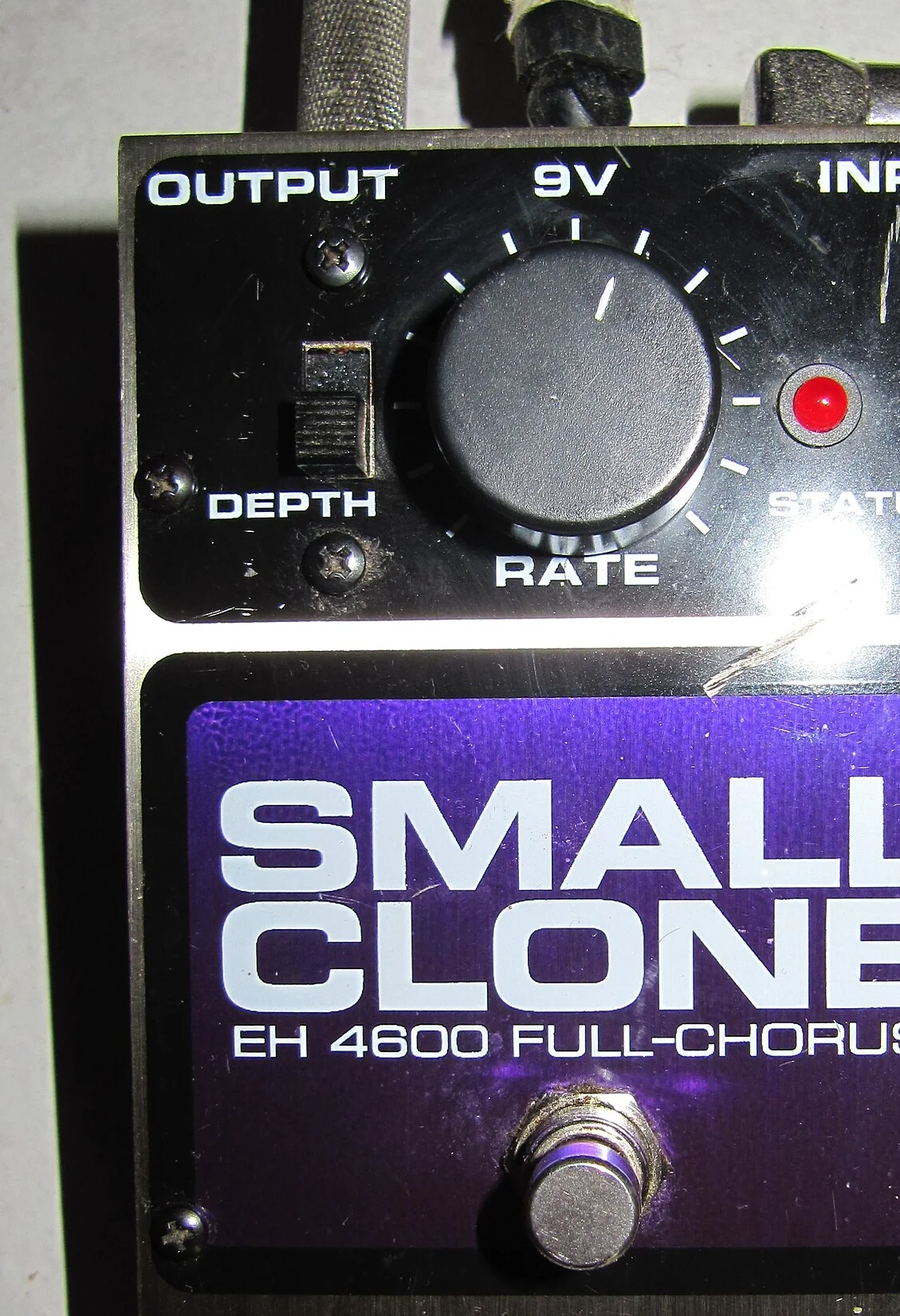
Small Clone
Its maker had gone broke years before it put the water under “Come As You Are.”
Sound City, Van Nuys, early 1991. Butch Vig is producing Nirvana’s second album, and Kurt Cobain has brought a small chorus box from a New York company that went under years ago.
- Introduced
- c. 1979
- Effect
- Modulation
The short version
1968
Electro-Harmonix
Mike Matthews founds the company in New York.
c. 1979
The Small Clone
An analog chorus with one Rate knob and a Depth switch, made from about 1979.
1983
The first run ends
Production stops as the original company goes out of business. The bankruptcy filing is dated 1984.
1991
Nevermind
Cobain’s Small Clone puts the watery sound on “Come As You Are” and the “Teen Spirit” pre-chorus.
1992
The single
“Come As You Are” comes out as a single on February 18.
Side A
A1
A box from a company that went broke
Sound City Studios, Van Nuys, California, early 1991. Butch Vig is producing Nirvana’s Nevermind, and in among Kurt Cobain’s pedals is a small chorus box from Electro-Harmonix of New York.
By then the company that built it was gone. The original Electro-Harmonix stopped making the Small Clone around 1983, when it went out of business, and the bankruptcy filing is dated 1984. The pedal had been out of production for years. Cobain’s was one of the originals, from before there were any reissues.
A discontinued box from a bankrupt maker doesn’t sound like the start of anything. It was about to become the sound of one of the biggest rock records of the decade.
A2
Wide and watery. Not subtle.
Chorus is a simple trick. The pedal takes your signal, makes a copy, delays the copy by a sliver of time, and keeps nudging its pitch up and down. Blend the two and one guitar sounds like two that aren’t quite in tune with each other. Done gently, it shimmers. Done the Small Clone way, it sloshes.
Vig didn’t dress it up when he described it:
As for that kind of washy sound on ‘Come As You Are’, that was an effect that Kurt had, called the Small Clone, which is basically just a flangy chorus box but with a very distinctive sound. It’s really kind of wide and watery. Not subtle, put it that way.
Then he made it bigger. Vig double-tracked Cobain’s guitars on the song, two passes through the pedal stacked on top of each other, so the wash spreads even wider across the speakers.
Put on “Come As You Are” and listen to the guitar in the verses and the pre-choruses. It sounds like it’s being played from the bottom of a pool. That’s the Small Clone, and that’s two of it.
A3
One knob and a switch
There isn’t much to work with on the front of the pedal. One knob, Rate, sets how fast the pitch wobbles. One switch, Depth, sets how hard: slight or strong. That’s the whole control panel. A battery goes in the base, or you can run it off a DC adapter.
Inside is the part that does the work, a bucket-brigade delay chip. Think of a line of people passing a bucket of water hand to hand: the signal goes down the line a step at a time and comes out the far end a moment late. Original Small Clones used one of two: the common Panasonic MN3007 or the rarer Reticon SAD1024.
Which one was in Cobain’s? People have wondered whether his was a SAD1024. Nothing is proven, and it’s a good example of how much guesswork piles up around a famous pedal.
The labels varied too. Originals read “Mini-Chorus” or “Full Chorus” on the front, with no real difference in what came out. And keep it straight from its neighbor in the catalog: the Small Stone is Electro-Harmonix’s phaser. Different pedal, different effect, and an easy name to misread in a hurry.
Flip the record · By the numbers
1
Knob, for Rate. Depth is a switch, slight or strong.
2
Delay chips found in originals, the Panasonic MN3007 or the scarcer Reticon SAD1024.
2
Nevermind songs Butch Vig names for its watery sound.
9V
Battery in the base, or a DC adapter.
Side B
B1
The pre-chorus, not the chorus
The Small Clone gets credited with a lot of Nevermind, and not all of it holds up. The person who was in the room named two songs. Vig put it on “the watery guitar sound you hear on the pre-chorus build-up of Smells Like Teen Spirit and also Come As You Are.”
So on “Teen Spirit,” listen to the build just before the chorus hits, when the guitar goes liquid and the band gathers itself. That’s the claim, and that’s where it stops. Fan lists spread the pedal across more songs and more sections of that one. Those don’t come with anybody who was there.
Nothing puts it on the vocals, either, whatever you may have read. Vig talks about guitars. And the chorus on Nevermind is this pedal, not a Boss chorus.
It had company on the floor. Cobain had a Boss DS-1 and a ProCo RAT on those sessions, and a Big Muff turned up on “Lithium” for a darker, thumpier sound. And the Small Clone wasn’t only a studio trick: he used it live, too.
B2
Popularized by Kurt Cobain
Electro-Harmonix didn’t stay dead. Mike Matthews, who had founded the company in New York in 1968, started putting out Russian-made versions of the classic pedals under his Sovtek brand in 1992. By 2000 production was back in New York, with reissues and new designs.
The Small Clone came back too, as a reissue. The new ones all use the MN3007 chip. Some say they sound strikingly close to the originals; others hear a far more prominent effect. Depends whose pedal you’re comparing against whose. Smaller versions followed, the Nano Clone and the Neo Clone.
Electro-Harmonix now describes its own pedal as “a reissue of the classic analog chorus pedal popularized by Kurt Cobain.” The company names, in its own product copy, the player who made the pedal famous on a record cut while the original company was gone.
The factory closed, and the pedal kept going anyway. All it ever needed was a guitar player with one on the floor, willing to plug it in.
Put this on
You’ve read about it. Now hear it. Here’s what this pedal sounds like, and what to listen for.
Come As You Are
Listen to the verses and pre-choruses. Butch Vig calls it “wide and watery. Not subtle,” and Cobain’s guitars were double-tracked to make it wider still.
Find it on YouTube (opens in a new tab)Smells Like Teen Spirit
Listen for the pre-chorus build-up. Vig says the watery guitar there is the Small Clone.
Find it on YouTube (opens in a new tab)
The cast
The people who built it, and the players who made it famous.
1991
Kurt Cobain
Small Clone, Nevermind
Played an original, from before the reissues, in the studio and live. On Nevermind it sat in his setup with a DS-1, a RAT, and a Big Muff.
1991
Butch Vig
Producer, Nevermind
Called it “a flangy chorus box but with a very distinctive sound,” and double-tracked Cobain’s guitars on “Come As You Are.”
1968
Mike Matthews
Founder, Electro-Harmonix
Started the New York company that made the Small Clone, and later brought its classic pedals back, first as Russian-made Sovtek versions.
Often paired with
The pedals and guitars it usually shares a board or a record with.
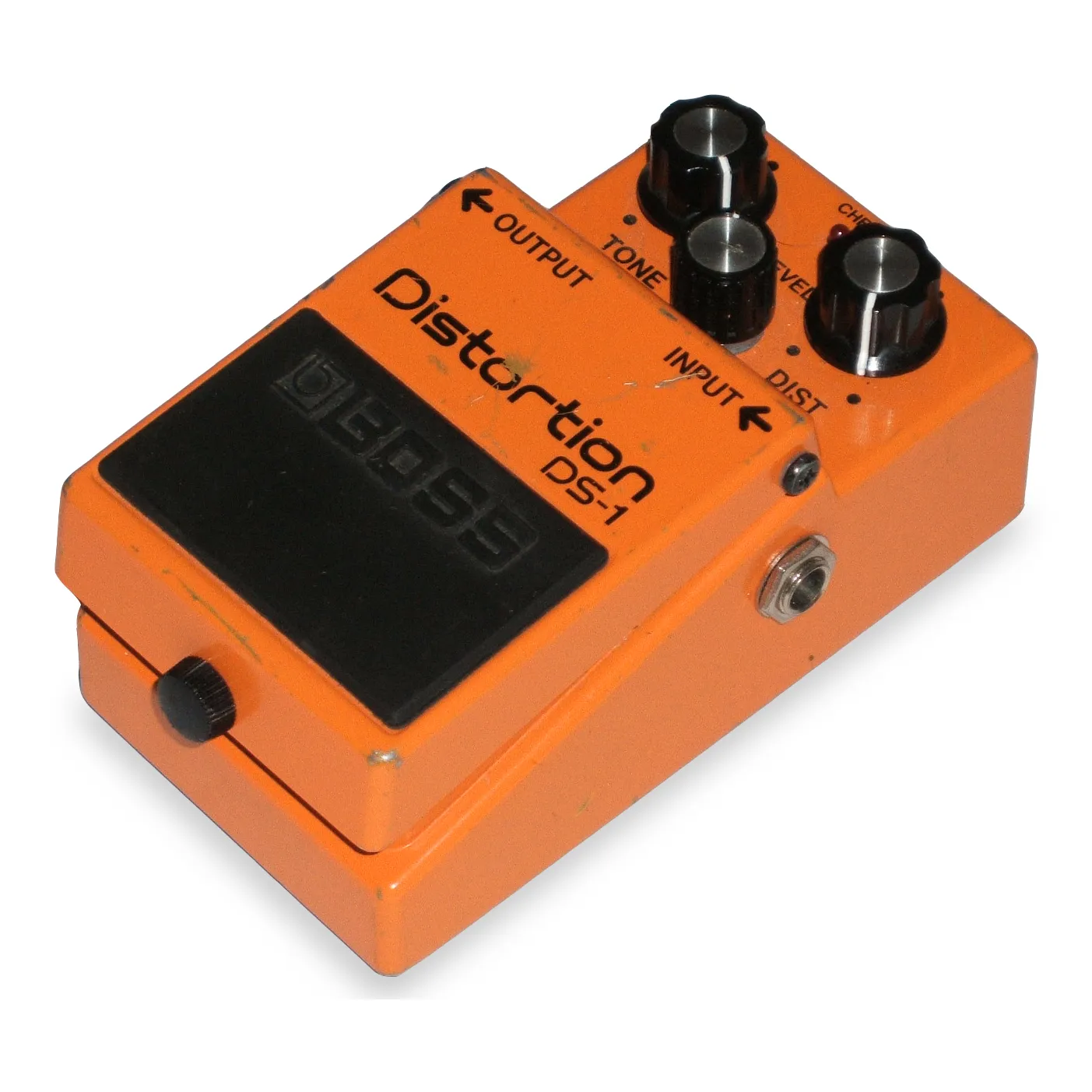
Photo: Matt Eason / Wikimedia Commons / CC BY 2.5 Boss
DS-1 Distortion
1978 · Distortion
The orange box Joe Satriani took on stage as the simplest, smallest, most reliable thing he could find.
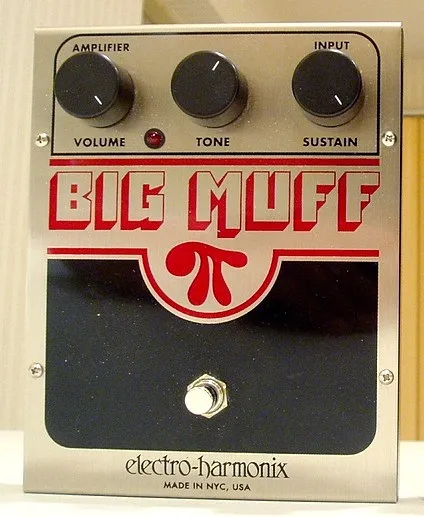
Photo: NIRVANA2764 / Wikimedia Commons / CC BY-SA 3.0 Electro-Harmonix
Big Muff Pi
1969 · Fuzz
Built to chase Hendrix, it missed, and made the smallest amp in the house sound like a wall.
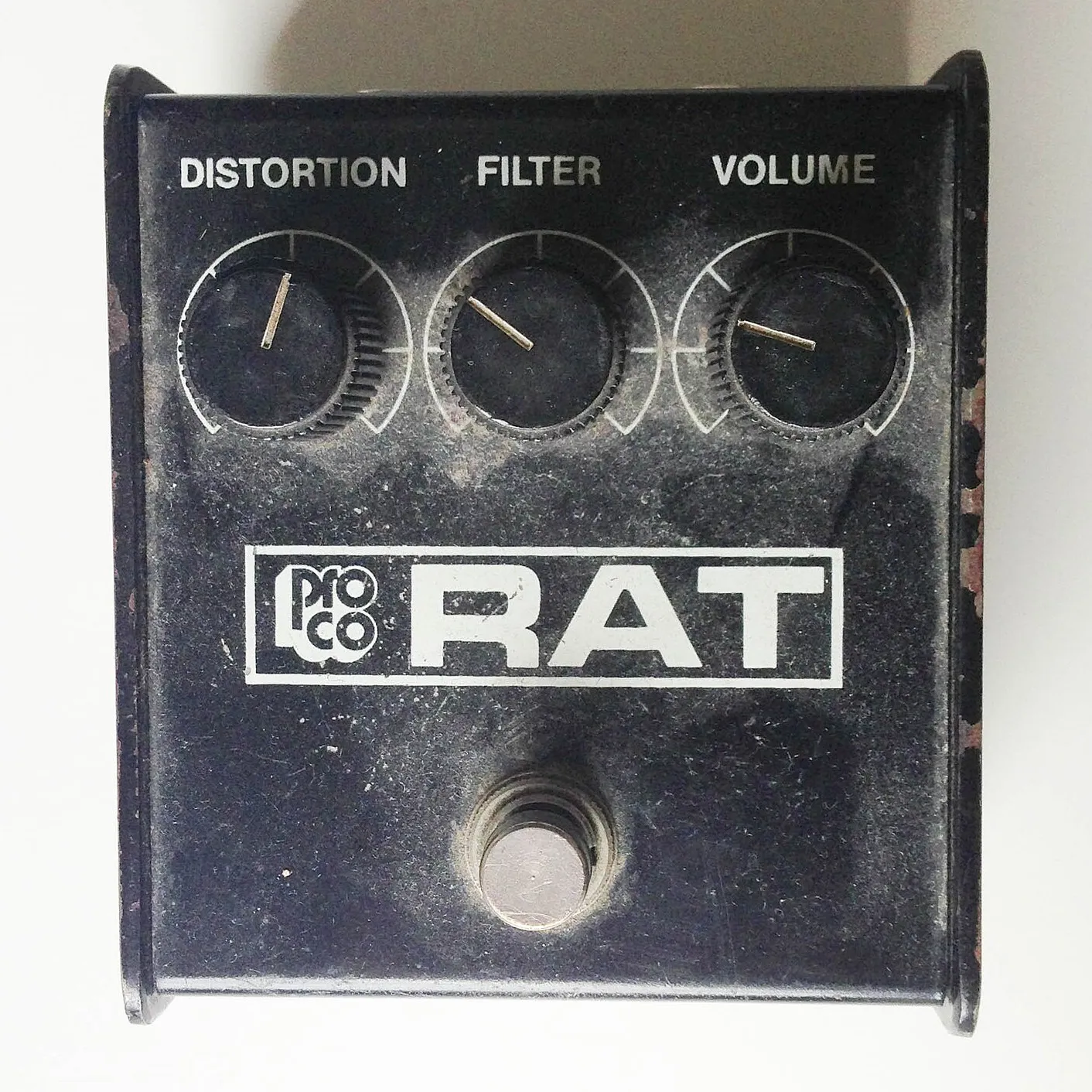
Photo: David Hilowitz / Wikimedia Commons / CC BY 2.0 ProCo
RAT
1979 · Distortion
Named for a basement full of rats, born of a wrong resistor, and at its best plugged in the wrong way.