Chapman
ML-1
A signature guitar where the signature belonged to the audience.
Rob Chapman was the guy in the YouTube demo videos when Barnes & Mullins offered him a signature model. Instead of deciding what went on it, he asked the people watching. He thought they’d make 50.
- Introduced
- 2009
- Type
- Solidbody electric
- Class
- Production
Have a photograph of this guitar? Send a picture
The short version
2009
Put it to a vote
Body shape, woods, pickups, and hardware go to the viewers, in videos and on the forum. The company dates itself to this year.
2010
The first 500
The first run ships in April, numbered, and sells out. Others count the launch from 2009.
2012
Korea
Production moves to Korea, to the factory behind PRS SE guitars.
2013
The BEA
Rabea Massaad demos his signature ML-1, the one that goes on every tour.
2016
Eight strings
Rob Scallon’s ML1 RS arrives at NAMM as a six and an eight.
2017
Standard and Pro
The range splits, Standard in Indonesia and Pro in Korea.
2024
Names, not numbers
Production moves to Chennai, the catalog had grown past 120 SKUs, and the models get names.
2026
Scout
The double-cut is renamed. “You may have known it as the ML1.”
Side A
A1
The demo guy gets an offer
Before there was a Chapman guitar there was Rob Chapman on YouTube, playing gear in demo videos. People called him Chappers, or Monkey Lord. He was a clinician for Faith when Barnes & Mullins offered him a signature electric under the Gould name.
Most signature guitars are one player’s taste with a name on the headstock. Chapman didn’t decide. He asked the channel what they wanted.
A2
Design by comments section
So the guitar was voted into being. A series of videos put body shape, woods, pickups, and hardware up for a vote, and the forum voted too. What came out was a mahogany S-type with a maple neck, an ebony board, a reverse headstock, and satin black paint.
Chapman is honest about the branding. He told an interviewer he asked the audience what they wanted, “and then once it was done, I branded it as ‘collaborative design’, to make it sound like I’d been really clever.”
I branded it as ‘collaborative design’, to make it sound like I’d been really clever.
The pickups were cheap on purpose. He called the guitar a blank canvas, so you’d swap them for whatever you liked. It had a Wilkinson tremolo, a 3-way switch, and a coil-tap. Barnes & Mullins told him to put it out as Chapman Guitars, so he did.
And no, the ML has nothing to do with Dean. Dean Zelinsky’s ML is a 1977 guitar, half Flying V and half Explorer. This ML stands for Monkey Lord.
A3
Fifty, then five hundred
He thought they’d make 50. “We ended up making 500, not 50, and they all sold out.”
When they shipped depends on who’s counting. The company and most histories say 2009. His biography has the 500 going out in April 2010, and the company’s own anniversary post counts from 2010 too. Either way, the first run came out of China numbered, with a Monkey Lord backplate and a gig bag, and the first guitar off the line was £299. When the factory offered more at a discount, the second batch was £199.
The people who voted for it were the people who bought it.
Flip the record · By the numbers
50
How many Rob Chapman thought they would make.
500
How many they made in the first run. All sold.
£299
The first guitar off the line. The second batch came in at £199.
120+
SKUs in the catalog before the 2024 switch to names.
Side B
B1
The one the magazines reviewed
Around 2012 production moved to Korea, to the factory that also builds PRS SE guitars. This is the version the magazines got their hands on: two slabs of mahogany under a figured maple veneer, extra-jumbo frets, different pickups, still the reverse headstock. It was not light. One reviewer’s guitar came in at a little over 4 kg, about 9 pounds.
By 2014 the company had built its 5,000th guitar. That’s every model, not just the ML-1, but the ML-1 is where it started.
Then came the signatures, and they’re still ML-1s. Lee “The Captain” Anderton got the first one, the CAP10. Rabea Massaad got the ML-1 BEA in 2013, modeled heavily on Nuno Bettencourt’s Washburn N4. “This ML1 BEA goes on every tour,” he said, “and I’ve played it longer than any of the others.” Rob Scallon got a six and an eight at NAMM in 2016, with anchors on them because “Anchor” was the first song he wrote on an eight-string.
B2
The audience keeps the name
The company grew past the guitar. In 2017 the range split, a Standard series built in Indonesia and a Pro series in Korea. In 2020 the ML1 X dropped into the Standard line with a straight headstock instead of the reverse one, a 5-way switch, and a new HSS set. In 2022 Chapman built its first guitars in England, at a workshop in York.
In 2024 production moved again, to Harmony in Chennai, with Trevor Wilkinson consulting. By then the catalog had grown past 120 SKUs, and the ML numbers gave way to names. When an interviewer asked what ML stood for, Rob said it plainly: Monkey Lord.
In 2026 the double-cut got a new name, Scout. The factory’s own launch copy calls it “the much requested double cut,” and then it adds a line it didn’t need to write:
“You may have known it as the ML1.”
Plenty of people did. They voted for it.
Put this on
You’ve read about it. Now hear it. Here’s what this guitar sounds like, and what to listen for.
Chapman ML-1 BEA demo
Massaad playing his new signature ML-1 in 2013. It’s the model of his tour guitar, and the clearest place to hear one in a player’s hands.
Watch it on YouTube (opens in a new tab)
The cast
The people, and the specific guitars, that made the legend.
2009
Rob Chapman
The first ML-1, designed by viewer vote
Monkey Lord on YouTube, and the ML in the name. Called the result “collaborative design,” and later admitted why.
2013
Rabea Massaad
ML1 BEA
Modeled heavily on Nuno Bettencourt’s Washburn N4. “This ML1 BEA goes on every tour and I’ve played it longer than any of the others.”
Lee “The Captain” Anderton
ML-1 CAP10
The first Chapman signature, a mahogany S-type with three Seymour Duncans, humbuckers at either end and a single in the middle.
2016
Rob Scallon
ML1 RS and ML1-8 RS
Neck-through six and eight strings, with anchors on them because “Anchor” was the first song he wrote on an eight-string.
Liner notes
Specs, construction, rarity, value, and every source we used.
A reverse Tele headstock on a mahogany S-type, voted into being on YouTube — Chapman’s ML-1, not Dean’s V-plus-Explorer.
- Body
- Mahogany, ash veneer on a flat top, gloss. Factory copy also calls it a thin lightweight mahogany body.
- Neck
- Maple, satin, C, recessed bolt-on. Width nut 42 mm / 22nd fret 56 mm. Thickness including fret height: 1st 22 mm, 12th 24.5 mm. Mix flagged.
- Fingerboard
- Macassar ebony, rolled edges, 240 mm (~9.5"), 22 jumbo nickel, pearloid dots, Infinity at the 12th. Mix flagged.
- Scale
- 648 mm (~25.5"). Mix flagged.
- Pickups
- HSS Alnico 5. Factory copy: Chapman Consentus set. Spec table: Chapman single-coils 6.4k (neck and middle), Chapman humbucker 15.5k (bridge). Mix flagged.
- Hardware
- Chapman 2-point tremolo with steel block; Chapman Classic closed tuners, 18:1
- Electronics
- Master volume (500k), master tone with push-pull (500k), 5-way
- Finish
- Gloss Blue, Gloss Red, Gloss Black
- Nut
- Graph Tech TUSQ, 42 mm. Guitar Center: 1.65" (42 mm). Mix flagged.
Open the full research fileConstruction details, the complete player record, production numbers, dated value estimates, and sources
Current typical = ML1 X (chapmanguitars.com/ml1-x spec page; Guitar Center item 1500000367275, 19 October 2026). Dealer $699.99; Deep Red also $533.99 from $699.99. GetMyGuitar Gloss Black 30-day low $533.99, 27 September 2026. Do not average. Factory grid this pass is Scout Traditional, the 2026 rename — not this table. Workshop Series ML1 X is the 2022 UK flagship. ML1 Modern is HH, 24-fret hardtail. ML-2 is a single-cut. ML-3 / Law Maker is a T-style. Ghost Fret is Explorer-ish. ML1 BEA, CAP10, and ML1 RS stay on this plate as signatures, not second slugs. Not a Dean ML (dean-ml). No Gibson SKUs. Mixed inch/mm flagged on 648 mm (~25.5"), 240 mm (~9.5"), and 42 mm / 1.65". 25.5" is 647.7 mm. 9.5" is 241.3 mm. Do not average.
Construction
The job was a SuperStrat the people watching the videos would actually buy. Rob Chapman was already the YouTube demo guy — Monkey Lord, Chappers — when Barnes & Mullins offered him a signature, as a Gould, while he was a Faith clinician (Wikipedia, Rob Chapman). He did not design it in a vacuum. He asked the channel what to put on it.
Not a Dean ML (dean-ml). Dean Zelinsky’s 1977 guitar is a V lower bout with an Explorer-ish upper. This is an S-type with a reverse Tele headstock. ML here is Monkey Lord (Andertons, 9 May 2022; Rob to Daniel Orchard in Guitar World, 29 October 2024). Different factory, different outline, different initials. Dimebag stays on that plate.
2009. Andertons titles the chapter that way: “It all started with the ML-1.” MusicRadar (Total Guitar, 24 October 2017; Dave Burrluck, 3 November 2017) puts the first electrics in 2009. Wikipedia’s company page and Seymour Duncan (5 September 2014) date the company the same year. Chapman told Duncan the offer was a signature; he asked the audience what they wanted, “and then once it was done, I branded it as ‘collaborative design’, to make it sound like I’d been really clever.” Andertons: a series of videos, a vote on body shape, woods, pickups, hardware. Gear Gods (22 October 2014): votes on the official forum. Keep the branding as his own words, not a factory myth.
Barnes & Mullins told him to put it out as Chapman Guitars (Performer Mag, 2 December 2014). He had thought they would make 50. “We ended up making 500, not 50, and they all sold out.” Wikipedia (Rob Chapman), citing his biography: 500 units shipped April 2010. Chapman Guitars on Facebook, 21 January 2021: “Eleven years ago Chapman launched our first guitar the ML1.” That arithmetic is 2010. Keep 2009 and April 2010. This plate starts in 2009, the year Andertons, MusicRadar, and the company page print. Do not bury the first 500.
What left China was a mahogany Strat-style body, maple neck, ebony board, reverse headstock, satin black (Wikipedia, Chapman Guitars). Rob’s own film, Chapman Guitars The Movie (The ML1 Story), 25 May 2010: first guitar off the line £299; Wilkinson tremolo; 3-way; coil-tap; a blank canvas, cheap pickups on purpose so you would swap them. Wikipedia: second batch £199 when the factory offered more at a discount. Ultimate Guitar (10 June 2011): £200 at Andertons. Those are 2009–11 lists, not 2026 street. Wikipedia’s quality-control move to World Musical Instruments, South Korea, is citation-needed on that page. MusicRadar (Ed Mitchell, 8 July 2013) independently dates the Korean run to 2012 — “last year” from that review.
The Korean guitar is the one the magazines had in hand. Mitchell: two slabs of mahogany, figured maple veneer, a little over 4 kg / 9 lbs, three-piece maple bolt-on, 22 extra jumbo, ebony, direct-mount Guitarnivore and Extreme Victory, still a 3-way plus push/pull, Wilkinson, Grover, £369. Performer Mag (16 December 2014): same Korean factory as PRS SE, reverse-Tele headstock, TUSQ, Infinity at the 12th, 13.8" radius, 42 mm nut, Wilkinson WVPCR, $499. Gear Gods the same autumn: $500, swamp ash also in the line. Do not read SE construction back onto this bolt-on.
NAMM 2017. The range splits. Andertons: Standard in Indonesia, bolt-on, veneers; Pro at World Guitars, Korea, through-necks, carved tops, Hipshot. MusicRadar: ML1 Pro Traditional £869, swamp ash, Venus Witch SSS — not the HSS table. Standard ML1 Modern is HH, 24 frets, hardtail. Keep them on this plate. They are not the 2009 HSS.
2020. Factory ML1 X page: decade of the company, then the X spec dropped into Standard. Straight Heritage headstock, not the reverse Tele. 5-way. Consentus HSS. That is the table.
2022. First UK-made Chapman. Guitar World (Dave Burrluck, 16 January 2023): Workshop Series ML1 X, UK Guitar Builders, York; British Standard announced Winter NAMM 2018 never shipped. Chambered African mahogany, maple drop top, Carnyx by Cream T, £3,499 inc. case, 3.33 kg / 7.33 lbs. Guitar.com: UK custom £3,499.99; international £2,999.99. Nine ready-mades. Not the Standard table.
2024. Production to Harmony Musical Instruments, Chennai (Guitar World, Burrluck, 29 October 2024). Rob, from Malta: Trevor Wilkinson is “the reason we have now moved to Harmony.” Daniel Orchard: SKU count had been over 120. Names instead of ML numbers. Orchard asked what ML stood for. Rob: Monkey Lord. Law Maker is the old ML-3, “arguably our best-selling guitar.”
2026. Factory NAMM copy: Scout is “the much requested double cut.” “You may have known it as the ML1.” Scout Traditional copy is HSS; the same spec page prints PICK CONFIG HH over an HSS wiring diagram. Mix flagged. Scout is the living factory double-cut. It is not an ML-1 badge.
Classic vs current: 2009–10 China — reverse headstock, satin black mahogany, HSS, 3-way, £299 / £199 — against an ML1 X you can still order from Guitar Center in 2026, straight headstock, 5-way, ash veneer, $699.99. Same silhouette. Different factory, different headstock, different switch.
Players
Do not hang a Dean ML here. Do not recruit Ghost Fret, ML-3, or Law Maker players as if they were this guitar. Do not pin Dorje or Toska albums on an ML-1 without a named credit.
Rabea Massaad. The named ML-1. Seymour Duncan (2014): ML-1 BEA, Custom / 59. Sonic State, 27 June 2013: the demo. MusicRadar / Total Guitar (Rob Laing, 26 February 2018): “This ML1 BEA goes on every tour and I’ve played it longer than any of the others.” Quilt maple veneer, alder, “heavily inspired by the Nuno Bettencourt Washburn N4”; Seymour Duncan 59 neck, Bareknuckle Warpig bridge by then; Floyd blocked, Fu-Tone brass block. “I’ve used them on all my recordings and gigs” — that sentence is the ML1 BEA and the ML3 BEA together. Do not flatten it onto a Dorje track list. The ML3 BEA is a T-style. Off the table. Nuno’s Washburn N4 is washburn-n4.
Rob Scallon. ML1 RS six and ML1-8 RS eight, NAMM 2016. His own film, 9 November 2015: neck-through mahogany, swamp-ash wings, 24 jumbo, Hipshot hardtail, Chapman Passive Aggressive ceramics, anchors because “Anchor” was the first song he wrote on an eight-string. That is the design brief, not a session log for the production guitar. Electric Herald (21 June 2017): six $799, eight $999, Riff City. Bonedo (4 November 2016): Korea, €799. The eight is still this silhouette. It is not a bass.
Lee “The Captain” Anderton. First Chapman signature, ML-1 CAP10, HSH Seymour Duncan JB / SSL-1 / Jazz (Seymour Duncan; Andertons). Mahogany Strat he liked. CAP10 Blackout and CAP10 America are limited cosmetics on that guitar. No album credit isolated this pass.
Rob Chapman told Performer Mag he takes his Seymour Duncan signature and an ML3 Modern on clinic. Wikipedia’s equipment line is the ML3 Semi-Hollow Traditional. Not this table. Clockwork Wolf & Co. is later, and not pinned here.
Also known to play stays empty. None invented.
Rarity
You can buy a new ML1 X from Guitar Center this week. Factory 2026 copy has moved the double-cut to Scout. That is still Chapman production, not a numbered cap.
Chapman does not publish an ML-1 census. None invented. The 500 is the first run Rob stated, and it sold out. Wikipedia’s second batch has no size. Performer Mag and Gear Gods, 2014: the company’s 5,000th guitar. That is the whole brand. Not this model. Serials date a guitar. They don’t count a year.
What is actually thinner: first-run China, numbered of 500, Monkey Lord backplate and gig bag (Reverb listings for #371 and #451). Reverse-headstock Korean HSS before the 2017 split. Workshop Series UK, nine ready-mades plus custom. Massaad’s tour ML1 BEA and Scallon’s NAMM eights are unique objects. They are not a used ML1 X.
Value
Informal estimate, 19 October 2026. Not an appraisal.
Ask vs sold labeled. Celebrity lots are not-comps. No invented medians or factory counts. Period £299 / £199 (2010 film; Wikipedia) and £369 (MusicRadar, 2013) and $499 (Performer Mag, 2014) are those years’ money, not 2026 street.
New street. ML1 X: Guitar Center and Musician’s Friend $699.99. Sale $533.99 on Deep Red this pass; GetMyGuitar Gloss Black 30-day low $533.99 (27 September 2026). ML1 Modern Standard: Guitar Center $533.99 from $699.99. ML1 Hybrid: Guitar Center from $457. Those are other pickup sets. Do not average them into the X. Workshop Series £3,499 (Burrluck, January 2023) is the 2022 UK custom, not a Standard cart.
Used modern. Reverb Price Guide, ML1 Modern, Good to Mint: $254–$443 on 22 orders (item fetch this pass; the product-page widget was bot-walled). Named hammers in that table: 4 December 2025 Mint $418; 22 August 2025 Very Good $550; 5 August 2025 Excellent $350; 12 November 2024 Good $250. Do not average those with the band. Flag: thin live sold-comp access on the original China run. Named asks, not hammers: first-run #451 listed at $295.66 (ended); #371 of 500 listed at £357.99 (ended, modified). A Good walnut Korean HSS sold $350 (listing four years old). Do not average ended asks with the Modern sold band.
Vintage / collectible. There isn’t one. A 2009 China ML-1 is a used modern guitar with a numbered certificate. The first 500 are scarcer than an Indonesian Modern. They are not a 1954 market. Massaad’s tour BEA and Scallon’s signatures are not comps. No artist auction sits here.
See also
- dean-ml — 1977 V-plus-Explorer hybrid; ML is Zelinsky, not Monkey Lord
- fender-stratocaster — the S-type this SuperStrat sits on
- washburn-n4 — Nuno’s guitar the ML-1 BEA was modeled after; not this Chapman
Sources
- Chapman, ML1 X — Standard-series X; mahogany, ash veneer, maple, Macassar ebony, 240 mm (~9.5"), 648 mm (~25.5"), 42 mm TUSQ, Consentus HSS Alnico 5 / table 6.4k / 6.4k / 15.5k, 2-point steel-block trem, 5-way, push-pull tone, Infinity 12th, Gloss Blue / Red / Black. Decade / Pro X Anniversary copy
- Chapman, Guitars — 19 October 2026 grid: Scout, Law Maker, DPT, SAR63, Pegasus, Guardian, Ghost Fret. No ML1 badge
- Chapman, Scout Traditional — page title still “Chapman Guitars ML1”; HSS copy and HSS wiring vs printed PICK CONFIG HH; mahogany, flame maple veneer, roasted maple / rosewood, 647.7 mm / 25.5", 22 jumbo stainless, 42 mm TUSQ XL, 350 mm / 14", Wilkinson WVS130, Redline Special 14.5k ceramic / Straight-Six 7.2k Alnico V
- Chapman, NAMM 2026 — Scout: “You may have known it as the ML1”; Scout Traditional HSS; Harmony-era carbon rods, spoke-wheel truss, pickups by Rob Chapman and Trevor Wilkinson
- Chapman, ML1 Modern — HH Sonorous Zero, 24 jumbo, 350 mm (~13.5"), string-through, alder / ash veneer. Not this table
- Guitar Center, ML1 X Gloss Black — $699.99; item 1500000367275; ash veneer, mahogany, maple C, Macassar ebony, 22 jumbo, Alnico 5 HSS, 2-point steel-block trem
- Guitar Center, Chapman — ML1 X Deep Red $533.99 / $699.99; ML1 Modern Standard $533.99 / $699.99; ML1 Hybrid from $457
- Musician’s Friend, ML1 X Gloss Black — $699.99
- GetMyGuitar, ML1 X Gloss Black — Guitar Center 30-day low $533.99, 27 September 2026
- Andertons, The History Of Chapman Guitars, Jed, 9 May 2022 — 2009 ML-1; collaborative votes on videos; Monkey Lord-1; Standard Indonesia / Pro Korea at NAMM 2017; CAP10 first signature; ML-1 BEA; timeline 2009–2022
- Seymour Duncan, An Audience With Rob ‘Chappers’ Chapman, 5 September 2014 — company 2009; collaborative-design quote; ML-3 RC Little 59 / Hot Rails; CAP-10 JB / SSL-1 / Jazz; ML-1 BEA Custom / 59; ML-1 Hot Rod 35th Anniversary JB
- Performer Mag, How Rob Chapman Rallied a YouTube Army, 2 December 2014 — Barnes & Mullins; 50 became 500, sold out; Korean pickups spec’d; 5,000th guitar; ML1 $499 in the same issue
- Performer Mag, ML1 review, 16 December 2014 — $499; PRS SE factory; reverse-Tele; Grover; TUSQ; 13.8"; 22 extra jumbo; 42 mm; Wilkinson WVPCR; Guitarnivore / Extreme Victory; mahogany, flame veneer
- MusicRadar, Ed Mitchell, Chapman ML-1 review, 8 July 2013 — Korean run 2012; £369; two-piece mahogany, maple veneer; ~4 kg / 9 lbs; three-piece maple; 22 extra jumbo; 3-way plus coil-split; Wilkinson; Grover
- MusicRadar / Total Guitar, First look Standard and Pro, 24 October 2017 — 2009 votes; ML1 Pro Traditional £869
- MusicRadar, Dave Burrluck, ML1 Pro Traditional, 3 November 2017 — 2009 first electrics; 29 models; World Musical Instruments Korea / PRS SE; swamp ash; Venus Witch SSS; reverse Tele headstock; Hipshot; 20.6 mm / 21.7 mm; £869 / €999
- Guitar World, Dave Burrluck, Workshop Series X, 16 January 2023 — 10th anniversary 2019; UK builds late 2022; British Standard NAMM 2018 never shipped; £3,499; 648 mm (25.5"); 42.1 mm bone; 305 mm (12") or 356 mm (14"); Carnyx by Cream T; 3.33 kg / 7.33 lbs
- Guitar.com, Cillian Breathnach, Workshop Series, 15 November 2022 — custom £3,499.99 UK / £2,999.99 international; nine ready-mades; Carnyx Alnico V
- Guitar World, Dave Burrluck, How Chapman reinvented itself, 29 October 2024 — Harmony, Chennai; Wilkinson consultant; SKU count over 120; ML = Monkey Lord; Law Maker from ML-3; Scout not yet named here
- Gear Gods, ML-1 & ML-2, 22 October 2014 — forum votes; ML-1 $500; swamp ash or mahogany; Guitarnivore / Extreme Victory; Grover; 22 extra jumbo; 25.5"; reverse Tele headstock; 5,000th guitar
- Wikipedia, Chapman Guitars — founded 2009; collaborative-design claim; first production ML-1; 500 then a second batch; £299 / £199; mahogany S-type, maple, ebony, reverse headstock, satin black; ML-2 250. Korea move citation-needed
- Wikipedia, Rob Chapman (guitarist) — Faith / Gould offer; 500 shipped April 2010, sold out; Dorje 2012–2021 with Massaad; equipment line ML3 Semi-Hollow Traditional
- MusicRadar / Total Guitar, Rob Laing, Rabea Massaad, 26 February 2018 — ML1 BEA on every tour; N4; alder, quilt veneer; 59 / Warpig; Floyd blocked; “all my recordings and gigs” with the ML3 BEA
- Sonic State, ML-1 BEA demo, 27 June 2013
- Electric Herald, ML1 / ML1-8 RS, 21 June 2017 — six $799, eight $999, Riff City
- Bonedo, ML1 RS, 4 November 2016 — Korea; €799
- Musician’s Friend, ML1 RS — swamp ash, mahogany neck-through, 24 jumbo, ceramic humbuckers, coil-split
- Rob Chapman, The ML1 Story, 25 May 2010 — collaborative design; prototypes; Barnes & Mullins; first production £299; Wilkinson; 3-way; coil-tap; blank-canvas pickups
- Rob Scallon, SIGNATURE GUITAR!!!, 9 November 2015 — ML1-8 RS brief; “Anchor”; NAMM 2016 aim
- Chapman Guitars, Facebook, 21 January 2021 — “Eleven years ago” launch copy
- Ultimate Guitar, ML-1 owner review, 10 June 2011 — £200 Andertons
- Reverb, ML1 Modern — Price Guide $254–$443 (22 orders, Good to Mint); named hammers through December 2025. Product-page widget bot-walled
- Reverb, ML-1 first run #451 of 500 — China; ended ask $295.66; Monkey Lord bag and backplate
- Reverb, ML-1 first run #371 of 500 — ended ask £357.99; modified; 13.75" radius on that listing
Keep digging
Guitars this one gets compared to, confused with, or descended from.
- Send a picture
Dean
ML
1977
Half a Flying V, half an Explorer. Then Dimebag Darrell played one with a lightning bolt, and it was his.
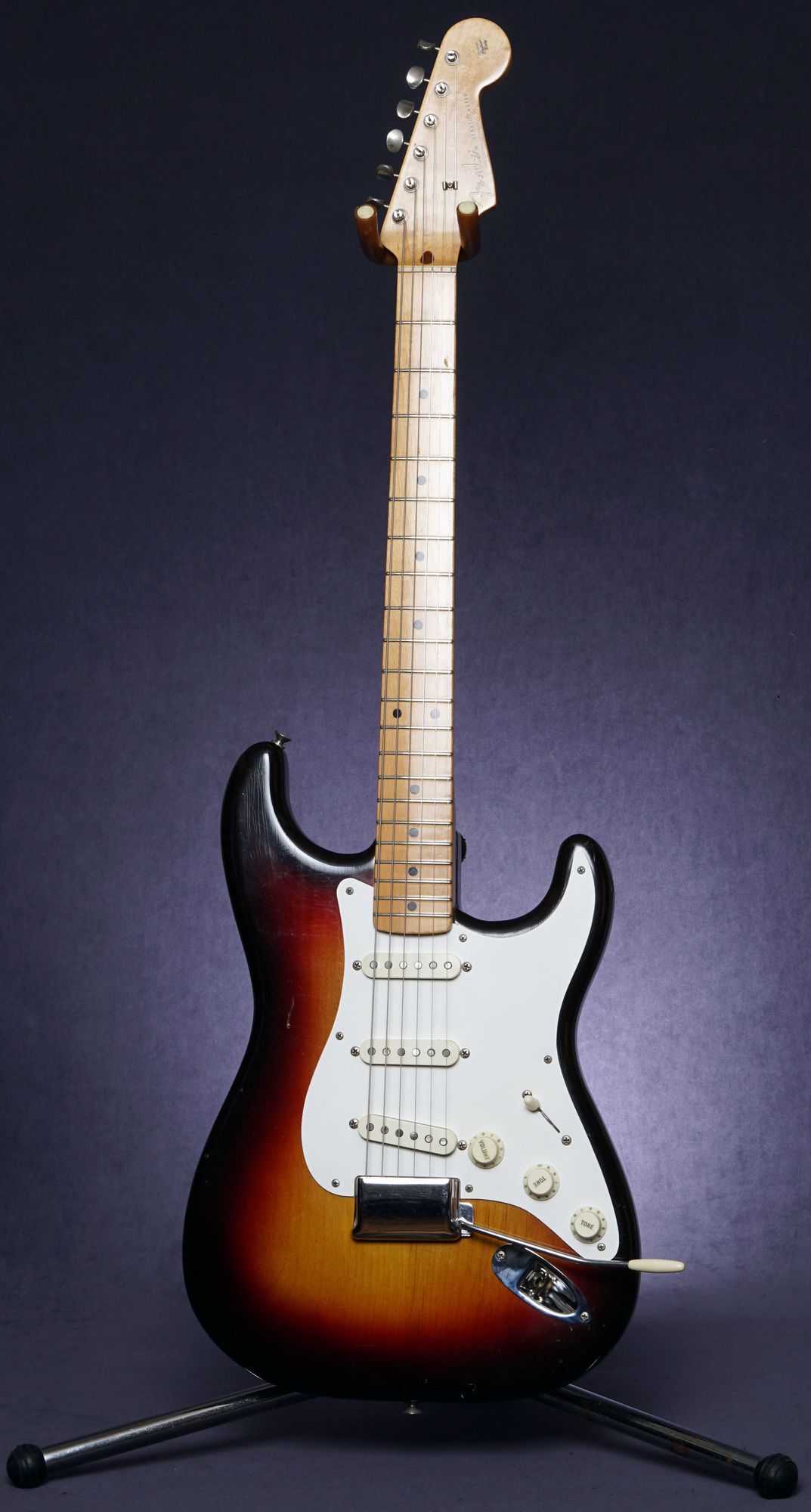
Photo: Lightburst / Wikimedia Commons / CC BY-SA 4.0 Fender
Stratocaster
1954
The guitar most people mean when they say “electric guitar.” Designed by a man who didn’t play one.
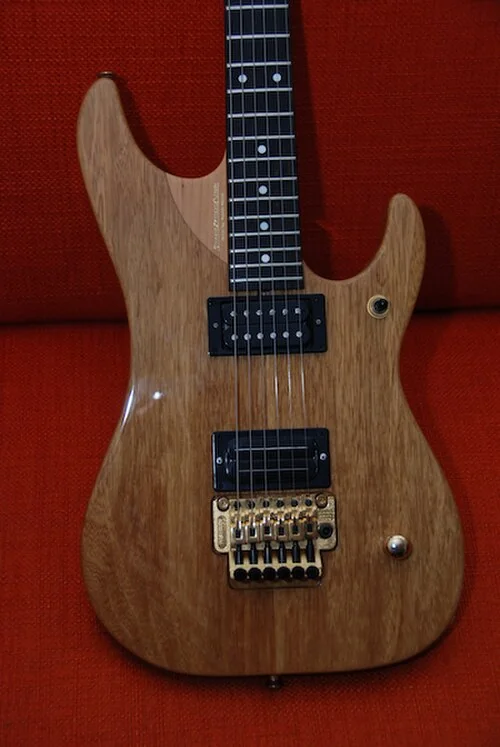
Photo: StefN4N8 / Wikimedia Commons / Public domain Washburn
N4
1990
Washburn could copy Nuno Bettencourt’s guitar down to the last ding. It couldn’t copy the years in it.