Collings
290
Named for the highway outside the shop: a plain mahogany slab with two P-90s, built as carefully as a flattop.
U.S. 290, west of Austin. The shop out on the highway is known for acoustic guitars, the kind with herringbone trim and scalloped braces. In 2006 it brings a mahogany slab with two P-90s to Summer NAMM and names it after the road out front.
- Introduced
- 2006
- Type
- Solidbody electric
- Class
- Production
Have a photograph of this guitar? Send a picture
The short version
2006
Summer NAMM
Collings shows its first electrics, the I-35, the City Limits, and the 290.
2007
“Yes it’s close”
Collings’s general manager admits the family resemblance to a ’50s Les Paul Special.
2008
$2,600
The list price in a 2008 American review.
2011
One pickup, two horns
The double-cut, single-pickup 290 DC S joins the family.
Side A
A1
Named for the drive
Most guitar names are trying to sell you something. This one is giving you directions.
Collings sits outside Austin on U.S. 290; the street address is 11210 W. Hwy 290. It’s an acoustic shop first, the one that builds the D2H. In 2006 Collings started making electric guitars, and at Summer NAMM that year it showed three: the I-35, the City Limits, and this one. The 290 is named for the highway that runs past the building.
It isn’t named for a player or a year. It’s named for the road you’d drive to go pick one up.
A2
“Yes it’s close”
Look at a 290 and you’ll see a 1950s Les Paul Special. Mahogany single-cut, flat top, no binding, two soapbar pickups. When a British magazine pointed that out in 2007, Steve McCreary, then Collings’s general manager, didn’t argue:
Yes it’s close.
Close isn’t the same, though. Measured up, it’s ¾" wider than the usual Les Paul-style shapes, with an upper bout that curves back into the cutaway and contours carved into the back for your ribs and your lap. The scale is 24⅞", a length Collings already used on its small 12-fret flattops, somewhere between a Fender and a Gibson. So an acoustic shop’s number ended up on its rock and roll guitar. It’s not a Gibson, and it doesn’t pretend to be.
A3
Two soapbars, done carefully
The pickups are a pair of Lollar soapbar P-90s. A P-90 is a single-coil, but a fat one: more growl and midrange than a Strat pickup, more bite and less polish than a humbucker. On a solid slab of mahogany, that’s about as direct a sound as an electric guitar makes. You hear your hands.
Everything around them is fussy in the Collings way. Honduran mahogany body and neck, joined with an extra-long mortise and tenon. Fifties-style wiring, the old Gibson way, so the sound doesn’t go dark when you roll the volume back. High-gloss nitro in Crimson, Doghair, Jet Black, Tobacco Sunburst, or TV Yellow.
It isn’t a featherweight. One review guitar in 2007 weighed 9.5 lb, which is what a solid slab of mahogany weighs. An early one had a medium-fat C neck that met the body at the 16th fret, so you can get up high, but nobody built this for shredding.
The early ones had different bridges and tuners, but the idea hasn’t moved. In Britain in 2007 it cost £1,849 with its case. In 2008 the American list price was $2,600. That’s a lot of money for a Special-style slab. It’s also a Special-style slab built by the people who build the D2H.
Flip the record · By the numbers
290
The U.S. highway that runs past the shop. That’s the whole name.
24⅞"
Scale length, the same one Collings already used on its small 12-fret flattops.
¾"
How much wider the body measured than the usual Les Paul-style single-cut.
2
Lollar soapbar P-90s. Nothing more.
Side B
B1
One pickup, two horns
There’s a family now. The 290 S drops to one Lollar at the bridge, with a volume, a tone, and nothing to switch. The 290 DC is the double-cut, and its neck pickup sits closer to the bridge than on the single-cut, so the neck sound is less boomy. The double-cut, one-pickup 290 DC S came along in 2011. And there’s a nod to John Lennon in the gallery, a custom with a Charlie Christian pickup at the neck.
Those are other guitars. The 290 is the two-soapbar single-cut, the plainest one on the list.
B2
Who pulled in
Robbie McIntosh went to the factory and came away with a solidbody 290 and its pair of Lollar P-90s. When he talked about it later, he named the highway. Then he said this:
The dynamic range of this guitar is quite amazing.
Ray LaMontagne had a TV Yellow 290 for a while, and later sold it. Rick Maguire of Pile has been photographed with a red left-handed one. I can’t tell you which records any of them are on, and I won’t guess.
It’s still a plain slab with two pickups. Even the truss-rod cover just says 290, the number of a stretch of Texas highway. Robbie McIntosh took that road to the shop and left with one.
The cast
The people, and the specific guitars, that made the legend.
Robbie McIntosh
A 290 with two Lollar P-90s
Bought it on a visit to the factory, and named the highway when he talked about it.
Ray LaMontagne
A TV Yellow 290
Owned one and later sold it.
Rick Maguire
Red left-handed 290
Of the band Pile, photographed with one.
2007
Steve McCreary
General manager
Asked whether the 290 was based on a Les Paul Special, he said, “Yes it’s close.”
Liner notes
Specs, construction, rarity, value, and every source we used.
Two Lollar soapbars on a mahogany slab named for the highway past the shop — Collings electric, not the D2H.
- Body
- Solid Honduran mahogany, single-cut slab; unbound. Width 13 1/2", length 17", depth 1 5/8", total length 38 1/2"
- Neck
- Honduran mahogany; extra-long mortise and tenon; haircut peghead, ebony veneer, MOP Collings logo
- Fingerboard
- Rosewood, ivoroid long dots (5mm non-tapered); 12" radius; medium 18% nickel-silver frets (count not printed on the live page)
- Scale
- 24 7/8"
- Pickups
- Two Lollar soapbar P-90s
- Hardware
- Kluson ABR-1 (nickel-plated zinc); Kluson stop tailpiece (nickel-plated zinc, steel studs); nickel Gotoh tuners with Collings logo; black/cream/black pickguard; deluxe hardshell case; D'Addario NYXL1046 (.010"–.046")
- Electronics
- 50s-style wiring; CTS 500K / Jupiter Vintage Yellow. Guitarist 2007: volume and tone per pickup, 3-way
- Finish
- High-gloss nitrocellulose lacquer. Standard colors: Crimson, Doghair, Jet Black, Tobacco Sunburst, TV Yellow
- Nut
- 1 11/16"
Open the full research fileConstruction details, the complete player record, production numbers, dated value estimates, and sources
Live factory 290, 4 September 2026. Factory inches plus 5mm dots; mix flagged. Fret count not printed on the live page. Guitarist (July 2007) prints 22 frets, bone nut, 632 mm / 43.2 mm / 305 mm against this inch card — mix flagged, not averaged. 290 S and 290 DC are other cards. No Gibson SKU.
Construction
The job was a P-90 slab from the shop that already made the D2H. Sitka, rosewood, and herringbone stay on the acoustic plate. This one is Honduran mahogany, two Lollar soapbars, and a name off the road past the building.
Bill Collings’s shop sits on US 290 west of Austin. Texas Monthly (May 2012): outside Austin on U.S. 290. Vintage Guitar’s I-35 review (November 2006 issue; 2020 reprint) prints the address, 11210 W. Hwy 290. Collings names the guitar for that highway. It is not the dreadnought.
Collings “Our Story” puts electrics in 2006. Wikipedia, citing Guitarist November 2006, dates the I-35, the City Limits, and the 290 to Summer NAMM that year. Vintage Guitar reviewed the I-35 in the same November 2006 issue. Detroit Guitar’s 2025 electric roundup repeats 2006 Summer NAMM. The live 290 page does not print a first year. This plate starts in 2006.
The silhouette is a mahogany single-cut with a flat top and no binding. Guitarist (Dave Burrluck, July 2007) calls it based on the fifties single-cut Les Paul Special. Steve McCreary, then general manager: “Yes it’s close.” Premier Guitar (James Egolf, May 2008) measured 3/4" more width than traditional LP-derived shapes, an upper bout that curves back into the cutaway, and rib/belly and lap contours on the back. Scale 24 7/8" — already on Collings 00 12-fret flattops, Burrluck wrote, and a Fender/Gibson compromise in Egolf’s review. Those are other makers’ templates. This is Austin: extra-long mortise and tenon, Lollar pickups, a haircut peghead. Not a Gibson SKU. Not a Les Paul Special (gibson-les-paul-special). Not a Junior (gibson-les-paul-junior). Different factory, different outline, different scale.
Current production is the live inches recipe. Solid Honduran mahogany body and neck. Unbound. Rosewood board, ivoroid long dots at 5mm non-tapered, 12" radius, medium 18% nickel-silver frets. Extra-long mortise and tenon. Haircut peghead, ebony veneer, MOP logo. Two Lollar soapbar P-90s. 50s-style wiring, CTS 500K, Jupiter Vintage Yellow. Kluson ABR-1 and Kluson stop. Nickel Gotoh with Collings logo. High-gloss nitro. Black/cream/black guard and a 290 truss-rod cover. Nut 1 11/16". Body 13 1/2" × 17" × 1 5/8". Total length 38 1/2". D'Addario NYXL1046. Deluxe hardshell. The live page does not print a fret count or call the nut bone. Guitarist 2007: 22 frets, bone, one-piece mahogany body and neck, 9.5 lb / 4.3 kg on that review guitar — a named example, not a factory weight.
The first reviews were already this guitar with different hardware. Guitarist 2007: TonePros tune-o-matic and stud tailpiece, Sperzel tuners. Guitar Gallery’s 2007 Doghair listing: TonePros Nashville, dual Lollar soapbars, medium-fat “C,” neck joining at the 16th fret. Premier Guitar 2008: TV Yellow nitro, East Indian rosewood, .011 strings, measured nut 1.7" and first-fret depth .87" — review inches against the factory 1 11/16" cell; mix flagged, not averaged. Current standard hardware is Kluson and Gotoh. Live factory caps are Jupiter Vintage Yellow. Eddie’s Guitars spec sheets on some 290s still print Xicon. NYXL1046, .010"–.046", not the .011s Egolf saw.
290 S is the one-pickup card. Factory: single Lollar high-wind dogear at the bridge, one volume, one tone, no selector. Same box, same scale. 290 DC is the double-cut: factory, the neck pickup sits closer to the bridge than on the single-cut, so the neck voice is less bass-heavy. 290 DC S is double-cut plus one dogear. Premier Guitar (Shawn Hammond, NAMM 2011) has Steve and Mark introducing the DC S as new that year, Collings-made Bakelite-style covers, an intonated wraparound they milled in-house. Premier Guitar (Charles Saufley, September 2011): street $2,850 on that DC S — historical, not 2026. MusicRadar (Burrluck, 16 May 2011): £2,794 / $2,950. Those are the one-pickup double-cut, not this table.
ThroBak P-90s, Imperials, a Charlie Christian neck, wraparounds, Bigsby, aged finish, and a 60s slimmer neck are factory options. They are not the standard card. The gallery Charlie Christian build is a Lennon-nod custom — Lollar Charlie Christian neck, dogear bridge — not the two-soapbar table.
The other Collings electrics are other guitars. I-35 is 2006 semi-hollow: mahogany with a maple center block and carved maple top, two Lollar Low Wind Imperials, 24 7/8" scale, body 15" × 17 5/8" × 1 5/8". City Limits is the carved maple-on-mahogany single-cut. 360 is the later offset. D2H is Sitka and East Indian rosewood, 15 5/8" wide, herringbone, no pickups. Same shop. Not this slab.
Bill Collings died in July 2017. “Our Story” has the shop continuing on his recipe. The 290 is still a guitar you can order.
Players
Do not hang a Les Paul Special or Junior on this plate. Do not recruit D2H players as if they were this guitar.
Robbie McIntosh. The named 290 this plate can put in a player’s hands. The Guitar Magazine, via Equipboard: he bought a solidbody 290 with a pair of Lollar P-90s on a visit to the factory. He names the highway. “The dynamic range of this guitar is quite amazing.” Same interview: a Collings D2HA from John Mayer’s band and crew for his 50th — that is the acoustic, not this slab. Album-to-guitar credits for the 290 are unpublished here.
Ray LaMontagne. Equipboard: he sold a 290 TV through Reverb. Reverb News previewed his official shop after Ouroboros (2016) with mint Collings guitars in the lot. Ownership and a sale. Not a session log.
Also known to play stays short. Rick Maguire of Pile has been photographed with a red left-handed 290 (Equipboard, via YouTube, after Green and Grey). None invented.
Rarity
You can order a new 290. Current production is not rare. The factory has not published 290 unit totals this pass. Serials date a guitar. They don’t count a year. That is why a first-year census is unknown, not the chapter.
What is actually thinner: earliest 2006 examples. A Reverb listing for TV Yellow serial #52 calls itself an early 2006 guitar — one dealer claim, not a factory total. 290 S, 290 DC, and 290 DC S are other cards. They do not thin this one. Bill-era instruments sit in a different pile from a guitar you can buy tomorrow. That is age, not a census. The Lennon-nod Charlie Christian customs are one-off configurations. They are not a vintage 290.
Value
Informal estimate, 4 September 2026. Not an appraisal.
Ask vs sold labeled. Celebrity lots are not-comps. No invented medians or factory counts. The live factory page does not print a street price.
New street. Named dealer asks, not a factory cart: Maple Street 290 DC Crimson $5,405; Dave’s Guitar Shop 290 S Doghair $5,275; Gryphon 290 Charlie Christian / 1959 Faded Crimson $5,225; Down Home Guitars Olive Drab custom $5,575. Reverb new 290 DC asks this pass: Tobacco Sunburst $5,619, TV Yellow $5,790. Historical lists, not 2026 street: Premier Guitar May 2008 MSRP $2,600; Guitarist July 2007 £1,849 inc. case; Premier Guitar September 2011 290 DC S street $2,850; MusicRadar May 2011 DC S £2,794 / $2,950.
Used modern. Reverb Price Guide on the two-pickup 290 did not print a clean USD band on the product page this pass. Flag: thin sold-comp access on the single-cut. Reverb Price Guide on 290 DC (45 orders, Good to Mint): $2,321–$4,131. Named DC solds on that page, not a series average: 8 August 2026 Very Good $3,600; 28 June 2026 Excellent $3,000; 18 June 2026 Mint $3,525. Named single-cut ask, not a hammer: 2006 TV Yellow #52, $3,300, with a listing widget $2,655–$3,263. Do not average those asks with the DC guide.
Vintage / collectible. There is no 1950s 290. Early shop electrics from the 2006 window are used modern with age, not a vintage band. LaMontagne’s TV Yellow sale is one artist object. Not a comp.
See also
- collings-d2h — Sitka, rosewood, herringbone dreadnought from the same shop; not this slab
- gibson-les-paul-special — two soapbar P-90s on a Kalamazoo mahogany slab; not an Austin 290
- gibson-les-paul-junior — one dog-ear P-90 student slab; 290 S is the Collings one-pickup, not a Junior SKU
Sources
- Collings 290 — live factory inches, 4 September 2026; Lollar soapbars; 24 7/8"; 13 1/2" × 17" × 1 5/8"; 5mm dots; 290 vs 290 S vs 290 DC; custom options
- Collings 290 S — single Lollar high-wind dogear; one volume, one tone; no selector
- Collings 290 Series — 290 / 290 S / 290 DC / 290 DC S keep-apart
- Collings I-35 — electric keep-apart inches
- Collings Our Story — 2006 electrics; 1989 rented shop; Gruhn 24; Bill Collings died July 2017
- Collings 290 Custom, Charlie Christian — Lennon-nod custom; Lollar Charlie Christian neck / dogear bridge
- Wikipedia, Collings Guitars — 2006 Summer NAMM: I-35, CL, 290 (citing Guitarist, November 2006); highway name; Lollar P-90s. Lead only
- Vintage Guitar, Tony Nobles, Collings I-35 (November 2006) — contemporaneous electric launch; 11210 W. Hwy 290 address on the 2020 reprint
- Guitarist, Dave Burrluck, Collings 290 (July 2007) — Special-based; McCreary “Yes it’s close”; 24 7/8" / 632 mm; bone / 43.2 mm; 22 frets; 12" / 305 mm; TonePros / Sperzel; 9.5 lb / 4.3 kg; £1,849
- Premier Guitar, James Egolf, Collings 290 (15 May 2008) — TV Yellow nitro; Lollar pair; 3/4" extra width; 24 7/8"; measured 1.7" nut / .87" first fret; .011s; MSRP $2,600
- Premier Guitar, NAMM 2011, Collings 290 DC S & I-35 LC — DC S new into production; slab mahogany 290 parent; in-house wraparound; Lollar dogear
- Premier Guitar, Charles Saufley, Collings 290 DC S (20 September 2011) — DC Junior inspiration; street $2,850; Gotoh SG301; Lollar P-90 with Collings covers
- MusicRadar, Dave Burrluck, Collings 290 DCS (16 May 2011) — £2,794 / $2,950; 632 mm scale; 22 mm / ~26 mm neck depths
- Texas Monthly, Michael Hall, Bill Collings (May 2012) — shop on U.S. 290
- Detroit Guitar, Living Machines: The Electric Guitars of Collings (8 July 2025) — 2006 Summer NAMM electrics; 290 named for Highway 290; Lollar P-90s
- Equipboard, Collings 290 — McIntosh, The Guitar Magazine (factory visit; Lollar pair; highway); LaMontagne sold 290 TV via Reverb; Maguire left-handed 290 via YouTube
- Reverb News, Artist Shop Preview: Ray LaMontagne — official shop after Ouroboros; mint Collings in the lot
- Reverb Price Guide, Collings 290 DC — used $2,321–$4,131 (45 orders, Good to Mint); named 2026 solds; new asks $5,619 / $5,790
- Reverb, Collings 290 — product page; Price Guide USD band not printed this pass; Down Home Olive Drab custom ask $5,575
- Reverb, early 2006 Collings 290 TV Yellow #52 — ask $3,300; listing widget $2,655–$3,263
- Maple Street Guitars, 290 DC Crimson — new ask $5,405
- Dave’s Guitar Shop, Collings 290 S — new Doghair ask $5,275
- Gryphon Strings, 290 Charlie Christian — new ask $5,225
- Guitar Gallery, Collings 290 Doghair (2007) — TonePros; medium-fat C; 22 frets, neck at 16th; 1 11/16" bone
- Eddie’s Guitars, Collings 290 Charlie Christian — Xicon caps on a dealer sheet; 22 frets; bone nut; medium-fat C
Keep digging
Guitars this one gets compared to, confused with, or descended from.
- Send a picture
Collings
D2H
1990
No famous owner, no famous record. Just a dreadnought recipe an Austin shop has never stopped making.
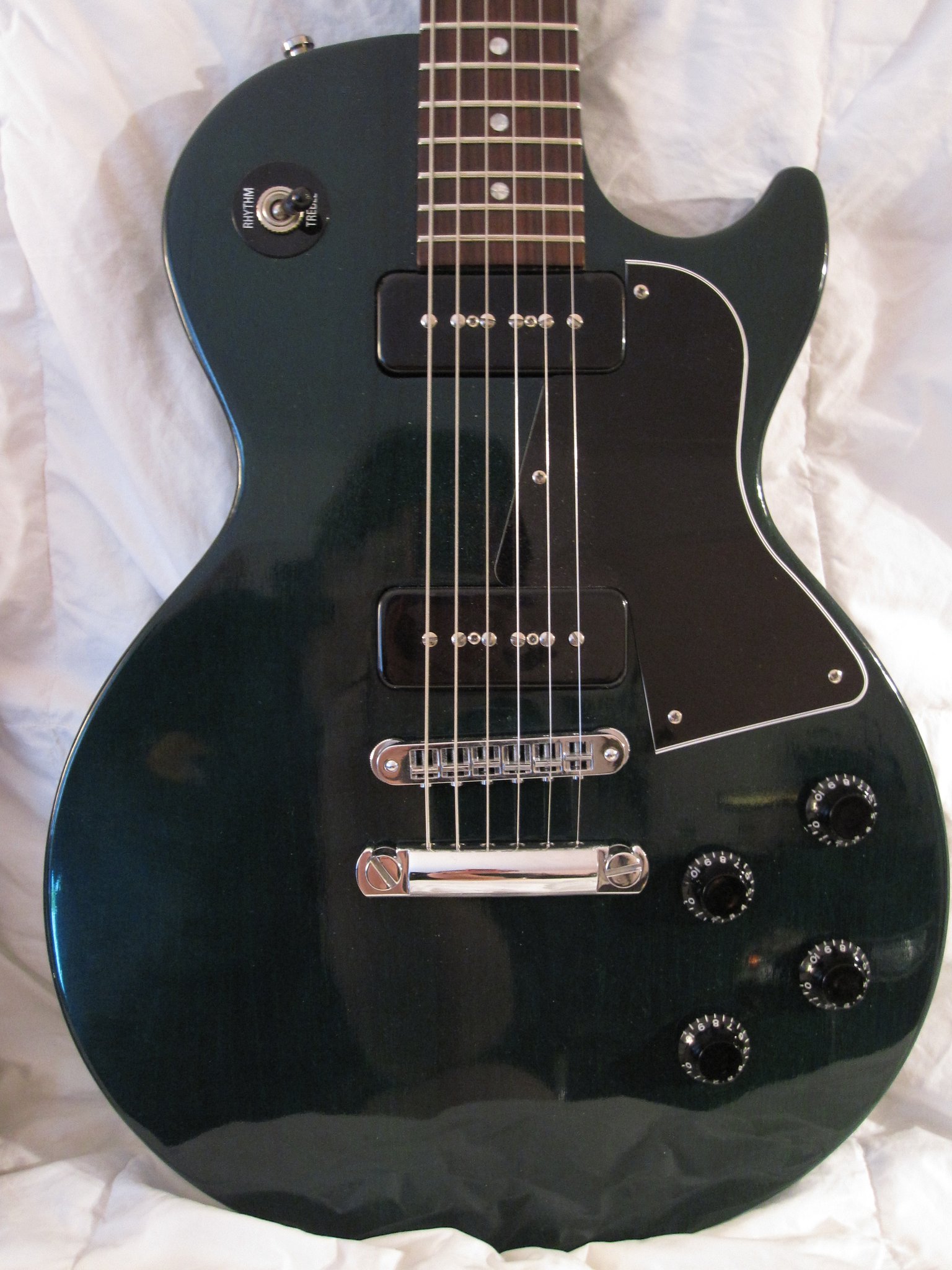
Gibson Les Paul Special 1998 Spearmint. Photo by A Gibson Man. Licensed under CC BY-SA 3.0. Via Wikimedia Commons. Gibson
Les Paul Special
1955
Dan Armstrong modified it. Marc Bolan traded it in. Bob Marley bought it and made it his.
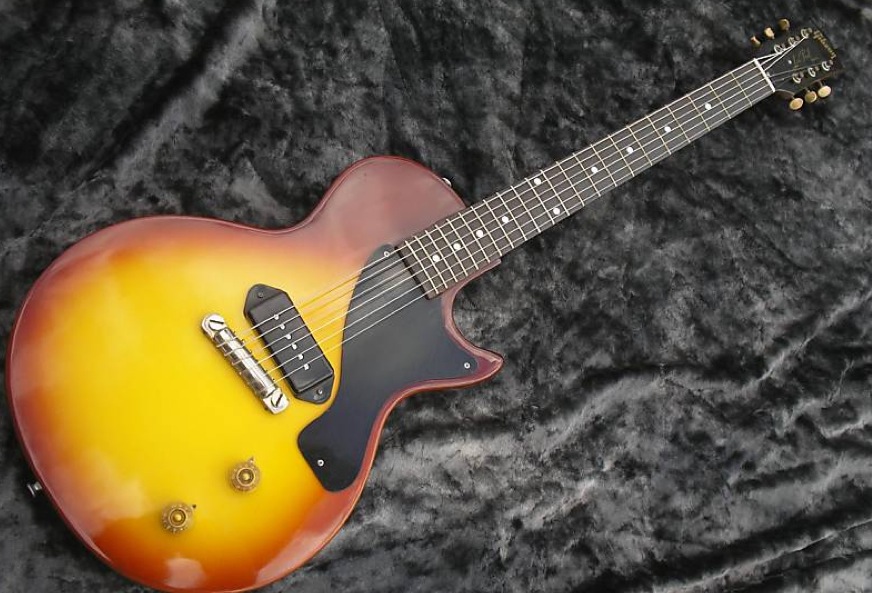
Gibson Les Paul Junior. Photo by Detroit Gorilla. Licensed under CC BY 2.0. Via Wikimedia Commons. Gibson
Les Paul Junior
1954
One pickup, two knobs, no switch. Built for beginners. Mountain and the New York Dolls never needed more.