Yamaha
AES620
Two magazine awards in its first year, gone by 2007 or 2008. Its owners just keep changing the pots.
2003. A Yamaha single-cut, drawn at the company’s USA Custom Guitar shop and built in Korea, gets an Editor’s Pick from Guitar Player at $499 street. It isn’t a Les Paul. It isn’t trying to be one. Within five years you can’t buy a new one.
- Introduced
- 2003
- Type
- Solidbody electric
- Class
- Production
Have a photograph of this guitar? Send a picture
The short version
1991
The first AES
The AES-1500, a hollow with a block under the bridge. Same three letters, different guitar.
1998
The bolt-ons
The AES-500 and AES-800, built in Taiwan, the shapes the 620 was drawn to update.
2003
The AES620
Set neck, two humbuckers, strings through the body. The service sheet is dated June.
2003
Two awards
A “1 Award” from Guitar One in October and an Editor’s Pick from Guitar Player, in May or November depending on which Yamaha page you read.
2005
Three more 620s
A left-handed one, a chambered HB with an “F” hole, and Sammy Hagar’s red SH.
2007
Gone
Discontinued in 2007, or made through 2008. The accounts don’t agree.
Side A
A1
An award for $499
- A guitar magazine has a new Yamaha on the bench. Single cutaway, beveled. A top they call radically contoured. A bookmatched maple veneer with the wood showing along the edge, which they put in quotes as “binding.” Abalone dots. Knobs sunk into the face.
Then the little things a player notices. The jack sits at the butt of the body, in line with the neck. There are two strap buttons on the bottom, so you can move the hang point. The strings anchor through the body.
Street price: $499. Guitar Player made it an Editor’s Pick. Which issue depends on which of Yamaha’s own press pages you read. One says May, the other November. Guitar One gave it a “1 Award” that October.
Two awards in its first year. You’d think that would be the start of something.
A2
Not a Les Paul, not a Pacifica
The job was a single-cut Yamaha could stand next to a Les Paul and still sign. Set neck, two humbuckers, one cutaway, a contoured top. Same neighborhood of outline. Different everything else.
The AES name was older than this guitar. The AES-1500 of 1991 was a hollow. The AES-500 and AES-800, built in Taiwan in the late 1990s, had bolt-on necks, and the 620 was drawn to update them. It also wasn’t the SG-2000, Yamaha’s through-neck from 1976, or the bolt-on Pacifica. It was the solid in the AES line, with the neck glued in.
Yamaha designed it at its USA Custom Guitar shop and built it in Korea. One Australian shop dates a blue one to 2000. Yamaha’s own dates, the service manual, and the review all say 2003.
A3
The bridge is the Yamaha part
Yamaha’s own history of its guitars singles out the bold contours, the cutaway, and the bridge. The strings run through the body to chromed anchors, with a low-mass Tune-o-matic-style bridge on top. One shop calls it a stopbar. The review and the catalogues say through-body.
The pickups depend on who’s describing them. Yamaha’s sheet says two Alnico V humbuckers and prints no brand. The press and most owners say a Seymour Duncan JB at the bridge and a Yamaha Alnico at the neck. One 2004 guitar has a Duncan Designed JB. Those aren’t the same pickup. Check yours.
The wood depends on the source too. Yamaha’s sheet and press say nato, with a flame maple veneer on top. The catalogues say mahogany. The scale is 628 millimeters, which dealers round to 24.75 inches, a Gibson-ish length.
And the knobs. The October 2003 press release promised:
“Active and passive volume controls.”
The wiring drawing has two volumes, one tone, a three-way switch, and no battery. It’s passive.
Flip the record · By the numbers
$499
Street price in the 2003 Guitar Player review that made it an Editor’s Pick.
628 mm
The scale on Yamaha’s service sheet. Dealers call it 24.75 inches.
2
Strap buttons on the bottom edge, so you can choose where it hangs.
0
Batteries. The press release promised “active and passive volume controls.” The circuit is passive.
Side B
B1
Hagar’s red one
In 2005 the 620 grew a family. A March brochure introduced a left-handed version, the chambered AES620HB with Yamaha’s own “F” hole, and the AES620SH for Sammy Hagar.
The SH came out of a Hollywood custom shop, based on the award-winning 620, with a Seymour Duncan JB, a set mahogany neck, the Cabo Wabo mark at the 12th fret, and a red he wanted. It’s a different guitar from the stock one. Don’t hang his Van Halen records on either. He later moved to Gibson signatures.
Ty Tabor of King’s X played Yamahas for years. For the album XV he named an AES-920 and an AES-720, not a 620. One fan reported seeing him play a 620 for most of a show and saying he loved it. Someone else in that thread said the pickups were from a 720. That’s a sighting. The 620 never got its record.
B2
Scratchy pots and a forgotten hero
It didn’t last long. One account says discontinued in 2007. Another says it was made through 2008. Yamaha never said why it stopped, and it never published how many it made.
Owners have their theory. The pots get scratchy, and one of them thinks that’s what killed the model. Maybe. It’s a theory, not a recall.
What you can see is what happened to the guitars that stayed in people’s hands. The pots get replaced. The neck pickup gets swapped. Finding one with both still stock is the hard part now.
You can’t order one new. In 2021 one owner filmed a neck-pickup swap on a 2004. In 2022 a forum thread called it “a forgotten hero.” Forgotten by Yamaha, maybe. Not by the people still changing the pots.
The cast
The people, and the specific guitars, that made the legend.
2005
Sammy Hagar
AES620SH signature
Built on the 620, with the Cabo Wabo mark at the 12th fret and a red he picked. A different guitar from the stock one. He later moved to Gibson signatures.
2008
Ty Tabor
AES-920 and AES-720
The King’s X guitarist named those two for the album XV. One fan saw him play a 620 for most of a show, and another said the pickups were from a 720. A sighting, not a session.
Liner notes
Specs, construction, rarity, value, and every source we used.
A contoured set-neck with the strings through the body — Yamaha’s AES620, the solid in that line, not a Les Paul and not a Pacifica.
- Body
- Single-cut solid, contoured. June 2003 service sheet: Nato+Maple, 48 mm deep, 343.6 mm wide, 995.8 mm long. October 2003 Yamaha press: flame maple veneer on solid nato. Catalogues Bill Alston read: mahogany with flamed maple. Blue Book: quilted maple top. Mix flagged.
- Neck
- Set. Service sheet: nato, 21.9 mm at the 1st fret, 23.9 mm at the 12th. Catalogues: mahogany. Blue Book: maple. Ishibashi measured 21.8 mm / 23.6 mm on one 2005. Mix flagged. Not a bolt-on.
- Fingerboard
- Rosewood, 22 frets. Sheet: 43.0 mm wide at the nut end, 52.5 mm at the 12th. Radius is not on the sheet. Alston’s catalogue comparison, and dealer pastes: 350 mm (13¾"). Ishibashi measured 381 mm and calls it 15". Guitar Player: abalone dots. Blue Book: pearl. Southside: medium-jumbo. Wire size is not on the sheet. Mix flagged.
- Scale
- 628.0 mm on the June 2003 sheet. Dealers print 24.75" (628 mm). Mix flagged.
- Pickups
- Two humbuckers. Sheet: Alnico V, neck and bridge, no brand printed. Press: Alnico neck, Duncan JB bridge. Catalogues and most owners: Seymour Duncan JB and a Yamaha Alnico. Twelfth Fret, on a July 2004 guitar: Duncan Designed JB. Mix flagged.
- Hardware
- Chrome. Grover tuners on the parts list, three a side. Bridge: Ping Well TP6-05Y. Press: low-mass Tune-o-matic style. Guitar Player: strings through the body. Southside calls it a stopbar and the tuners Yamaha. Mix flagged.
- Electronics
- Two 500 kΩ volumes, one 250 kΩ tone, 0.022 µF, 3-way toggle, straight jack at the butt. Passive on the sheet. The October 2003 press says “active and passive volume controls.” The drawing has no battery.
- Finish
- Launch, sheet and press: Translucent Dark Red, Royal Blue, Faded Burst. Neck black, on the sheet. Alston’s later catalogues add Charcoal Gray.
- Nut
- Graphite, on the sheet. Board width at the nut end 43.0 mm. Ishibashi measured a 42.6 mm nut on one 2005. Southside prints 43 mm. Mix flagged.
Open the full research fileConstruction details, the complete player record, production numbers, dated value estimates, and sources
Classic living example = Korea AES620, service sheet June 2003 (PDF-K47, Hamamatsu). No current AES620 SKU this pass. AES-1500 (1991) is the hollow. AES-500 / AES-800 are the late-1990s bolt-ons this top updates. AES620HB, AES620L, and AES620SH are the other 620s, not this table. Pacifica is the bolt-on Strat-layout. SG-2000 is the 1976 through-neck. SA2200 is the Japan center-block thinline. No Gibson SKU. Mixed inch/mm flagged. Do not average 628.0 mm with a dealer’s 24.75", 350 mm with 381 mm, 43.0 mm with 42.6 mm, or 21.9 / 23.9 mm with 21.8 / 23.6 mm. Do not average nato, mahogany, and Blue Book’s maple neck.
Construction
The job was a single-cut Yamaha could stand next to a Les Paul and still sign. Contoured. A set neck. Two humbuckers. The strings running through the body.
The AES name is older than this guitar. Yamaha’s 60th chronology puts AES-1500 in 1991: a hollow, a block only under the bridge, a P-90-sized humbucker, a Bi-Sound switch. Japan. Alston still finds it in catalogues into 2016. That is the other object. AES-500 and AES-800 are the guitars Guitar Player says this top was drawn to update. Alston: Taiwan, 1998–2000, bolt-on. Not this joint.
This plate starts in 2003. The chronology lists the AES620 there: bold contours, a fine cutaway, a bridge it treats as the distinctive part. The service manual is PDF-K47, Hamamatsu, June 2003. That is where the sheet was issued, not a claim the guitar was built in Japan. Guitar Player reviewed one. Yamaha’s own pages do not agree which issue. The 19 December 2003 reprint says May 2003. The 3 October 2003 award note says the November 2003 issue, and an Editor’s Pick. Guitar One, October 2003, gave it a “1 Award.” Keep May and November. Southside, in Brisbane, dates one blue guitar to November 2000. The chronology, the manual, and the review do not. 2003 is the launch. 2000 is that shop’s date on one instrument.
Designed at Yamaha’s USA Custom Guitar shop. The press does not print a city for that shop. Built in Korea. Guitar Player had a bookmatched maple veneer, abalone dots, and exposed wood along the edge, which they put in quotes as “binding.” A beveled cutaway. A top the review calls radically contoured. Knobs sunk into the face. Jack at the butt, in line with the neck, and two strap buttons on the bottom so the hang point can move. Street in that review: $499.
The wood is a fight. Do not pick a tree. The sheet says body Nato+Maple, neck nato, 48 mm deep. The October 2003 press, the paragraph Alston quotes: solid nato, flame maple veneer, nato neck. Catalogues he read: mahogany, flamed maple, set mahogany. Blue Book: mahogany, a quilted top, a set maple neck. Quilted is the word on the 2005 Hagar guitar, not this sheet. Nato, mahogany, and a maple neck all stay. Width 343.6 mm and length 995.8 mm are on the sheet only. No inch beside them. None invented.
Weight splits the same way. Sheet: 3.7 kg. Ishibashi, serial QLM0287R, a 2005 Translucent Dark Red: 3.48 kg. Twelfth Fret, July 2004 Royal Blue QKN0751R: 8.96 lb. Gardiner Houlgate’s March 2024 lot: 3.52 kg. Three guitars. Do not average them into the 3.7 kg.
The bridge is the Yamaha part. Sheet: Ping Well TP6-05Y. Press: low-mass Tune-o-matic style. Guitar Player: strings through the body, chromed anchors. Blue Book: six individual string tailpieces. Alston’s HB copy calls that family hardware Yamaha’s finger tailpieces. Southside calls the 620 a stopbar, and the tuners Yamaha. The parts list says Grover. Twelfth Fret, on the 2004: Grover Rotomatics. Through-body is the review and the catalogues. A stopbar is that one shop. Factory string on the sheet: D’Addario XL-120. D’Addario’s current EXL120 set of that number is .009–.042. The manual does not print the gauge.
Dealers print the scale as 24.75" and equate it with 628 mm. The sheet says 628.0 mm. Mix flagged. Do not average. Radius is not on the sheet: Alston and the dealer pastes say 350 mm, Ishibashi measured 381 mm (15") on the 2005, and Southside prints a slim C the sheet never letters. Nut is graphite, board 43.0 mm at the nut end. Ishibashi’s nut on that 2005 is 42.6 mm. The rest of those splits are in the table.
Pickups, same caution. The sheet says two humbuckers, Alnico V, both positions, and prints no brand. The press: a Duncan JB at the bridge. Catalogues and most owners: a Seymour Duncan JB and a Yamaha Alnico neck. Twelfth Fret, on QKN0751R: a Duncan Designed JB. A 2004 owner who filmed a neck swap called the stock neck a Yamaha/Daewon. Do not collapse Duncan, Seymour Duncan, and Duncan Designed. The press also says “active and passive volume controls.” The circuit is passive: two 500 kΩ volumes, one 250 kΩ tone, 0.022 µF, no battery. Players have called the pots scratchy (Seymour Duncan forum, July 2007; Yamaha Musicians, June 2022). One of them thinks the pots killed the model. That is a theory. Yamaha did not print a reason.
Launch colors, sheet and press: Translucent Dark Red, Royal Blue, Faded Burst. Neck black, on the sheet. Alston’s later catalogues add Charcoal Gray. A March 2005 Australian brochure introduces the left-hand AES620L, the chambered AES620HB with Yamaha’s own “F” hole, and the Sammy Hagar AES620SH as new that spring. Blue Book runs the left-hand 2003–08, same window as the right-hand guitar. Keep the brochure’s 2005 “new” and Blue Book’s 2003. The 720 wears DiMarzios. The 920 is the Japan flagship in that catalogue, covered Duncan ’59s. Not this table.
Not a Les Paul (gibson-les-paul-standard). Same neighborhood of outline. Different factory, a top the sheet calls Nato+Maple, a Ping Well bridge, Korea. Not an SG-2000 (yamaha-sg-2000): 1976, through-neck, T-Cross, brass under the bridge, Hamamatsu. Not a Pacifica (yamaha-pacifica): 1990, bolt-on, Strat layout. Not an SA2200 (yamaha-sa2200): Japan, a center block, f-holes, 1991. No Gibson SKU.
When it stopped is the other date. Twelfth Fret: around 2003, then discontinued 2007. Blue Book: manufactured 2003–08. Alston’s comparison of the 620, the SH, and the HB is headed 2005–2007, his catalogue window, not a birth. A Reverb listing claims a 2008 Korea guitar. Keep 2007 and 2008.
Players
Do not hang a Les Paul session on this plate. Do not hang Sammy Hagar’s Van Halen or Chickenfoot records on a stock AES620. Do not file Ty Tabor’s XV here. He said what he used, and it was not this model.
Sammy Hagar. The signature is the AES620SH, not the guitar in the table. Yamaha’s 2005 copy: Hollywood custom shop, based on the award-winning 620, his own touches, a figured maple veneer, a Seymour Duncan JB, a set mahogany neck, the Cabo Wabo mark at the 12th, a red he wanted. Alston: Korea, Red Rocker Red. Wikipedia: he has since moved to Gibson signatures. No song on either guitar is pinned here. The inlay and the red are the other object.
Ty Tabor. King’s X. His own account of XV (Guitar Site, 2008): Yamahas for years, and on that record primarily an AES-920 and an AES-720, plus the Strat Elite from the first four albums. Not a 620. A Seymour Duncan forum thread opened 30 November 2005 has a report that he played a 620 for most of a King’s X night instead of a signature model, and that he said he loved it. A follow-up in that thread says those were 720 pickups, DiMarzios, not the JB and the Yamaha Alnico. A stage report, then a pickup correction. Not an album credit. The AES he has actually named on a record stays the 920 and the 720.
Also known to play stays empty on purpose. No second player with a stock AES620 on a named track turned up in a magazine, a maker page, or an interview this pass. Owner clips are not a cast.
Rarity
You cannot order a new AES620 from Yamaha. Musician’s Friend’s new page is unavailable. Audiofanzine, this pass: no dealer has one. The Korea solid is the guitar. The left-hand, the chambered HB, and the Hagar SH are the 2005 brochure’s other models. The 720 and the Japan 920 sit in Alston’s catalogues beside them. None of those is this table.
Yamaha does not publish AES620 unit totals. None invented. Serials date a guitar when a shop has done the work. They do not count a year. Twelfth Fret dates QKN0751R to July 2004, Korea. Ishibashi dates QLM0287R to 2005. That is two stamps, not a census. Southside’s November 2000 is one shop’s heading. It is not a first-year population.
What is actually thinner: a 2003 guitar you can separate from the Charcoal Gray catalogues; one that still has the original pots and the original neck humbucker, because both get swapped; a left-hand, which is the other SKU. Hagar’s red SH is one signature run. It is not a tax on this model.
Value
Informal estimate, 6 October 2026. Not an appraisal.
Ask versus sold, labeled. No celebrity hammer on a stock AES620 turned up. No invented medians or factory counts. Do not convert dollars, euros, pounds, or Australian dollars into each other.
New street. None. Guitar Player, in the review Yamaha reprinted from 2003: $499 street. Musician’s Friend’s AES620 page is unavailable and the page data still shows $499.99. That is not a cart you can press. The March 2005 Australian brochure prices the left-hand, the HB, and the other new models. It does not print a 620 RRP in the pages consulted. None invented for this SKU.
Used. Audiofanzine’s argus, this pass: €314, marked “cote à confirmer,” calculated on 6 listings and sales. One ask on that page, posted about two months ago, excellent, with a case: €250 (260.25 € including their fee line). Ask, not a hammer. A Guitar Center Huntsville used honeyburst, SKU 121561721, was indexed at $399.99, marked down from $499.99. The page itself did not open. Ask, not confirmed sold. Reverb’s Price Guide did not return a band for this model. Blue Book’s dollar guide is behind a login. No clean 2024–26 US hammer isolated. Don’t invent a midpoint.
Older sold, not a 2026 series. Gardiner Houlgate, 5 March 2024: estimate £200–300, sold £200, amber flame, 3.52 kg, a Seymour Duncan described as installed at the bridge. One lot. Southside, Brisbane, 12 February 2026: the blue guitar they date to November 2000, sold $883 AUD. Named hammers. Do not average a 2024 English auction with a 2026 Australian sale, and do not treat either as a US street.
There is no separate vintage band above the used one. The whole run sits in the 2000s. A Hagar SH, if one surfaces with the inlay, is the other guitar.
See also
- gibson-les-paul-standard — the single-cut this outline is negotiating with; not this factory, not this bridge
- yamaha-sg-2000 — 1976 through-neck, T-Cross, brass under the bridge; not this set-neck
- yamaha-pacifica — 1990 bolt-on Strat-layout; not this solid
Sources
- Yamaha AES620 service manual, PDF-K47, June 2003 (ManualsLib) — set neck; 628.0 mm; Nato+Maple; 48 mm depth; 343.6 × 995.8 mm; 3.7 kg; rosewood; 22 frets; 43.0 / 52.5 mm board; nato neck 21.9 / 23.9 mm; graphite nut; Ping Well TP6-05Y; Grover; D’Addario XL-120; 500 kΩ × 2, 250 kΩ, 0.022 µF; Alnico V humbuckers, both positions; TDR, Royal Blue, Faded Burst; black neck
- Yamaha USA, 3 October 2003, “Award Winning Yamaha AES620” — USA Custom Guitar shop; nato body and neck; flame maple veneer; Duncan JB; “active and passive” volumes; TDR, Royal Blue, Faded Burst; Guitar One October 2003 “1 Award”; Guitar Player cited as November 2003
- Yamaha USA, 19 December 2003, *Guitar Player* reprint — $499 street; AES500 / AES800 as the profiles being updated; Korea; through-body; butt jack; two bottom strap buttons; abalone dots; bookmatched veneer; footer says May 2003
- Yamaha, guitar 60th chronology — AES-1500 in 1991 (hollow, block under the bridge, P-90-sized humbucker, Bi-Sound); AES620 in 2003. Page blocked on fetch; chronology text from the public page
- Bill Alston, The Yamaha AES Guitars (Buzzard’s file, updated July 2020) — catalogues say mahogany, Yamaha’s site says nato; 350 mm radius in the 620 comparison; colors including Charcoal Gray; 620 / SH / HB window he heads 2005–2007; AES-500 and 800 in 1998–2000; AES-1500 from 1991 into at least 2016; 720 and 920
- Blue Book of Guitar Values, Yamaha AES solidbody series — AES 620 mfg. 2003–08; mahogany / quilted top / set maple neck; 24.75 in.; Seymour Duncan JB; pearl dots. Dollar guide behind a login
- Southside Guitars, Hall of Fame, 26 February 2026 — shop date November 2000; mahogany; slim C; 24.75" (628 mm); 13.75" (350 mm); medium-jumbo; 43 mm nut; sold 12 February 2026 for $883 AUD. Their year does not match Yamaha
- The Twelfth Fret, used AES620 — QKN0751R, July 2004, Korea; Duncan Designed JB; Grover Rotomatics; 8.96 lb; launched around 2003, discontinued 2007
- Ishibashi, AES620 QLM0287R — 2005, Korea; 3.48 kg; nut 42.6 mm; neck 21.8 / 23.6 mm; scale 628 mm (24.75"); radius 381 mm (15")
- Australian new-models brochure, March 2005 (ManualMachine) — AES620L, AES620HB, AES620SH as 2005 additions; Hagar / Cabo Wabo; HB chamber and Yamaha “F” hole
- Wikipedia, list of Yamaha signature instruments (AES620 SH) — Hagar signature based on the AES620; JB; Cabo Wabo inlay; later Gibson signatures
- Guitar Site, Ty Tabor interview, 8 July 2008 — XV: primarily AES-920 and AES-720, plus the Strat Elite
- Seymour Duncan forum, “Somebody fill me in on Yamaha’s AES,” 30 November 2005 — a 620 on a King’s X night; follow-up that the pickups were from the 720
- Seymour Duncan forum, neck pickup, 2 July 2007 — owner on the pots
- Yamaha Musicians, “a forgotten hero,” 14 June 2022 — scratchy-pot theory; not a factory recall
- vismajeure, neck-pickup swap, 22 May 2021 — 2004 Korea AES620; stock neck called Yamaha/Daewon
- Audiofanzine, AES620 petites annonces — argus €314 on 6 listings and sales, cote à confirmer; one ask €250; no dealer listing
- Gardiner Houlgate, 5 March 2024, lot 244 — sold £200; estimate £200–300; 3.52 kg
- Musician’s Friend, AES620 — new page unavailable; page data still shows $499.99
- Guitar Center, used honeyburst, SKU 121561721 — indexed at $399.99 from $499.99; page did not open this pass
Keep digging
Guitars this one gets compared to, confused with, or descended from.

2006 Gibson Les Paul Standard (SN 000660573). Photo by wetwebwork. Licensed under CC BY-SA 2.0. Via Wikimedia Commons. Gibson
Les Paul Standard
1952
Gibson made about 1,500 sunburst Les Pauls, decided nobody wanted them, and stopped. Then the British blues boom happened.
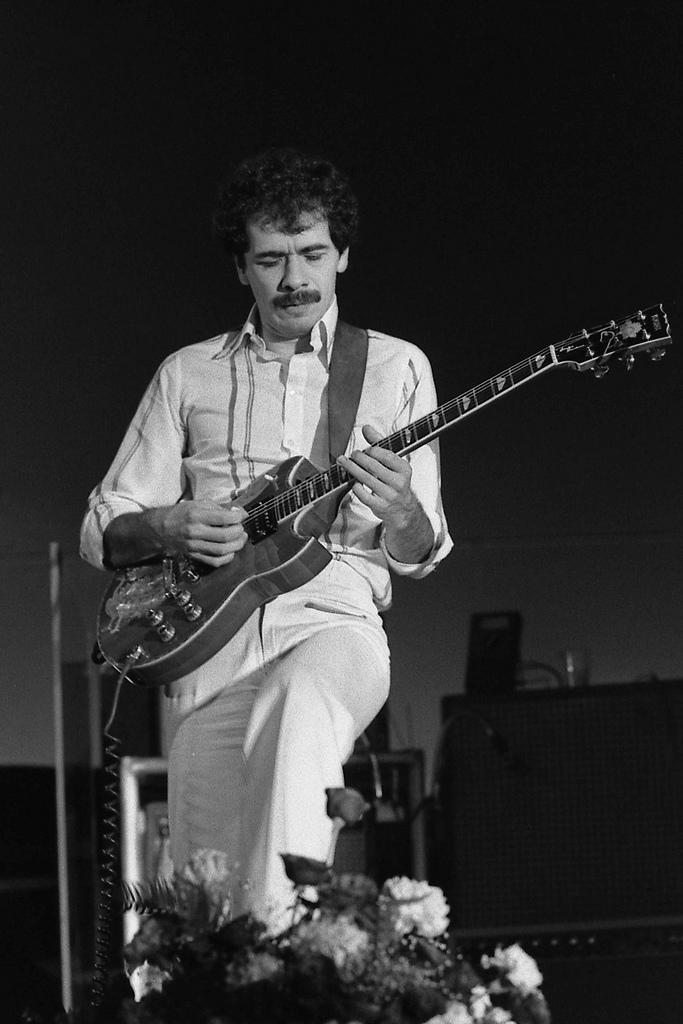
Photo: Chris Hakkens / Wikimedia Commons / CC BY-SA 2.0 Yamaha
SG-2000
1976
Santana told Yamaha to put a chunk of metal under the strings. They listened, and the notes stopped dying.
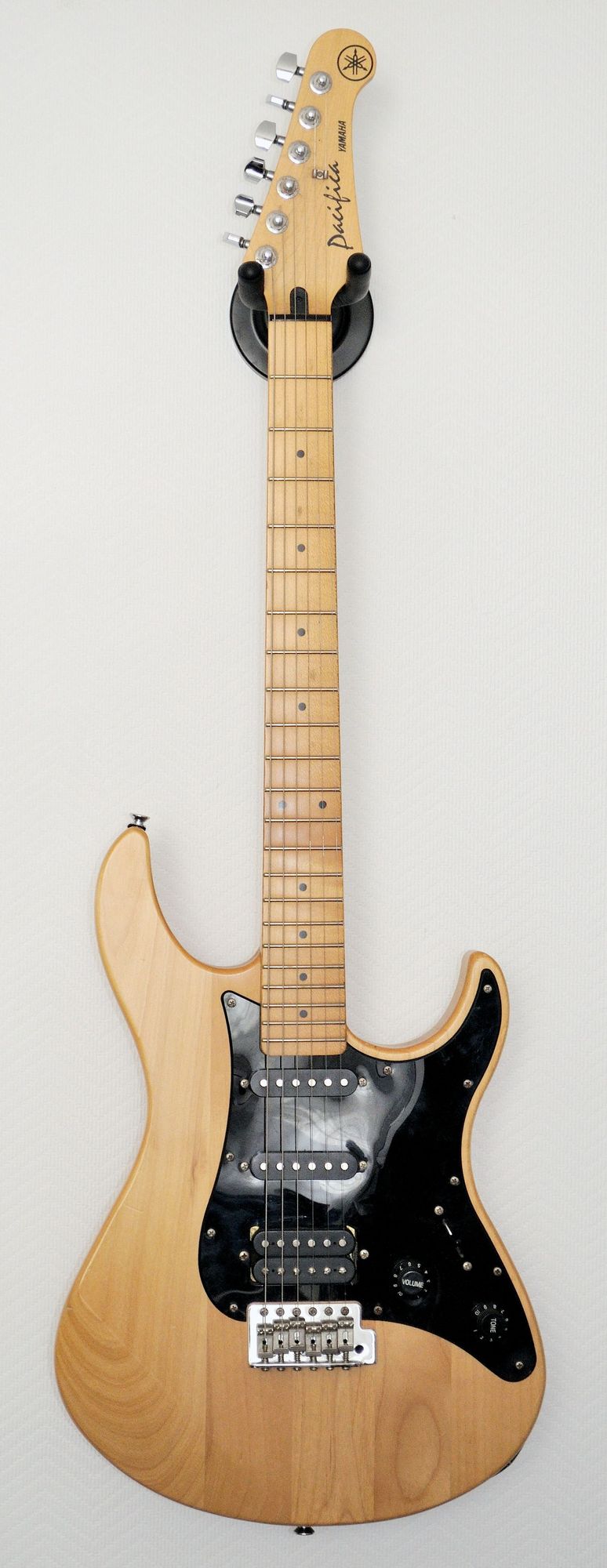
Electric guitar Yamaha Pacifica 112. Photo by BastienM. Licensed under CC BY-SA 3.0. Via Wikimedia Commons. Yamaha
Pacifica
1990
No hit record, no famous owner, no legend. Just the guitar that’s ready when a beginner is.