Eastwood
Sidejack
Mike Robinson owned a perfect Mosrite. The Sidejack is the one he could stand to scratch.
2001: a new-old-stock Mosrite Ventures, not a mark on it, won on eBay by Mike Robinson, who wanted to play it and couldn't bring himself to. So he founded a guitar company and had the shape built again, this time for the gig.
- Introduced
- 2002
- Type
- Solidbody electric
- Class
- Production
Have a photograph of this guitar? Send a picture
The short version
1963
Bakersfield
The Mosrite Ventures Model. Nokie Edwards takes the Ventures off Jazzmasters and onto it.
2001
The eBay Mosrite
Mike Robinson wins a new-old-stock Ventures and founds Eastwood in Brampton, Ontario.
2002
The first Sidejack
A Burns tremolo and a different headstock from the one you'd see now.
2004–05
A stop-tail, briefly
About two years, as Robinson remembers it, and he adds "I think."
2009
Closer to the original
The DLX gets a new tremolo, a roller bridge, and a headstock closer to the Mosrite's.
2017
The Pro DLX
A sibling in alder, bolted on, at 25.5 inches. Not the guitar most people mean.
2023
Twenty years
The DLX 20th LTD, with M-90 pickups and a roller bridge. Eastwood says 160 were made.
Side A
A1
Too good to play
In 2001 Mike Robinson won an eBay auction for a Mosrite Ventures. New old stock. Not a scratch on it.
That was the problem. He wanted a guitar to play every day, and he was not going to put a ding in that one. A museum piece is a museum piece.
The cheap copies didn't help. Teisco, Univox, and the rest missed the thing that mattered, the reversed-Stratocaster outline, like a Strat flipped over in a mirror. Same year, Robinson founded Eastwood Guitars in Brampton, Ontario, and sold direct before any shop carried them. The Sidejack was the guitar he had built so the shape could come down off the wall.
A2
Sidejack, get it?
The first one was 2002. Eastwood was still dating it there fifteen years later, and again in a 2025 video: "we made the first one in 2002." That first version had a Burns tremolo and a different headstock from the one you'd see today.
The name is a joke, and Eastwood will tell it to you:
"Sidejack, get it? The jacks are on the side."
That's where early Mosrites put the output. It was never a 1960s model name. On the first Ventures run, late in 1963, "side-jack" just means where the jack was before it moved to the pickguard. Same words. Different object.
A3
A Mosrite you can actually hold
Here's what you get on the one Eastwood still sells. Bound basswood body, a set maple neck, rosewood with dots, a 24¾-inch scale. Two P-90s, one volume, one tone, a three-way switch. A Tune-o-matic and a Mosby tremolo. About seven and a half pounds.
The neck is the part a Mosrite owner notices first. Vintage Mosrites came with teeny frets and thin necks, an inch and a half or slimmer at the nut. The Sidejack is 1⅝. That's the whole point of the exercise: the outline from Bakersfield, with a neck you can play for two sets.
And it's an offset, so somebody will call it a Jazzmaster. It isn't. There's no second rhythm circuit, no 25.5-inch scale. Just the shape, a pair of P-90s, and the tremolo.
Flip the record · By the numbers
24¾"
The scale on the DLX. Shorter than a Jazzmaster's, and not the Pro's 25.5.
1⅝"
Nut width. Eastwood's own account puts vintage Mosrites at 1½ inches or slimmer.
2002
The first Sidejack. Eastwood was still dating it there fifteen years later, and again in 2025.
160
The 20th LTD run. One limited build, not a count of the model.
Side B
B1
The hardware wouldn't sit still
The name stayed put. Everything bolted to it moved.
Robinson, looking back on a 2017 desk video, remembers the old headstock running from 2002 to 2006, "I think," and a stop-tail version for only about two years, 2004 and 2005, "I think." His memory, not a catalog, and he says so.
The 2009 DLX shipped with a new tremolo, a roller bridge, and a headstock closer to the Mosrite original. In 2017 came the Pro DLX: alder instead of basswood, bolted on instead of set, more offset, a Jazzmaster-style tremolo, and a 25.5-inch scale. It's a sibling. Don't average it into the DLX, and don't read its scale onto this one.
B2
Not on "Walk, Don't Run"
The famous records in this shape aren't this guitar. The Ventures played Mosrites, and Eastwood's own posts don't even agree what the band did next: one says they reportedly stuck with Fenders in the studio, another says they eventually swapped the Mosrites for Jazzmasters. Either way, there was no Sidejack in the room.
Richard Lloyd of Television plays one now. Eastwood describes him "often playing Television classics using his greenburst Sidejack DLX." The classics, not the album. Marquee Moon came out in 1977, twenty-five years before there was a Sidejack.
The baritone gets around too. Eastwood says Pat Smear had an early Sidejack Baritone at the 2009 MTV awards, the Foo Fighters doing the Sex Pistols' "God Save the Queen." Richard Hawley told an interviewer about Hollow Meadows:
"We used a couple of Eastwood guitars – an Eastwood 12-string and an Eastwood Baritone – a lot on the album."
He didn't say Sidejack. Eastwood's artist page says he's often seen with a Sidejack Baritone DLX. Keep both.
B3
Twenty years, 160 guitars
For the twentieth, Eastwood made a dressed-up DLX: M-90 pickups, branded knobs, a roller bridge, a MosLike vibrato. They say 160 were made, in eight finishes. One reviewer weighed his at 7.6 pounds and called the M-90 a P-90 design, which is about right for a guitar whose whole job is to be the practical version of something.
You can still order a new Sidejack. The plain DLX, the stop-tail Standard, the baritone, the Bass VI. Nobody has published how many there are, and that's fine. It was never meant to be counted. It was meant to be played.
The whole idea was that the perfect one could stay perfect. That was the deal.
Put this on
You’ve read about it. Now hear it. Here’s what this guitar sounds like, and what to listen for.
God Save the Queen (MTV, 2009)
Pat Smear on an early Sidejack Baritone, by Eastwood's account. A baritone, not the six-string DLX, and the maker's word rather than a session log.
Watch it on YouTube (opens in a new tab)
The cast
The people, and the specific guitars, that made the legend.
2001
Mike Robinson
A new-old-stock Mosrite Ventures
Founded Eastwood the same year. Wanted to play his Mosrite every day and wouldn't put a ding in it.
2018
Richard Lloyd
Greenburst Sidejack DLX
Plays Television classics on it, Eastwood says. His signature Eastwood is a different model, and Marquee Moon is a 1977 record.
2009
Pat Smear
Early Sidejack Baritone
At the 2009 MTV awards with the Foo Fighters, covering the Sex Pistols. Eastwood's account only.
2016
Richard Hawley
An Eastwood baritone
Used it "a lot" on Hollow Meadows, he said, without naming the model. Eastwood says he's often seen with a Sidejack Baritone DLX. Keep both.
Liner notes
Specs, construction, rarity, value, and every source we used.
A side jack on a reverse-Strat body — Eastwood’s Mosrite you can gig, not a Ventures Model and not Airline’s glass.
- Body
- Bound solid basswood; reverse-Strat outline. Eastwood’s 2017 Pro is the one they call more offset, with the German carve. Not this line.
- Neck
- Bound maple, set. Current cart: slim tapered.
- Fingerboard
- Rosewood, dot markers. Fret count unpublished on the current DLX cart.
- Scale
- 24 3/4" (628mm) on the current DLX, Standard, and 20th LTD. 2017 Pro: 25.5". Mix flagged. Do not average.
- Pickups
- Two Vintage EW P-90s. 20th LTD and the 2017 Pro: Eastwood of Canada M-90s, which Vintage Guitar calls a P-90 design.
- Hardware
- Tune-o-matic and Mosby tremolo; Gotoh-style nickel/chrome. 20th LTD still lists a roller bridge and MosLike vibrato.
- Electronics
- One volume, one tone, 3-way. Not a Jazzmaster lead/rhythm circuit.
- Finish
- Current DLX cart: Dark Cherry, Pelham Blue, Black, Tobacco Burst. Finish chemistry unpublished.
- Nut
- 1 5/8". No millimetres on the cart. Eastwood’s 2025 account: vintage Mosrites can be 1 1/2" or slimmer.
Open the full research fileConstruction details, the complete player record, production numbers, dated value estimates, and sources
Classic living example = current Sidejack DLX (Eastwood, fetched 2 October 2026), $949. Stop-tail sibling: Sidejack Standard, $549. Sidejack DLX 20th LTD is still on the cart at $999 — Eastwood says 160 were made. Pro DLX (announced 9 October 2017) is alder, bolt-on, 25.5", and not on the Sidejack collection this pass. Baritone is 28". Bass VI is 30". Not a 1963 Mosrite Ventures (mosrite-ventures). Not Airline Res-O-Glas (airline-res-o-glas). Not a Jazzmaster. Mixed inch/mm flagged on Eastwood’s own 24 3/4" (628mm). No millimetres invented for the nut. Do not average 24.75" and 25.5".
Construction
The job was a Mosrite you could take to a gig. Mike Robinson already had a perfect one. He wanted to play it, and he would not put a ding in it.
Eastwood’s 2025 account (Freddy Angelico): in 2001 Robinson won an eBay auction for a new-old-stock Mosrite Ventures. No scratches. He wanted a daily player and would not ding the museum piece. Cheaper copies, Teisco and Univox among them, missed the reversed-Stratocaster outline. Vintage Mosrites also came with teeny frets and thin necks. Wikipedia: he founded Eastwood Guitars in 2001, in Brampton, Ontario, and sold direct before the shops. The Sidejack is the guitar he had built so the shape could leave the wall.
Eastwood, 9 October 2017: the first Sidejack was 2002. Fifteen years on, they still dated it there. A February 2025 Eastwood clip says the same: “we made the first one in 2002.” The MkI photo on that 2017 post has a different headstock and a Burns tremolo. The name is the jack. Angelico: “Sidejack, get it? The jacks are on the side.” That is a pun on where early Mosrites put the output, not a 1960s model name. On mosrite-ventures, “side-jack” means the jack location on the first Ventures run, late 1963, before it moved to the guard. Same words. Different object.
What you get, on the guitar Eastwood still sells, is bound basswood, a set maple neck, rosewood with dots, two Vintage EW P-90s, one volume, one tone, a 3-way, and 24 3/4" (628mm). Current cart, 2 October 2026: Tune-o-matic and a Mosby tremolo, average weight 7.5 lbs, slim tapered neck, $949. The 20th LTD, same scale, is the dressed-up one: M-90s, branded knobs, roller bridge, MosLike vibrato. Vintage Guitar (Pete Prown, November 2023 issue) weighed that one at 7.6 pounds and called the M-90 a P-90 design. Do not average the two weights.
The hardware moved. Robinson, on a February 2017 desk video, remembers the old headstock from 2002 to 2006, “I think,” and a stop-tail only about two years, 2004 and 2005, “I think.” His recollection, not a catalog. Eastwood’s November 2008 release: the 2009 DLX shipped with a new tremolo, a roller bridge, and a headstock closer to the Mosrite original. The same release claims a 2006 Guitar of the Year award from UK Guitar & Bass. That is Eastwood’s claim. A Harmony Central review reprinted on MyRareGuitars, submitted 28 April 2006, lists $479 paid. Historical street, not 2026.
9 October 2017. Sidejack Pro DLX. Eastwood’s own split with the DLX: Pro body more offset, German carve, alder against the DLX’s basswood, top-hat knobs, 25.5" against 24.75", bolt-on with a “peanut” neck plate against a set neck, EoC M-90s, a Jazzmaster-style tremolo, mid-D neck, 10" compound radius. Not a wire-for-wire Ventures, and not the guitar in the table above. The Pro is absent from the Sidejack collection this pass. April 2018’s Sidejack JM Pro DLX is another sibling: semi-acoustic, f-hole, Joe Maphis horns. Not this solidbody.
Not a Ventures Model. Bakersfield, 1963, German carve, Mosrite single-coils, Vibramute. Nokie Edwards took the Ventures off Jazzmasters and onto that headstock (Guitar Player). Eastwood’s own posts disagree with each other about what the band did next: the 2017 Pro announcement says they “reportedly preferred to use Fender guitars in the studio”; a May 2017 Eastwood note says they eventually swapped Mosrites for Jazzmasters. Keep both. Neither story is a Sidejack on a record. “Walk, Don’t Run” is not this guitar.
Not Airline Res-O-Glas. Wikipedia (Eastwood Guitars): after the Airline trade name in the early 2000s, Eastwood reissued Valco-era Airlines, including the J.B. Hutto outline, as wood — chambered mahogany, not two molded fiberglass halves. That revival is the other badge. Jack White’s red 1964 Montgomery Ward guitar stays on airline-res-o-glas. Supro’s Dual Tone stays on supro-dual-tone. Same company as those tributes, once. Different outline.
Not a Jazzmaster. Offset, yes. Dual circuit, no. Floating trem and 25.5" rhythm circuit, no. The 2017 Pro borrowed a JM-style trem and a 25.5" scale and is still Eastwood’s Mosrite, alder and bolt-on. The living DLX is 24 3/4" and a set neck.
Baritone (28"), Bass VI (30"), the 12-string, the lap steel, and the Delta 6 resonator sit in the same Sidejack collection. Siblings. Not this table. Eastwood did not print a country of origin on the current DLX cart. None invented.
Classic vs current: 2002 MkI — Mosrite outline, Burns trem, the other headstock — against a basswood set-neck DLX you can order in 2026, P-90s, Mosby trem, $949.
Players
Do not hang a Mosrite record on this plate. Do not hang an Airline, a Dual Tone, or a Jazzmaster here either. The Ventures’ Mosrites, Johnny Ramone’s Ventures II slab (Guitar Player), and Kurt Cobain’s Gospel (Guitar.com) are other guitars. Marquee Moon is 1977. This model did not exist. Tom Verlaine’s offset on that record is a Jazzmaster, and the year is contested on fender-jazzmaster. Deerhoof’s Eastwood is the scroll-shaped signature (Premier Guitar), not a Sidejack. Seven Nation Army is Jack White’s Kay, not a baritone Sidejack and not the Airline.
Richard Lloyd (Television). The Sidejack this plate can name on a six-string DLX. Eastwood, 16 February 2018: he is “often playing Television classics using his greenburst Sidejack DLX.” His signature is a different Eastwood, the Classic 6. The greenburst is the later guitar. Not the 1977 album.
Pat Smear (Foo Fighters). A baritone, and Eastwood’s account only. Eastwood, 31 October 2019: an early Sidejack Baritone at the 2009 MTV awards, Foo Fighters covering the Sex Pistols’ “God Save the Queen.” Not the DLX in the table. Not a studio diary for the records.
Richard Hawley. Guitar.com (Gary Walker, 5 January 2016), on Hollow Meadows: “We used a couple of Eastwood guitars – an Eastwood 12-string and an Eastwood Baritone – a lot on the album.” He does not say Sidejack. Eastwood’s artist page, 11 February 2019, says he is often seen with a Sidejack Baritone DLX. Keep both. The 12-string’s model is unpublished here. Which songs sat on which guitar is unpublished here.
Also known stays short. Maker pages repeat the same three. None invented.
Rarity
You can buy a new Sidejack tomorrow. DLX, stop-tail Standard, humbucker variants, baritones, and a 20th LTD that is still listed. This is not a closed catalog.
Eastwood does not publish lifetime Sidejack totals. None invented. The number they do print is the anniversary run: 160 of the DLX 20th LTD, eight finishes (product page, still up 2 October 2026). That is one limited build, not a census of the model.
What is actually thinner: the 2002 MkI, Burns trem and the first headstock; the short stop-tail window Robinson remembers as 2004–05; a Pro DLX, which is not on the current collection. A greenburst Lloyd played, and Smear’s 2009 baritone, are single objects if the maker’s pages are right. They are not a used DLX.
Value
Informal estimate, 2 October 2026. Not an appraisal.
Ask vs sold labeled. Celebrity lots are not-comps. No invented medians or factory counts beyond Eastwood’s own 160. A 2006 paid price of $479 is 2006 money.
New street. Sidejack DLX $949 (Dark Cherry, Pelham Blue, Black, Tobacco Burst, all listed available). Sidejack Standard, the stop-tail, $549. Sidejack DLX 20th LTD $999, four of eight finishes still available. Fetched 2 October 2026. Vintage Guitar’s November 2023 review lists the 20th at $799 — the price in that issue, not this cart. No new Pro DLX price this pass.
Used modern. Reverb Price Guide, Eastwood Sidejack DLX: $303–$452, 104 orders, Good to Mint. Named solds on that rail, not a series to average: 15 January 2026 Very Good $260; 9 January 2026 Very Good $399.99; 4 October 2025 Very Good $499.99; 9 August 2025 Mint $599. The Mint sale sits above the guide band. Pro DLX, the 2017 sibling, separate guide: $344–$613, 23 orders, Good to Mint. Not a substitute for the current basswood DLX, and not a 1963 Mosrite.
Vintage / collectible. There is no 1960s Sidejack. Early Eastwoods with the Burns trem are the scarce end of this name, and no clean sold band was isolated on the MkI this pass. Mosrite Ventures money is the other plate. Ramone’s guitar, White’s Airline, and Verlaine’s Jazzmaster are not comps.
See also
- mosrite-ventures — the 1963 Bakersfield guitar this outline nods at; “side-jack” there is a jack location, not this model
- airline-res-o-glas — Eastwood’s other revival; fiberglass Ward’s guitar, not this basswood Mosrite shape
- fender-jazzmaster — the offset this gets filed beside; dual circuit and 25.5", not a Sidejack
Sources
- Eastwood, Introducing the Sidejack Pro DLX (9 October 2017) — first Sidejack 2002; MkI headstock and Burns tremolo; Pro vs DLX: alder/basswood, 25.5"/24.75", bolt-on/set, German carve, M-90s, JM trem; Ventures “reportedly” preferred Fenders in the studio
- Eastwood, The Best Mosrite-Style Electric Guitars and Baritone Guitars — 2001 NOS Mosrite; “Sidejack, get it? The jacks are on the side”; 1 5/8" vs 1 1/2" or slimmer; C-shaped necks, roller bridges, medium jumbo frets as the series claim; Standard is the stop-tail
- Eastwood, Sidejack DLX (fetched 2 October 2026) — $949; bound basswood; Vintage EW P-90s; Tune-o-matic and Mosby tremolo; set maple; 24 3/4" (628mm); nut 1 5/8"; 7.5 lbs; slim tapered; Dark Cherry, Pelham Blue, Black, Tobacco Burst
- Eastwood, Sidejack collection (fetched 2 October 2026) — Standard $549; 20th LTD $999; Pro not on the collection
- Eastwood, Sidejack DLX 20th LTD — 160 made; eight finishes; M-90s; roller bridge; MosLike vibrato; $999
- Eastwood, Sidejack Standard — stop-tail; $549; same scale and P-90s; 7.5 lbs
- Vintage Guitar, Pete Prown, Sidejack DLX 20th LTD — November 2023 issue; “twenty years ago”; basswood; set maple; 24.75"; M-90 as a P-90; 7.6 lb; review price $799
- Wikipedia, Eastwood Guitars — founded 2001, Michael Robinson, Brampton, Ontario; Airline trade name in the early 2000s; Airline DLX is chambered mahogany, not fiberglass
- Eastwood, Richard Lloyd (16 February 2018) — greenburst Sidejack DLX on Television classics; Classic 6 is the signature
- Eastwood, Pat Smear (31 October 2019) — early Sidejack Baritone; Foo Fighters, 2009 MTV, “God Save the Queen”
- Eastwood, Richard Hawley (11 February 2019) — often seen with a Sidejack Baritone DLX
- Guitar.com, Gary Walker, Richard Hawley, 5 January 2016 — Eastwood 12-string and Eastwood Baritone “a lot” on Hollow Meadows; model name Sidejack not in the quote
- Eastwood, Re-inventing the Past (15 May 2017) — Eastwood’s line that the Ventures later swapped Mosrites for Jazzmasters; conflicts with the 9 October 2017 “reportedly Fender in the studio” line
- Eastwood, Sidejack JM Pro DLX (10 April 2018) — semi, f-hole, Joe Maphis; not the solidbody table
- Guitarsite, Eastwood release (25 November 2008) — 2009 trem, roller bridge, new headstock; 2006 Guitar of the Year claim
- MyRareGuitars, Sidejack DLX review reprint (22 June 2008) — Harmony Central review, $479 paid, submitted 28 April 2006; 24.750" scale in the reviewer’s note
- YouTube, Eastwood, From Mike’s Desk (14 February 2017) — old headstock 2002–2006 and stop-tail about 2004–2005, both “I think”
- YouTube, Eastwood, Sidejack DLX 20th LTD (28 February 2025) — “we made the first one in 2002”
- Reverb Price Guide, Eastwood Sidejack DLX — $303–$452, 104 orders, Good to Mint; named solds through 15 January 2026
- Reverb Price Guide, Eastwood Sidejack Pro DLX — $344–$613, 23 orders, Good to Mint
- Premier Guitar, Deerhoof’s Ed Rodriguez and John Dieterich (8 September 2016) — Deerhoof’s Eastwood is the scroll-bodied signature, not a Sidejack
- Guitar Player, Dave Hunter, Mosrite Ventures — Edwards off Jazzmasters onto Mosrite, 1963; Ramone’s guitar is a Ventures II slab
- Guitar.com, A Brief History of Mosrite — Cobain’s Mosrite is a Gospel
Keep digging
Guitars this one gets compared to, confused with, or descended from.
- Send a picture
Mosrite
Ventures
1963
Semie Moseley offered Nokie Edwards the guitar free. He paid $200, and the Ventures dropped their Jazzmasters.
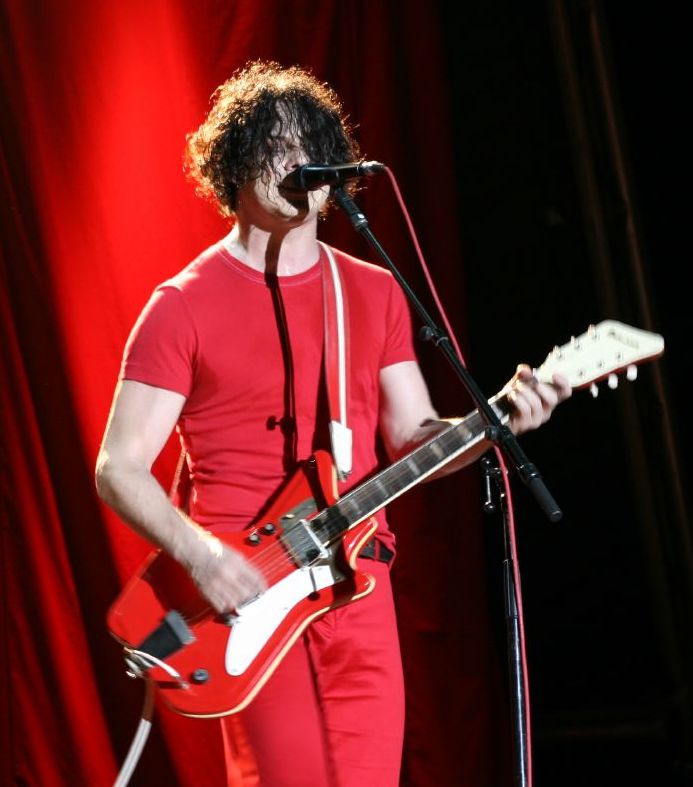
Photo: Michael Morel / Wikimedia Commons / CC BY 2.0 Airline
Res-O-Glas
1964
A fiberglass guitar from a mail-order catalog. Jack White called it a hollow piece of plastic, and meant it kindly.
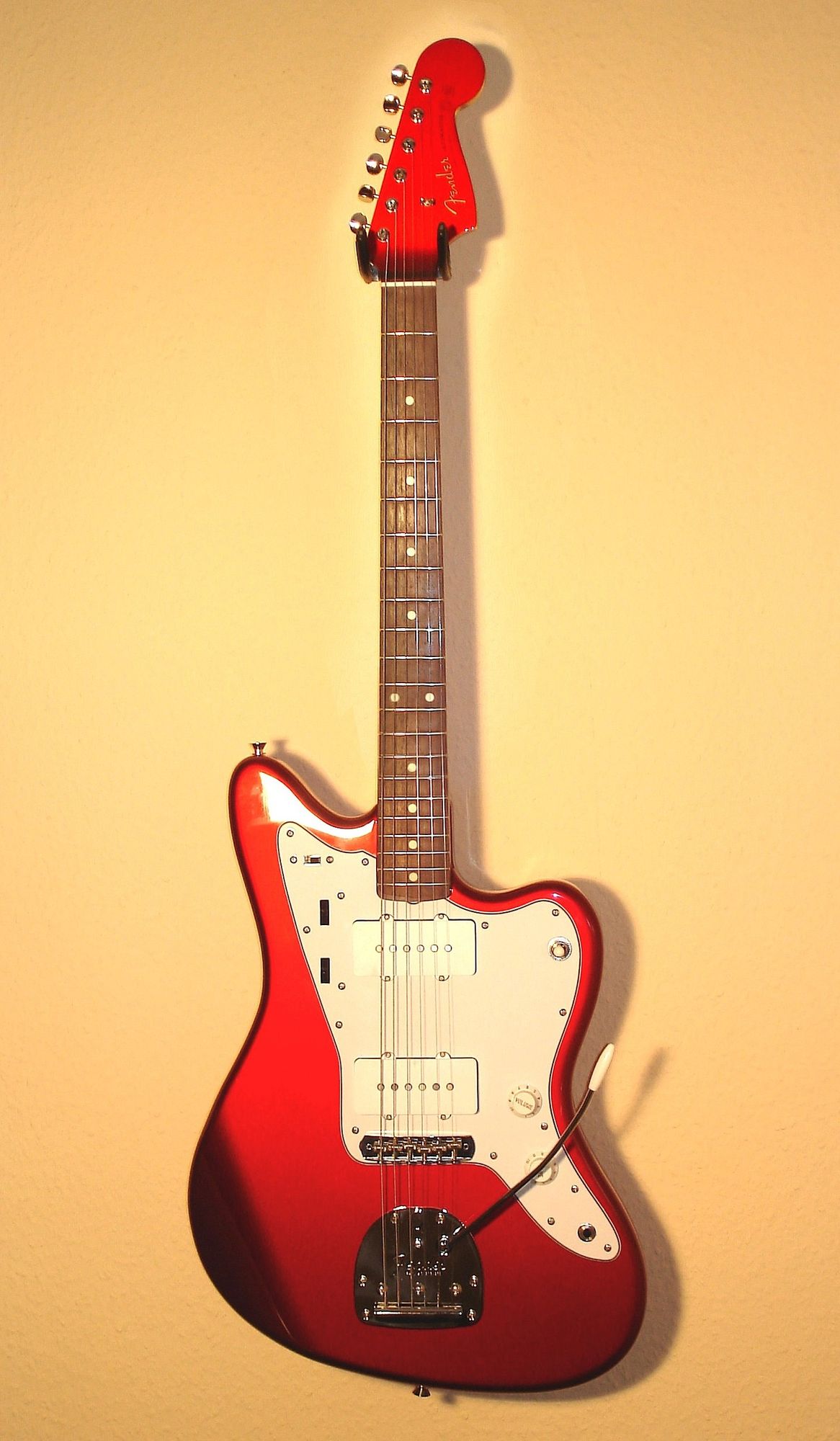
Photo: Dirk-X / Wikimedia Commons / CC BY-SA 4.0 Fender
Jazzmaster
1958
Fender built it for jazz players. Jazz players said no thanks. Surfers, punks, and noise bands said yes.