Airline
Res-O-Glas
A fiberglass guitar from a mail-order catalog. Jack White called it a hollow piece of plastic, and meant it kindly.
Chicago, 1964. If you live somewhere without a guitar shop, you pick up the Montgomery Ward catalog, flip past the fishing rods and the power tools, and order one. What shows up is angular, made of fiberglass, and has no model name on it at all.
- Introduced
- 1964
- Type
- Solidbody electric
- Class
- Production
The short version
1962
Space-age plastic
Valco introduces Res-O-Glas, “Space Age Polyester Glass,” on its Supro guitars.
1964
In the catalog
The angular Airline shows up in a Montgomery Ward catalog. The headstock just says “Airline.”
1965
The fancy one
A white three-pickup “Professional,” with a factory Bigsby, lists for $249.
1968
Lights out
Valco, by then merged with Kay, shuts down.
1973
Slidewinder
J.B. Hutto on the cover of his Delmark album with the guitar that got his name.
1985
Montreux
Rory Gallagher plays slide on a red ’65 Airline, “I Wonder Who.”
2010
“A piece of plastic”
Jack White, to Guitar Player, on the guitar he played in the White Stripes.
Side A
A1
Ordered from a catalog
People walk into guitar shops every day convinced the right guitar will make them sound great. I get it. But if you want to know where the sound really lives, look at this one: a plastic guitar from a department-store catalog that ended up in some of the most exciting hands in blues and rock.
In the early ’60s a lot of Americans bought their first guitar the way they bought a lawnmower: out of a catalog. Sears had Silvertone. Montgomery Ward had Airline.
Ward’s didn’t build guitars. A Chicago company called Valco did. Valco also built Nationals and Supros. National was the fancy name, Supro was the middle, and Airline was the catalog badge. Same factory, different paint job, different price.
This particular Airline showed up in the Ward catalog in 1964, and it didn’t even have a model name. The headstock just said “Airline.” You got two pickups, or, if you had the money, the white three-pickup “Professional” with a factory Bigsby.
A2
Built like a boat
Here’s the fun part. The body isn’t wood. It’s fiberglass. Valco called it Res-O-Glas, “Space Age Polyester Glass,” and around 1961 they started retooling part of the Chicago plant to build guitar bodies the way a boatyard builds a hull. They’d put the color right into the mold. Then two molded halves went together around a wooden spine down the middle, a rubber strip went around the seam, and screws went through the back.
It looks like a solidbody. It’s mostly hollow. Tap on it and you’ll know.
Valco built guitars the way a boatyard builds a hull. Then they sold them out of the same catalog as the fishing rods.
The pickups look like humbuckers. They aren’t. They’re fat single-coils, and they’re loud and nasty in the best way. There’s no truss rod, just a couple of bolts and a tilt adjuster, which is why some of these guitars now have necks you couldn’t play if you tried. The headstock shape changed a few times too, depending on the year and who you ask.
Nobody at Montgomery Ward thought they were making a legend. They were making something a kid in Nebraska could afford.
A3
The Chicago bluesman
For decades, the only people who cared about this guitar were blues fans. J.B. Hutto, the Chicago slide player, picked one up and made it, as Dave Hunter puts it, “his main squeeze for many years.” He’s holding it on the cover of Slidewinder, his 1973 album on Delmark. Collectors started calling it the “J.B. Hutto model.” Other people called it the “Jetsons,” because it looks like it came out of a cartoon about the future.
Valco didn’t last long enough to enjoy any of that. The company was sold in 1964, merged with Kay in 1967, and closed in 1968. The fiberglass guitars went with it.
Flip the record · By the numbers
2
Molded fiberglass halves, screwed together around a wooden spine.
0
Truss rods. Some originals now have necks nobody can play.
~10
Different Res-O-Glas models Valco was building by 1962.
$249
What the white three-pickup Professional listed for in the 1965 catalog.
Side B
B1
Before Jack, there was Rory
Rory Gallagher, the Irish blues guitarist with the beat-up Strat, bought a red 1965 Airline in London in the ’80s and used it mostly for slide. He played it at Montreux in July 1985 on “I Wonder Who.” Paul Fenton saw it at a soundcheck in Montreal in 1982, on “Secret Agent,” a guitar Gallagher had just bought.
B2
A hollow piece of plastic
And then Jack White.
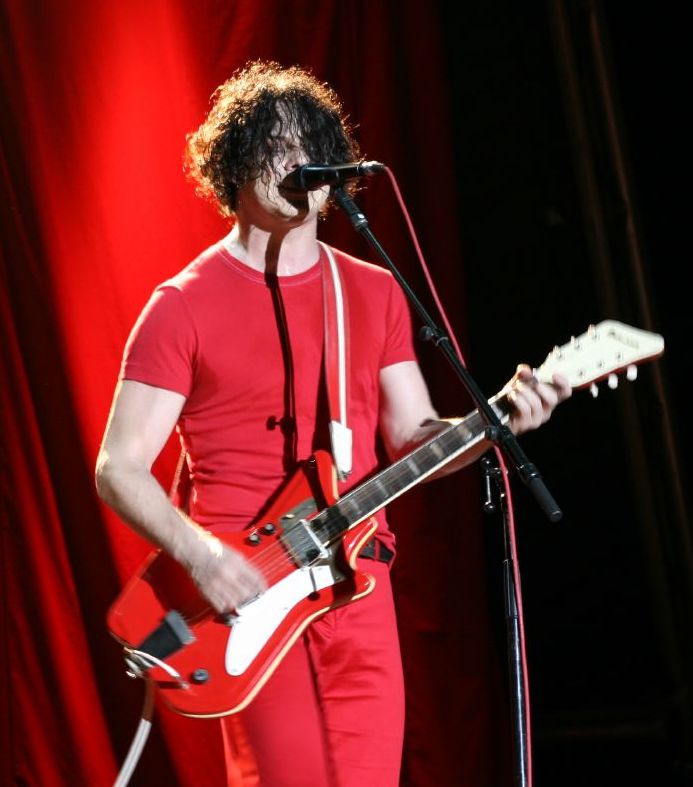
White got his red 1964 Airline from Jack Yarber, who plays as Jack Oblivian. The way Yarber tells it, he’d found a white three-pickup Professional with a Bigsby and didn’t need the red two-pickup anymore, so he sold it to White for a couple hundred bucks. White played it in the White Stripes for nearly ten years. In It Might Get Loud he says, “I play really old guitars; plastic guitars.” To Guitar Player, in 2010: “You can do it with a piece of plastic.”
A lot of guitarists in the ’90s were buying the most expensive gear they could find. White was on stage with a mail-order guitar that had no model name, and he sounded enormous.
One thing, because I hear it every week: the “Seven Nation Army” riff was not this guitar. That was a Kay archtop. The Airline is the red one you see in all the photos.
B3
Wood this time
Once White made it famous, everybody wanted one, and there weren’t enough to go around. Eastwood bought the Airline name in the early 2000s and brought the shape back, but in wood, with a chambered mahogany body, a real truss rod, and sometimes real humbuckers. Since 2024, Airline Guitars has been its own company again, family-owned, in Chicago.
They’re good guitars, and they play better than the originals. But a 1964 Airline is a slightly creaky plastic boat from a department store catalog, and that’s why people love it.
J.B. Hutto, Rory Gallagher, and Jack White all ended up with the cheap one, and none of them ever sounded cheap. The sound was never in the price tag. It was in their hands. So the next time you’re standing in a shop wondering whether you can afford to sound good, think about a plastic guitar from the Montgomery Ward catalog.
Put this on
You’ve read about it. Now hear it. Here’s what this guitar sounds like, and what to listen for.
I Wonder Who (live at Montreux)
Gallagher playing slide on his red 1965 Airline on stage in July 1985. That’s not his famous Strat.
Watch it on YouTube (opens in a new tab)
The cast
The people, and the specific guitars, that made the legend.
1973
J.B. Hutto
The unofficial namesake
Chicago slide man. It was his “main squeeze for many years,” and collectors named the model after him.
1985
Rory Gallagher
Red 1965 Airline
Bought in London in the ’80s and used mostly for slide. On stage at Montreux in July 1985.
late 1990s
Jack White
Red 1964 Airline
Played it in the White Stripes for nearly ten years. Not the “Seven Nation Army” guitar. That was a Kay.
1990s
Jack Oblivian
The guy who sold it
Sold Jack White the red one for a couple hundred bucks after he found a white three-pickup with a Bigsby.
1990s
PJ Harvey
White three-pickup Professional
Photographed with the fancy version, factory Bigsby and all.
Liner notes
Specs, construction, rarity, value, and every source we used.
Two molded fiberglass halves, two fat single-coils, and a Montgomery Ward badge — Airline Res-O-Glas, not Supro’s Dual Tone.
- Body
- Two molded Res-O-Glas (fiberglass) halves, rubber or vinyl seam, wood center block (maple typical; Airline Guitars also names poplar). Angular double-cut. Looks solid; mostly hollow.
- Neck
- Bolt-on wood. Steel-reinforced (Reverb News). Wright’s Valco Res-O-Glas necks are magnesium-reinforced Kord-Kings. Mix flagged. No adjustable truss rod; tilt screws.
- Fingerboard
- Rosewood, block markers, 20 frets (Reverb News). Bound on the Bonhams Gallagher 1965. Zero fret on some (Gazette Drouot; Twang listing). Mix flagged.
- Scale
- 25" on a named 1965 dealer listing (Twang) and a 1966 (Golden Pickups). 3/4-scale examples: 22" (VintageSilvertones 7270); 22 1/4" (Killer Vintage). Current Jetsons ’59 2P: 25 1/2" (648 mm). Mix flagged. Do not average.
- Pickups
- Two large single-coils in humbucker-sized covers (gold-foil typical). Not humbuckers.
- Hardware
- Adjustable rosewood or ebony bridge; plate / stop tailpiece. Kluson Deluxe on the Gallagher 1965. White three-pickup Professional: factory Bigsby.
- Electronics
- Volume and tone per pickup; 3-way labeled “Tone Switch” on many. Master volume by the jack on many two-pickup examples (Reverb News; Bonhams: five knobs). Mix flagged.
- Finish
- Color in the glass, not a later paint (Wright). Red typical on the two-pickup; white on the Professional.
- Nut
- Nylon (Bonhams). Gazette Drouot: 44.2 mm. Mix flagged. No inches invented from that millimetre.
Open the full research fileConstruction details, the complete player record, production numbers, dated value estimates, and sources
Classic living example = vintage Valco Montgomery Ward Airline Res-O-Glas, the unnamed angular two-pickup (unofficially J.B. Hutto / Jack White / “Jetsons”). Supro Dual Tone is the other Valco two-pickup — not this table. National MAP, Martinique, wood Town & Country, and 3/4-scale Res-O-Glas stay off. Current Airline Guitars Jetsons ’59 2P is chambered mahogany, not fiberglass. No Gibson SKU. Mixed inch/mm flagged on Gazette’s 44.2 mm nut and the living 25 1/2" (648 mm).
Construction
The job was a department-store electric Chicago could mold instead of carve. Montgomery Ward put it in the catalog so a kid without a guitar shop could order one. Not a Fender. Not a Gibson. Same factory as Supro and National. Different badge, different outline.
Airline was Ward’s house name — Sears had Silvertone. Ward did not build guitars. Valco did, in Chicago: Victor Smith, Al Frost, Louis Dopyera — V.A.L. plus Co. (Vintage Guitar, Michael Wright). National sat above. Supro sat in the middle. Airline was the catalog badge. Harmony, Kay, and Danelectro also filled Ward books under Airline; the fiberglass ones everybody means came from Valco.
Wright: Valco called the material Res-O-Glas, “Space Age Polyester Glass,” first on Supro, 1962. Color went in before the mold. Bodies look solid. They are two molded halves, a wood spar down the middle for the neck, pickups, and tail, a rubber strip on the seam, screws through the back. Airline Guitars (Pete Williams, 17 June 2026): starting around 1961 Valco retooled part of the Chicago plant and built bodies the way a boatyard builds a hull. Premier Guitar (Wizard of Odd): by 1962 a large portion of the factory was on fiberglass, about ten Res-O-Glas models. Guitar.com (Justin Beckner, 16 October 2024): Res-O-Glas 1962–1967. Keep 1961, 1962, and 1967. This silhouette is later.
This guitar had no factory model name. Eastwood (31 July 2015): it debuted in a Montgomery Ward catalog in 1964 with only “Airline” on the headstock. Two-pickup standard, or a white three-pickup Professional with a factory Bigsby. Dave Hunter (365 Guitars, 2013): 1964 Airline Res-O-Glas; unofficially the J.B. Hutto model, also “Jetsons.” Reverb Price Guide: years of production 1964–1968. Wright: all Valco Res-O-Glas gone by ’67. Keep 1964 as the start of this outline. Keep 1967 and 1968 as the end. This plate starts in 1964.
Not a Dual Tone (supro-dual-tone). Dual Tone is Supro’s two-pickup Spanish, wood “No Mar” from 1954, later a Res-O-Glas body of its own, white, single-cut. Same shop. Different badge, different silhouette. Jack White’s guitar is this angular red Montgomery Ward Airline.
What you get is two fat single-coils that look like humbuckers and are not. Volume and tone for each. A 3-way. On many two-pickup examples a master volume by the jack — five knobs, not four. Twenty frets. No truss rod. A couple of bolts and a tilt adjuster instead. Some originals now have necks so far gone you cannot play them (Eastwood). Reverb News: a narrow maple stick down the middle. Premier Guitar on Dual Tone Res-O-Glas: except for that wood center block, the glass is mostly hollow. Same formula here.
Headstocks wander. Wide Valco / “Gumby” and Fender-style six-inline both exist. Reverb Price Guide dates a 1965 change from three pickups to two and from a Fender-style angled head to a slanted 3+3. A Worthpoint note citing Tony Bacon and Ward catalogs dates Gumby to 1965 and Fender-style to 1966–67. Gallagher’s Bonhams 1965 has a Fender-style head. Keep both. Do not pick a winner.
Professional is the white three-pickup with a Bigsby on this same angular body. Eastwood puts it in the 1964 book beside the two-pickup. Premier Guitar: 1965 catalog, $249, gone by 1967. Keep 1964 and 1965. Historical list, not 2026 street.
Not the 3/4. Same glass, shorter scale. VintageSilvertones on an Airline 7270, circa 1965: 22" scale, 34.75" overall, body 13.5" wide. Killer Vintage: 22 1/4" on a 1965. Jack White used a short-scale Airline as well as the full-size (Guitar.com). Sibling. Not this table.
Not Town & Country, not MAP, not Martinique. Town & Country is wood Airline. National MAP is the map-shaped Res-O-Glas Robert Smith played. Martinique is the other Valco fiberglass Dan Auerbach is known for. Off this slug. No Gibson SKU.
Wright: Valco sold to accountant Robert Engelhardt in 1964. Kay merger 1967. Valco/Kay closed 1968.
Eastwood bought the Airline name in the early 2000s (Reverb News: producing since 2001) and reissued the outline as wood: chambered mahogany, truss rod, real humbuckers on some. Wikipedia: Airline Guitars became independent under Chicago family ownership in October 2024. Living cart this pass is wood Jetsons, not two molded halves of 1960s glass. The ’59 in the reissue name is a marketing year. It is not this guitar’s intro.
Classic vs current: 1964 Valco Montgomery Ward Airline — two molded Res-O-Glas halves, two fat single-coils, no truss rod, unofficially Hutto — against a chambered-mahogany Jetsons you can order from Airline Guitars in 2026.
Players
Do not recruit Dual Tone, MAP, or Martinique players as if they were this guitar. David Bowie’s Dual Tone stays on supro-dual-tone. The Cure’s National MAP stays off. Dan Auerbach’s Martinique stays off. Seven Nation Army is Jack White’s Kay archtop, open A, not this Airline.
J.B. Hutto. The nickname. Chicago slide guitar. Hunter: before the late 1990s this guitar was the J.B. Hutto model to the few who cared — “the Chicago bluesman who made one his main squeeze for many years.” Pictured with it on Slidewinder (Delmark, 1973). Unofficial. Not a factory signature.
Jack White. The guitar people mean. Red 1964 Montgomery Ward Airline Res-O-Glas. White, to Guitar Player, 2010: “You can do it with a piece of plastic.” It Might Get Loud, via Reverb News: “I play really old guitars; plastic guitars.” Reverb News: he played it with the White Stripes for nearly ten years; he calls it a “hollow piece of plastic.” Do not pin Seven Nation Army as this guitar — Guitar World (Jackson Maxwell, 11 November 2025) and Guitar.com put that riff on the Kay.
How he got it is a named sale. Michael Hurtt, Metro Times, via Glorious Noise: Jack Yarber (Jack Oblivian) sold White the red two-pickup after Yarber found a white three-pickup with a Bigsby; “a couple hundred bucks.” Third Man: about $250 from someone in the Oblivions. Keep both. White also used a short-scale Airline and a wood Town & Country in the Stripes (Guitar.com). Other Airlines. This plate is the full-size Res-O-Glas.
Rory Gallagher. Ahead of White on this outline. Estate and Bonhams: 1965 Airline, J.B. Hutto style, red, two pickups, Fender-style head, bought in London in the 1980s, mainly slide. Onstage at Montreux, July 1985, “I Wonder Who.” Paul Fenton saw it at soundcheck in Montreal, 1982, on “Secret Agent,” “a guitar he had just bought.” Not his Strat. Not a Dual Tone.
Also known to play stays short. PJ Harvey photographed with the white three-pickup Professional (MyRareGuitars; Equipboard). Bonhams names her on this model. G. Love’s signature is an Eastwood/Airline wood reissue. Not a 1964 Valco. None invented.
Rarity
You cannot buy a new Res-O-Glas body from Valco. The Chicago run ended with the catalog. Living Airline Guitars and older Eastwood Jetsons are other factories on this silhouette. They are not a 1964 Ward’s guitar.
Valco did not publish Airline Res-O-Glas unit totals. Hunter, 2013: “We’re not sure quite what the actual sales figures were.” None invented. Pot codes and catalog years date a guitar. They don’t count a year.
What is actually thinner: uncracked originals with necks that still play; intact headstock badges; white Professionals with the factory Bigsby; earliest 1964 contours Eastwood treats as more “Jetsons” than the ’65–’67 run. Fiberglass from this era crazes and splits at the seam (Airline Guitars).
White’s red two-pickup and Gallagher’s Bonhams 1965 are unique objects. They are not a vintage Res-O-Glas.
Value
Informal estimate, 4 September 2026. Not an appraisal.
Ask vs sold labeled. Celebrity lots are not-comps. No invented medians or factory counts. Period $99 (Reverb News, 1964) and $99.95 (Eastwood, mid-’60s catalog) are 1960s money, not 2026 street. Professional list $249 (Premier Guitar) is the same.
New street. Living wood Jetsons on airlineguitars.com this pass, not fiberglass: Jetsons ’59 2P $1,279; 2P Standard $1,079; ’59 2P PRO $1,579; ’59 3P DLX $1,499; Jetsons Jr 2P $799 (fetched 4 September 2026). Many marked out of stock. Eastwood’s older Airline DLX / ’59 Custom carts are the previous factory on this outline.
Used modern. Eastwood and Airline Guitars mahogany reissues trade used. No clean Reverb Price Guide band isolated on the wood reissue this pass. Don’t invent a midpoint.
Vintage / collectible. US Reverb Price Guide dollar widget bot-blocked this pass. Flag: thin sold-comp access. Reverb AU Price Guide, labeled estimate from US sales: A$1,518–A$2,787 based on 60 orders, Res-O-Glass “JB Hutto” 1965 Red, Good to Mint. Named solds on that rail, not a series: 27 August 2026 Good A$2,350.19; 14 August 2026 Very Good A$2,919.04. Reverb News, 31 July 2014: $1,500–$3,000 — dated 2014. Named older ask, not a 2026 hammer: Cumberland Guitars 1965 $2,499 (listing ended). Do not average those figures.
Gallagher’s Airline, Bonhams London 17 October 2024, £19,200 inc. premium. Airline Guitars: about $25,000. That is one object. Not a comp.
See also
- supro-dual-tone — same Valco shop, white two-pickup Spanish; not this angular Airline
- danelectro-59 — another cheap catalog construction; lipstick masonite, not Res-O-Glas
- ampeg-dan-armstrong — another plastic-body electric; carved Lucite, not molded fiberglass
Sources
- Reverb News, Jack White and the Airline Res-O-Glas Guitars — 1964; J.B. Hutto nickname; $99; hollow piece of plastic; maple center; no truss rod, steel-reinforced; 20 frets; master volume; Eastwood since 2001; 2014 tape $1,500–$3,000; It Might Get Loud
- Guitar Player, Dave Hunter, Jack White — 1964 Montgomery Ward Airline Res-O-Glas; 2010 “piece of plastic”
- Dave Hunter, 365 Guitars, Amps & Effects You Must Play (2013), p. 103 — 1964 Airline Res-O-Glas; J.B. Hutto then Jack White; Jetsons; unpublished sales figures
- Vintage Guitar, Michael Wright, Supro FolkStar — Valco names; Res-O-Glas 1962, “Space Age Polyester Glass”; two-piece; Kord-King; Gumby head; Dual-Tone to Ermine White by ’64; all Res-O-Glas gone by ’67; Engelhardt 1964; Kay 1967; closed 1968
- Eastwood, The Airline of Many Names — unnamed 1964 Ward catalog debut; 2P or white 3P Professional; $99.95; two Res-O-Glas halves, white binding, center block; no truss rod; Kay merger then closed; Rory 1965
- Airline Guitars, The Airline Res-O-Glass: A Guitar Built Like a Boat — ~1961 retool; two halves, wood spar, rubber seam; no truss rod; Jack White; J.B. Hutto; Rory 1965 / Montreux 1985 / Bonhams £19,200
- Premier Guitar, Wizard of Odd, 1965 Airline Professional Vibrato — Valco 1961 retool; ~10 Res-O-Glas models by 1962; Professional white, Bigsby, $249; 1965 catalog, gone 1967
- Guitar.com, Justin Beckner, What guitars does Jack White play? — red 1964 Res-O-Glas; Airline 1958–1968; Res-O-Glas 1962–1967; $99; short-scale and Town & Country also used; Kay on Seven Nation Army
- Reverb Price Guide, Airline Res-O-Glass "JB Hutto" — years 1964–1968; 20 frets; bolt-on; 1965 change note; USD widget bot-blocked this pass
- Reverb AU Price Guide, Res-O-Glass "JB Hutto" — A$1,518–A$2,787, 60 orders, 1965 Red Good to Mint; named solds through 27 August 2026
- Bonhams, Rory Gallagher Airline, 17 October 2024 — 1965; 41" (104 cm); red; two pickups; five knobs; Brazilian rosewood; nylon nut; Fender-style head; Kluson; £19,200 inc. premium; London 1980s; Montreux 1985 “I Wonder Who”; Fenton 1982
- Rory Gallagher, Airline (JB Hutto Model) — 1965; slide; Montreux; Fenton
- Wikipedia, Airline Guitars — Ward 1958–1968; Valco / Kay / Harmony; Eastwood reissue wood not glass; independent Chicago Oct 2024
- Wikipedia, J. B. Hutto — informal J.B. Hutto model; White later
- Wikipedia, Valco — Smith / Frost / Dopyera; Supro, Airline, National; closed 1968
- Airline Guitars, Jetsons ’59 2P — chambered mahogany; 25 1/2" (648 mm); 1 11/16" nut; $1,279
- Glorious Noise / Metro Times, Michael Hurtt — Yarber sold White the red two-pickup; “couple hundred bucks”
- Guitar World, How Jack White got his Seven Nation Army guitar — Seven Nation Army is the Kay, not the Airline
- MyRareGuitars, Airline 3P Res-O-Glas — PJ Harvey on original 3P; White on 2P; Cure is National MAP; Bowie is Dual Tone
- VintageSilvertones, Airline 7270 — circa 1965 3/4; 22" scale; 34.75" / 13.5" / 1.5"; 1.75" nut
- Twang Vintage, 1965 J.B. Hutto Res-O-Glas — 25" scale; maple core; steel-reinforced; zero fret
- Golden Pickups, 1966 Airline Res-O-Glass — 25" scale; 1 49/64" nut
- Killer Vintage, 1965 Airline Res-O-Glas 3/4 — 22 1/4" short scale
- Gazette Drouot, 1965 Airline J.B. Hutto — nylon nut 44.2 mm; 3.1 kg; tilt screws
Keep digging
Guitars this one gets compared to, confused with, or descended from.
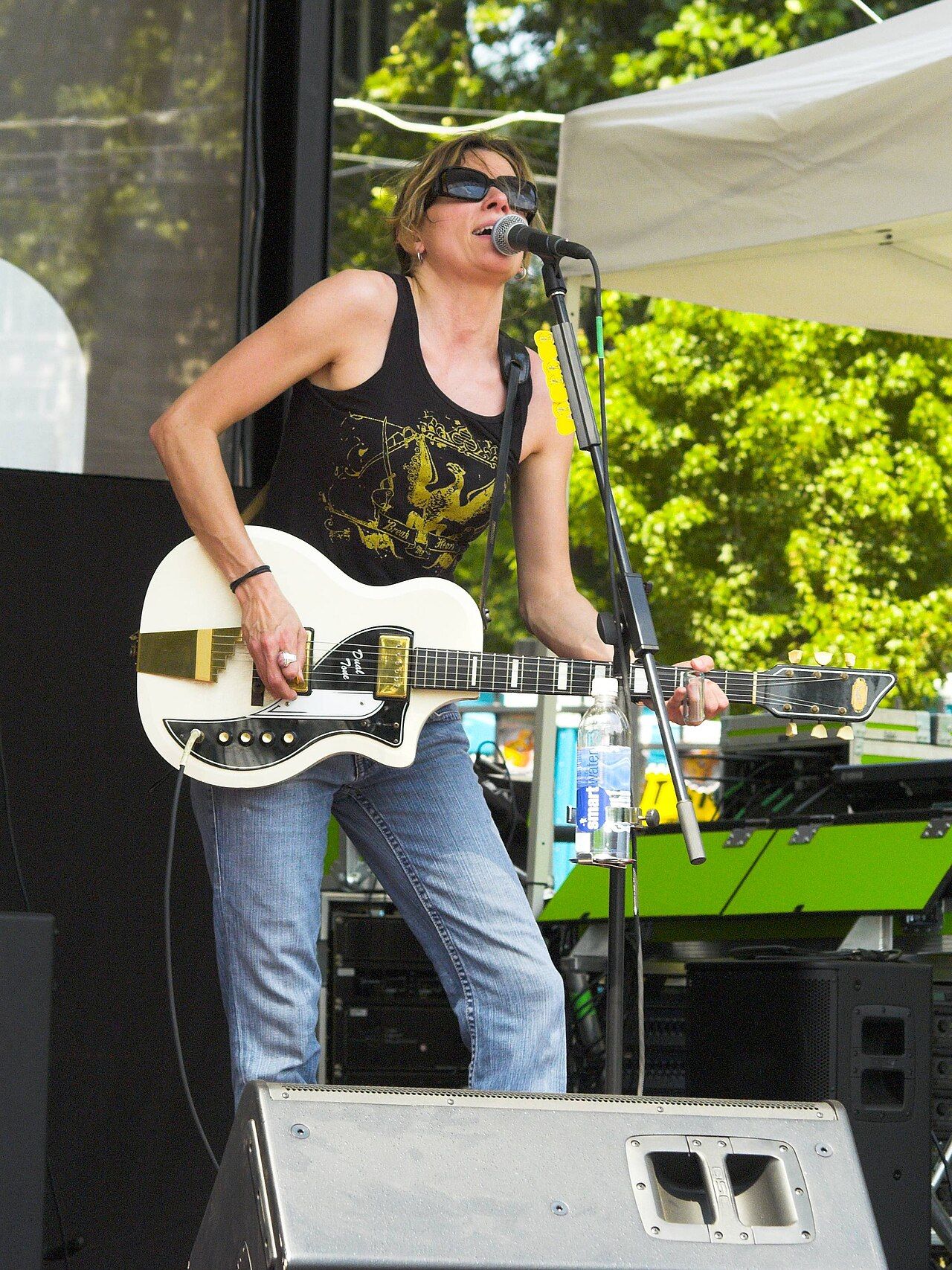
Photo: Tim from Atlanta, USA / Wikimedia Commons / CC BY 2.0 Supro
Dual Tone
1954
Link Wray posed with one for Rumble. Bowie found two on eBay. James Murphy bought his because Bowie said so.
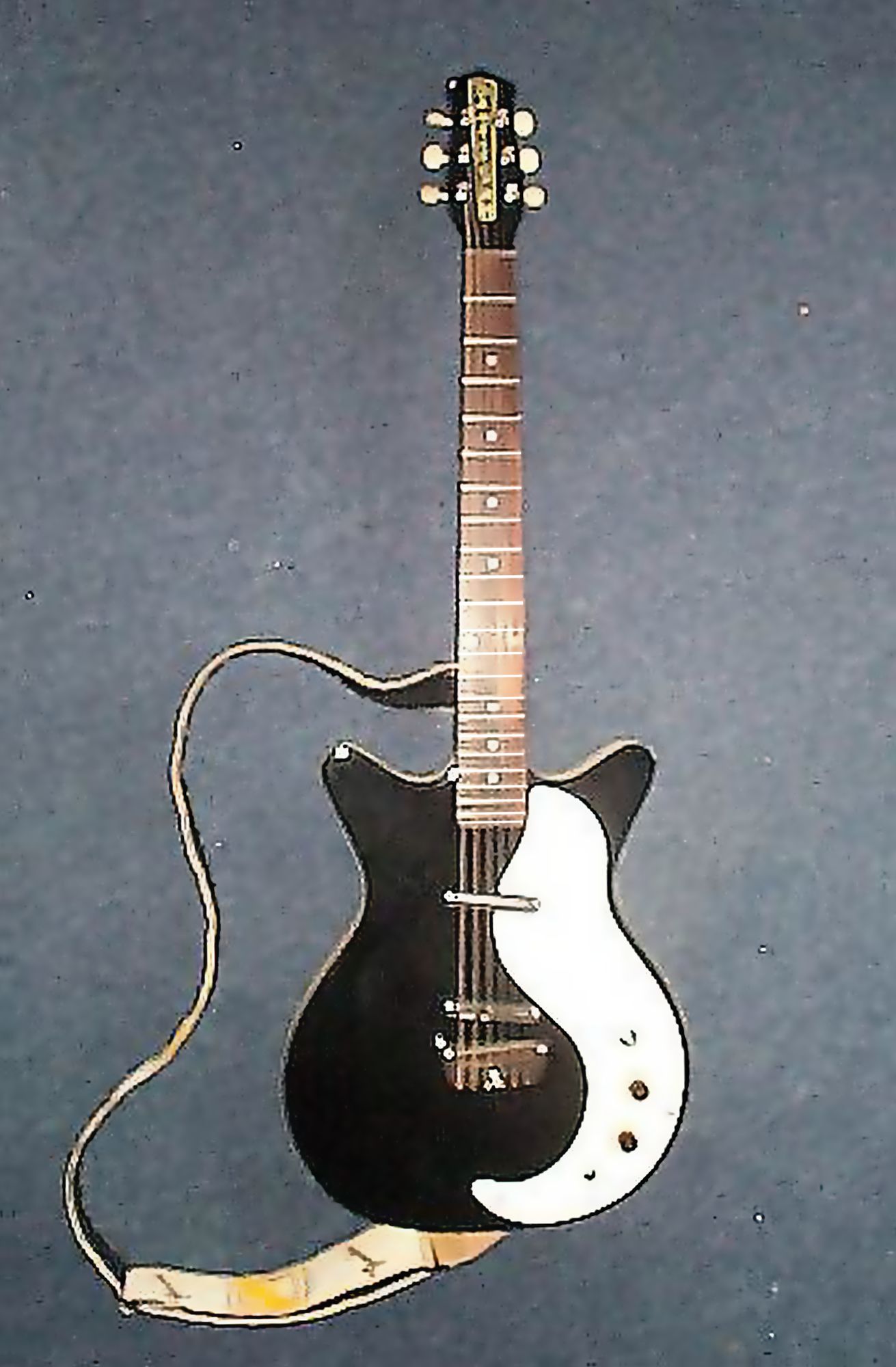
Danelectro 59-DC. Photo by Sander van Malssen. Licensed under CC BY-SA 2.0. Via Wikimedia Commons. Danelectro
59
1958
Jimmy Page’s has been shown at the Met. The same two lipsticks and coke-bottle head are hanging on a shop wall near you.
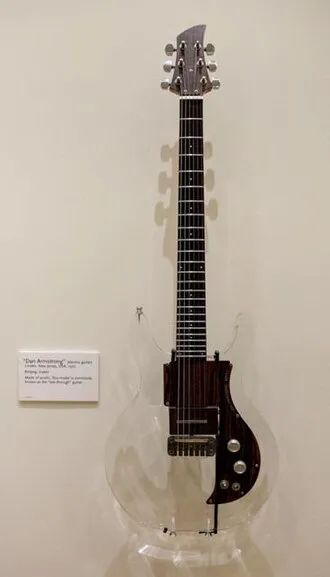
Photo: Frank Kovalchek / Wikimedia Commons / CC BY 2.0 Ampeg
Dan Armstrong
1969
A repairman who spent his days inside other people’s guitars designed one you could see straight through.