Martin
0-18
Martin keeps dropping the little 0-18 from the catalog. The people who own one never put it down.
San Francisco, the late 1990s. Jeff Tweedy walks out with an old Martin 0-18, a plain little guitar thirteen and a half inches across. He’s about to write a record on it with Billy Bragg, and it’s about to become the main acoustic of his life.
- Introduced
- 1898
- Type
- Acoustic flat-top
- Class
- Production
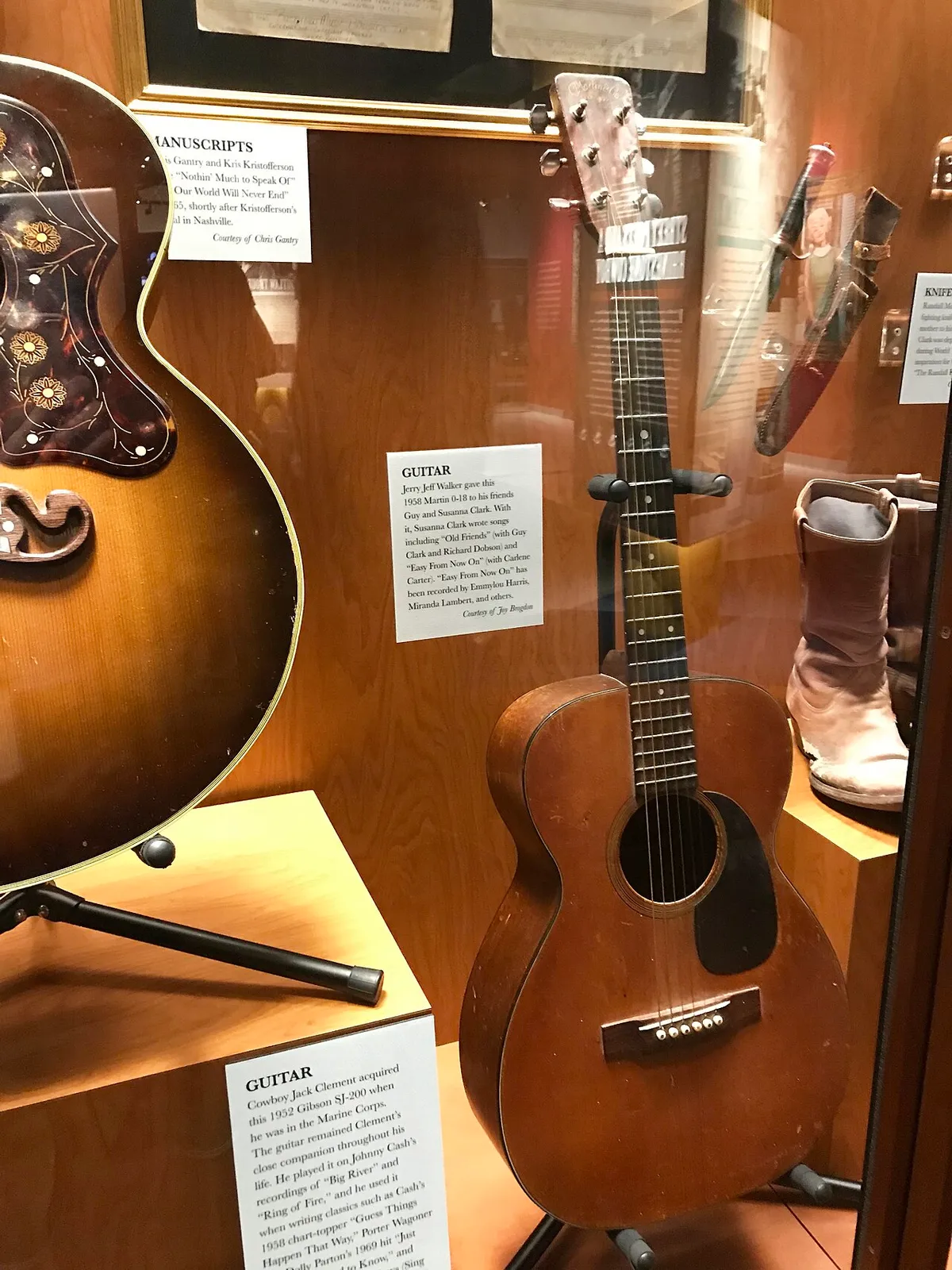
The short version
1850s
The concert size
The size 0 appears, in 1852 or 1854 depending who you ask.
1898
The name
The 0-18 as a model. Twelve frets, Brazilian rosewood, an Adirondack top, and a plain rectangle bridge.
1917
Mahogany
Style 18 switches to mahogany back and sides, and the 0-18 becomes the guitar people picture now.
1932
Fourteen frets
The neck meets the body at the 14th fret. Some put it at 1934.
1996
Dropped
Martin discontinues the 0-18, and the 00-18 with it.
2017
Back
Returns as the lowest-cost guitar in the Standard Series.
2025
Dropped again
Left out of the Standard refresh. The small Standard is now an 0-17.
Side A
A1
A small guitar in San Francisco
Jeff Tweedy bought an old Martin 0-18 in San Francisco in the late 1990s. Nobody’s pinned down what year it is, though it may be from the 1930s. Either way it was small, plain, and nobody’s idea of a trophy.
He used it to write the Mermaid Avenue songs with Billy Bragg, setting unused Woody Guthrie lyrics to music. Then he just kept it.
That guitar just became basically part of my writing voice… it’s the main acoustic I’ve had my whole life.
Hold on to that, because Martin has never been that loyal. The 0-18 has been in the catalog, out of it, back in, and out again. The company keeps deciding it can live without the little one. The people who own one keep deciding they can’t.
A2
Not a parlor, whatever the tag says
With Martin, the part before the dash is the body size and the part after is the trim. So this is Style 18 on a size 0 body. It isn’t a shrunken D-18 and it isn’t a 000-18 that got smaller. Different box, different guitar.
A 0 is thirteen and a half inches across the lower bout. A 000 is fifteen. A dreadnought is fifteen and five-eighths, and deeper. Funny detail: the 0 is an eighth of an inch deeper than the 00 and the 000, which is a strange thing for the smallest of the three to be.
People call it a parlor guitar. Martin did too, when it sold the 2017 version. Martin’s own museum draws the line tighter: parlor means anything smaller than an 0, sizes 1 through 5. The 0 is a concert guitar. Even Martin can’t agree with itself, so I’ll let you settle that one at the counter.
What the small box gives you is focus. Less boom, quicker notes, a sound that sits next to a singing voice instead of on top of it. It’s the guitar you can play on the couch without waking the house.
A3
Eighteen dollars and a change of wood
Style 18 dates to 1857, and it started as rosewood, wholesaling at $18. The size 0 is a few years older, 1852 or 1854 depending who you ask, and I’m not picking.
The 0-18 as a named model arrives in 1898: twelve frets clear of the body, Brazilian rosewood, a plain rectangle bridge. In 1917 Martin moved Style 18 to mahogany. Mahogany is drier and punchier than rosewood, less shimmer and less growl, and it suits a small guitar. By 1923 most Style 18s were braced for steel strings.
Around 1932 the neck moved out to meet the body at the 14th fret. Some put it a couple of years later, and twelve-fret ones kept turning up for a while regardless.
It was a fixture into the 1950s, the cheaper Martin that was selling nearly as well as the D-28. For a guitar that small, that’s a lot of kitchens and front porches.
Flip the record · By the numbers
13½″
Width of the lower bout. A 000 is 15 inches. A dreadnought is 15⅝.
$18
Wholesale price of a Style 18 Martin back in the 1850s.
1996
The year Martin first let it go. It came back in 2017 and left again in 2025.
1947
The year of the Edge’s 0-18, his go-to guitar on Songs of Surrender.
Side B
B1
In the catalog, out of the catalog
In 1996 Martin discontinued the 0-18, along with the 00-18.
It came back in 2017 as the lowest-cost guitar in the Standard Series, listing at $2,799, with scalloped braces to let that little top move. The timing looked a lot like a hundredth birthday present for mahogany Style 18.
Then the 2025 Standard refresh left it out, along with the OM-21 and the M-36. The 00-18 and 000-18 stayed. The small Standard today is an 0-17, a different style, and Martin’s page for the 0-18 just says retired.
Even the signature guitar Martin built for Tweedy, the 00DB, isn’t an 0-18. It’s a deeper 00, inspired by his.
B2
The ones that stayed
Catalogs move on. Owners mostly don’t. Here’s the Edge, talking about remaking U2’s songs for Songs of Surrender:
There was a particular guitar that was my go-to, a 1947 Martin 0-18, and it’s a beauty.
He found it at McCabe’s in Santa Monica, with his son Levi along, and that was that. Steve Earle has a 1951 in his collection. Bob Dylan played an 0-18 at the Woody Guthrie tribute in January 1968. John Frusciante and Warpaint’s Emily Kokal have played them too.
Look at the ones with years attached: a 1947, a 1951, an old one bought in the ’90s that might be from the 1930s. Found, not ordered. Small, plain, old guitars that fit, and the people who found them didn’t let go.
Martin has retired the 0-18 again. The one Tweedy bought in San Francisco is still the main acoustic he’s had his whole life. Martin can take it off the website. It can’t take it off his lap.
Put this on
You’ve read about it. Now hear it. Here’s what this guitar sounds like, and what to listen for.
Mermaid Avenue
Tweedy wrote his Mermaid Avenue songs with Billy Bragg on his old 0-18. Nobody says which takes it plays on, so hear it as the guitar the songs came out of.
Find it on YouTube (opens in a new tab)Songs of Surrender
The Edge’s go-to guitar for these stripped-down remakes was a 1947 0-18 he found at McCabe’s in Santa Monica.
Find it on YouTube (opens in a new tab)
The cast
The people, and the specific guitars, that made the legend.
late 1990s
Jeff Tweedy
Vintage 0-18
Bought in San Francisco, and possibly from the 1930s. Nobody’s pinned the year. His main acoustic ever since.
2023
The Edge
1947 0-18
Found at McCabe’s in Santa Monica with his son Levi. His go-to on Songs of Surrender.
2009
Steve Earle
1951 0-18
One of the old Martins in his collection.
1968
Bob Dylan
An 0-18
Played one at the Woody Guthrie tribute in January 1968. His Cash duet guitar was a 000-18, a different Martin.
Liner notes
Specs, construction, rarity, value, and every source we used.
Style 18 on a size-0 concert body — 13½ inches of mahogany, not a 000-18, and not a D-18 in a smaller box.
- Body
- 0-14 fret concert; 13½" lower bout. guitarhq.com 14-fret 0: 13½" × 4¼" × 18⅜". Spruce top; mahogany back and sides (from 1917). Style 18 trim. 12-fret 0: 13½" × 4 3/16" × 19⅛"
- Neck
- Mahogany typical on vintage examples; 14th-fret joint, dovetail. 2017 Standard: Select Hardwood, Modified Low Oval with High-Performance Taper; satin, dark mahogany color
- Fingerboard
- Ebony unbound on 1898 and on the 2017 Standard (Old Style 18 abalone dots, 20 frets). Rosewood standard on 0-18 by 1940 (guitarhq.com; some from 1935)
- Scale
- 24.9" (632.46 mm). MusicRadar quoting Martin on the 2017 Standard. Mix flagged.
- Pickups
- None
- Hardware
- Belly bridge from 1932 (rectangle before; guitarhq.com). 2017 Standard: ebony Modern Belly, drop-in saddle, 2 5/32" spacing; black plastic pins; compensated bone saddle (16" radius); nickel open-gear / Grover Sta-Tite; tortoise-pattern pickguard
- Electronics
- None on the acoustic. 2017 Standard listed optional Fishman packages — other guitars if fitted.
- Finish
- Gloss body; aging toner on the 2017 Standard top; satin neck
- Nut
- Bone. 14-fret Style 18 1 3/4" until late 1939 serial 72740, then 1 11/16". 2017 Standard back to 1 3/4"; 12th-fret width 2 1/8". Vintage Instruments 1932 12-fret: 1 7/8"
Open the full research fileConstruction details, the complete player record, production numbers, dated value estimates, and sources
Classic living example = 14-fret mahogany 0-18 (Nazareth concert 0). Not a 000-18. Not a D-18. 1898 original was 12-fret rosewood. Martin.com 2018 0-18 (SKU path 10018) is a later Standard, now retired. Mixed inch/mm flagged on MusicRadar’s 24.9" (632.46 mm); body millimetres unpublished on guitarhq.com.
Construction
C. F. Martin & Co., Nazareth. Concert 0, not a dreadnought and not a 000. guitarhq.com body-size table: 14-fret 0 is 13½" × 4¼" × 18⅜"; 14-fret 000 is 15" × 4 1/8" × 19 3/8"; D is 15 5/8" × 4 7/8" × 20". Style 18 woods and trim on that smaller box. Not a D-18 in a parlor stamp, and not a 000-18 that shrank.
The job was volume without jumping a size. Jason Ahner (Martin museum, Guitar Player): parlor is a loose word; he would call anything below an 0 — sizes 1, 2, 2½, 3, 4, 5 — a parlor guitar. Size 0 is Concert. Martin still sold the 2017 Standard as a “classic parlor guitar.” Keep both names. The 0 is larger than those earlier parlors and noticeably smaller than a dreadnought.
Name years, not one invention date. guitarhq.com size-0 row: 1852. Ahner: first 0 1854. Don’t pick. Style 18 listed 1857, originally rosewood (guitarhq.com; Ahner: wholesale $18). 0-18 as a named model: 1898 (guitarhq.com; Guitar Player; Acoustic Guitar) — unbound ebony board, rectangle bridge, Brazilian rosewood back and sides, Adirondack top. This plate’s YAML introduced: 1898 is that model name, not a claim that no size-0 Martin existed earlier.
Mahogany back and sides from 1917. Most Style 18s braced for steel by 1923. Belly bridge on the 0-18 in 1932 (00-18 had already switched in 1931). Tortoise pickguard the same year.
14-fret is a source fight. guitarhq.com: first 14-fret size 0 1932. Ahner: 14-fret 0-18s, some sunburst, in 1932. Guitar Player’s 0-18 history: neck join moved 12th to 14th in 1932. Premier Guitar’s 2017 review: 14-fret in 1934 in the wake of the OM. Keep 1932 and 1934. 12-fret slotted 0-18s did not vanish from the story; Vintage Instruments had a 1932 12-fret 0-18 five numbers from being a ’31.
Nut on 14-fret Style 18 1 3/4" → 1 11/16" around serial 72740 (1939). Forward vs rear-shifted bracing 1939. Heavy vs scalloped late 1944. Rosewood board standard on 0-18 by 1940; D-18 kept ebony through 1946. Sitka prevalent from the mid-1940s. Black body binding 1966; black pickguard 1967. Those are dated Style 18 changes, not a different model name.
Catalog life is a range, not a straight line. guitarhq.com model table: O-18 1898–1983, 1985–present. Same page: 1996, 0-18 and 00-18 discontinued. Acoustic Guitar: fixture into the 1950s — “selling nearly as well as the D-28” on price — then 1996 out, 2017 back as the lowest-cost Standard. Premier Guitar: Nazareth brought it back that year, “presumably” the mahogany Style 18 centenary. Martin.com: 2018 0-18 retired (fetched 10 September 2026). Alamo Music on the 2025 Standard refresh: 0-18, OM-21, and M-36 left the lineup. 00-18 and 000-18 stayed. The current 0-size in Standard is an 0-17, Style 17, not this guitar.
2017 Standard (Martin.com retired sheet; Acoustic Guitar; MusicRadar): 0-14 fret, Sitka, mahogany, scalloped 1/4" X with non-scalloped tone bars, Select Hardwood neck, ebony board and bridge, 24.9", 1 3/4" bone nut. Hide glue not listed. That SKU is not a 1932 14-fret and not a 12-fret rosewood 1898.
Not this guitar. D-18 is Style 18 on a D body. 000-18 is Style 18 on a 15" 000. 00-18 is Grand Concert. 0-18K is koa (1918–1935). 0-18T is a tenor. Tweedy’s 00DB and Isbell’s 0-17 are other stamps.
Players
Named instruments first. A famous mahogany Martin that does not say 0-18 stays off this page.
Jeff Tweedy — vintage 0-18, San Francisco, late 1990s. Martin (9 October 2025): bought it there; wrote the Mermaid Avenue songs with Billy Bragg on it. His words: “That guitar just became basically part of my writing voice… it’s the main acoustic I’ve had my whole life.” Music Connection calls it a 1930s 0-18. Martin does not print the year. Keep vintage and 1930s. The 00DB Jeff Tweedy is a deeper 00 signature inspired by this guitar, not an 0-18.
The Edge — 1947 0-18. Guitar Player (1 June 2023), on Songs of Surrender: “There was a particular guitar that was my go-to, a 1947 Martin 0-18, and it’s a beauty.” McCabe’s, Santa Monica, with his son Levi. Instantly. Artist-owned — not a comps tape.
Steve Earle — 1951 0-18. Vintage Guitar (July 2009): photographed in the Umanov/Earle session among the collection. Guitar Player (Ahner) and Acoustic Guitar name him on the 0-18. Collection object. Not a pinned session log here.
Bob Dylan. Ahner (Guitar Player 18-series): used an 0-18 and a 000-18. Ground Guitar: 0-18 at the Guthrie tribute, January 1968; the Cash duet “Girl From the North Country” is a 000-18. His early acoustic in Chronicles is a 00-17, not this. Keep the 0-18 mention. Do not move the 00-17 or the 000-18 onto this plate.
Also known to play stays short. Guitar Player: John Frusciante; Warpaint’s Emily Kokal. No invented album credits.
Not this guitar. Julian Lage’s 1939 is a 000-18. Elvis’s Sun guitar is a 1942 D-18. Steve Howe’s “The Clap” guitar is a 00-18. Elizabeth Cotten and Muddy Waters, 00-18s (Ahner). Jason Isbell’s writing guitar is an 0-17.
Rarity
You cannot order a new 0-18 from Martin.com. The 2018 Standard is retired. 00-18 and 000-18 remain regular catalog. The new Standard 0-size is an 0-17. Official lifetime totals for the 0-18 are unpublished. None invented.
MusicRadar (Dick Boak): 00-18 22,004 made 1898–2005, “only slightly behind the 0-18.” That is a 00-18 factory figure plus a comparison. It is not an 0-18 census.
What is actually thinner: clean 12-fret rosewood-era examples (1898–1916 woods); early 14-fret 1932 survivors (bar-fret, ebony, some shade-top — Ahner); scalloped pre-late-1944. guitarhq.com collectibility: smaller Style 18 bodies subtract a letter grade from the D-18 / 000-18 ratings. They are not D-45-scarce (closed 91) and not pre-war D-18 money as a class. Tweedy’s writing guitar and the Edge’s 1947 are unique objects. They are not a vintage 0-18.
Value
Informal estimate, 10 September 2026. Not an appraisal.
Ask vs sold. Tweedy’s 0-18 and the Edge’s 1947 are not comps. A 2017 Standard is not a 1932 14-fret.
New street. None under 0-18 this pass. Martin.com 2018 0-18 retired (fetched 10 September 2026). Historical lists, not a 2026 cart: Guitar Player $2,799; MusicRadar 2017 review $2,459.
Used modern. No clean Reverb Price Guide band isolated on Standard Series 0-18 this pass (widget: estimate unavailable). Named ask, not a hammer: Eddie’s Guitars 2017 $2,249. Expect used Standards under the old list; do not invent a midpoint.
Vintage / collectible. Reverb Price Guide on 0-18 1898–1945: $4,473–$11,138 (63 orders, Good to Mint; fetched 10 September 2026). Named solds on that tape, not a series average: Dec 2025 Very Good $12,500; Aug 2025 Very Good $12,000; June 2025 Very Good $9,200 / Good $10,000; March 2025 Good $5,400; Good outliers $3,500 and $3,800. Do not average those hammers with dealer queens. Named asks, not solds: Vintage Instruments 1932 12-fret $12,500; Reverb 1944 wartime $14,895. Do not paste D-18 or 000-18 ladders onto this size. A restored/refin example is not a collector original.
See also
- martin-000-18 — Style 18 on a 15" 000; Lage’s 1939 lives there
- martin-d-18 — Style 18 on a dreadnought; Elvis’s Sun guitar lives there
Sources
- guitarhq.com Style 18 — 0-18 1898–1983, 1985–present; 1898 unbound ebony / rectangle bridge; size 0 12-fret 1852 (13½" × 4 3/16" × 19⅛") / 14-fret 1932 (13½" × 4¼" × 18⅜"); mahogany 1917; belly bridge 1932; rosewood board some 1935 / standard 1940; nut 72740; 1996 0-18 discontinued
- Guitar Player, The History of the Martin 0-18 — 1898 rosewood/Adirondack/ebony; mahogany 1917; rosewood board 1935–40; 13½" / 24.9"; 14-fret 1932; 2017 Standard list $2,799; Edge 1947; Earle, Dylan, Frusciante, Kokal
- Guitar Player, History of Martin 18-Series (Jason Ahner) — Style 18 1850s rosewood / $18 wholesale; mahogany 1917; first 0 1854; parlor = below 0; 14-fret 0-18s 1932; Dylan and Earle on 0-18; 0 deeper than 00/000 by ⅛"
- Acoustic Guitar, Review: Martin’s 0-18 — 1898 intro; 1950s sales vs D-28; Dylan, Earle; discontinued 1996; 2017 Standard reintroduction; 24.9" / 1 3/4" / scalloped X
- Premier Guitar, Martin 0-18 Review (20 July 2017) — 14-fret 1934 in that review; 2017 return
- Martin, 0-18 2018 retired — 0-14 fret; 24.9"; 1 3/4"; Select Hardwood; scalloped 1/4" X, non-scalloped tone bars; retired (fetched 10 September 2026)
- Martin, 00DB / 000 Jr E Jeff Tweedy (9 Oct 2025) — vintage 0-18, San Francisco, late 1990s; Mermaid Avenue
- Martin, Tweedy blog — “I bought a 0-18 in San Francisco”
- Music Connection, Tweedy 000 Jr E — 1930s 0-18 / Mermaid Avenue 1998
- Guitar Player, The Edge on Songs of Surrender — 1947 0-18; McCabe’s
- Vintage Guitar, Steve Earle (July 2009) — ’51 0-18 in the collection photos
- MusicRadar, Martin 0-18 review — 24.9" (632.46 mm); 2017 list $2,459
- MusicRadar, Martin 00-18 review — Boak: 00-18 22,004 (1898–2005), slightly behind the 0-18
- Reverb Price Guide, 0-18 1898–1945 — $4,473–$11,138 / 63 orders; named 2025 solds
- Vintage Instruments, 1932 0-18 — 12-fret; 1 7/8" nut; 24.9"; ask $12,500
- Eddie’s Guitars, used 2017 0-18 — ask $2,249
- Alamo Music, 2025 Standard — 0-18 dropped from the 2025 Standard lineup
- Ground Guitar, Dylan gear — 0-18 at Guthrie tribute, January 1968; Cash duet is 000-18
Keep digging
Guitars this one gets compared to, confused with, or descended from.
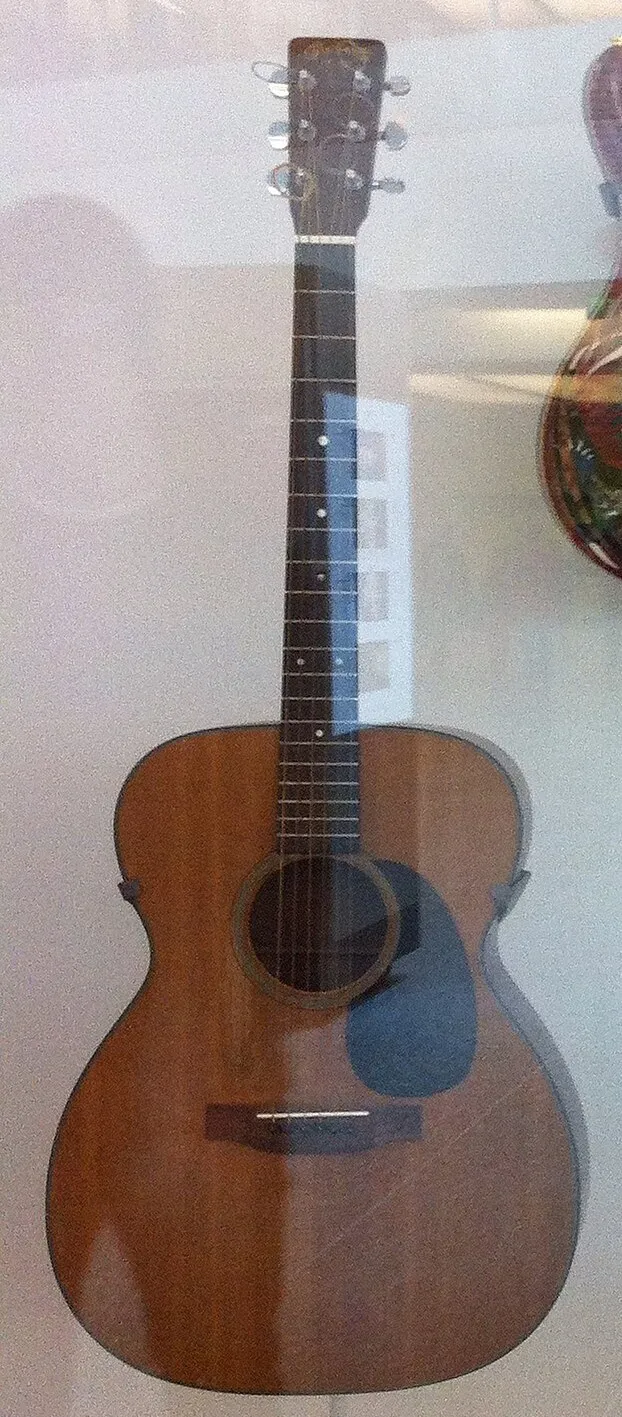
Photo: Tyfferz Y / Wikimedia Commons / CC BY 2.0 Martin
000-18
1934
Julian Lage’s 1939 000-18 had been in pieces. It showed up when his own left hand needed putting back together.
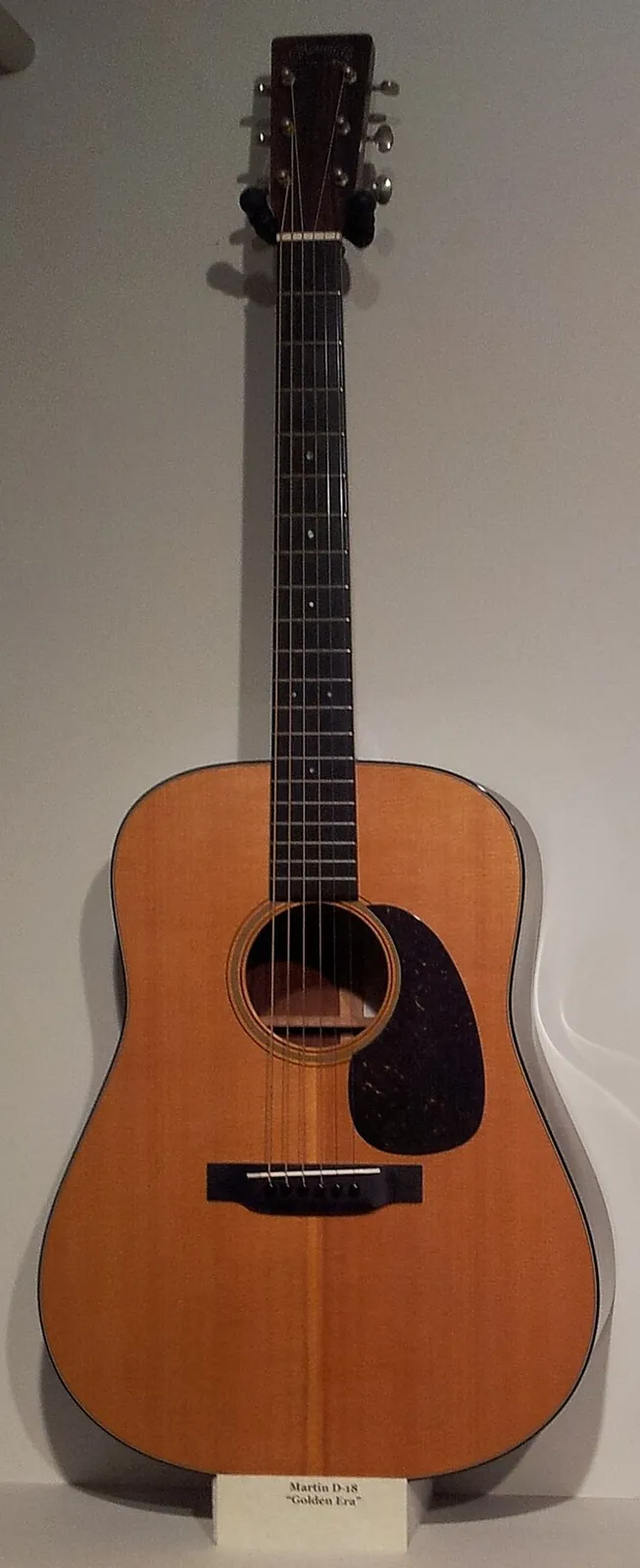
Photo: doryfour / Wikimedia Commons / CC BY-SA 2.0 Martin
D-18
1931
Elvis traded his D-18 up for a leather-covered D-28. The plain one had already been there for the Sun records.