Martin
00-18
Not the big dreadnought. The small mahogany Martin you can carry into a field and write a song on.
Before Yes rehearsals, Steve Howe used to go walking with a 1953 Martin 00-18 and a cassette recorder, working out the acoustic parts outdoors. It’s a small guitar, 14 5/16 inches across, and it had been doing that kind of job for half a century before he got to it.
- Introduced
- 1898
- Type
- Acoustic flat-top (size 00 parlor)
- Class
- Production
Have a photograph of this guitar? Send a picture
The short version
1858
The size shows up
The first 00 appears in Martin’s sales ledgers, decades before the model name.
1898
The name
The 00-18 is named, with rosewood back and sides and 12 frets clear of the body. Four are made.
1917
Mahogany
Style 18 switches to the wood it’s known for now.
1934
Fourteen frets
The size table’s date for the 14-fret 00. Some forum memory says 1933.
1953
Howe’s guitar
The 00-18 that Steve Howe will take to Yes is built.
1970
“Clap”
Recorded live at the Lyceum, London, on 17 July, for The Yes Album.
1981–96
Out of the catalog
Sources give 1981, 1994, 1995, and 1996 for when it stopped. Nobody agrees.
2016
Back again
The plain 00-18 returns at Summer NAMM. It’s still in the Standard line.
Side A
A1
A guitar you can take for a walk
Steve Howe had a routine before Yes rehearsals. He’d take his 1953 Martin 00-18 out walking in the fields with a cassette running, and write the acoustic parts out there.
Try that with a dreadnought. You can, but you won’t enjoy it. The 00-18 is the size you can carry without thinking about it, and play on a bed or at a kitchen table without it getting in the way. The big Martins get the stage. The small mahogany one goes wherever the songs are being written.
A2
Older than its own name
Martin calls the size Grand Concert. It sits between the concert 0 and the auditorium 000: 14 5/16 inches across on a 14-fret body, where a dreadnought is 15 5/8. People call it a parlor guitar. Jason Ahner, writing its history for Guitar Player, won’t: to him a parlor is anything smaller than an 0.
The size is older than the model. Ahner finds the first 00 in Martin’s sales ledgers in 1858. Another history dates the 12-fret 00 body to 1877, and MusicRadar, citing Martin’s records, says 00-18s “date back to 1873.” Those don’t line up, and I’m not going to pretend they do.
The name 00-18 is clearer. It shows up in 1898 on a guitar that doesn’t look much like today’s: rosewood back and sides, an unbound ebony board, a rectangle bridge, and a neck that meets the body at the 12th fret. Martin made four that year.
A3
Mahogany, steel, and two more frets
Over the next forty years the guitar turned into the one people mean now. The back and sides went to mahogany in 1917. Most Style 18s were braced for steel strings by 1923.
The belly bridge is a small argument. One history says 1931 for the 00-18. RetroFret has a 1929 guitar with the “new-style larger ebony belly bridge, a feature just added.” Both dates stay.
Around 1934, the size table moved the 00 to 14 frets clear of the body, like the rest of the line. Forum memory says 1933. Either way, the neck got longer, the body got squarer shoulders, and you could reach higher up the neck.
Then came wartime changes. The scalloped braces, shaved thin to let the top move, gave way to heavier ones in late 1944, which is why a scalloped 00-18 from before then is harder to find.
Flip the record · By the numbers
4
00-18s made in 1898, the year the name appeared.
$45
What one listed for in 1929, without a case.
22,004
Made from 1898 to 2005, per MusicRadar. Slightly behind the 0-18, far behind the dreadnought.
14 5/16"
Across the lower bout of a 14-fret 00. A dreadnought is 15 5/8".
Side B
B1
The working guitar
The 00-18 was never the star of the catalog. It was a working guitar at a working price. In 1929 it listed for $45 without a case. In 1955, $105, plus the case. By 1967, the hang tag said $250.
Production peaked somewhere in the middle of the century. One count says 800 in 1954. RetroFret calls 1967 an “up-to-then peak” at 650. The two sources don’t agree, so I won’t name a winner. What’s clear is the scale: that same year Martin shipped over 2,602 D-18s. The dreadnought was winning.
By the ’70s the numbers were falling fast: 602 in 1970, 751 in 1971, then 403, 202, 152, 181, 128. For 1977 the count is one. Boak, talking to MusicRadar, says the 000-18 took over because it projects more.
MusicRadar counts 22,004 made from 1898 to 2005, “only slightly behind the 0-18.” Then the guitar left the catalog. When, exactly, depends on who you read: 1981, 1994, 1995, or 1996, none of which squares with a count that runs to 2005.
B2
Clap
The best-known 00-18 in rock is still Howe’s. On 17 July 1970, at the Lyceum in London, he played a solo piece on it for his son Dylan. The title was “Clap.” Jon Anderson introduced it as “The Clap,” and that name stuck. It went on The Yes Album, and the same guitar plays the same piece in the Yessongs film.
I have a ’53 00-18 and they brought out the 00-18SH based on that.
That was the 00-18SH in 1999, 250 of them. Ahner names other players on the 00-18 too: Elizabeth Cotten and Muddy Waters, in the same sentence as Howe. Nobody has tied either one to a particular 00-18 or a particular record, so I won’t either.
B3
Still in the arms
Martin brought a vintage-style 00-18V back in 2003, and the plain 00-18 returned at Summer NAMM in 2016. When Martin trimmed the Standard line in 2025, the 0-18 went. The 00-18 stayed. It’s mahogany, ebony, scalloped bracing, the 24.9-inch scale, and a 1 3/4-inch nut.
In 2026 Joe Bonamassa got two signature models based on a 1937 00-18 shade-top he owns.
A guitar from 1937 is still showing people how the next one should sound. And the small mahogany Martin is still the one you can pick up without thinking and take somewhere quiet, where the next song gets started.
Put this on
You’ve read about it. Now hear it. Here’s what this guitar sounds like, and what to listen for.
Clap
Steve Howe alone on his 1953 00-18, recorded live at the Lyceum in London on 17 July 1970 and released on The Yes Album. No band, just Howe and the small Martin he wrote on.
Find it on YouTube (opens in a new tab)Clap (live at the Rainbow, Yessongs)
The same 00-18 and the same piece, this time on film at the Rainbow. It’s a good look at how small the guitar is next to him.
Watch it on YouTube (opens in a new tab)
The cast
The people, and the specific guitars, that made the legend.
1970
Steve Howe
1953 00-18
Wrote Yes acoustic parts on it and played “Clap” on it. Martin’s 1999 00-18SH, 250 made, was based on it.
Elizabeth Cotten
00-18
Named on the 00-18 by Guitar Player’s Jason Ahner. No serial, and no specific recording pinned to it.
Muddy Waters
00-18
Named in the same sentence as Cotten and Howe. Again, no serial and no recording pinned.
2026
Joe Bonamassa
1937 00-18 shade-top
His pre-war shade-top is the pattern for two 2026 Martin signatures.
Liner notes
Specs, construction, rarity, value, and every source we used.
Style 18 on a size-00 Grand Concert — 14 5/16 inches of mahogany, not an 0-18, and not a 000 that shrank.
- Body
- 00-14 fret Grand Concert; spruce top, aging toner; mahogany back and sides; black binding; Old Style 18 back strip; Old Style 18 multi-stripe rosette. guitarhq.com 14-fret 00: 14 5/16" × 4 1/8" × 18 7/8". 12-fret 00: 14 1/8" × 4 1/16" × 19 5/8"
- Neck
- Select Hardwood (Martin spec — not explicitly mahogany), GE Modified Low Oval with High-Performance Taper; satin, dark mahogany color; dovetail
- Fingerboard
- Ebony, Old Style 18 abalone dots, unbound, 20 frets, 14th-fret joint
- Scale
- 24.9"
- Pickups
- None
- Hardware
- Ebony GE Modern Belly, drop-in saddle, 2 5/32" spacing; ebony pins (no dots); compensated bone saddle (16" radius); nickel open-gear tuners, butterbean knobs; faux-tortoise pickguard
- Electronics
- None
- Finish
- Gloss top and back/sides; satin neck; aging toner on top
- Nut
- Bone, 1 3/4"; 12th-fret width 2 1/8"
Open the full research fileConstruction details, the complete player record, production numbers, dated value estimates, and sources
*SKU 10Y250018. Current Standard, 2025 refresh (Martin.com, fetched 23 September 2026). Classic living example = 14-fret mahogany 00-18. Not an 0-18. Not a 000-18. Not a D-18. The 1898 guitar was 12-fret rosewood. Hide glue is not on this sheet. Braces: X, Golden Era scalloped, spruce, 1/4"; the 2025 copy names Sitka for the braces. The top line says Spruce, not Sitka. Mixed inch/mm flagged on MusicRadar’s 632.5 mm (24.9 inches) and 44.5 mm (1.75 inches). Body millimetres unpublished on guitarhq.com. Do not average RetroFret’s measured 24 3/4" (629 mm) with 24.9". A 1941 at Queens measures 24.9" and a 1 11/16" nut — one guitar, not a conversion.*
Construction
C. F. Martin & Co., Nazareth. Grand Concert 00, between a concert 0 and an auditorium 000. guitarhq.com: 14-fret 00 is 14 5/16" × 4 1/8" × 18 7/8"; 14-fret 0 is 13½" × 4¼" × 18⅜"; 14-fret 000 is 15" × 4 1/8" × 19 3/8"; D is 15 5/8" × 4 7/8" × 20". Ahner (Guitar Player): a 14-fret 0 is deeper than the 00 and the 000 by 1/8". Style 18 on that middle box. Not an 0-18 with a wider stamp, and not a 000 that lost an inch.
The job was mahogany volume you can hold, short of a dreadnought. Martin’s name for the size is Grand Concert. Ahner would not call it a parlor. Parlor, in his mouth, is anything below an 0.
Name years, not one invention date. The size is older than the stamp. Ahner: first 00 in the sales ledgers, 1858. guitarhq.com: 12-fret OO body, 1877. MusicRadar (Dave Burrluck, 17 October 2016), citing Martin’s records: 00-18s “date back to 1873.” Don’t pick. The named 00-18 is the 1898 guitar. guitarhq.com: 0-18 and 00-18 introduced 1898 — unbound ebony, rectangle bridge, rosewood back and sides. Model row on that page: OO-18 1898–1981. The production total below also starts in 1898. YAML introduced: 1898 is that model name, not a claim that no size-00 Martin existed earlier.
Mahogany from 1917. Most Style 18s braced for steel by 1923. The belly bridge is a small fight. guitarhq.com: 1931, the 00-18 goes belly; the 0-18 waits until 1932. RetroFret, on a 1929 (serial 40125): the “new-style larger ebony belly bridge, a feature just added,” and too early for a factory pickguard. Keep 1929 and 1931.
14-fret is 1934 on the size table. guitarhq.com: first 14-fret OO, 1934, length 18 7/8". One Man’s Guitar: 1934 is when every size from 0 through D went to 14 frets. UMGF (kydave), from Carter: “around 1934.” Another UMGF thread remembers 1933, or a single 1934. Forum memory, not a factory sentence. Don’t pick. The 12-fret guitar is the earlier one. It did not stop existing because the shoulder squared.
The rest is the shared Style 18 calendar, not a new name. Nut 1 3/4" → 1 11/16" around serial 72740 (1939). Bracing forward to rear-shifted the same year. Some rosewood boards 1935, most 1936, standard on the 0-18 / 00-18 / 000-18 by 1940. Heavy braces replace scalloped late 1944. Adirondack until 1946 (kydave, citing Vintage Guitar). Black binding 1966. Black pickguard 1967. The current nut is back at 1 3/4".
The catalog end is a range. guitarhq.com’s year row stops at 1981. Same page, later line: 1996, 0-18 and 00-18 discontinued. MusicRadar: ceased 1994, while the count runs through 2005. UMGF (kydave): maybe 1995. Reverb’s blurb: ending in 1995. Keep all four. The 2005 is not those stop-years. MusicRadar: the 00-18V returned in 2003; the plain 00-18 came back at Summer NAMM 2016, “an updated version of the popular 00-18V.” One Man’s Guitar on the last big run: straight non-scalloped braces, rosewood board and bridge, 1 11/16" neck. 2016 changed the neck (Modified V to Modified Low Oval) and the bridge (Vintage Belly to Modern Belly). Bridge spacing, MusicRadar, millimetres only: 54.8 mm new, 57.2 mm on the V. Do not convert. Ahner: after the 2012 D-18 went back to ebony and forward-shifted scallops, Martin started the 0-18 and the 00-18 again.
The table is the 2025 Standard. GE-scalloped 1/4" X, Select Hardwood, ebony, 24.9", 1 3/4", no electronics. Not a 1934 14-fret. Not an 1898 rosewood 12-fret.
Not this guitar. 0-18 is the 13½" concert. 000-18 is the 15" 000. D-18 is the dreadnought. 00-18G (gut, 1936–1962), 00-18C (classical, 1962–1976), and 00-18K (koa, 1918–1925) are other stamps. So is 00-18H — 75 of them in 1938, a separate tally from the 00-18. The 00-18 Authentic 1931 is a retired 12-fret reissue: hide glue, Adirondack with VTS, 1 7/8" nut, 2 3/8" spacing, copied from a 1931 Fred Oster loaned Martin (Acoustic Guitar). Not a 1931, and not SKU 10Y250018. The 1999 00-18SH and the 2026 00-18 Joe Bonamassa are signatures. Tweedy’s writing guitar is an 0-18. His 00DB is a different 00.
Players
Named instruments first. A mahogany Martin that does not say 00-18 stays off this page.
Steve Howe — 1953 00-18. Guitar Player (Rod Brakes, 12 May 2023): he walked the fields with it before Yes rehearsals, cassette on, writing the acoustic parts. “Clap” — his title with Bill Bruford; Jon Anderson announced “The Clap,” and that stuck — was recorded live at the Lyceum, London, 17 July 1970, on The Yes Album, for his son Dylan. The Yessongs Rainbow clip is the same 00-18, in that piece. Howe: “I have a ’53 00-18 and they brought out the 00-18SH based on that.” The 00-18SH (1999) is 250 guitars (My Martin Gallery), Engelmann top. Not this Standard. Artist-owned — not a comps tape. The MC-38 Steve Howe is another signature.
Elizabeth Cotten and Muddy Waters. Ahner names both on the 00-18, in the same sentence as Howe. No serial, and no side pinned to a guitar. “Freight Train” is not documented here as one instrument. The Martin Carrboro took back in 2026 is something else: a 150th-anniversary guitar, a 1983 gift from Congress.
Joe Bonamassa — 1937 00-18 shade-top. Martin’s 2026 page and Guitar World (13 August 2026): two signatures taken from that pre-war shade-top. The 00-18 Joe Bonamassa and the 00-10E Retro are other SKUs. RetroFret’s 1937 shade-top, serial 65353, from the Wilco loft, is a different guitar. Do not put his name on 65353. Not a comps tape.
Dylan and Cash are not pinned. Boak, to MusicRadar, puts Dylan on a 00-18 list with Howe, Waters, Waits, Griffith, “to name a few.” Ahner puts Dylan on an 0-18 and a 000-18. The early acoustic on the 0-18 plate is a 00-17. Guitar Player’s Howe piece calls Dylan a “00-18 endorsee.” That is a relationship, not a serial. One Man’s Guitar calls the 00-18 a writing guitar for Cash and Dylan, no year. Folsom, 13 January 1968, is a fight on UMGF: 00-18, 000-18, Marshall Grant’s guitar, and one reply that if it was Grant’s it was a 000-28. Don’t pick. The black D-35 and the D-42JC live on martin-d-35.
Also known to play stays the rest of Boak’s list: Tim O’Brien, Cindy Combs, Lonnie Donegan, Lennie Gallant, Nanci Griffith, Michael Martin Murphey, Darius Rucker, Tom Waits. No album credits invented.
Not this guitar. Tweedy’s San Francisco 0-18. The Edge’s 1947 0-18. Lage’s 1939 000-18. Elvis’s Sun guitar, a 1942 D-18.
Rarity
You can order a new 00-18. SKU 10Y250018 is regular catalog. The 0-18 left the 2025 Standard line. This one stayed.
One lifetime figure is in print. MusicRadar: 22,004 made 1898–2005, “only slightly behind the 0-18,” both under the dreadnought. Boak, same piece, says the 000-18 took over because it projects more. That 22,004 is not a year book, and 2005 fights the stop-years above. Don’t add the year counts into a second total.
The year counts are the shape. Longworth via UMGF (kydave): 4 in 1898, 34 / 26 / 1 across 1899–1901, then none or single figures until 1907. RetroFret shipments: 227 (1929), 275 (1937, “best since a decade before”), 450 (1955), 650 (1967) against a D-18 “over 2602” that year. UMGF (Jack, book in hand): 353 in 1938, not the 75 of the H. One Man’s Guitar: 1954 high watermark, 800. RetroFret calls 1967 an “up-to-then peak” at 650. UMGF’s 1970s Longworth run: 602, 751, 403, 202, 152 (1970–74), then 181, 128, 1 (1975–77). Keep 800 and 650. Don’t crown a peak. It was a working catalog guitar, never the dreadnought’s volume, and then it left.
Thinner than that run: clean 12-fret rosewood; early 14-fret; shade-tops (RetroFret on the 1937: “one we don’t see everyday”); scalloped braces from before late 1944. guitarhq.com writes its grades for the 000-18, OM-18, and D-18, and smaller bodies “subtract a full letter grade.” Not D-45-scarce (closed 91). Howe’s 1953 and Bonamassa’s 1937 are one guitar each. The 00-18SH is 250 signatures. None of those is a vintage 00-18.
Value
Informal estimate, 23 September 2026. Not an appraisal.
Ask vs sold. Howe’s 1953 and Bonamassa’s 1937 are not comps. A 2025 Standard is not a 1934 14-fret. Period lists are period money: RetroFret, $45 without case (1929), $105 plus case (mid-1955), hang-tag $250 (1967).
New street. Martin.com $2,999.99 (fetched 23 September 2026). Sweetwater the same $2,999.99. Named ask under list, not an average: Haggerty’s, a 2026 Standard, serial 3058056, $2,749.99 off $2,999.99. The Bonamassa 00-18 is another guitar — Guitar World $3,999, Sweetwater $3,999.99 — and the 00-10E Retro is $1,299. 2016 lists, not a 2026 cart: One Man’s Guitar $3,099; MusicRadar $2,459 / £1,999. The Authentic 1931 is retired: Peghead Nation list $7,499; Acoustic Guitar $7,999 / street $5,959.
Used modern. Reverb Price Guide, Standard Series, 2025–present, Good to Mint: $1,581–$2,183 (chart on 3 orders). The dollar widget did not re-render on a direct fetch the same day; that band is the indexed guide. Named mint solds on the tape, not to be averaged with the floor: 7 Oct 2025 $2,199; 11 Oct $2,100; 26 Oct $2,018.75; 4 Dec $2,319.20. Sweetwater Certified Open Box $2,699.99 is a dealer open-box, not a used sale.
Vintage / collectible. Reverb Price Guide, 1898–1945, Good to Mint: $4,325–$10,672 (42 orders; same index caveat). Named solds: 21 Oct 2024 Very Good $7,200; 16 Nov 2024 Good $4,899; 1 Feb 2025 Good $3,420; 6 Jul 2025 Very Good $4,960; 16 Sep 2025 Very Good $6,100. One Excellent, 26 Jun 2025, $22,300, is a single hammer, not the band. Named ask, not a sold: Queens, a 1941 with neck reset and refret, $18,000. Don’t average that ask into the guide. Don’t paste 0-18, 000-18, or D-18 ladders onto this size. A reset is not a collector original.
See also
- martin-0-18 — Style 18 on a 13½" concert; Tweedy’s writing guitar and the Edge’s 1947 live there
- martin-000-18 — Style 18 on a 15" 000; Lage’s 1939 lives there
- martin-d-18 — Style 18 on a dreadnought; Elvis’s Sun guitar lives there
Sources
- Martin, 00-18 Standard, SKU 10Y250018 — current spec; GE Modified Low Oval; 24.9"; 1 3/4"; GE-scalloped 1/4" X; list $2,999.99 (fetched 23 September 2026)
- guitarhq.com Style 18 — OO-18 1898–1981; 1898 unbound ebony / rectangle bridge; 12-fret OO 1877 / 14-fret 1934 dimensions; mahogany 1917; belly bridge 1931; nut 72740; rosewood board standard 1940; 1996 discontinuation; smaller bodies subtract a letter grade
- MusicRadar, Martin 00-18 review (Dave Burrluck, 17 October 2016) — “date back to 1873”; 22,004 from 1898–2005; ceased 1994; 00-18V returned 2003; Summer NAMM 2016; Boak’s player list; 632.5 mm (24.9") / 44.5 mm (1.75"); bridge 54.8 mm vs 57.2 mm; $2,459 / £1,999
- Guitar Player, History of Martin 18-Series (Jason Ahner) — parlor = below 0; first 00 in ledgers 1858; 14 5/16" / 24.9"; 0 deeper by 1/8"; Cotten, Waters, Howe; 00-18 built again after 2012
- Guitar Player, Steve Howe “Clap” — 1953 00-18; Lyceum 17 July 1970; “Clap” vs “The Clap”; 1999 00-18SH
- One Man’s Guitar, 00-18 — 2016 Standard; list $3,099; 1954 watermark 800; prior run non-scalloped, rosewood, 1 11/16"
- Martin, 00-18 Authentic 1931, retired — 00-12 fret; hide glue; 1 7/8"; 24.9"; not the Standard
- Acoustic Guitar, 00-18 Authentic 1931 — Oster’s 1931 as the pattern; list $7,999 / street $5,959
- Peghead Nation, Authentic 1931 demo — list $7,499
- RetroFret, 1929 00-18 — serial 40125; belly bridge “just added”; 227 shipped; $45 without case; measured 24 3/4" (629 mm)
- RetroFret, 1937 00-18 shade-top — serial 65353, Wilco loft, not Bonamassa’s; 275 shipped
- RetroFret, 1955 00-18 — 450 shipped; list $105 plus case; measured 24 3/4" (629 mm)
- RetroFret, 1967 00-18 — 650 shipped; D-18 over 2602; hang tag $250
- UMGF, 00-18 history (kydave, Longworth) — 4 / 34 / 26 / 1 for 1898–1901; 1970–77 counts; 14-fret “around 1934” via Carter; maybe last year 1995
- UMGF, 1938 totals (Jack, Longworth in hand) — 00-18: 353; 00-18H: 75
- UMGF, Folsom ’68 — 00-18 / 000-18 / Grant’s guitar / a 000-28 reply; not pinned
- Guitar World, Bonamassa signatures (13 August 2026) — 1937 shade-top; $3,999 and 00-10E Retro $1,299
- Martin, New Models 2026 — 00-18 Joe Bonamassa and 00-10E Retro, from his 1937
- My Martin Gallery, 00-18SH — 1999; limited to 250
- Town of Carrboro, Cotten guitar (7 May 2026) — 150th-anniversary Martin; 1983 Congressional gift
- Sweetwater, 00-18 Standard — $2,999.99; Certified Open Box $2,699.99
- Reverb, Haggerty’s 2026 Standard — ask $2,749.99 off $2,999.99; serial 3058056; Reverb blurb “ending in 1995” (fetched 23 September 2026)
- Reverb Price Guide, Standard Series 00-18 — 2025–present $1,581–$2,183; named 2025 mint solds; widget did not re-render on a direct fetch 23 September 2026
- Reverb Price Guide, 00-18 1898–1945 — $4,325–$10,672 / 42 orders; named solds including the $22,300 Excellent; same widget caveat
- Reverb, Queens Vintage 1941 — ask $18,000; neck reset and refret; scale 24.9", nut 1 11/16"
Keep digging
Guitars this one gets compared to, confused with, or descended from.
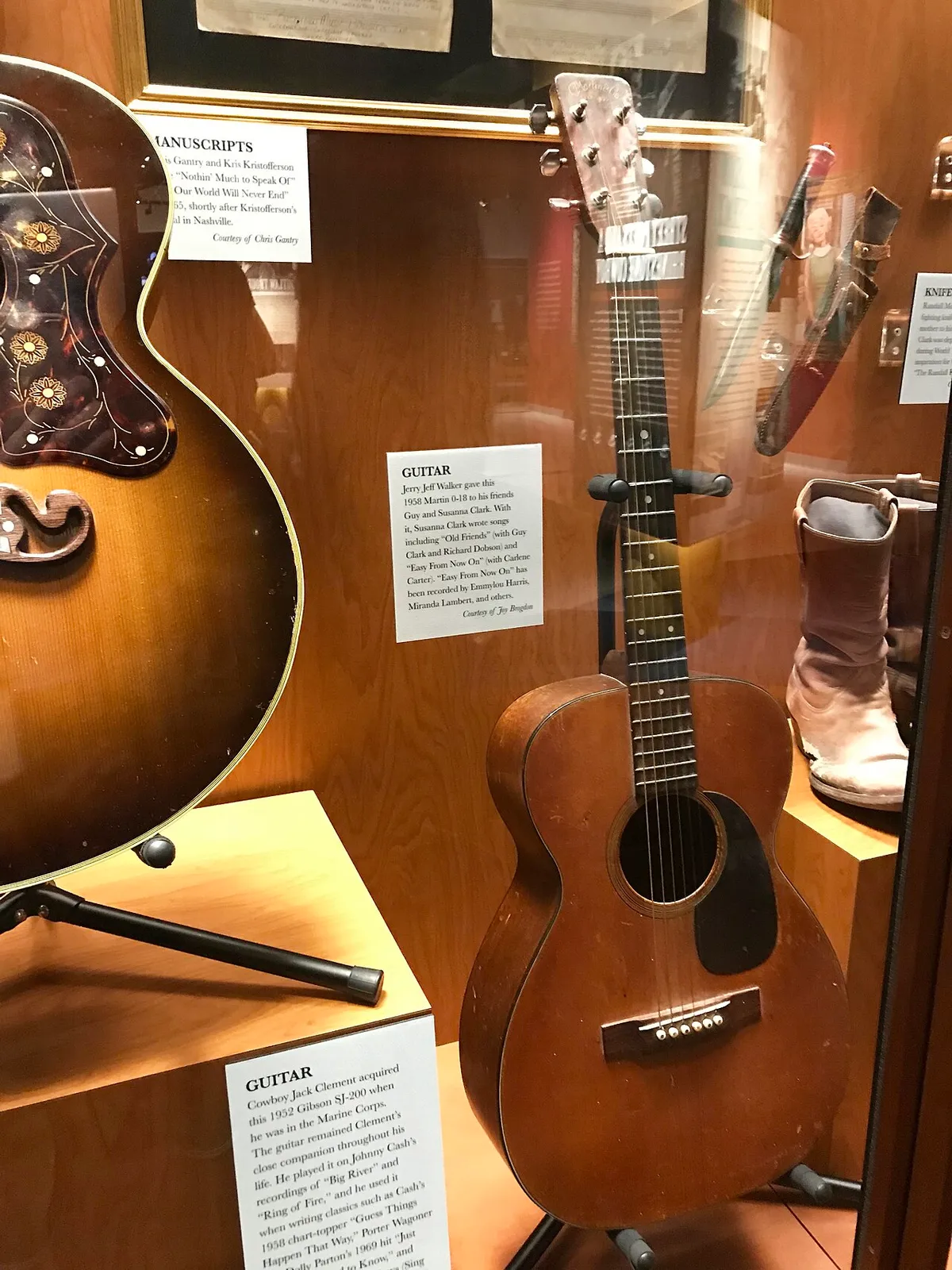
Photo: e Kat / Wikimedia Commons / CC0 Martin
0-18
1898
Martin keeps dropping the little 0-18 from the catalog. The people who own one never put it down.
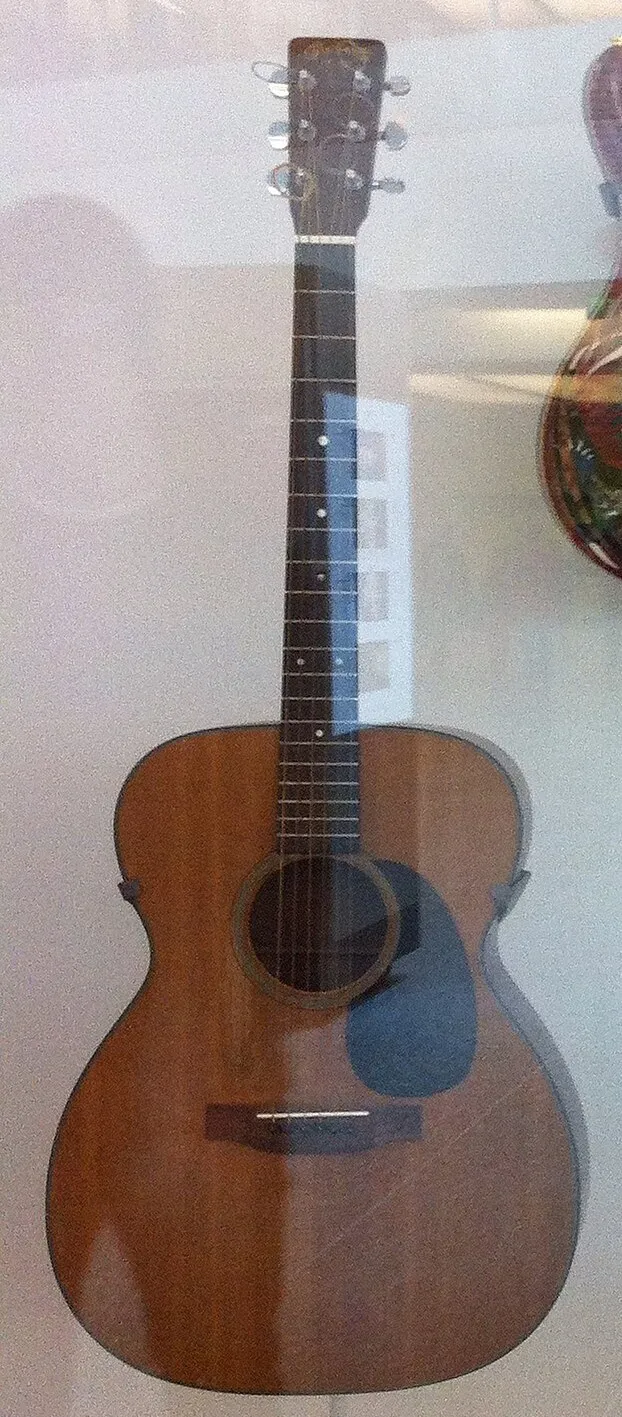
Photo: Tyfferz Y / Wikimedia Commons / CC BY 2.0 Martin
000-18
1934
Julian Lage’s 1939 000-18 had been in pieces. It showed up when his own left hand needed putting back together.
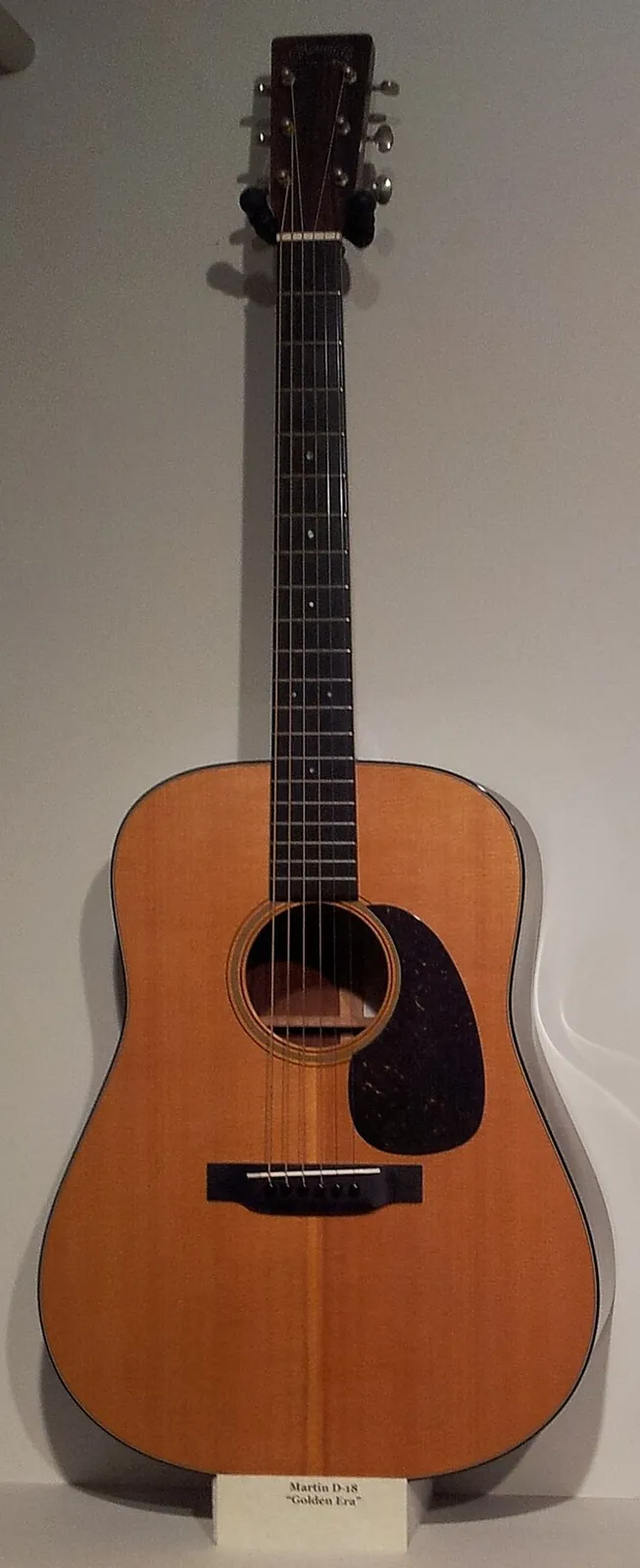
Photo: doryfour / Wikimedia Commons / CC BY-SA 2.0 Martin
D-18
1931
Elvis traded his D-18 up for a leather-covered D-28. The plain one had already been there for the Sun records.