Novo
Serus
Dennis Fano walked away from the brand with his name on it, and drew a body big enough to start over.
Tempered pine, two P-90s, a Mastery bridge, and an offset outline Fano insists is his own. Not a Jazzmaster. Not a Jaguar. Not a Fano with the logo filed off. The company he built it for is called Novo, Latin for making something new.
- Introduced
- 2016
- Type
- Solidbody electric
- Class
- Production
Have a photograph of this guitar? Send a picture
The short version
1995
Bleecker Street
Fano starts at Matt Umanov’s in New York and builds his first custom, for Andy Partridge.
2001
Fano Guitars
His own brand, dated 2001 (one later statement says 1996), and later the Alt de Facto line of mixed-up classics.
2009
The sale
Fano Guitars goes to Premier Builders Guild in 2009, or 2010 by Fano’s own later telling.
2015
Novo
He leaves in 2014 or 2015. The new company starts in 2014, October 2015, or the end of 2015.
2016
The first Serus
A Serus T is reviewed in February and played at NAMM that winter.
2017
The J, and Nashville
The Serus J is reviewed in February. In May the shop leaves Fleetwood, Pennsylvania, for Nashville.
2025
Under one roof company
Novo and Fano both land under Psonic Design Lab, with Fano as chairman.
Side A
A1
Bleecker Street, 1995
Somewhere around February or March of 1995, Dennis Fano starts work at Matt Umanov’s guitar shop on Bleecker Street. He stays five years. That same year he builds his first custom guitar, for Andy Partridge of XTC.
By 2001 there are guitars with his name on them, or by 1996 if you go by one later company statement. The line people remember is Alt de Facto, first called Artifact, which took Gibson, Fender, Rickenbacker, and the rest and stirred them together. Six of the nine designs were offsets. One of them, the JM6, wears a Jazzmaster outline.
So when Fano sat down to draw a new guitar, he wasn’t short of offsets. He was short of a name.
A2
Nobody agrees when he left
The leaving doesn’t have one date. He sold Fano Guitars to Premier Builders Guild in 2009 or 2010. He walked out in 2014 or 2015. Novo started in 2014, or in October 2015, or at the end of 2015 after a year and a half of consulting. On one interview tape he says fall of 2016 and then corrects himself back toward 2015. Keep all of them.
What isn’t in dispute is the name. Fano glosses Novo as Latin for “to make anew or refresh.” And he set a rule for himself: no Telecaster silhouette, no Jazzmaster, no Les Paul Junior. Whatever came next had to be his.
A3
Sectis first, then the letters
The first new Novo wasn’t the Serus. It was the Sectis, with a clean finish and a neck held on by a single bolt. Then, as Fano told it later:
“I took this new model, the Novo Sectis, and did some traditional versions of that. That’s where the Serus T, Serus S, and Serus J came from.”
The name was public by winter 2016. A Serus T was reviewed that February, a slab with a Tele bridge pickup, and played at NAMM the same season. It listed at £2,099 in the UK. The J followed a year later. Even that first T came already distressed. The Sectis had started clean.
The letters are a menu, not separate guitars. T for the Tele-style setup, S for three single coils, J for the version most people mean. Fano called the Serus “a platform or a jumping-off point.”
Flip the record · By the numbers
25.5″
Scale length. A Jazzmaster’s, not a Jaguar’s 24″.
6 of 9
Alt de Facto designs that were already offsets, years before the Serus.
6–8
The first Novos built from ordinary wood, before the tempered pine arrived.
45–50
Guitars a month from the whole Nashville shop in 2021, every model together.
Side B
B1
Bigger than a Jazzmaster, and not one
Stand a J next to a Jazzmaster and you’d forgive somebody for squinting. Look again. The body is big, bigger than anything Fano had drawn except one earlier JM-inspired model, broader at the bottom, with sharp horns. It has two contours, for your forearm and your belly, where the Fender has one.
Then listen to what’s missing. No wide Jazzmaster coils: two Lindy Fralin P-90s. No rhythm circuit, no strangle switch, no mute. Volume, tone, a pickup selector. The scale is 25.5 inches, not the Jaguar’s 24. And instead of a floating bridge with a separate vibrato, a Mastery, sitting higher than on most offsets because Fano uses the same neck angle whether the guitar gets a wrapover, a tune-o-matic, or a Mastery. That break angle, he says, tames the sympathetic overtones.
No strangle, no mute, no rhythm circuit. Two P-90s and a Mastery.
B2
Pine with a nail hole
The body is pine, and not just any pine. Tempering, in Fano’s words, leaves the wood lighter, stiffer, and more resonant than kiln-dried stock. The supplier is Tempered Tonewoods in Sonoma. The first half-dozen or eight Novos were made from ordinary wood, before that started. Some of the pine is reclaimed, and you can still find a nail hole in one.
The guitars land around seven pounds. Some bodies look like four pieces, some are two. Keep both.
Plenty changed under the same name. The first T had 21 frets and a compound radius. The first J had 21 frets and a constant 9.5-inch radius. Today’s J has 22 and a compound board. The early pickups were Amalfitanos; by 2018 Fralin was standard. A reviewer’s guitar that year came with Lollar Gold Foils and a wrapover. A platform, like he said.
B3
Nashville, and the name back
In May 2017 the shop left Fleetwood, Pennsylvania, for Nashville. The next year it was about twenty guitars a month and six people. By 2021, twenty-one people and forty-five to fifty a month, every model together.
Corey Taylor’s first Novo is a red Serus J with custom DiMarzios and the Cherry Bombs logo of his wife Alicia’s dance troupe. “I’d never played anything like it,” he said. “To me, the beautiful thing about a Novo is it’s got the weight, it’s got the heft, and the richness of a Gibson, and yet it feels like you’re playing a Fender.”
In January 2025, both brands landed under one company, Psonic Design Lab, with Fano as chairman and head of product design. The Fano shop was to move to Nashville, right next to Novo.
So he has his name back, right next door. The Serus kept the new one.
Put this on
You’ve read about it. Now hear it. Here’s what this guitar sounds like, and what to listen for.
Novo Serus J demo
A Serus J he owned and calls one of the best guitars he has ever owned. A 2017 J, in the hands of a player who bought one.
Watch it on YouTube (opens in a new tab)Charlie Allen’s Novo Serus
Titled as Allen’s Serus, with Lollar Imperials in it instead of the stock Fralins. The title is the model claim.
Watch it on YouTube (opens in a new tab)
The cast
The people, and the specific guitars, that made the legend.
2016
Dennis Fano
The Serus T, S, and J
Designed it after leaving his own brand. Calls it “a platform or a jumping-off point.”
Corey Taylor
Red Serus J
His first Novo. Custom DiMarzios and the Cherry Bombs logo of his wife Alicia Taylor’s dance troupe. Solo-era; no Slipknot track is pinned to it.
2017
Rhett Shull
Serus J
Called it one of the best guitars he has ever owned. The Idris he later brought to Fano is a different body.
2025
Charlie Allen
Novo Serus
The player Cordy had just seen with Incognito. The video title calls it his Serus; no side is pinned here.
Liner notes
Specs, construction, rarity, value, and every source we used.
Tempered pine, a Mastery, and P-90s — Fano’s offset after he left his name, not a Jazzmaster and not a Jaguar.
- Body
- Tempered pine; offset double-cut; forearm and belly contours
- Neck
- Bolt-on tempered maple, Medium “C” (.830")
- Fingerboard
- East Indian rosewood; MOTO dots on Novo’s pages. Compound 9.5"–14". 22 Jescar medium nickel/silver (.047" × .095") on the maker’s 2025–26 J pages
- Scale
- 25.5". Guitar.com prints 647.7 mm. Gitarre & Bass (10/2025) prints 648 mm. Mix flagged.
- Pickups
- Two Lindy Fralin P-90s
- Hardware
- Mastery M1 bridge and NV vibrato, lightning-bolt arm. Novo 18:1 non-locking tuners on the maker’s 2025–26 J pages; Kluson Supreme on Boullard’s Nucleus sheet. Mix flagged.
- Electronics
- Volume, tone, 3-way on current J sheets and on the 2017 review guitar. Digimart’s 2017 J sheet prints a 4-way. Mix flagged.
- Finish
- Thin nitrocellulose; light or medium distress; matching peghead on most
- Nut
- Unbleached bone, 1.65". Guitar.com measured 41.3 mm (2017 J) and 41 mm (2016 T). Mix flagged.
Open the full research fileConstruction details, the complete player record, production numbers, dated value estimates, and sources
Classic living example = Nucleus Serus J (Nashville). Serus T is Digimart’s TL-style on this outline — not a model named Serus TL. Serus S was the three-single-coil. J Baritone and a left-handed J are the other Nucleus variants. P2, H2, TC are configuration codes, not this table. Sectis is the earlier Novo, Cyclops single-bolt, not this neck. Miris, Solus, and Idris are other bodies. Rivolta is the Asian-made line. Not a Jazzmaster (fender-jazzmaster). Not a Jaguar (fender-jaguar). Mixed inch/mm is flagged in the table. Do not average those figures, or Chicago Music Exchange serial 24998’s 21 frets against 22.
Construction
The job was an offset that was not a Fender with the logo changed, and not an Alt de Facto with his name filed off. Fano told Digimart (14 May 2026) he would not use Telecaster, Jazzmaster, or Les Paul Junior silhouettes.
He was at Matt Umanov’s on Bleecker Street from about February or March 1995, five years (Digimart). A 1995 guitar for Andy Partridge was the first custom (Dave Hunter, Guitar.com, 30 August 2021). The Satellite, a single-cut offset, he dates to 1995. Digimart’s introduction and Guitar.com (16 January 2025) put Fano Guitars at 2001. Alt de Facto — mid-2000s, first called Artifact — mixed Gibson, Fender, Rickenbacker, and the rest. Six of the nine were offsets (Fano, 1 April 2019). The JM6 wears a Jazzmaster outline. This plate is not that guitar.
The leaving does not have one year. Hunter: sold to Premier Builders Guild in 2009, one-offs still in Fleetwood, Pennsylvania; parted in 2014, Novo that year. Rachel Roberts (16 January 2025) matches him. Fano, via Digimart: sale in 2010, left in 2015, formal start at the end of 2015, after about a year and a half consulting while he designed the line. Burrluck (MusicRadar, 19 June 2018): resigned 2015, Novo in October 2015. On the Eastwood tape (12 July 2018) the last Fano guitar is around May 2014, and Novo is “fall of 2016,” then a correction toward 2015. The January 2025 Psonic statement dates the launches 1996 and 2015, and “the past nine years since leaving.” Keep them. This plate is the model, not the company.
Sectis came first, and he was not distressing “right out of the gate.” To Hunter: “I took this new model, the Novo Sectis, and did some traditional versions of that. That’s where the Serus T, Serus S, and Serus J came from.” Digimart in September 2017 still had Sectis #003 — swamp ash, salvaged curly redwood, Lollar gold foils, a Cyclops single bolt — and orders paused. A Serus neck is screws through a logo plate (Burrluck), not that bolt.
The name is public by winter 2016. Chris Vinnicombe (Guitar.com, 4 February 2016) reviews the first Serus T; the interview is pre-NAMM, the piece after. Gearnews (8 February 2016) has it on that stand. Fano glosses Novo as Latin for “to make anew or refresh.” The J is reviewed on 22 February 2017, and the T is called the debut. No 2015 catalog date for a guitar named Serus turned up. This plate starts in 2016.
The body is his, and it is large. Hunter: bigger than anything he had done except the JM-inspired Fano JP6. Burrluck: an amalgam of the JM6 and RB6, broader below, sharp horns. Holtmann (Gitarre & Bass, 10/2025) treats the J as a Jazzmaster reference, then says the body is more generous than that Fender. Scale is 25.5", not the Jaguar’s 24". The coils are P-90s, not wide Jazzmaster singles and not Jaguar claws. No rhythm circuit, no strangle, no mute. A Jazzmaster has one forearm contour and a floating bridge with a separate vibrato. This J has both contours, and a Mastery. Vinnicombe’s T was lighter than an alder Jaguar or Jazzmaster of similar proportions. In 2019 Fano called the Serus “a platform or a jumping-off point.” One popular setup is a Tele bridge and a neck P-90. The neck angle is the same for a wrapover, a tune-o-matic, and a Mastery, so the Mastery sits higher than on most offsets. That break angle, he says, tames sympathetic overtones.
The other letters are the same outline, wired differently. Digimart’s 2017 J sheet is a 4-way on Emerson 500 kΩ and .022 µF; Holtmann’s Nucleus J puts the jack on a metal plate with the volume and tone. A T is a slab with only the forearm contour, a chunky C at .860"–.950", a Gotoh T bridge, and an Amalfitano Tele beside a P-45 — one bar magnet, not two, so the neck can keep up. Four-way, the fourth click in series, Emerson 250 kΩ / .047 µF. Shops still don’t agree: Wildcat 25704 and Pedal Empire print a 4-way; Music Emporium’s Mocha and Eddie’s 25631 print a 3-way. An S had both contours, a Wilkinson tremolo, a 5-way, and those same 250 kΩ / .047 µF parts. It is not on the Nucleus menu now. The NAMM 2026 J Baritone is a 28" guitar with Lollar Mini-Broilers.
Tempering, in Fano’s words to Vinnicombe, leaves the wood lighter, stiffer, and more resonant than kiln-dried stock. Hunter names the supplier: Tempered Tonewoods, Sonoma, Hans Brede. The first half-dozen or eight Novos were ordinary wood. Burrluck’s 2018 J is 42 mm deep — millimetres on that one guitar — four pieces by the look of it, just over 7 lb. Holtmann’s is two pieces, joined down the center. Keep two and four. Named weights, not a spec: 7.4 lb / 3.3 kg (2016 T) and 7.3 lb / 3.3 kg (2017 J), each review’s own pairing; 7 lb (Ice Blue 24730); 6.8 lb (Novo 26177 and Haggerty’s 26968); 7 lb 5 oz (Eddie’s 26349). Reclaimed pine can still show a nail hole (Guitar.com, 17 July 2018).
The board changed under the same name. The 2016 T is compound 9.5"–12" with 21 Jescar 6125s. The 2017 J is a constant 9.5", 21 frets, clay dots, and one sentence in that review calls the neck pine while the spec block says maple. Holtmann’s Fralin P-90s measured about 6.8 kΩ each, and he calls the markers pearl; Novo’s pages say MOTO. Boullard’s 241–355.6 mm is 9.5"–14" converted, not a new measurement. The 2016 and 2017 reviews have Amalfitano pickups. In June 2018 Burrluck calls Fralin the standard, and the guitar in his hands had Lollar Gold Foils and a Schroeder wrapover. Early sheets say Kluson. The maker’s recent J pages say Novo 18:1. That first reviewed Serus was already distressed. The Sectis had started clean.
May 2017, the shop leaves Fleetwood for Nashville (Burrluck; Fano, in a note reposted September 2022). Reverb’s Charcoal Frost J, serial 17006, still says Fleetwood. Matthew Timmons told Burrluck about 20 guitars a month, six people, and a hope of 60 before the end of 2018. The 60 was a plan. In 2021 Fano told Hunter the shop was 21 people and 45 to 50 guitars a month, every Novo model. 125 or 150 was the number he wanted to be able to look at. None of those figures is a Serus census.
In January 2025 both brands sit under Psonic Design Lab. Fano is chairman and head of product design. The Fano-brand shop was to move from Arizona to Nashville, next to Novo; Graham Dowling stays with Fano (Roberts). A Serus is still a Novo. Solus, from late 2020, is a 24.75" single-cut. The Idris is a shape Rhett Shull brought to Fano (MusicRadar, 15 August 2022). Neither one is this guitar.
Players
Don Wilson’s “Walk Don’t Run” is a Jazzmaster. Kurt Cobain’s stage Jaguar is a Jaguar. The Alt de Facto JM6 is a Fano. None of those is a Serus.
Corey Taylor. Guitar.com (Sam Roche, 2 February 2024): the first Novo he bought is a red Serus J, custom DiMarzio pickups, the Cherry Bombs logo of his wife Alicia Taylor’s dance troupe. “I’d never played anything like it,” he says. “To me, the beautiful thing about a Novo is it’s got the weight, it’s got the heft, and the richness of a Gibson, and yet it feels like you’re playing a Fender.” Solo-era guitars. No Slipknot track is pinned to it.
Rhett Shull. His demo (22 April 2017): a Serus J he calls one of the best guitars he has ever owned. The Idris is a different body.
Charlie Allen. John Nathan Cordy’s video (15 February 2025) is titled as Allen’s Novo Serus and puts Lollar Imperials in it. Allen is the player Cordy had just seen with Incognito. The title is the model claim. Not the Fralin spec in the table, and no side is pinned here.
A Palen Music blurb lists Frank Iero and Soccer Mommy on a Serus J. Shop copy. No interview or photographed Serus turned up for either. Not used.
Rarity
You can order a new Serus. Nucleus J and T, dealer-limited colors, and Dennis-spec’d pieces are all current. It is a small Nashville shop, not a Fender year.
Novo has not published a Serus total. The monthly rates above are the whole brand, years apart, and one of them is a plan. They date a shop. They don’t count this model. That is why a first-year census is unknown.
What is actually thinner: the first half-dozen or eight Novos in ordinary wood, which may be Sectis as much as Serus; Pennsylvania guitars from before May 2017; an early T that still has the Amalfitano P-45. Taylor’s red J and Shull’s 2017 J are particular guitars. They are not a used Nucleus.
Value
Informal estimate, 8 October 2026. Not an appraisal.
Ask vs sold labeled. Historical UK prices are not 2026 street. No celebrity hammer turned up. No factory total. An aggregator “MSRP” is not used.
New street. No single Novo MAP located. The maker’s own tags, each one guitar: Ice Blue Metallic Serus J, Fralin P-90s, serial 24730, $3,699 (sold out); NAMM 2026 Serus T Bull Black $3,899; From The Bench Olympic White, ebony, serial 26177, $4,699 (sold out). US dealer asks for a current Fralin P-90, Mastery Serus J: $3,999 (Guitars To Be Played, Vandalism Yellow over burst) and $4,199 (Eddie’s serials 26349 and 26319; Haggerty’s serial 26968, marked 2026; The Loft, a 2026 custom). Peach’s 2026 Dealer Limited J is £4,199. The Vibrato Bar’s NAMM 2026 J Baritone was $4,599 — a baritone, not this table.
Used modern. Reverb’s Serus J guide, as fetched: $2,765–$3,612 (240 orders, Good to Mint) and $2,798–$3,702 (241 orders). Do not average the two widgets. Named solds on that guide, not a series and not an October 2026 median — the listed transactions stop in December 2025: Excellent $3,200, $3,350, $3,500, $3,655; Mint about $3,300–$3,500. Asking is not sold. A 2016 Pennsylvania guitar and a 2025 Nucleus are not the same object inside that band.
Vintage / collectible. There isn’t one. The model is a decade old. Early Fleetwood examples and the non-tempered first handful are the scarce end of a living run, not a pre-CBS market. Signature and NAMM pieces are separate asks. Taylor’s red Serus J has no published sale. Not a comp.
Period UK lists, for the file: Serus T £2,099 (Guitar.com, 4 February 2016); Serus J £2,999 including the Mono case (22 February 2017); £3,199 (MusicRadar, 19 June 2018).
See also
- fender-jazzmaster — 25.5" offset, wide coils, a rhythm circuit, and a floating trem; the job this body is not
- fender-jaguar — 24" offset, claw pickups, a mute, and a strangle switch; not this wiring
- fender-telecaster — the bridge and the four-way job on a Serus T, not the outline
Sources
- Guitar.com, Chris Vinnicombe, Novo Serus T review, 4 February 2016 — first UK Serus T; pre-NAMM interview; tempered red pine slab; compound 9.5"–12"; 21 Jescar 6125; Gotoh T bridge; Amalfitano Tele and P-45 (one bar magnet); 4-way; 25.5" / 647.7 mm; nut measured 41 mm; 7.4 lb / 3.3 kg; £2,099; “to make anew or refresh”; tempering in Fano’s words
- Gearnews, Novo Serus T, 8 February 2016 — played at that year’s NAMM
- Guitar.com, Chris Vinnicombe, Novo Serus J review, 22 February 2017 — T as debut; J forearm and belly contours; Mastery; maple neck; constant 9.5"; 21 frets; 3-way; Amalfitano P-90s; 25.5" / 647.7 mm; nut 41.3 mm; 7.3 lb / 3.3 kg; £2,999 including Mono case
- Digimart, Novo Serus Japan arrival, 28 September 2017 — J as JM-style, S as ST-style, T as TL-style; spec sheets (J 4-way, Emerson 500 kΩ / .022 µF; T chunky C, 4-way, 250 kΩ / .047 µF; S 5-way); Sectis #003, Cyclops, orders paused
- MusicRadar, Dave Burrluck, Novo Serus J review, 19 June 2018 — resigned 2015, Novo October 2015; Nashville May 2017; ~20/month, staff of six, plan of 60; 42 mm; four pieces apparent; just over 7 lb; Fralin called standard; review guitar had Lollar Gold Foils and a Schroeder; logo-plate screws; £3,199
- Guitar.com, Dave Hunter, Dennis Fano interview, 30 August 2021 — 1995 Partridge guitar; PBG 2009; left 2014; Novo 2014; Sectis then Serus T/S/J; body larger than earlier offsets except the JP6; Tempered Tonewoods / Hans Brede; first half-dozen or eight non-tempered; 21 employees, 45–50 a month; Solus late 2020 at 24.75"; Rivolta
- Guitar.com, Chris Vinnicombe, Dennis Fano on offsets, 1 April 2019 — Satellite 1995; six of nine Alt de Facto designs offsets; Serus as a platform; Tele bridge and neck P-90; one neck angle for wrapover, tune-o-matic, and Mastery
- Digimart, Dennis Fano interview, 14 May 2026 — Umanov from about February/March 1995; sale to PBG in 2010; left 2015; formal Novo start end of 2015; consultant overlap; would not use Tele, Jazzmaster, or Les Paul Junior silhouettes; Sectis as predecessor of Serus
- Digimart, Novo feature, 14 May 2026 — Nucleus Serus as T, J, left-handed J, and J baritone; Miris as the hollow-body relative
- Guitar.com, Rachel Roberts, Psonic merger, 16 January 2025 — Fano Guitars 2001; sold 2009; Novo 2014 in the narrative; statement launches 1996 and 2015; “past nine years since leaving”; Psonic; Fano production moving from Arizona to Nashville
- Gitarre & Bass, Franz Holtmann, Nucleus Serus J, issue 10/2025 — Nucleus as top line; two-piece pine; pointed horns; both contours; 22 Jescar 47095; PLEK; 648 mm; Fralin P-90s ~6.8 kΩ; pearl dots; metal control plate
- Novo Guitars, Serus J Ice Blue Metallic — $3,699; serial 24730; 22 frets; 9.5"–14"; Fralin P-90s; Mastery M1 and NV; 1.65"; Medium C .830"; 7 lb
- Novo Guitars, NAMM 26 Serus J — serial 25974; 22 frets; Fralin P-90s; Novo 18:1
- Novo Guitars, Serus J Olympic White From The Bench — $4,699; serial 26177; 6.8 lb; ebony; 22 frets
- Novo Guitars, NAMM 26 Serus T Bull Black — $3,899; Fralin P-45 and high-output Tele; Tele bridge; 22 frets
- Novo Guitars, Serus Nucleus page — menu lists Serus J, J Baritone, P2, and T
- Eastwood Guitars, talk with Dennis Fano, 12 July 2018 — last Fano guitar around May 2014; Novo start given as fall 2016, then corrected toward 2015
- Dennis Fano, Instagram, 23 September 2022 — move from Fleetwood to Nashville, May 2017
- Guitar.com, Sam Roche, Corey Taylor, 2 February 2024 — first Novo is a red Serus J, custom DiMarzios, Cherry Bombs logo
- Rhett Shull, Novo Serus J demo, 22 April 2017 — a Serus J he says he owned
- MusicRadar, Novo Idris with Rhett Shull, 15 August 2022 — Idris is a different shape
- John Nathan Cordy, Charlie Allen’s Novo Serus, 15 February 2025 — titled as Allen’s Serus; Lollar Imperials; Incognito
- Reverb, Charcoal Frost Serus J, serial 17006 — marked made in Fleetwood, Pennsylvania
- Reverb Price Guide, Novo Serus J — Good–Mint widgets $2,765–$3,612 (240 orders) and $2,798–$3,702 (241 orders); named solds through December 2025
- Chicago Music Exchange, Serus J Bull Black serial 24998 — sheet prints 21 frets
- The Vibrato Bar, NAMM 2026 Serus J Baritone — 28"; $4,599; Lollar Mini-Broilers
- Eddie’s Guitars, Dealer Limited Serus J — ask $4,199; serial 26349; 7 lb 5 oz
- Haggerty’s, serial 26968 — ask $4,199; marked 2026; 6.8 lb; 3-way
- Guitars To Be Played, Vandalism Yellow — ask $3,999
- Peach Guitars, 2026 Dealer Limited Serus J — £4,199
- The Loft, Serus J Custom 2026 — ask $4,199; 3-way; Fralin P-90s
- Guitar.com, The Money Shot, 17 July 2018 — reclaimed pine, nail holes; Schroeder on that Antigua J
- Wildcat Guitars, Serus T 25704 — Fralin P-45 and high-output Tele; 4-way
- Music Emporium, Serus T LTD Mocha — volume, tone, 3-way on that T
- Pedal Empire, Serus T Olympic White — 4-way on that T
- Eddie’s, Serus T Fiesta Red 25631 — 3-way; 21 frets on that T
- Boullard, Nucleus Serus J Bull Black — radius printed 241–355.6 mm; Kluson Supreme; 22 frets
- Palen Music, Serus J copy — dealer sentence naming Frank Iero and Soccer Mommy; not used as a credit
Keep digging
Guitars this one gets compared to, confused with, or descended from.
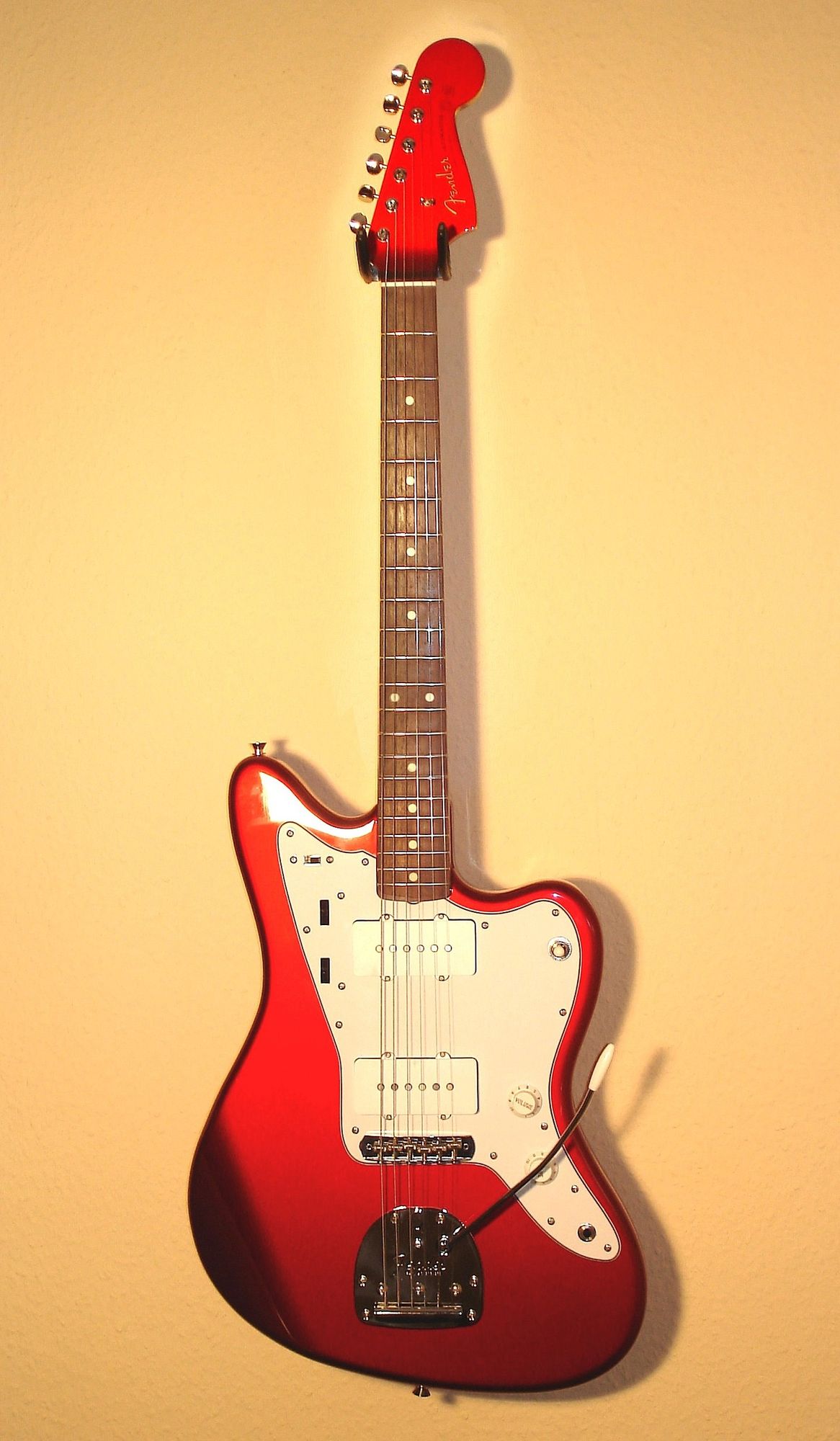
Photo: Dirk-X / Wikimedia Commons / CC BY-SA 4.0 Fender
Jazzmaster
1958
Fender built it for jazz players. Jazz players said no thanks. Surfers, punks, and noise bands said yes.
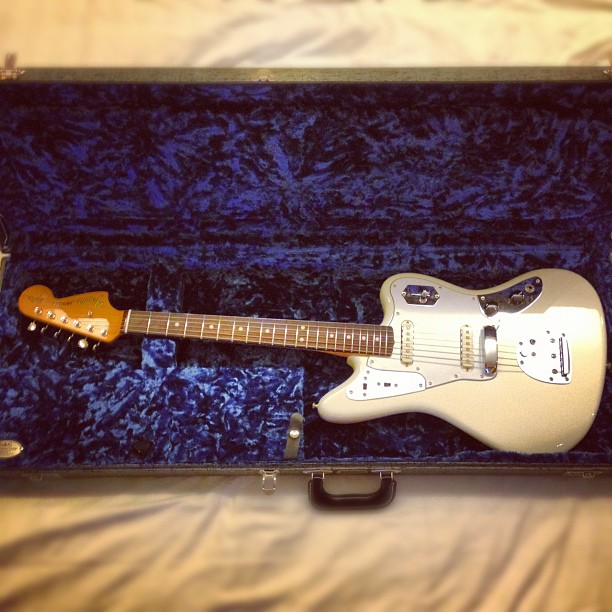
Fender Jaguar Johnny Marr signature. Photo by ToGa Wanderings. Licensed under CC BY 2.0. Via Wikimedia Commons. Fender
Jaguar
1962
It was the top of Fender’s catalog in 1962. By the late ’70s it was a pawn-shop guitar, and somebody’s only one.
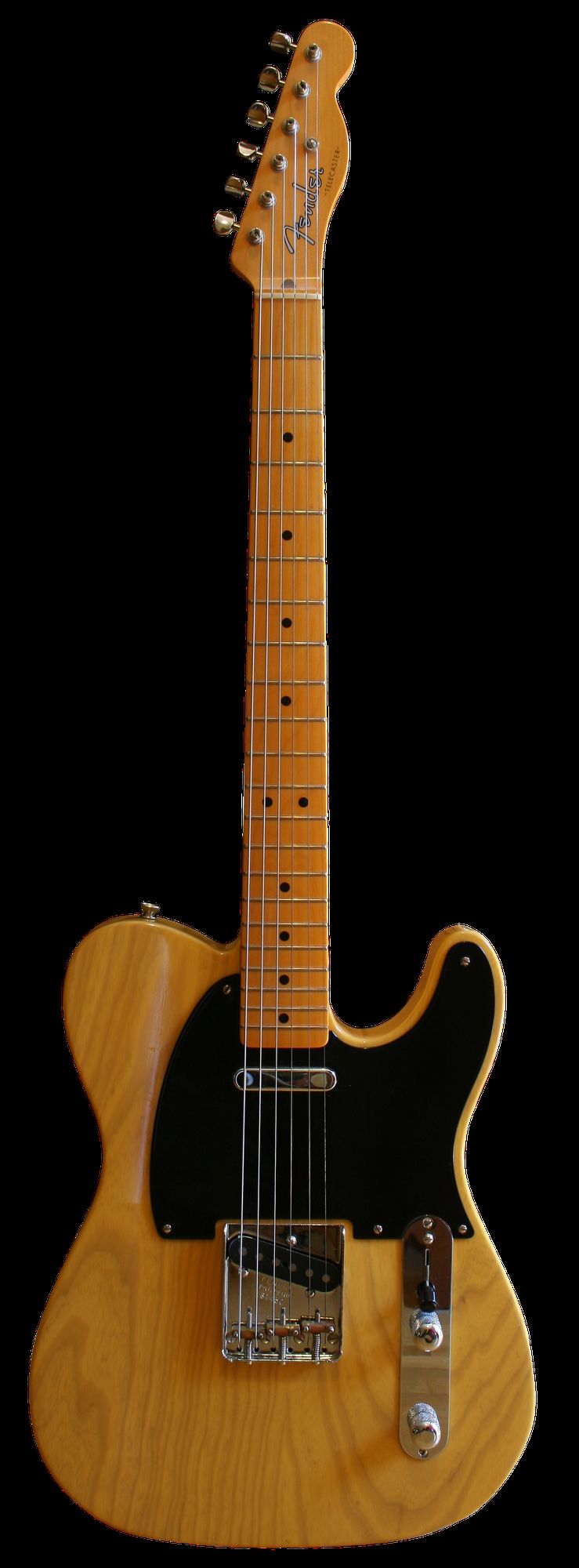
Fender Telecaster American Vintage 1952 with transparent background. Photo by Massimo Barbieri. Licensed under CC BY-SA 3.0. Via Wikimedia Commons. Fender
Telecaster
1950
Leo built it like a tool. The famous ones look like they just clocked off a double shift.