Rick Turner
Model 1
In 1978 Rick Turner was fired from the company he co-founded, and his house burned down. He kept the drawing.
1976, the Record Plant in Sausalito. Fleetwood Mac are making Rumours, and Lindsey Buckingham’s amps are smoking. The man John McVie called in to bring basses has a blueprint for a guitar that doesn’t exist yet, and Buckingham says he’ll take one.
- Introduced
- 1979
- Type
- Solidbody electric
- Class
- Production
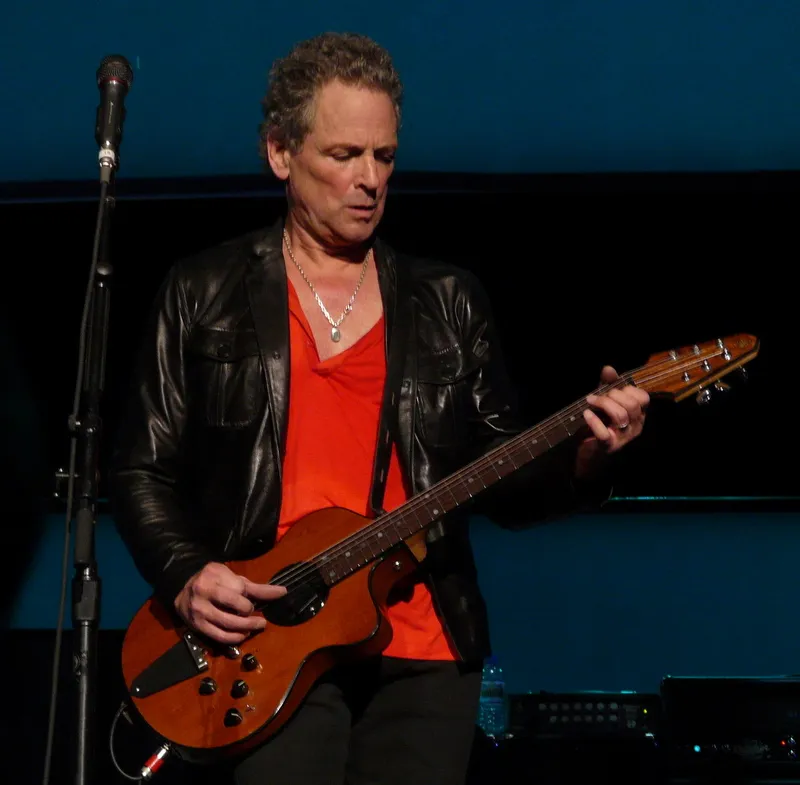
The short version
1969
Alembic
Turner co-founds Alembic. The basses work. The guitars, he decides, don’t.
1976
The Rumours sessions
McVie calls him to the Record Plant. Buckingham gets an Alembic Stratoblaster, gain up.
1978
Fired, then burned out
Out of Alembic after pushing for an audit. On December 7 an arsonist burns his Santa Rosa house.
1979
Three prototypes
Turner Guitars opens in Ignacio. By the end of summer the first three Model 1s are nearly done.
1979
Leave the Les Paul at home
End of October, Tusk-tour rehearsals. Buckingham plays 79-003 and sends his other guitars home.
1988
The Gibson years
Turner goes to Gibson’s West Coast R&D. Out by 1991 or 1992, depending who tells it.
mid-1990s
Santa Cruz
Model 1 building has picked back up, in a new town.
2022
The shop goes on
Turner dies on April 17, at 78. By December the shop says it’s in full production.
Side A
A1
Smoke from the Hiwatts
1976, the Record Plant in Sausalito. Fleetwood Mac were making Rumours, and John McVie had called Rick Turner in to bring basses. Turner brought Alembics, including the first one with a carbon-fiber neck, and a long-scale stainless fretless you can hear on “The Chain.”
Lindsey Buckingham got something too. Turner fitted his guitar with an Alembic Stratoblaster, a little booster, and turned the gain up: twelve decibels of it, straight into Hiwatts. The transformers started smoking in fifteen or twenty minutes.
Turner showed Buckingham a blueprint. A set neck, mahogany, one pickup, and a tone control that could find a slice of the sound and push it up or pull it down. Buckingham said he’d take one as soon as it was done.
Getting it done cost Turner a job and a house.
A2
The guitars didn’t work
Turner had co-founded Alembic in 1969. The basses were the success. The guitars, he decided, were not. They had necks that ran the length of the body and a heavy bridge on a sustain block. “The strings just weren’t moving the right way,” he said. Alembic’s own ratio ran about twenty basses for every guitar.
Then Alembic went bad for him. In 1978 he pushed for an independent audit and was fired. On December 7 that year, an arsonist burned down his house in Santa Rosa.
The settlement gave him a payout, his share of the carbon-fiber neck patent, and the Model 1 design. The carbon-fiber necks are someone else’s story. The guitar he’d promised Buckingham was mahogany, and now it was his.
A3
Alembic scraps, Bartolini coils
Turner Guitars opened in Ignacio, in Marin County. Larry Robinson bought about 300 leftover Alembic neck laminates, so the first necks came off the old shop’s scrap pile: maple and purpleheart, with the peghead scarfed on. Jim Furman designed the preamp and the EQ. Bill and Pat Bartolini wound the humbucker.
The body is a clam shell. Two halves of mahogany, shaped on the outside, hollowed for the electronics, then joined and bound. The top and back are arched like a slice of a cylinder, an idea Turner took from old Howe-Orme acoustics and from PA cabinets, where parallel walls make standing waves. The outline is an 1820s Stauffer with a cutaway. “Basically a Stauffer with a cutaway and slight modifications,” Turner said.
So is it hollow? “It isn’t,” Turner said. “It’s a solidbody.” People who’ve reviewed later ones call them chambered. Keep both.
Then there’s the pickup. It sits in a round hole and turns, and an Allen key on the back locks it where you want it. Buckingham and his tech set his “closer to the bridge on the low strings and closer to the neck on the upper strings,” and leave it there. Bite on the bottom, round on top, out of one pickup.
By the end of summer 1979, Turner was finishing the first three.
Flip the record · By the numbers
12 dB
The Stratoblaster boost Buckingham ran into his Hiwatts. The transformers smoked in 15 to 20 minutes.
20 to 1
Alembic basses to Alembic guitars, by the shop’s own ratio.
3
Prototypes Turner finished in Ignacio in 1979. Buckingham got one.
~25 years
How long 79-003 stayed on Buckingham’s stage, by one account.
Side B
B1
Leave the Les Paul at home
End of October 1979. Fleetwood Mac were rehearsing for the Tusk tour on a Hollywood soundstage, and Turner brought prototype 79-003. In Turner’s telling, Buckingham played it for about half an hour before the band arrived. Another telling makes it three hours. Either way, he then told his tech, Ray Lindsey, to leave the Les Paul, the Strat, and the Ovation at home.
Turner counts it as the third prototype. At least one account says the second.
Mick Fleetwood’s question was simpler: how fast could they have a backup?
Don’t hang the Tusk album on it. That record was already made. The Model 1 arrived for the tour, and that’s where it lived. Buckingham rarely uses them in the studio. Onstage they’re essential. Ask what it sounds like and you get two answers: a Les Paul’s fullness with a Tele’s bite, or with a Strat’s crispness. Which is about what Turner had set out to build.
B2
Still on the bench in Santa Cruz
By one account, 79-003 stayed on Buckingham’s stage for about twenty-five years: the Mirage tour, Tango in the Night, his solo shows. Then a knock to the headstock, and it was retired. He had more made. How many depends on the year you ask: three, six, or eight with one more on order.
Turner’s own road bent. He went to Gibson’s West Coast R&D in 1988 and left in 1991 or 1992; by his shop’s account, it had got too corporate. Model 1 building picked back up, and by the mid-1990s the shop was in Santa Cruz. The guitar grew options: an in-house humbucker, a piezo you can blend in, active electronics Turner developed with Seymour Duncan. One of those options is the one associated with John Mayer.
Rick Turner died on April 17, 2022. He was 78. The crew he trained kept building, and by the end of that year the shop said it was in full production.
You can still order a Model 1. It’s still mostly what he showed Buckingham in Sausalito: mahogany, a set neck, one pickup that turns. He lost the job and the house. He kept that.
The cast
The people, and the specific guitars, that made the legend.
1979
Lindsey Buckingham
79-003, the 1979 prototype
Fleetwood Mac. Took it on the Tusk tour and kept it through Mirage and his solo shows, until a knock to the headstock retired it. Has had several more since.
1979
Ray Lindsey
The guitars left at home
Buckingham’s tech. Told to leave the Les Paul, the Strat, and the Ovation at home once Buckingham had tried the Model 1.
1976
John McVie
Alembic basses, not a Model 1
Fleetwood Mac. Made the call that brought Turner to the Record Plant during Rumours.
John Mayer
Model 1 with the B electronics
The factory calls its B electronics option the one associated with him, and he’s occasionally been spotted with one. No record is pinned to it.
1979
Rick Turner
Builder
Alembic co-founder. Fired and burned out of his house in 1978, and built the Model 1 anyway. Died in 2022, at 78.
Liner notes
Specs, construction, rarity, value, and every source we used.
A mahogany clam-shell, a rotating humbucker, and a set neck after Alembic — Rick Turner’s Model 1, not a Rickenbacker.
- Body
- Chambered mahogany clam-shell; cylindrical arched top and back; single-cut. LB: fully bound. MusicRadar (2015) measured 298 mm lower bout, 410 mm body length, 60 mm depth. Mix flagged.
- Neck
- Set. LB: 5-piece maple and purpleheart, scarf peghead, multi-layer backstrap. Baseline: mahogany. 15 frets to the body.
- Fingerboard
- Bound ipe (LB), 12" (305 mm) radius, 24 medium-jumbo. Early and Vintage Reissue: rosewood. Mix flagged.
- Scale
- 24.75" factory / Premier Guitar / Vintage Guitar. MusicRadar 629 mm (24.75"). Guitar.com 625 mm / 24.6". Mix flagged.
- Pickups
- In-house “hot humbucker,” rotatable, CERAMIC 5. Factory neck pickup: 21 kΩ / 4.7 H. Optional piezo (P suffix) or second magnetic.
- Hardware
- Gotoh 510; tune-o-matic; Turner tailpiece. Original 1979: Schaller M6-A; Stars Guitars copy of Turner’s early-’70s Alembic bridge. Mix flagged.
- Electronics
- A: volume, tone, push-pull coil cut. B: D-TAR Eclipse 18 V (trim 3–12 dB) plus buffered output. C: B plus quasi-parametric EQ. P: piezo blend. Two 9 V cells under the tailpiece on active guitars.
- Finish
- LB: gloss natural or burgundy. Earliest late-1970s / early-’80s: natural, aged tan. Custom colors to order.
- Nut
- 1 11/16" factory. MusicRadar 42.3 mm. Guitar.com Deluxe LBU 43.5 mm. Mix flagged.
Open the full research fileConstruction details, the complete player record, production numbers, dated value estimates, and sources
Current typical = Model 1 (Santa Cruz, CA; rickturnerguitars.com/guitar/model-1/, fetched 28 September 2026). Table is the factory LB trim. Baseline (satin mahogany neck, unbound ipe) is a sister, not this table. Vintage Reissue copies 79-003. Featherweight is cedar-core. Renaissance, Electroline, and Model T are other lines. Not an Alembic (alembic-series-i). Not a Rickenbacker. Graphite is Turner’s 1976 neck patent with Geoff Gould (later Modulus), not this mahogany body. Mixed inch/mm flagged; do not average 24.75" / 24.6" or 2" / 2 1/8" bridge spacing.
Construction
The job was an electric a fingerstyle player could take on a loud stage. Les Paul warmth. Strat bite. An acoustic overlay. Not the through-neck Alembic guitar that had already failed that test.
Turner co-founded Alembic in 1969 (Wikipedia; factory About). The basses worked. The guitars, he decided, did not. Factory Fleetwood Mac page: through-neck maple and purpleheart, a heavy bridge on a sustain block — “the strings just weren’t moving the right way.” Alembic’s own ratio was about 20-to-1 bass to guitar.
1976. John McVie called him to the Record Plant in Sausalito. Rumours. Turner brought Alembic basses, including the first carbon-fiber neck and a long-scale stainless fretless heard on “The Chain.” For Buckingham he fitted an Alembic Stratoblaster, gain up. Premier Guitar (Max Mobley, 21 December 2010): 12 dB into Hiwatts. Transformers smoked in 15–20 minutes.
He showed Buckingham a blueprint: set neck, mahogany, one pickup, semi-parametric EQ. Buckingham said he would take one as soon as it was done. Then Alembic went south. Fired in 1978 after pushing an independent audit. Pearl Harbor day that year, an arsonist burned his Santa Rosa house. Settlement: a payout, the Model 1 design, and his share of the carbon-fiber neck patent. Graphite stays on the Alembic / Modulus side of the ledger. This guitar is mahogany.
Turner Guitars opened in Ignacio, Marin County. Larry Robinson bought about 300 leftover Alembic neck laminates. Jim Furman designed the preamp and EQ. Bill and Pat Bartolini wound the humbucker. By the end of summer 1979 he was finishing the first three prototypes. Wikipedia dates the Model 1 to 1979. This plate starts there.
The body is a clam-shell: two mahogany halves, each 1¼" thick at the center — the same lumber as an Alembic bass core — outer curves first, electronics cavities cut, then joined and bound. Cylindrical arch on top and back, from Howe-Orme acoustics and from PA cabinets: parallel surfaces make standing waves. Turner, to Premier Guitar: “It isn’t [hollow]. It’s a solidbody.” Guitar.com (Huw Price, 15 August 2018) calls later examples chambered solidbodies. MusicRadar (Dave Burrluck, 10 October 2015): two halves, cavities, then bound. Keep all three. Not a semi-hollow with a cedar stick — that reading belongs to Featherweight construction, a sister, not this table.
The outline is a Stauffer from the 1820s with a cutaway. Turner: “basically a Stauffer with a cutaway and slight modifications.” MusicRadar’s 2015 C-LB: 298 mm across the lower bouts, 410 mm long, 60 mm deep. Mix flagged. Neck from Alembic scrap: laminated maple and purpleheart, heel stacked, peghead scarfed, 15 frets to the body. Rosewood board on the early ones; current LB is bound ipe. Scale 24.75" on the factory page, Premier Guitar’s original-spec box, and Vintage Guitar (Oscar Jordan, July 2017). Guitar.com prints 625 mm / 24.6" on the 2018 Deluxe LBU. Keep both. Do not average.
The pickup sits in a round hole and rotates. An Allen key on the back locks it. Buckingham and his tech, to Guitar.com (Tom Pinnock, 17 September 2021): “closer to the bridge on the low strings and closer to the neck on the upper strings,” and they leave it. Original electronics (Premier Guitar spec box): Bartolini-wound high-impedance ceramic humbucker; Furman quasi-parametric, 150 Hz–3.5 kHz sweep, 12 dB boost/cut, hardwire bypass; master volume and passive tone. Piezo is later. Premier Guitar: Turner added a piezo and coil-split as the circuit evolved. Wikipedia attributes 18-volt preamps on this guitar to taming piezo quack. Keep both. Current factory: in-house hot humbucker; A passive; B D-TAR Eclipse 18 V; C adds the parametric; P blends a piezo. D-TAR is Turner with Seymour Duncan.
Not an Alembic Series I. Through-neck, low-impedance single-coils, dummy coil, outboard supply. This is a set-neck mahogany guitar from a different shop. Not a Rickenbacker. Turner’s horseshoe “Rick” pickup lives on the Model T. Not a Renaissance.
Then the shop moved. Wikipedia: Gibson Labs West Coast R&D, 1988; left 1992. Factory About: too corporate by 1991. Keep both. Fretboard Journal (18 April 2022): Model 1 building resumed around that stretch; Santa Cruz in the mid-1990s. Turner died 17 April 2022, congestive heart failure and a stroke, age 78. Music Inc (29 December 2022): Scott Cooper — still in “full production mode”; Zack Jones production manager; crew Turner trained. Classic vs current: 1979 Ignacio prototype — Honduras mahogany clam, Bartolini/Furman, Schaller, Stars Guitars bridge, natural — against the living LB: in-house humbucker, D-TAR Eclipse, optional piezo, Gotoh 510, bound ipe, gloss natural or burgundy.
Players
Do not hang the Tusk album on this guitar. Do not recruit Alembic basses, the Peanut, or a Rickenbacker as if they were this Model 1.
Lindsey Buckingham (Fleetwood Mac). The origin object. Serial 79-003, third prototype, late 1979. Turner (factory): Tusk-tour rehearsals on a Hollywood soundstage, end of October; about half an hour before the band arrived, then he told tech Ray Lindsey to leave the Les Paul, the Strat, and the Ovation at home. Vintage Guitar: three hours. Keep both. Fretboard Journal calls it the second prototype. Turner, VG, and Heartbreaker call it the third / 79-003. Keep both counts. Mick Fleetwood asked how fast they could have a backup.
The guitar is a stage tool. Tusk the album was already cut; the Model 1 arrives at the tour. Guitar.com 2021: “In the studio, Buckingham rarely uses the Model 1s, but live they’re essential.” Premier Guitar (Paul Kobylensky, 23 September 2021): inseparable onstage; the 2021 solo record used a ’64 Strat and a Taylor 814ce. Guitar Player 2008, via Jackson Maxwell (26 March 2024): Les Paul fullness with Tele bite. Premier Guitar 2021: Les Paul fullness with Strat crispness. Keep both. Heartbreaker: 79-003 through the Mirage tour, Tango in the Night, and solo shows for about twenty-five years, then traded back after a headstock smack. Factory About: original retired; three others still played. Premier Guitar 2010: six. Guitar.com 2021: eight, plus one on order. Keep the range. LB on the spec sheet is a trim of Model 1, not the product name.
John Mayer. Factory: electronics option B is “the model associated with John Mayer.” Vintage Guitar 2017: occasionally spotted with one. Named studio-to-guitar credits for Heavier Things are unpublished here. Do not pin “Bigger Than My Body” as a Model 1 studio track.
Also known to play stays short. Factory and dealer lists repeat Buckingham and Mayer. None invented.
Rarity
You can order a new Model 1 from Santa Cruz. It is a custom-shop guitar, not a Fullerton run. Music Inc, December 2022: full production after Turner’s death. That is availability, not a census.
Rick Turner Guitars does not publish Model 1 unit totals. None invented. Serials date a guitar. They don’t count a year. MusicRadar 2015: about 24 instruments a month shop-wide — Compass Rose ukes, Model 1s, Electroline basses, Renaissance — four luthiers. That is not a Model 1 total.
What is actually thinner: the 1979 Ignacio prototypes (three, of which 79-003 is the named survivor; Heartbreaker: the other two went to Turner and his brother-in-law, both MIA); early natural Ignacio guitars before the Gibson-years pause; Vintage Reissue copies of 79-003, not the object. Jazz Guitar Today (3 January 2019): 40th Anniversary, 18 guitars, MSRP $8,500. Heartbreaker 2025–26: Legacy 21, 21 Featherweights from cedar Turner cut. Celebrity objects are unique. They are not a vintage Model 1.
Value
Informal estimate, 28 September 2026. Not an appraisal.
Ask vs sold labeled. Celebrity lots are not-comps. No invented medians or factory counts. Reverb Price Guide for Model 1 was unavailable this pass. Flag: thin sold-comp access.
New street. No factory retail list on rickturnerguitars.com this pass. Named historical lists, not 2026 street: Vintage Guitar, July 2017, Deluxe LB $6,665; MusicRadar, October 2015, C-LB £4,950; Guitar.com, August 2018, Deluxe LBU £6,550 / Special C £3,350; Jazz Guitar Today 2019, 40th Anniversary MSRP $8,500. Named Heartbreaker dealer asks, fetched 28 September 2026, not a midpoint: Standard Black Gloss $5,495; Satin with full electronics $5,295; Custom walnut $6,295; Custom flamed redwood $7,495; Vintage Reissue $7,995 (trapeze sister $8,875); Legacy 21 $9,595. Configuration-dependent. Do not average those asks.
Used modern. No clean Reverb Price Guide band isolated this pass. Do not invent a midpoint from the new-street asks above.
Vintage / collectible. Early Ignacio 1979–early ’80s examples are the scarce end. Named Heartbreaker ask on 79-003, the Buckingham prototype: $142,090, sold out — celebrity, not a street tape, not a Model 1 average.
See also
- alembic-series-i — Turner’s previous shop; this is the set-neck guitar he built after 1978, not an Alembic
- gibson-les-paul-custom — the all-mahogany Custom whose warmth he wanted
- fender-stratocaster — the clarity half of the brief; Buckingham’s other electric
Sources
- Rick Turner Guitars, Model 1 — LB vs Baseline; 5-piece maple/purpleheart; bound ipe; A/B/C/P electronics; D-TAR Eclipse 18 V; piezo blend; natural/burgundy; early tan
- Rick Turner Guitars, Fleetwood Mac / Model 1 — 1976 Rumours; Stratoblaster; Alembic through-neck problem; 20-to-1; 1978 firing and arson; settlement includes Model 1 design and carbon-fiber patent; Ignacio; Bartolini; Furman; three 1979 prototypes; Tusk-tour half hour; 79-003 quote
- Rick Turner Guitars, About — Alembic origin; Model 1 cylindrical arch; Buckingham retired original, three others; Gibson to 1991; Electroline; Renaissance
- Rick Turner Guitars, Pickups — hot humbucker; CERAMIC 5; neck 21 kΩ / 4.7 H; bridge 27 kΩ / 8.2 H
- Wikipedia, Rick Turner (luthier) — born 30 July 1943; Alembic 1969; Turner Guitars 1979; Model 1 1979; Gibson 1988 / left 1992; graphite neck patent 1976 with Geoff Gould; 18 V piezo claim; died 17 April 2022
- Premier Guitar, Max Mobley, Rick Turner: The Father of Boutique Guitars, 21 December 2010 — Stauffer; solidbody not hollow; original Buckingham spec 24 3/4" / 1 11/16" / 12" / 2" span; Bartolini; Furman 150 Hz–3.5 kHz / 12 dB; piezo added later; six Buckingham guitars
- Vintage Guitar, Oscar Jordan, Model 1 Deluxe LB (July 2017) — list $6,665; 8 lb; 24.75" / 12" / 1 11/16"; rotating pickup; piezo blend; three-hour Tusk-tour telling
- MusicRadar / Guitarist, Dave Burrluck, Model 1 C-LB, 10 October 2015 — 1979 number three; 298 / 410 / 60 mm; 629 mm (24.75"); 42.3 mm nut; 4.15 kg / 9.13 lb; £4,950; ~24 instruments/month
- Guitar.com, Huw Price, Deluxe LBU & Special C, 15 August 2018 — chambered solidbodies; 625 mm / 24.6"; LBU £6,550; Special C £3,350; LR Baggs T-Bridge; 8.1 lb
- Guitar Player, Jackson Maxwell, 26 March 2024 — 2008 Buckingham interview; Tele vs Les Paul; Turner designed Model 1
- Premier Guitar, Paul Kobylensky, Lindsey Buckingham’s Gear, 23 September 2021 — Les Paul fullness / Strat crispness; stage Model 1; 2021 solo on ’64 Strat and Taylor 814ce
- Guitar.com, Tom Pinnock, 17 September 2021 — eight Model 1s; pickup rotation; studio rarely, live essential
- Fretboard Journal, Rick Turner, 1943–2022 — Stauffer; second-prototype telling; Santa Cruz mid-1990s; Model 1 resumed after Gibson stretch
- Music Inc, 29 December 2022 — full production after Turner’s death; Zack Jones; Scott Cooper
- Guitar.com, Rick Turner dies at 78, 18 April 2022 — 17 April 2022; congestive heart failure and stroke
- Jazz Guitar Today, 40th Anniversary, 3 January 2019 — 18 guitars; MSRP $8,500; Honduras mahogany clam; maple/purpleheart
- Heartbreaker Guitars, 1979 79-003 — serial 79-003; ~25 years; $142,090 sold out; other two prototypes MIA
- Heartbreaker Guitars, Vintage Reissue #5979 — 79-003 copy; zero fret; Brazilian rosewood; $7,995; 7 lb 12 oz
- Heartbreaker Guitars, Rick Turner collection — named 2026 asks: Standard Black Gloss $5,495; Satin full electronics $5,295; Custom walnut $6,295; flamed redwood $7,495; Legacy 21 $9,595
- Heartbreaker Guitars, Legacy Series, 29 January 2025 — 21 Featherweights; cedar Turner cut; mahogany Model 1s usually ~8.0–8.5 lb
Keep digging
Guitars this one gets compared to, confused with, or descended from.
- Send a picture
Alembic
Series I
1972
The sound wizards behind the Grateful Dead got tired of noisy pickups, so they built bass players a better one.
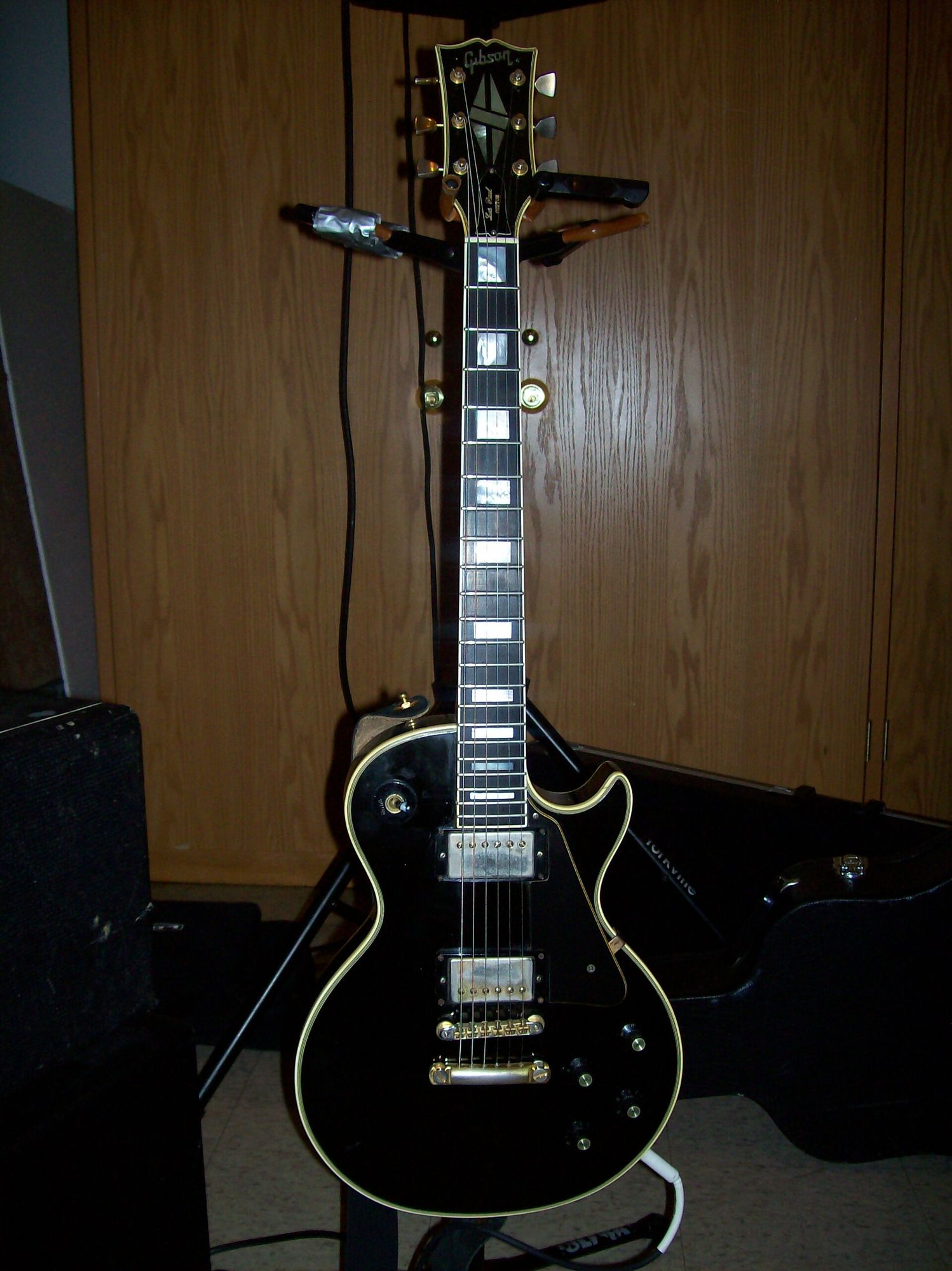
A 1974 Gibson Les Paul Custom guitar. Photo by Ibanez Guy. Licensed under CC BY-SA 3.0. Via Wikimedia Commons. Gibson
Les Paul Custom
1954
Jimmy Page paid his off in installments at 18. It was stolen in 1970. He got it back over 40 years later.

Photo: Lightburst / Wikimedia Commons / CC BY-SA 4.0 Fender
Stratocaster
1954
The guitar most people mean when they say “electric guitar.” Designed by a man who didn’t play one.