Weissenborn
Style 2
Built to be played flat on your lap. Within a couple of years, a louder guitar had taken its job.
In 1920s Los Angeles, Hermann Weissenborn built koa Hawaiian guitars with a neck that was hollow all the way to the nut. The Style 2 was the one with black binding and a rope ring around the soundhole. Then the cone guitars came.
- Introduced
- 1925
- Type
- Acoustic lap steel
- Class
- Closed run
Have a photograph of this guitar? Send a picture
The short version
1863
Hermann Weissenborn
Born in Germany. New York around 1900 or 1902, then Los Angeles.
c. 1909
The hollow neck
Knutsen, in Seattle, gets there first, by one account, by straightening the arm of a harp guitar.
1913 or c. 1920
The first steels
One researcher has him copying a borrowed Knutsen in 1913. Another says it only appears he started around 1920.
c. 1923
Four styles
The factory years begin, with a brand burned in and Styles 1 through 4.
1925
$56
A distributor’s catalog lists the Style 2, black binding and “fancy selected position marks.”
1927
The metal arrives
Nationals hit the market. By one estimate most Weissenborn Hawaiians had already been sold.
1937
The last day
He works his last day on 7 January and dies on 30 January, at 73. No factory records survive.
Side A
A1
Played lying down
Put a Weissenborn on your lap and the first odd thing is the neck. It’s square, and it’s hollow, all the way from the body to the nut. The box doesn’t stop at the heel. The whole length of the guitar is the guitar.
The second odd thing is that you can’t fret it. The strings sit high off a koa board with flush lines of white holly where the frets would go. You play it flat, with a bar in your left hand. It was built for one job: Hawaiian music, loud enough for a room.
Hermann Weissenborn was born in Germany in 1863, worked in New York, and was in Los Angeles by 1910. No cone, no pickup. Just koa.
A2
A borrowed guitar
How he got into steel guitars depends who you ask.
One version has it starting in 1913. His wife Concepcion was taking lessons from Charles S. DeLano and brought home a Seattle-built Knutsen, and Hermann copied it. Over the next two years he built almost three dozen steels, mostly in what would become the Style 2 layout. The other version says only that he appears to have taken up steels around 1920. Keep both.
The hollow neck wasn’t his idea first, either. Knutsen got there around 1909, by one account, by straightening the arm of a harp guitar. Dulcimers had used a similar chamber. Nobody’s sure who was first, and there’s no known partnership. But Weissenborn is the name that came to mean acoustic Hawaiian.
A3
Rope at the soundhole
The style numbers are trim, not different guitars. Style 1 is plain. Style 2 adds black binding and a ring of rope pattern around the soundhole, and its fingerboard ends in a French curve instead of squaring off. Style 3 runs the rope onto the top and the board. Style 4 puts it on the back and the headstock too, with fancier koa as you go up. David Lindley called the rope “clown binding.”
In 1925 a distributor’s catalog listed them at $40, $56, $67.50, and $79. The Style 2 was $56, “fancy selected position marks” included. By 1930 it was $55 or $56, depending which copy you’re reading, still 3 inches deep.
The odd thing is when the Style 2 was common. In the early paper-label years, before about 1922, most of what he built was in the Style 2 layout. One researcher’s favorite-sounding Weissenborn is a paper-label Style 2 from about 1920. But in the factory years after that, very few Style 2s were built. Most of those were 1s and 4s.
The whole length of the guitar is the guitar.
Flip the record · By the numbers
$56
A Style 2 in the 1925 catalog. Plain Style 1 was $40, the fanciest Style 4 was $79.
3"
Body depth on the factory guitars, with the neck hollow from the body to the nut.
$125
The cheapest plain National tricone. Louder, and Hawaiian players paid it.
under 5,000
A rough guess at everything he built, ukes and Spanish guitars included. Not a count.
Side B
B1
Louder for $125
Then came the metal guitars. National’s cheapest plain tricone cost $125, more than twice a Style 2, and it was louder than any Weissenborn. Hawaiian players paid it. Within a couple of years the wooden hollow-neck was off the bandstand. National even numbered its tricones Style 1 through 4, almost certainly borrowing the idea from this ladder.
The guitars changed as the cones arrived. From about mid-1926 the guitars got heavier braces and a smaller bridge, and around 1927 shellac gave way to nitrocellulose. It didn’t matter. Production slowed after 1927 and was a trickle by about 1934.
He moved to a smaller building in 1935. His last day of work was 7 January 1937. He died of heart failure on 30 January, at 73. Nobody has found the factory records.
B2
Eat Dobros for lunch
The guitars stayed. Decades later David Lindley had what he called his “A-Team”: two Weissenborn Style 2s, a Style 1, a thin early Style 2 in maple and spruce, and a Kona. He liked the plain ones best, Style 1s and 2s with straight-grain koa. What he said about them is about as good a review as a maker gets:
“They’re not made badly, they’re made simply — sometimes a little bit crude, but a fantastic, superior design. They all sound good.”
Ben Harper toured with a Style 2 in his kit, though his main guitar, and his first, is a Style 4. It was Harper’s grandfather who sold Lindley his first Weissenborn.
Which records his Style 2s are on hasn’t been pinned down. But Lindley had a line for the cone guitars that took the Weissenborn’s job, and he didn’t hedge it.
“Weissenborns eat Dobros for lunch.”
The cast
The people, and the specific guitars, that made the legend.
1996
David Lindley
Two koa Style 2s, plus a thin maple-and-spruce early Style 2
All part of his “A-Team,” with a Style 1 and a Kona. He preferred the plainer Style 1s and 2s.
1996
Ben Harper
A touring Style 2, beside his main Style 4
The Style 4 is his first and his main one. The Style 2 was in the kit he toured with.
until 1937
Hermann Weissenborn
Maker
Built steels in Los Angeles until weeks before his death.
C. S. DeLano
Kona, his brand from the same shop
The teacher in one origin story. His Konas have a solid neck and wire frets. Not this guitar.
Liner notes
Specs, construction, rarity, value, and every source we used.
Black binding, a rope rosette, and a square hollow neck — Weissenborn’s Style 2, a Los Angeles lap guitar, not a Kona and not a resonator.
- Body
- Koa, hollow, shoulders running into the neck. 1930 Tonk catalog, this style: 3" deep. Noe: 1923–27 factory guitars standardized at 37" overall and 3" deep. Ben Elder, 1996, on most Weissenborns: 39" long, 15¼" lower bout, 10¼" upper. Mix flagged. Do not average 37" and 39".
- Neck
- Square, hollow from the body to the nut. Koa on the factory guitar. Not a Kona solid neck.
- Fingerboard
- Koa. Flush white holly fret lines, not wire. White binding. Fancy pearl position marks. French curve over the soundhole (Elder). Factory era: diamond at the 12th (Noe). Fret count unpublished.
- Scale
- 25" on most Weissenborns (Elder) and on Dusty Strings’ mid-1920s Style 2. Miki’s 1920s Style 2: 636 mm. Harper owns an early Weissenborn at a longer scale “just less than 25 inches.” Mix flagged. Do not average.
- Pickups
- None
- Hardware
- Bat-wing bridge, metal saddle (Reverb’s history piece: aluminum). Open-back tuners on Dusty Strings’ mid-1920s Style 2. Reverb: Waverly on the four styles by about 1923.
- Electronics
- None
- Finish
- Hand-rubbed gloss. Shellac on the 1923–27 guitars (Noe). Nitrocellulose lacquer from about 1927.
- Nut
- Mix flagged. Dusty Strings Style 2: 1⅞". Imperial Vintage, 1920s Style 2: 2". Miki: 50 mm. Do not average.
Open the full research fileConstruction details, the complete player record, production numbers, dated value estimates, and sources
Classic living example = 1920s Los Angeles H. Weissenborn Style 2, hollow-neck koa, played flat with a bar. No current H. Weissenborn Co. SKU. Richard Wilson’s 2026 Style 2 and Gold Tone’s GT-Weissenborn are other shops on the silhouette. Kona is C. S. DeLano’s brand: solid neck, 4¼" deep, bouts 9¼" and 13¼" (Elder). Teardrop is a Style 1 shape (Noe). Spanish A / B / C / D are round-necks. No Gibson SKUs. Mixed inch/mm flagged on Miki’s 636 mm and 50 mm against the inch figures. Do not average 37" / 39", 25" / 636 mm / “less than 25 inches,” or 1⅞" / 2" / 50 mm. Do not fold Gold Tone’s 24¾" into the 25".
Construction
The job was Hawaiian music loud enough for a room, on a guitar that was never meant to be fretted upright. Square neck. Strings off the board. A bar in the left hand. The neck is hollow, so the box does not stop at the heel. Los Angeles. Koa. No cone. No pickup.
Hermann C. Weissenborn, born 1863 (Gruhn). Elder: Germany to New York around 1902, violin and piano listings until 1910, then Los Angeles. Gruhn has New York around 1900 and Los Angeles in 1910. Keep both. When the steels start is the other split. Elder: he “appears” to have taken up steels around 1920. Noe: mid-1913, shop at 527 East 12th Street, copying a Seattle Knutsen his wife Concepcion brought home from lessons with Charles S. DeLano. Over the next two years, almost three dozen steels, “mostly of what would become the Style 2 platform,” from about an inch thick to William Pester’s four-inch Style 4. Keep 1913 and “around 1920.”
The hollow neck is older than his name on it. Noe: Knutsen, about 1909, by straightening a harp-guitar arm. Elder: dulcimers had used a similar chamber, and between the two makers it is not certain who was first. No known partnership. Gruhn: Knutsen’s tops are typically ladder-braced and Weissenborn’s X-braced, except the earliest Weissenborn in Jonathan Kellerman’s collection, which is ladder-braced. Weissenborn is the maker whose guitar came to mean acoustic Hawaiian.
Style numbers are trim, not a second guitar. Gruhn: Style 1 plain, Style 2 rope at the soundhole only, Style 3 rope onto the top and the board, Style 4 rope on the back and the headstock too, with fancier koa as the number rises. Elder: Style 2’s board ends in a French curve; the other three square off. Position marks “in various patterns,” sometimes a first-fret triangle. Lindley called the rope “clown binding.” Spruce tops were optional, and rare, on Styles 1 and 2.
This plate’s introduced: 1925 is the Stadlmair catalog Noe quotes. Style 1 $40. Style 2, black binding, “fancy selected position marks,” $56. Style 3 $67.50. Style 4 $79. Not a claim that nothing with this trim existed earlier.
Noe’s era notes, on weissenborn.es: 1914–15, “what was later to become a Style 2 configuration,” maple and spruce, as little as one inch deep. 1915–22 paper labels, mostly Style 2 configuration, often a spruce top on koa, depth from two inches toward three. His best-sounding guitar is a paper-label Style 2 from about 1920. The interview captions a 1916 Style 2. 1923–27 is the burned-in brand: factory Styles 1–4, nearly all koa, shellac, 37" long, 3" deep, a diamond at the 12th on Styles 2–4, Style 2 still with the curved board end. Reverb’s history piece puts the four styles at about 1923. Keep 1923 and 1925. In that factory window Noe says very few Style 2s were built. Most of those years were Style 1 and Style 4.
The 1930 Tonk Bros. copy, on the Weissenborn Guitar Heritage Archive, prices this style at $55.00, still 3 inches deep, still black on the edges and rope at the hole. Noe’s 1928 Tonk list is the same $55. Gruhn’s 2008 column calls the 1930 price $56. Keep both. Elder’s 1996 article said the black binding was celluloid. On 8 May 2011 he corrected it: phenolic. Period lists, not 2026 street.
It got heavier when the cones arrived. Noe, from about mid-1926: heavier braces, a larger bridge plate, a smaller bridge, and on some of them a heavy coat of nitrocellulose. Bridge thickness from a half-inch to three-eighths, bat-wing ends gone, length from 6.25" to 5.5". The same notes measure the 1923–27 bridge at 6.5" point to point. Keep 6.5 and 6.25. Do not average. Shellac gives way to nitrocellulose around 1927. Stadlmair sold them east until 1928; Tonk Brothers after that (Noe). Gruhn: the Chicago agreement is why you could buy one almost anywhere in the U.S.
Not a Kona. DeLano’s brand, from the same shop, and a different guitar. Elder: 4¼" deep, bouts 9¼" and 13¼", a short solid neck, raised bone nut, joint at the seventh fret, wire frets. “A black-bound (Style 2) Kona has yet to be reported.” Noe’s paper-label note is the other half: those Konas were mostly Style 2s in white binding, not black. Reverb News, 2017, puts the split as solid neck versus hollow. Not this slug.
Not a teardrop. Noe: offered about 1926, nearly a 1910 Knutsen, and “as far as I know, they are all Style 1s.” Elder: a Style 1 without the upper bouts. Brozman called it “the salad spoon.”
Not a Spanish Weissenborn. Styles A, B, C, and D parallel Hawaiian 1–4 (Elder, Gruhn). Elder: 12-fret, Martin 0 size. Style B is the black-bound round-neck. It frets. This one does not.
Not National’s Style 2, and not a Dobro. National’s Styles 1–4 are tricones. Reverb News: that numbering was almost definitely borrowed from this ladder. Gruhn: the cheapest plain tricone was $125, louder than any Weissenborn, and Hawaiian players paid it. Within a couple of years the wood hollow-neck was off the bandstand. A Dobro 27 is a birch spider. A Style O is a nickel biscuit. An A-22 is an aluminum electric. Noe: Rudolph Dopyera became shop foreman after Hermann Friedrich died in 1926. A man changing benches. Not a cone in this body.
The shop did not outlast the electric steel. Noe: a smaller building in 1935, last day of work 7 January 1937, dead of heart failure 30 January 1937, age 73. No factory records have been found. Gruhn has the year, and spells him Herman in that sentence. Reverb News: production slowed after 1927, a trickle by about 1934, and he was still building at his death. Keep the trickle and the date. No Gibson SKUs.
Players
“Better Way” and the $500 guitar are a Style 4. A Kona in the same case is not this plate.
David Lindley. Ben Elder, Acoustic Guitar, 1996: the “A-Team” is two Weissenborn Style 2s, one Style 1, a thin maple-and-spruce Style 2, and a Kona Style 3. The thin maple-and-spruce guitar is the early configuration, not the 3-inch koa catalog piece. He preferred Style 1 and 2, generally the plainer straight-grain koa. To Elder: “They’re not made badly, they’re made simply — sometimes a little bit crude, but a fantastic, superior design. They all sound good.” And: “Weissenborns eat Dobros for lunch.” A boast about the hollow neck, not a Dobro serial. The Kona Style 3 was a gift from Jackson Browne, the guitar in the Trio video for “To Know Him Is to Love Him,” red hearts on the board. Solid neck. Not this slug. Burgin: two later stage guitars were their Style Ones, his “Burgintwangers.” Not Los Angeles Style 2s. Which records used the vintage pair is unpublished here.
Ben Harper. Elder, same 1996 article: a straight-grain Style 4 is his best, and he also tours with a teardrop and a Style 2. The Style 2 is in the kit. It is not the guitar the later interviews name. Acoustic Guitar’s lesson: “Better Way” is a late-era Style 4 from the late 1980s. Guitar Player (July 2024): the Jack Johnson overdub is “my main one in Style 4,” and that Style 4 was his first. Guitar World (March 2021): he worked that first one off at $500 in the family shop. His grandfather sold Lindley his first Weissenborn (Harper to Guitar Player). Model of that sale unpublished. Premier Guitar names “Homeless Child,” “Welcome to the Cruel World,” and “Give a Man a Home” as Weissenborn songs in a band set. No style number. A Richard Wilson Style 3 is a modern gift. The “Ceasefire” clip is a 1917/1920 solid-neck. Neither is this hollow Style 2.
Steve Fishell is the trap in one sentence. Elder: a teardrop player; his Style 3 mellower than his Style 1; the Style 1 is the one on “Born to Run,” Emmylou Harris, Cimarron. Not a Style 2.
Also known to play stays empty for this trim level. John Fahey’s cover guitar, in Elder, is a Kona Style 3. Ry Cooder’s, an all-koa Kona Style 1. Jerry Douglas’s rescued planter was a Style 1. Sol Hoopii passed through Weissenborns on the way to tricones and electrics (Noe), with no Style 2 pinned. None invented.
Rarity
You cannot order a Style 2 from H. Weissenborn Co. The shop died with him in 1937. Wilson, Asher, Iseman, Burgin, and Gold Tone build hollow-necks now. They are other factories. They are not a burned-in Los Angeles brand.
No factory ledger (Noe). None invented. Elder, 1996: three numbered guitars documented, one a thin spruce-top Style 2. Brozman’s rough estimate, in that article, is under 5,000 instruments of every kind, ukes and Spanish necks included, and perhaps 80 percent of the Hawaiians sold before Nationals in 1927. In 2011 Elder put the known stamps at four or five, “probably post-factory.” Estimates. Not a Style 2 census.
The scarce end is the burned-brand Style 2, not every guitar with a rope rosette. Paper-label years are mostly Style 2 configuration (Noe). 1923–27 is the opposite: very few Style 2s, while Style 3s from about 1920–25 are what he calls relatively rare. Lindley’s two koa Style 2s, the thin maple-and-spruce one, and Harper’s touring Style 2 are single objects. They are not the model.
Value
Informal estimate, 21 October 2026. Not an appraisal.
Ask versus sold labeled. No hammer isolated this pass. Celebrity guitars are not-comps; no auction result sourced for Lindley’s or Harper’s. No invented median. Period $56 (1925 Stadlmair, Noe; Gruhn’s 1930 figure) and $55 (1928 Tonk, Noe; 1930 Tonk copy) are 1920s–30s money. Elder’s 1996 line that they were going for 20 to 30 times list is a 1996 sentence. It is not a 2026 tape.
New street. None from the original company. A living luthier’s Style 2, not this table: Richard Wilson, 2026 build list, Style 2 $4,290 in Tasmanian blackwood; Hawaiian koa from $800 more. Gold Tone GT-Weissenborn, Sweetwater $799.99 (backordered, estimated November 2026), is sapele, 24¾", nut 1 15/16". A hollow neck with the name on it. Not a koa Style 2.
Used modern. Shop-built Style 2s trade used. Named ask, not a 2026 hammer: Iseman 2012 Style 2, $3,939.51. No clean Reverb Price Guide band for modern copies this pass. Don’t invent a midpoint.
Vintage / collectible. Flag: thin sold-comp access. Reverb’s Weissenborn index, this pass, listed asks and not hammers: a 1922 Style 2 at $3,500; a 1920s Style 2 at $3,995 (was $4,295); another 1920s Style 2 at $4,393.79; a 1930 Style 2 at $7,231.10; Miki’s 1920s Style 2 at $3,981.04 on that index. Named shop ask, same neighborhood: Imperial Vintage, gbase, 1920s natural koa $3,995. Miki’s own page, registered 19 September 2026: ¥528,000 (from ¥598,000). Do not convert that yen and average it with the dollars. Dusty Strings’ mid-1920s Style 2, the 25" / 1⅞" example, ended at $3,670 — an ended ask from about three years ago, not a confirmed hammer. Do not average a $3,500 ask with a $7,231 ask. The spread is the market. It is not a midpoint.
See also
- national-style-o — nickel biscuit; National’s Style 1–4 are tricones, not this rope rosette
- dobro-model-27 — spider in birch; the lunch line is not a model mash
- rickenbacker-a-22 — 1932 aluminum electric lap steel; the volume idea after the wood Hawaiian
Sources
- Vintage Guitar, George Gruhn, Weissenborn Style 4 (February 2008) — born 1863; New York ~1900; Los Angeles 1910; Knutsen to Los Angeles 1916; ladder vs X; Kellerman’s earliest ladder-braced; mid-1920s 3" body, square hollow neck, koa, optional spruce, holly frets; Style 2 rope at the soundhole only, retail $56 in his 1930 figures; Style 1 $40, Style 3 $67.50, Style 4 $79; Kona for C. S. Delano; Spanish A–D; Tonk distribution; National tricone $125; death 1937
- Tom Noe, Squareneck Journal interview, 6 February 2015 — mid-1913, 527 E. 12th, Knutsen loaner, ~three dozen steels; Knutsen hollow neck ~1909; 1925 Stadlmair prices $40 / $56 / $67.50 / $79; paper-label Style 2 ~1920; 1916–26 same structure except binding; mid-1926 brace and bridge changes; teardrops ~1926, all Style 1s as far as he knows; 1196 S. San Pedro, 1921; Rudolph Dopyera foreman after 1926; last day 7 January 1937, died 30 January 1937; no factory records
- Tom Noe, instrument eras (weissenborn.es) — 1914–15 Style 2 configuration, ~1" deep; 1915–22 paper labels, mostly Style 2, Konas mostly white-bound Style 2s; 1923–27 burned brand, 37" / 3", very few Style 2s; bridge 6.5" then 6.25" to 5.5"; 1928 Tonk Style 2 $55; nitro; Stadlmair until 1928
- Ben Elder, “Unraveling the Mysteries of the Weissenborn,” Acoustic Guitar — January 1996 cover date per Elder (Steel Guitar Forum, 8 May 2011, issue #37); reprint footer says April 1996. Dimensions 39" / 25" / 15¼" / 10¼"; Style 2 binding, rope, French curve; Lindley A-team and quotes; Harper tours with a Style 2; Fishell Style 1 on Cimarron; Kona dimensions and “no black-bound Style 2 Kona”; Brozman under 5,000 and ~80% before 1927; ’20s prices $40 / $56 / $67.50 / $79
- Ben Elder, Steel Guitar Forum, 8 May 2011 — Style 2 binding is phenolic, not celluloid; four or five serials, probably post-factory
- Weissenborn Guitar Heritage Archive, style guide — 1930 Tonk Bros. Style 2 copy, $55.00, 3" depth, black binding, rope rosette
- Reverb News, history of Weissenborn Hawaiian guitars, 11 April 2017 — four styles by about 1923; 3" body, bat-wing, aluminum saddle, X-brace, flush frets; Konas solid-neck; National styles inspired by the four-style ladder; slowed after 1927, trickle ~1934, died 1937; “likely” under 5,000, author’s estimate
- Acoustic Guitar, Ben Harper with Christopher Paul Stelling, 12 December 2016 — he plays a Style 4; style ladder in his own words
- Acoustic Guitar, “Better Way” lesson (YouTube) — late-era Style 4, late 1980s
- Guitar Player, Ben Harper, 15 July 2024 — Style 4 is the first and the main one; grandfather sold Lindley his first Weissenborn
- Guitar World, Ben Harper, 18 March 2021 — first Weissenborn worked off at $500, late 1980s
- Guitar Player, Ben Harper on Winter Is for Lovers, 25 June 2021 — an early Weissenborn of his, scale just under 25"
- Premier Guitar, Ben Harper, 30 March 2016 — “Homeless Child,” “Welcome to the Cruel World,” “Give a Man a Home” as Weissenborn songs; style number not given
- Burgin Guitars, Weissenborn — Lindley’s stage copies were two Burgin Style Ones, “Burgintwangers”
- Richard Wilson, 2026 build list — Style 2 $4,290; koa from $800
- Sweetwater, Gold Tone GT-Weissenborn — $799.99; sapele; nut 1-15/16"; backordered, estimated November 2026
- Telluride Music, Gold Tone GT-Weissenborn — scale 24-3/4"; not a Style 2
- Ben Harper, “Ceasefire” (YouTube) — 1917/1920 solid-neck Weissenborn; not this hollow Style 2
- Reverb, Dusty Strings Style 2 1920–1927 — ended ask $3,670; 25" scale; 1-7/8" nut
- Reverb, Weissenborn brand index — asks this pass: 1922 Style 2 $3,500; 1920s $3,995 (was $4,295); 1920s $4,393.79; 1930 $7,231.10; Miki 1920s $3,981.04. Not sold medians
- Imperial Vintage, 1920s Style 2 (gbase) — ask $3,995; 25" scale; 2" nut
- Miki / Digimart, Style-2 1920s — ¥528,000 from ¥598,000; nut 50 mm; scale 636 mm; registered 19 September 2026
- Reverb, Iseman Style 2, 2012 — ask $3,939.51; a shop guitar, not Los Angeles
Keep digging
Guitars this one gets compared to, confused with, or descended from.
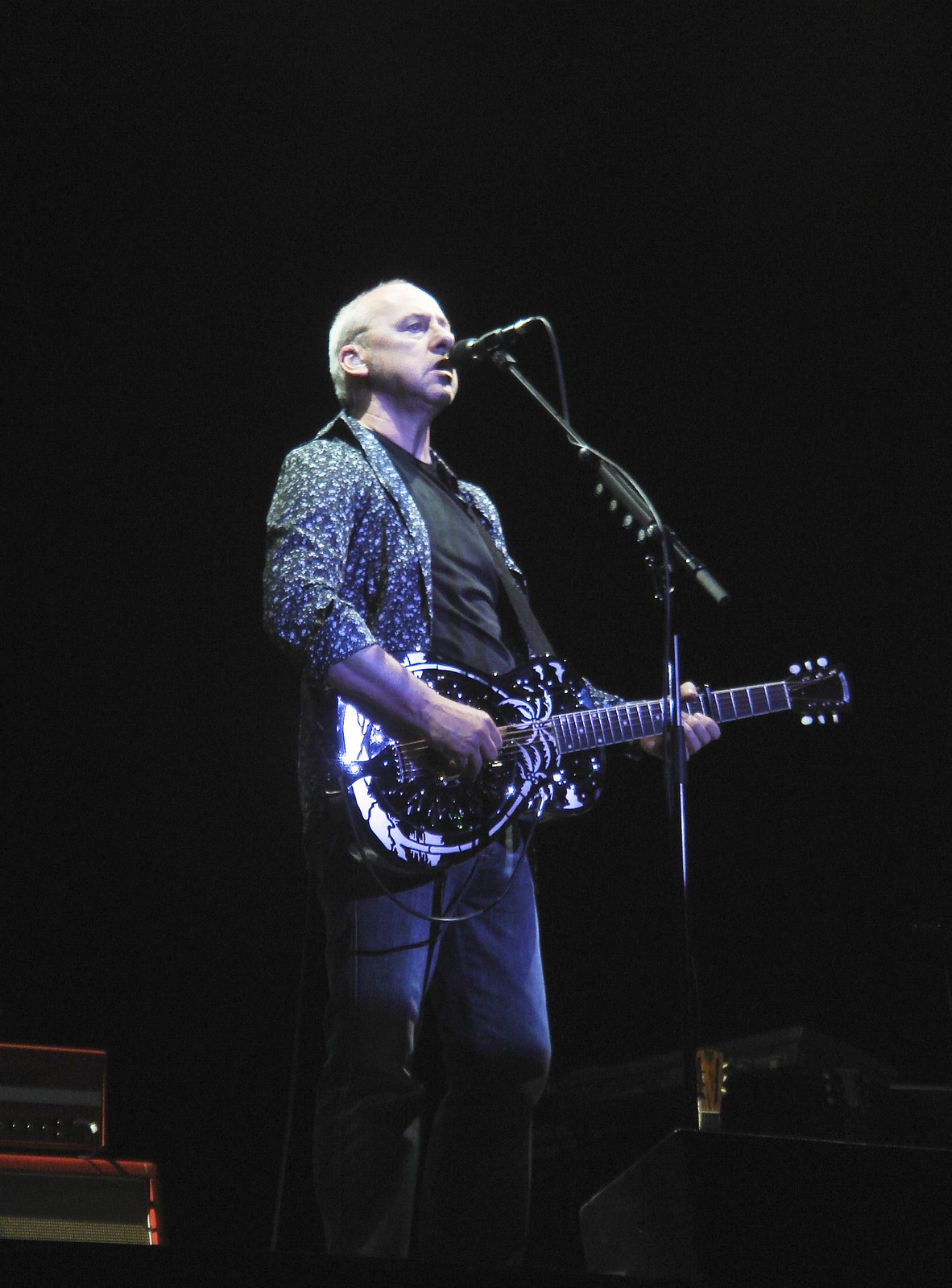
Photo: Chris J Bowley / Wikimedia Commons / CC BY 2.0 National
Style O
1930
A nickel-plated brass guitar from 1930s Los Angeles, and the one Mark Knopfler wouldn’t sell.
- Send a picture
Dobro
Model 27
1932
It cost $27, so Dobro called it the Model 27. Josh Graves called his Julie.
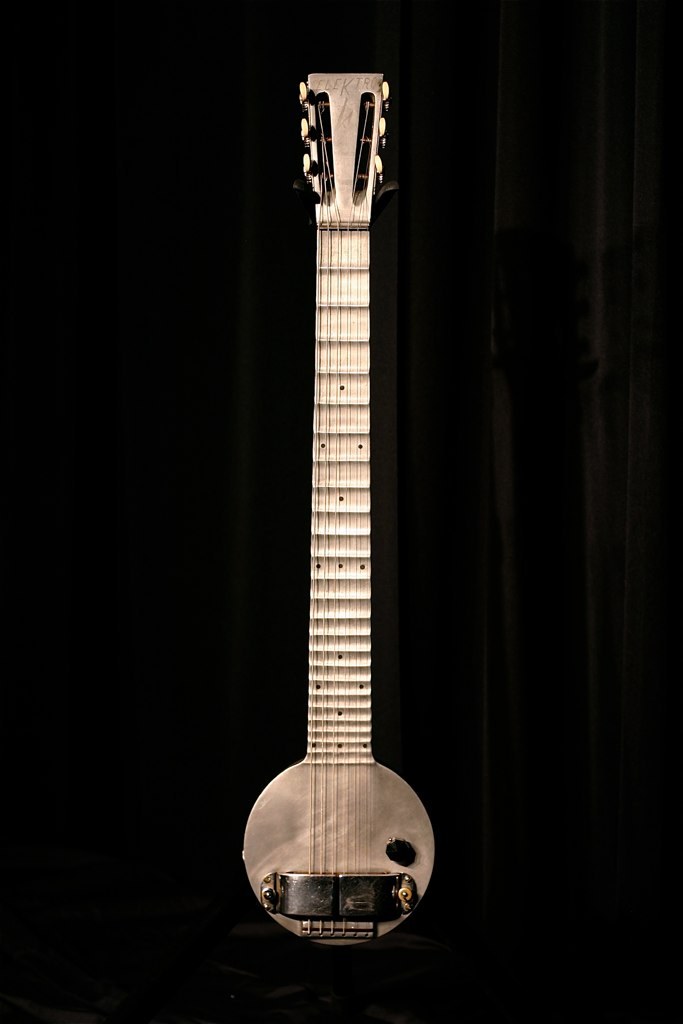
Photo: Museum of Making Music / Wikimedia Commons / CC BY 3.0 Rickenbacker
A-22 Frying Pan
1932
The first electric guitar you could buy looked like a frying pan. The patent office didn’t believe it worked.