Dobro
Model 27
It cost $27, so Dobro called it the Model 27. Josh Graves called his Julie.
Los Angeles, 1932. The Dopyera brothers have a factory full of resonator guitars and a country with no money. So they cut one down to the bare minimum, a plain wooden body with a single screen on the top, and name it the way they name everything: after the price.
- Introduced
- 1932
- Type
- Wood-body resonator
- Class
- Production
Have a photograph of this guitar? Send a picture
The short version
1929
Dobro
John Dopyera leaves National and starts a new company with his brothers in Los Angeles.
1932
The first 27
A cheaper line with one screenhole, which collectors call the Cyclops. The cheapest is the Model 27.
1934
The one people mean
A birch Model 27 with two screens. It becomes Dobro’s biggest seller.
1939
Renumbered
Prices go up, and this guitar becomes the Model 32. Bashful Brother Oswald joins Roy Acuff’s band.
1941
The war ends it
The original run is over. Within weeks of Pearl Harbor, the company’s assets are sold off.
1947
Julie
Josh Graves buys his first Dobro, a 1930s Model 27, for $70.
1949
Oswald’s 27
Oswald gets the Model 27 from Shot Jackson that he’ll play in open A.
1979
A Floyd in Ventura
David Gilmour buys a circa-1933 Model 27 at a California guitar shop, between The Wall and the tour.
Side A
A1
Named after the price
Guitar companies love a good model name. Dobro, in the 1930s, didn’t bother. The model number was the list price. The Model 45 cost $45. The Model 27 cost $27. It’s the most honest naming system in the history of guitars, and one of the most confusing.
The 27 arrived in 1932, when Dobro cut a cheaper line with a single screened soundhole. Collectors call those Cyclops guitars, and the 27 was the cheapest of them: an unbound body that came stained, painted silver, or brushed with fake wood grain. Some of the early square-necks had the frets painted on.
A number is not a name. But hold that thought.
A2
The brothers turn it upside down
John Dopyera had helped invent the resonator guitar at National, and he left there in 1929. Some accounts put the new company a year earlier. He and his brothers called it Dobro, short for Dopyera Brothers, which also happens to mean “good” in Slovak. They started building in the back of a plating shop in Los Angeles.
The Dobro trick is under the cover plate. National’s single-cone guitars sat the bridge on a wooden biscuit at the tip of the cone. The Dopyeras turned the cone upside down and hung an eight-legged aluminum spider across it, and the bridge sat on the spider. To my ear that’s the Dobro sound: a little sweeter and woodier than a National, with a growl underneath. And a wooden body made it cheaper than National’s metal guitars.
Business got tangled fast. By 1932 the Dopyeras effectively ran both Dobro and National, and Regal in Chicago was building Dobros for everything east of the Mississippi. The two companies merged in 1935, and by 1937 all Dobro assembly had moved to Chicago. So a Model 27 might be a Los Angeles guitar or a Chicago one. Same model, two cities.
Flip the record · By the numbers
$27
The list price. Dobro’s model numbers were the prices, a system it kept until the war.
8
Legs on the aluminum spider the bridge sits on. That spider is what makes it a Dobro and not a National.
0
Extra soundholes under the strings. Pricier Dobros had three there. The 27 skipped them to save money.
$70
What Josh Graves paid for Julie, his 1930s Model 27, in 1947.
Side B
B1
The holes that aren’t there
When people say “a Model 27,” they usually mean the one Dobro introduced in 1934. Birch plywood body, a two-tone brown sunburst, two screened holes on the top. It became Dobro’s biggest seller.
Here’s how you spot one. The more expensive Dobros had a row of three small soundholes under the strings, between the two screens. The 27 doesn’t. It was a cost-cutting idea that came from Regal, the Chicago company that built Dobros under license, and Dobro adopted it. Plenty of players will tell you the guitar sounds better without them. That’s player talk, not a factory drawing. I wouldn’t argue with it, though.
One warning for anyone shopping. In 1939 Dobro raised its prices and renumbered everything. This guitar went up five dollars and became the Model 32. The old Model 25 took its place as the new 27. Same outline, different number, and it still trips up dealers today. Then the war came, and within weeks of Pearl Harbor the company’s assets were sold off. The original Model 27 was finished.
The Dobro name came back years later, and OMI and Gibson have both built guitars they called the Model 27. They’re plywood with a spider, same idea. They aren’t a 1934 birch 27 from Los Angeles or Chicago.
B2
Julie
In country music, the Model 27 means Bashful Brother Oswald. He joined Roy Acuff’s band on the Grand Ole Opry in 1939, and in 1949 he got a wood-body Model 27 from Shot Jackson. He kept it in open A. Oswald believed it was a 1929. The guitar itself points to the mid-’30s. Believe whichever you like. It’s still his guitar.
Josh Graves bought his first Dobro in 1947 for $70. It was a 1930s Model 27, and he called her Julie. He took the Dobro into bluegrass when he joined Flatt and Scruggs in 1955, and eventually he retired Julie for a Model 37.
Jerry Douglas made his name on a Regal-built 27 in the ’70s. Much later his wife found him a 1936 online: never played, original strings, a broken tailpiece in the case, and a stretch of its life spent under a bed. And in December 1979, between mixing The Wall and rehearsing the tour, David Gilmour walked into a guitar shop in Ventura, California, and came out with a circa-1933 Model 27.
Dobro gave this guitar a price and called it a name. The people who played it gave it the real ones. Oswald’s went on to another Nashville player. Graves’s was Julie.
The cast
The people, and the specific guitars, that made the legend.
1929
John Dopyera
Founder
Left National and started Dobro with his brothers. The name means “Dopyera Brothers,” and “good” in Slovak.
1949
Bashful Brother Oswald
Wood-body Model 27
Roy Acuff’s Dobro man. Got his 27 from Shot Jackson and kept it in open A.
1947
Josh Graves
“Julie,” a 1930s Model 27
Bought her for $70. Went on to put the Dobro into bluegrass with Flatt and Scruggs, and later retired Julie for a Model 37.
1970s
Jerry Douglas
Regal-built Model 27
Made his name on one in the ’70s. Years later his wife bought him an unplayed 1936 she found online.
1979
David Gilmour
Circa-1933 Model 27
Bought it in Ventura, California, in December 1979, between mixing The Wall and rehearsing the tour.
Liner notes
Specs, construction, rarity, value, and every source we used.
Birch ply, an inverted cone, and a spider — Dobro’s cheapest full-size screenhole, not a National biscuit, and not a Hound Dog.
- Body
- Laminated hardwood, typically 3-ply birch. Two screenholes. No three holes at the fingerboard. Vintage Blues Guitars: 14¼" lower bout. RetroFret 1933 Cyclops: 14¼" (36.2 cm) wide, 3 7/16" (8.7 cm) deep. RetroFret 1939: 14" (35.6 cm) wide, 3½" (8.9 cm) deep. Vintage Guitar: mid-1930s ~3½" at the butt; earlier closer to 3¼". Mix flagged.
- Neck
- Round or square; 12-fret typical, 14-fret exist. Hardwood (poplar, basswood, mahogany reported). Neck stick into a soundwell typical; late Regal sometimes a dovetail.
- Fingerboard
- Unbound rosewood typical; dots. Ebonized boards exist. Late Regal 27s may bind the board.
- Scale
- Mix flagged. Vintage Blues Guitars / Gryphon: 25". RetroFret Cyclops / Cream City: 24¾" (629 mm). Bernunzio 1934: 24.5". Elderly conversion: 24-5/8". Do not average.
- Resonator
- Inverted single cone (bowl), eight-leg spider. Not a National biscuit. Not a tri-cone. Soundwell typical.
- Hardware
- Fan or later poinsettia coverplate; 3-on-a-plate open tuners; California stamped tailpiece or Regal trapeze
- Electronics
- None
- Finish
- Two-tone brown sunburst top typical; dark back, sides, neck. 1932 Cyclops: stained, silver-painted, or faux wood grain.
- Nut
- Mix flagged. Vintage Blues Guitars / Elderly: 1-13/16". RetroFret Cyclops: 1⅞" (48 mm). Cream City: 1 15/16". Gryphon: 1⅞". Do not average.
Open the full research fileConstruction details, the complete player record, production numbers, dated value estimates, and sources
Classic living example = 1934 birch two-screen Model 27 (Los Angeles Dobro and Chicago Regal). No current Model 27 SKU this pass. Gibson.com Hound Dog M-14 Metalbody page (fetched 18 September 2026) is no longer available; biscuit brass, not this spider birch. Dealer Hound Dog Deluxe wood ~$799 is a different name. 1932 Cyclops Model 27 is the first named 27. 1939 recatalog: this guitar became Model 32; former Model 25 became the new Model 27. Mixed inch/mm flagged.
Construction
The job was volume without a metal body, cheaper than National’s tricone. John Dopyera left National in January 1929 (Vintage Guitar, Tom Gray). Wikipedia: mid-1929, company dated 1928. Keep both. He and his brothers named the new shop Dobro — Dopyera Brothers, and “good” in Slovak. Spring 1929 production started in the back of Russell Plating in Los Angeles, then a brick factory at 727 East 62nd Street.
The cone is why this is not a National. Gray: they turned the resonator upside-down, modified the V into a W, and hung an eight-legged aluminum spider on the rim of the bowl. The bridge sits on the spider, not on a wooden biscuit at the apex. Patent 1,896,484 (Rudy Dopyera, issued 7 February 1933). Wikipedia’s resonator page files three families: National tricone, National biscuit, Dobro spider. This table is the third. Not Style O (national-style-o). Style O is National biscuit in nickel brass, Los Angeles then San Luis Obispo revival. This is wood, spider, Dobro. Different cone, different bridge, different factory.
Model numbers were list prices. Gray: a confusing system the company kept until the war. 1929’s cheapest guitar was a Model 45. The number 27 arrives in 1932, when Dobro cut a cheaper single-screenhole line collectors call Cyclops. Least expensive: Model 27, unbound body stained, painted silver, or brushed with faux wood grain. Some ’33 square-necks had painted frets. This plate starts in 1932.
1934 NAMM is the guitar most players mean. Gray: all previous models discontinued by mid-year; bodies about 3½" deep at the butt. The birch Model 27 became Dobro’s biggest seller. Two screenholes. Binding on the top only is how modern dealers usually ID one; rare early examples had no binding, and most Regal-made 27s were bound top and back. The true mark is the missing three holes under the strings between the screenholes — an economy Regal suggested and Dobro adopted. Model 27s from either factory do not have them. Many players hold that omitting the holes improved the sound. Keep that as player talk, not a factory drawing.
Not a Model 37. Mahogany, bound top and back and along the fretboard, a step up the price list. Mike Auldridge’s Seldom Scene guitar was a 37. Jerry Douglas played a 37 for much of his bluegrass past. That is a different number.
California vs Chicago is the other split, not a different model. Gray: Dobro bought Regal bodies about 1931, then licensed Regal east of the Mississippi; first Regal-made Dobros by summer or fall 1932. January 1933, Regal announced its own ampliphonic line. Los Angeles skipped most of the 4000s for Regal. Wikipedia: Dopyeras had both companies by 1932. Gray: National and Dobro merged January 1935 under Louis Dopyera, then 6920 McKinley Avenue. Keep 1932 and 1935. California: square slot-ends early, then rounded slanted slots after the merge. Regal: round slot-ends straight through the headstock. August 1937: all Dobro assembly to Regal. Solid headstocks from 1936 cheap gear machines; Regal put them on all models. Serials mostly stop.
1939 recatalog is the trap that still bites dealers. Gray: former Model 25 got a $2 raise and became the new Model 27; former Model 27 went up $5 and became Model 32. Same silhouette, new number. Production ends with the war. Gray: within weeks of Pearl Harbor, Louis Dopyera sold National-Dobro’s assets into Valco. According to Vic Smith, leftover Dobro hardware went to Gibson. Gibson built prototypes, no production.
The name came back without this guitar. Wikipedia Dobro: revived 1964, sold to Semie Moseley 1966, OMI reacquired 1970. Wikipedia resonator guitar: Emile from 1959, OMI formed 1967 (first branded Hound Dog), name 1970. Keep the split. Gibson bought OMI 1993, Nashville 2000, Epiphone as of 2012; Dobro-branded Epiphone through 2020. OMI and Gibson-era “Model 27” / “27 Deluxe” objects exist. Huntington Beach and Nashville plywood with a spider, not a 1934 Los Angeles or Chicago 27. Classic vs current: 1934 birch two-screen, no three holes — against no new Model 27 you can order from a living Dobro page in 2026.
Players
Do not hang a National Style O on this plate. Do not recruit every Dobro player as if they played a 27. Do not flatten a Model 37 onto this number.
Pete “Bashful Brother Oswald” Kirby. The guitar this plate is named for in country. Vintage Guitar (October 2004): wood-bodied two-tone sunburst, single coverplate, round neck, 12 frets clear of the body, no three holes. Serial 7233. Kirby’s letter says 1929; the serial points to 1934–’36. Patent #1896484 / “Other Pat. Pend.” on the plate. California 27G or Chicago Regal 27 — VG keeps both. He joined Roy Acuff’s Smoky Mountain Boys in 1939. Wikipedia: Opry with Acuff New Year’s Day 1939. VG: acquired from Shot Jackson in 1949, always open A. Current owner: Nashville musician Mike Webb. Named object.
Josh Graves. Gray: the Model 27 played on the Grand Ole Opry after the war, with Oswald. The Squareneck Journal (September 2015): Graves’s Julie is a 1930s Model 27; he later retired it for a Regal Model 37. BluegrassBios: first Dobro named Julie, bought for $70 in 1947. Wikipedia: joined Flatt and Scruggs 1955, the player who put the resonator into bluegrass. Album-to-guitar credits for named Foggy Mountain sides are unpublished here. The Opry 27 is the fact.
Jerry Douglas. Gray: in the ’70s he made his mark on a Regal-built Model 27. Vintage Guitar (Michael Dregni, October 2013): a 1936 Model 27 found online, bought by his wife, stored under a bed unplayed; original strings, broken tailpiece in the case. He also owns an early-’30s double-Cyclops he calls Sonnyboy. Union Station-era touring hybrids (Scheerhorn, Beard) are other guitars. Do not pin O Brother or Alison Krauss to this 27.
David Gilmour. Christie's, Los Angeles circa 1933 Model 27, serial 5617, cover stamped 1896484 / other pats. pend. Bought 15 December 1979 from Frank Lucido at California Guitar, Ventura, between The Wall mix and Wall Tour rehearsals. Sale 20 June 2019, lot 39, $112,500. Celebrity lot. Not a street tape.
Also known to play stays short. Cream City sold G.E. Smith’s square-neck, serial 8348, last Los Angeles run. None invented.
Rarity
You cannot buy a new Model 27 from Dobro or Gibson. The original run ended in 1941. Living Hound Dogs and OMI/Gibson 27s are other factories on a spider silhouette. They are not a 1934 birch 27.
Dobro did not publish Model 27 unit totals. None invented. Serials date a guitar. They don’t count a year. Gray: Dobro started around 800, skipped most 4000s for Regal, McKinley Avenue in the 8000s. After 1937 Regal mostly stopped numbering. Randy Getz (ResoGat): John Dopyera’s “600 a month” early-California claim includes house-brand boxes without numbers; serialized screen-hole Dobros may sit under 10,000. Inference, not a factory census. That is why a Model 27 count is unknown, not the chapter.
What is actually thinner: 1932 Cyclops 27s; unbound early two-screens; California square-neck 27s matching the catalog (Getz: only one of the advertised description had surfaced). Tut Taylor’s teardrop-sunburst McKinley 27s: 21 known by 2005 (Getz). Oswald’s 7233, Graves’s Julie, Douglas’s unplayed 1936, Gilmour’s 5617 are unique objects. They are not a vintage Model 27.
Value
Informal estimate, 18 September 2026. Not an appraisal.
Ask vs sold labeled. Celebrity lots are not-comps. No invented medians or factory counts. Period $27 (the model number was the list price; Gray) is 1930s money, not 2026 street. 1939 recatalog: this guitar $32.
New street. None under Model 27 this pass. Gibson.com Hound Dog M-14 Metalbody page unavailable (fetched 18 September 2026) — biscuit brass, not this table. Named dealer cart, different SKU: Hound Dog Deluxe Round Neck $799 (Musician’s Friend / Guitar Center / Chicago Music Exchange). Wikipedia resonator guitar: Dobro-branded Epiphone production through 2020.
Used modern. OMI and Gibson-era 27s trade used. Named ended asks, not a 2026 hammer: Elderly 1982 Model 27 square-neck $1,125; Woodshed 1980 OMI 27 $1,149.99. Named ask: Gibson-era 1996 27 Deluxe square-neck $2,650. No clean Reverb Price Guide band isolated this pass (reverb.com/p/dobro-model-27 unavailable). Don’t invent a midpoint.
Vintage / collectible. Reverb Price Guide page for Model 27 unavailable this pass. Flag: thin sold-comp access. Named dealer asks, not hammers: Vintage Blues Guitars c. 1938 sunburst $1,250; c. 1932 black $1,625; Gryphon c. 1938 Regal/Dobro $1,500; Reverb 1934 listing $1,550 (was $2,999.95). Cream City G.E. Smith square-neck serial 8348 listed $1,799, marked sold — named ask with provenance, not a series. Do not average those asks. Gilmour’s 5617 at Christie's $112,500 (20 June 2019) is one object. Not a comp.
See also
- national-style-o — National biscuit in nickel brass; this is Dobro spider in birch
- rickenbacker-a-22 — 1932 electric volume that was not a cone
- mosrite-ventures — Semie Moseley owned the Dobro name in 1966; not this 1930s wood
Sources
- Vintage Guitar, Tom Gray, A Guide to Vintage Dobros (June 1999) — January 1929 resignation; spring 1929 production; model numbers = list prices; 1932 Cyclops Model 27; 1934 birch 27 biggest seller; no three holes; Oswald / Graves / Douglas; Regal 1932–37; 1935 merge; 1939 recatalog 25→27 / 27→32; WWII / Valco
- Vintage Guitar, Dobro Model 27 — Brother Oswald (October 2004) — serial 7233; 27G vs Regal 27; 12-fret round neck sunburst; no three holes; Kirby letter 1929 vs serial 1934–36; patent 1896484; Shot Jackson 1949; Mike Webb
- Vintage Guitar, Michael Dregni, Jerry Douglas (October 2013) — 1936 Model 27 gift; unplayed under a bed; double-Cyclops “Sonnyboy”; Scheerhorn with Alison Krauss
- Wikipedia, Dobro — 1928 company / mid-1929 leave National; 1932 control of both companies; spider vs biscuit patent 1896484; Oswald January 1939; Gilmour 1933 Model 27 Christie's $112,500; 1964 revival / 1966 Moseley / 1970 OMI; Gibson 1993 / Epiphone; 2023 Epiphone listing gap
- Wikipedia, Resonator guitar — tricone / biscuit / spider families; Dobro 1928; 1932 control; Emile 1959; Mosrite; OMI 1967 / name 1970; Gibson 1993; Epiphone Dobro through 2020
- Wikipedia, Bashful Brother Oswald — Acuff / Opry New Year’s Day 1939; Will the Circle Be Unbroken; Gibson Brother Oswald signature 1995, retired
- Wikipedia, Josh Graves — Flatt and Scruggs 1955; resonator into bluegrass
- US patent 1896484, Rudolph Dopyera — issued 7 February 1933
- Christie's, Dobro Los Angeles circa 1933 Model 27, lot 39 — serial 5617; Gilmour invoice 15 December 1979; sold $112,500, 20 June 2019
- Randy Getz, History of the Pre-War Dobro (ResoGat) — Cyclops 27 then birch 27; no three holes; 1939→32; serial ranges; <10,000 serialized screen-hole inference; teardrop 27 census 21 by 2005
- The Squareneck Journal, September 2015 — Graves Julie as 1930s Model 27, then Model 37; 1934 Model 27 photo
- BluegrassBios, Graves, “Uncle Josh” — Julie bought $70 in 1947
- RetroFret, Dobro Model 27 Cyclops squareneck (1933) — 14¼" (36.2 cm) / 3 7/16" (8.7 cm) / 24¾" (629 mm) / 1⅞" (48 mm)
- RetroFret, Regal Dobro Model 27 roundneck (1939) — 14" (35.6 cm) / 3½" (8.9 cm); solid headstock; segmented f-holes
- Vintage Blues Guitars, 1932 Model 27 black — 14¼" / 25" / 1-13/16"; ask $1,625
- Vintage Blues Guitars, 1938 Model 27 sunburst — 14¼" / 25" / 1-13/16"; f-holes; 14-fret; ask $1,250
- Gryphon Strings, circa 1938 Regal/Dobro No. 27 — introduced 1934 copy; laminated birch; 25" / 1⅞"; ask $1,500
- Cream City Music, G.E. Smith 1930s Model 27 — serial 8348; 24¾" / 1 15/16"; listed $1,799, sold
- Elderly Instruments, 1934–35 Model 27 conversion — 24-5/8" / 1-13/16" / 14-1/8" / 3½"
- Gibson, Epiphone Dobro Hound Dog M-14 Metalbody — biscuit brass; no longer available this pass
- Musician’s Friend, Dobro Hound Dog Deluxe Round Neck — $799; figured maple ply; spider; Fishman; not a Model 27
- Reverb, Gibson-era Dobro 27 Deluxe — 1996; ask $2,650
- Reverb, OMI Dobro Model 27 1980 — $1,149.99 sold listing
- Reverb, Dobro Model 27 (1982), Elderly — ended $1,125
- Reverb, 1934 Dobro Model 27 — ask $1,550 (was $2,999.95)
Keep digging
Guitars this one gets compared to, confused with, or descended from.
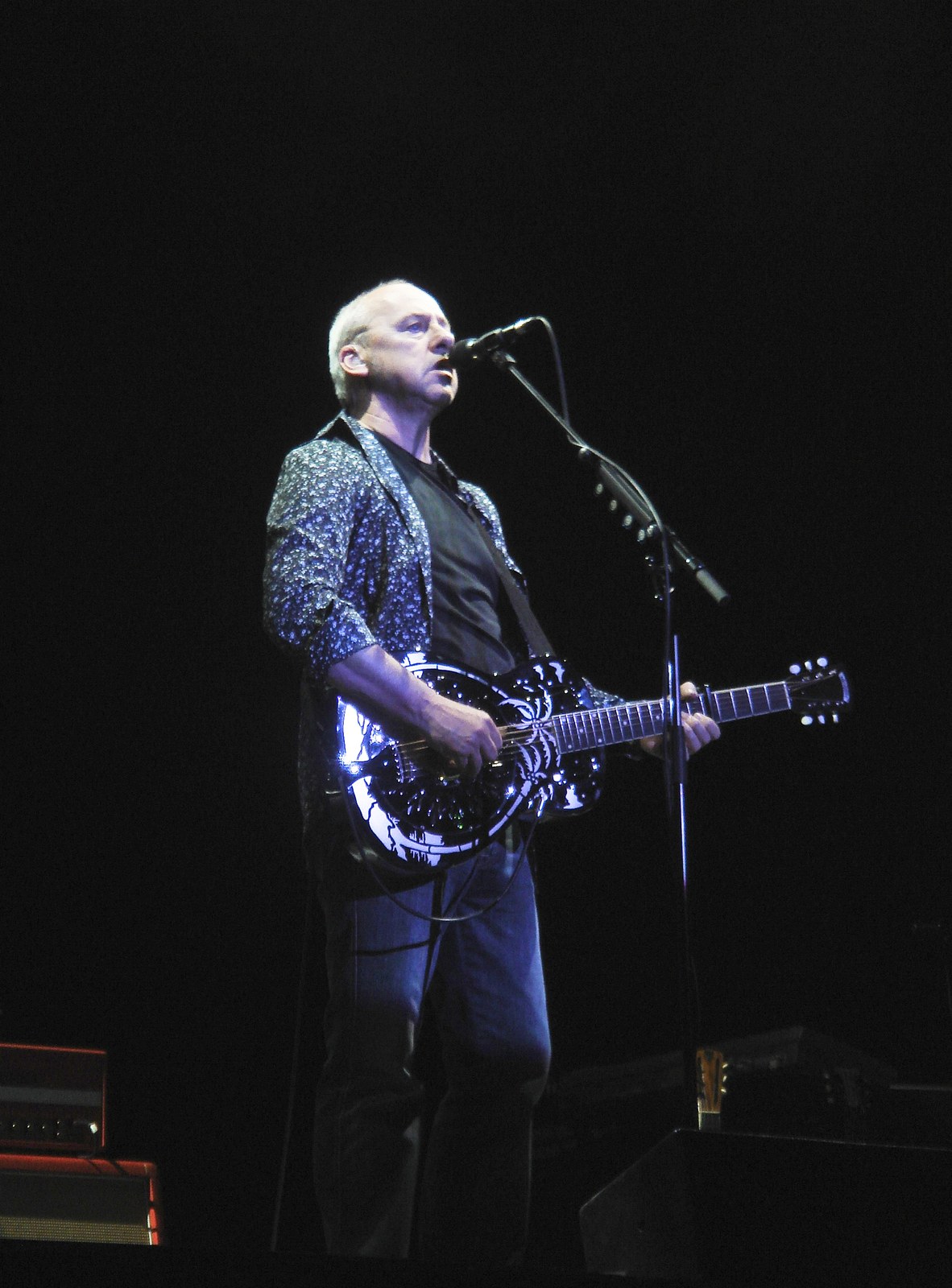
Photo: Chris J Bowley / Wikimedia Commons / CC BY 2.0 National
Style O
1930
A nickel-plated brass guitar from 1930s Los Angeles, and the one Mark Knopfler wouldn’t sell.
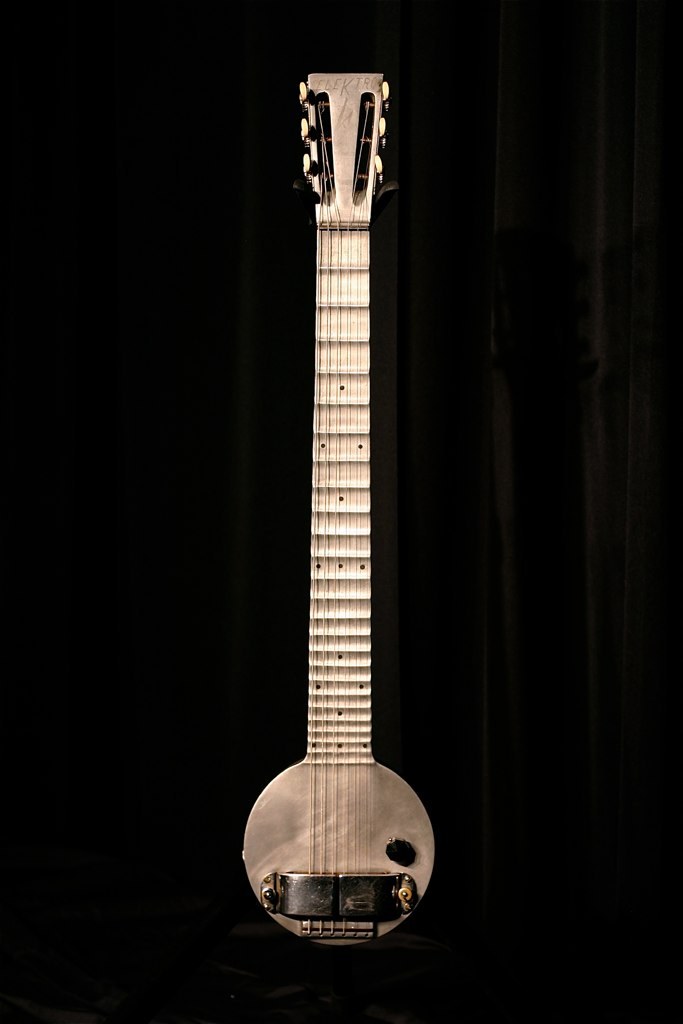
Photo: Museum of Making Music / Wikimedia Commons / CC BY 3.0 Rickenbacker
A-22 Frying Pan
1932
The first electric guitar you could buy looked like a frying pan. The patent office didn’t believe it worked.
- Send a picture
Mosrite
Ventures
1963
Semie Moseley offered Nokie Edwards the guitar free. He paid $200, and the Ventures dropped their Jazzmasters.