Guitaripedia
Musitronics
Mu-Tron III
Its inventor thought he’d built a quacky novelty. Then Stevie Wonder put “Higher Ground” through it.
May 12, 1973. Stevie Wonder cuts “Higher Ground” almost in one take, three Clavinets deep, patting the keys to get the sound. The quack on those Clavinets comes from a Mu-Tron III, a box from a young New Jersey company whose first plant was a converted chicken coop.
- Introduced
- 1972
- Effect
- Filter
No photograph of this pedal yet. Have one? Send a picture
The short version
1970
A synth for Guild
Guild’s president, Al Dronge, buys the rights to a synthesizer Mike Beigel designed with MIT friends. It dies before a single unit ships.
1972
The Auto-Wah
Beigel and Guild’s former chief engineer, Aaron Newman, pull an envelope follower and a filter out of the synth and build a prototype that summer.
1973
Higher Ground
Stevie Wonder runs his Clavinet through one on “Higher Ground,” then appears on a poster for it. Beigel says the song put Musitronics “on the map.”
1974
Stink-Foot
Frank Zappa sends an acoustic guitar’s magnetic pickup into a Mu-tron on Apostrophe (’) for what he calls “an enveloped attack.”
Late ’70s
Garcia
The Mu-Tron III becomes one of Jerry Garcia’s signature sounds with the Grateful Dead.
1978 or 1979
ARP takes over
The synth maker buys Musitronics, moves production to Massachusetts, and goes bankrupt about a year later, taking the III with it.
2014
Beigel builds it again
His new company, Mu-FX, releases the Tru-Tron 3X, checked against two original Mu-Tron IIIs of his own.
2026
The inventor
Mike Beigel dies at 77.
Side A
A1
Patting the keys
May 12, 1973. Stevie Wonder is recording a song he calls “Until I Reach My Highest Ground,” and it goes down fast, pretty much in one shot, with some overdubs. There are three Clavinets on it. Wonder doesn’t strike the keys so much as pat them, to get the sound he wants.
Listen to the riff on “Higher Ground” and you hear the Clavinet talk. Every note opens with a wet quack and closes again. That isn’t the keyboard. It’s a Mu-Tron III, a box made by a small company in New Jersey.
The man who designed it had no idea anyone would use it like this. Mike Beigel thought he’d built a gimmick:
I had thought it was mainly a quacky item that would be a sometimes-used novelty in music that would be a lot more pedestrian.
A2
A synthesizer that never shipped
Beigel was an engineer out of MIT. In 1970 Al Dronge, the president of Guild Guitars, bought the rights to a synthesizer Beigel had designed with a few MIT friends. It was like a Moog, Beigel said, “but a little different.”
Then Dronge was killed when his plane crashed. The accounts don’t agree on the year. The company’s vice president, an accountant, killed the synthesizer, and not one was ever produced.
Beigel and Aaron Newman, Guild’s former chief engineer, salvaged a piece of it. They thought about a ring modulator but decided it was a little too strange for the mainstream. Instead they took a section of the synth they called the “timbre generator,” added one of its four filters, and made an envelope follower. Newman’s version: “We made the first prototype of what became the Mu-Tron III envelope follower in the summer of 1972, and I left my job to start Musitronics.”
At first it was called the Auto-Wah. An investor came up with the name Mu-tron. The “III” came from Beigel’s fondness for the number three.
A3
Hit it harder
Here’s the idea. A wah pedal sweeps a filter when you rock your foot. The Mu-Tron III sweeps it when you play. Hit a note hard and the filter jumps open; let it ring and it closes again. Inside, an envelope follower reads your picking and drives the filter through little light-sensitive parts called optocouplers.
Beigel picked a filter that could do three jobs, low-pass, band-pass and high-pass, and put it on three switches with two knobs. Peak sets how sharp the quack is. Gain sets how much your playing moves it. It ran on two 9-volt batteries, and Beigel had a reason: “That way you could really smash on the guitar and not distort the whole effect.”
The case was designed with help from a man who had once led the team that styled the ’50s Studebaker. “We designed them so you could drop them off tall buildings and they’d still work,” Beigel said. The old ads promised it would work on almost anything: guitar, keyboards, drums, flute, sax. “The sharper your attack and the more percussive your instrument, the wilder your sounds.”
Flip the record · By the numbers
2
Knobs, Peak and Gain, plus three switches for filter type, range, and sweep direction.
18
Volts, from two 9-volt batteries, so you could really smash on the guitar without distorting the effect.
3
Filter types, low-pass, band-pass and high-pass. The “III” came from Beigel’s liking for the number three.
35
Workers at the converted chicken coop in Rosemont, New Jersey, soon the town’s biggest employer.
Side B
B1
On the map
The first ones went to E.U. Wurlitzer in Boston, and soon Musitronics was making more, in a converted chicken coop in Rosemont, New Jersey. With 35 people on the payroll, it soon became the town’s biggest employer.
Then came “Higher Ground.” Wonder agreed to appear on a poster for the Mu-Tron III, and he came out to play some music with the team and talk. The song, Beigel said, put Musitronics “on the map.” “Soon all kinds of rock and roll and jazz players were using the unit.”
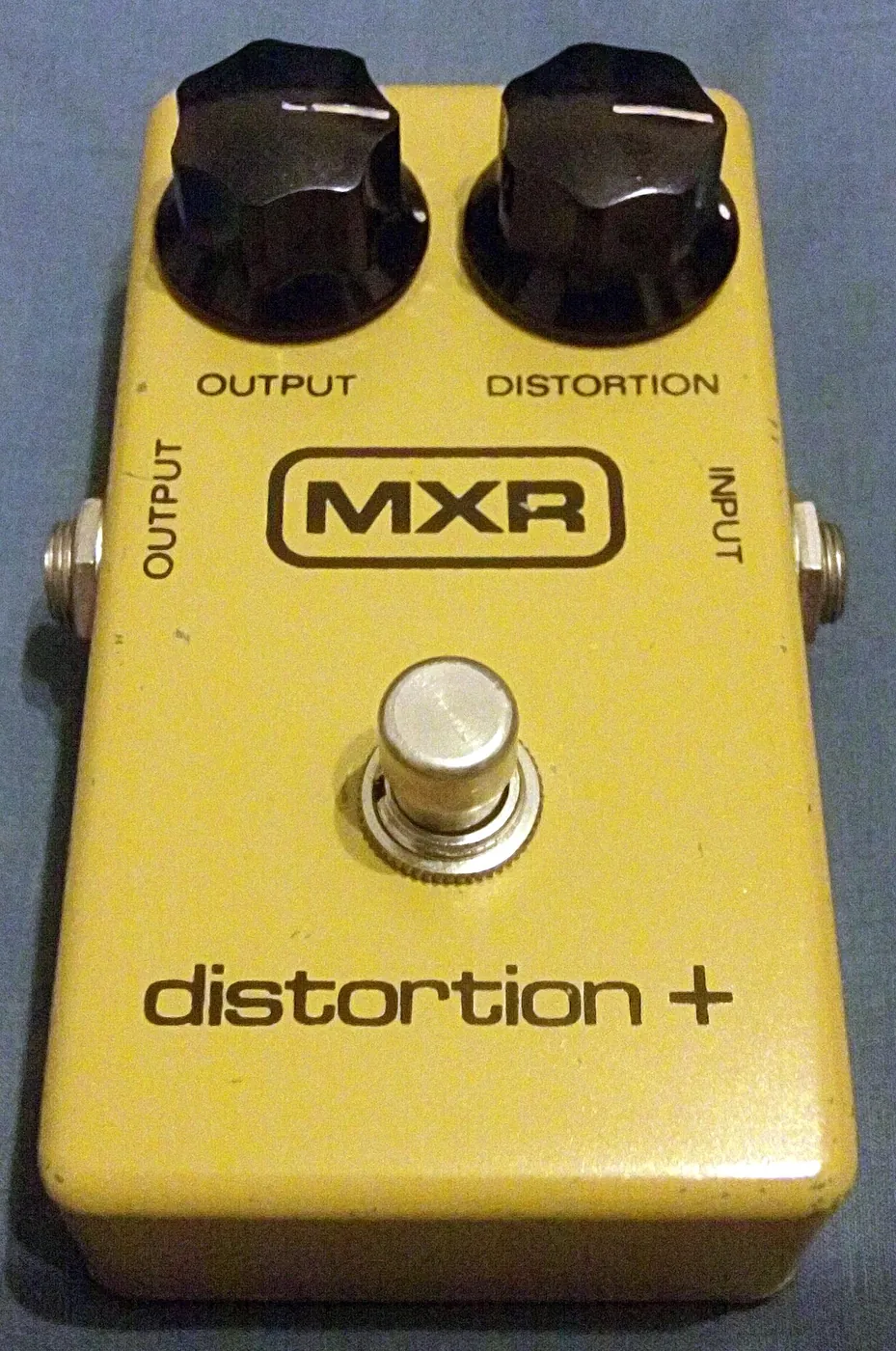
Frank Zappa was one. Asked in 1977 what wah he used, he answered, “I have a Mu-tron.” On “Stink-Foot” he played an acoustic guitar with two pickups, one into its own channel and the magnetic one into the Mu-tron and another channel, “so you have a sharp attack and an enveloped attack.” Jerry Garcia made it part of his signature lead sound with the Grateful Dead, and by 1978 he favored it alongside an MXR Distortion+. Bootsy Collins made its watery thump so much his own that one profile put it next to Eddie Van Halen’s Phase 90 and Hendrix’s Uni-Vibe. Musitronics even hired a young Larry Coryell to record a Mu-Tron III demo album, released in 1975.
Some of its best moments, notice, aren’t guitar at all.
B2
The quacky item
Musitronics didn’t last. “Our downfall was the Gizmotron,” Newman said, a later product of theirs. ARP, the synthesizer company, bought Musitronics in 1978 or 1979, moved production to Lexington, Massachusetts, and went bankrupt a little over a year later. The Mu-Tron III went with it.
Beigel kept working on the sound. In 1996 he designed the Q-Tron envelope filters for Electro-Harmonix. In 2014 his new company released the Tru-Tron 3X, and he only let it out after checking it against two original Mu-Tron IIIs of his own. Four years later he got the Mu-Tron name back. He died in 2026, at 77.
He never pretended he’d seen it coming. He knew he’d built an automatic wah. He just couldn’t hear in advance what a real musician would do with it. “Higher Ground,” he said, was “something I had hoped for but couldn’t myself conceive.”
It took a man patting a Clavinet to show him what his box was for.
Put this on
You’ve read about it. Now hear it. Here’s what this pedal sounds like, and what to listen for.
Higher Ground
From Innervisions. The quacking Clavinet riff is a Hohner Clavinet tracked through a Mu-Tron III.
Find it on YouTube (opens in a new tab)Stink-Foot
From Apostrophe (’). In Zappa’s words, an acoustic guitar’s magnetic pickup “is going to a Mu-tron and the other channel, so you have a sharp attack and an enveloped attack.”
Find it on YouTube (opens in a new tab)
The cast
The people who built it, and the players who made it famous.
1972
Mike Beigel
Designer
An MIT engineer, he built it from parts of a shelved synthesizer. “I had thought it was mainly a quacky item that would be a sometimes-used novelty.”
1972
Aaron Newman
Co-founder
Guild’s former chief engineer. He made the first prototype with Beigel in the summer of 1972 and left his job to start Musitronics.
1973
Stevie Wonder
Clavinet
Ran his Clavinet through a Mu-Tron III on “Higher Ground.” Beigel says the song put Musitronics “on the map,” and Wonder came out to play some music with them.
Late ’70s
Jerry Garcia
Grateful Dead
Made the Mu-Tron III part of his signature lead sound. By 1978 he favored the Mu-Tron envelope filter alongside an MXR Distortion+.
1974
Frank Zappa
Solo
Asked in 1977 what wah he used, he said, “I have a Mu-tron.” On “Stink-Foot” it gave his acoustic guitar “an enveloped attack.”
Bootsy Collins
Parliament-Funkadelic, bass
The Mu-Tron III’s watery thump is his trademark, the way the Phase 90 is Eddie Van Halen’s. No one track is credited to it.
Often paired with
The pedals and guitars it usually shares a board or a record with.