Benedetto
Fratello
Benedetto hung the pickup off the pickguard, so nobody ever had to cut a hole in the spruce.
November 2023. Jack Petersen, the man who started Berklee’s guitar department, brings his 1992 Fratello back to Benedetto for a refresh. He has been playing it for more than thirty years, on stages and in classrooms, and it shows.
- Introduced
- 1982
- Type
- Archtop electric / acoustic-electric
- Class
- Production
Have a photograph of this guitar? Send a picture
The short version
1946
Born in the Bronx
Robert Benedetto, 22 October.
1968
The first archtop
Built in New Jersey. Florida follows by 1976.
1982
A Fratello with a date on it
A 7-string built for Paul Novak is the earliest dated one found. A photo caption puts one in Gonzalo Mico’s hands around 1980. Keep the circa.
1987
Two names on the wall
In Clearwater, a customer sees only the Cremona and the Fratello on offer.
1992
Petersen’s Fratello
Built by Bob in East Stroudsburg, in Antique Burst.
1999
The Fender years
A license, through 2006, lets Custom Shop hands build his models. Bob inspects them.
2006
Savannah
Howard Paul and Bob open the shop that still builds it.
2026
Home to the bench
Petersen’s guitar, refretted, goes up for sale for his estate.
Side A
A1
Welcome back, Jack
November 2023. Jack Petersen walks into the Benedetto shop with a guitar he has been playing since 1992. It’s a Fratello in Antique Burst, a full 17 inches across and 3 deep, and it has done the kind of work that wears a guitar in.
Petersen was the first faculty member and chairman of the guitar department at Berklee, from 1962. Later he chaired the programs at North Texas and North Florida. This was the guitar he carried through a lot of that, on stages and in classrooms. Bob Benedetto had built it for him in East Stroudsburg, Pennsylvania.
He brought it back for a refresh. It wouldn’t be the last time it went home.
A2
Two names on the wall
Bob Benedetto was born in the Bronx in 1946 and built his first archtop in New Jersey in 1968. His early years went to other people’s guitars: repairs and restorations on old Gibsons, D’Angelicos, and New York Epiphones. That was the bench he learned on. It isn’t this badge.
By 1976 he was in Florida. In 1987 a customer named Ken Louis visited the Clearwater shop and remembers exactly two models on offer: the Cremona and the Fratello. Bob told him the difference was the inlay. Blindfolded, he said, you wouldn’t hear it.
The Fratello was the one with the jewelry: big mother-of-pearl blocks, black-and-white binding, an ebony tailpiece shaped like a cello’s. Through the 1980s it was the showpiece.
When did it start? Nobody printed a debut year. A photo caption puts one in Gonzalo Mico’s hands “circa 1980.” The earliest one with a date on it is a 1982 seven-string built for Paul Novak. Somewhere in there. Keep the circa.
A3
Don’t cut the spruce
Every jazz archtop has the same problem. The top is a carved, hand-graduated plate of spruce, and it is the whole sound. Plug it in the way a factory would and you cut a hole in it for a pickup.
Benedetto didn’t. The Fratello’s pickup is a small humbucker hung from the fingerrest, floating over the top without touching it. The volume knob sits on the fingerrest too. The top stays a top. Unplug it and nothing is missing.
The top stays a top. Unplug it and nothing is missing.
The rest follows the same idea. The bridge is ebony. Ken Louis remembers Bob describing it as held on by string tension alone, the way a violin’s is. The tailpiece is solid ebony, fastened with a cello-style adjuster, and Bob gets credit as the man who started that. Who built the pickups depends on which page you read: designed by Bob and built by Seymour Duncan, or co-designed with Duncan.
When Louis took delivery in 1988, his first impressions were plain ones: light in the hands, loud unplugged, balanced once you plugged it in.
It’s worth saying what it isn’t. It isn’t a Gibson ES-175, which is pressed laminated maple and smaller. It isn’t a D’Angelico New Yorker, which is 18 inches and a different era. Carved spruce, 17 inches, a pickup that never touches the wood: that’s a Fratello.
Flip the record · By the numbers
17" × 3"
Lower bout and depth. Full-size jazz box, carved spruce over flamed maple.
0
Holes cut in the top for the pickup. It hangs from the fingerrest.
30+
Years Jack Petersen played his, on stages and in classrooms.
11
People in the Savannah shop that builds it today.
Side B
B1
Other benches, same outline
The shops kept moving. Homosassa Springs, then Clearwater, then East Stroudsburg from 1990. That’s where Petersen’s guitar was made. From 1999 to 2006, a license let Fender Custom Shop hands build Benedetto’s models, first in Nashville and then in Corona. Fender never owned the company. Bob inspected the guitars.
In 2000 a Fratello in Antique Burst was built on the Pennsylvania bench as a reference, so the licensed shops had something to match.
In 2006 Bob and Howard Paul opened the shop in Savannah, Georgia. Bob fully retired from the company in 2015, and the guitars since have been built under master luthier Damon Mailand. It’s eleven people in a warehouse. The Fratello is still Bob’s design, built to his standards, though the page doesn’t claim he carved the one you order. You buy it direct and wait most of a year.
The outline didn’t move. The pickup still hangs off the guard.
B2
Home to the bench
Petersen died in 2026. Before he did, he asked Benedetto to restore his Fratello and sell it for his estate. The shop refretted it, and in February 2026 it went up on the company’s own site: one educator’s guitar, not a catalog average.
A lot of instruments wander off after their player is gone. This one went back to the people who make them, got new frets, and waited for someone else to carry it into a classroom.
The spruce top still has no hole in it.
The cast
The people, and the specific guitars, that made the legend.
1992
Jack Petersen
1992 Fratello, Antique Burst
Built by Bob in East Stroudsburg. Berklee’s first guitar chairman played it for more than thirty years, then asked Benedetto to restore it and sell it for his estate.
1988
Ken Louis
1988 Fratello, French sunburst
Ordered in Clearwater in 1987. Light in the hands, loud unplugged, balanced once amplified, in his telling.
1988
Jack Wilkins
1988 Fratello, Clearwater
Custom-built for him by Bob. Not the Jack Wilkins signature model he’s pictured with at his 70th. Two different guitars.
Eric Johnson
Honey Blonde Fratello
A photo in Benedetto’s gallery. No year, no song. His Strat records stay on the Strat.
1982
Paul Novak
1982 7-string Fratello
The earliest Fratello with a date on it. The seller calls it the only 7-string Fratello Bob built himself. That claim is theirs.
Liner notes
Specs, construction, rarity, value, and every source we used.
A 17-inch carved spruce jazz box with the pickup hung off the guard — Benedetto’s Fratello, not an ES-175 and not a New Yorker.
- Body
- 17" lower bout, 3" deep, Venetian cutaway. Carved, hand-graduated European spruce top; carved European flamed maple back; flamed maple sides; X-braced European spruce; f-holes. Millimetres unpublished.
- Neck
- Select American flamed maple
- Fingerboard
- Ebony, 12" radius, 21 frets, large mother-of-pearl block inlays
- Scale
- 25"
- Pickups
- One Benedetto S-6, suspended mini-humbucker, mounted off the top
- Hardware
- Ebony bridge, black wheels and posts; ebony tailpiece with Benedetto tail adjuster; Gotoh gold tuners, ebony buttons; ebony fingerrest
- Electronics
- Volume on the fingerrest
- Finish
- Gloss nitrocellulose. Claret, Antique Burst, Honey Blonde, Opulent Brown, Natural
- Nut
- Bone, 1¾"
Open the full research fileConstruction details, the complete player record, production numbers, dated value estimates, and sources
Current Savannah Fratello, maker spec page, 30 September 2026. Six-string is the table. The same page offers a 7-string at +$500. Strings are a mix, not an average: the model table prints pure nickel .012–.052; customer care prints roundwound .14–.52 on carved Flagships; the build page prints hybrid .014–.052 for carved guitars. Blue Book’s Fratello line still says Schaller minis and two knobs (volume, tone). A 1989 Gruhn example had a floating Bartolini. Flag: mixed inch/mm. Maker specs are inches only; millimetres for bout, depth, scale, radius, and nut are unpublished. Do not convert 17", 3", 25", 12", or 1¾". A measured 1988 (DjangoBooks) gives action as 1.8 mm and weight as 6.4 lb. A 2007 listing gives weight as 2.54 kg. Different guitars. Not this table.
Construction
The job was a full-depth jazz archtop you could still plug in, without cutting a hole in the spruce for the pickup.
Robert Benedetto was born in the Bronx, 22 October 1946. First archtop: 1968, New Jersey. Florida by 1976. The Fratello is the ornamented 17-incher from that one-at-a-time shop: pearl blocks, black-and-white binding, an ebony cello-style tail. It is not the first guitar he made. The maker’s site does not print a debut year.
Bob told Premier Guitar at the 2009 Montreal show that the Cremona was “the first model that I actually introduced way back in probably 1971 or two.” Ken Louis, Clearwater, 1987, remembers only those two names on the wall. Bob told him the difference was inlay, and that blindfolded you would not hear it (Jazz Guitar Life, 14 January 2025). Gruhn, on a 1989: through the 1980s the Fratello was the showpiece. Company archives caption Gonzalo Mico with a Fratello “circa 1980.” The earliest serial-styled guitar called a Fratello in this pass is Tune Your Sound’s 1982 7-string, F-7-8082, for Paul Novak. This plate starts in 1982. Keep the circa.
The table is that outline, still. The part that matters is where the pickup sits. The S-6 is a mini-humbucker hung from the fingerrest — the blurb says pickguard — so nobody routes the spruce. Customer care: S-6 is the floater for the carved acoustic archtops. A-6 and B-6 are the built-in humbuckers, same coils, different covers, other models. The build page says Bob designed the pickups and Seymour Duncan builds them. The FAQ says co-designed with Duncan. Keep both. The bridge is ebony, on black wheels and posts. Louis remembers Bob describing a bridge held by string tension only, the violin way. The tailpiece is ebony with his adjuster. Blue Book’s maker bio calls him the originator of that solid ebony tailpiece, fastened with a cello tail adjuster. The archives’ note on La Cremona Azzurra calls the same idea a Sacconi adjuster. That essay is about his hardware, not a claim that the Fratello is a Cremona.
Not an ES-175 (gibson-es-175). That is laminated maple, about 16¼", pressed, Florentine, a factory hollow. Not an L-5 CES (gibson-l-5-ces). Carved spruce and 17 inches, but Gibson, and the CES pickup is a different idea from a guard-hung floater. Not a New Yorker (dangelico-new-yorker). Eighteen inches, Kenmare Street, 1936. Benedetto’s own story PDF: his early years were repairs and restorations on old Gibsons, D’Angelicos, and New York Epiphones. That is the bench he learned on. It is not this badge. Not an ES-335. No center block. And not the six carved-top semi-hollows he made in 1982–83, the ones Adrian Ingram nicknamed Semi-dettos (Blue Book). Those have a solid block through the middle. Different guitars.
The shops changed. The outline did not. Homosassa Springs by the late 1970s, Clearwater about three years after the 1976 move (Blue Book), East Stroudsburg from 1990. A Fender license, 1999–2006, let Custom Shop hands build his models. Fender never owned the company. He inspected them. The customer-care serial key is how you tell the benches apart, and it is not a Fratello census: Bob’s own guitars are sequence plus year (26492 is the 264th, 1992). N prefix is the Fender Nashville Custom Shop, 2000–2002. 2002–2006 numbers are sequence only, Fender Custom Shop, Corona. S is Savannah, 2006 on. One exception the company states in its own words: prototype N10500, a 2000 Fratello in Antique Burst, was built on the East Stroudsburg bench as a reference for the Guild and Fender shops. Not a Nashville production guitar wearing an N.
Savannah is the living object. Howard Paul and Bob opened the shop in 2006. Customer care: Bob fully retired from the company in 2015, still a non-equity director. Since then the S-prefix guitars are under master luthier Damon Mailand. The product page says the Fratello is still Bob’s design, built to his standards. It does not say he carved the one in the cart. The shop is a 10,000 square-foot warehouse, 11 people: three out front, a master luthier, six luthiers, a master finisher. Direct from Savannah. Lead time about 10–12 months. Almost no dealer stock.
The 7-string box on today’s configurator is +$500. Tune Your Sound calls F-7-8082 the only 7-string Fratello Bob himself built. That claim is the listing’s. It is not the Savannah order form.
Players
Do not hang “the Benedetto Players” on this model. Bucky Pizzarelli, Chuck Wayne, Jimmy Bruno, Kenny Burrell, Andy Summers, and the rest played Benedettos. The company says so. It does not say they played a Fratello.
Bucky’s Smithsonian guitar is not this plate. National Museum of American History: 7-string archtop, serial 1678, Homosassa Springs, 1978, played until he gave it to the museum in 2005. No Fratello name on the label.
Jack Wilkins’s signature model is not this plate either. The Fratello gallery shows him at his 70th at the Jazz Standard on “his signature Benedetto Jack Wilkins model.” The about page puts that signature, with Bucky’s, Frank Vignola’s, and Howard Alden’s, in the Fender years. A different object does carry the Fratello name: DjangoBooks’s 1988 guitar, serial 15588, Clearwater, custom-built for Wilkins. Bob’s 2014 letter, quoted by the shop, says he hand-built it for Wilkins and puts a replacement value of $40,000 on it. That letter is 2014 money. The guitar on the birthday stand is the signature model. Do not merge them.
Jack Petersen — 1992 Fratello, serial 26492. This is the named one. The company: custom-made by Bob in East Stroudsburg, Antique Burst, 17" × 3", X-brace, floating S-6. Petersen (1933–2026) was the first faculty member and chairman of the guitar department at Berklee from 1962, and later chaired the programs at North Texas and North Florida. He played this guitar for more than thirty years, on stages and in classrooms. Before he died he asked Benedetto to restore it and sell it for the estate. The shop refretted it the year before the February 2026 listing. One educator’s guitar. Not a catalog average.
Ken Louis — 1988. His account, not a session log. He ordered in 1987, took the guitar in 1988, and asked for a French sunburst that still showed grain in the dark edge. First impression, in his words: light in the hands, loud unplugged, balanced once amplified. No album credit here.
Eric Johnson. The Fratello gallery: “Eric Johnson with his Honey Blonde Fratello,” credit line courtesy FMIC. The caption names no year and no song. His Strat records stay on the Strat.
Also known to play stays short. The archives caption puts Gonzalo Mico on a Fratello circa 1980. A caption, not a record date.
Rarity
You can order a new Fratello. You wait most of a year, and you buy it from Savannah. The company does not feed a dealer wall. A Brooklyn shop and a Sherman Oaks shop hold two or three Benedettos between them, any model. Eleven people. Not a line you can count from a catalog.
Benedetto has not published a Fratello total. None invented. The about page says Bob personally made nearly 1,000 instruments, including 500 archtops, over fifty years. Wikipedia says nearly 850 instruments. Both figures are every model he built. A dealer, justjazzguitars, claims he personally made 102 Fratellos through the 1980s and 1990s. That is a sales page, not a ledger. The serial key dates a guitar and, on Bob’s own instruments, counts his output across models. It does not count Fratellos.
What is actually thinner: a Clearwater or Stroudsburg Fratello he carved himself; N10500, the 2000 bench prototype; an ’80s example that still has the pickup it left with, whether that was a Bartolini or something else. Petersen’s 26492 and the Wilkins 15588 are unique objects. They are not “a Fratello.” A Nashville or Corona license guitar, signed off by Bob, is a shop instrument from 2000–2006. Same name. Different bench.
Value
Informal estimate, 30 September 2026. Not an appraisal.
New, direct. Benedetto sells this guitar itself. List $25,000 on the Fratello page and on the customer-care price list, both read 30 September 2026. “Prices subject to change.” Flagship series, and the price list says that series includes a custom flight case. Seven-string on the configurator: +$500. About 10–12 months. Buyer pays shipping, and Georgia pickup adds the state’s 7%. Not a second market. Not a dealer MAP.
Used modern. Shop Fratellos from the license years and from Savannah. No Reverb Price Guide median isolated this pass. Flag: thin sold-comp access. Named asks, not hammers. Do not average them. A jazzguitar.be seller asked $8,500 in December 2025 for a guitar he called a Nashville custom-shop Fratello, and wrote on 18 March 2026 that it had sold. The price it sold for is not on the thread. Ended Reverb asks, older listings, not 2026 hammers: a 2002 example described as Corona Custom Shop, $20,062.51; a 2006 Miki listing, $11,295.35; a 2007 Miki listing, €9,441.61.
Vintage / collectible. Bob-built is the other shelf, and the old prices are old. Gruhn’s archive asked $12,500 with case for a 1989, and marked it sold. That page is the 1999–2012 inventory, not a 2026 result. The 2014 Wilkins letter’s $40,000 replacement figure is a maker’s letter about one guitar. DjangoBooks later marked the listing sold. No 2026 dollar hammer turned up here.
Player and one-off asks are not comps. Petersen’s 26492, in stock on the company site this pass: $15,500 by card through Benedetto (fees included, shipping extra) or $15,000 by check or cash to the estate. Prototype N10500, also in stock: $35,000. One reference guitar from the Pennsylvania bench. Neither number is what a new Savannah Fratello costs, and neither is a clean-collector median.
See also
- gibson-l-5-ces — carved 17" spruce jazz box, Gibson, pickup in the top; not this guard-hung Benedetto
- gibson-es-175 — laminated 16¼" hollow, the factory jazz guitar this carved top is not
- dangelico-new-yorker — 18" Kenmare archtop, 1936; the New York instruments Bob repaired, not his model
Sources
- Benedetto Guitars, Fratello — current spec; list $25,000; 7-string +$500; lead time 10–12 months; .012–.052 on the spec table; S-6 suspended; gallery captions for Eric Johnson’s Honey Blonde Fratello (courtesy FMIC), Jack Wilkins on his signature model, Cinnamon Pearl S1560 (March 2009), Honey Blonde S1850. Fetched 30 September 2026.
- Benedetto Guitars, Customer Care — Flagship price list, Fratello $25,000, flight case included; serial key (Bob sequence+year, N = Nashville Custom Shop 2000–2002, 2002–2006 Corona sequence-only, S = Savannah); Bob retired 2015, non-equity director; Fender licensed, never owned; S-6 floating mini-humbucker vs A-6/B-6; pickups co-designed with Seymour Duncan; carved Flagship strings .14–.52; 11 employees, 10,000 sq ft; no real dealer inventory; NYC and LA partner shops hold two or three guitars. Fetched 30 September 2026.
- Benedetto Guitars, Build your own — 25" scale standard (Pat Martino 24⅝" and Andy 23" are other models); optional 25½" or 24¾"; nut 1¾" on 17" archtops; S-6/S-7 float only over a carved top; carved-guitar strings hybrid .014–.052; pickups designed by Bob, built by Seymour Duncan.
- Benedetto Guitars, About Robert Benedetto — born 22 October 1946; first archtop 1968; nearly 1,000 instruments including 500 archtops; Fender license 1999–2006; signature models for Bucky Pizzarelli, Frank Vignola, Jack Wilkins, Howard Alden; Savannah with Howard Paul, 2006; “The Benedetto Players” as a list of names, not a Fratello credit.
- Benedetto Guitars, Jack Petersen’s Fratello — serial 26492; 1992; East Stroudsburg; 17" × 3"; X-brace; floating S-6; Berklee from 1962, then North Texas and North Florida; estate sale $15,500 / $15,000. Page dated 26 February 2026; price still on the page 30 September 2026.
- Benedetto Guitars, Fratello prototype N10500 — 2000 Antique Burst, built on the East Stroudsburg bench as a Guild/Fender reference; ask $35,000, in stock. Fetched 30 September 2026.
- Benedetto Guitars, Welcome back, Jack — Petersen brought his extensively played 1992 Fratello in for a refresh, 1 November 2023.
- Benedetto story PDF — early repairs on Gibsons, D’Angelicos, and New York Epiphones; 1978 7-string for Bucky.
- Benedetto Guitars Archives, La Cremona Azzurra — ebony tailpiece with a Sacconi adjuster, as his hardware generally. Not a Fratello.
- Wikipedia, Robert Benedetto — first archtop 1968, New Jersey; nearly 850 instruments; Florida 1976; East Stroudsburg 1990; Fender Custom Shop license 1999–2006; Guild Artist Award / Johnny Smith Award and Stuart X-700 redesigns are separate from this model; Savannah 2006.
- Smithsonian, Bucky Pizzarelli Benedetto — 1978 Homosassa 7-string, serial 1678; not named a Fratello; donated 2005.
- Premier Guitar, Montreal Guitar Show 2009 — Bob: Cremona was the first model he introduced, “probably 1971 or two”; 17" traditional archtop, European spruce, European maple, American maple neck.
- Jazz Guitar Life, Ken Louis, 14 January 2025 — 1987 Clearwater visit; only Cremona and Fratello; inlay was the difference; 1988 delivery; French sunburst.
- Gruhn Guitars archive, 1989 Fratello — showpiece through the 1980s; 17"; amber blonde; floating Bartolini; ask $12,500 with case, sold; archive years 1999–2012.
- DjangoBooks, 1988 Fratello 15588 — Clearwater, built for Jack Wilkins; 17", 3", 25", 1¾" nut; top-mounted volume and tone; humbucker fitted to the top; 6.4 lb on that guitar; Bob’s 2014 letter, replacement value $40,000. Listing later marked sold.
- Tune Your Sound, 1982 7-string Fratello — serial F-7-8082; Paul Novak; the listing’s claim that it is the only 7-string Fratello Bob built.
- Blue Book of Guitar Values, Benedetto electric — Fratello line as published there (Schaller minis, two knobs, 25" scale, “current mfg”).
- Blue Book, Benedetto electric archtops — eight semi-hollow electrics; six of them 1982–83, Ingram’s “Semi-dettos”; the other two are 1997 prototypes. Carved top, center block. Not this guitar.
- Blue Book of Guitar Values, Benedetto acoustic — Homosassa 1976, Clearwater three years later; originator of the solid ebony tailpiece with a cello tail adjuster.
- Benedetto Guitars Archives, players — caption: Gonzalo Mico with a Fratello, circa 1980. Page blocked on a direct fetch this pass; the caption is from the indexed text.
- Reverb, 2007 Fratello (Miki) — ended ask €9,441.61; weight on that listing 2.54 kg. Not confirmed as a hammer.
- archtop.com, 2000 Fratello N12000 — 17", 3", 25", 1¾"; Schaller gold; floating S-6. The same page says both a two-piece neck and a one-piece neck. Not used as a piece-count.
- Reverb, 2002 Fratello (Fellowship of Acoustics) — ended ask $20,062.51; described as Fender Custom Shop, Corona. Not confirmed as a hammer in this pass.
- Reverb, 2006 Fratello (Miki) — ended ask $11,295.35; dealer text places it at the end of the Fender/Guild-Benedetto years.
- jazzguitar.be, Fratello for sale, December 2025 — ask $8,500; seller’s Nashville 1999–2000 claim; reported sold 18 March 2026 with no hammer printed.
- justjazzguitars, Fratello no. 42 — dealer claim of 102 personally made Fratellos in the 1980s and 1990s. Not a factory total.
Keep digging
Guitars this one gets compared to, confused with, or descended from.
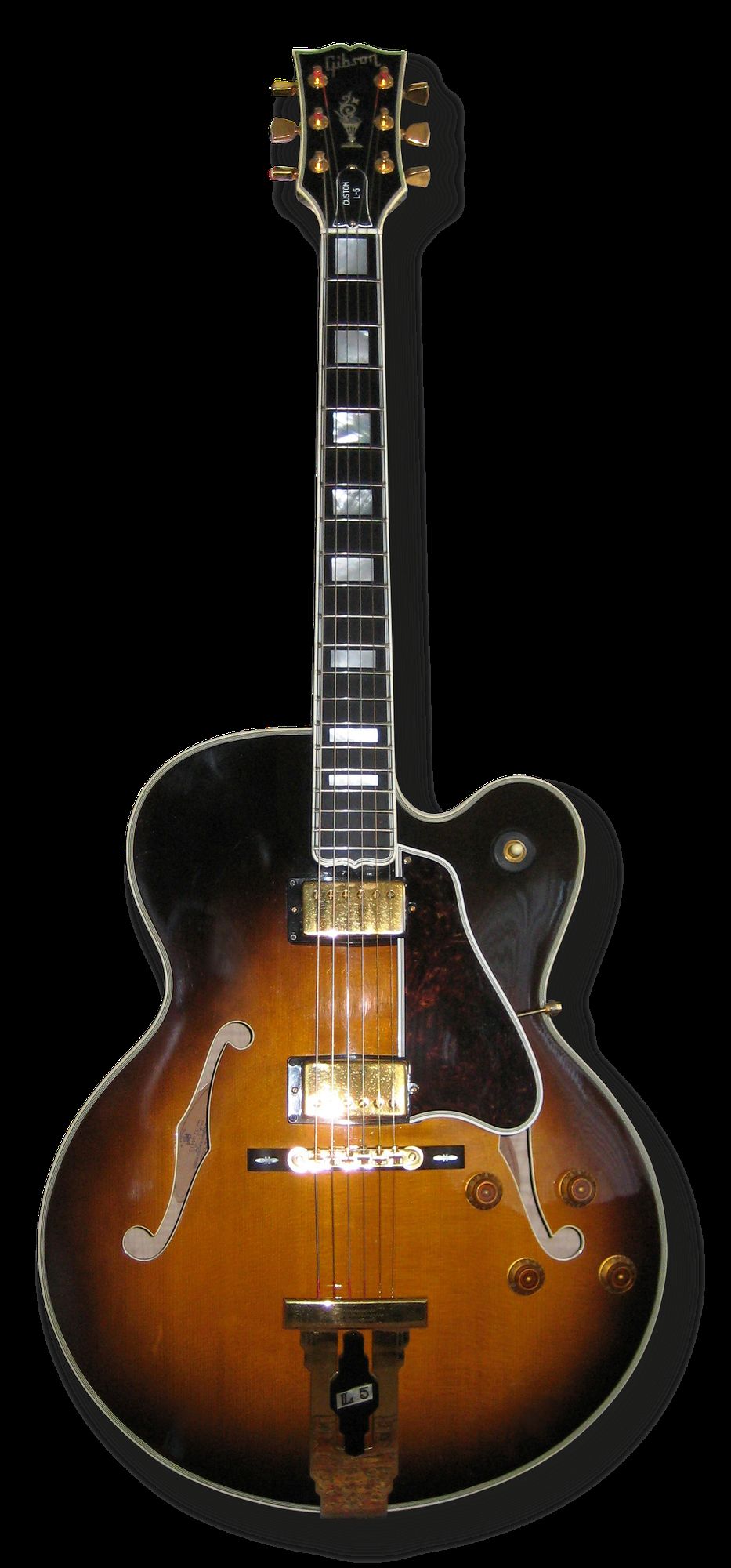
Gibson L-5 CES Tobacco Burst. Photo by Cruciniacus; isolated background by Auge=mit. Licensed under CC BY-SA 3.0. Via Wikimedia Commons. Gibson
L-5 CES
1951
In the ’50s Gibson shipped a few dozen a year. Wes Montgomery and Scotty Moore made them count.
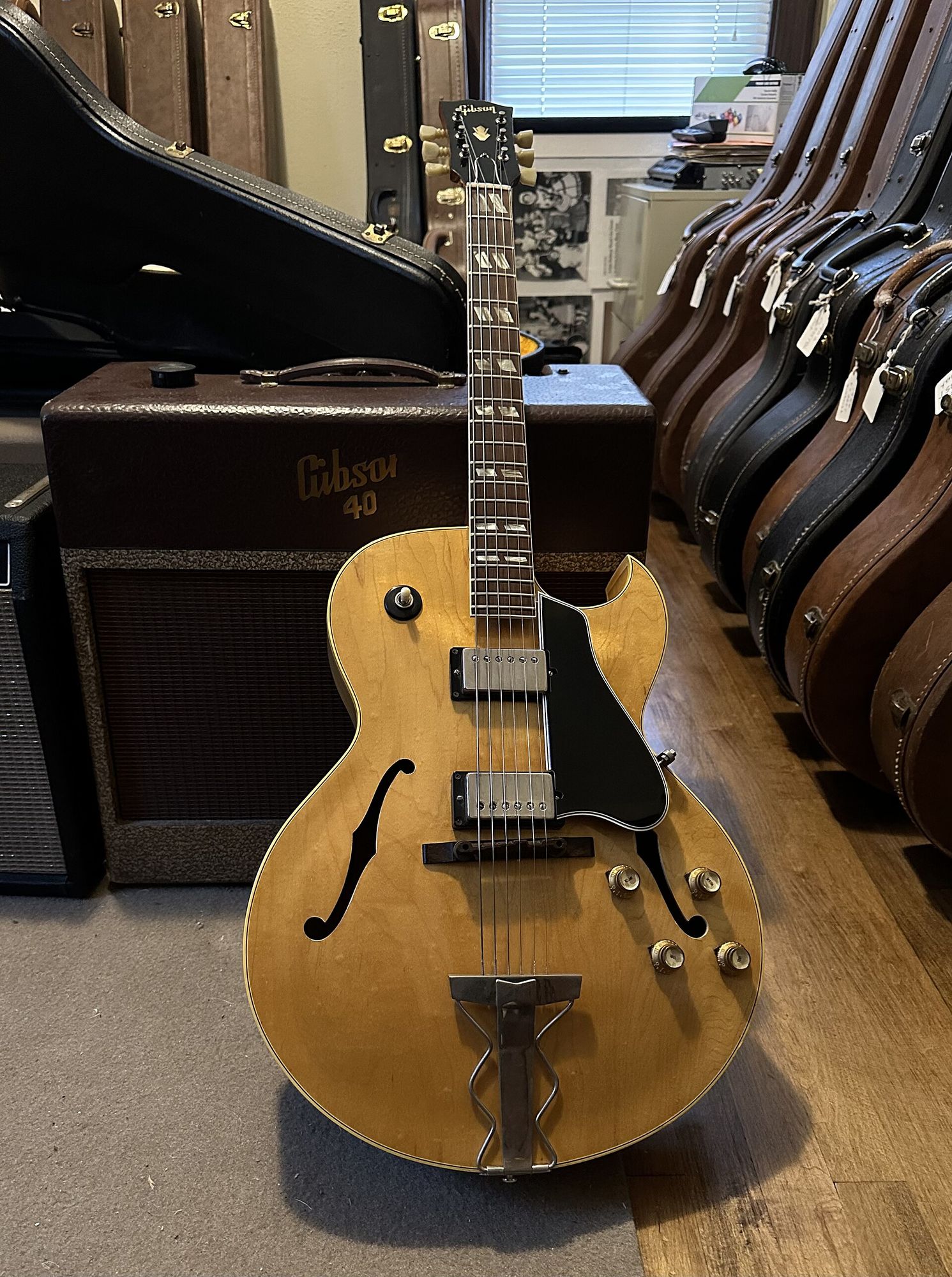
1963 Gibson ES-175DN. Photo by Lightburst. Licensed under CC BY-SA 4.0. Via Wikimedia Commons. Gibson
ES-175
1949
A laminated jazz box that kept changing hands: bought used, given as a gift, borrowed for a hit.
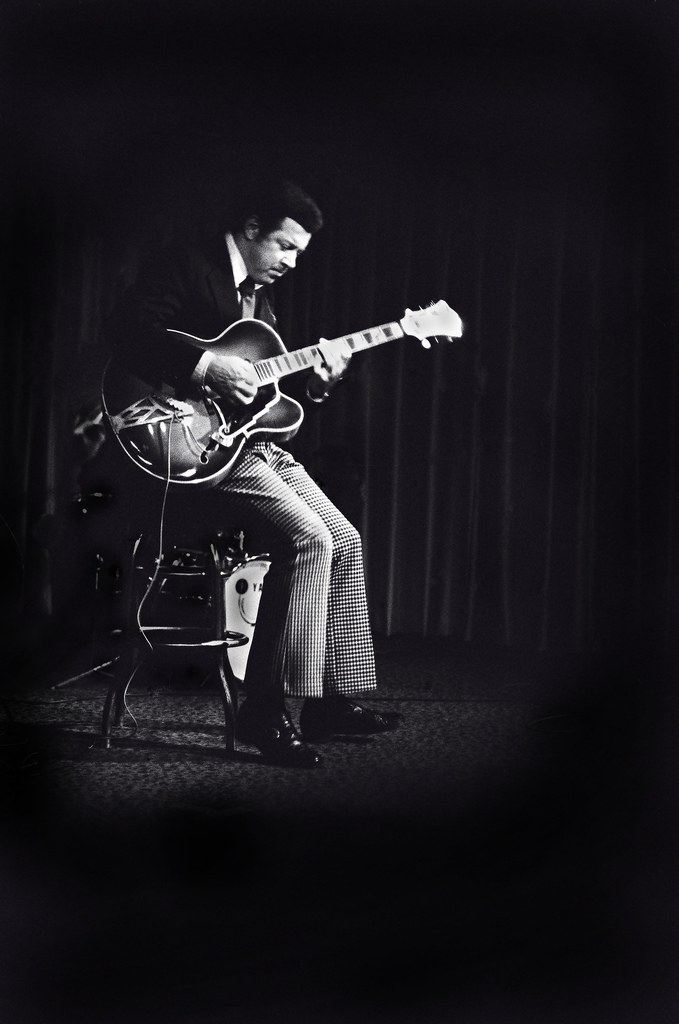
Photo: Tom Marcello / Wikimedia Commons / CC BY-SA 2.0 D'Angelico
New Yorker
1936
One man carved them by hand on Kenmare Street. When he died in 1964, the name kept going. The guitar didn’t.