Ibanez
AS200
Ibanez handed John Scofield one in 1981. Twenty years later, they had to scan his to remember how it was made.
Japan, 1981. John Scofield is on tour, and the neck on his Gibson 335 has gone weird. He won’t touch the truss rod himself. Ibanez hands him a brand-new AS200 to get him through. He plays it for a month, and then he just doesn’t stop.
- Introduced
- 1979
- Type
- Semi-hollow electric
- Class
- Production
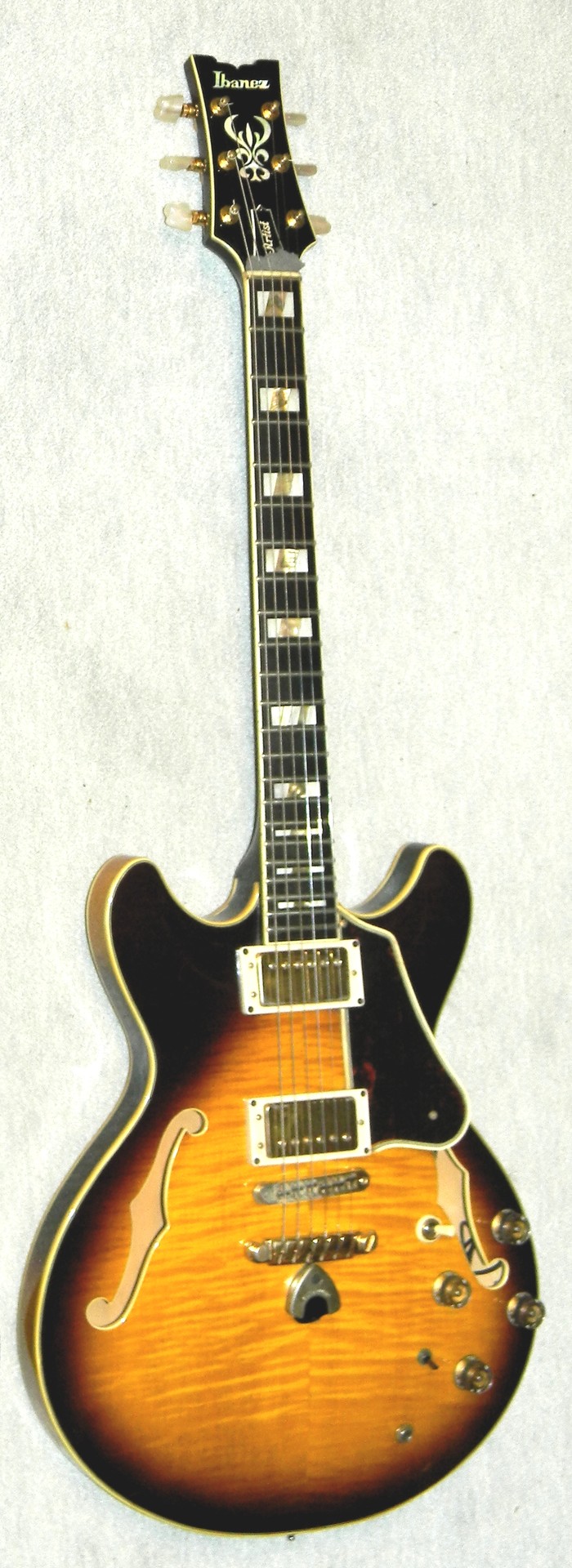
The short version
1977
The Artist 2630
Ibanez’s semi-hollow with rounder horns, the guitar the AS200 grew out of.
1979
A new name
The flagship becomes the AS200, with pointier horns and the same $660 price.
1981
Super 58s, and Scofield
New pickups arrive, and a jazz guitarist on tour in Japan gets one as a gift.
1986
A different factory
Terada takes over building it until 1991. Then it goes back to FujiGen.
1987
Artstar
Same guitar, new banner. The line gets renamed Artstar.
2001
The scan
Ibanez digitizes Scofield’s own AS200 to make his signature model.
2004
The end of the run
The last year of the original Japanese AS200.
Side A
A1
The neck went weird
Most guitar love stories start with somebody saving up. This one starts with somebody’s guitar breaking.
In 1981 John Scofield was touring Japan, and the neck on his Gibson ES-335 had gone weird. (He has also dated it to 1982, so take the year loosely.) He wasn’t going to adjust the truss rod himself. So Ibanez gave him a brand-new AS200. His first impression, as he told it years later:
This plays great and feels great … it feels a lot like my 335.
He played it for a month on that tour. Then he kept playing it. That was more than forty years ago, and he still hasn’t found a reason to put it down.
A2
Not a 335, whatever it looks like across the room
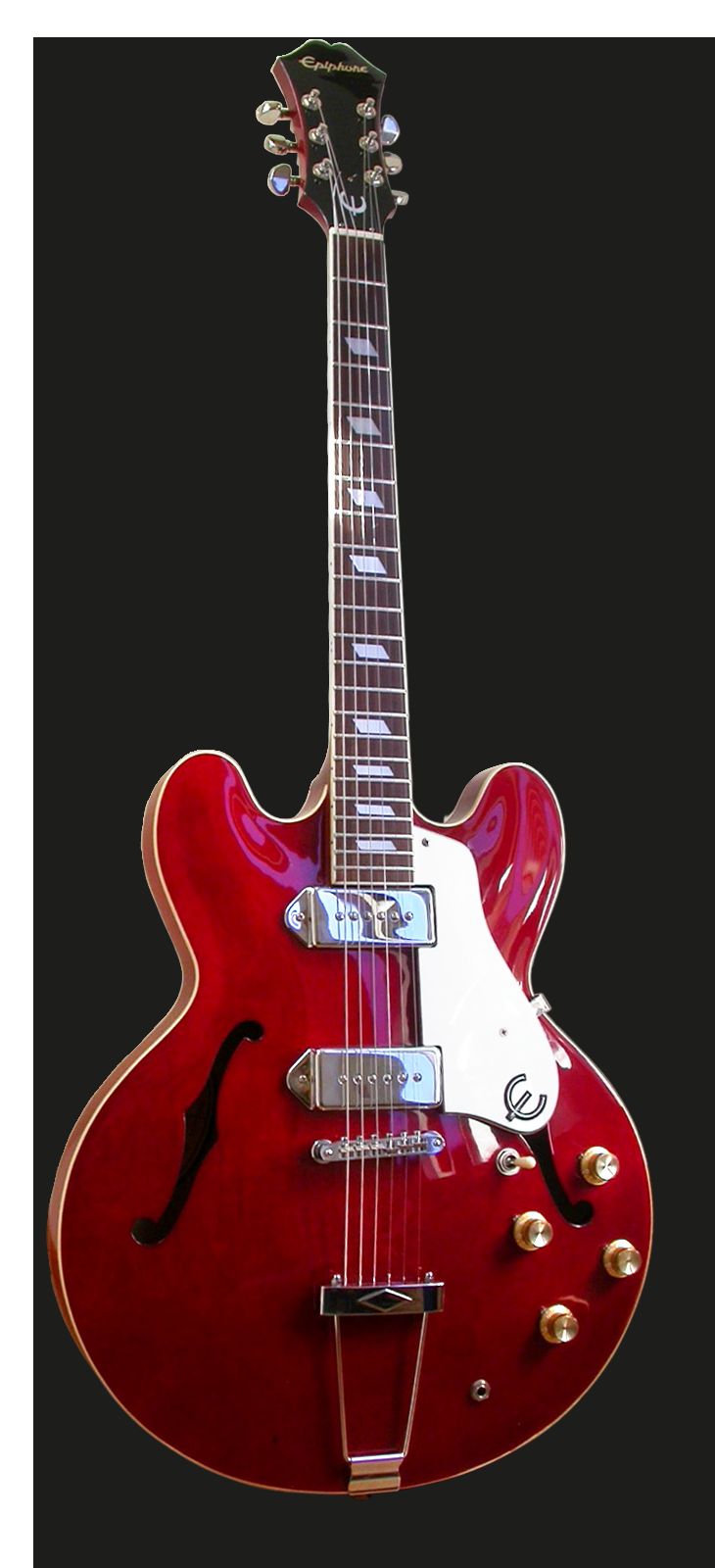
From across a shop you’ll swear an AS200 is a 335. It isn’t. It isn’t an Epiphone Casino either, which is fully hollow with nothing down the middle.
It does borrow the big idea. Gibson had been building a thin double-cutaway with f-holes and a solid block of maple down the middle since 1958. The block is the trick: it lets a hollow-ish guitar get loud without howling, and it gives the notes a longer, rounder sustain. Ibanez had been selling that look as the Artist 2630. In 1979 it pointed the horns, moved a few things around, and called its flagship the AS200. Same $660 list price as the guitar it replaced.
The rest is Ibanez. Flamed maple top, back, and sides. A hard-rock maple center block. A set mahogany neck, bound ebony board, split-block inlays, and gold hardware everywhere. The finish people mean when they say AS200 is Antique Violin, as brown as the name suggests.
The clever bit is a little switch called the Tri-sound. It works on the neck pickup, the one jazz players live on, and gives you three versions of it: the full humbucker, a parallel setting, and a single coil. Warm, a bit clearer, and thin and bright, from one pickup. It is not a Gibson Varitone, and it isn’t a gimmick either.
A3
The loudest pickups known to man
The first AS200s, in 1979 and 1980, had Super 70 pickups. Around 1981 (some say 1982) they switched to Super 58s. Scofield’s guitar has those, and he’s described the originals on his main one as “the loudest pickups known to man.”
That’s a funny thing for a jazz guitarist to be happy about. But what he’s said he prefers about the AS200 over his old 335 is how even it is.
He has two old ones now, a black one and a sunburst. The sunburst is close to stock. The black one wears Voodoo humbuckers, and it’s the one on Uncle John’s Band. The ’81 is on Juice. The main guitar on Piety Street is an AS200 too.
Flip the record · By the numbers
$660
List price in 1979, the same as the Artist 2630 it replaced. A case was $110 more.
3
Voices from the neck pickup, thanks to the Tri-sound switch.
1¾"
Body depth of the original. The 2014 revival was much thicker.
2
Old AS200s Scofield still plays, one black and one sunburst.
Side B
B1
Twenty-five years, two factories
The AS200 stayed in the catalog a long time, and it moved around. FujiGen built it until the middle of 1986. Terada built it until 1991. Then it went back to FujiGen until the end. In 1987 the series got a new name, Artstar, and the guitar carried on as if nothing had happened.
If you’re trying to date one, look at the headstock, which changed shape in 1988 and again late in the run. The original ended after 2004. Ibanez revived it from 2014 to 2020 with a much deeper body, then replaced that with the AS2000, which is gone now too. There’s no AS200 you can order from Ibanez today.
B2
They lost the drawings
Around 2001 Ibanez asked Scofield about a signature model. There was a problem. The AS200 in the catalog had changed since 1981, and, he told Guitar World, the company had lost the schematics for the old one.
So they scanned his guitar. The JSM100, his signature model, is a digital copy of the AS200 from that tour in Japan. It’s a different guitar in the end, with the jack moved to the side and no Tri-sound switch.
He still plays the AS200s. The company forgot how it built the thing. The guy it handed one to in 1981 never needed reminding.
Put this on
You’ve read about it. Now hear it. Here’s what this guitar sounds like, and what to listen for.
Juice
Scofield played his ’81 AS200, the one from that tour in Japan, on this record.
Find it on YouTube (opens in a new tab)Piety Street
His AS200 is the main guitar here. It sounds fat and even, the way a good semi-hollow should.
Find it on YouTube (opens in a new tab)Uncle John’s Band
This time it’s his black AS200, the one with Voodoo pickups.
Find it on YouTube (opens in a new tab)
The cast
The people, and the specific guitars, that made the legend.
1981
John Scofield
The ’81 AS200
A gift in Japan when his 335 needed work. He’s dated it to 1981 in one interview and 1982 in another.
1986
John Scofield
The black ’86 AS200
His other old one, wearing Voodoo humbuckers. It’s the one on Uncle John’s Band.
1979
FujiGen
The factory
Built the AS200 from 1979 into 1986, and again from 1992 to 2004.
1986
Terada
The other factory
Built it from the middle of 1986 until 1991.
Liner notes
Specs, construction, rarity, value, and every source we used.
Flamed maple, a maple center block, and a neck Tri-sound — Ibanez’s 1979 Artist flagship, not a 335 and not a hollow Casino.
- Body
- Semi-hollow double-cut; flamed maple top, back, and sides; hard-rock maple center block; ivory multi-ply; f-holes. Wiki (1982 dealer sheet): 480mm / 16½" × 406mm / 13⅞" × 44mm / 1¾". Mix flagged.
- Neck
- Set 1-piece mahogany (1979–87); 3-piece mahogany/maple (1988–2004)
- Fingerboard
- Bound ebony; pearl/abalone split blocks; 22 medium
- Scale
- 628mm / 24¾". A 1979 listing: 24¾" (629 mm). Mix flagged.
- Pickups
- Super 58 humbuckers, gold covers, alnico (from 1981). Super 70 1979–80.
- Hardware
- Gold. ST + Quik Change (1979–82); Gibraltar II + Quik Change II (1983–2004). VelveTune, then Gotoh. Tortoise guard.
- Electronics
- Two volumes, two tones, 3-way; Tri-sound on the neck
- Finish
- Antique Violin typical. Natural, White, Cherry, Amber exist.
- Nut
- Half bone/half brass 1979–81; bone 43mm 1982–2004. Mix flagged.
Open the full research fileConstruction details, the complete player record, production numbers, dated value estimates, and sources
Classic living example = 1979–2004 Japan AS200 (FujiGen; Terada mid-1986–91; FujiGen again). Super 58 era is the identity guitar. No current typical AS200 SKU this pass: ibanez.com USA AS200 page not found 10 September 2026; 2026 hollow catalog is ASH300 / AS113 / Artcore. 2014–2020 Prestige revival and AS2000 (2021–early 2025) are later objects. JSM100 is Scofield’s signature, not this table. 2630 is the 1977–79 predecessor. AS100 / AS180 are the plainer cousins. AM200 is the smaller body. AF200 is the full-hollow single-cut. JEM, RG550, Destroyer, and Iceman stay on their plates. No Gibson SKU. Mixed inch/mm flagged; do not average 628 mm / 629 mm.
Construction
The job was a semi-hollow Ibanez could put its own name on. Gibson’s ES-335 had been the thinline with a maple stick through the middle since 1958. Ibanez had already been selling the look as Artist 2630. In 1979 the catalog renamed the flagship AS200, pointed the horns, and kept going.
This plate starts in 1979. Ibanez wiki: introduced for 1979, FujiGen. January 1979 US list still has 2630 at $660. September 1979 list: AS200, same $660, “née 2630.” Japan catalog that year: ¥110,000 without case. Reverb’s Artist marketplace bucket prints 1978–1987. guitar-list.com says 1978. Keep 1978 as a marketplace year. The catalog object is 1979.
What they built is a double-cut laminate with f-holes and a hard-rock maple center block. Flamed maple top, back, and sides — curly, tiger, same wood under three catalog names. Set mahogany, bound ebony, pearl/abalone split blocks, 22 medium, 628mm / 24¾". Gold throughout. Tortoise guard. Face-mounted jack. Tri-sound on the neck: series, parallel, or one coil. That switch is Ibanez, not a Gibson Varitone.
It is not a 335. The 335 is Kalamazoo then Nashville, PAFs then T-Types (gibson-es-335). This is Hoshino, FujiGen then Terada, Super 70 then Super 58, Ibanez head, Quik Change. From across a shop it can look like a 335. It is not one. No Gibson SKU.
It is not a Casino. Casino is fully hollow, dog-ear P-90s, no center block (epiphone-casino). A spruce contour brace is not a maple stick. This guitar has the block.
It is not a JEM. It is not an RG550. Those are 1987 superstrats — monkey grip and claw on one, Wizard/Edge/HSH mass sibling on the other. Destroyer took the Explorer. Iceman is the angular original. This is the Artist/AS semi-hollow. Standalone.
2630 (1977–mid-1979) is the parent outline: rounder horns, Super 80s, Gibraltar with a brass tone block, side jack. Wiki: AS200 pointed the horns and moved the toggle and output. Same job, new catalog name. 2629 / AS100 is the chrome-and-dots sibling, not this table.
1979–80: Super 70 pair. Half bone/half brass nut. ST bridge, Quik Change, VelveTune, Sure Grip. Antique Violin is the finish people mean.
1981: Super 58s on the wiki. guitar-list.com puts the swap at 1982. Keep both. That Super 58 guitar is Scofield’s. Guitar World (2014): original pickups on the main one are “the loudest pickups known to man.”
1982–83: full bone nut, 43mm; Sure Grip II; Gibraltar II and Quik Change II replace the ST package. Smooth Tuner 1985–87. Gotoh SG38/SG381 from 1988.
Mid-1986–91: Terada. FujiGen again 1992–2004. Wiki. Headstock is the dating tell: original Artist 1979–86; new shape and inlay 1988; flowering GB-style 1999–2004. Three-piece mahogany/maple neck from 1988. Artstar series name from 1987 — same guitar, new banner. Reverb’s Artstar bucket: 1987–2003. Wiki last year 2004. Keep both.
JSM100, 2001. Scofield signature. Ibanez scanned his 1981 AS200 because, he told Guitar World (2023), they had lost the schematics. Side jack, no Tri-sound, compound radius. That is a different guitar. JSM10 is the Chinese then Indonesian cheaper one. Do not file either as an AS200.
2014–2020 Prestige revival: FujiGen again, Vintage Yellow Sunburst, Super 58s, Gotoh 510BN / GE101A. Wiki body 464mm / 18¼" × 400mm / 15¾" × 67mm / 2⅝" — thicker than the original 44mm / 1¾". Flamed maple, then anigre in 2018 and 2020. SMAP $2,299.99 (2015–18) / $2,399.99 (2019–20). Historical street, not a 2026 cart. AS2000 (2021–early 2025) is the roasted-maple successor. Wiki: gone from all markets except Japan after 2024, gone completely early 2025. Not this slug.
Classic vs current: 1979–2004 Japan AS200 — flamed maple, maple block, Super 70 then Super 58, Tri-sound, 44mm / 1¾" — against no new AS200 you can order from Ibanez in 2026.
Players
Do not recruit JEM, RG550, Destroyer, or Iceman users. Vai is JEM. Gilbert is RG/PGM. Eddie’s Shark is Destroyer. Stanley is Iceman. Do not hang a Gibson ES-335 on this plate. Do not file JSM100 as this guitar.
John Scofield. The player this guitar still means. Guitar World (26 September 2014): given a brand-new AS200 in Japan in 1981; his 335’s neck had gone weird and he would not touch the truss. “This plays great and feels great … it feels a lot like my 335.” He played it a month on that tour and did not stop. Vintage Guitar (John Heidt, July 2009): “I’ve had it since 1982, when it was given to me by the company.” Keep 1981 and 1982. GW 2023: two old AS200s, black and sunburst, different pickups, slightly different necks. The black one wears Voodoo humbuckers; the sunburst is closer to stock. Main guitar on Piety Street (VG 2009); the ’81 on Juice (GW 2014); black one on Uncle John’s Band (GW 2023). Vintage Guitar (29 December 2023 soundcheck clip): ’86 AS200 with Voodoo pickups. That is a later black guitar, not the 1981 gift. When Ibanez asked for a signature, the current AS200 had moved on; they scanned the old one. JSM100 is that scan. He still plays the AS200s.
Also known to play stays short. Reverb’s Artstar card names Scofield. No second sourced player pinned to a serial here. None invented.
Rarity
You cannot buy a new AS200 from Ibanez. The original run ended after 2004. The Prestige revival ended after 2020. AS2000 is gone. Living Artstar and Artcore AS models on the 2026 catalog are other SKUs on this silhouette. They are not a 1979 AS200.
Ibanez did not publish AS200 unit totals. None invented. Serials on these years date a guitar. They don’t count a year. That is why a first-year census is unknown, not the chapter.
What is actually thinner: 1979–80 Super 70 / half-and-half nut; 1981–82 Super 58 with the ST and Quik Change; first-year Antique Violin. Terada 1986–91 is a factory window, not a second model. 2014–2020 Prestige is a thicker revival, not a 1979. Scofield’s two AS200s are unique objects. They are not a vintage AS200.
Value
Informal estimate, 10 September 2026. Not an appraisal.
Ask vs sold labeled. Celebrity lots are not-comps. No invented medians or factory counts. Period list $660 plus case $110 (September 1979 USA price list) and ¥110,000 (1979 Japan catalog) are 1970s money, not 2026 street.
New street. None under AS200 this pass. 2014–2020 Prestige SMAP $2,299.99 / $2,399.99 (Ibanez wiki, Musician’s Friend archives) is historical, not a 2026 cart. AS2000 SMAP $2,599.99 (wiki 2022–25) is a different SKU, discontinued. JSM100 is the living Scofield cart — Sweetwater lists it — not this table.
Used modern. 2014–2020 Prestige trades used. Named asks this pass, not hammers: Blue Book’s Reverb scrape $2,522 / $2,557; a German Prestige ended about €1,977–€2,197. Reverb Prestige Price Guide widget did not print a clean band this pass. Don’t invent a midpoint.
Vintage / collectible. Distinguish the buckets. Reverb AS200 Artstar (1987–2003) Price Guide: $1,246–$2,138 on 117 orders, Good to Mint. Named solds on that tape: $2,300 (27 December 2024, Excellent); $1,710 (11 July 2025, Mint); $1,665 (28 September 2025, Excellent); $1,450 (6 October 2025, Excellent); $1,619.10 (14 October 2025, Very Good); $2,070 (31 October 2025, Very Good); $1,850 (28 December 2025, Good). Named ask this pass: 1996 Artstar $1,845. Artist 1978–1987 Price Guide widget was bot-walled this pass. Named asks, not hammers: 1985 AV $2,550 (from $2,750); Blue Book scrape $2,249–$2,750 on early-’80s examples; Guitar Colonel 1979 $1,950. Do not average those asks with the Artstar sold band. Early Super 70 / 1981 Super 58 ST-bridge examples sit at the top of the ask tape when original. Scofield’s two guitars are a separate provenance market. They are not a street AS200.
See also
- gibson-es-335 — the lookalike trap: Kalamazoo/Nashville laminate with PAFs; this is FujiGen/Terada with Super 58s
- epiphone-casino — fully hollow, dog-ear P-90s, no center block
- ibanez-iceman — 1975 angular Ibanez original; not this semi-hollow
Sources
- Ibanez wiki, AS200 (1979–2004) — 1979 intro; FujiGen / Terada / FujiGen; replaced 2630; Artist then Artstar 1987; Super 70 then Super 58; hardware years; 480mm / 16½" × 406mm / 13⅞" × 44mm / 1¾"; $660 / ¥110,000 (1979); discontinued after 2004
- Ibanez wiki, AS200 (2014–2020) — FujiGen Prestige revival; 67mm / 2⅝" body; SMAP $2,299.99 / $2,399.99; replaced by AS2000 after 2020
- Ibanez wiki, Portal: AS models — AS body 1979, replacing 2629 / 2630; flagship AS200; 2026 catalog ASH300 / AS113 / Artcore, no AS200
- Ibanez wiki, 2630 — Artist 1977–mid-1979; Super 80; rounder horns; replaced by AS200
- Ibanez wiki, 1979 catalogs — Jan US list still 2630 $660; Sept US list AS200 $660 née 2630; Japan ¥110,000
- Ibanez wiki, AS2000 — 2021–early 2025 successor; SMAP $2,599.99; gone early 2025
- Ibanez wiki, JSM100 — 2001–; scanned from Scofield’s 1981 AS200; side jack, no Tri-sound
- Vintage Guitar, John Heidt, John Scofield (July 2009) — AS-200 since 1982, company gift; Piety Street
- Vintage Guitar, John Scofield and his Trio (29 December 2023) — ’86 AS200 with Voodoo pickups, Uncle John’s Band soundcheck
- Guitar World, Talking Gear and ‘Juice’ with John Scofield (26 September 2014) — 1981 Japan gift; 335 comparison; two old AS200s; Voodoo on one; original pickups “loudest known to man”
- Guitar World, John Scofield on why he prefers Ibanez to Gibson (9 November 2023) — 1981 Japan; two AS200s, black and sunburst; prefers evenness vs 335; schematics lost; scan for JSM
- Guitar Player, How Ibanez turned a knockoff into a knockout with the Artist Model 2617 (27 June 2024) — Elger suit 1978; 2629 / 2630 as the 335-influenced semis
- Reverb, Ibanez AS200 Artist 1978–1987 — marketplace years 1978–1987; 1985 AV ask $2,550 from $2,750; Price Guide widget bot-walled this pass
- Reverb, Ibanez AS200 Artstar — Artstar name 1987; years 1987–2003; Price Guide $1,246–$2,138 on 117 orders; named 2024–25 solds; 1996 ask $1,845
- Reverb, Ibanez AS200 Artstar Prestige — 2014–2020 revival bucket; Price Guide widget bot-walled this pass
- Blue Book of Guitar Values, IBANEZ AS200 — live Reverb ask scrape ~$1,927–$2,750
- The Guitar Colonel, Ibanez AS-200 1979 — 1979 ask $1,950
- Reverb, 1979 AS-200 serial L794584 — measured 24¾" (629 mm); nut 1 11/16" (43 mm); maple center block; sold listing
- Sweetwater, Ibanez JSM100 — living Scofield signature; digitized AS200AV; not this table
- guitar-list.com, IBANEZ AS200 — 1978 manufacture date (marketplace/tertiary); Super 58 from 1982 in that copy
Keep digging
Guitars this one gets compared to, confused with, or descended from.

Photograph of a vintage 1960 Gibson ES-335TD. Photo by Lightburst. Licensed under CC BY-SA 4.0. Via Wikimedia Commons. Gibson
ES-335
1958
Larry Carlton played three 335s off a shop wall, unplugged, paid $850 for one, and became Mr. 335.
Epiphone Casino Cherry. Photo by Maxo; background removed by Auge=mit. Licensed under CC BY-SA 4.0. Via Wikimedia Commons. Epiphone
Casino
1961
Of all the Beatles’ famous guitars, the only one John, Paul, and George all had. Two sanded theirs bare.
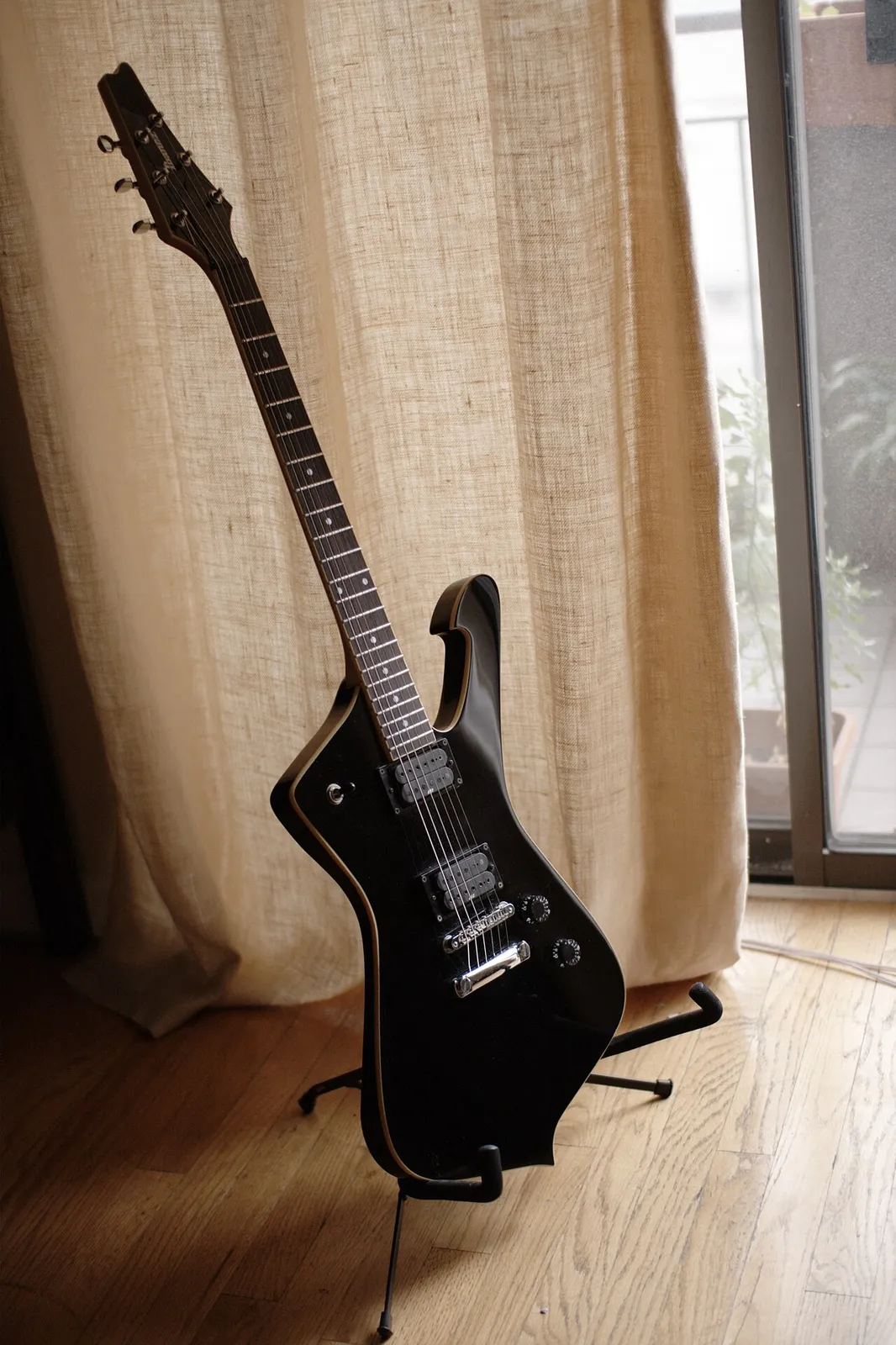
Photo: anders pearson / Wikimedia Commons / CC BY-SA 2.0 Ibanez
Iceman
1975
Ibanez drew this one itself in 1975. When the lawyers made the copies go away, it got to stay.