Ibanez
Talman
Named for a bluesman who never existed, it kept getting dropped, and players kept asking for it back.
1994. The Offspring’s Smash is out, and Noodles has just bought his first Les Paul. It’s too heavy, and it still feels wrong. What he ends up playing instead is an Ibanez that doesn’t look like an Ibanez: an offset body, three lipstick pickups, and no pointy horns at all.
- Introduced
- 1994
- Type
- Solidbody electric
- Class
- Production
Have a photograph of this guitar? Send a picture
The short version
1993
First necks
Production starts mid to late in the year, before the catalog does. The debut necks are stamped TV-650.
1994
The Talman
In the catalog. The TC530 has three lipstick pickups in a body pressed from Resoncast.
1996
Sparkle
The factory in Japan buys a flake booth so a sparkle Talman can ship that summer.
1998
Expired
The solidbody line ends. Paul Gilbert’s signature hangs on through 1999.
2003
Duct tape
Noodles gets the NDM1, a Korean Talman wrapped in a duct-tape finish.
2015
Back
Standard and Prestige Talmans return in November.
2020
Slime green
Yvette Young’s YY10 launches at NAMM.
Side A
A1
Too heavy, still wrong
When Smash came out in 1994, Noodles bought his first Les Paul. It was too heavy, and it still didn’t feel right. So he went looking.
Don’t pin Smash on a Talman. He’s said it himself: the Les Paul came first, the Talman after. What he found was a guitar Ibanez had built for a player who had stopped wanting what Ibanez was famous for. By 2001 he was playing mostly Talmans, almost stock.
A2
The pointy ones go down
In the early ’90s Ibanez meant the shred guitar: the RG, the JEM, pointy horns. Then guitar bands started turning up with pawn-shop offsets instead. The Talman was the answer, drawn up from scratch. It replaced the RT, which had been an RG body wearing Stratocaster parts.
What the shape looks like depends who’s looking. A Jazzmaster with a rounder bass horn. Vaguely Jazzmaster-esque. A vintage Telecaster, a little bit of Danelectro. Noodles called it a Jazzmaster kind of body. It isn’t a Fender, and it doesn’t try very hard to pretend.
And the name? Pulled out of thin air, by one account, because the real English words were already trademarked in Japan. Brian Wood told a retailer it honored “Skinny” Talman, a bluesman who played slide with his glass eye. There was no Skinny Talman. That didn’t stop anyone.
A3
Pressed, not carved
The first Talmans weren’t made from a plank. The body was Resoncast: alder offcuts in resin, pressed into a medium-density board. Plenty of people just call it MDF. The guitars were put together at FujiGen in Japan, and they were the first Ibanez guitars with Korean hardware, the pickguards wired in Korea and dropped in whole.
The 1994 TC530 had three lipstick pickups, wound to echo the ones on an old Danelectro. That’s where the sound lives, and it’s nothing like a superstrat. Add a five-way switch and a vibrato, and you have a guitar for chords, not for sweep-picking.
The catalog year is 1994. The debut necks were stamped TV-650 in the pocket, and production had started in the middle or back end of 1993. Keep both.
Flip the record · By the numbers
3
Lipstick pickups on the 1994 TC530, wound to echo Danelectro’s.
1994–98
The first solidbody run. Some sources hold the TC530 itself to 1994 only.
5
Noodles signature Talmans, NDM1 through NDM5.
25½"
Scale. Fender length, on a guitar that isn’t a Fender.
Side B
B1
Sparkle, then nothing
After 1995 the Resoncast went away and most production moved to Korea. Light ash on one model, basswood on another. Not every late one left Japan, though. FujiGen bought a flake booth so a sparkle Talman could ship for summer 1996. A Japanese model with a Bigsby ran from 1997 into 1998.
Then the line expired. By the end of ’98 the solidbodies were done, apart from Paul Gilbert’s PGM900, which lasted through 1999. The name came back later on an acoustic. The 1997 website had called the line “the Classic Alternative.” A year later there wasn’t one.
B2
Wrapped in duct tape
Noodles kept playing them. In 2003 Ibanez gave him a signature, the NDM1, made in Korea and wrapped in a duct-tape finish. It wasn’t even his favorite Talman body. The outline he actually loved had been dropped, and later Ibanez brought it back for him. There have been five Noodles models, NDM1 through NDM5.
Bob Casale of Devo, Bob 2, played a green Talman and a red one from the 1990s until his death in 2014. In November 2015 the plain Talman came back, and Ibanez called it one of its most-requested models. Standard versions, and Japanese Prestige versions. The Prestiges stopped after 2017. The Standards lasted through 2018.
B3
A guitar that wasn’t pointy
Yvette Young didn’t want a metal guitar. So when Ibanez sent her something, it sent a Talman. She pulled the pickups out of a cheap Tele copy and put them into a pink-sparkle one. A sunburst she borrowed at NAMM became the guitar she wrote on, and they let her keep it.
Her own models followed: the slime-green YY10 at NAMM 2020, the orange-cream YY20 in 2021. In February 2026 she showed a pink-sparkle one with P-90s. It isn’t out yet.
More than thirty years in, the Talmans Ibanez still sells in America have somebody’s name on them: the people who wouldn’t let it go.
Put this on
You’ve read about it. Now hear it. Here’s what this guitar sounds like, and what to listen for.
Noodles rig rundown
Noodles walks through his signature Talmans, including the duct-tape NDM1, and says what he liked about the shape Ibanez brought back for him.
Watch it on YouTube (opens in a new tab)Yvette Young on her Talman
NAMM, January 2020. Young introduces the YY10, her slime-green sparkle Talman with three single coils.
Watch it on YouTube (opens in a new tab)
The cast
The people, and the specific guitars, that made the legend.
2001
Noodles
Talmans, nearly stock
Mostly Talmans by 2001, with DiMarzio pickups swapped in. One had a Super Distortion for the shows where Dexter Holland puts his guitar down.
2003
Noodles
NDM1, duct-tape finish
The first of five signature Talmans. The outline he loved most had been dropped, and Ibanez brought it back for him.
1990s–2014
Bob Casale
A green Talman and a red one
Bob 2 of Devo, from the 1990s until his death in 2014.
Paul Gilbert
PGM900
His signature on the Talman outline, made through 1999. His other PGMs aren’t Talmans.
2020
Yvette Young
Pink-sparkle Talman, then the YY10
Ibanez sent a Talman because she didn’t want a pointy metal guitar. She moved the pickups over from a cheap Tele copy.
Liner notes
Specs, construction, rarity, value, and every source we used.
Three Sky lipsticks in a Resoncast offset — Ibanez’s 1994 Talman, not a Jazzmaster and not an RG.
- Body
- Resoncast solid; offset double-cut. Blue Book: Jazzmaster outline, rounder bass horn. Ibanez Wiki also says Telecaster-like.
- Neck
- Bolt-on 1-piece maple, Talman profile, AANJ. FujiGen, Japan.
- Fingerboard
- Rosewood, pearl dots, 22 medium. Radius unpublished on the TC530 table.
- Scale
- 648 mm / 25½". Ibanez Wiki prints both. Mix flagged.
- Pickups
- SSS Sky lipsticks: SLV-1 neck, SLV-1R middle, SLV-1 bridge
- Hardware
- TZ100 tremolo, 10.5 mm spacing; Gotoh; ivory guard; chrome
- Electronics
- Volume, tone, 5-way
- Finish
- 1994 catalog includes black, pale white, pale blue, bursts, Gravure Flame. Not one color.
- Nut
- Plastic, 41 mm. No inch on this table.
Open the full research fileConstruction details, the complete player record, production numbers, dated value estimates, and sources
Classic living example = 1994 Japan TC530 (FujiGen), not the signatures still in the catalog. Wikipedia and Blue Book: 1994 only. Ibanez Wiki: 1994–1995. Mixed inch/mm flagged on 648 mm / 25½". Do not paste the 2016 Prestige review’s 1.6" nut, or the NDM5’s 42 mm, onto this 41 mm.
Construction
The job was a guitar for the bands who had put the pointy ones down. Ibanez Wiki: the Talman, with the Ghostrider, was the clean-sheet answer to the pawn-shop offset, and it replaced the RT, an RG body wearing Strat parts. Not a JEM (ibanez-jem). Not an RG550 (ibanez-rg550). Not a Destroyer, an Iceman, a JS, or a Musician.
This plate starts in 1994. Wikipedia, Blue Book, Vintage Guitar (July 2005), the Ibanez Wiki. Tal’s Guide starts the build earlier: TV650 production mid to late 1993, with the TC530 and the US-only TV750, and those debut necks stamped TV-650 in the pocket. Catalog year is 1994. Keep the stamp.
What the outline is depends on who is looking. Blue Book: the TC is a Jazzmaster shape with a rounder bass horn; the TV is a reverse Jazzmaster with a sharp treble horn. Seymour Duncan (14 July 2015): vaguely Jazzmaster-esque. Ibanez Wiki: inspired by Telecasters and Danelectros, “a shape similar to the vintage Telecaster.” Noodles called his duct-tape Talman a Jazzmaster kind of body (Premier Guitar). Keep them. Not a Fender.
The first bodies were a press, not a plank. Vintage Guitar: Resoncast was medium-density fiberboard, alder offcuts in resin. Ibanez Wiki: a marketing name for MDF. FujiGen assembled them. Wiki and Tal’s Guide: the first Ibanez guitars with Korean hardware, guards wired in Korea and dropped in. Sky pickups. VG: wound as replicas of Danelectro lipsticks, plus Sky copies of ’60s mini-humbuckers.
The table is that lipstick TC530. Ibanez Wiki: Europe, Japan, and the USA, 1994–1995. Wikipedia and Blue Book print 1994 only. Don’t pick the end date they didn’t share.
TV650 is the other debut, not this table. Tal’s Guide: HSH, a mini-humbucker and a mini-lipstick he credits to Kent Armstrong, a cavity under the guard. He calls it the mother Talman because of the stamp. The TV750 was the USA-only sibling for 1994.
Then the composite went away. VG: after 1995 Resoncast disappeared and production shifted to Korea. The TC630 became light ash and lasted into 1997. The TC420 — basswood, two humbuckers, a vibrato — ran through 1998. Jim Donahue’s own account: TC420 and TC620 to Korea; a TC830 stayed in Japan; FujiGen bought a flake booth so the sparkle TC820 could ship for summer 1996. The TC825 is still Japan, 1997–1998 (Ibanez Wiki): alder, two Super 58s, a Gibraltar II, a Bigsby B5, graphite nut 41 mm. Not every late Talman is Korean.
VG on the close: in ’97, the TC630 plus the TC825 and the TC740 (alder, two lipsticks, a V8). In ’98, an agathis TC220 and a lefty TC420L. After ’98 the line expired, “except for being reprised later as an acoustic/electric.” The solid that outlasts that sentence is Paul Gilbert’s PGM900, through 1999. His other PGMs are not this plate.
Paul Specht, Ibanez: The Untold Story, as Peter Hodgson quotes it: the name was pulled out of thin air, English words already trademarked in Japan. Brian Wood told a retailer it honored “Skinny” Talman, a made-up bluesman who played slide with his glass eye. The archived 1997 page called the line “the Classic Alternative.”
2003 is a signature, not a new TC530. The NDM1 is Korea, basswood, a duct-tape wrap, Infinity HSH, a hardtail, 2003–2005. Acoustics (TCY / TCM) debut in that year’s acoustic catalog. A different instrument. The TMB is a bass. An Artcore semi with a TM number is not this body. Ichika Nito’s ICHI10 is a headless Q. The wiki’s ICHI00 (2023) is the one it calls Talman-based.
November 2015. Standard and Prestige electrics come back (Wikipedia). FujiGen Prestige: the TM1702 is a Tele-style pair and a fixed bridge; the TM1730 is three singles and a trem; the TM1803 is the third. Alder, or ash on the AHM. Seymour Duncan. Guitar World (4 May 2016): 25½", 22 medium, a 12" radius, a C, Gotoh MG-T lockers. A Japanese dealer page prints 305 mm on the TM1702M. Mix flagged. Neither figure belongs on the 1994 table, which published no radius. Molenda (Guitar Player, 14 January 2016): $1,199 street for both guitars he played; nut 1.6"; TM1702M 6.94 lb; TM1730M 7.64 lb. Guitar World’s list is $1,599.99. The wiki’s 2016 MSRP is US$1,600. Those two are the list. SMAP and Molenda’s street are both $1,199. Don’t average list into street. Prestige stops after 2017. The Standards linger through 2018. Then no non-signature solid.
What the site will still sell is not the table. The NDM5 is Indonesia. Retailers call the body the original TV outline. American basswood, 3-piece maple, ebony, 22 medium, 648 mm / 25.5", nut 42 mm, radius 250 mm on ibanez.com USA, Seymour Duncan P90 Stacks, an F106. Chuck Levin’s page prints 240 mm for that radius. Don’t average 240 and 250. GearTree’s 9.8" and 1.6535" are that shop’s inches. YY10 and YY20 are the other signatures still catalogued. No non-signature TC/TV on ibanez.com USA this pass. Japan’s TM730 J-Line — alder, three singles — starts September 2020; the wiki portal runs it 2020–2024. Not a USA page this pass. The acoustic with this name is still a catalog guitar. It is not this one.
Players
Do not hang Smash on a Talman. Noodles told Guitar World (Andrew Daly, 27 June 2023) he got his first Les Paul when Smash came out in ’94, and that the Talman came after the Les Paul felt too heavy and still wrong. A short that files the Talman as the Smash guitar is contradicted by the player. In that same interview the guitar the band keeps going back to in the studio is “Number One,” a ’64 Gibson SG Junior with one P-90. “I’m sure I used some Ibanez stuff, too” is not a track credit.
Noodles (Kevin Wasserman). Guitar Center, 2001: mostly Talmans, almost stock except DiMarzio Tone Zones; one of them with a Super Distortion for the shows where Dexter Holland puts the guitar down. The duct-tape guitar in that interview is an Artstar, a hollow, not this solid. The duct-tape Talman is the later NDM1. Premier Guitar’s rig rundown: the NDM1 was his second-favorite body; the outline he actually loved had been dropped, and Ibanez brought it back for him. Retailers call that later shape, and the current NDM5, the TV. Five signatures, NDM1 through NDM5. Not a pinned Offspring album.
Yvette Young. Covet. Ibanez sent a Talman because she did not want a pointy metal guitar (Guitar.com, Gary Walker, 8 July 2020; Guitar World, 4 June 2020). She moved the Bill Lawrence pickups from a cheap SX Tele into a pink-sparkle Talman. A sunburst with Seymour Duncan Five-Twos, borrowed at NAMM, is the one she says she wrote on. They gave it to her. The YY10 (NAMM 2020, slime-green sparkle, three Five-Twos, a Wilkinson) and the YY20 (2021, orange-cream sparkle, Tele-style Alnico II Pros) are the production guitars. Guitar World (12 February 2026): a pink-sparkle P-90 is next. Not released. Not a SKU.
The mid-’90s list, with the traps attached. Guitar Player, January 2016: Paul Gilbert, Noodles, Tom Morello, Kim Gordon, and the late Bob 2 of Devo. Gilbert’s object on this silhouette is the PGM900. The Fireman and the rest of the PGM line are not this plate, and a Mr. Big track does not move here with them. Morello is on Molenda’s list of players of the period guitar. That is not a session note, and it is not “Killing in the Name.” Kim Gordon is on the same list. Wikipedia: Bob Casale played a green Talman and a red one from the 1990s until his death in 2014. No song pinned on either.
Also known to play stays short. Wikipedia adds names past that magazine list, including a Fenix TX video. No session log for them here. Not recruited.
Rarity
You cannot order a new TC530. The 1994–98 solidbody run ended, and Ibanez never published a Talman total. None invented. A neck stamped TV-650 dates a guitar. It does not count a year.
What is actually thinner: Resoncast debuts, a TC530 if you hold the sources to 1994 only, the USA-only TV750, a sparkle TC825 from a two-year Japan run, a PGM900. The 2015–17 Prestige is a closed FujiGen reissue. It is not a 1994 guitar, and it was not a numbered JEM. NDM5, YY10, and YY20 are catalog signatures. Common as new guitars. The scarce thing is the old Resoncast one.
Value
Informal estimate, 1 October 2026. Not an appraisal.
Asks are not hammers. No celebrity lot turned up in the sources read here. No invented medians. Molenda’s $1,199 and the wiki’s $1,600 MSRP are 2016 Prestige money, not this street.
New street. No non-signature TC/TV this pass. NDM5: Japan ¥187,000 tax-in (¥170,000 before tax) on ibanez.com/jp. US tags seen for this plate, not one number: $1,049.99 (GearTree; Island Music) and a Reverb listing at that tag marked to $944.99. Chuck Levin’s had it at $899, that page’s own $150.99 markdown. Europe, 9 January 2026 price list: €999. YY10 and YY20: Musician’s Friend and zZounds $1,249.99; Japan YY10 ¥231,000 tax-in; Europe €1,199 each on that January list. MusicRadar’s $1,466 (NAMM 2020, YY10) and $1,099 (December 2021, YY20) are announcement figures. Not this cart. Talman basses and TCY acoustics trade in their own bands. Not comps for this solidbody.
Used modern. No clean sold band isolated this pass. Merchant “available,” not hammers: Equipboard’s YY10 used figure $959.99 (prices as of 21 February 2026); one TM730 at $932.82 (23 September 2026). The TM730 is a Japan J-Line. Don’t average it with a YY10 and call the result a used Talman.
Vintage / collectible. Blue Book’s dollar widget is paywalled. Flag: thin sold-comp access. Named asks, not a run of hammers, from guitar-list’s US scrape (30 August 2026) and the same neighborhood of listings: 1990s TC630s at $770, $779.99 (Guitar Center used), $799, $875, $954, $995, $1,127, and $1,140. A TC530 ask at $549 showed up in a Blue Book for-sale scrape. Different model. Don’t average it in. A Noodles-played guitar would be one object. Not a comp.
See also
- fender-jazzmaster — the 1958 offset Blue Book and Seymour Duncan hear in the outline; not this Resoncast guitar
- danelectro-59 — the lipstick single the Sky pickups were wound to echo
- ibanez-rg550 — the 1987 mass superstrat this line was built not to be
Sources
- Wikipedia, Ibanez Talman — introduced 1994; electric run ended 1998; acoustics 2003; November 2015 Standard and Prestige; model list; Noodles’ five signatures; Bob Casale through 2014; Vintage Guitar July 2005 shrinkage quote
- Ibanez Wiki, Talman series — 1994; Telecaster / Danelectro inspiration; RT replaced; Ghostrider; PGM900 through 1999; NDM1 from 2003; non-signature return 2015; Standards through 2018; tagline “the Classic Alternative” (archived June 1997 Ibanez USA page); TM730 from September 2020
- Ibanez Wiki, TC530 — 1994–1995; FujiGen; Resoncast as MDF; Korean hardware; AANJ; 648 mm / 25½"; plastic nut 41 mm; Sky SLV-1 / SLV-1R; TZ100; 1994 USA catalog
- Ibanez Wiki, TC825 — Japan 1997–1998; alder; Super 58s; Bigsby B5; graphite nut 41 mm
- Ibanez Wiki, NDM1 — 2003–2005; Korea; basswood; duct-tape; Infinity HSH; hardtail
- Ibanez Wiki, TM1702 — Prestige reintroduction; 2016 MSRP US$1,600 / SMAP $1,199; discontinued after 2017
- Ibanez Wiki, ICHI10 — Q-based; ICHI00 (2023) is the Talman-based signature
- Ibanez Wiki, 2026 catalogs — Europe price list 9 January 2026: NDM5 €999; YY10 €1,199; YY20 €1,199
- Blue Book, Talman (TC/TV) series — two shapes; Resoncast 1994–1995; wood from 1996; TC530 as 1994 only; dollar widget paywalled
- Blue Book, TC630 for-sale module — TC530-BK ask $549 in that scrape; not a sold
- ギタセレ, Talman Prestige, 22 April 2016 — TM1702M fingerboard radius 305 mm
- Vintage Guitar, July 2005, as carried on Wikipedia and Absolute Astronomy — Resoncast as MDF plus alder and resin; Sky lipsticks as Danelectro replicas; Korea after 1995; ’97–’98 shrinkage
- Tal’s Guide, TV650 — mid/late 1993 start; neck stamp TV-650 on the debuts; TV750 USA-only; FujiGen; Korean hardware; HSH; Kent Armstrong; cavity under the guard
- Jim Donahue, “Ibanez the 1994 to 2000,” 22 November 2023 — TC420 and TC620 to Korea; TC830 stayed in Japan; FujiGen flake booth; TC820 summer 1996
- Seymour Duncan, “The Return of the Ibanez Talman,” 14 July 2015 — vaguely Jazzmaster-esque; Summer NAMM 2015 Prestige; Duncan sets on 1702 / 1730 / 1803
- Peter Hodgson, quoting Paul Specht, *Ibanez: The Untold Story* (jemsite) — “Skinny” Talman; Brian Wood
- Guitar Player, Michael Molenda, 14 January 2016 (archived) — Gilbert, Noodles, Morello, Gordon, Bob 2; $1,199 street; nut 1.6"; 25.5"; weights 6.94 lb and 7.64 lb; most-requested, per Ibanez
- Guitar World, Prestige Talman review, 4 May 2016 — 25½"; 12" radius; C neck; Gotoh MG-T; list $1,599.99
- ibanez.com USA, NDM5 — basswood; 648 mm / 25.5"; nut 42 mm; radius 250 mm; P90 Stack; F106
- ibanez.com Japan, NDM5 — ¥187,000 tax-in / ¥170,000 before tax
- ibanez.com Japan, YY10 — alder; 648 mm / 25.5"; nut 41 mm; radius 305 mm; Five-Two; ¥231,000 tax-in
- Guitar World, Andrew Daly, Noodles, 27 June 2023 — Les Paul at Smash (1994), then Talmans; “Number One” is a ’64 SG Junior
- Guitar Center, Noodles interview, 2001 (archived) — Talmans with Tone Zones; one Super Distortion; duct-tape Artstar
- Premier Guitar, Noodles rig rundown — NDM1 as the second-favorite Talman body; later shape brought back for him; Jazzmaster comparison, his words
- Guitar.com, Gary Walker, Yvette Young, 8 July 2020 — SX Tele; pink-sparkle Talman; Five-Two sunburst; YY10
- Guitar World, Yvette Young, 4 June 2020 — Talman sent because she is not a metal player; Bill Lawrence pickups moved over
- Guitar World, Yvette Young, 12 February 2026 — unreleased pink-sparkle P-90; not a current SKU
- MusicRadar, NAMM 2020, YY10, 21 January 2020 — announcement figure $1,466
- MusicRadar, YY20, 16 December 2021 — orange-cream sparkle; Alnico II Pro; $1,099 at announcement
- Musician’s Friend, YY10 — $1,249.99
- zZounds, YY10 — $1,249.99; alder; Wilkinson; Five-Two
- GearTree, NDM5 — $1,049.99; shop inches 9.8" and 1.6535"
- Island Music, NDM5 — $1,049.99
- Reverb, NDM5 — a new listing at $1,049.99 marked to $944.99
- Chuck Levin’s, NDM5 — $899 when read for this plate; $150.99 markdown; that page also prints 240 mm radius
- Equipboard, YY10 — used available $959.99; prices as of 21 February 2026
- Equipboard, TM730 — one used at $932.82; prices as of 23 September 2026
- guitar-list, TC630 US asks, 30 August 2026 — asks $770 to $1,140; not solds
Keep digging
Guitars this one gets compared to, confused with, or descended from.
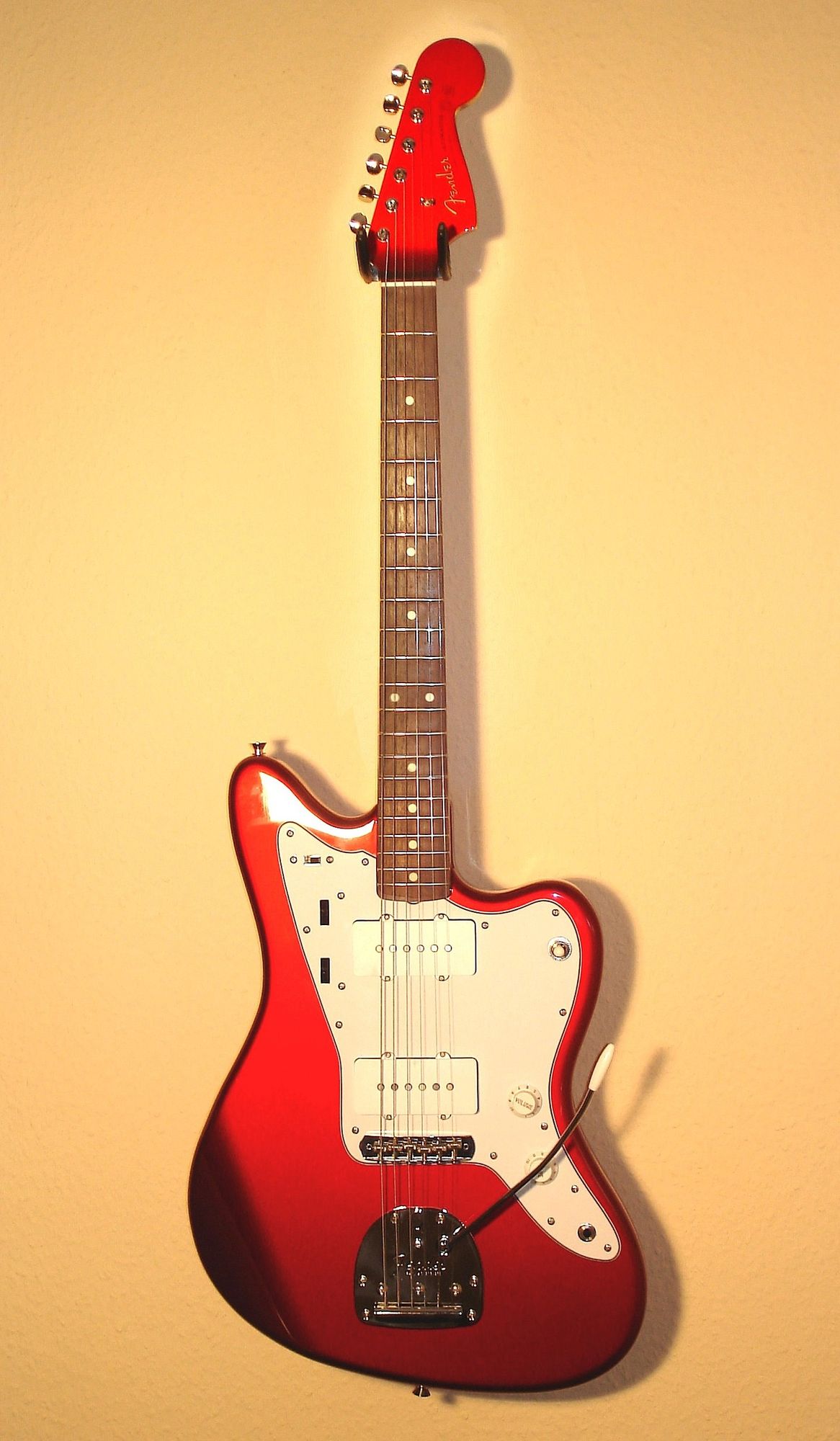
Photo: Dirk-X / Wikimedia Commons / CC BY-SA 4.0 Fender
Jazzmaster
1958
Fender built it for jazz players. Jazz players said no thanks. Surfers, punks, and noise bands said yes.
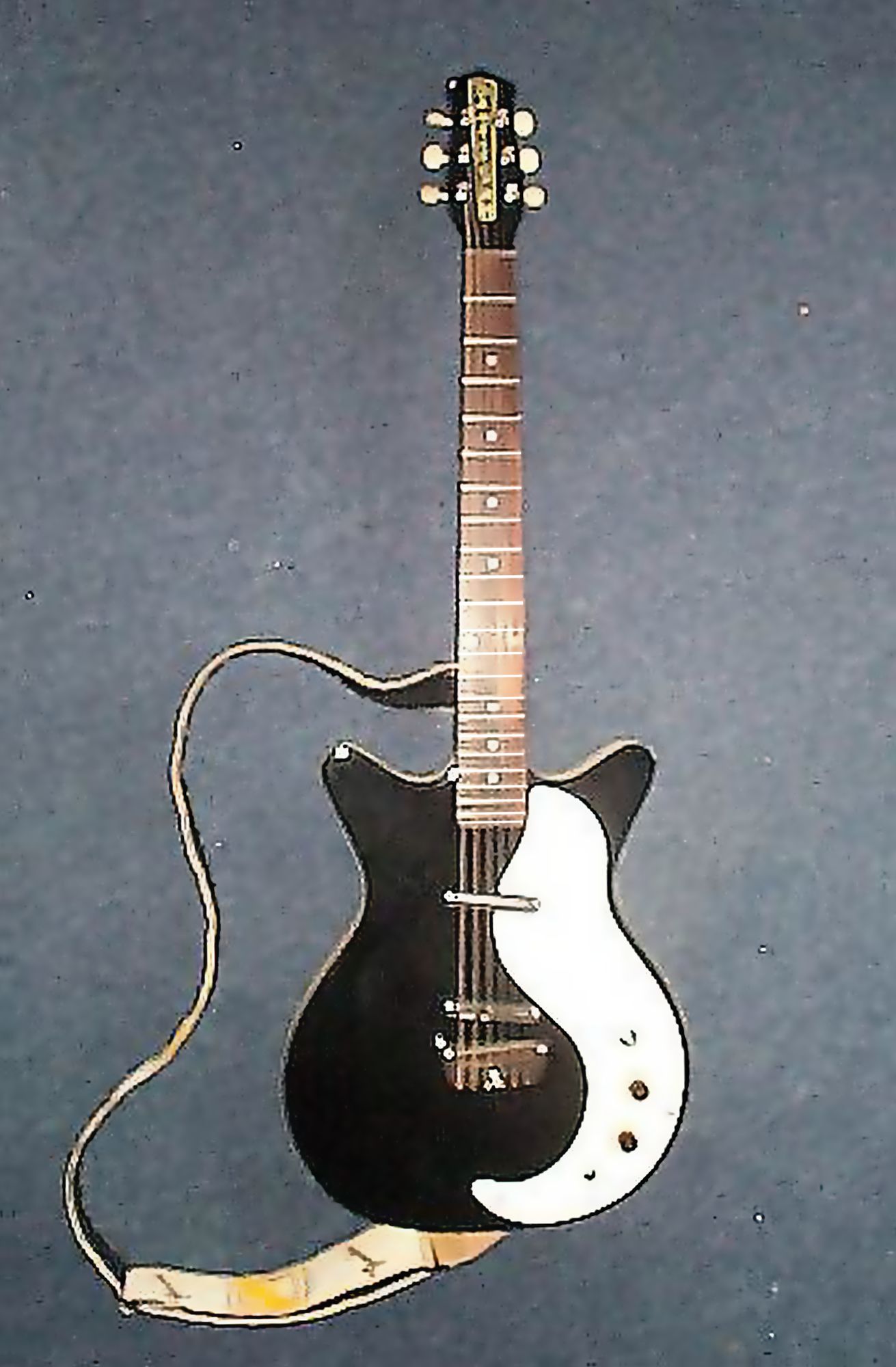
Danelectro 59-DC. Photo by Sander van Malssen. Licensed under CC BY-SA 2.0. Via Wikimedia Commons. Danelectro
59
1958
Jimmy Page’s has been shown at the Met. The same two lipsticks and coke-bottle head are hanging on a shop wall near you.
- Send a picture
Ibanez
RG550
1987
Nobody’s name on it. Just a thin neck, 24 frets, and a locking trem, and it keeps coming back.