Danelectro
59
Jimmy Page’s has been shown at the Met. The same two lipsticks and coke-bottle head are hanging on a shop wall near you.
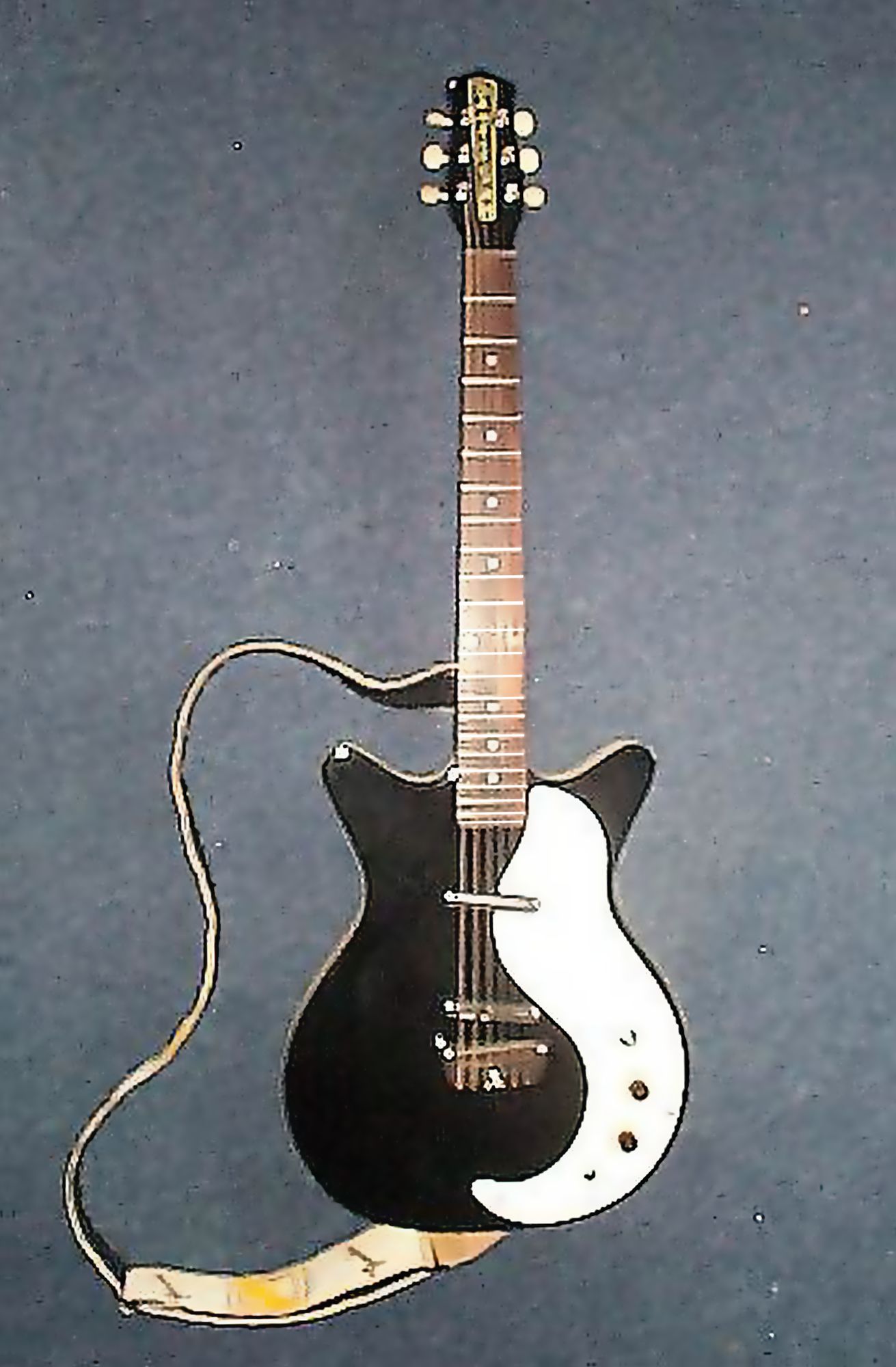
The Metropolitan Museum of Art, New York. Among the guitars it has put on show is a 1961 Danelectro shorthorn of Jimmy Page’s: masonite, two chrome pickups shaped like lipstick tubes, a headstock like a Coke bottle. Across town, in any guitar shop, there’s a new one hanging on the wall.
- Introduced
- 1958
- Type
- Solidbody electric
- Class
- Production
The short version
1958
The shorthorn
Nathan Daniel’s double-cutaway, two-pickup Danelectro arrives. It will later be sold as the ’59.
1961
Page’s guitar
Jimmy Page’s shorthorn is built. It’s tied to his session and Yardbirds-era years.
1998
Back in production
Reissues arrive in 1998–99.
2026
Still on the wall
The ’59 is regular production, in plain, blacked-out, and metalflake versions.
Side A
A1
Behind glass, and on the wall
Most guitars that end up in a museum stopped being guitars a long time ago. You can’t buy one, you can’t play one, and you’re not supposed to breathe on the case. The Danelectro ’59 is the odd exception. The one the Met has shown and the one on the shop wall are the same idea, and nobody put a velvet rope between them.
Jimmy Page’s is a 1961 shorthorn. It’s been shown at the Metropolitan Museum of Art, which is a funny place for a guitar made out of hardboard. By the usual telling it belongs to his session years and the Yardbirds era, before the Les Paul became the guitar everybody pictures him with.
A2
Hardboard and lipstick tubes
Nathan Daniel built guitars out of things other companies wouldn’t touch. The top and back are masonite, the pressed board you’d find behind a cheap bookcase. The two pickups sit in chrome tubes that look exactly like lipstick cases, because that’s more or less what they were. The headstock is shaped like a Coke bottle. The neck bolts on.
To my ears it sounds like what it is: light, bright, and a little glassy, nothing like the thick midrange of a Gibson. The volume and tone knobs are stacked on top of each other, two knobs on one shaft, which takes about a minute to get used to and then feels like the obvious way to do it.
The scale is about 25 inches, a touch shorter than a Strat’s, so bends come a little easier. None of it is fancy. It was never supposed to be. It was supposed to be cheap enough that you could buy one, and good enough that you’d keep it.
Flip the record · By the numbers
1958
The year the shorthorn arrived. The name says ’59 anyway.
2
Lipstick pickups. The model name is borrowed from a year; the pickups are borrowed from a cosmetics case.
1961
The year of Jimmy Page’s shorthorn, the one the Met has shown.
Side B
B1
A 1958 guitar called the ’59
The shorthorn, the little double-cutaway with the lipsticks, arrived in 1958. The name it goes by now is ’59. Don’t read the badge as a birth certificate. It’s a name, not a date stamp, and the guitar doesn’t seem bothered.
It gets confused with its relatives constantly. It isn’t the Convertible, which is hollow with a soundhole. It isn’t the single-cutaway U2, and it isn’t the Longhorn bass with the long, curling horns. It isn’t a Les Paul Junior, which is a slab of wood with one pickup. And it isn’t Tony Iommi’s guitar. Black Sabbath is an SG story. Plenty of garage players show up with Danelectros, Jack White among them, but a Danelectro in a photo isn’t automatically a ’59.
B2
Same guitar, different room
Danelectro’s original factory is long gone. The early shorthorns that survive are finite, and nobody ever published how many were made. But in 1998 and ’99 the shorthorn came back, and today it’s regular production again. A late-’90s reissue is its own guitar, by the way: the old outline on a new instrument, not a 1958 somebody found in a closet.
Today there’s a plain ’59, a blacked-out one, and a metalflake version with freshly wound pickups. Same outline. Same two lipsticks. Same Coke-bottle head. The winding is new, the sparkle is new, and you can take it home tonight.
Page’s has been shown at the Met. Yours is at the shop down the street. Between them: sixty-odd years, a sheet of glass, and not much else.
The cast
The people, and the specific guitars, that made the legend.
1958
Nathan Daniel
Designer
Drew the shorthorn and built it the Danelectro way, out of masonite and lipstick tubes.
1961
Jimmy Page
1961 shorthorn
From his session days and the Yardbirds era, by the usual telling. Not a Les Paul story, and not a modern reissue.
1970s
Tony Iommi
Not this one
People pin Black Sabbath on the Danelectro. Iommi’s guitar is a Gibson SG Special.
Liner notes
Specs, construction, rarity, value, and every source we used.
Danelectro’s shorthorn lipstick guitar — ’59 / 3021 family, not a Convertible, not a U2, and not Sabbath’s guitar.
- Body
- Shorthorn dual-cut; masonite-over-pine construction in the original family
- Neck
- Bolt-on maple
- Fingerboard
- Rosewood-class board on living NOS+ examples; dots
- Scale
- 25" class (factory page this pass did not reprint the number)
- Pickups
- Two lipstick-tube single-coils; living SKU uses NOS+ winds
- Hardware
- Adjustable die-cast bridge; coke-bottle headstock
- Electronics
- Stacked tone and volume (NOS+ Metalflake page)
- Finish
- Metalflake colors on ’59M NOS+; black shorthorn on the Commons reissue plate
Open the full research fileConstruction details, the complete player record, production numbers, dated value estimates, and sources
Current production typical = ’59M NOS+ (danelectro.com, 26 August 2026). Factory cart unpublished. Sweetwater listing bot-walled this pass. Do not invent $529. Stock ’59 and Blackout ’59 are siblings on this plate, not Convertibles.
Construction
Nathan Daniel’s shorthorn 3021 is the object: masonite, lipstick tubes, “coke bottle” headstock. guitarhq dates the dual-cutaway 3021 family 1958; the living name is ’59. Keep 1958 as introduced; do not pretend the badge is a factory year stamp.
Not a Convertible (lipstick plus piezo). Not a U2 / 3021 single-cut longhorn confusion — U2 is a different Danelectro silhouette. Not a Longhorn bass. Not a Gibson Les Paul Junior (gibson-les-paul-junior): one P-90 slab vs two lipsticks in masonite.
Jimmy Page’s Met guitar is a 1961 3021, not a 2026 NOS+. Do not hang Black Sabbath on this plate (Iommi’s identity is SG Special).
1998–99 59-DC reissues (the Commons photo) are later objects on this plate, not 1958 originals.
Players
Jimmy Page. Metropolitan Museum / named 1961 3021 — early session and Yardbirds-adjacent use in the literature; not the Les Paul identity, not a living NOS+.
Jack White and other garage players show Danelectros; do not flatten every lipstick photo onto the ’59M NOS+ SKU without a named guitar.
Rarity
Living NOS+ / Stock ’59 / Blackout ’59 are regular production. Danelectro does not publish 3021 totals. None invented. Original late-1950s masonite examples are finite; no factory census found.
Value
Informal estimate, 26 August 2026. Not an appraisal.
Ask is not sold. Factory $ unpublished. No invented median.
New street. Unpublished this pass. Do not print a guessed MAP.
Used. 1998–99 59-DC reissues and original 3021s are different tapes. Page’s Met guitar is not a comp.
See also
- gibson-les-paul-junior — the other famous cheap student single-pickup story; not lipsticks
- fender-stratocaster — not this construction
- silvertone-1448 — Sears’ one-lipstick amp-in-case; same lipstick idea, not this two-lipstick ’59
- coral-electric-sitar — Coral’s thirteen-drone Electric Sitar; same lipstick idea, not this two-lipstick ’59
Sources
- Danelectro, ’59M NOS+
- Danelectro, ’59M NOS+ Metalflake
- guitarhq, Danelectro — 3021 / 1958 vs ’59 name
- Wikipedia, Danelectro — lead only
Keep digging
Guitars this one gets compared to, confused with, or descended from.
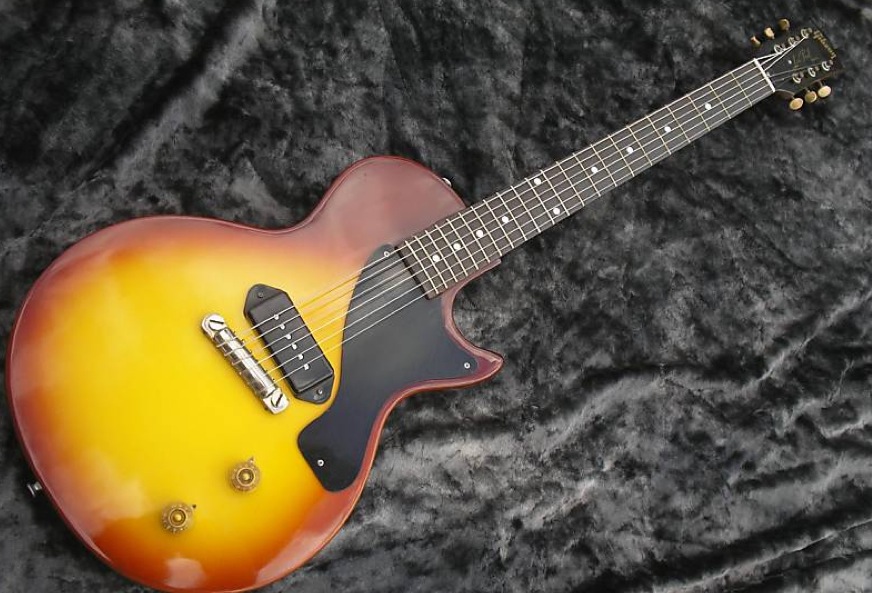
Gibson Les Paul Junior. Photo by Detroit Gorilla. Licensed under CC BY 2.0. Via Wikimedia Commons. Gibson
Les Paul Junior
1954
One pickup, two knobs, no switch. Built for beginners. Mountain and the New York Dolls never needed more.

Photo: Lightburst / Wikimedia Commons / CC BY-SA 4.0 Fender
Stratocaster
1954
The guitar most people mean when they say “electric guitar.” Designed by a man who didn’t play one.
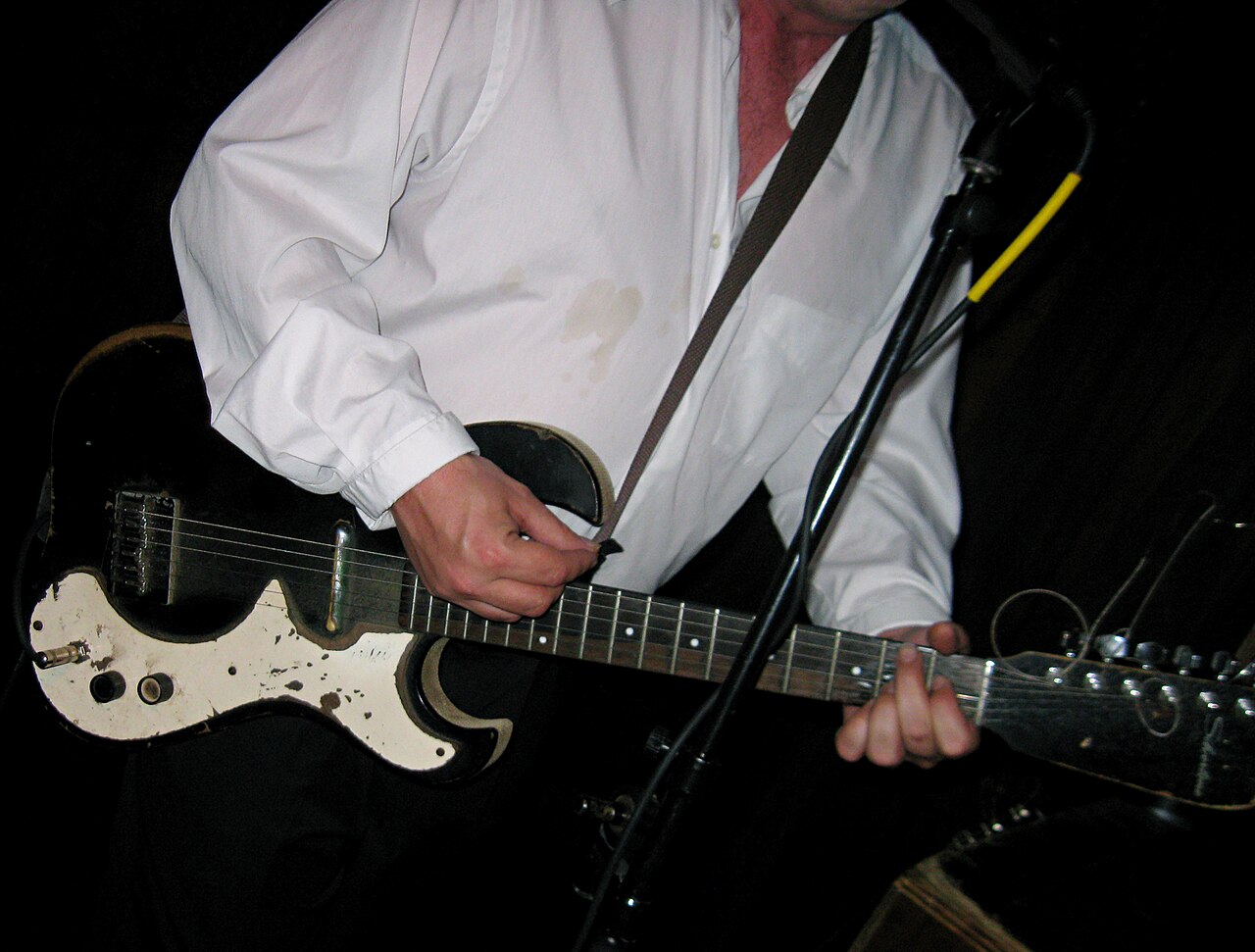
Photo: Rick Hall / Wikimedia Commons / CC BY 2.0 Silvertone
1448
1962
A beginner’s electric from the Sears catalog, with the amp in the case. Beck has played one his whole career.