Tokai
Talbo
The copy company’s own idea: a guitar body poured like an engine block. Its fans wouldn’t let it stay gone.
Hamamatsu, 1983. Tokai is the Japanese company that makes copies of American guitars true enough to fool you, and everybody knows it. Now it pours molten aluminum into a sand mold and puts a promise on the headstock: “The New Legend Of The Guitar History.”
- Introduced
- 1983
- Type
- Solidbody electric (cast aluminum)
- Class
- Production
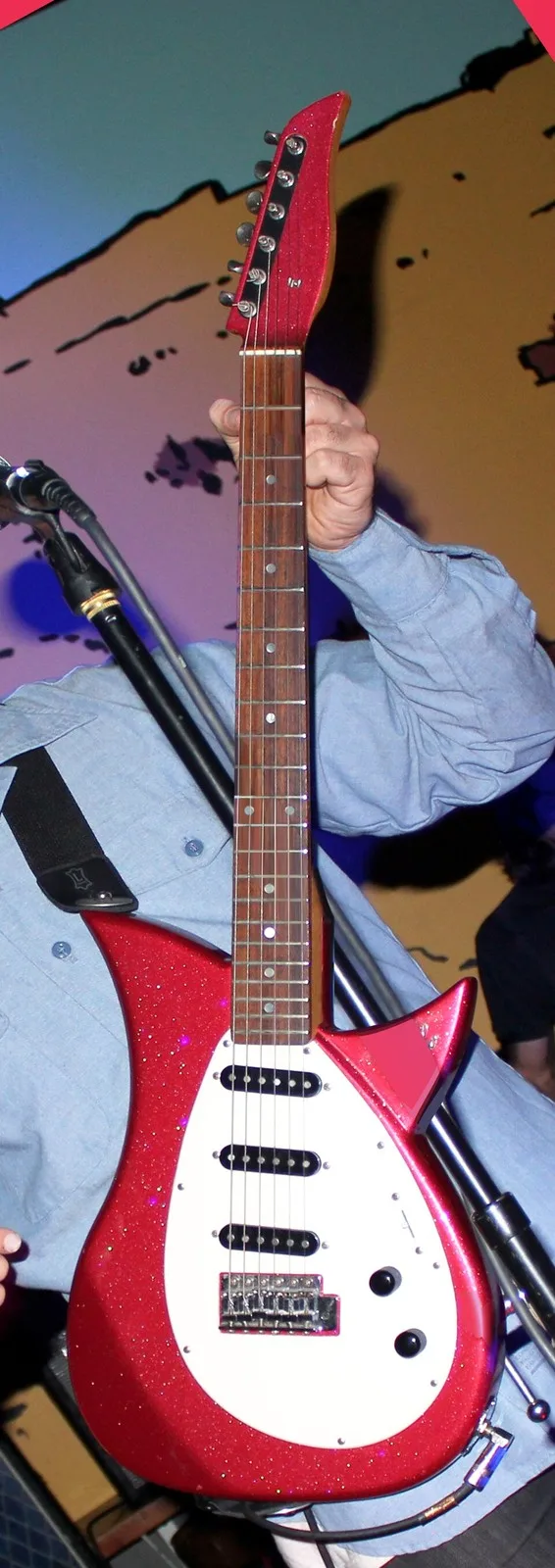
The short version
1947
Pianos and harmonicas
Tokai starts out in Hamamatsu as a research institute making keyboard and reed instruments.
1978
The copies
The LS series arrives, and Tokai becomes famous for other people’s designs.
1983
The Talbo
A cast-aluminum body in two welded halves. One account puts the start of production in 1982.
1987
“Road to Hell”
Rory Gallagher plays lead on a white Talbo on Defender.
1994
The leftovers
About 100 unused 1983 bodies turn up and get sold off with a new logo.
1996
Back for good
Tokai restarts production, now in one piece, and HISASHI of GLAY buys his first.
2023
Forty years
The Talbo turns forty, counting from 1983.
Side A
A1
The copy company’s own idea
By the early ’80s, Tokai’s name meant copies. Very good copies. Love Rocks and Breezysounds that got the neck, the color, and the sound right. What Tokai didn’t have was a guitar of its own.
So in 1983 it made one, and it didn’t do it halfway. The body was aluminum. Tokai called it the world’s first new-material metal body, which is the company talking. It wasn’t the first metal guitar, not by a long way. But pouring a whole guitar body out of aluminum, the way Tokai did it, was its own idea.
The headstock said: “The New Legend Of The Guitar History.” It was a bold thing to print. It took the players to make it true.
A2
Poured like an engine block
The name depends on who you ask. Either Tokai Aluminum Body, or T-ALloy-BOdy. Either way, Talbo.
Here’s how you make one. You melt an aluminum alloy, the kind that gets tied to racing engines, past 800 degrees Celsius and pour it into a sand mold, the way you’d make an engine block or a wheel. In 1983 the body came out in two halves, stacked like the lid on a bento box, welded along the seam and ground smooth.
Inside it’s hollow, and an empty aluminum box rings like a bell. So Tokai squirted urethane foam in through a hole to fill it. The wall is only about 2.5 millimeters thick. The outline is two teardrops laid over each other, pointing opposite ways.
Hang a bolt-on maple neck off the end, add pickups, and you get a guitar that looks like it came off a spaceship with good taste.
“Lead guitar was a white metal body Tokai Talbo — a very under-rated guitar.”
A3
An aluminum guitar?
Susumu Hirasawa of P-MODEL saw a magazine ad that asked exactly that. He wanted one for how it was built and how it looked, before he ever heard it, so he rang Tokai and borrowed one. He says it became his main guitar as soon as it came out.
Rory Gallagher ended up with two, both gifts. The white one, three pickups, played the lead on “Road to Hell” in 1987. He wrote that the rhythm part was his Gretsch Corvette and the lead was the Talbo, and then added the line up top. The black one, with two pickups and gold hardware, is the one that goes with Fresh Evidence, three years later.
Tim Farriss of INXS kept Talbos in the studio next to his old Tele and Strat. He liked that the metal body kept the noise out: “a Strat setup with the three single pole pickups but they’re encased in an aluminum body so there’s no noise.” Steve Stevens tried to buy one off him after a show.
Flip the record · By the numbers
800°C
The aluminum is poured hotter than this, into a sand mold, like an engine block.
2.5 mm
Average thickness of the aluminum wall. The rest is a hollow full of foam.
~100
Leftover 1983 bodies found in 1994. They sold, and that restarted the Talbo.
1947
The year Tokai began, making pianos and harmonicas.
Side B
B1
Gone, sort of
Outside Japan, the Talbo dropped off the radar after about 1984. Tokai says production was interrupted. There’s a long gap in the serial numbers people have found, and the catalogs don’t fill it in neatly.
Then, in 1994, shop staff found about a hundred leftover 1983 bodies. They changed the logo, reworked the fingerboard, and sold them. Hisashi Imai of BUCK-TICK had started playing one, and people were paying attention again. Hirasawa says he was pushing to bring the Talbo back himself in those years.
The leftovers sold well enough that Tokai started the Talbo up again for real in 1996.
B2
The one-piece
The restart finally got the body Tokai had wanted in ’83: one piece, no weld. The first one they cast rang too much empty, so they fitted pre-cut foam instead of injecting it. That’s still how the current model is made, in Hamamatsu.
HISASHI of GLAY bought his first Talbo on 6 July 1996, and Talbo Secret Factory, the specialist shop he helped open, still counts from that date. He took a platinum blue one on GLAY’s 1997 arena tour, and a black one became the guitar he plays most, with the hardware blacked out to match. GLAY’s EXPO shows even held Talbo-bragging contests.
The copy company’s own idea went quiet for years. It came back because a pile of old bodies sold, Hirasawa kept pushing, and GLAY’s guitarist bought one and never really put it down. Tokai made the Talbo. The people who played it kept it alive.
Put this on
You’ve read about it. Now hear it. Here’s what this guitar sounds like, and what to listen for.
Road to Hell
The lead guitar is his pearl-white Talbo, through an octave divider. The rhythm is a Gretsch Corvette.
Find it on YouTube (opens in a new tab)
The cast
The people, and the specific guitars, that made the legend.
1987
Rory Gallagher
White Talbo and black Talbo
The white one goes with Defender, the black one with Fresh Evidence. Two gifts, two different guitars.
1980s
Susumu Hirasawa
A borrowed Talbo, later the chrome ICE-9
Saw the ad, called Tokai, borrowed one, and says it became his main guitar as soon as it came out.
1983
Ichiro Tanaka
Talbo
The ARB guitarist demonstrated one at the launch in Shinjuku and appeared in the ads.
2006
Tim Farriss
Tokai Talbos
The INXS guitarist listed his Talbos alongside a ’72 Tele and a ’56 Strat. Steve Stevens tried to buy one off him.
1996
HISASHI
The Black Talbo
GLAY’s guitarist bought his first in July 1996 and has played Talbos ever since.
1990s
Hisashi Imai
Talbo
BUCK-TICK’s guitarist started playing one, and people started paying attention again.
Liner notes
Specs, construction, rarity, value, and every source we used.
Two teardrops of sand-cast aluminum, foam in the hollow, and a bolt-on maple neck — Tokai’s Talbo, not a wooden copy and not a Travis Bean.
- Body
- Cast aluminum alloy AC-4B, Talbo outline, flat top, hollow one-piece. Polyester. 1983 was two halves welded.
- Neck
- Bolt-on maple, one piece, “U”. Tokai: 20.5 mm at the 1st fret, 22.5 mm at the 12th.
- Fingerboard
- Rosewood, acrylic pearl dots, 22 frets, R300. Mix flagged.
- Scale
- 648.0 mm (Tokai A-101SH). Named 1983 dealers print 25.5". Ikebe’s story page prints 324 mm. Mix flagged. Do not average.
- Pickups
- Gotoh GS-1 single-coil (neck), GS-1 (middle), uncovered GH-1 humbucker (bridge)
- Hardware
- Gotoh SD91-05ML; Wilkinson VS100N tremolo; Tokai’s own strap pins and knobs
- Electronics
- Master volume, master tone, CRL 5-way
- Finish
- Polyester. Shop listings this pass name black, silver gray, and metallic red.
- Nut
- Bone, 42.4 mm (Tokai). Norman’s 1983: 1.687". Mix flagged.
Open the full research fileConstruction details, the complete player record, production numbers, dated value estimates, and sources
Current A-101SH. A September 1983 Blazing Fire was the same alloy and outline, two cast halves welded shut. Ikebe: two-bolt neck. Wright’s late-1983 3042110: four bolts. SSS or two humbuckers, three-way, two-point tremolo or a hardtail. Talbo3, the acrylic Blazing Fire, Woody, Junior, the bass, and Z-Talbo are not this table.
Construction
The job was an original. By the early ’80s Tokai’s name was the copies — Love Rock, Breezysound. Wright (Vintage Guitar, March 2006): replicas true to neck, color, and sound, then a guitar unique unto itself. Hamamatsu. Research institute, Terajima-cho, 1947, pianos and harmonicas. Classical guitars 1965. Hummingbird electrics 1968. Martin agency 1972. LS series 1978. Then metal. Tokai’s history page.
Tokai dates the Talbo to 1983: development succeeded, production and sales began. The concept page says the same. Japanese Wikipedia ships the first guitars in September 1983. Ikebe tells the birth as ’83. Ikebe’s 40th-anniversary line counts 1983–2023. Wright says production commenced January 1982. Bonhams repeats him. Keep both. Under Wright’s own 1980s serials — first digit the year, then a zero, then where it fell in the run — the guitars people show read 1983. His plate guitar is 3042110, late that year. This plate starts in 1983.
The name is not settled. Wright, and Bonhams after him: Tokai Aluminum Body. Topshelf spells it Aluminium. Japanese Wikipedia: 「T-ALLOY-BODY」. Keep both. The headstock did not argue. Wright: “The New Legend Of The Guitar History.”
Tokai’s history calls it the world’s first new-material metal body. That is the company’s line. It is not the first metal guitar. Veleno was already all aluminum (veleno). The TB1000 was an aluminum neck in koa from 1974 (travis-bean-tb1000). Rickenbacker’s A-22 was a cast lap steel in 1932. No Gibson SKU. What Tokai cast was a whole Spanish-guitar body in AC-4B, the alloy Wright ties to racing-car engines, and the metal was the shield.
Ikebe, the shop that now holds Talbo Secret Factory: aluminum over 800°C, poured in a sand mold, the same idea as an engine block or a wheel. 1983 was two-ply. Halves stacked like a bento lid, seam welded, burrs ground. Hollow. Foam urethane injected through a hole so the cavity would not ring. Wall, Ikebe: average 2.5 mm. Wright, on the guitar in front of him: most of the body solid, a large cavity under the pickguard. Same hollow. Outline: two superimposed teardrops, tips pointing opposite ways.
The neck is maple. Four bolts and a scalloped heel on Wright’s 3042110. Ikebe’s ’83 comparison: two bolts, a dovetail-style groove, the nut let into the neck. Those lean after twenty years. The restart went to four. Keep both accounts of 1983.
September 1983, Wikipedia’s opening row, not a later catalog: A-80 chrome, A-100 gold, A-150 antique. Each as a D (two P1-26BB humbuckers) or an S (three P2-71B single-coils). Hardtail or a two-point tremolo. Maple board or rosewood. Wright’s Blazing Fire: two volumes, one tone, a three-way. Two-humbucker examples already existed. Rory’s two gifts, below, are one of each idea.
Wright: a couple of years in America and Europe, off that radar after 1984, and he thought Japan never stopped. The company history says production was interrupted and started again in 1996. Wikipedia’s table still has 1985 Ayer’s Rockers and a 1987 TF80, then a gap. A forum gallery had not found serials between the first run and 1997. Catalog years and a serial gap can both stand. Neither is a count.
1994. Ikebe: staff found about 100 leftover 1983 bodies, changed the logo and the fingerboard radius, sold them off. Wikipedia: Mitaka Gakki revived the model from 1980s stock. Good enough that Tokai restarted in 1996, and HISASHI of GLAY opened Talbo Secret Factory with them. Mitaka closed 2003. Staff and Factory moved to Ikebe. The one-piece shell was the wish from ’83. Ikebe: factory manager T got one cast. Empty, it rang too much. Pre-cut foam, fitted instead of injected, made it a guitar from ’96. That is the hollow one-piece on the A-101SH page.
Ikebe’s same page prints the scale as 324 mm, “unchanged,” against Tokai’s 648.0 mm and 25.5" on named 1983 dealers (Topshelf A-100S, serial 3037709; Norman’s blue). Radius there: 280R, then 350R. Tokai now prints R300. Single 1983s: 7.25" (Topshelf, maple board), 9.25" (Norman’s). Mix flagged. Do not average. Ikebe also says the ’83 outline reads rounder, and the later one a little sharper. Same guitar across a room. Not the same casting.
Not the bass — Wikipedia: that is where the first unwelded shell happened; Ikebe says the trick later went magnesium. Not the Junior (Wright: 2000, a cast frame and a little amp). Not the Woody (Wright: 1999, hollow maple, a different outline). Not the acrylic Blazing Fire — the old name on Korean plexiglass, no aluminum. Wikipedia files it apart. Not a Z-Talbo, and not a Zemaitis metal-front. Not Talbo3: ACV-501, billet aluminum, anodized, on sale 25 June 2025, direct ¥396,000 tax in. Not the Re:A-700: recycled Tokaido Shinkansen N700A aluminum, 60 guitars, ¥330,000 tax in with a case, reservations closed. Not the 7-string A-101 CM7 FI (2025, Frontisland): Brazilian rosewood, 24 frets, Fishman Fluence, direct ¥1,056,000.
Classic vs current: September 1983, two welded halves, foam through a hole, two-bolt or the four Wright saw, SSS or two humbuckers, three-way — against an A-101SH still in the lineup, one-piece, GS-1 / GS-1 / GH-1, Wilkinson VS100N, five-way, 648.0 mm, R300.
Players
Do not hang a Bean or a Veleno here. Do not recruit the acrylic Blazing Fire, the Woody, the Junior, or the bass. HISASHI’s “more like a Gibson SG” line sits under his Zemaitis on the Wikipedia gear page. It is not this body.
Susumu Hirasawa (P-MODEL). Ikebe, at Studio Wireself: a magazine ad — “An aluminum guitar?” — and he wanted it for how it was made and how it looked, before the sound. He called Tokai and borrowed one. Probably, he says, around Another Game (1984). In that interview he agrees Ichiro Tanaka of ARB demonstrated one at the Shinjuku Loft launch, and adds that Tanaka was in the ads. For 1994–96 he says he was bringing the Talbo back himself. Gipnoza (2013) is not this guitar. He told Ikebe that record was EVO only. Amass, 7 December 2020: the chrome ICE-9, a limited Tokai run announced for January 2021 at ¥268,000 before tax, from a 2005 meeting, the last chrome body, named for Vonnegut’s ice-nine. He writes that the Talbo became his main guitar as soon as it came out. ICE-9 is one object. EVO is a later aluminum guitar from the same shop, not this table.
Rory Gallagher. Two gifts. Do not mash them. Bonhams, 17 October 2024, lot 82, serial 3041636: pearl white, three pickups, two controls, five-way, maple neck and board, bone nut. Lead on “Road to Hell,” Defender (1987). His note in Making Music that year, via Bonhams: rhythm was the Gretsch Corvette, and “Lead guitar was a white metal body Tokai Talbo — a very under-rated guitar,” through an octivider. Sold £7,040 including premium. Lot 81, serial 3038390: black, gold hardware, two pickups, two controls, three-way, Indian rosewood, bone nut. Fresh Evidence (1990). Sold £6,400 including premium. Irish Examiner: Sheena Crowley bought that one, £6,400 (€7,700). Celebrity. Not comps.
Tim Farriss (INXS). Ultimate Guitar, February 2006: in the studio, the ’72 Tele “and my Tokai Talbos,” plus a ’56 Strat and Les Pauls. The aluminum guitar was “a Strat setup with the three single pole pickups but they’re encased in an aluminum body so there’s no noise.” Steve Stevens tried to buy one after a show. Farriss wishes he had sold it, and said he wasn’t using it. Which INXS track is unpublished here. Guitar Player (12 July 2024) has him liking the teardrop Talbos Tokai “made for a while.” Affection. The 2006 interview is the use.
HISASHI (GLAY). The restart’s guitarist. Ikebe: first Talbo bought 6 July 1996, the date that shop uses for Talbo Secret Factory. The Platinum Blue “LFO Jet Speeder” was out with him from GLAY ARENA TOUR ’97, Hit the World. Set against a new one, the urethane inside had aged and lost its spring. Japanese Wikipedia: from about ’97 the Platinum Black is the one he uses most; he owns three; the next year the pegs, string saver, bridge, and knobs went black; nickname 黒タルボ. Some hide a ray gun, brought out on 「ビリビリクラッシュメン」. Maple, rosewood, 22 frets, 648 mm on that page — Tokai’s current scale, not Ikebe’s 324 mm. GLAY EXPO 1999, 2001, and 2004 ran a Talbo-bragging contest. Natalie, on Freedom Only: he had been keeping his identity on a Talbo, with Zemaitis as its own guitar.
Hisashi Imai (BUCK-TICK). Japanese Wikipedia credits the 1990s attention to Imai starting to play one, before the 1994 Mitaka revival. No serial and no song here.
Wright’s famous 1980s appearance is “the band Devo.” No member, no song, no year in the article. Also known to play stays short. Wikipedia’s list runs on — Hoppy Kamiyama, Hajime Okano, others — without a named instrument here. None invented.
Rarity
You can buy a new cast-aluminum Talbo. The A-101SH is current Hamamatsu production. Talbo3 is billet on the same silhouette. The 60 Re:A-700s were a closed reservation. An ’83 is scarce for a different reason.
Tokai published no Talbo census on the pages fetched. Japanese Wikipedia prints an uncited 1980s shipment figure. It is not used here. None invented. Wright’s serials date a guitar. They do not count a year. That is why a first-year total is unknown.
What is thinner: two-piece welded bodies; the two-bolt necks Ikebe says lean; the pile of about 100 leftover 1983 shells he says turned up in 1994 — leftovers, not a year total. Wright already called the Japanese originals pretty rare, more often in the U.K. Rory’s white Defender guitar and black Fresh Evidence guitar, Hirasawa’s ICE-9, HISASHI’s 黒タルボ and LFO Jet Speeder are single objects. They are not a vintage Talbo. Acrylic, Woody, Junior, and bass are other ideas. Not this count.
Value
Informal estimate, 22 September 2026. Not an appraisal.
Ask vs sold labeled. Celebrity lots are not comps. No invented medians or factory counts. No 1983 list price on the pages fetched.
New street. The living cast guitar is the A-101SH. Named Japanese asks, tax in: Ikebe ¥176,000 (Silver Gray, latest production); Music Plant ¥195,800 (list ¥178,000 before tax). Miyaji’s ¥165,000 against a usual ¥176,000 was a window through 31 March 2026. Not a September cart. Ikebe’s global black page, 29 July 2026, showed $1,161, sold out. Named Reverb new sales, not a guide: Ikebe $1,195.70; Miyaji A-101SH SG $980.54. Soft bag on the Ikebe listings. Other new carts, not this table: Talbo3 ¥396,000 tax in; Re:A-700 ¥330,000 tax in, 60 pieces, reservations closed; the 7-string ¥1,056,000.
Used modern. Recent one-piece Talbos exist, so a used band should too. No clean Reverb Price Guide pulled away from Woody, Junior, acrylic, and 1980s aluminum this pass. No midpoint invented.
Vintage / collectible. Flag: thin sold-comp access. Named asks, not hammers: Echotone (Melbourne) 1983, serial 3036453, two P1-26BB humbuckers, hardtail, $1,299 AUD; The Bonfires, ruby, non-stock Wilkinson, $1,495 (from $1,895). Older ended Reverb asks, not a 2026 series: $995 (listed ten years ago); a black 1983 at $1,159.20 (eight years ago); a gold two-humbucker at $999 (ten years ago); an A-80D at €839.66 (listed seven months ago, ended). Do not average those with a new A-101SH. Rory at Bonhams, £6,400 and £7,040 including premium, is celebrity. Not a comp.
See also
- veleno — earlier all-aluminum guitar, carved halves and an aluminum neck, not this sand-cast body
- travis-bean-tb1000 — 1974 aluminum through-neck into koa; not a cast-aluminum Talbo
- yamaha-sg-2000 — the other Hamamatsu sustain guitar, wood and a brass plate, not this alloy
Sources
- Tokai, history — 1947 institute; 1965 classical; 1968 Hummingbird; 1972 Martin agency; 1978 LS; 1983 Talbo development, production, and sales; 1985 MAT; 1996 Talbo restarted; “world’s first” is the company’s line
- Tokai, concept — 1983 metal-body Talbo
- Tokai, A-101SH — current cast AC-4B; maple “U” 20.5 / 22.5 mm; rosewood R300; bone nut 42.4 mm; 648.0 mm; 22 frets; Gotoh GS-1 / GS-1 / GH-1; SD91-05ML; Wilkinson VS100N; volume, tone, CRL 5-way; polyester
- Tokai, Talbo3 / ACV-501 (1 Aug 2025) — billet, anodized; direct ¥396,000 tax in; on sale 25 June 2025; not this table
- Tokai, Re:A-700 — recycled N700A aluminum; 60 guitars; reservations from 20 Dec 2024, closed; ¥330,000 tax in with case
- Frontisland, 7-Talbo A-101 CM7 FI (25 Apr 2025) — Brazilian rosewood; 648 mm; 24 frets; Fishman Fluence; direct ¥1,056,000; not this table
- Vintage Guitar, Michael Wright, Tokai Talbo (March 2006) — January 1982 claim; Tokai Aluminum Body; AC-4B; teardrop outline; decal; cavity under the guard; four bolts on SN 3042110; two volumes, one tone; Devo; export quiet after 1984; Woody 1999; Junior 2000; bass; Korean acrylic Blazing Fire; serial scheme
- Japanese Wikipedia, 東海楽器・Talbo — September 1983; T-ALLOY-BODY; two-ply sand cast, welded, foam; later one-piece; 1983 A-80 / A-100 / A-150 and 1985 / 1987 rows; 1994 Mitaka; 1996 restart; Secret Factory with HISASHI; 2003 to Ikebe; bass as first unwelded shell; acrylic, Woody, Junior filed apart; Imai. Uncited 1980s shipment figure not used
- Ikebe, Talbo story — 800°C sand cast; 1983 two-ply and injected foam; ~100 leftover 1983 bodies in 1994; one-piece from the ’96 foam insert; wall 2.5 mm; two-bolt then four-bolt; 280R then 350R; scale printed 324 mm; Wilkinson from ’96; LFO Jet Speeder, GLAY arena tour ’97
- Ikebe channel, Talbo 40th (9 Nov 2023) — anniversary copy counted 1983–2023
- Ikebe, Hirasawa interview — ad; called Tokai; probably Another Game (1984); Tanaka in the ads; revival 1994–96 in his words; Gipnoza (2013) is EVO only
- Amass, TALBO ICE-9 (7 Dec 2020) — Hirasawa; chrome; 2005 meeting; ¥268,000 before tax; January 2021
- Bonhams, Rory Gallagher lot 81 — black, serial 3038390, two pickups, 3-way, rosewood; gift; Fresh Evidence (1990); £6,400 inc. premium; repeats January 1982
- Bonhams, Rory Gallagher lot 82 — pearl white, serial 3041636, three pickups, 5-way, maple board; gift; “Road to Hell,” Defender (1987); Making Music quote; £7,040 inc. premium
- Irish Examiner, Des O’Driscoll, 17 Oct 2024 — Crowley purchase of the £6,400 Talbo
- Ultimate Guitar, INXS interview (23 Feb 2006) — Farriss: studio Talbos; three single-coils in aluminum; Stevens tried to buy one
- Guitar Player, Tim Farriss (12 July 2024) — teardrop Talbo, affection, not a session log
- Japanese Wikipedia, HISASHI — Platinum Black from about 1997, three owned, 黒タルボ, ray gun on 「ビリビリクラッシュメン」; 22 frets, 648 mm; GLAY EXPO contests 1999 / 2001 / 2004. SG sentence is under Zemaitis
- Ikebe global, Armored TALBO — first Talbo 6 July 1996
- Natalie, GLAY *Freedom Only* — identity on a Talbo; Zemaitis separate
- Ikebe, A-101SH list — Silver Gray ¥176,000 tax in
- Music Plant, A-101SH — ¥195,800 tax in; ¥178,000 before tax; 648 mm; 42.4 mm
- Miyaji, A-101SH SG — ¥165,000 tax in against usual ¥176,000; window through 31 March 2026
- Ikebe global, A-101SH Black (29 July 2026) — $1,161, sold out; one-piece cast; Wilkinson VS-100N
- Topshelf / Reverb, 1983 A-100S — serial 3037709; three P2-71B; 25.5"; 7.25"; 3.685 kg
- Norman’s Rare Guitars, 1983 blue — 25.5"; nut 1.687"; radius 9.25"; 8.6 lb; non-original pickups
- Echotone, 1983 — serial 3036453; two P1-26BB; hardtail; ask $1,299 AUD
- Reverb, Bonfires ruby Talbo — ask $1,495 from $1,895; non-stock Wilkinson
Keep digging
Guitars this one gets compared to, confused with, or descended from.
- Send a picture
Veleno
Veleno
1970
A rocket-parts machinist built an aluminum guitar, hid it in a closet, and waited to be asked twice.
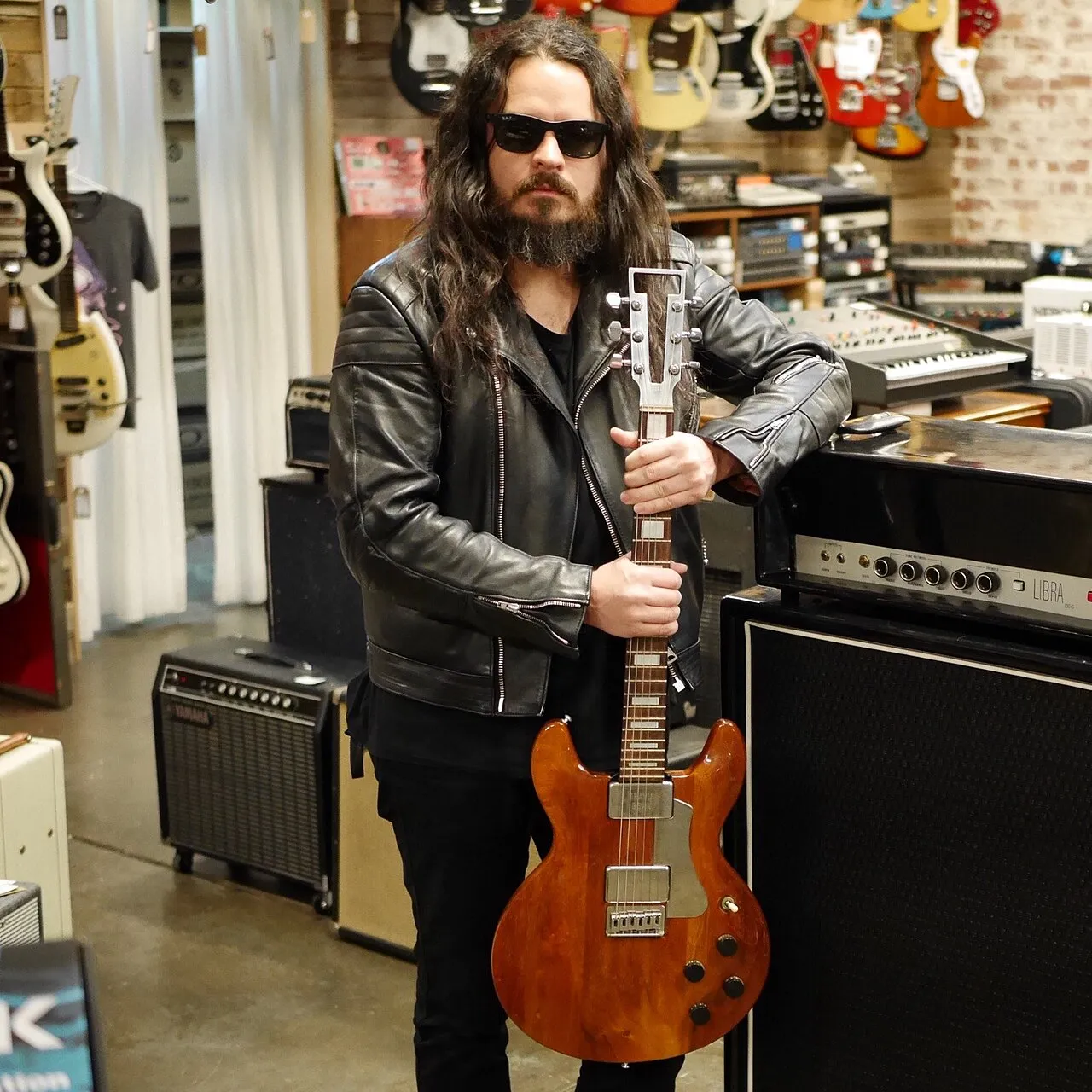
Photo: Somalley / Wikimedia Commons / CC BY-SA 4.0 Travis Bean
TB1000
1974
A motocross racer watched a repairman fight wooden necks all day. So he made one out of aluminum.
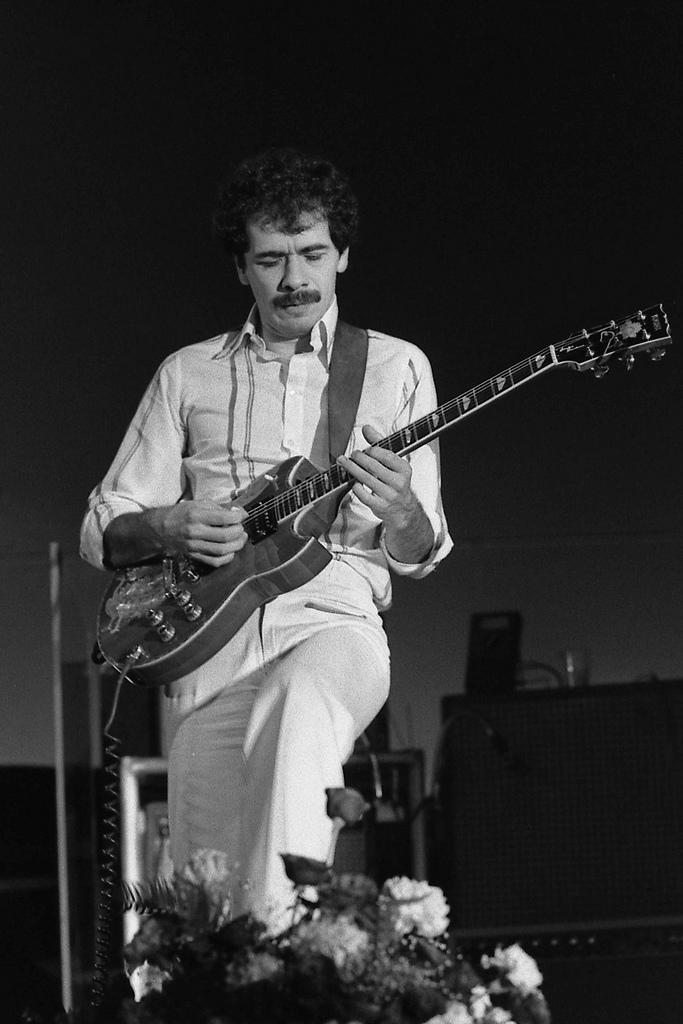
Photo: Chris Hakkens / Wikimedia Commons / CC BY-SA 2.0 Yamaha
SG-2000
1976
Santana told Yamaha to put a chunk of metal under the strings. They listened, and the notes stopped dying.