Yamaha
BB-2000
Andy Rourke’s main bass was a Precision. For the funky stuff, he picked up a Yamaha.
Manchester, the mid-1980s. The Smiths’ bassist has a 1964 Fender Precision he bought in New York, and it does most of the work. But when a song needs to move, when it needs that snap and bounce, Andy Rourke reaches for a Japanese bass with an extra pickup at the bridge.
- Introduced
- 1978
- Type
- Solidbody bass
- Class
- Production
Have a photograph of this guitar? Send a picture
The short version
1977
The Broad Bass
Yamaha’s BB-1200, a through-neck with a single reversed split-coil pickup.
1978
The BB-2000
Yamaha adds a blade pickup at the bridge. One price guide only dates it from 1982.
1979
Casiopea
Tetsuo Sakurai’s first Yamaha, a fretless BB-2000, on Super Flight.
1981
Let’s Groove
Verdine White plays his custom BB-2000, the one with the Egyptian inlay, in the video.
1983
Andy Rourke
The Smiths’ bassist buys his BB-2000.
1985
Meat Is Murder
Rourke plays it on “Barbarism Begins at Home.”
2017
Rebooted
Yamaha relaunches the BB line for its fortieth birthday, all bolt-on this time.
Side A
A1
The second bass
A lot of bass players have one main instrument and one for special occasions. Andy Rourke’s main bass in the Smiths was a 1964 Fender Precision. It carried most of the load. But he kept a Yamaha BB-2000 around, bought in 1983, for what he called “the funky stuff.”
Put on “Barbarism Begins at Home” from Meat Is Murder and you hear what he meant. That’s the Yamaha. It doesn’t sit under the song. It moves it.
The reason the Yamaha did that job better starts with a trick session players were already doing with a screwdriver.
A2
A Precision with a Jazz pickup
By the mid-’70s, plenty of session bassists had worked out that a Precision got even better if you added a Jazz Bass pickup near the bridge. The Precision’s big split pickup gave you the round, heavy bottom. The extra one at the bridge added bite and snap, the sound that makes a funk line pop.
Yamaha’s flagship bass of 1977, the BB-1200, only had the one pickup. BB stood for Broad Bass. It had a neck that ran all the way through the body, which helps a note hold on, and its split pickup was mounted backwards from Fender’s: the two low strings closer to the bridge, for clarity, and the two high strings closer to the neck, for more bottom.
Then Yamaha built one for the session great Chuck Rainey with an extra pickup at the back. In 1978 that became a production bass: the BB-2000.
It took the thing players were already doing with a screwdriver and built it in at the factory.
A3
The blade at the bridge
The new pickup wasn’t a copy of a Jazz pickup. It was a single blade, a bar instead of separate poles, curved to follow the fingerboard so the outside strings wouldn’t shout over the middle two. Paired with the reversed split-coil, it gave you the Precision’s weight and the Jazz Bass’s snap on one three-way switch, with no battery and no fuss.
The rest was simple and solid: alder wings on a maple-and-mahogany neck, 21 frets, one volume, one tone. Japanese ones still said Broad Bass on the headstock. The export ones said BB2000. Same bass.
A price guide dates regular production from 1982 to 1989, though dealers turn up examples older than that. Yamaha also made a fretless version, the BB2000F, only a hundred of them, and a short-scale.
Flip the record · By the numbers
1978
The year Yamaha added the bridge pickup and made it a BB-2000.
2
Pickups. A reversed split-coil and a curved blade at the bridge.
21
Frets on a neck that runs the full length of the body.
100
Fretless BB-2000Fs, a limited run.
Side B
B1
Tokyo, Los Angeles, Manchester
Tetsuo Sakurai of the Japanese fusion band Casiopea played a Jazz Bass on the band’s debut. His first Yamaha, in 1979, was a fretless BB-2000, and it’s on “Sailing Alone” from Super Flight. By 1980 a fretted one was his main bass.
Verdine White of Earth, Wind & Fire had a custom white BB-2000 with Egyptian metalwork set into the top. That’s the bass in the “Let’s Groove” video, about a minute and twenty seconds in. He used a BB3000 at other times, including at the White House, so not every Verdine Yamaha is this one.
And in Manchester, Rourke’s Yamaha went out on the 1985 tours and turned up on The Tube in 1987. A letter in his name, written when the bass was sold in 2003, says it’s in the Hatful of Hollow gatefold photos and that it stayed with him into later work with the Pretenders and Sinéad O’Connor. One list of his gear calls it a BB3000 instead, so the model number depends who you ask.
B2
For when the song needs to move
The BB-2000 never knocked the Precision off its throne. For a few players it became the main bass. For others it was the one that came out for a particular job, and it did that job so well that people still name the songs.
Verdine White on “Let’s Groove.” Sakurai on “Sailing Alone.” And Andy Rourke of the Smiths, putting down his old Fender and picking up a Japanese bass with one extra pickup whenever the song called for the funky stuff.
Put this on
You’ve read about it. Now hear it. Here’s what this guitar sounds like, and what to listen for.
Barbarism Begins at Home
Andy Rourke’s BB-2000 on the song he used it for, the funky one on Meat Is Murder. Seven minutes of bass that won’t sit still.
Find it on YouTube (opens in a new tab)Let’s Groove (video)
Verdine White with his white custom BB-2000, Egyptian metalwork set into the top. Look for it around the 1:20 mark.
Watch it on YouTube (opens in a new tab)Sailing Alone
From Super Flight. Tetsuo Sakurai’s first Yamaha, a fretless BB-2000.
Find it on YouTube (opens in a new tab)
The cast
The people, and the specific guitars, that made the legend.
Chuck Rainey
The prototype that pointed the way
The session great for whom Yamaha built a BB-1200 with an extra rear pickup, the idea that became the 2000.
1981
Verdine White
Custom BB-2000, Egyptian inlay
Earth, Wind & Fire. His white one is in the “Let’s Groove” video. He used a BB3000 at other times.
1983
Andy Rourke
BB-2000
The Smiths. A 1964 Precision for most things, the Yamaha for “the funky stuff.”
1979
Tetsuo Sakurai
Fretless, then fretted BB-2000
Casiopea’s bassist. The fretless came first, and a fretted one became his main bass in 1980.
1979
Paul McCartney
A BB-1200, not this one
His left-handed Yamaha is the earlier one-pickup model. Dealers still get this wrong.
Liner notes
Specs, construction, rarity, value, and every source we used.
Through-neck, reverse split-coil, and a blade at the bridge — Yamaha’s 1978 PJ Broad Bass, not a Precision, not a Jazz Bass, and not the later bolt-on BB.
- Body
- Alder wings on a maple/mahogany through-neck core. Offset double-cut.
- Neck
- Through-neck, five-piece maple/mahogany (Blue Book; TCG; Mike & Mike’s). Cream City: maple and walnut. Mix flagged. Not a bolt-on.
- Fingerboard
- Named dealers split: ebony (Blue Book; TCG; Mike & Mike’s; Carter) vs rosewood (Cream City; BassBros). 21 frets, oval pearl. Mix flagged.
- Scale
- 34" on named dealers (Carter; Cream City; TCG). Blue Book / Mike & Mike’s 33.875" / 33 7/8". Digimart 860 mm. Mix flagged.
- Pickups
- Reverse-mounted split-coil (P-style) plus a bar-magnet / blade single-coil at the bridge
- Hardware
- Chrome. Lyre-embossed four-saddle bridge (Mike & Mike’s). 4-on-a-side tuners.
- Electronics
- Volume, tone, 3-way toggle. Passive.
- Finish
- Blue Book: Natural or Brown Stain. Named examples also sunburst, black, white, cherry burst.
- Nut
- Mix flagged: 1.700" (Carter); 1 9/16" bone (Mike & Mike’s); 1 11/16" (Cream City); 43 mm (TCG); 42 mm (Topshelf; Apollon). Do not average.
Open the full research fileConstruction details, the complete player record, production numbers, dated value estimates, and sources
Classic living example = late-1970s–80s Japan BB-2000 (Broad Bass). No current BB-2000 SKU this pass. BB1200 is the 1977 P-only through-neck. BB800 / BB1000 are bolt-on. BB3000 is the later through-neck with conventional P orientation. BB2000F fretless and BB2000S short-scale are other objects. BB200 is a 1990s cheap bolt-on. BB2004 / BBNE are Nathan East shapes. BB2024 (2010s spline through-neck) and BBP34 (2017 six-bolt) are later BB names, not this table. Pacifica is the 1990 Strat-layout. SG-2000 is six-string through-neck. FG180 is the folk jumbo. No Gibson SKU. Mix flagged; do not average 34" with 860 mm or 1 9/16" with 43 mm.
Construction
The job was a Japanese through-neck that already had the Jazz pickup West Coast players were bolting onto Precisions. Japan, 1978. Not a Fender Precision (fender-precision-bass). Not a Jazz Bass (fender-jazz-bass). Not the 1977 BB1200 with one reverse split-coil. Same badge as Pacifica, SG-2000, and FG180. Different object.
BB is Broad Bass. Yamaha’s Innovation Road plate dates BB-1200 to 1977: flagship through-neck; bolt-on BB-1000 and BB-800 around the same time. Hub Yamaha: noise-canceling split coils, reversed — E/A closer to the bridge for articulation, D/G closer to the neck for bottom. Digimart (Bass Magazine, November 2010): Alembic-style through-neck on a P-shaped body, a die-cast bridge with extra room so the ball-end wrap never sits on the saddle, and a headstock that still said Broad Bass, not BB. Paul McCartney’s lefty is a BB1200L. That guitar is not this one.
One pickup was the limit. Yamaha answered the next year. Digimart: 1978, a blade single-coil at the bridge, bar pole with a curve to match the board so strings 1 and 4 don’t out-shout 2 and 3. Hub Yamaha: first Yamaha bass to add a single-coil to those reverse splits — the PJ most players now mean by BB. TalkBass chronology and BassBros the same year. Blue Book prints mfg. 1982–89. Keep 1978 and 1982–89. This plate starts in 1978.
Chuck Rainey is the reason, not a credit. Digimart: session players were already stuffing a Jazz pickup behind a Precision; a BB1200 with a rear pickup was built as a Rainey prototype. He later played Yamahas. Do not hang a Rainey session tape on a street 2000.
What left the factory is neck-through, five-piece maple/mahogany from nut to butt, alder wings, 21 frets, oval pearl, volume / tone / 3-way, chrome lyre bridge. Reverse P plus blade. Passive. Not a set neck. Not a bolt-on. Not two Jazz singles. Not a 1957 split-coil the right way around.
BB2000F. Digimart: fretless, 100 limited. BB2000S: short-scale — Digimart 800 mm against the regular 860 mm. Other objects.
1982 (Digimart; en.wikipedia) / 1980 (ja.wikipedia): BB3000. Front coil now the Precision way, bass strings toward the neck. Do not mash them. ja.wikipedia’s 1980 is a lead. Keep both years. 1984: BB5000, Yamaha’s first five-string. Not this table.
Home-market headstocks still read Broad Bass; export examples say Yamaha BB2000 (TalkBass). Same guitar, two badges.
1994: Nathan East BBNE — slim body, 24 frets, active. 2002: BB2004 / BB2005 on that shape. 2010–15: BB2024 spline-joint through-neck. 2017: 40th-anniversary reboot — BBPro / BB700 / BB400 / BB200, all bolt-on; Pro and 400/700 get six-bolt miter. Premier Guitar on BBP34 (Steve Cook, 27 October 2017): “It’s not your dad’s BB.” Living analog is that Japan six-bolt PJ. Not 1978 through-neck.
Players
Do not hang a Precision or a Jazz Bass on this plate. Do not steal Paul McCartney — Van Eaton / Music Rising, December 2021: left-handed BB-1200, Back to the Egg through Tug of War. Do not steal Peter Hook — Yamaha UK: BB600, then a BB1200 from Manny’s after a theft, later BB734A / BBPH. Those are other Broad Basses. Nathan East is BBNE. Billy Sheehan is Attitude / BB714BS. Michael Anthony is BB3000MA.
Verdine White. en.wikipedia: custom BB2000 with an Egyptian inlay in the body, as seen in “Let’s Groove” and “Boogie Wonderland.” A Reverb listing of that white bass (Egyptian metal in the top, black knobs, strap locks) IDs the Let’s Groove video around 1:20. Named object. He also used a BB3000 at the White House — Equipboard, quoting him: white one on the road, another BB3000 for the record. Keep the split. The inlaid 2000 is not a street 2000.
Andy Rourke. Gear4music (17 March 2026): Yamaha BB2000 for what he called “the funky stuff”; the line on “Barbarism Begins at Home” (Meat Is Murder, 1985) is the Yamaha. Live for “Meat Is Murder” on the 1985 Spanish tour; Scottish tour the same year; The Tube, April 1987. His main bass stays a 1964 Precision bought at Manny’s after the Sire deal. Glorious Noise, 2003 eBay letter in his name: purchased 1983, Hatful of Hollow gatefold, later Pretenders / Sinéad / Badly Drawn Boy. Wikipedia’s Rourke gear line prints a BB3000. Keep the mash. Do not flatten every Smiths bass onto this guitar.
Tetsuo Sakurai. ja.wikipedia: Casiopea debut on a Jazz Bass; 1979 Super Flight, “Sailing Alone,” first Yamaha is a fretless BB-2000; 1980 the fretted main becomes a BB-2000. en.wikipedia Broad Bass: Casiopea 1980–84, and a 1984 Yamaha signature never sold commercially. Mint Jams (1982) white “BB-2000 MILK BASS” is liner-note language for a BB-3000 prototype (ja.wikipedia). That white slap bass is the other object.
Also known to play stays short. Dealer copy repeats McCartney and Leland Sklar onto a 2000. McCartney is a 1200. Sklar is unpublished here.
Rarity
You cannot order a new BB-2000 from Yamaha this pass. The regular Japan through-neck run is a closed catalog on Blue Book’s 1982–89 window; examples dated 1978–81 sit outside that print. Later BB2024 through-necks and the 2017 bolt-on BBP34 are other factories on this silhouette. They are not a 1978 guitar.
Yamaha does not publish BB-2000 unit totals. None invented. Serial stamps date a guitar. They don’t count a year. That is why a first-year census is unknown, not the chapter.
What is actually thinner: first-year 1978 examples; Digimart’s 100 BB2000F fretless; complete originals with the reverse split and the blade un-rewound. White’s inlaid Let’s Groove bass and Rourke’s 1983 guitar are unique objects. They are not a vintage 2000.
Value
Informal estimate, 11 September 2026. Not an appraisal.
Ask vs sold labeled. Celebrity lots are not-comps. No invented medians or factory counts. Topshelf’s ¥150,000 on a 1983 (dealer copy: about double a then-new Fender Japan JV Precision or Jazz) is 1980s money, not 2026 street.
New street. No current BB-2000 SKU. Living analog is BBP34, a different guitar: Sweetwater Vintage Sunburst $2,099.99 this pass; Midnight Blue $1,569.99 (was $1,999.99). Guitar Center Vintage Sunburst $2,099.99. Sam Ash $1,999.99. Musician’s Friend $2,099.99. Premier Guitar 2017 street $1,499 is 2017 money, not this cart.
Used modern (BBP34). Musician’s Friend used Sunburst $1,499.99. Not a BB-2000.
Vintage / collectible (BB-2000). Reverb Price Guide was unavailable this pass. Flag: thin sold-comp access. Named solds, not a series: Reverb 1984 sunburst Excellent $2,125; Basschat 1985, June 2024, £900. Named listing now marked sold, hammer unpublished: Carter Vintage 1980s Natural $1,500. Named Japan asks, not hammers: TCG 1980 ¥160,000; Ishibashi Natural ¥198,000; Sonics 1981 ¥128,000. Do not average those. White’s inlaid bass $25,000 ask (earlier $80,000) is a celebrity object. Rourke’s 2003 eBay $5,800 is 2003 money on a named guitar. Neither is a street tape.
See also
- fender-precision-bass — the 1957 split-coil this reverse-P is not
- fender-jazz-bass — the blade half of the PJ; Fullerton, not this through-neck
- yamaha-sg-2000 — same-era Hamamatsu through-neck; six strings, not a bass
Sources
- Yamaha, Innovation Road: BB-1200 — 1977; through-neck flagship; BB-1000 / BB-800 bolt-ons
- Yamaha Hub, A Brief History of Yamaha Electric Bass Guitars — 1977 BB1200 reverse splits; BB2000 first Yamaha P+J
- Digimart / Bass Magazine, Yamaha BB history (Shin Sakamoto) — 1977 BB1200/1000/800; 1978 BB2000 blade; Rainey prototype; BB2000F 100 limited; BB2000S 800 mm vs 860 mm; BB3000 1982; BB5000 1984; BBNE 1994
- Blue Book of Guitar Values, Yamaha BB2000 — alder; maple/mahogany through-neck; 33.875"; 21-fret ebony; P/bar-magnet J; Natural or Brown Stain; mfg. 1982–89
- en.wikipedia, Yamaha Broad Bass — BB1200 1977; BB2000 one year later; White custom 2000 on “Let’s Groove” / “Boogie Wonderland”; Sakurai 1980–84; McCartney BB1200; Hook Broad Bass
- ja.wikipedia, ヤマハ・BB — 1978 BB2000; PJ as the later BB spec; BB3000 1980 (lead)
- ja.wikipedia, 櫻井哲夫 — Super Flight 1979 fretless BB-2000; 1980 fretted main; Mint Jams “BB-2000 MILK BASS” = BB-3000 prototype
- TalkBass wiki, Yamaha BB Series (chronological) — BB-2000 1978; bar-magnet Jazz-style bridge pickup
- BassBros, Yamaha BB Bass History — BB2000 1978; BB2000F fretless
- Gear4music, Andy Rourke’s Bass Setup (17 March 2026) — BB2000 “funky stuff”; “Barbarism Begins at Home”; 1985 tours; The Tube 1987; main 1964 Precision
- Glorious Noise, Andy Rourke’s Bass on Ebay (9 October 2003) — 1983 purchase; Hatful of Hollow gatefold; sold $5,800
- The Paul McCartney Project, Yamaha BB-1200 auction — BB-1200, not 2000; $471,900
- Yamaha UK, Peter Hook — BB600 / BB1200 from Manny’s; not a 2000
- Equipboard, Verdine White — BB3000 quote: White House / road white / studio 3000
- Reverb, Verdine White BB2000 — Let’s Groove ID; ask $25,000
- Carter Vintage, Yamaha BB2000 1980s Natural — 34"; 1.700" nut; 9.5" radius; ebony; listed $1,500, now sold
- Cream City Music, 1981 BB2000 — 34"; 1 11/16" nut; rosewood; alder wings
- Mike & Mike’s / Reverb, early-1980s BB2000 Natural — five-ply maple/mahogany; 33 7/8"; 1 9/16" bone; lyre bridge
- TCG, 1980 BB2000 — 1978 release; 34"; 43 mm nut; ebony; ¥160,000
- Topshelf Instruments, 1983 BB-2000 — dealer copy ¥150,000; 34"; 12" radius; 42 mm nut
- Reverb, 1984 BB2000 Sunburst (sold) — Excellent $2,125
- Basschat, 1985 BB2000 (22 June 2024) — sold £900
- Ishibashi, BB2000 Natural — 1979 serial 002497; ¥198,000 ask
- Sonics, BB2000 CS 1981 — 1978 launch note; ¥128,000 ask
- Premier Guitar, Yamaha BBP34 Review (27 October 2017) — 2017 reboot; street $1,499; “not your dad’s BB”
- Sweetwater, BBP34 Vintage Sunburst — $2,099.99
- Sweetwater, BBP34 Midnight Blue — $1,569.99 (was $1,999.99)
- Guitar Center, BBP34 Vintage Sunburst — $2,099.99
- Sam Ash, BBP34 Vintage Sunburst — $1,999.99
- Musician’s Friend, BBP34 Vintage Sunburst — $2,099.99
- Musician’s Friend, used BBP34 Sunburst — $1,499.99
Keep digging
Guitars this one gets compared to, confused with, or descended from.

Photo: Infrahertzz / Wikimedia Commons / CC BY-SA 3.0 Fender
Precision Bass
1951
Leo’s bass let the player at the back be heard. You know their lines by heart. You mostly don’t know their names.

Fender Jazz Bass from 1966 in Olympic white with the transition fingerboard (bindings and dot inlays). Photo by Th. Ott. Licensed under CC BY-SA 3.0. Via Wikimedia Commons. Fender
Jazz Bass
1960
Built for jazz players who mostly passed on it. Then bass players started using it to take the solo.
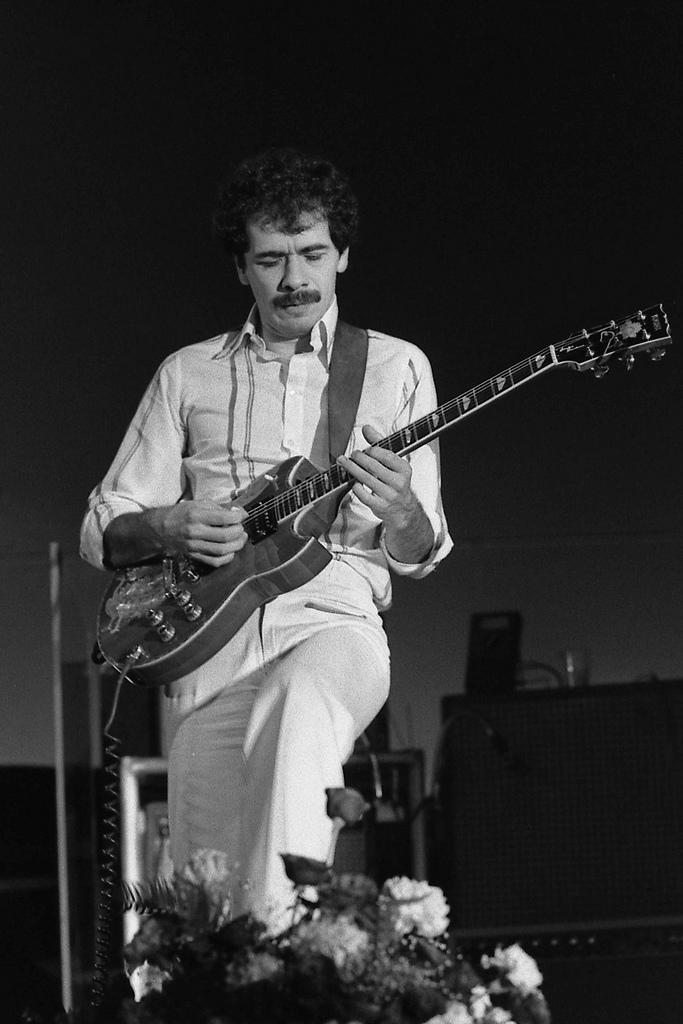
Photo: Chris Hakkens / Wikimedia Commons / CC BY-SA 2.0 Yamaha
SG-2000
1976
Santana told Yamaha to put a chunk of metal under the strings. They listened, and the notes stopped dying.