Yamaha
Revstar
Named for an engine, drawn in a London pickle factory, and built to be just different enough.
In 2013 a design agency in London started asking guitarists questions, hundreds of them. Two years later Yamaha had a set-neck solid with offset horns, a motorcycle look, and a name borrowed from the other side of the family.
- Introduced
- 2015
- Type
- Solidbody electric
- Class
- Production
Have a photograph of this guitar? Send a picture
The short version
1966
Yamaha guitars
The start of the line the Revstar would look back on, on Yamaha’s telling.
2013
The interviews
A London agency, forpeople, starts talking to players. Hundreds of conversations follow.
2015
Launch
Yamaha announces the Revstar on 15 December. Seven models for the US, eight counting the Japan flagship.
2016
In the shops
The US models are promised for late January, with a NAMM booth on 21–24 January.
2020
Prototypes, and a custom
Second-generation guitars turn up at Winter NAMM under wraps. Chris Buck gets his custom from Yamaha’s Los Angeles shop.
2022
Second generation
Introduced on 2 March. Every body chambered, carbon in the neck, and a Focus switch.
2026
Signatures
Chris Buck’s RS02CB at NAMM in January, then Matteo Mancuso’s RS20MM in the autumn.
Side A
A1
A pickle factory near the Oval
The Revstar starts in a converted pickle factory near the Oval, in London. A design agency called forpeople worked there, and from 2013 they did what agencies do: they asked questions. Hundreds of interviews. Yamaha’s launch note talks about three years of it, in London, Los Angeles, and Tokyo.
Then forpeople put a direction in front of Yamaha’s guitar team: motorcycles. The team took it.
The brief was a solid that could stand next to an SG and still be its own guitar. Set neck. Two pickups. Offset horns. Yamaha’s guitar developers call that “just different enough.” Hold on to that.
A2
The other Yamaha
The name is the bike. Rev, as in an engine, and Yamaha Motor’s line, “Revs Your Heart.” Yamaha’s motorcycle design goes back to the YA-1 in 1955. Its guitars go back to 1966.
So you get café-racer finishes and steel-wool tops. On the Japan flagship there was a copper pickguard, meant to tarnish along with whoever played it. That’s my favorite detail on the guitar: a part designed to end up looking like you.
The designers were also looking over their shoulder at old Yamahas. They name the headstock of an SA-15 (dated 1966 by them, 1968 by others), the double-cut of the SG-1000, and the offset of a Super Flighter from the 1970s, either 1974 or 1977 depending who you ask. One reviewer looked at the first Revstars and saw an SG-2000, a shade broader, with the horns pushed around. Close, but the 2000 is a 1976 through-neck guitar, and the Revstar’s neck is set.
A3
December 2015
Yamaha announced the Revstar on 15 December 2015. The US got seven models, promised for late January 2016, from the $629 RS320 to the $1,549 RS820CR. Count the Japan-built RSP20CR and there were eight. Keep both counts.
The RS320 was the plain one, no body cuts, with loud ceramic humbuckers on purpose. The RS502T, with P-90s and an aluminum tailpiece, is the one Yamaha says became the favorite. Behind all of them were dozens of body prototypes and more than 50 pickup prototypes.
Most of them had a Dry Switch, and here’s where the Revstar started its long argument with the press. The US release promised “the versatility of a coil split.” It isn’t one. It’s a high-pass filter: it trims the lows without dropping the output or adding noise, and the humbucker stays a humbucker. It works on the P-90s too, which a coil-split never could.
Flip the record · By the numbers
50+
Pickup prototypes before the first Revstar shipped.
7 or 8
Models at launch. The US list priced seven. The Japan flagship made eight.
$629
The RS320, cheapest Revstar on the 2015 US list.
15 years
Since Yamaha’s previous signature electric, on Buck’s and Yamaha’s telling, when his Revstar arrived.
Side B
B1
Hollow where it counts
A Yamaha demonstrator played second-generation prototypes at Winter NAMM in 2020 and wasn’t allowed to say a word about them. The guitars came out on 2 March 2022.
Every body is now chambered. Above the cheapest model there’s carbon in the neck beside the truss rod, and the top model has more under its maple cap. The Dry Switch stayed on the cheapest one. The others got a Focus switch: pull the tone knob and a small transformer in the cavity, no battery, pulls the top down and pushes the bass and mids up. One reviewer said it sounds “as if the pickup is overwound.”
Then there’s the five-way. Positions 2 and 4 put capacitors in the circuit. Yamaha calls it a fixed wah. One demonstrator heard it as out-of-phase. People still call it a coil-split. It still isn’t.
B2
The shop in Cardiff
About ten years ago, Chris Buck saw a Revstar in a shop in Cardiff. His story with it runs through two guitars: a black first-generation RS502, and a custom he picked up from Yamaha’s Los Angeles shop in 2020.
“My Custom Shop Revstar has been the beating heart of every record I’ve made and every show I’ve played since I first laid hands on it in 2020.”
He doesn’t name the records, so neither will I. In January 2026 his RS02CB arrived at NAMM: P-90s, a wraparound bridge, no Focus switch. It was the first Revstar signature, and on his telling and Yamaha’s, the company’s first signature electric in fifteen years. Matteo Mancuso, playing them since 2017, got the second that autumn.
Buck’s father had a Yamaha too, an SG-1000. “Heavier than my car,” Buck said. The Revstar’s double-cut was drawn as a nod to that guitar, and drawn to be just different enough. The son’s has his name on it.
The cast
The people, and the specific guitars, that made the legend.
2020
Chris Buck
Black first-generation RS502, then a Custom Shop Revstar from Los Angeles
First saw one in a Cardiff shop. His custom became the starting point for the RS02CB, the first Revstar signature.
2017
Matteo Mancuso
Revstars, including a US custom
Playing them since 2017, a Yamaha artist since 2019. His RS20MM, with DiMarzio humbuckers and flame maple, is the second Revstar signature.
2022
Jeff Schroeder
Four second-generation Revstars
Of the Smashing Pumpkins, on the Spirits on Fire tour. They came with P-90s. One now has Black Cat minis, one Lollar humbuckers, and the drop-D guitar stayed stock.
Liner notes
Specs, construction, rarity, value, and every source we used.
Offset horns, a set neck, and a passive switch that is not a coil-split — Yamaha’s Revstar, not an SG-2000 and not a Pacifica.
- Body
- Double-cut solid, offset horns, chambered. Maple top, two-piece mahogany back, carbon under the top, gloss polyurethane. Burrluck’s June 2022 samples (not this SKU): about 6 mm of maple, 347 mm wide, about 430 mm to the bass horn, 42 mm deep. Mix flagged.
- Neck
- Set-in. Three-piece mahogany, carbon beside the truss rod, satin polyurethane. Not a through-neck.
- Fingerboard
- Rosewood, 22 jumbo stainless, 12" (304.8 mm). Burrluck prints 305 mm (12") on the 2022 guitars and 350 mm (13.75") on the 2015 necks. Mix flagged.
- Scale
- 24-3/4" (628.6 mm) on Yamaha’s current table. Burrluck prints 629 mm (24.75") for 2015 and for the 2022 models he specced. Mix flagged.
- Pickups
- Two Yamaha VH5 humbuckers, Alnico V. VH5n neck, VH5b bridge
- Hardware
- Tune-o-matic and stopbar, 10.5 mm spacing, die-cast tuners. Hardshell case. Strings D’Addario EXL110, .010–.046
- Electronics
- Master volume, master tone with a push-pull Focus switch, 5-way. Focus is a passive transformer boost, not a coil-split
- Finish
- Gloss polyurethane. Spec table: Swift Blue, Moonlight Blue, Sunset Burst. The USA shop line this pass still says two café-racer finishes
- Nut
- PPS. The sheet measures 41.9 mm at the zero fret and 52.0 mm at the 12th, and 21.0 / 23.9 mm thick at the 1st / 12th. Not a separate nut width
Open the full research fileConstruction details, the complete player record, production numbers, dated value estimates, and sources
Classic living example = current Japan RSP20 (second generation). Sweetwater calls it the flagship. The 2015 press called the Japan RSP20CR the flagship: Dry Switch, VH7, copper guard, a solid body, not this chambered guitar. Yamaha Guitar Development calls the RSP02T the pro form of the RS502T, the recipe that “emerged as a popular favorite.” Not this table. RSS20 / RSS02T are the Standards. RSE20 keeps the Dry Switch and skips the carbon. RS02CB is Chris Buck’s. RS20MM is Matteo Mancuso’s. RSP20B 60TH is the February 2026 tremolo anniversary. RSP20X is the aluminum-guard sibling. RS320–RS820CR are the first generation. Pacifica is the bolt-on. SG-2000 is the 1976 through-neck. SA2200 is the semi. AES620 is the 2003 single-cut. No Gibson SKU. Mixed inch/mm flagged. Do not average 628.6 mm with 629 mm, 304.8 mm with 305 mm or 350 mm, or the current 52.0 mm at the 12th with Burrluck’s measured 53 mm and the 56.8 mm his 2022 sheet printed.
Construction
The job was a solid that could sit next to an SG and still be its own guitar. Set neck. Two pickups. Offset horns. Only just different enough. That phrase is Yamaha Guitar Development’s.
The drawing starts in a converted pickle factory near The Oval, south-west London. The agency was forpeople. They put a motorcycle direction in front of Yamaha’s guitar team, and the team took it. YGD: interviews from 2013, hundreds of them. Hamamatsu’s launch note says three years, and talks in London, Los Angeles, and Tokyo. Dozens of body prototypes. More than 50 pickup prototypes. Burrluck saw prototype stages around the world. None of that is a catalog guitar.
Revstar launched in December 2015. Hamamatsu and Buena Park both date the announcement 15 December 2015. The US seven-model release was promised for late January 2016, with a NAMM booth 21–24 January. 2015 is the launch. 2013 is the interviews. 2016 is the ship date they printed. Don’t collapse them.
The name is the bike. YGD: the rev of an engine, and Yamaha Motor’s “Revs Your Heart.” Motorcycle design, on that page, starts with the YA-1 in 1955. Guitars, on Yamaha’s telling, go back to 1966. Steel-wool tops. A copper guard on the Japan flagship, meant to tarnish with the player.
Which old Yamaha they were nodding at does not settle. YGD: the headstock of a 1966 SA-15, the double-cut of the SG-1000 / SBG-1000, and the offset of the Super Flighter from the late 1970s. The SA chronology on yamaha-sa2200 puts the SA-15 in 1968, and 1966 on the SG-2 and SG-3. Keep 1966 and 1968. Audiofanzine says the RS620 was inspired by a 1974 Super Flighter. Burrluck’s 2022 review says 1977, bass horn pulled up off the SG outline. His 2015 piece: the body owes a lot to the SG-2000, a shade broader in the lower bout, horns offset, and no “Yamaha” word on the head, only the tuning-fork. Keep the 1000 and the 2000. This guitar is neither.
Not an SG-2000 (yamaha-sg-2000). That is 1976, through-neck, T-Cross, brass under the bridge. This neck is set. Burrluck: it slots in full width and runs on under the neck pickup. Robbie Calvo, on Yamaha’s hub, 7 March 2022, calls the second generation neck-through. The spec table says set-in. He is describing that heel, not the 2000. Not a Pacifica (yamaha-pacifica): 1990, bolt-on, Strat layout. Not an SA2200. Not an AES620 (yamaha-aes620): the 2003 Korea single-cut, strings through the body. Not a Gibson SG. No Gibson SKU. The 2022 press, looking back, calls the 2015 line the first new electric series in more than a decade. The 2015 note says the first major update of the body shape in over a decade. Pacifica was still the mass solid. Don’t read either sentence as a factory that had stopped.
First generation is the solid one. Set-neck throughout. Forearm cut and ribcage cut, except the RS320: no body cut, nato, uncovered ceramic humbuckers, no Dry Switch. YGD wanted those ceramics loud. From the 502 up, Burrluck: mahogany, a maple cap, jumbo frets. His reading of the digits: grade, then humbucker count, then single-coil count. The 502T, aluminum tailpiece and P-90s, is the one YGD says became the favorite. The 720B is the Bigsby B50, and YGD’s underwound humbuckers: 2500 turns of heavy Formvar at the neck, 2900 at the bridge. Yamaha’s press calls them a Tron-type. Audiofanzine: VT5+, Filtertron-style. The 820CR is the Indonesia top. The RSP20CR is the only Japan guitar in that launch: VH7, copper guard, Graph Tech Tusq, I.R.A., hardshell, Audiofanzine’s MSRP $2,800. Burrluck: the other seven are Indonesian, and G&B built the pickups Yamaha designed. The US price list that week is seven models and does not print the Japan flagship. Hamamatsu and Audiofanzine count eight. Keep seven and eight.
The Dry Switch is a high-pass. YGD: it cuts lows, no drop in output, no extra noise, and it works on the P-90s. Hamamatsu agrees: the humbucker’s noise cancel stays. The US release said “the versatility of a coil split.” That sentence is the press. Burrluck’s 2015 tables print scale 629 mm (24.75"). The radius he only gives later, 350 mm (13.75"). The current sheet is the other pair. Mix flagged. Do not average.
Burrluck: after a couple of extra models, the line sat, and the customs were Yamaha Artist Services in Los Angeles, not a catalog. Calvo played second-generation prototypes at Winter NAMM 2020 and could not talk. Buena Park introduced the lineup 2 March 2022. Japan’s RSP20 page: on sale that March. Prototypes in 2020. Catalog in 2022.
Every 2022 body is chambered, Acoustic Design, not a casual rout. Burrluck’s four samples: slightly larger than the solid originals, 42 mm deep against 44 mm, 347 mm wide, about 430 mm to the bass horn. His inch glosses do not land on those millimetres, and “(16.69lb)” beside 430 mm is not a weight. Maple cap about 6 mm on Standard and Professional, carbon in those necks, and two more strips in the Professional top. Element: no cap, no carbon. Radius to 12". First lefties, RSS20L and RSE20L. His spec boxes say Indonesia for Element and Standard. Professional is Japan. The same review’s prose puts a Chinese acoustic factory next to the Japanese guitars. Keep Indonesia and China. No winner on the Element.
Element keeps the Dry Switch and a 3-way. Standard and Professional get Focus and a 5-way. Focus is a push-pull on the tone: top down, bass and mids up, a small transformer in the cavity, no battery. Takashi, in that Guitarist review: the level rises a little, “as if the pickup is overwound.” Barrett, on the Standard in the same issue’s film, also finds a treble bleed. The RSP20 sheet does not print one. The 5-way puts capacitors in positions 2 and 4. YGD calls that a fixed wah, not the quack of a reverse-wound pair. Calvo heard out-of-phase. Keep both. Still not a coil-split. I.R.A. is the Japan Professional only.
Burrluck called those June 2022 guitars production prototypes: a narrow ABR-1-style bridge on the Element, Nashville width above it. The sheet this pass just says tune-o-matic and stopbar. Yamaha then printed 56.8 mm at the 12th. He measured that as the 22nd, and averaged 53 mm on the four. The USA table now prints 52.0 mm. Do not average. Weights, same rule. His RS502T 3.98 kg (8.76 lb), RS820CR 4 kg (8.8 lb). The 2022 four ran from an RSE20 at 3.52 kg (7.76 lb) to an RSP02T at 3.86 kg (8.5 lb). Sweetwater’s RSP20 Sunset Burst, serial IMH210E: 8 lb 6 oz. One guitar. Not his P-90 Professional.
The living table is that RSP20. The RSP20B 60th, Japan, February 2026, is flame maple, a bone nut, and a Göldo tremolo. Not this stopbar.
Players
Do not hang a Gibson SG on this plate. Do not hang an SG-2000, a Pacifica, or an SA2200 on it. Santana’s Yamaha years are the 2000. Schroeder plays a Revstar, a Pacifica, and an SA2200. They are not one guitar. Corgan, on the same 2022 tour, is not on a Revstar.
Jeff Schroeder. Premier Guitar, 23 November 2022, Spirits on Fire: four Revstars. They came with P-90s. One now has Black Cat Vintage Repro Minis, one has Lollar Low Wind Imperial humbuckers, and the drop-D guitar was left stock. The video chapters also title an RSP02T and an RSP20. The Music Zoo, Philadelphia, 26 October 2022: his main E guitar was a new-series Revstar that had left with P-90s and then took Black Cat minis; the E-flat guitar beside it was another new one, stock except locking tuners. Four guitars, most of them no longer the sheet. Not a stock RSP20, and not a session log for Atum. The Pacifica on that tour is the scalloped one with the Floyd. The SA2200 is the semi, with Lollars in the written rundown. Corgan’s “1979” guitar, same piece, is a 1972 ES-335.
Chris Buck. First saw one in a Cardiff shop. Guitar.com, March 2026, puts that about a decade back. Guitar World, 28 January 2026: the signature started from a black first-generation RS502, and from the custom he picked up in 2020. That custom is a YASLA guitar, Los Angeles. His line: “My Custom Shop Revstar has been the beating heart of every record I’ve made and every show I’ve played since I first laid hands on it in 2020.” He does not name the records there. Don’t invent them. His father’s SG-1000, “heavier than my car,” is a different Yamaha. Not this, and not the through-neck 2000.
The RS02CB, NAMM 2026, is the first Revstar signature and, on his and Yamaha’s telling, Yamaha’s first signature electric in fifteen years. Guitar World’s review: Indonesia, Alnico III P-90s, a TonePros wraparound, a 3-way, no Focus switch, scale printed 629 mm, PPS nut 42.3 mm. Not the RSP20.
Matteo Mancuso. Yamaha, 25 September 2026: a Revstar player from early on, and a custom from the US shop. Fame, 24 September 2026: playing them since 2017, a Yamaha artist since 2019. Sweetwater says the custom since 2019. Keep 2017 and 2019. Guitar.com, March 2026, an ad feature: a solid “similar to the SG,” with more room for jazz and rock, and Lollar Imperials on the guitar in that piece. The writer calls the five-way coil-splitting. Yamaha’s circuit note says positions 2 and 4 are a capacitor phase shift, not a split. Keep both. The production RS20MM is not that Lollar guitar. Yamaha: DiMarzio PAF 36th Anniversary, Focus, 5-way, a heel he asked them to recut, flame maple, Vintage Sunburst, gold. He calls it an evolution of the custom he uses onstage and in the studio. Japan lists it for October 2026. Not an SG. Not this table.
Also known to play stays short. YGD’s list, repeated in that ad feature: Graham Coxon, Lynval Golding, Dave Keuning. No song and no serial pinned here.
Rarity
You can order a new RSP20. Yamaha’s USA shop had it in stock this pass. Element, Standard, and the Japan Professional are all current. The first-generation overview page is the one marked discontinued.
Yamaha does not publish Revstar unit totals. None invented. Serials date a guitar. They don’t count a year. That is why a 2015 total is unknown.
What is thinner: a December 2015 or early-2016 guitar, if the year can be shown; the Japan RSP20CR, the one the US price list did not even price; a YASLA one-off. Buck’s number one and Mancuso’s Lollar custom are those. They are not a tax on a new RSP20.
Value
Informal estimate, 19 October 2026. Not an appraisal.
Ask versus sold, labeled. No celebrity hammer turned up. No invented medians or factory counts. The 2015 US MSRPs, and the $2,800 Audiofanzine printed for the RSP20CR, are launch list. So is the 2 March 2022 MSRP: RSP20 and RSP02T $3,200, Standard $1,260 ($1,340 left-handed), Element $786 ($864 left-handed). Burrluck’s June 2022 streets, Element £399 / $499 and Standard £649 / $799, are 2022 money.
New street. Yamaha USA’s shop, this pass: RSP20 $2,199.99, in stock. Sweetwater’s Sunset Burst is the same $2,199.99, down from $2,299.99 on that page. InSync, 19 June 2026, prints list $3,520 and that same sale on Sunset Burst, Moonlight Blue, and Swift Blue. Don’t average $3,200, $3,520, and $2,199.99. Japan’s list is still ¥286,000 tax in, the March 2022 figure. Kakaku, 2 October 2026: a long-display outlet Swift Blue at ¥217,800, another shop ¥247,500, another ¥269,500. Don’t convert. Other SKUs, not this table. RS02CB: $1,299.99 at Sweetwater and on the USA shop, with $2,180 also on Yamaha’s page; Guitar World’s box $1,299 / £1,254 / €1,199. RS20MM: USA shop $1,599.99, out of stock; Japan ¥264,000 tax in, October 2026. The 60th’s USA line is MSRP $6,200, and Japan ¥599,500.
Used. Reverb’s Price Guide, titled Revstar II RSP20: $1,024–$1,587, 56 orders, Good to Mint, and the line says all models. Labeled estimate, not a median computed here. That page’s typical new is $2,299, which is not the cart above. Named solds on the same tape, all late 2025: 28 October Mint $1,650; 14 November Mint $1,724.99; 23 November Very Good $1,599.99; 7 December Mint $1,655.10; 12 December Very Good $1,250; 17 December Excellent $1,583.10; 21 December Excellent $1,600. No 2026 hammer isolated this pass. Don’t average the band with the hammers.
Vintage / collectible. No separate first-year sold series isolated. A 2016 RSP20CR is not a 1976 SG-2000, and the guitar is still a current SKU, so the used guide above is the market. Buck’s YASLA guitar and Mancuso’s Lollar custom are one object each. Not comps.
See also
- yamaha-sg-2000 — the 1976 through-neck this outline nods at and is not
- yamaha-pacifica — the bolt-on Strat-layout still in the catalog; not this set neck
- yamaha-aes620 — the 2003 set-neck solid, strings through the body; the previous Yamaha single-cut
Sources
- Yamaha Guitar Development, The Revstar Story (18 April 2022) — forpeople, from 2013; “just different enough”; SA-15 headstock dated 1966 there; SG-1000/SBG-1000; Super Flighter, late 1970s; the name; YA-1 1955; dozens of prototypes; RS320 ceramics; RS502T as the favorite; RS720B 2500/2900 Formvar, Bigsby B50; Dry Switch is a high-pass, not a coil-split; December 2015 launch; RSP02T as the pro RS502T; chambering; 5-way as fixed-wah, not quack; Focus switch; Buck on resonance; Coxon, Golding, Keuning, Mancuso, Schroeder
- Yamaha USA, Revstar launch (15 December 2015) — Hamamatsu announcement; three years; 50-plus pickup prototypes; set-neck; Dry Switch from the RS420 up; RSP20CR the Japan flagship, I.R.A., copper guard; RS320 with no body cut; first major body update in over a decade
- Premier Guitar / Giles, Revstar unveiled (15 December 2015) — seven models; the coil-split sentence; MSRP RS320 $629 through RS820CR $1,549
- PRWeb, same US release (15 December 2015) — ships late January 2016; NAMM booth 21–24 January 2016
- Audiofanzine, launch (16 December 2015) — eight models, $629–$2,800; RSP20CR $2,800, VH7+, TonePros; RS720B VT5+ Filtertron-style; RS620 and a 1974 Super Flighter
- MusicRadar, Dave Burrluck (15 December 2015) — outline against the SG-2000; Indonesia for the seven, Japan only for the RSP20CR; scale 629 mm (24.75"); Dry Switch as a high-pass; G&B; Tusq and a hard case on the RSP20CR
- Yamaha USA, second generation (2 March 2022) — 2015 as the first new electric series in more than a decade; chambered; Dry Switch on Element; Focus and 5-way on Standard and Professional; first lefties; MSRP $3,200 / $1,260 / $1,340 / $786 / $864
- Yamaha USA, Revstar 2022 specs — RSP20 sheet: set-in; 24-3/4" (628.6 mm); maple / chambered two-piece mahogany, carbon; 3-piece mahogany, carbon; rosewood; 12" (304.8 mm); jumbo stainless; 22; PPS; 41.9 / 52.0 mm; 21.0 / 23.9 mm; VH5 Alnico V; Focus; 5-way; tune-o-matic, stopbar, 10.5 mm; EXL110 .010–.046; hardshell; I.R.A.
- Yamaha USA shop, RSP20 — $2,199.99, in stock this pass; Japan; shop copy still says two café-racer finishes
- Yamaha Japan, RSP20 lineup — ¥286,000 tax in; on sale March 2022; RSP20B 60th, ¥599,500, February 2026
- Guitar World, Dave Burrluck (1 June 2022) — Guitarist. YASLA customs; 1977 Super Flighter; 6 mm cap; carbon; glued-in heel; radius 350 mm (13.75") to 305 mm (12"); samples 347 mm / about 430 mm / 42 mm against 44 mm; weights; 56.8 mm sheet error vs 53 mm; Indonesia on the spec boxes and a Chinese factory in the prose; Takashi on the transformer; Element £399/$499, Standard £649/$799
- Yamaha Music, Robbie Calvo (7 March 2022) — Winter NAMM 2020 prototypes; “neck-through”; Focus; positions 2 and 4 heard as out-of-phase
- Guitarist / Richard Barrett, 2022 demo — transformer on the Standard; treble bleed on that volume
- Premier Guitar, Smashing Pumpkins rig rundown (23 November 2022) — four Revstars; Black Cat; Lollar; drop-D stock; Pacifica; SA2200 with Lollars; Corgan’s 1972 ES-335 on “1979.” Chapters also title an RSP02T and an RSP20
- The Music Zoo, Schroeder (26 October 2022) — main E guitar, ex-P-90, Black Cat minis; second Revstar stock apart from locking tuners
- Guitar.com, Josh Gardner (26 March 2026) — ad feature. Buck in Cardiff; YASLA since 2020; first signature electric in 15 years; Mancuso, Lollars, the coil-split wording
- Guitar World, Chris Buck (28 January 2026) — black RS502; father’s SG-1000; 2020 custom; NAMM 2026
- Guitar World, RS02CB review (10 June 2026) — Indonesia; 629 mm; PPS 42.3 mm; Alnico III; $1,299 / £1,254 / €1,199
- Yamaha USA, RS02CB — $1,299.99 and $2,180
- Sweetwater, Chris Buck RS02CB — $1,299.99
- Yamaha, RS20MM (25 September 2026) — US custom; DiMarzio PAF 36th Anniversary; the jazz-and-rock line
- Premier Guitar, RS20MM (2 October 2026) — $1,599.99; second signature; onstage and in the studio
- Fame, RS20MM (24 September 2026) — since 2017; artist since 2019
- Yamaha Japan, RS20MM — ¥264,000 tax in; October 2026
- Yamaha USA shop, RS20MM — $1,599.99, out of stock this pass
- Sweetwater, RSP20 Sunset Burst — $2,199.99, was $2,299.99; serial IMH210E, 8 lb 6 oz; flagship wording
- Sweetwater InSync (19 June 2026) — list $3,520; sale $2,199.99; three colors
- Reverb Price Guide, Revstar II RSP20 — $1,024–$1,587, 56 orders; typical new $2,299; the late-2025 solds in Value
- Kakaku, RSP20 (2 October 2026) — ¥217,800 outlet; ¥247,500; ¥269,500
- Yamaha Asia-Oceania, first-generation Revstar — that page marked Discontinued
Keep digging
Guitars this one gets compared to, confused with, or descended from.
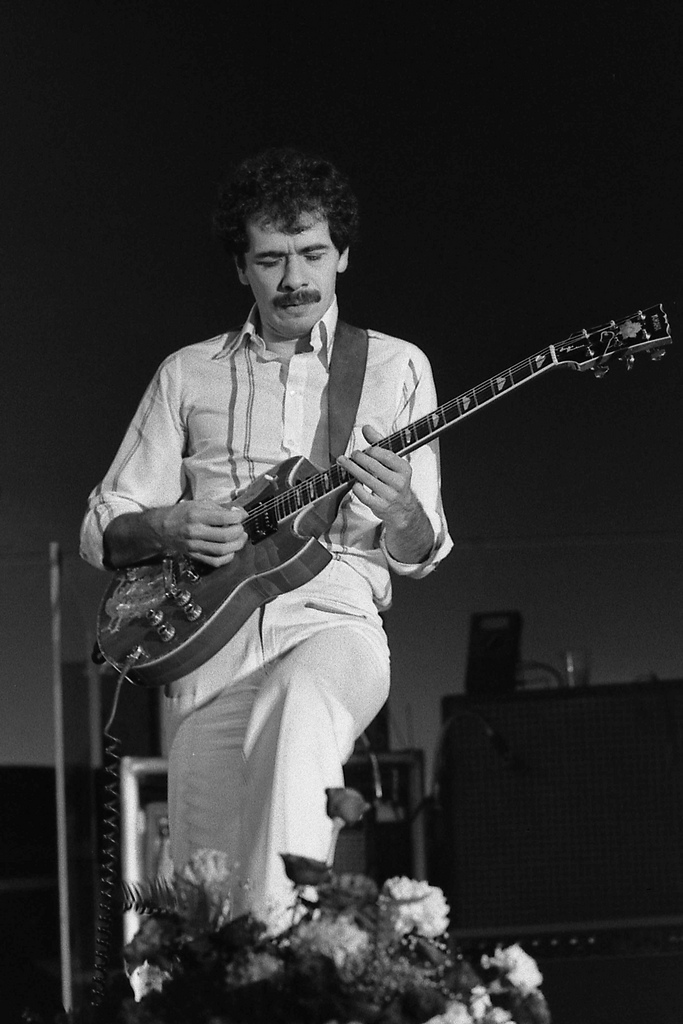
Photo: Chris Hakkens / Wikimedia Commons / CC BY-SA 2.0 Yamaha
SG-2000
1976
Santana told Yamaha to put a chunk of metal under the strings. They listened, and the notes stopped dying.
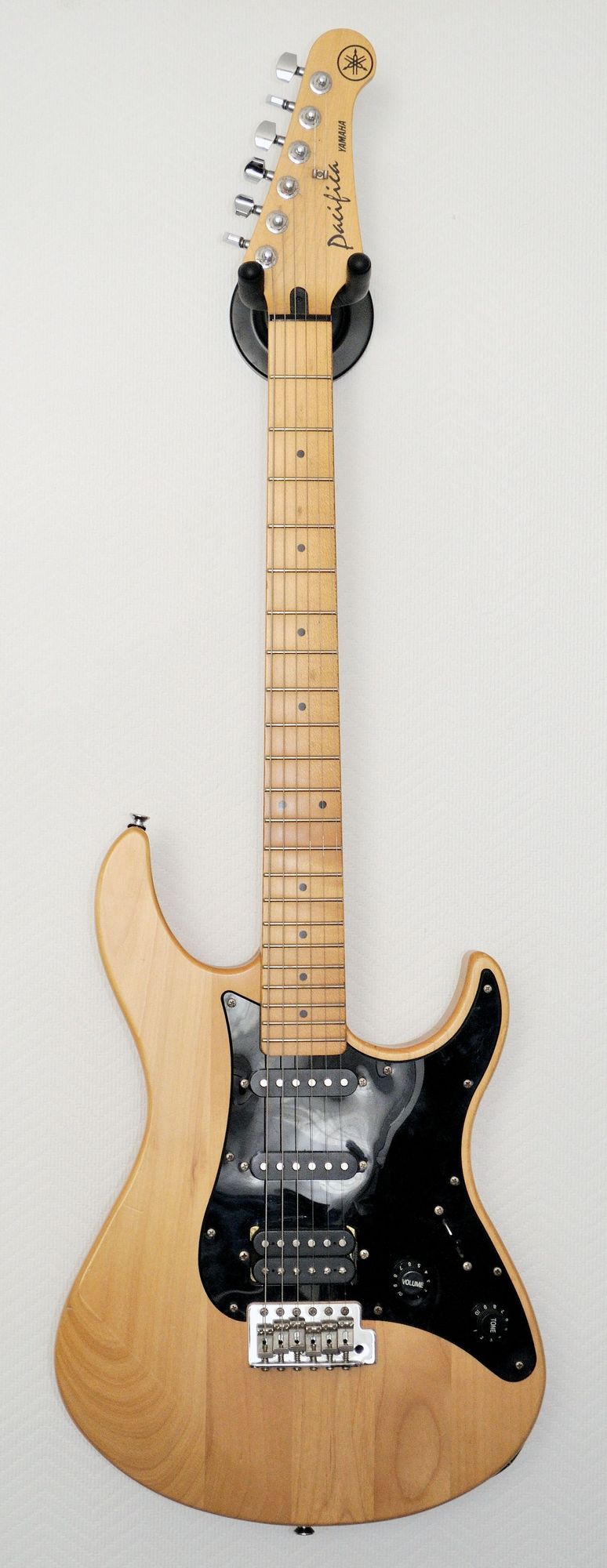
Electric guitar Yamaha Pacifica 112. Photo by BastienM. Licensed under CC BY-SA 3.0. Via Wikimedia Commons. Yamaha
Pacifica
1990
No hit record, no famous owner, no legend. Just the guitar that’s ready when a beginner is.
- Send a picture
Yamaha
AES620
2003
Two magazine awards in its first year, gone by 2007 or 2008. Its owners just keep changing the pots.