 Guitaripedia
MXR
Flanger
Eddie Van Halen kicked it in and out on “Unchained,” and the sweep landed on the riff by accident.
Van Halen, working up “And the Cradle Will Rock…” for their 1980 album. Eddie has written the intro riff on an electric piano, and the band thinks it needs something. He hooks up his MXR Flanger and pounds on the low keys.
- Introduced
- 1976
- Effect
- Modulation
No photograph of this pedal yet. Have one? Send a picture
The short version
Late 1976
Five new pedals
MXR brings out the Flanger with an Analog Delay, an Envelope Filter and two graphic EQs, all wearing the new block logo.
1976
Neck and neck
Ads for the MXR Flanger, the Electro-Harmonix Electric Mistress and the Tycobrahe Pedalflanger run in the same magazine at the same time, so who was first depends who you ask.
1979
Outta Love Again
Eddie Van Halen uses the Flanger on the song’s intro, with a different setting from the one he used nearly everywhere else.
1980
The piano intro
On “And the Cradle Will Rock…,” Eddie runs an electric piano through the Flanger.
1981
Unchained
Eddie kicks the Flanger in and out on the riff, and the sweep happens to fit the tempo.
Early ’80s
Gone
MXR stops making the Flanger, and the company closes in 1984.
Mid-’90s
Back
Dunlop, which bought the MXR name in 1987, reissues the Flanger.
2007
The Unchained switch
The EVH Flanger arrives with a switch that calls up Eddie’s “Unchained” settings, matched against his own 1970s unit.
Side A
A1
Pounding on the low keys
Van Halen are working up a song for their 1980 album, and the intro isn’t a guitar part. Eddie wrote it on an electric piano. The band listens and thinks it needs something.
“I just hooked up the Flanger and pounded on the low keys,” he said. That’s the opening of “And the Cradle Will Rock…”: a keyboard, played by a guitarist, through a guitar pedal, sounding like a jet taking off in the next room. One account has the Flanger on his guitar in the song as well. Eddie’s own account names only the piano.
He hadn’t gone looking for a flanger. He already loved MXR’s Phase 90, and when the company brought out something new, he figured why not. “When MXR came out with the Flanger, I said, What the hell? I loved their stuff,” he said. “I started putzing around with the Flanger too.”
Putzing around turned out to be the whole method.
A2
Five new boxes from Rochester
MXR started as a repair shop in Rochester, New York, opened in 1971 by Keith Barr and Terry Sherwood. The Phase 90 went into serious production in late 1973, and more pedals followed: the Dyna Comp, the Distortion+, the Phase 100.
As the company grew, Barr brought in two technicians from the old repair shop, Tony Gambacurta and Richard Neatour. Both played an instrumental role in developing the Flanger, which came out in late 1976 with an Analog Delay, an Envelope Filter, and two graphic EQs. All of them wore a brand-new block logo, so there is no such thing as a script-logo Flanger.
It arrived in a scramble. New bucket-brigade chips, which could pass a signal along a chain of tiny capacitors and delay it a few thousandths of a second, had just turned up in 1974 and 1975. The first flangers you could buy were studio rack units, MXR’s own Auto Flanger among them. Then came the pedals. In late 1976 the same guitar magazine ran ads for the MXR Flanger, the Electro-Harmonix Electric Mistress and the Tycobrahe Pedalflanger side by side. Who got there first depends who you ask.
A3
A jet plane in a box
Here’s the trick. The pedal copies your signal, delays the copy by somewhere under about 10 milliseconds, and keeps sliding that delay longer and shorter. Mix the copy back in with the original and certain frequencies cancel out. As the delay moves, so do the notches, and the sound sweeps up and down like a plane going overhead.
There are four knobs. Manual sets where the sweep sits, Width sets how far it travels, Speed sets how fast, and Regeneration feeds the effect back into itself until it rings. Turn Width all the way down and the sweep stops, so you can park the effect in one spot with Manual.
Eddie found a spot and stayed there. “I set the three knobs on the left between 11 o’clock or 11:30, and the last knob on the right is all the way up,” he said. Sometimes he nudged the speed to match a song’s tempo. The Flanger went first, in front of the Phase 90, straight into the amp.
“I always use the same setting for everything,” he said, “from the intro to ‘And the Cradle Will Rock…’ to ‘Unchained,’ with the exception of the setting I used on the intro to ‘Outta Love Again’ and ‘Bullethead.’” So if you want to hear him move the knobs, that’s where to go: the opening of “Outta Love Again,” from Van Halen II.
Flip the record · By the numbers
4
Knobs. Manual, Width, Speed and Regeneration.
11:30
O’clock, or a touch under. Where Eddie set three of the knobs. Regeneration went all the way up.
9
Months it took MXR to match the EVH Flanger to Eddie’s original.
12.8 ms
Longest delay on today’s reissue. Flanging lives at around 10 ms and under.
Side B
B1
Other boards
Plenty of players had one in the ’70s and early ’80s. Joe Perry kept a Flanger with his MXR compressor, phaser and EQ. Randy Rhoads had one on his Blizzard of Ozz pedalboard, next to a Distortion+, a Cry Baby and an MXR chorus.
MXR stopped making the Flanger in the early ’80s and closed before the end of 1984. Dunlop bought the name in 1987 and brought the Flanger back in the mid-’90s, and it has been around since.
It still turns up. Adam Granduciel of The War on Drugs had a vintage one on his board in 2014, in a rig with a ’56 reissue Strat. Kerry King of Slayer ran his wah straight into one in 2013, and from there into an MXR overdrive.
B2
Totally by accident
Fair Warning, 1981. The riff to “Unchained” is big and heavy, and now and then it whooshes. Here’s how that happened, in Eddie’s words:
Even the Flanger on ‘Unchained’ was totally by accident. The way it goes from the sweep up to the sweep down wasn’t planned. My normal setting just happened to fit the tempo of the song.
He kicked it in and out, heard the sweep rise and fall against the riff, and thought it sounded cool. He didn’t leave it on. “The riff just needed a little bit here and there.”
In 2007 MXR put out the EVH Flanger. Eddie and Bob Cedro of MXR went back and forth on prototypes for about nine months, comparing each one to his original ’70s Flanger. The new one got red and yellow lights and something the old one never had: a switch that calls up his “Unchained” settings.
Nine months of work, to put a switch on a sound he found by putzing around.
Put this on
You’ve read about it. Now hear it. Here’s what this pedal sounds like, and what to listen for.
Unchained
Eddie kicks the Flanger in and out on the riff. His normal setting just happened to sweep in time with the song.
Find it on YouTube (opens in a new tab)And the Cradle Will Rock…
The intro is Eddie pounding the low keys of an electric piano through the Flanger. One account has it on the guitar too.
Find it on YouTube (opens in a new tab)Outta Love Again
Listen to the intro. It’s one of the rare spots where Eddie moved the Flanger off his usual setting.
Find it on YouTube (opens in a new tab)
The cast
The people who built it, and the players who made it famous.
1981
Eddie Van Halen
Van Halen
Put it in front of his Phase 90 and used one setting for nearly everything. “Even the Flanger on ‘Unchained’ was totally by accident.”
1976
Tony Gambacurta
MXR engineer
A former technician at the MXR founders’ repair shop who played an instrumental role in developing the Flanger.
1976
Richard Neatour
MXR engineer
Came from the same repair shop and shared the Flanger’s development. He later co-founded ART in Rochester.
1980
Randy Rhoads
Ozzy Osbourne
Had an MXR Flanger on his Blizzard of Ozz pedalboard, next to a Distortion+ and a Cry Baby.
2014
Adam Granduciel
The War on Drugs
Had a vintage MXR Flanger on his board in 2014, with a ’56 reissue Strat in the same rig.
2013
Kerry King
Slayer
Ran his wah straight into an MXR Flanger, then an MXR overdrive.
Often paired with
The pedals and guitars it usually shares a board or a record with.
- Send a picture
MXR
Phase 90
1972 or 1974 · Modulation
One knob, and the quiet swirl Eddie Van Halen stepped on when he wanted to be heard.
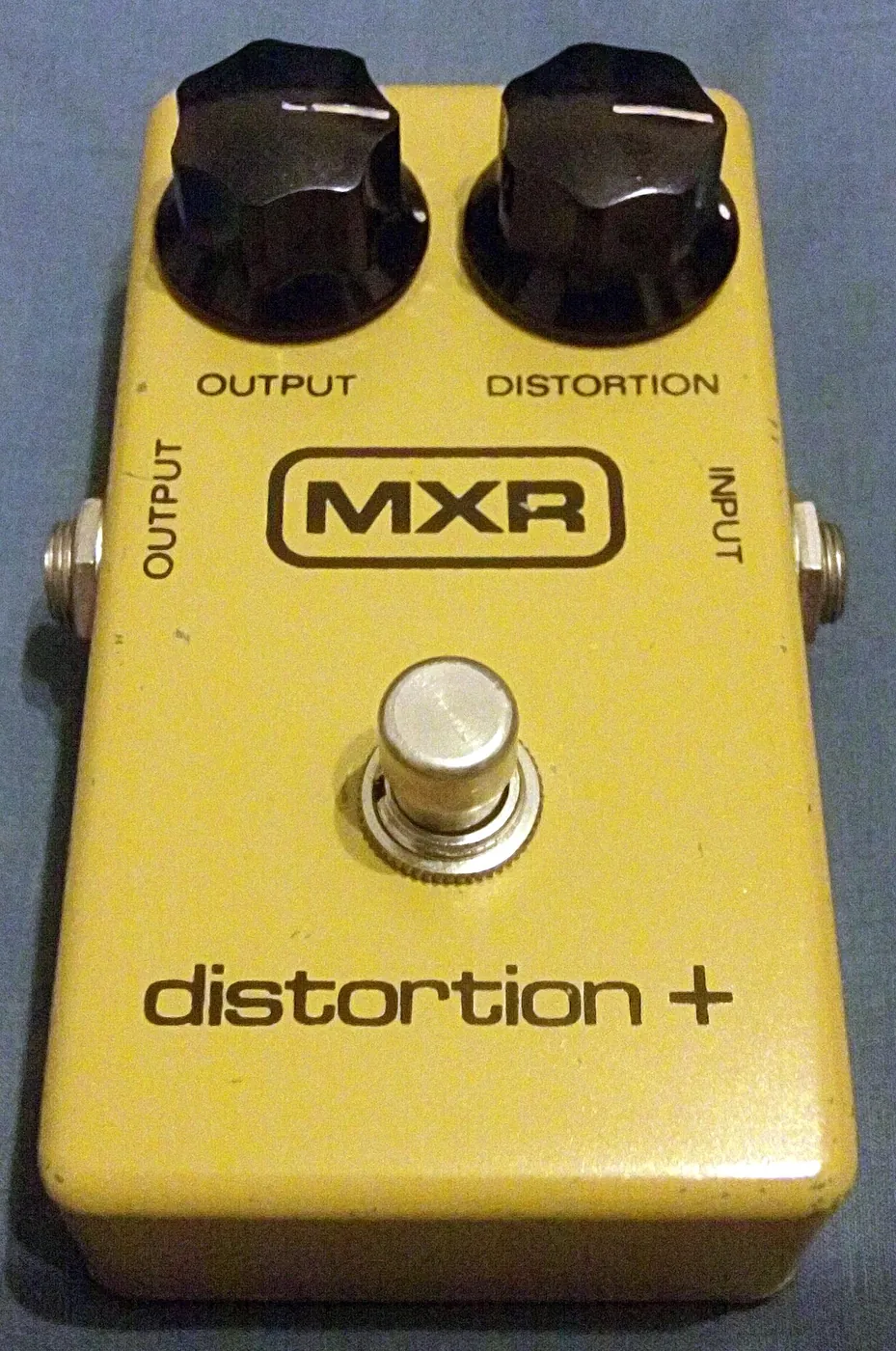
Photo: tpeck111 / Wikimedia Commons / CC BY-SA 3.0 MXR
Distortion+
1974 · Distortion
Two knobs, no tone control, and the one gadget Randy Rhoads said he used a lot.
- Send a picture
Dunlop
Cry Baby
1967 · Wah
An amp engineer’s shortcut, built into an organ pedal for horn players. Guitarists plugged in anyway.
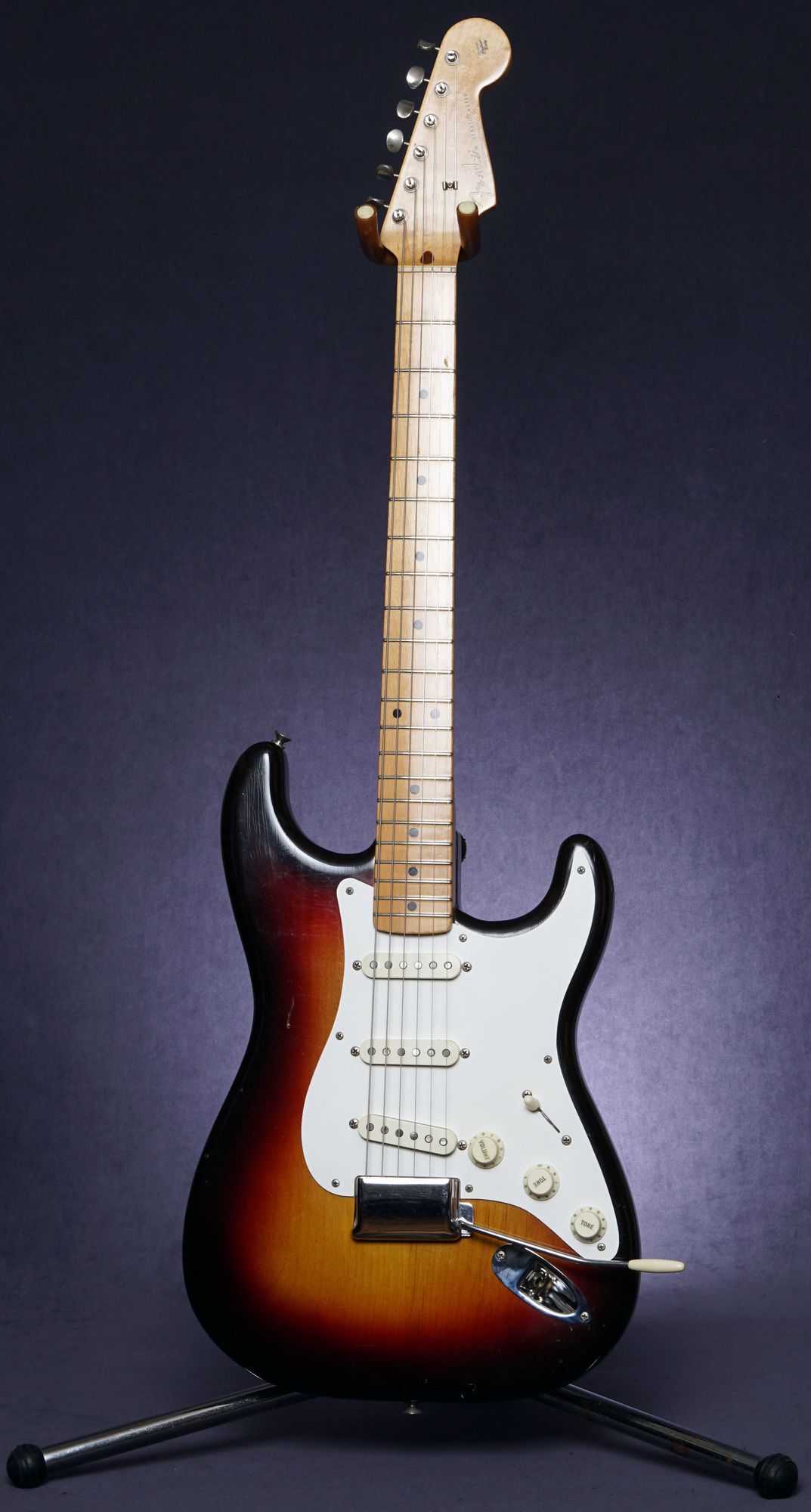
Photo: Lightburst / Wikimedia Commons / CC BY-SA 4.0 Fender
Stratocaster
1954
The guitar most people mean when they say “electric guitar.” Designed by a man who didn’t play one.