Framus
Tennessee
A German hollowbody built to take a hot rock pickup. One player said that’s when everything made sense.
Markneukirchen, Germany, around 2000. An old guitar name has come back to life in a new factory, and one of the first new designs is a single-cut hollowbody with one f-hole, a flamed maple top, and a pair of Seymour Duncans. It’s called the Tennessee. It has nothing to do with Chet Atkins.
- Introduced
- 2000
- Type
- Semi-hollow electric
- Class
- Production
Have a photograph of this guitar? Send a picture
The short version
1946
Framus begins
Fred Wilfer’s company starts building instruments.
mid-1970s
Gone
The original Framus factory in Bubenreuth goes under.
1995
The name comes back
Hans-Peter Wilfer revives Framus under Warwick in Markneukirchen. Guitar production follows by 1996.
2000
The Tennessee
One of the first models designed for the revival.
2004
Lefebvre’s Framus years
Simple Plan’s Sébastien Lefebvre starts playing Framus, the Tennessee among them.
2008
The Pro goes
The cheaper oil-finish version is discontinued. The Custom follows later.
Side A
A1
The name came back first
Framus had a whole first life. Fred Wilfer’s company started in 1946 and built a lot of guitars in Bubenreuth before the factory went under in the mid-’70s. For about twenty years the name sat on the shelf.
Then, in 1995, Fred’s son Hans-Peter Wilfer brought it back. He already ran Warwick, the bass company, and Framus came back to life under Warwick in Markneukirchen: same name, new town, new building. By 1997 there were new models on the floor. Around 2000 came the Tennessee, one of the first guitars designed for the revival.
It had one job. Framus wanted a hollowbody that could take a hot rock pickup without turning into a Gibson ES-335. Same old ingredients, in a new body.
A2
A hollow with a JB in it
The body is mahogany, hollow, with a bookmatched flamed maple top and a single f-hole on the bass side. It’s a single-cutaway. The neck is bolted in, not glued, and the scale is 25.5 inches, longer than a Gibson’s, which gives it a bit more snap.
The pickups are Seymour Duncans: a ’59 in the neck and a JB at the bridge. The JB is a hot, bright rock humbucker, the kind usually found in a solid body. Put it in a hollow one and the note gets more air around it. Pull up on the tone knob and the humbuckers split, for something thinner and quicker. There’s one volume and a three-way switch, and that’s all.
Framus made it a little bigger in outline than you might expect, but not thicker, so the top could move more freely. It isn’t light. One 2006 example weighed just under nine pounds. One owner measured his at about two inches deep through the f-hole, and a little over fifteen inches across the lower bout.
The hardware is all business: a Tone Pros Tune-o-matic bridge and stop tailpiece, locking tuners, and frets dressed at the factory on a Plek, the computer-guided machine that levels them to a fraction of a hair. There’s at least one early Custom out there wearing a Bigsby vibrato. That was one guitar, not the standard.
Same name, new town. Same pickups, new body.
What the neck is made of depends on which one you pick up. Some are mahogany, some are ovangkol, a dense African hardwood. The sources split, and nobody has sorted it by year.
Flip the record · By the numbers
25.5"
Scale length. Longer and snappier than the Gibson hollowbodies it gets mistaken for.
1
F-hole, on the bass side.
A$3,699
List price of a Tennessee Custom in Australia in 2008. The Pro was A$2,599 to A$2,899.
2
Seymour Duncan humbuckers, a ’59 in the neck and a JB at the bridge. Pull the tone knob and they split.
Side B
B1
Not that Tennessee
The name confuses people. Gretsch made a Chet Atkins Tennessean, the 6119, in Brooklyn. It’s a completely different guitar from a completely different country. If you see a Chet Atkins photo on a Framus Tennessee listing, somebody got carried away.
It isn’t a 335, either. The 335 is a double-cut with a shorter scale and a glued-in neck. The Tennessee is a single-cut, bolt-on, longer scale, one hole.
There were two versions. The Custom had the fancy flame top, ebony board, and a high-polish finish. The Pro was the same hollow in plainer clothes: a maple top, rosewood dot board, and an oil finish. Both are discontinued now. You can’t order a new one from Framus.
B2
When everything made sense
Sébastien Lefebvre of Simple Plan started playing Framus guitars around 2004. His main ones were other models, the Mayfield and the Panthera, but the Tennessee was in the rack. He’d used the same pickups for years. In 2014 he explained what changed:
I’ve always played with the JB pickups, but it’s when I finally put them into a hollowbody-shaped guitar that everything made sense for me. The Tennessee and the Mayfield by Framus are the models I used.
An old name in a new town. A familiar pickup in a new body. Lefebvre didn’t change his sound. He changed the house it lived in, and everything made sense.
The cast
The people, and the specific guitars, that made the legend.
1946
Fred Wilfer
Founder of Framus
Built the original company. Its Bubenreuth factory went under in the mid-’70s.
1995
Hans-Peter Wilfer
Revived the name
Brought Framus back under Warwick in Markneukirchen. The Tennessee was one of the first new designs.
2004
Sébastien Lefebvre
Framus Tennessee and Mayfield
Simple Plan’s guitarist. Put the pickups he’d always used into a hollowbody, and it clicked.
Liner notes
Specs, construction, rarity, value, and every source we used.
Bolt-in mahogany hollow, one f-hole, a ’59 and a JB — Framus’s Tennessee, not Chet’s 6119, and not a 335.
- Body
- Single-cut mahogany hollow; bookmatched AAAA flamed maple top; one f-hole. Factory: thinline. Mix flagged.
- Neck
- Bolt-in. Factory Custom: mahogany. 2003 Reverb / Blue Book / 2008 Pro: ovangkol. Mix flagged.
- Fingerboard
- Tigerstripe ebony, 12" / 305 mm, 22 jumbo, traditional Custom mother-of-pearl inlays. Mix flagged.
- Scale
- 25.5" (648 mm)
- Pickups
- Seymour Duncan SH-1n chrome (neck), SH-4b chrome (bridge)
- Hardware
- Tone Pros Tune-o-matic with stop tailpiece; Framus locking tuners; Warwick security locks; chrome
- Electronics
- Volume; push/pull tone for coil-split; 3-way toggle
- Finish
- High polish. 2008 AU catalog: wood binding except Natural High Polish.
- Nut
- Framus low-friction, 43 mm / 1.7". 2003 Reverb: 42 mm (1.7"). Mix flagged.
Open the full research fileConstruction details, the complete player record, production numbers, dated value estimates, and sources
Classic living example = Tennessee Custom (Markneukirchen). Factory discontinued-features page, fetched 21 September 2026. No current typical SKU on shop.warwick.de this pass. Factory mixed inch/mm flagged; do not invent millimetres for the unstated depth. Tennessee Pro is the oil-finish sister — ovangkol, rosewood dots — same plate, not a second slug. Mayfield is the double-cut hollow. AK-1974 is Akkerman’s. Hollywood is the P-90 offset hollow. Television is another Framus name. Gretsch Tennessean (gretsch-tennessean) is Chet’s 6119. No Gibson SKU.
Construction
The job was a Markneukirchen hollow that would take a Duncan JB without becoming a 335. Single-cut. One f-hole. Bolt-in. 25.5". Framus, not Gretsch, not Kalamazoo.
Hans-Peter Wilfer revived the name in 1995 under Warwick in Markneukirchen, after Fred Wilfer’s Bubenreuth factory went under in the mid-1970s (Wikipedia; Blue Book, citing Wilfer, puts guitar production back in 1996). Panthera and Hollywood were already on the floor by 1997. The Tennessee is that shop’s single-cut hollow, not a Bubenreuth leftover. Vintage & Rare dates a Custom to 2000 and calls it one of the first models Warwick designed for the revival. UsedPrice.com’s database window is 2003–2012. Keep both. This plate starts in 2000.
What you get is a thinline mahogany hollow with a bookmatched flame maple lid and a single f-hole on the bass side. Factory Custom: bolt-in, AAAA top, tigerstripe ebony, traditional Custom inlays, Tone Pros Tune-o-matic and stop, SH-1n / SH-4b under chrome covers, volume plus a push/pull tone that splits the humbuckers, 3-way, 25.5" (648 mm), nut 43 mm / 1.7". Plek on the set-up. The 2008 Australian list adds wood binding except on Natural High Polish. Factory photo, that catalog, and Blue Book are single-cut. Chorder’s “double cutaway” is the mash; do not follow it.
Neck wood is split. Factory Custom and Guitar Riot’s 2006: mahogany. A 2003 Reverb Custom, Blue Book, and the 2008 Pro: ovangkol. Keep both.
Not a 335 (gibson-es-335). Kalamazoo, 1958, double-cut laminate, maple stick, 24.75". This is Markneukirchen, single-cut, bolt-in, 25.5", one hole. Not Chet’s Tennessean (gretsch-tennessean) — Brooklyn 6119, then Booneville; Gibson later sold a Chet Atkins Tennessean of its own. Neither is a Framus. Do not hang a Chet photo here because the word Tennessee is on the truss-rod cover.
Not Mayfield. 2008 catalog: laminated double-cut, two f-holes, set neck, 24.75". Lefebvre’s later main guitar. Not AK-1974 — Akkerman’s; Wikipedia’s Summer NAMM 2010 shot puts Custom and AK-1974 on the same table so people mash them. Not Hollywood — P-90s, roller bridge, trapez or Bigsby B7 in that 2008 list. Not Television. Not the 1970s Nashville (11010).
Tennessee Pro is the same hollow in cheaper clothes: maple top, ovangkol, rosewood dots, oil or colored satin, $2,599 / $2,899 AUD in August 2008. Custom that year: AAA flame, ebony, Custom inlays, high polish, $3,699 AUD. Historical list, not 2026 street. Blue Book dates Pro discontinued 2008; Custom it still prints as current mfg — stale against the live discontinued page. A Vintage & Rare 2000 Custom wears a Bigsby; that is one guitar. The 2008 catalog puts trapez and B7 on Hollywood, not here.
The owner’s manual groups Tennessee with Hollywood as a little bigger in plan, not thicker, for a freer top. Factory will not advertise a weight. Named measures, not a midpoint: Guitar Riot 2006, 8 lb 15 oz; 2003 Reverb Custom about 4.4 kg. The Gear Page (9 July 2007): about 2" deep through the f-hole, lower bout a bit over 15" — one player’s Custom, not a factory cell.
Classic vs current: there is no current typical. Factory files Custom and Pro under Discontinued Models. shop.warwick.de’s Custom Shop this pass is Diablo, Panthera, Mayfield, AK 1974, Television, The Blank, signatures — no Tennessee. You cannot order a new one from the page.
Players
Do not hang a 6119, a 335, a Mayfield, or a Hollywood here. Do not recruit Lennon’s Hootenanny, Wyman’s Star Bass, or Earl Slick’s signature as if they were this guitar.
Sébastien Lefebvre. The named player of this silhouette. Seymour Duncan interview (2014): “I’ve always played with the JB pickups, but it’s when I finally put them into a hollowbody-shaped guitar that everything made sense for me. The Tennessee and the Mayfield by Framus are the models I used.” Wikipedia’s Framus page: Simple Plan’s Lefebvre “include[s] the Framus Mayfield and Tennessee models.” French Wikipedia dates his Framus years from Still Not Getting Any... (2004), mainly Mayfield and Panthera, Tennessee among them. Named studio-track credits for the Tennessee are unpublished here.
Also known to play stays empty this pass. Slick’s Framus is the Mayfield and the Hollywood-based signature. None invented.
Rarity
You cannot buy a new Tennessee from Framus this pass. Custom and Pro sit on the discontinued index. Living Framus production is other silhouettes. They are not this hollow.
Framus does not publish Tennessee unit totals. None invented. Serials date a guitar. They don’t count a year. That is why a first-year census is unknown, not the chapter.
What is actually thinner: Vintage & Rare’s 2000 first-revival Customs; complete originals with the Duncans un-swapped; Bigsby examples that were never catalog-standard on this table. Current Diablos and Pantheras do not substitute.
Value
Informal estimate, 21 September 2026. Not an appraisal.
Ask vs sold labeled. Celebrity lots are not-comps. No invented medians or factory counts. A Mayfield is not a Tennessee comparable. Period Australian list is 2008 money, not 2026 street.
New street. None under Tennessee this pass. Factory discontinued; shop.warwick.de has no Tennessee family (fetched 21 September 2026). Historical lists, not a 2026 cart: Dominant Music, August 2008 — Pro Natural Oil $2,599 AUD, Coloured Oil $2,899 AUD; Custom AAA flame high polish $3,699 AUD. The Gear Page, 9 July 2007: “about $2200 US” on a Custom, forum first-impressions, not a MAP. A Reverb seller six years ago wrote originally £3500 new — that seller’s memory, not a factory sheet.
Used modern. Named ask, not a hammer: Blue Book widget this pass, 2004 Natural $3,122 (Reverb deal). guitar-list 2006 Custom $3,799. Wild Custom Nirvana Black €1,985. Vintage & Rare 2000 sunburst €1,810. Named older sold listing, not a series: Reverb Excellent Custom $1,702.55 (listed six years ago). Named older ask, listing ended: 2003 Custom $4,311.49. Do not average those. No clean Reverb Price Guide band isolated this pass. Flag: thin sold-comp access.
Vintage / collectible. This is a 21st-century Markneukirchen guitar. Early Customs trade as used modern. They are not a 1958 6119 and not a 1958 335.
See also
- Tennessean — Chet’s 6119; Brooklyn hollow, other factory, other name
- ES-335 — 1958 Kalamazoo double-cut this single-cut bolt-in is not
- Starplayer — Hannover’s German semi; spruce/maple, sustain block, not this mahogany hollow
Sources
- Framus, Tennessee Custom features (discontinued) — mahogany hollow, AAAA flamed maple top, f-hole; mahogany neck; tigerstripe ebony; 12" / 305 mm; 25.5" (648 mm); 43 mm / 1.7" nut; 22 jumbo; SH-1n / SH-4b chrome; volume, push/pull tone split, 3-way; Tone Pros Tune-o-matic + stop; thinline / bolt-in; high polish; Plek (fetched 21 September 2026)
- Framus, Tennessee Custom pictures — single-cut Natural Transparent High Polish; SKU 1176831014CPMFSM2L
- Framus, Tennessee Pro features (discontinued) — ovangkol; rosewood dots; maple top; oil or colored satin
- Framus, Discontinued Models: Tennessee — Custom and Pro filed discontinued (fetched 21 September 2026)
- Warwick shop, Framus Custom Shop — no Tennessee family this pass (fetched 21 September 2026)
- Framus Guitars Consumer Price List, August 2008 (Dominant Music, AU) — Tennessee Pro $2,599 / $2,899 AUD; Custom AAA flame $3,699 AUD; wood binding except Natural High Polish; single-cut photos; Hollywood, not Tennessee, takes trapez / B7
- Blue Book, Framus electric models — revival guitars 1996 (Hans-Peter Wilfer); Tennessee Custom single-cut hollow, current mfg on that page; Tennessee Pro disc. 2008; 2004 Natural widget $3,122
- Wikipedia, Framus — 1946 / bankruptcy mid-1970s / 1995 Warwick revival; Lefebvre Mayfield and Tennessee; Summer NAMM 2010 photo of Tennessee Custom with AK-1974
- Seymour Duncan, Interview with Simple Plan’s Sébastien Lefebvre — JB in a hollowbody; Tennessee and Mayfield (2014)
- Wikipédia, Sébastien Lefebvre — Framus from Still Not Getting Any... (2004); Mayfield and Panthera main; Tennessee among them
- Vintage & Rare, Framus Tennessee 2000 Sunburst — dealer-dated 2000 Custom; “one of the first models” of the Warwick revival; Bigsby on that guitar; €1,810
- Reverb, 2003 Tennessee Custom (Ransom Guitars) — ovangkol; 42 mm (1.7") nut; ~4.4 kg; ended ask $4,311.49
- Reverb, Tennessee Custom sold listing — Excellent sold $1,702.55; seller: no longer produced; originally £3500 new; 4.4 kg (listed six years ago)
- Guitar Riot, 2006 Tennessee Custom — mahogany neck; AAAA top; 25.5"; 1.7" nut; 8 lb 15 oz; SH-1 / SH-4
- The Gear Page, Tennessee Custom first impressions, 9 July 2007 — ~2" depth through the f-hole; lower bout a bit over 15"; “about $2200 US”
- UsedPrice.com, Framus — Tennessee Custom 2003–2012
- Guitar Player, Framus factory tour (Jacob Barlow, 28 February 2023; Feb 2019 issue) — 1995 return; Markneukirchen; bolt-on neck system
- Framus electric guitar owner’s manual (En) — Tennessee Custom / Pro in the model list; Tennessee grouped with Hollywood as a little bigger in plan, not thicker
- guitar-list, Framus electrics for sale (US) — 2006 Tennessee Custom $3,799
- Wild Custom Guitars, Tennessee Custom — ask €1,985; single-cut; Nirvana Black
Keep digging
Guitars this one gets compared to, confused with, or descended from.
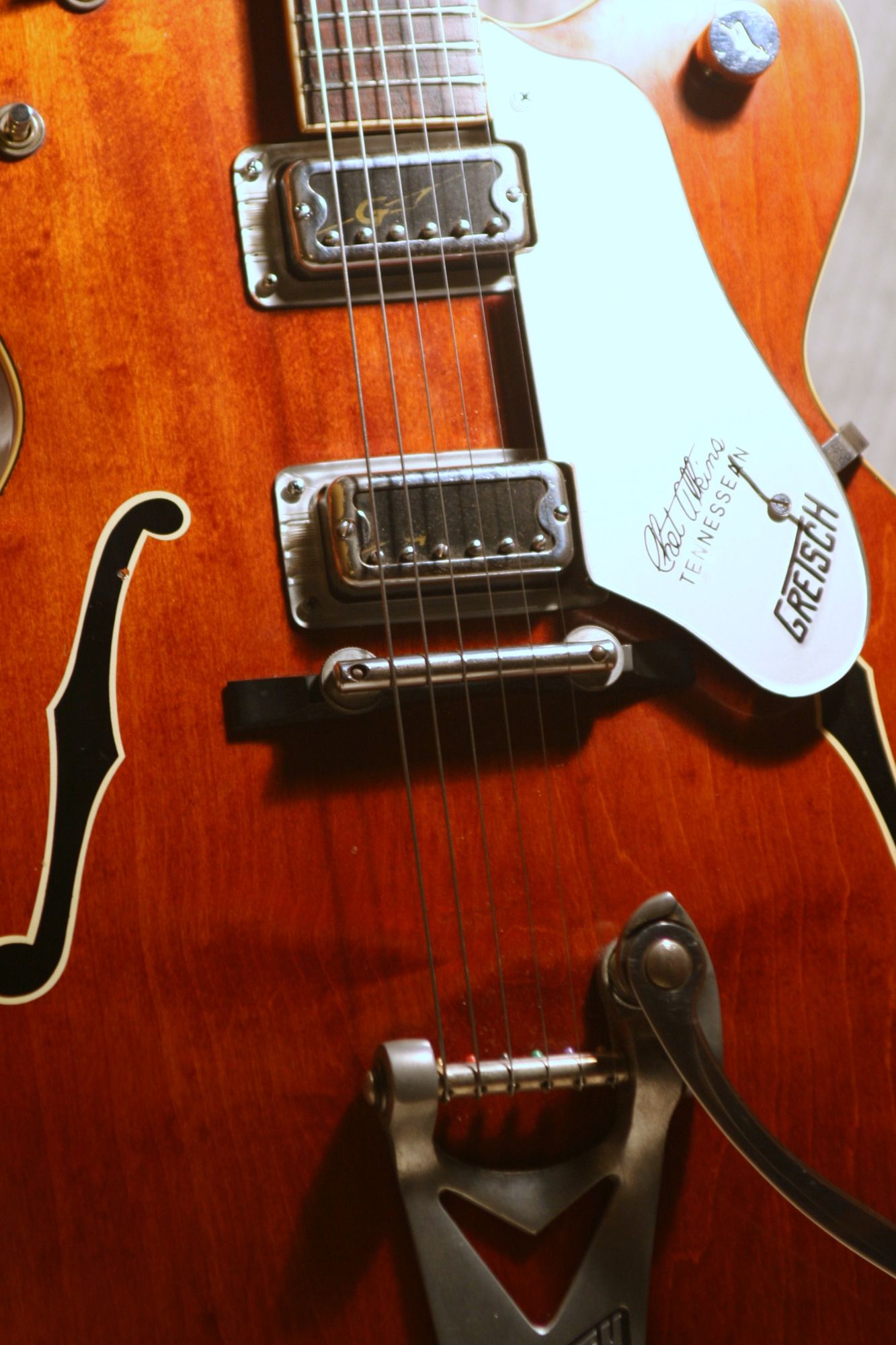
Gretsch 6119 Tennessean 1966. Photo by matanao. Licensed under CC BY-SA 3.0. Via Wikimedia Commons. Gretsch
Tennessean
1958
The cheap Chet Atkins Gretsch: one pickup, $295. It’s the guitar on the intro to “House of the Rising Sun.”

Photograph of a vintage 1960 Gibson ES-335TD. Photo by Lightburst. Licensed under CC BY-SA 4.0. Via Wikimedia Commons. Gibson
ES-335
1958
Larry Carlton played three 335s off a shop wall, unplugged, paid $850 for one, and became Mr. 335.
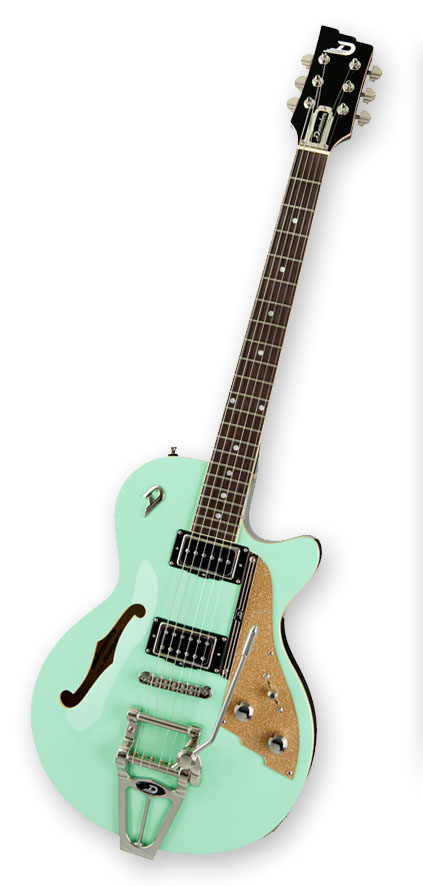
Photo: LittleLuck / Wikimedia Commons / CC BY-SA 3.0 Duesenberg
Starplayer
1995
It looks like a 1950s guitar. There is no 1950s Starplayer. It had to make its own past, starting in 1995.