Gibson
Melody Maker
Gibson built it to be outgrown. Billy Gibbons pinstriped his on day one. Joan Jett never traded up.
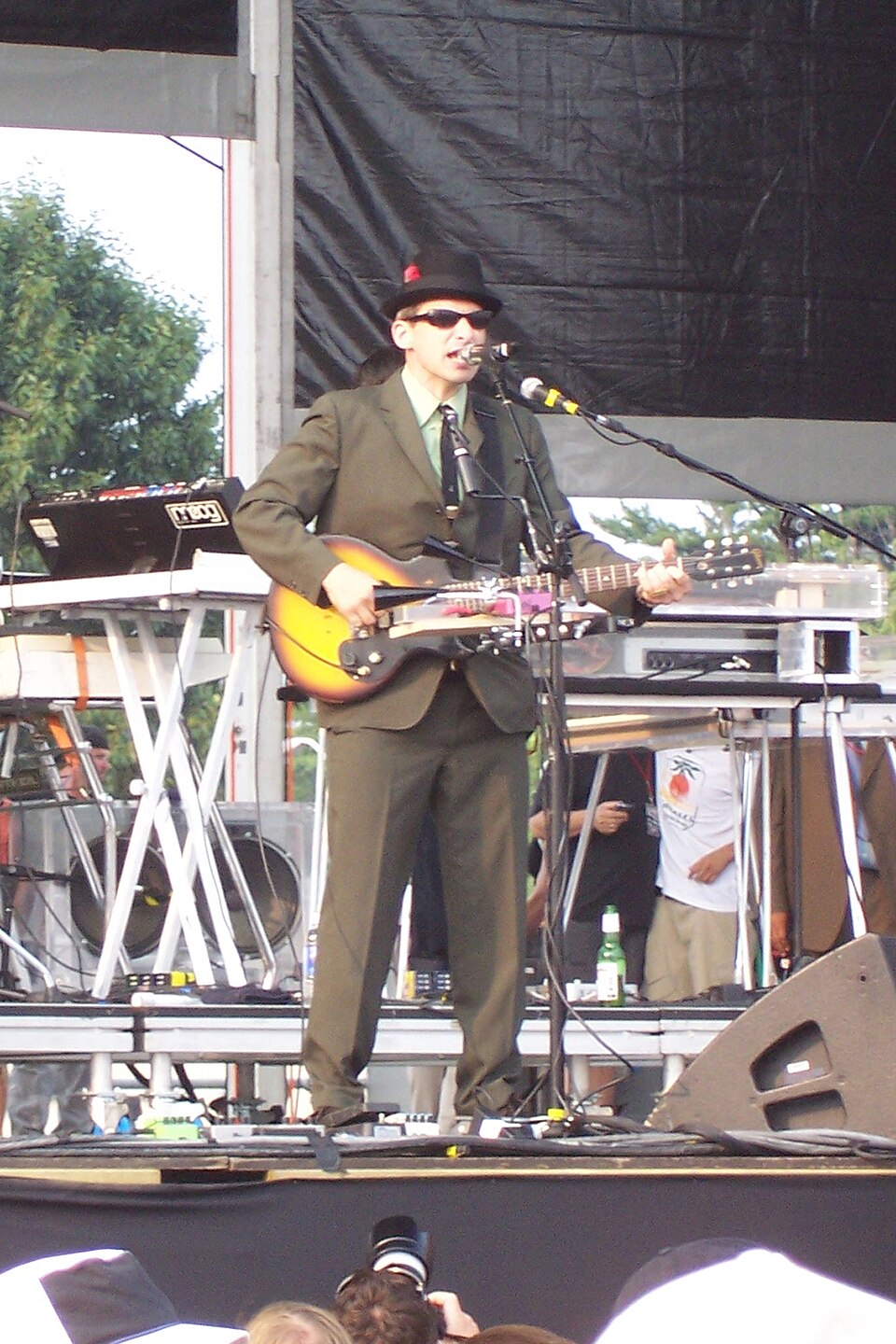
Christmas, the year Billy Gibbons turns thirteen. Under the tree is his first electric guitar, a Gibson Melody Maker: one pickup, one cutaway, two-tone sunburst. Before the day is over, he’s painted pinstripes on it.
- Introduced
- 1959
- Type
- Solidbody electric
- Class
- Production
The short version
1959
The bottom rung
The Melody Maker replaces the Les Paul Junior as Gibson’s cheapest solidbody. List price $99.50.
1960
Two pickups
The two-pickup Melody Maker D ships. The pickup covers get narrower.
1961
Two horns
The single-cut body gives way to a rounded double-cutaway.
1966
The SG look
Around 1966–67 it takes on the pointed SG shape, in Fire Engine Red or Pelham Blue.
1971
Discontinued
The SG-100, 200, and 250 take over the budget slot.
1977
Queens of Noise
Joan Jett switches from a Les Paul Deluxe to a white double-cut Melody Maker.
2008
Her name on it
Gibson releases a Joan Jett signature Melody Maker, a humbucker guitar of its own.
Side A
A1
Built to be outgrown
Nobody tells you your first guitar is supposed to be temporary. The price tag does, sort of. Gibson built the Melody Maker as the first rung of the ladder, and the plan was that you’d climb off it.
Billy Gibbons got one for Christmas the year he turned thirteen. By his own account it was 1962, single pickup, single cutaway, two-tone sunburst. He painted pinstripes on it the same day. (Gibson’s records say the single-cut body gave way to a double-cut in 1961. Gibbons says 1962. It was his Christmas, and I’m not going to argue with him about it.)
Most kids who get a student guitar trade up. A few of them never saw the point.
A2
What ninety-nine fifty buys you
In 1959 the Les Paul Junior was already Gibson’s student guitar. The Melody Maker went under it. It listed at $99.50, and you could see where the money had been saved.
The body was a slab of mahogany about an inch and three-eighths thick, thinner than a Junior. One narrow little single-coil pickup sat at the bridge, not the fat P-90 on a Junior, mounted on the pickguard with the volume and tone knobs. No switch, because there was nothing to switch between. The finish was sunburst.
But the neck was set, the wood was mahogany, and the scale was full-size, the same length as a Les Paul. It was cheap, not a toy. There was a 3/4 version for smaller hands, and in 1959 it actually outsold the full-size one, 1,676 to 1,397.
One pickup, two knobs, no switch. Everything you need, and not one thing you don’t.
A3
Three bodies, one name
The Melody Maker kept changing clothes. A two-pickup version, the D, started shipping in 1960. In 1961 the single cutaway became a rounded double-cut. Around 1965 the horns got sharper and cherry replaced sunburst. By 1966 or 1967, depending on who’s counting, it had the pointed SG body, a white pickguard, a vibrato, and Fire Engine Red or Pelham Blue paint. In 1967 there was even a three-pickup Melody Maker III and a 12-string.
The same factory sold the same basic recipe under the Epiphone name, as the Olympic. In 1963 the Epiphone cost $139.50. The Melody Maker, with Gibson on the headstock, was $119.50. Figure that one out.
It’s still a Melody Maker, though. Not an SG Special, not a Junior. The pickups give it away.
Gibson sold a lot of them. The peak year was 1965, with 11,804 across the line, and the whole run from 1959 to 1970 comes to 47,880. Then, in 1971, Gibson dropped the line and gave the budget slot to the SG-100, 200, and 250. The kids had graduated, or so the plan went.
Flip the record · By the numbers
$99.50
List price in 1959 and 1960. Gibson’s cheapest solidbody.
1,676
Short-scale 3/4 Melody Makers shipped in 1959, more than the 1,397 full-size ones.
11,804
Melody Makers of all kinds shipped in 1965, the peak year.
47,880
The whole line, 1959 to 1970. Nobody was saving these for later.
Side B
B1
Via Eric Carmen
Joan Jett played a blond Les Paul Deluxe on the first Runaways record. Around Queens of Noise, in 1977, she switched to a white double-cut Melody Maker, and that’s the guitar people picture when they picture her.
It came secondhand, and it came with a story. An Ohio roadie got it for her from Eric Carmen of the Raspberries, and she says it was on their hit “Go All the Way.” She put a Velvet Hammer pickup in it, a Red Rhodes design. Which version and which year it started life as are still argued over by collectors, so I’ll leave it at white and double-cut.
B2
Never traded up
By Jett’s own account, the student guitar is on “I Love Rock ’n’ Roll,” “Crimson and Clover,” and “Bad Reputation.” Then she retired it from the road. In 2008 Gibson put her name on a signature model, and it was another white double-cut Melody Maker, this time with a humbucker.
The Melody Maker was built to be the guitar you learn on and then leave behind. Gibbons painted his the first day and made it his. Jett made hits on hers. A student guitar is only a student guitar until somebody decides it’s enough. She decided early, and never had any reason to change her mind.
Put this on
You’ve read about it. Now hear it. Here’s what this guitar sounds like, and what to listen for.
I Love Rock ’n’ Roll
Jett names this among the records she made on her white Melody Maker, before it came off the road. One secondhand student Gibson, a pickup she picked out herself, and a chorus everybody knows.
Find it on YouTube (opens in a new tab)Bad Reputation
Another one Jett puts on the Melody Maker. Listen to how little is going on in the guitar, and how much it gets done.
Find it on YouTube (opens in a new tab)Go All the Way
Jett bought her Melody Maker from Eric Carmen, and she says it’s on this record. That’s her account. It’s a good one.
Find it on YouTube (opens in a new tab)
The cast
The people, and the specific guitars, that made the legend.
1962
Billy Gibbons
His first electric
Single cutaway, one pickup, two-tone sunburst, pinstriped the same day. He dates it 1962; the catalog says single-cuts ended in 1961.
1977
Joan Jett
White double-cut Melody Maker
Bought from Eric Carmen via an Ohio roadie. She put a Velvet Hammer pickup in it and played it for years.
1970s
Eric Carmen
The white Melody Maker, before Jett
Of the Raspberries. The guitar went from him to her.
Liner notes
Specs, construction, rarity, value, and every source we used.
Gibson’s student single-cut — Melody Maker, not a Les Paul Junior, not an SG, and not a Special.
- Body
- Single-cut slab mahogany, 1 3/8" thick (guitarhq). Unbound. Flat top, no maple cap.
- Neck
- Set mahogany. Narrow 2 1/4" peghead — narrower than Junior/Special/SG (guitarhq). Gold decal Gibson logo.
- Fingerboard
- Unbound rosewood; dots; 22 frets.
- Scale
- 24.75 in / 628.65 mm (full-size). Not the 3/4 sibling.
- Pickups
- One PU-380 single-coil, bridge. 7/8" oblong black cover, no visible poles (guitarhq 1959). Pickguard-mounted. Not a dog-ear P-90.
- Hardware
- Stud wraparound. Knobs and jack on the pickguard. Chrome/nickel student hardware.
- Electronics
- 1 volume, 1 tone. No toggle. Guard-routed, not Junior rear-load.
- Finish
- Gloss nitrocellulose. Sunburst (this 1959). Not Junior TV yellow.
- Nut
- Unbound student neck; dealer sheets often ~1 5/8"–1 11/16" — not a factory ticket this pass.
Open the full research fileConstruction details, the complete player record, production numbers, dated value estimates, and sources
This table is the 1959 original Kalamazoo full-scale, one-pickup, single-cut Melody Maker (list $99.50, VGAB). It is not a current Gibson.com SKU — no USA Melody Maker listed this pass (25 August 2026). 2007–13 Nashville wraptail leftovers (Reverb: Vintage Sunburst LPMMVSCH, original list $659) are later USA students, not the table. Joan Jett signatures, 2011/2014 Les Paul Melody Maker soup, and Epiphone Les Paul Melody Maker / Olympic copies are Construction. Vintage 3/4, Melody Maker D, rounded DC, and pointed SG-body Melody Makers stay on this plate as history — not a second slug.
Construction
Kalamazoo, 1959. Cheaper than the already-student Junior. guitarhq: Junior was Gibson’s least expensive single-pickup solidbody until the Melody Maker replaced it at the bottom in 1959. Thin slab mahogany, set mahogany, dots, wraptail. One small PU-380 on a pickguard, two knobs, jack in the rout. Not a Les Paul Junior: Junior is a thicker slab (~1¾", Joe’s) with one dog-ear P-90, open-book peghead, controls in the body. Not a Les Paul Special: two soapbars, bound board. Not an SG Standard (two humbuckers, pointed thin body) and not an SG Special (pointed thin body, typically two P-90s). Do not hang a Junior, Special, or SG photograph here.
One pickup vs two. Early 1959: one pickup only (Melody Maker and Melody Maker 3/4). Guitar World: Melody Maker D listed late 1959, first shipped the following year. guitarhq / VGAB: two-pickup D from 1960 (VGAB first D cell 1,196). Two PU-380s + four knobs + a 3-way is still this family, not a Special. Do not write every Melody Maker as a two-pickup guitar.
3/4 is a sibling, not the table. guitarhq: short MM3/4, 12 frets clear of the body. Chicago Music Exchange measured a 1959 3/4 at 22 3/4" scale. Wikipedia lead prints 18.56" short scale — keep as a lead, don’t pick against the measured 22 3/4" / 12-fret-clear recipe. VGAB: in 1959 only, the 3/4 (1,676) outsold the full-scale Melody Maker (1,397). Premier Guitar / Blue Book “1,676 produced in 1959” is the 3/4 cell, not the full-scale run. Joe’s Junior guide calling the Melody Maker a shorter-scale guitar is mixing the 3/4 into the full-size identity. 3/4s are less wanted than full-scale (same student logic as Junior 3/4s). guitarhq shippin4 excludes 3/4s from its Junior/Special table and does not print a Melody Maker row.
TV yellow ≠ this guitar. Junior TV Model is limed mahogany + peghead legend on gibson-les-paul-junior. Special’s stock 1955 beige/yellow is gibson-les-paul-special. 1959 Melody Maker stock is sunburst (guitarhq; VGAB lists sunburst through 1964, cherry later). Do not illustrate a TV Junior as a Melody Maker.
Three bodies, one name — keep the SG chapter here. 1959–60: single-cut slab, Junior-like outline, thinner. guitarhq 1961 / VGAB mid-1961: symmetrical rounded double-cut (Junior-style DC horns, not SG points). Guitar World 1965: horns sharpen, neck join 16th → 18th, cherry replaces sunburst. guitarhq 1966 / VGAB late 1966 or early 1967 / Wikipedia 1966: pointed SG body, white guard and covers, knobs into the top, vibrato standard, Fire Engine Red or Pelham Blue (guitarhq; 1966 catalog). That SG-shaped Melody Maker is still this plate. Do not invent gibson-sg-melody-maker. It is not an SG Standard and not an SG Special. 1967: Melody Maker III (three pickups) and Melody Maker-12. guitarhq 1970: 3/4 dropped; wider peghead; walnut. 1971: line discontinued; SG-100 / 200 / 250 take the budget slot (guitarhq; Guitar World).
Catalog vs ship. VGAB: first catalog is the 1960 Guitars & Amplifiers; 1959 already shipped. List $99.50 (1959–60). Pickup cover narrows 7/8" → 5/8" in 1960 (guitarhq; Guitar World). Optional Maestro/vibrola from 1962 (guitarhq). Billy Gibbons’s own dating of a 1962 single-cut sits against the factory DC change in 1961 — keep both; don’t flatten his first guitar into a catalog year.
Later USA / copies, not vintage. VGAB: Melody Maker Double reissue 1976/77– (VGAB D cells 1976–79: 2 / 887 / 139 / 59); Wikipedia revival into 1983. 1986 single-cut humbucker and later Les Paul Melody Maker / Flying V / Explorer / SG Melody Maker SKUs are name soup. 2007 Nashville single-coil wraptail (MusicRadar; Wikipedia: Henry Juszkiewicz “almost… a 1959”) is a later USA student, not the table. Joan Jett signature (2008) is a white DC humbucker artist SKU. Epiphone: Kalamazoo Olympic / Olympic Special used the same PU-380 student recipe (VGAB 1963: Olympic $139.50 vs Melody Maker $119.50). Current/discontinued Epiphone Les Paul Melody Maker E1 (poplar, ceramics; gibson.com “no longer available”) is not a 1959 Gibson.
Players
Student guitar, volume model. Named instruments only. Do not steal Iommi “Monkey,” Townshend Woodstock / Live at Leeds, or Santana Woodstock — those are SG Specials. Do not steal Thunders’s TV Junior or West’s single-cut Junior.
Joan Jett — white double-cut Melody Maker, from ~1977. Not a 1959 single-cut, not an SG Special, not a stock one-pickup student. Guitar World (Jett Set): blond Les Paul Deluxe on the first Runaways record; switched to the Melody Maker around Queens of Noise (1977). Rock Cellar: bought via an Ohio roadie from Eric Carmen / the Raspberries; she says it was on “Go All the Way.” She put a Red Rhodes / Velvet Hammer pickup in it (GW). Wikipedia (lead, quoting Jett): I Love Rock ’n’ Roll, Crimson and Clover, Bad Reputation, then off the road. “California style” / two-pickup talk vs SG-body 1968 dating is contested in the collector record — don’t pick a factory SKU. The 2008 Joan Jett Signature (Burstbucker 3, kill switch) is a later artist guitar, not Carmen’s.
Billy Gibbons — first electric: Gibson Melody Maker, Christmas after he turned 13. His words (billygibbons.com / Guitar World via his site): 1962, single pickup, single cutaway, two-tone sunburst, pinstriped the same day. Catalog single-cuts are 1959–60/61; he dates 1962 SC. Keep the conflict. Later “Mojo Maker” replicas (Bolin / Seymour Duncan) are not the Kalamazoo guitar.
Also known to play. Eric Carmen — the white Melody Maker Jett bought (Rock Cellar). Not a Raspberries census object beyond that chain.
Rarity
Volume student model; scarcity is year/body/pickup-count/finish, not the name. Factory shipping, not production counts. guitarhq shippin4 has no Melody Maker column — use VGAB.
VGAB 1959–70 (shipping):
- Melody Maker (one pickup): 1,397 / 243 / 2,390 / 2,386 / 2,278 / 3,685 / 6,753 / 3,012 / 1,332 / 338 / 316 / 376 = 24,506
- Melody Maker 3/4: 1,676 / 42 / 225 / 171 / 200 / 364 / 348 / 158 / 73 / 14 / 46 / 39 = 3,356
- Melody Maker D: (blank 1959) 1,196 / 1,496 / 1,611 / 1,604 / 2,528 / 4,703 / 2,499 / 1,909 / 645 / 634 / 631 = 19,456
- MM-12 / MM-III from 1967: 210 and 352 published totals
- Line total 47,880 (VGAB). Peak year 1965 (11,804). SG-body years 1968–70 are the thin end (~1,100–1,300/year), not 1965 volume.
First-year full-scale 1,397 is not scarce. First-year 3/4 1,676 is the 1959 volume slice. 1960 one-pickup 243 is the small full-scale cell in that table (VGAB: 1960 “less so” after a strong 1959) — do not silently “fix” it to 2,430. guitarhq collectibility: 1959–65 D-; 1966–71 D--. Artist lots (Jett, Gibbons first guitar) are provenance objects, not a production count.
Value
Informal estimate, 25 August 2026. Not an appraisal.
Asks ≠ solds. Reverb Price Guide pages for full-scale 1959–60 were bot-blocked this pass. Don’t invent a median. Jett / Gibbons lots are a separate provenance market, labeled not-a-comp. P-90 or mini-humbucker conversions destroy PU-380 identity (VGAB). Don’t use Junior, Special, or SG Special comps.
No current USA list. Gibson.com has no Melody Maker SKU this pass. Epiphone Les Paul Melody Maker E1 is discontinued reference copy, not a Gibson hammer.
3/4, labeled solds. Reverb Price Guide Melody Maker 3/4 1959–1960 Sunburst: estimated used $1,373–$2,949, based on 76 orders (Good to Mint) — guide, not a quote-as-median. Labeled solds on that page include 15 May 2025 Very Good $1,300; 30 April 2025 Excellent $2,500; 3 March 2025 Good $1,550; 26 January 2025 Excellent $2,114.10. Below full-scale money in the usual ranking.
Full-scale vintage, asks and neighborhood. Working dealer asks observed this pass: Gbase 1959 SC sunburst $2,495; Chicago Music Exchange 1959 SC (replaced bridge) $3,195; VGAB marketplace asks from about $2,200 (player SG-body / converted) into the mid-teens for clean early SC — asks, not 2024–26 sold medians. A 2021 blog tape ($1,300–$1,700 for 1959–61 SC) is stale vs 2025–26 asks. 3/4 below SC; D and clean 1961 leftover SC D sit at the top of the student ladder. SG-body Pelham / Sparkling Burgundy is a color premium narrative, not a sold histogram here. 1977–79 Double reissue is a later, cheaper chapter (VGAB list $539 / $569).
See also
- gibson-les-paul-junior — one dog-ear P-90 student slab; TV Model lives there; not this PU-380
- gibson-les-paul-special — two soapbars on a slab; not a Melody Maker D
- gibson-sg — two-humbucker Standard; Fool, Harrison Revolver, Angus, Derek Trucks live there
- gibson-sg-special — pointed thin SG, typically P-90s; Iommi / Townshend / Santana Woodstock live there, not on an SG-body Melody Maker
Sources
- guitarhq: Gibson solidbody year notes (Melody Maker 1959–71)
- guitarhq: Les Paul Junior (MM replaces Junior as cheapest solidbody, 1959)
- guitarhq: solidbody shipping 1952–69 (no MM column; 3/4s excluded)
- Vintage Guitar and Bass: Melody Maker
- Vintage Guitar and Bass: Melody Maker shipping
- Guitar World: evolution of the Melody Maker (Rod Brakes, 24 April 2023)
- Joe’s Vintage Guitars: Les Paul Junior guide (MM vs Junior trap)
- Premier Guitar: Blue Book / Fjestad Melody Maker letter (1959 1,676 cell)
- MusicRadar: 2007 USA Melody Maker review
- Vintage Guitar and Bass: Epiphone solid bodies / Olympic vs Melody Maker
- guitarhq: Epiphone Olympic
- Gibson: Epiphone Les Paul Melody Maker E1 (discontinued, not this guitar)
- billygibbons.com: first Melody Maker
- billygibbons.com: Guitar World, 1962 SC Melody Maker
- Guitar World: Joan Jett — Jett Set
- Rock Cellar: Joan Jett Melody Maker / Eric Carmen
- Wikipedia: Gibson Melody Maker (lead only)
- Chicago Music Exchange: 1959 Melody Maker 3/4 (22 3/4" scale)
- Chicago Music Exchange: 1959 Melody Maker SC ask $3,195
- Gbase: 1959 Melody Maker SC ask $2,495
- Reverb: Melody Maker 3/4 1959–1960
- Reverb: Joan Jett Signature Melody Maker
Keep digging
Guitars this one gets compared to, confused with, or descended from.
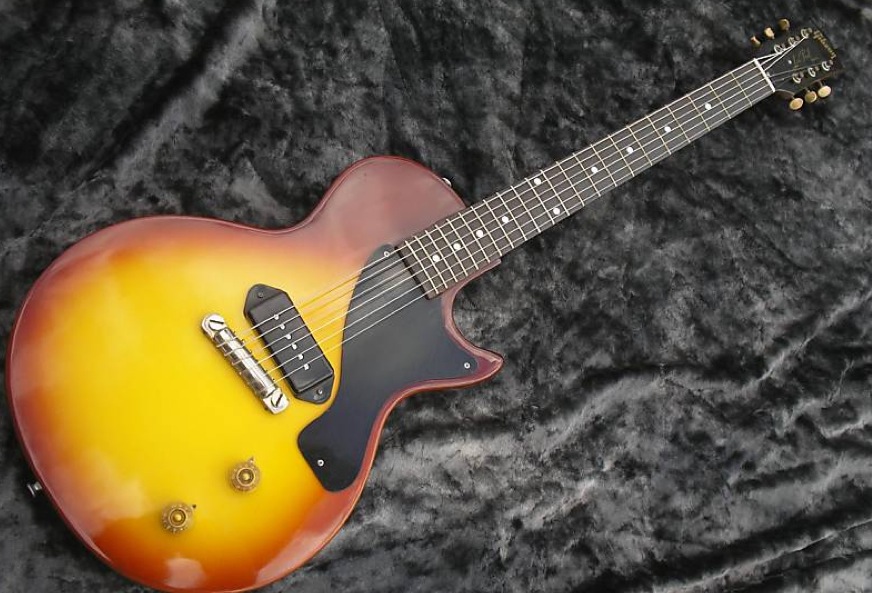
Gibson Les Paul Junior. Photo by Detroit Gorilla. Licensed under CC BY 2.0. Via Wikimedia Commons. Gibson
Les Paul Junior
1954
One pickup, two knobs, no switch. Built for beginners. Mountain and the New York Dolls never needed more.
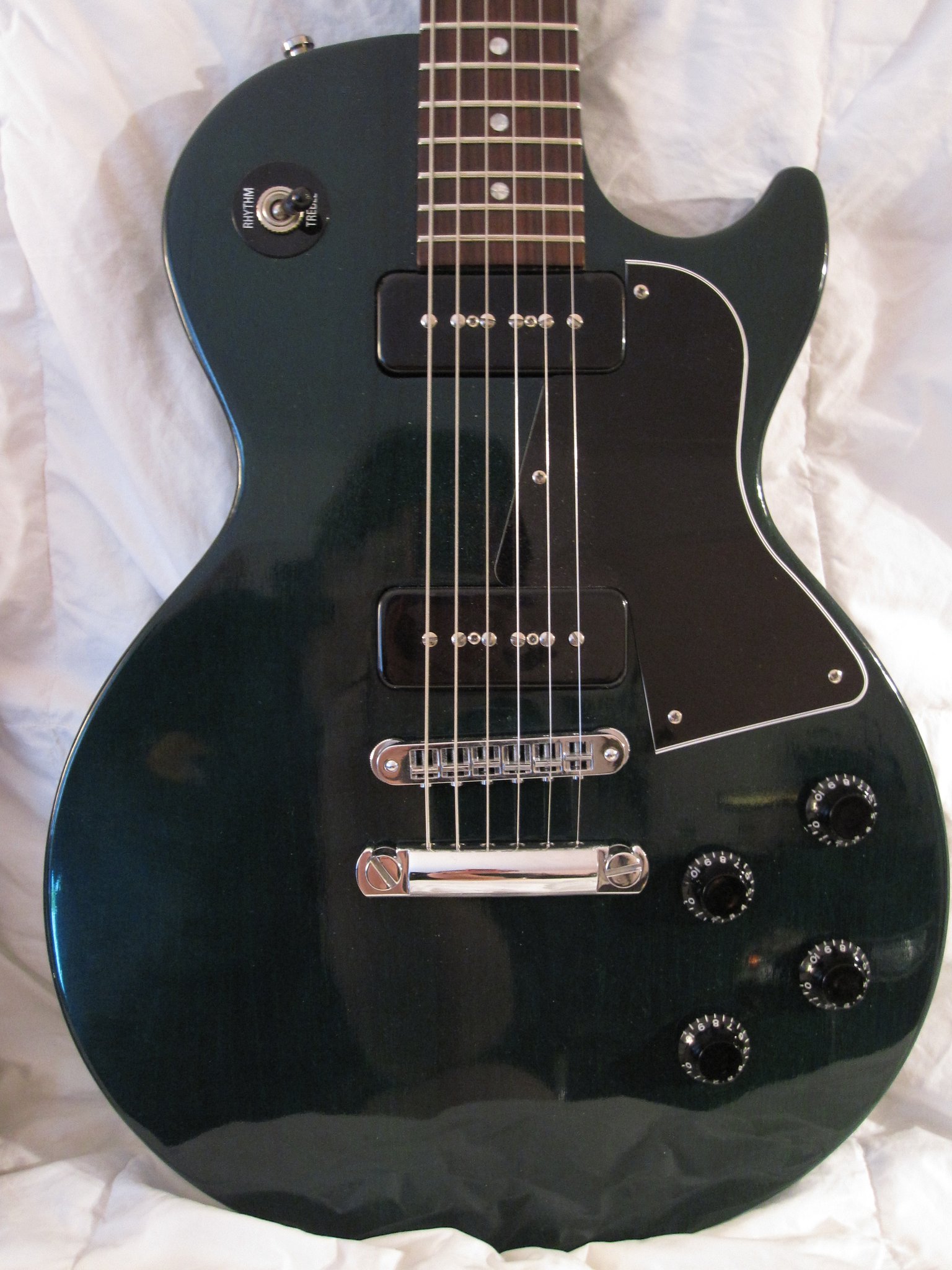
Gibson Les Paul Special 1998 Spearmint. Photo by A Gibson Man. Licensed under CC BY-SA 3.0. Via Wikimedia Commons. Gibson
Les Paul Special
1955
Dan Armstrong modified it. Marc Bolan traded it in. Bob Marley bought it and made it his.
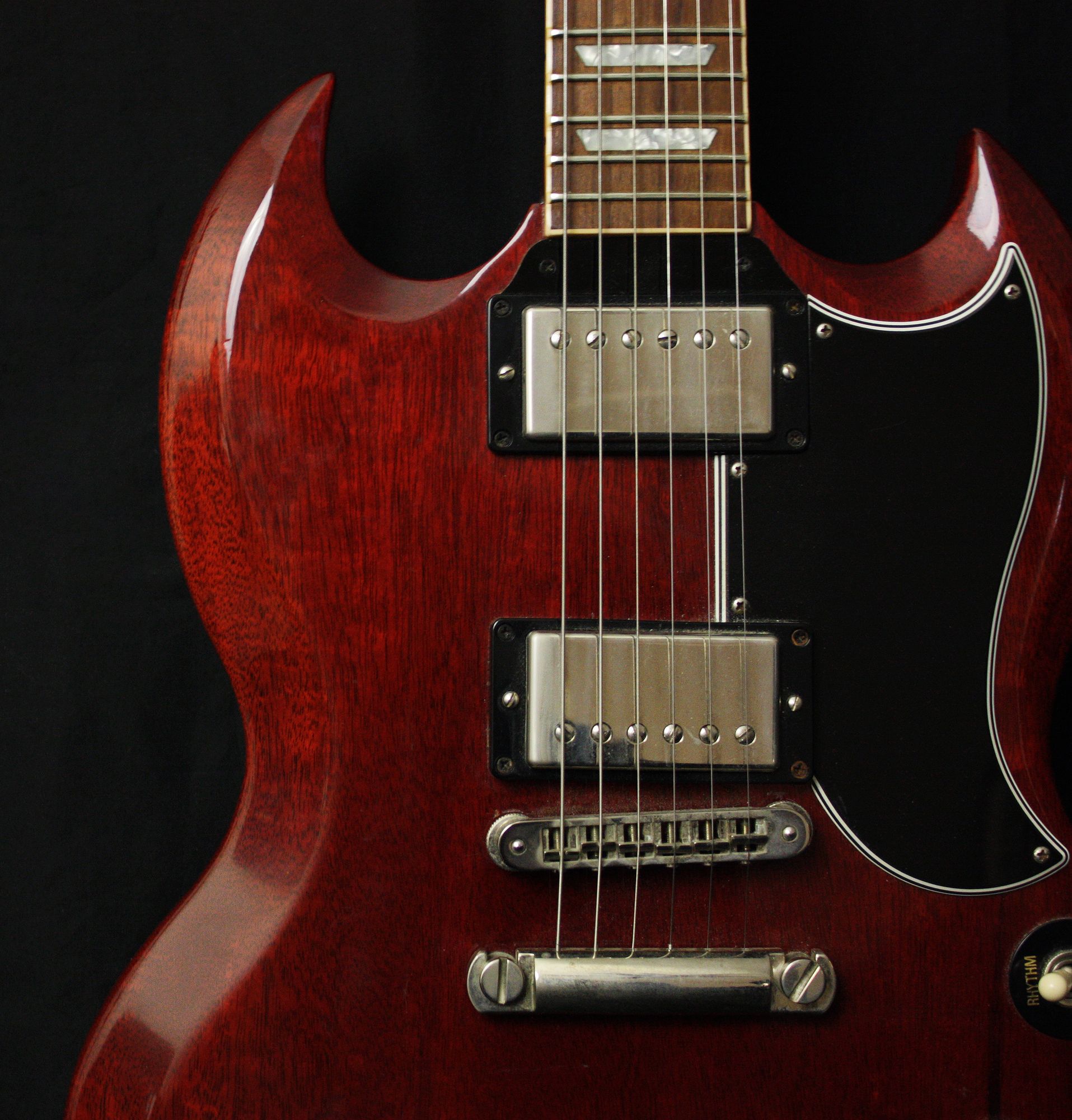
Gibson SG Standard ’61 Reissue, photographed 18 March 2010. Photo by John Tuggle. Licensed under CC BY 2.0. Via Wikimedia Commons. Gibson
SG
1961
Gibson has never stopped making SGs. Angus Young has lost count of his. He still only means one.