Hagstrom
Viking
Elvis needed something flashy for the Comeback Special. A session man had a Swedish guitar in his trunk.
NBC, Burbank, summer 1968. Elvis Presley is taping a television special, and the producer asks the studio players for something flashy for him to hold. Al Casey, one of the session guitarists, says he has a guitar in the trunk of his car. It’s a cherry-red Hagstrom Viking II, and it came from Sweden.
- Introduced
- 1965
- Type
- Thinline semi-hollow electric
- Class
- Production
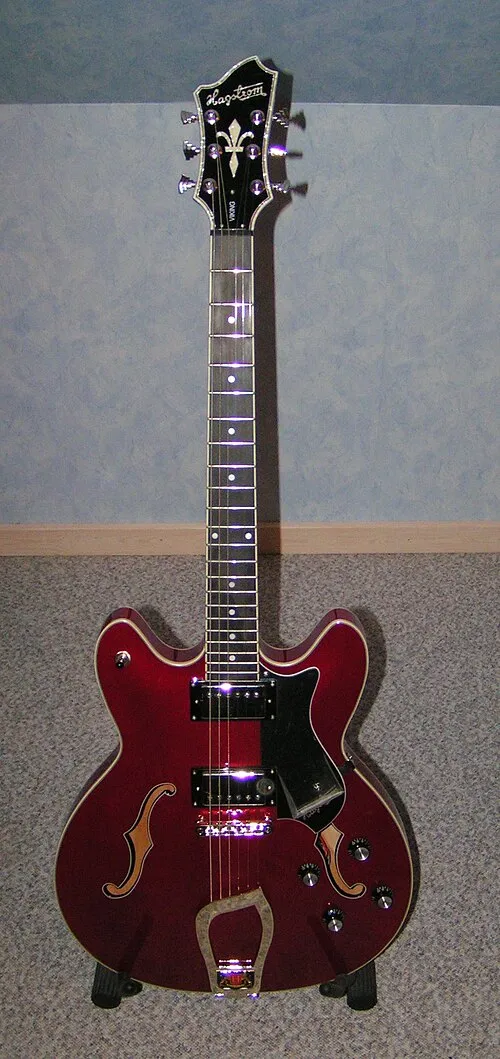
The short version
1958
Hagstrom goes electric
The Swedish company starts building electric guitars.
1965
The Viking arrives
A Swedish thinline with two single-coils, a bolt-on neck, and nothing inside but air.
1967
Frank Zappa, ad man
Zappa’s New York company makes three print ads and a radio spot for Hagstrom, starring Frank.
1968
The Comeback Special
Elvis plays Al Casey’s borrowed red Viking II on NBC. The next year it’s on an album cover.
1978
A block, at last
The Viking finally gets a maple center block like a Gibson ES. It’s dropped in 1979.
1983
Sweden closes
Hagstrom’s Swedish plant shuts down.
2004
Back again
Hagstrom returns internationally, Viking included. Some date the relaunch to 2005.
Side A
A1
Something flashy, from the trunk
Most guitars get famous the slow way. Somebody plays one for years, makes records on it, wears the finish down to the wood. The most famous Hagstrom Viking skipped all of that. It got famous because it happened to be in the right car.
Summer 1968, NBC in Burbank. Elvis is taping a special, and the producer goes to the studio players and asks for something flashy for him to hold. Al Casey, a session guitarist, has a cherry-red Hagstrom Viking II in his trunk. He offers it.
That was the audition. Elvis played it in the opening and closing segments and in the stand-up performances, taped on 29 June, through Casey’s own Benson amp. The next year the same guitar was on the cover of From Elvis in Memphis. Not a Gibson. Not a Gretsch. A Swedish guitar that belonged to somebody else, fetched from a parked car.
A2
Sweden’s idea of a 335
Hagstrom had been making electric guitars since 1958. In 1965 the Viking arrived, and Selmer’s 1965/66 catalogue sold it as a guitar “designed to meet the increasing demand for the electro-acoustic sound.”
From across the room it looks like an ES-335 or a Guild Starfire. Up close it’s built like neither. The neck bolts on. The body is completely hollow, with no maple block down the middle. Two single-coil pickups, rosewood with dots, a headstock that looks more Fender than Gibson. Honestly, it has more in common with a Fender Coronado or a Harmony H72 than with anything from Kalamazoo.
What that means in your hands: a light, airy, lively guitar that talks back when you turn up. No block means more air in the box, and more air means it will howl at you if you stand too close to the amp. Some people call that a flaw. Some people call it the point.
From across the room it’s a 335. Pick it up and it’s something else entirely.
And Hagstrom wasn’t some garage outfit. In 1966, its peak year, the company shipped 16,660 electric guitars and 5,800 basses. The Viking was one line in a very busy Swedish factory.
A3
Frank Zappa, spokesman
In 1967 Hagstrom got itself the least likely pitchman in rock. Frank Zappa’s New York company, Nifty Tough & Bitchin’, made three print ads and a radio spot for them, with Frank as the subject. The ads had titles like “Long and Slippery” and “Folk Rock is a Drag,” and they ran in Hit Parader and Song Hits. Which Viking, if any, Zappa played on a record is a different question, and nobody has answered it.
That same year came the fancy one. The Viking II Deluxe had gold hardware, bound f-holes, an ebony board with block inlays, and an optional Bigsby. It was a short run, maybe a thousand Viking IIs in all, and it’s the kind of guitar Casey had in his trunk. There was a 12-string Viking in 1967 too, one batch of about 650.
Flip the record · By the numbers
9,241
Roughly how many Vikings shipped from 1965 to 1972. A rough table, not a factory ledger.
~1,000
Viking IIs, the short 1967–68 run that Casey’s borrowed guitar came from.
410
Vikings in the last Swedish run, 1978–79, the first ones with a center block.
24.75"
Scale length. The Super Viking sister stretches it to 25.5".
Side B
B1
Thirteen years to get the middle
The ’70s were busy. In 1972 the Viking got humbuckers and the “duck’s foot” headstock that Hagstrom had already put on the Swede. Around 1978 the name went back to plain Viking, and, for the first time, the body got a maple center block, like the Gibson ES guitars it had been compared to since 1965.
So after thirteen years of looking like a 335, the Viking finally got a 335’s insides. It lasted about another year. The Viking was dropped in 1979, and Hagstrom’s Swedish plant closed in 1983.
B2
Back from the cold
Hagstrom came back. The company dates its international return to 2004; others say 2005. The new Viking is built in China, not Sweden, and it has everything the 1965 guitar didn’t: a glued-in neck, a solid center block, and humbuckers. It still has the 24.75" scale and the two f-holes.
Dweezil Zappa played one in 2008, while he was getting Zappa Plays Zappa together. His verdict was short: “The Viking feels amazing, and it has a great natural sustain.” In 2025, when Hagstrom marked its hundredth year, it counted sixty years of Vikings.
Sixty years, two countries, thousands of guitars. The one people remember is the one that happened to be in Al Casey’s trunk when somebody asked for something flashy.
Put this on
You’ve read about it. Now hear it. Here’s what this guitar sounds like, and what to listen for.
Elvis (the ’68 Comeback Special)
Al Casey’s red Viking II is the guitar in the opening and closing segments and the stand-up performances, taped 29 June 1968, running through Casey’s own amp.
Watch it on YouTube (opens in a new tab)
The cast
The people, and the specific guitars, that made the legend.
1968
Elvis Presley
Al Casey’s cherry-red Viking II
Borrowed for the NBC special, the opening and closing segments and the stand-up numbers. It’s on the cover of From Elvis in Memphis too.
1968
Al Casey
The Viking II in his trunk
Session guitarist. When the producer asked for something flashy, he offered the Hagstrom, and his Benson amp with it.
1967
Frank Zappa
Hagstrom’s 1967 ad campaign
His New York company made the ads and put Frank in them. Which Viking he played on record, if any, nobody’s published.
2008
Dweezil Zappa
Viking
Played one while getting Zappa Plays Zappa ready. “The Viking feels amazing, and it has a great natural sustain.”
Liner notes
Specs, construction, rarity, value, and every source we used.
Two f-holes, a 24.75-inch neck, and a laminated maple hollow — Hagstrom’s Viking, not an ES-335 and not the Super Viking long-scale.
- Body
- Ply maple, double-cutaway, contoured top, solid center-sustain-block
- Neck
- Canadian hard maple, set, long mortise and tenon
- Fingerboard
- Resinator, 15" radius, 22 medium jumbo, block inlays. Mix flagged.
- Scale
- 24.75" (628 mm). Mix flagged.
- Pickups
- Two Hagstrom HJ-50 humbuckers
- Hardware
- Long Travel Tune-O-Matic, Hagstrom trapeze tailpiece, Hagstrom Design 18:1
- Electronics
- Two volume, two tone, 3-way toggle
- Finish
- Gloss; Black, White, Transparent Cherry, Tobacco Burst typical
- Nut
- GraphTech Black Tusq XL, 43 mm. Mix flagged.
Open the full research fileConstruction details, the complete player record, production numbers, dated value estimates, and sources
Current typical = Hagstrom Viking (hagstromguitars.com, fetched 2 September 2026). Factory mixed inch/mm flagged; no millimetres invented for the 15" radius. No USD list on that page this pass. Musician’s Friend Tobacco Sunburst $1,249.99 (from $1,599.99). Adorama Black Gloss the same. Optional case C-55. Super Viking is the 25.5" / 648 mm sister — same plate, not a second slug. ’67 Viking II is the bolt-on, six-in-line, H-52 mini-humbucker recreation (24.56" / 624 mm) — sister, not this table. Deluxe, Tremar, 12-string, baritone, and the 2025 100th Anniversary Edition stay on this name. Swede is a solidbody. Jimmy is D’Aquisto’s carved hollow. No Gibson SKU lives here.
Construction
The job was a Swedish hollow for the electro-acoustic sound Selmer was already selling Gibson to cover. Hagstrom’s 67 Viking II page: the Viking “saw the first light of day back in 1965.” Guitar.com (Justin Beckner, 16 January 2024) dates Elvis’s 1968 Comeback Special “just three years after the Hagstrom Viking’s debut.” The 2025 factory anniversary page calls the same span sixty years of Viking. This plate starts in 1965.
Selmer’s 1965/66 catalogue, quoted by Vintage Guitar and Bass: a new guitar “designed to meet the increasing demand for the electro-acoustic sound,” two high-gain pickups, a slim low-action neck, a modern head. Vintage Guitar and Bass puts the original V-1 on 1965–1972: two single-coils, 24 3/4" scale, bound body 18 1/2" × 16 1/4" × 1 3/4", rosewood dots, a Fender-style headstock, optional Hagstrom Bigsby VB-1. In the US the name often sat as V-1. The same site is blunt about the mash: it looks like an ES-335 or a Guild Starfire and is built like neither. Bolt-on. Fully hollow — no central block. Closer to a Fender Coronado or a Harmony H72, both arriving around 1965/66, than to a Gibson with a maple stick through the middle.
Not an ES-335 (gibson-es-335). Different factory, different joint, different hollow. Not Super Viking. Factory overview: Super Viking takes the long 25.5" / 648 mm scale “like its solidbody sister Super Swede.” This table is 24.75". Not the ’67 Viking II — bolt-on, six-in-line, H-52 mini-humbuckers, 24.56" (624 mm). The Elvis silhouette lives there as a recreation, not this set-neck HJ-50 table. Not Swede. Not Jimmy. Not the Viking bass (Concord in the US). No Gibson SKU.
1967–68. Viking II Deluxe: gold, bound f-holes, ebony with blocks, optional VB-2 Bigsby, flamed maple and spruce (Vintage Guitar and Bass). Same two single-coils. Short run. That is the guitar Al Casey lent Elvis, not the V-1 dots-and-chrome.
1972. Viking I N: two humbuckers, a three-way tone switch, the “duck’s foot” headstock already on the Swede, Van Ghent tuners. Vintage Guitar (Michael Wright, 7 January 2010): D’Aquisto’s headstock went onto the Swede and onto Hagstrom’s Viking thinlines in the early ’70s. Under Ampeg in the US it wore HG802 or Scandia. Schaller tuners at the end of 1975.
1978–79. The name went back to Viking. Vintage Guitar and Bass: humbuckers kept, fleur-de-lys inlay, and — first time on this silhouette — “the central maple block of the Gibson ES guitars.” Wright: in ’78 the double-cutaway Viking was also tagged as D’Aquisto legacy; those Jimmy Vikings lasted through ’79. Discontinued 1979. Swedish plant closed 1983 (Guitar.com).
The living guitar is the post-return Viking. Hagstrom dates the international return 2004. Guitar.com dates the relaunch 2005. Keep both. Current Viking: laminated maple, a solid center-sustain-block the 1965 guitar did not have, a set maple neck with a long mortise-and-tenon the original V-1 did not have, Resinator, H-Expander, HJ-50s, trapeze, 24.75" (628 mm). That is this table. China, not Älvdalen.
Classic vs current: 1965 V-1 — bolt-on, fully hollow, two single-coils, Fender-style head — against the 2026 Viking: set neck, center-sustain-block, HJ-50s, Resinator, dealer street $1,249.99.
Players
Do not recruit Swede, H-II, Kent, or H8 players as if they were this guitar. Pat Smear is H-II / Super Swede / the 2013 signature. Benny Andersson and Björn Ulvaeus are Swede. Noel Redding is the H8 bass on Axis: Bold as Love. David Bowie’s 1974 Hagstrom in Guitar.com is a Kent.
Elvis Presley. The named object. A cherry-red Viking II, Al Casey’s, borrowed for the NBC Elvis Comeback Special, 1968. Scotty Moore’s site quotes Casey: the producer asked the studio players for something flashy; Casey had the Hagstrom in the trunk and offered it. Elvis used it in the opening and closing segments and for the stand-up performances taped 29 June 1968 at NBC Burbank, through Casey’s Benson 200. Guitar Player (Jackson Maxwell, 31 March 2021): the same guitar sold at GWS for $625,000, starting bid $250,000, with notarized letters from Casey, Hal Blaine, and Bones Howe. Maxwell: it is also the guitar on the cover of From Elvis in Memphis (1969). That lot is unique. It is not a street Viking II.
Frank Zappa. Hagstrom’s archived Zappa page: in 1967 his New York shop Nifty Tough & Bitchin’ cut three print ads — “Nifty,” “Long and Slippery,” “Folk Rock is a Drag” — and a radio spot, Frank as the subject, in Hit Parader and Song Hits. The campaign is the sourced credit. A named studio or album Viking is unpublished here.
Dweezil Zappa. Same archive, 2008, preparing Zappa Plays Zappa: “The Viking feels amazing, and it has a great natural sustain.” Named current player of this silhouette. Not the 1968 Casey guitar.
Also known to play stays empty this pass. None invented.
Rarity
The current Viking, Super Viking, ’67 Viking II, Deluxe, Tremar, 12-string, and baritone are regular production. Hagstrom does not publish Viking unit totals. None invented.
Vintage Guitar and Bass prints shipping data as “roughly”: Viking 1965–1972 9,241; Viking 12-string 1967 651 (one batch); Viking II 1967–1968 1,000; Viking I N 1972–1975 1,845; Viking 1978–1979 410. Their table, labeled roughly, not a factory ledger. Keep it attributed.
Serials date a guitar, they don’t count a factory. Run numbers overlap years; that is why a first-year count is unknown, not the chapter. Guitar.com’s 1960s company figure — about 7,000 guitars a year — is all models, not Viking. 1966 peak, same piece: 16,660 electrics and 5,800 basses.
The thin vintage window is the 1967–68 Viking II (1,000) and the last Swedish 1978–79 block-body run (410). Casey’s red II is unique. Current Chinese Vikings are not scarce.
Value
Informal estimate, 2 September 2026. Not an appraisal.
Ask vs sold labeled. Celebrity lots are not-comps. No invented medians or factory counts. Hagstrom’s Viking product page did not print a USD MAP this pass.
New street. Musician’s Friend Tobacco Sunburst $1,249.99 (from $1,599.99). Adorama Black Gloss the same $1,249.99 / $1,599.99. guitar guitar (UK) Wild Cherry Transparent £659 (from £895). Super Viking and ’67 Viking II streets are adjacent SKUs, not this table.
Used modern. Named asks this pass, not hammers: Musician’s Friend used Viking Black $549.99 and $559.99; used Viking Deluxe maple $649.99. Reverb mint Wild Cherry Transparent $812.49 (from $1,249.99). A Reverb Price Guide widget on that listing printed $331–$386 estimated used — labeled widget, not a sold median computed here.
Vintage / collectible. Named asks, not hammers: c.1965 sunburst, The Bonfires Vintage, $1,075.50 (from $1,195); 1967 Sweden, $1,294.36. Do not average those asks. First-year V-1s and short-run Viking IIs sit at the scarce end of the same slug, not a separate SKU.
The Casey/Elvis Viking II at $625,000 (GWS, 2021) is one object. Not a comp.
See also
- gibson-es-335 — Gibson’s 1958 thinline with a maple center block; the original Viking did not have one
- guild-starfire — another 1960s hollow, Hoboken single-cut, not this Swedish double-cut
- gretsch-6120 — another hollow with a different job; not a Viking
Sources
- Hagstrom, Viking — ply maple; semi-hollow; center-sustain-block; set Canadian hard maple; H-Expander; Resinator; 24.75" (628 mm); 15"; block inlays; 22 medium jumbo; GraphTech Black Tusq XL 43 mm; 2× HJ-50; Long Travel Tune-O-Matic; trapeze; 18:1; fetched 2 September 2026
- Hagstrom, Viking overview — Super Viking 25.5" / 648 mm; Deluxe, 12-string, baritone; 100th anniversary / 60 years of Viking (2025)
- Hagstrom, ’67 Viking II — Viking first light 1965; production to 1979; international return 2004; bolt-on; 24.56" (624 mm); H-52 mini-humbuckers; 40 mm nut
- Hagstrom, our history — electrics from 1958; Viking among the semi-acoustic models
- Vintage Guitar and Bass, Hagstrom Viking — V-1 1965–1972 spec; body 18 1/2" × 16 1/4" × 1 3/4"; bolt-on, no central block vs ES-335; Viking II 1967–68; V-1N 1972–75; 1978–79 center block; roughly 9241 / 651 / 1000 / 1845 / 410; Selmer 1965/66 catalogue quote
- Guitar.com, Justin Beckner, A Brief History of Hagstrom Guitars, 16 January 2024 — electrics 1958; Viking debut three years before 1968 Elvis; 1960s ~7,000/year; 1966 peak 16,660 electrics / 5,800 basses; Swedish production ended 1983; relaunch 2005
- Vintage Guitar, Michael Wright, 1976 Hagstrom Jimmy (Wayback, 7 January 2010) — D’Aquisto headstock on early-’70s Viking thinlines; 1978 Jimmy Viking through ’79
- Guitar Player, Jackson Maxwell, Elvis Presley’s Comeback Special Hagstrom Viking II sells for $625,000, 31 March 2021 — GWS $625,000; start $250,000; Casey / Blaine / Howe letters; From Elvis in Memphis cover
- Scotty Moore, Elvis 1968 Hagstrom Viking II — Casey quote; 29 June 1968 stand-up; Benson 200
- Hagstrom archive, Zappa / Nifty Tough & Bitchin’ — 1967 ads; Dweezil 2008 Viking quote
- Musician’s Friend, Hagstrom Viking Semi-Hollowbody — $1,249.99; from $1,599.99; HJ-50; 24.75"; set maple; Resinator; fetched 2 September 2026
- Adorama, Hagstrom Viking Black Gloss VIK-BLK — $1,249.99 / $1,599.99
- guitar guitar, Hagstrom Viking — Wild Cherry Transparent £659 from £895
- Reverb, mint Hagstrom Viking Wild Cherry Transparent — ask $812.49 from $1,249.99; Price Guide widget $331–$386
Keep digging
Guitars this one gets compared to, confused with, or descended from.

Photograph of a vintage 1960 Gibson ES-335TD. Photo by Lightburst. Licensed under CC BY-SA 4.0. Via Wikimedia Commons. Gibson
ES-335
1958
Larry Carlton played three 335s off a shop wall, unplugged, paid $850 for one, and became Mr. 335.
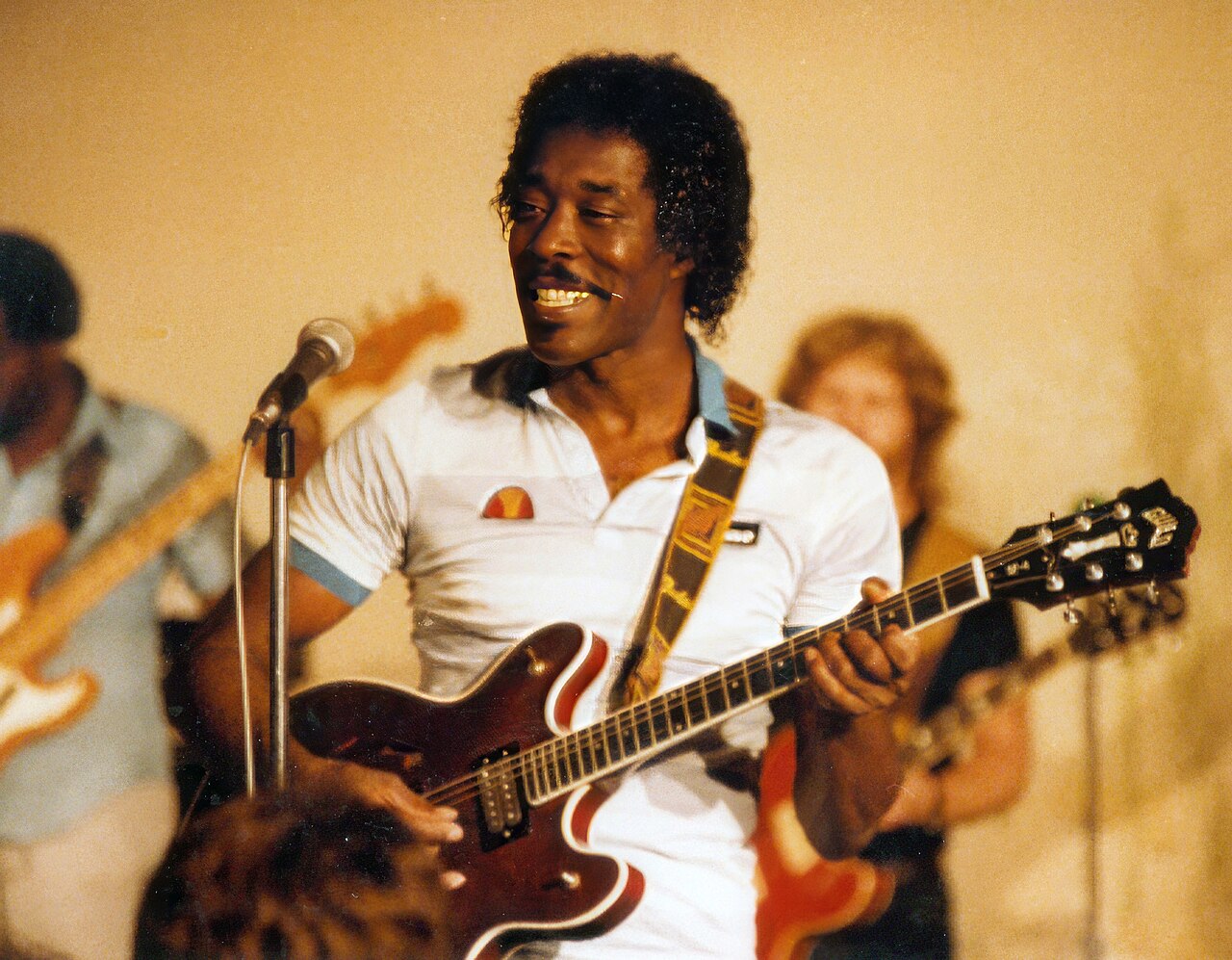
Photo: Bubba73 / Wikimedia Commons / CC BY-SA 3.0 Guild
Starfire
1960
Before they were the Grateful Dead, they were the Warlocks, and Jerry Garcia was playing a Guild Starfire.
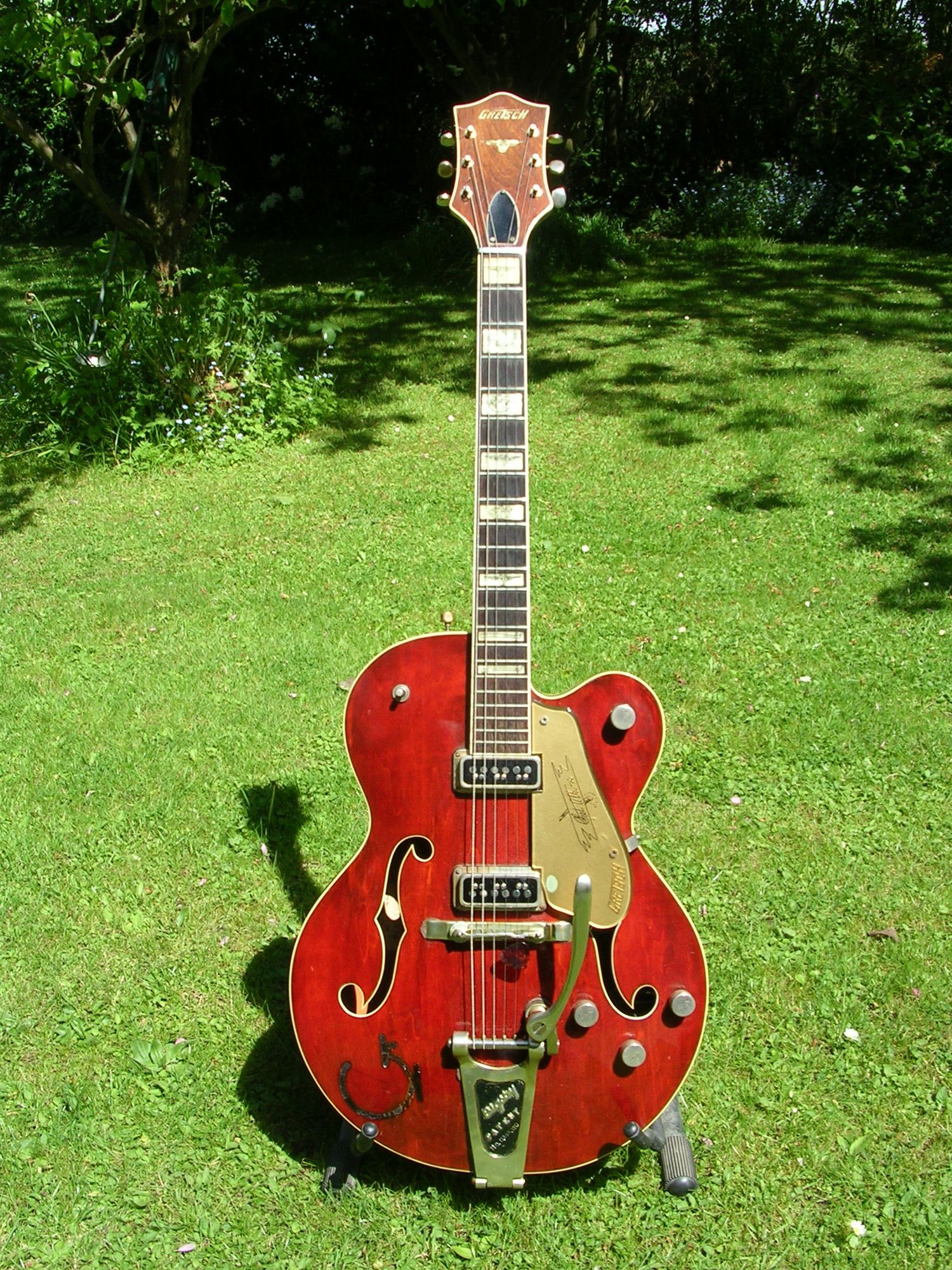
Gretsch 6120 G-Brand 1955. Photo by Francis pullen. Public domain (PD-self). Via Wikimedia Commons. Gretsch
6120
1955
Joe Walsh gave Pete Townshend one. Steve Miller gave Brian Setzer one. Chet Atkins just lent it his name.