 Guitaripedia
Hayman
3030
Jim Burns drew it, Dallas Arbiter named it after a drum, and the men who built it outlasted both.
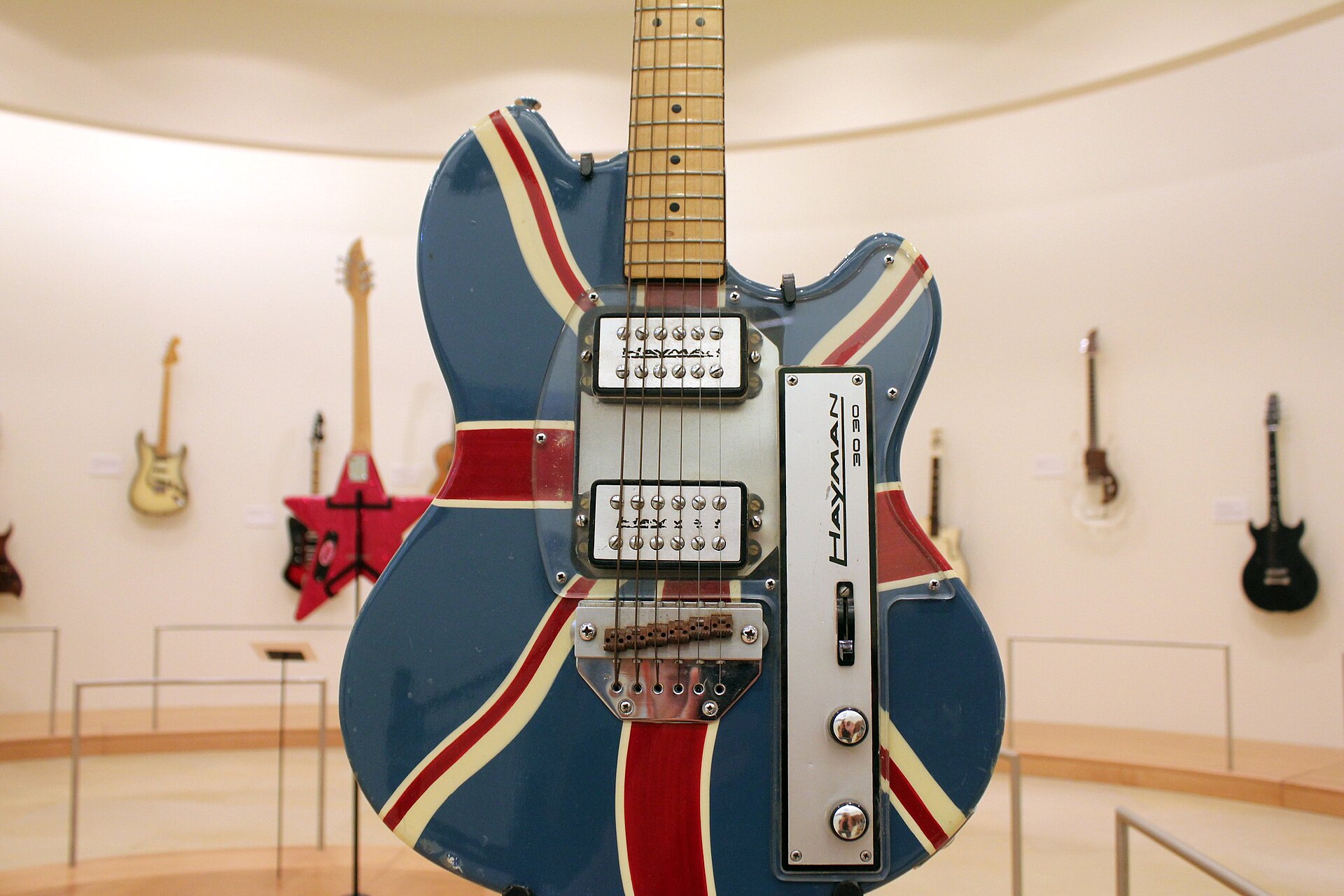
London, the early 1970s. Dallas Arbiter puts the name off its drums on a new line of guitars designed by Jim Burns, and the 3030 is the plain two-pickup solid. It's a Hayman, not a Burns, and the people who built it went on to make Shergolds.
- Introduced
- 1971
- Type
- Solidbody electric
- Class
- Production
The short version
1965
Burns sells up
Jim Burns sells his company to Baldwin, and for three years he can't put his name on a guitar.
1968
The Shergold bench
Jack Golder and Norman Houlder start making necks and bodies for other people's brands. Hayman is the first.
1969
The invitation
Ivor Arbiter asks Burns to design a range under a name Dallas already owns, with Bob Pearson.
1970
1010 and 2020
The first Haymans, a three-pickup solid and a semi-solid.
1971
The 3030
The simpler solid, two pickups and an obeche body. In September Burns leaves Dallas Arbiter.
1973
Humbuckers
The 3030H gets humbuckers. One account has Dallas Arbiter folding the same year.
1975
One of the last
A black 3030H completed on 9 March is called one of the very last Haymans assembled.
Side A
A1
Somebody else's name
In 1965 Jim Burns sold his guitar company to Baldwin. For the next three years he couldn't put his own name on a guitar.
In 1969 Ivor Arbiter of Dallas Arbiter came to him with an offer. Design a whole range, with Bob Pearson, who'd come over from Vox. It still wouldn't say Burns. It would go out under a name Dallas already owned.
The name was Hayman, and it came off the drums. Arbiter's drum line had been called George Hayman, after a man at the Shoeburyness factory whose surname was actually Haymon, and maybe with a nod to George Way of Camco too. Then it got shortened. The guitars took the short version.
That's how Jim Burns ended up designing guitars for a drum brand.
Not every idea made it. Pearson had been working with John Lennon on a see-through perspex guitar, based on Lennon's customized Epiphone. When Dan Armstrong's guitar came out, the plan was dropped.
A2
Squint and it's a Tele
The first Haymans came out in 1970: the 1010, a solid with three Super Flux single-coils, and the 2020, a semi-solid with two. The 3030 came in 1971, along with the 4040 bass.
The 3030 is a simplified 1010. Two pickups instead of three, one volume, one tone, a three-way switch instead of the 1010's odd one-pickup-per-position setup, and an obeche body. It has a 25½-inch scale and 21 frets on maple. It listed at £160. The 1010 was £164. Four quid bought you a third pickup and a stranger switch.
The shape is very British, and it was meant to be. One historian calls it a Burns Vista Sonic crossed with a Telecaster. Another says squint at it and a Tele comes to mind. It goes back to a semi-solid prototype Burns built between 1966 and 1968, with a humped shoulder and its controls on a little Tele-style plate. The early ones came in metallic ivory, burgundy, or gold, and a round medallion in the headstock said Hayman. That medallion tends to fall out.
A3
The old bench
The headstock said Hayman. The people building it had done this before. Jack Golder did the woodwork and Norman Houlder made the truss rods. Re-An supplied the fittings, Re-An's Super Flux pickups among them, and Derek Adams did the finishing. Golder and Houlder had a business going since 1968, making necks and bodies for other people's brands, and Hayman was the first of them.
One historian calls the whole range "Burns by another name." He means the hands and the habits. The maker on the guitar is Hayman, and a Burns Bison or Marvin is a different guitar from the company Jim had sold.
There's one more thing that turns up in some of them: a little wooden box on springs inside the body, behind the bridge, meant to give the notes a springy sustain. It's called the Vibrosonic chamber. Nobody's published how many 3030s got one.
Flip the record · By the numbers
£160
List price for a new 3030
£4
What you saved by skipping the three-pickup 1010
25½"
Scale length, 21 frets on a maple board
2
Single-coil pickups, one volume, one tone, a three-way switch
Side B
B1
Burns walks
Burns didn't stay. He and Pearson split in September 1971, the 3030's first year, and Burns left Dallas Arbiter. The launch year was his. Everything after it was Pearson's watch.
In 1973 the line got Re-An humbuckers, and the solid became the 3030H, with black binding on the maple board and a smoked plexiglass pickguard. One writer who's played one calls the humbuckers clean and a bit restrained, and says the guitar doesn't feel like an American solid.
How long the Hayman line lasted after that is a fight. One account says the 3030H was made for less than a year and that Dallas Arbiter folded in 1973. But a black 3030H was completed on 9 March 1975 and is called one of the very last Haymans ever assembled. There was a warehouse fire around Christmas 1974. Somewhere between 1973 and early 1975, it stopped.
How many were made isn't recorded either. The man who catalogued the range just says many, and that it was popular.
B2
A plug where the badge was
When Dallas went down, Pearson, Golder, and Houlder kept building, now under the name Shergold.
Bernard Sumner played a late-'70s Masquerader in Joy Division. That's a Shergold, not a 3030, and any listing that hangs Joy Division on a Hayman has the wrong guitar.
But the early Masqueraders, from 1975 and early 1976, were built from what was left in the shop: the waisted Hayman neck, the Hayman three-piece bridge. On some of them there's a plug in the headstock, filling the hole where a Hayman medallion was supposed to go.
Put this on
You’ve read about it. Now hear it. Here’s what this guitar sounds like, and what to listen for.
Song 2 (video)
The Shergold fan site says Graham Coxon's black guitar here is a 3030, the one that bounces across the floor at the end. Another gear site files the same video once as a 3030 and once as a 1010, so the picture isn't settled, and the studio track isn't tied to either.
Watch it on YouTube (opens in a new tab)
The cast
The people, and the specific guitars, that made the legend.
1969–71
Jim Burns
Designer of the Hayman range
Drew the line for Dallas Arbiter under the Hayman name, then left in September 1971.
1969
Bob Pearson
Ran the line after Burns
Late of Vox. In charge once Burns was gone, then making Shergolds with Golder and Houlder.
1970
Jack Golder
Woodwork
The old Burns hand who cut the bodies and necks. After Dallas, he made Shergolds.
1970
Norman Houlder
Truss rods
Built the truss rods. Some histories spell him Holder.
1997
Graham Coxon
A black Hayman, 3030 or 1010 depending on who you ask
Throws it aside at the end of the "Song 2" video. The sources don't agree on which Hayman it is.
Liner notes
Specs, construction, rarity, value, and every source we used.
Two Super Flux coils in an obeche solid — Hayman’s 3030, the simpler guitar Dallas Arbiter added beside the 1010, not a Burns.
- Body
- Solid obeche (Paul Day; Michael Wright). Day: a Burns Vista Sonic crossed with a Telecaster. Wright: squint, and a Tele comes to mind
- Neck
- Maple. shergold.co.uk: the earliest Masqueraders were built on Hayman necks. A four-bolt plate is what dealer sheets print (Mike & Mike’s, a 1974). Day says “bolt-on” in so many words only for the 4040 bass
- Fingerboard
- Maple, 21 frets (Day). Black binding on the 3030H Wright describes. A zero fret is on measured guitars, not in Day’s list
- Scale
- 25½" (Day). No millimetres in that list. One German listing also prints 25 1/2"
- Pickups
- Two Re-An single-coils. Day writes Superflux on this model and Super Flux on the 1010. blackguitars: Super-Flux, 1970–73. The 3030H uses Re-An humbuckers (Wright)
- Hardware
- Strings through the body (Wright, on the 3030H, and on the guitar it followed). Grover machines were standard on the range except the Comet (Day; blackguitars). No vibrato is described
- Electronics
- One volume, one tone, one 3-way (Day). He calls that conventional, against the 1010’s one-pickup-per-setting switch. The middle position is not printed
- Finish
- Day: as the 1010 — metallic ivory, burgundy, or gold. Other finishes later. Black, red, and sunburst 3030Hs are in the serial notes (blackguitars)
- Nut
- Unpublished in Day. 1 5/8" at a zero fret on Mike & Mike’s 1974 and on one Cream City example. BluesTONE’s 1972 listing prints 1.625". A UK shop sheet prints 1.65"
Open the full research fileConstruction details, the complete player record, production numbers, dated value estimates, and sources
The specs above are Day’s 1971–73 six-string, two Super Flux single-coils. No current model carries the name. The 3030H is this solid with Re-An humbuckers from 1973. blackguitars notes a 3030H twelve-string in a 1984 German retrospective. That is twelve strings. The 1010, the 2020, and the 4040 bass are different Haymans.
Construction
The job was a solid Dallas Arbiter could put its own name on. Jim Burns sold Burns to Baldwin in 1965, and for three years he could not put his own name on a guitar (Wright). The Hayman line is a different fact. In 1969 Ivor Arbiter asked him to design a range under a name Dallas already owned, with Bob Pearson, late of Vox. Day’s extract is the invitation. Wright tells the same scene and spells the surname Arbitor.
The banner was already on Arbiter’s drums. haymandrums.co.uk: first George Hayman, after a man at the Shoeburyness factory whose surname was actually Haymon, possibly also a nod to George Way of Camco, then shortened to Hayman. The guitars took the short name. They are not the drums, and the drum’s Vibrasonic interior coating is not this guitar’s chamber.
Pearson had also been at work on a perspex-bodied guitar with John Lennon (Day). Wright: a plexiglass prototype based on Lennon’s customized Epiphone, plans dropped when Dan Armstrong’s guitar appeared. That object never became the catalog. It is not a 3030.
The shape they did build is British on purpose. Day: a Burns Vista Sonic crossed with a Fender Telecaster, still very British, with a family likeness to the earlier Burns models. Wright: it looked like an Ormston prototype Burns had built between 1966 and 1968, a semi-solid with a humped shoulder, an f-hole, a black-bound maple board, two single-coils, strings through the body, and controls on a little Tele-style plate. Squint, he says, and a Tele comes to mind. The prototype is the ancestor of the outline. It is not this model. The 2020 is the semi-acoustic in the new range. The 3030 is the solid.
The first Haymans are 1970. Wright: the solid 1010, three Super Flux single-coils, and the semi-solid 2020, two of them, both mahogany, maple boards. Day’s dates match: 1010 and 2020, 1970–73. The 3030 follows in 1971, and the 4040 bass with it (Wright). Day: the 3030 “appeared slightly later,” a simplified 1010, two pickups, conventional circuitry, an obeche body, the other fittings carried over. Scale 25½", 21 frets. List £160. The 1010 was £164, the 2020 £195, the bass £175. Four pounds under the three-pickup solid is the whole price story Day prints. Not a student guitar. A shorter loom.
Who cut it is the old Burns bench, under a new brand. Woodwork by Jack Golder. The truss rod by Norman Houlder — Robin Millar, Sound International, 1980, and Day’s extract on blackguitars. Day’s extract on shergold.co.uk, Wright, and the Blue Book spell it Holder. Re-An supplied the fittings. Derek Adams finished them (Day). Millar: Shergold Ltd was underway in 1968, making necks and bodies for other people’s names, and Hayman was the first of those names. Shergold’s own history says the same year, London, work for Burns, Rosetti, and Barnes & Mullins. The 3030 is Dallas Arbiter’s guitar, built on that bench. The headstock says Hayman.
Day calls the whole range “Burns by another name,” and he is talking about the hands and the habits, not the logo. The maker on the plate is Hayman. A Burns Bison and a Burns Marvin are the previous company. Shergold’s history notes a 1974 Burns UK range built on Shergold wood. That is Burns’s name again, on a different guitar. None of them is a 3030.
Burns did not stay for the whole run. Day: he and Pearson split in September 1971, and Burns left Dallas Arbiter. Wright: the fall of 1971, Pearson left in charge. So the launch year is Burns’s. The guitars that follow it are Pearson’s watch. In 1973 the line added Re-An humbuckers (Wright; Day says later versions of the original four models got them). Wright’s 3030H: obeche, maple neck, maple board with black binding, a smoked plexiglass guard, one volume, one tone, a three-way, strings through the body. He calls the pickups clean and a bit restrained, and the feel unlike an American solid. He also writes that the 3030H was produced for less than a year, and that Dallas Arbiter folded in 1973. That is the short clock.
The long clock is the serials. shergold.co.uk holds the production ledger from October 1970 to June 1973: five-digit numbers beginning 40, then four-digit numbers beginning 5. From July 1973 into 1975 the third system is a longer number whose last two digits are the year. The Blue Book, citing Tony Bacon and Paul Day, says that year-in-the-last-two-digits practice began in 1974. The two accounts of when the year got written into the number do not match. blackguitars prints a 3030 with Super Flux pickups, serial 40945, 24 January 1972, and another, 5144, 30 June 1972. The earliest 3030 in those notes is 1972. Day and Wright still date the model to 1971. A January 1972 serial does not move the introduction. It is the first dated example those notes show.
blackguitars then prints 3030H serials through 1974 and a black one, 7859375, completed 9 March 1975, “one of the very last Hayman guitars to be assembled.” The same page points at a warehouse fire around Christmas 1974 and a “Demise of Dallas” piece from March 1975. The Blue Book puts the folding in the mid-1970s and the instruments at 1970 through 1973. Wright’s 1973 is the early date. March 1975 is the late one. Sources differ. What agrees is that Pearson, Golder, and Houlder came out of the collapse making Shergold, and that those guitars are a new name.
One body trick is easy to mash onto the drums. blackguitars, on that March 1975 3030H: a Vibrosonic chamber, an untuned sprung wooden box in the body behind the bridge, meant to add a springy sustain. The same site reads the same chamber in an early Masquerader as a Hayman body reused. A UK shop sheet on a natural 3030 spells it Vibrasonic. The drum company’s Vibrasonic is paint inside a shell. The guitar’s is a box of wood and springs. How many 3030 bodies got the box has not been published.
The head is how you tell one from the Shergold that followed. shergold.co.uk: a round perspex and metal medallion in the headstock, often fallen out. Early Masqueraders still wear the waisted Hayman neck, sometimes with a plug where that logo was going to sit, and a Hayman three-piece bridge. Those are 1975 and early 1976 Shergolds on leftover Hayman parts. They are not 3030s.
No catalog weight, and the measured ones refuse to agree. Mike & Mike’s 1974: 7 lb 7 oz, and 1 5/8" at the zero fret, just forward of the nut. Cream City, one early-1970s humbucker example: 7 lb 10.4 oz, 1 5/8", zero fret. A UK shop sheet: 8.55 lb and 1.65". Michael’s Collection prints 5 kg, overall 98 cm, width 34 cm, on a sunburst. God’s Own Guitars prints 38.5" overall on one 1974 3030H. Inches from one shop, centimetres and kilograms from another. Not one factory figure.
Nothing in 2026 carries the name as a new guitar. Hayman on a drum head is the revived drum company. The Masquerader is what the woodworkers built once the Hayman brand had stopped.
Players
The 1010, the 2020, and the 4040 are other Haymans. A Bison and a Marvin are the earlier Burns company. Bernard Sumner’s Joy Division solid, Peter Hook’s six-string bass, and Mike Rutherford’s double-neck are Shergolds. A listing that puts Joy Division or New Order on a 3030 has the wrong guitar.
Graham Coxon. shergold.co.uk says the video for Blur’s “Song 2” shows him with a black Hayman 3030, thrown aside at the end so it bounces across the floor. Equipboard files that video as a 1010 and, on another page, as a 3030. The picture is not agreed. The studio track has not been tied to either model.
Bernard Sumner. Not this guitar. MusicRadar, Rob Laing, 16 March 2023: a late-1970s Shergold Masquerader, already modified, the one he played in Joy Division. Shergold and Patrick James Eggle later built a one-off replica of that guitar. The replica is not a 3030 either. Which Joy Division sides were cut on the original Masquerader has not been published.
Peter Hook. A bass, and a Shergold. Guitar.com, 29 August 2022, photographs him with a Shergold Marathon. In a Reverb interview he calls his six-string “a Shergold,” says the maker used to make Burns guitars, and says he used that six-string on nearly every song on Joy Division’s Closer, and a lot in New Order. Closer is 1980. The Hayman chapter was already over. Shergold’s history traces the Marathon to the Hayman 4040, the bass, not to this guitar.
Mike Rutherford. Not this guitar. His Shergold is the Custom Double (shergold.co.uk). It is not a Hayman solid.
No other player has a named source on a 3030. Julian Cope is documented on a Shergold Custom Double (shergold.co.uk). That is not this solid.
Rarity
You cannot buy a new 3030. The run ended with Dallas. No reissue of this model turned up. A new Shergold Masquerader is a different company and a different outline, even when an early one still has a Hayman neck.
Day says the 3030 was popular and that many were made, so examples are still around, and that the 2020 is the scarcer one of the original range. “Many” is his word. Dallas published no 3030 total. The Shergold ledger is a serial book for every Hayman model from October 1970 to June 1973, and then the numbering changes. A number dates a guitar. It does not count a year. That is why a 1971 census is unknown. The March 1975 guitar is one of the last blackguitars has found. It is not a production total.
What is actually thinner inside that unknown: a 3030 still on two Super Flux single-coils, which is the guitar Day catalogued, against the humbucker 3030H that listings treat as the commoner later one; a medallion still in the headstock; a guitar whose finish is still Day’s ivory, burgundy, or gold rather than a later colour. Wright’s “less than a year” for the H and blackguitars’ serials through March 1975 cannot both be a factory span. They are two accounts of how fast the humbucker guitar stopped. Neither is a count of the single-coil.
Value
Informal estimate, 28 October 2026. Not an appraisal.
Prices below are asking prices unless marked sold. No celebrity 3030 sale turned up. Coxon’s video guitar, if it is this model, has not been offered. £160 (Day) is the period list. It is not 2026 money. The 1010 at £164 and the 2020 at £195 are the other guitars in that same list.
New street. No new 3030 was on sale. There is no current factory cart for the name.
Used modern. No reissue, and so no separate modern used market. A Shergold, a Burns London guitar, or a Hayman drum kit is a different object at a different price.
Vintage / collectible. Reverb showed no separate price-guide band for the model on 28 October 2026. The live asks that day were a handful, not a median. BluesTONE, Bennington, a 1972 natural with two Super Flux coils, Very Good, hard case, $1,299, listed about ten days earlier. Michael’s Collection, a sunburst the seller dates 1971–73, Very Good, $1,611.60, the same listing the UK storefront was showing near £1,243. It has sat there for about eight years. Authentic Guitars, a 1970s natural badged 30/30, Excellent, $1,750, listed about a year. Guitar Hi-Fi, a 1973 3030H in Good shape with a maxed truss rod, rusted saddle screws, and a warped fingerboard, $475, cut from $899.99. That last figure is a troubled guitar. It is not the market for a clean Super Flux example.
Sold listings still on Reverb are older, or single, and they are not a band. Blue Island Vintage, an early-1970s guitar, last price $722.51, the page marked sold, the listing about seven months old. Further back: Division Street’s 1973 natural, the page still showing a sold price of $1,400, listed about five years before this estimate; Mike & Mike’s 1974 sunburst, sold at $950, listed about six years before; Southside’s 1974 black, sold at $900, listed about seven years before. A shop listing that once hung Joy Division and New Order on a refinished 3030 is the wrong guitar, as above. It is not a comp.
See also
- Bison — Jim Burns’s earlier flagship, from the company he sold to Baldwin before this line
- Masquerader — the Romford solid Golder and Houlder built after Hayman, and the guitar Sumner played
- Telecaster — the silhouette Wright says this outline squints toward; not the guitar Dallas built
Sources
- Paul Day, *The Burns Book*, Hayman extract (shergold.co.uk, via the Internet Archive) — 1969 invitation; Pearson; Vista Sonic crossed with a Telecaster; Golder, Holder, Re-An, Derek Adams; 1010 and 2020, 1970–73; 3030, 1971–73, 25½", 21 frets, two Superflux, one volume, one tone, 3-way, obeche, £160, other finishes later; 1010 £164, 2020 £195, 4040 £175; “many” made; Burns leaves September 1971; later Re-An humbuckers; “Burns by another name”
- Vintage Guitar, Michael Wright, “1973 Hayman 3030H” (Jan. 2006; online) — Arbiter (spelled Arbitor); 1010 and 2020 in 1970, mahogany; 3030 and 4040 in 1971, obeche; Golder, Holder, Adams; Burns leaves fall 1971; 3030H in 1973, Re-An humbuckers, black-bound maple, smoked plexiglass, three-way, one volume, one tone, string-through; H “less than a year”; Dallas folded in 1973; Ormston prototype 1966–68; plexiglass Lennon prototype dropped for the Dan Armstrong; name silenced after the 1965 Baldwin sale
- blackguitars, Hayman overview — Day extract with Houlder; Super-Flux 1970–73, humbuckers 1973–75; Grover except the Comet; serial bands and the 3030 examples 40945 (24 January 1972) and 5144 (30 June 1972); 3030H serials into 1975; warehouse fire circa Christmas 1974
- blackguitars, 3030 reference — page dated 1971–75; 7859375 completed 9 March 1975, called one of the last; Vibrosonic chamber, sprung wooden box behind the bridge; 3030H twelve-string in a 1984 German retrospective
- shergold.co.uk, Hayman serials 1970–1973 — ledger October 1970–June 1973; third serial system July 1973 into 1975, year in the last two digits
- shergold.co.uk, models — Hayman medallion in the headstock, often fallen out; early Masqueraders on Hayman necks and the Hayman three-piece bridge, 1975 to early 1976; a Custom Double later used by Julian Cope
- shergold.co.uk, “As Seen On TV” — “Song 2” video: Graham Coxon (spelled Coxen there) with a black Hayman 3030, thrown aside at the end
- shergold.co.uk, Robin Millar, *Sound International*, 1980 — Shergold from 1968 making necks and bodies; Hayman the first of those contracts; Houlder
- Shergold Guitars, history — London 1968; Golder and Houlder building for Burns, Rosetti, Barnes & Mullins, and Hayman; 1974 Burns UK woodwork; Hayman Modular becomes the Modulator; the 4040 becomes the Marathon; the Hayman line dies with Dallas
- shergold.co.uk, Mike Rutherford — the Custom Double is his Shergold
- Blue Book of Guitar Values, Hayman — 1969 invitation; three guitars and one bass; produced 1970–1973; Burns leaves 1971; Dallas-Arbiter folds in the mid-1970s; Bacon and Day, year digits from 1974; source named as Day’s Burns Book
- Hayman Drums, history — George Hayman, the Shoeburyness man surnamed Haymon, possibly George Way; shortened to Hayman. Drums, not this guitar
- Equipboard, Hayman 3030 and Hayman 1010 — the “Song 2” video filed once as a 3030 and once as a 1010
- MusicRadar, Rob Laing, 16 March 2023 — Sumner’s Joy Division guitar is a late-1970s Masquerader
- Guitar.com, Peter Hook, 29 August 2022 — photographed with a Shergold Marathon
- Reverb interview, Peter Hook on his basses — six-string Shergold, the maker “used to make Burns guitars”; nearly every song on Closer; a lot of New Order
- God’s Own Guitars, 1974 3030H — one guitar: 21 frets, maple, obeche, 25.5", overall 38.5", string-through, serial 728 710 74
- Reverb, BluesTONE, 1972 natural — live ask $1,299 on 28 October 2026; listing prints nut 1.625" and a zero fret
- Reverb, Michael’s Collection, sunburst — live ask $1,611.60; 25 1/2", 21 frets, 98 cm, 34 cm, 5 kg
- Reverb UK, Hayman electrics — the same sunburst ask near £1,243 on 28 October 2026
- Reverb, Authentic Guitars, 1970s 30/30 — live ask $1,750
- Reverb, Guitar Hi-Fi, 1973 3030H — live ask $475, down from $899.99; damaged neck and saddles
- Reverb, Blue Island, early 1970s — last price $722.51, marked sold; listing about seven months old
- Reverb, Division Street, 1973 natural — sold listing showing $1,400
- Reverb, Mike & Mike’s, 1974 sunburst — sold at $950; 7 lb 7 oz; 1 5/8" at the zero fret
- Reverb, Southside, 1974 black — sold at $900
- Reverb, refinished 1970s 3030 — a shop listing that tied the model to Joy Division and New Order; the wrong guitar
- Cream City Music, early-1970s 30 30 — one humbucker example, 7 lb 10.4 oz, 1 5/8", zero fret, 25 1/2"
- Reverb, UK shop sheet, natural — ended listing; 8.55 lb, nut 1.65", serial 5910973; spells the chamber Vibrasonic
Keep digging
Guitars this one gets compared to, confused with, or descended from.
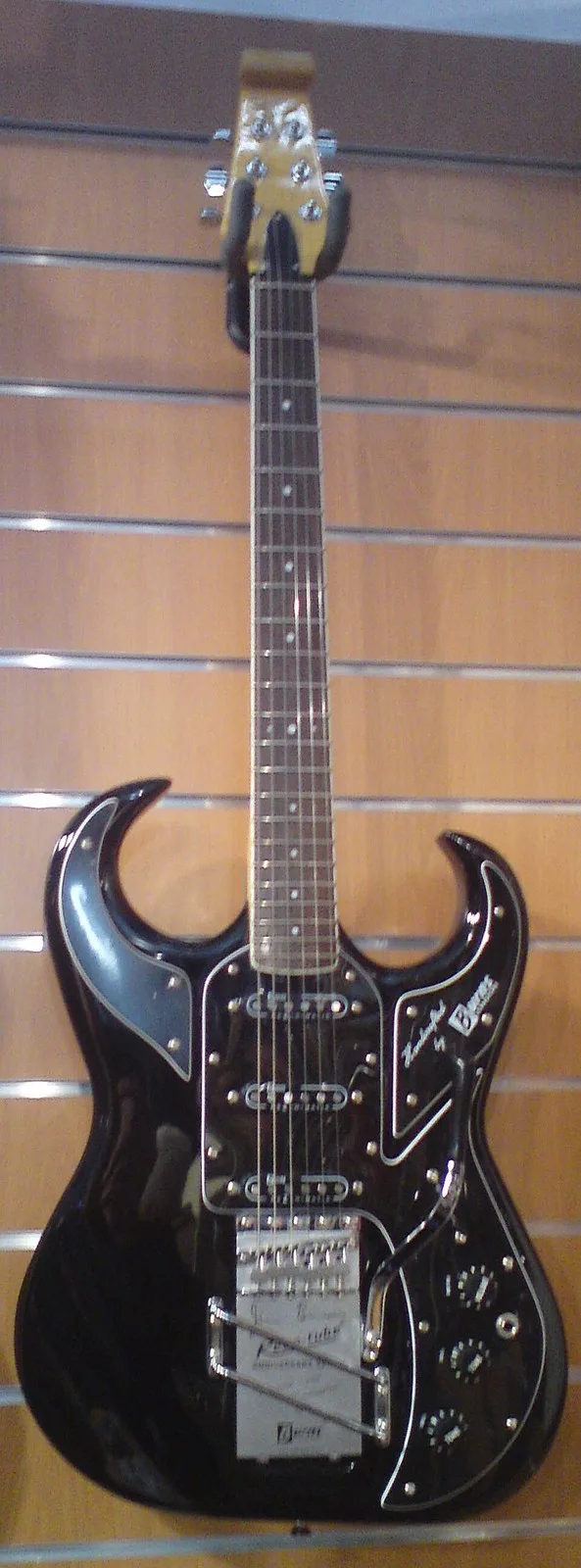
Photo: Bruce Marvin / Wikimedia Commons / Public domain Burns
Bison
1961
Ike Isaacs said it looked like a bloody bison. Burns changed almost everything else about it. Not that.
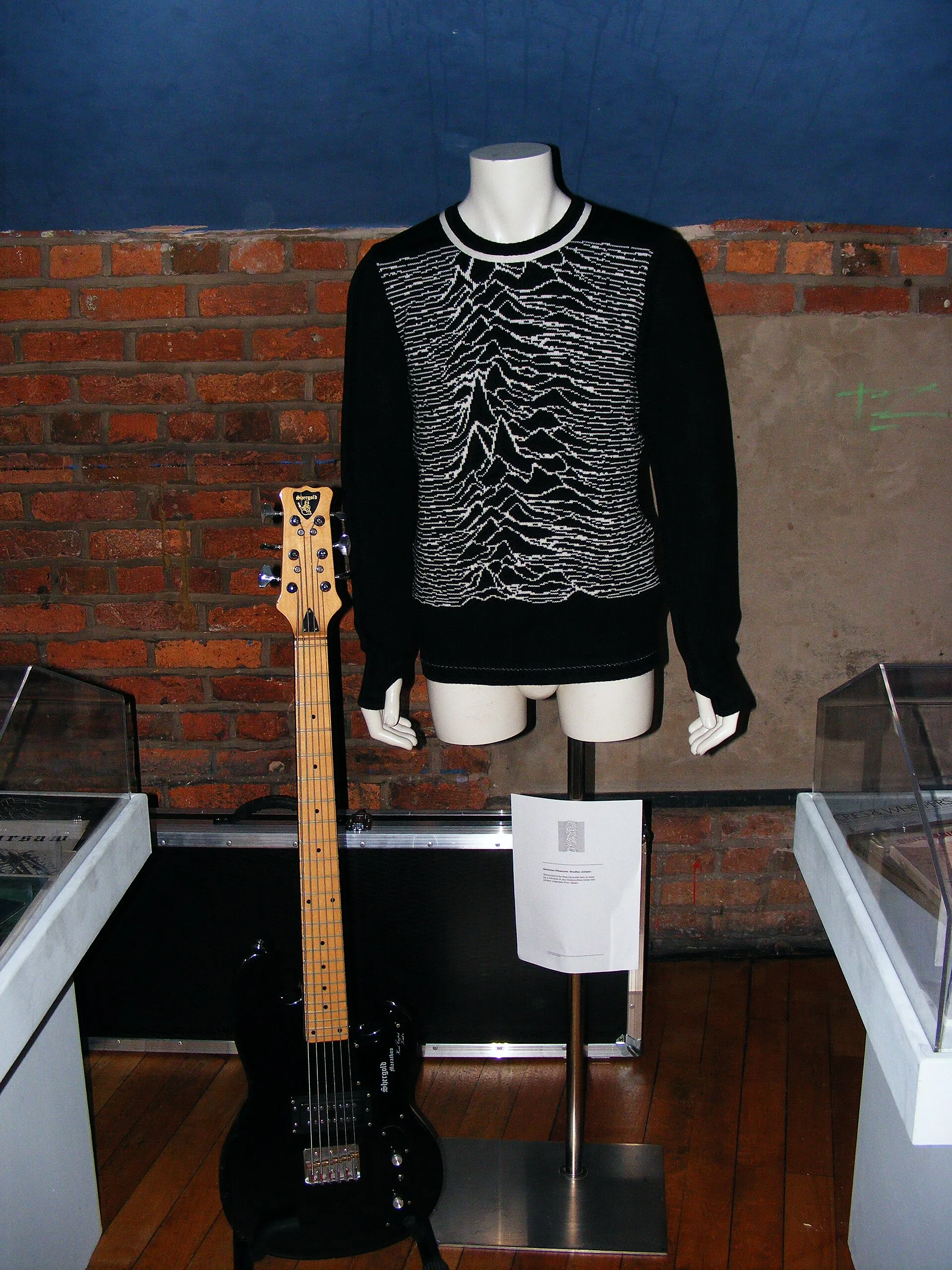
Photo: Man Alive! / Wikimedia Commons / CC BY 2.0 Shergold
Masquerader
1975
Two men spent twenty years making guitars with other people’s names on them. Then they made this.
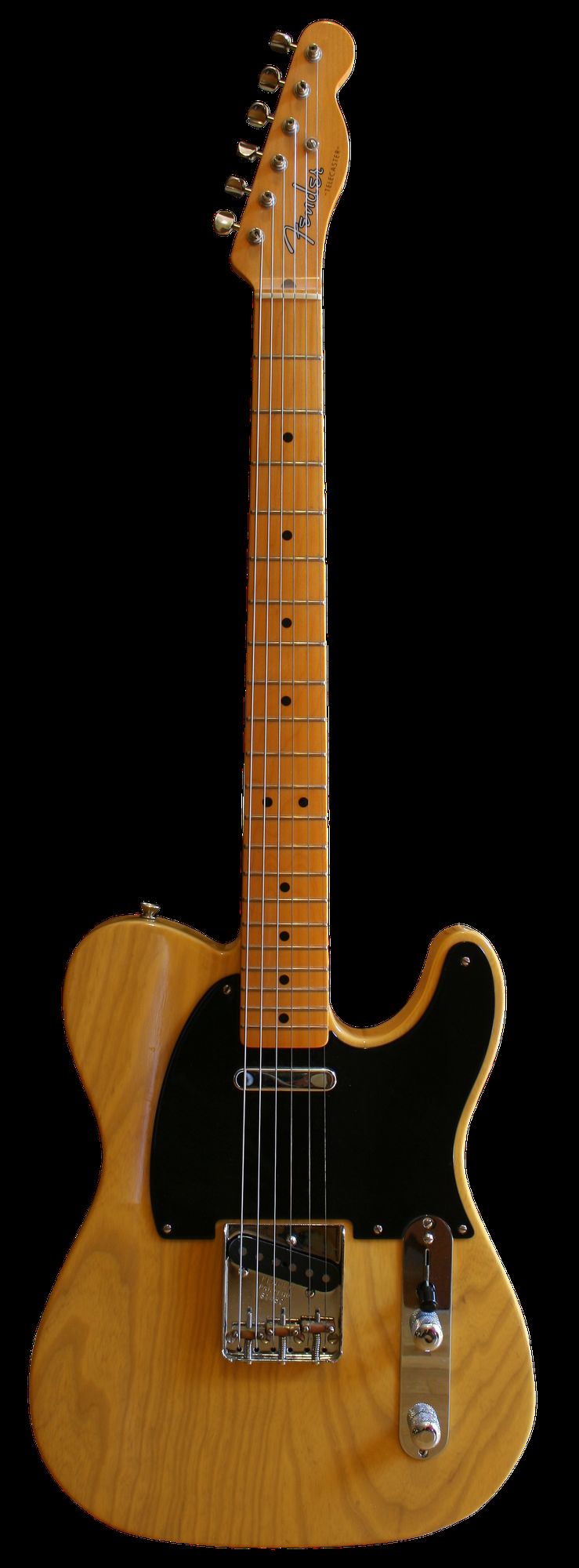
Fender Telecaster American Vintage 1952 with transparent background. Photo by Massimo Barbieri. Licensed under CC BY-SA 3.0. Via Wikimedia Commons. Fender
Telecaster
1950
Leo built it like a tool. The famous ones look like they just clocked off a double shift.