Martin
D-35
Martin split the back in three to save rosewood. The bass it made was just what Johnny Cash’s voice needed.
Nazareth, 1965. The wide Brazilian rosewood sets a dreadnought back needs are getting hard to find, and good narrow pieces are going to waste. The fix comes from Bob Johnson, Martin’s computer engineer, who isn’t a guitar designer at all.
- Introduced
- 1965
- Type
- Flat-top steel-string acoustic
- Class
- Production
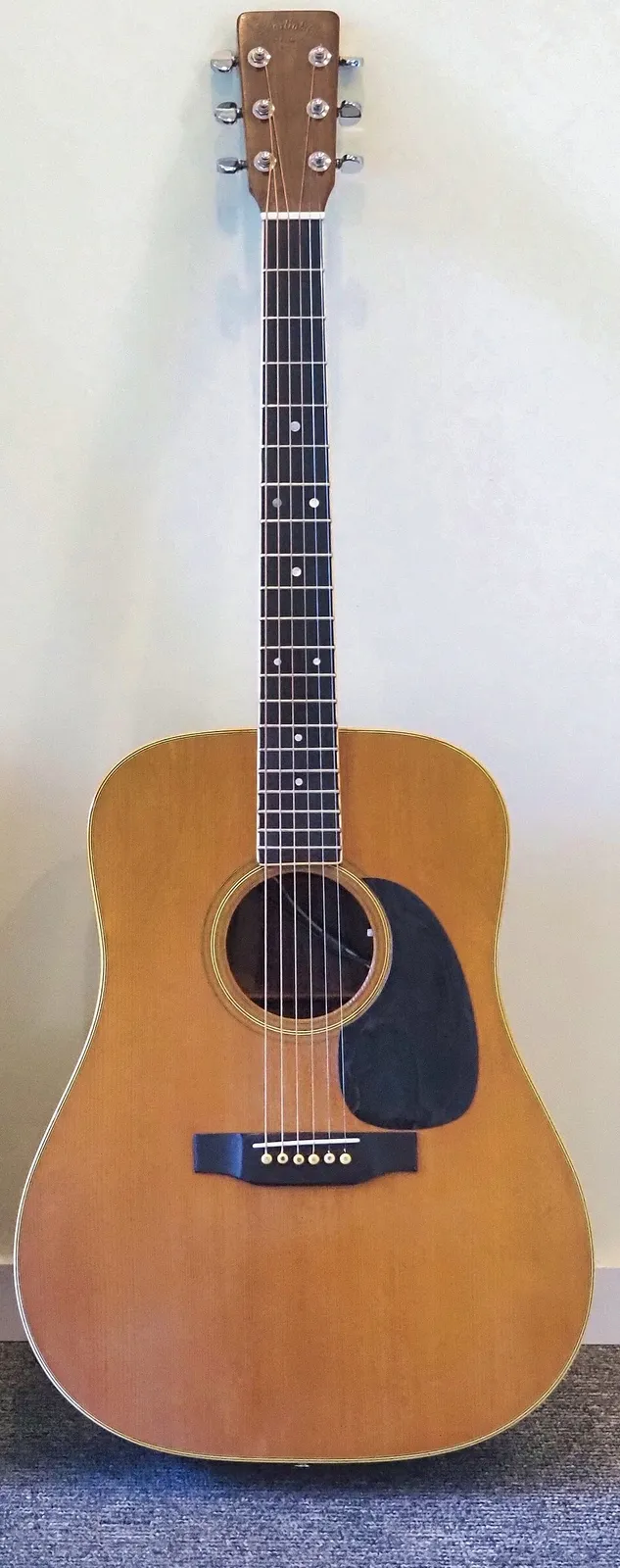
The short version
1965
A new dreadnought
The first new Martin dreadnought style since the early 1930s. 207 built that year.
1966
Black guard
The pickguard goes from tortoise to black, in 1966 or 1967 depending who you ask.
1969
Brazilian to Indian
Late in the year, the rosewood changes, with leftovers after.
1970
Neck and neck
By one account, it’s selling as well as the D-28.
early 1970s
All black
Johnny Cash gets a custom black D-35, with a factory black lacquer nobody had ordered before.
1974
Top seller
Reportedly Martin’s best-selling instrument, though nobody has the factory tally to prove it.
1997
The Cash signature
Cash’s signature, a black three-piece-back dreadnought in Style 42. 200 made.
Side A
A1
The narrow-wood problem
A dreadnought back is wide. Traditionally it’s two pieces of rosewood, book-matched down the middle, and each piece has to cover half the width of that big lower bout. By the mid-1960s wide Brazilian rosewood sets were getting scarce, and a lot of good, narrower wood was being left over.
The answer came from Bob Johnson, who was Martin’s computer engineer, not a guitar designer. Split the back into three pieces. Put a wedge down the middle. Use the narrow wood instead of throwing it out.
That’s how the D-35 started: not as a dream guitar, but as a practical fix for a shortage. It was the first new dreadnought style Martin had offered since the early 1930s.
A2
Dressing up a compromise
A three-piece back meant more joinery, and more joinery cost more. So Martin made the guitar look like it was worth it. It got a bound ebony fingerboard and a strip of marquetry between the back pieces. What it didn’t get was the abalone soundhole ring of earlier 30-series Martins.
Martin tried a handful of prototypes, mixing and matching braces from its other guitars, before it settled on one. It built 207 D-35s that first year.
Here’s the part that matters for the sound. The D-35’s braces are 1/4 inch. The D-28’s are 5/16. That split still holds on today’s Standards. Lighter braces let the top move more, and on a big rosewood dreadnought that means a bigger, looser, deeper bass. Strum a D-35 and a D-28 back to back and the D-35 blooms a little more at the bottom.
A3
Brazilian, then Indian, then everywhere
Like the D-28, it was Brazilian rosewood until late 1969, then Indian, with leftovers in between. There’s at least one D-35 out there with an Indian back and a Brazilian wedge down the middle, which is about as thrifty as a guitar gets.
And people bought it. By 1970, by one account, it was selling as well as the D-28. By 1974 it may have been Martin’s best-selling instrument. Nobody has the factory tally to prove that last part, but the direction is clear. The leftover-wood guitar had caught up with the D-28.
Flip the record · By the numbers
3
Pieces in the back, so narrower rosewood could be used instead of wasted.
207
D-35s built in 1965, the first year.
1/4″
Brace thickness on a D-35, against the D-28’s 5/16. Lighter braces, looser bass.
200
D-42 Johnny Cash guitars in the 1997 limited run.
Side B
B1
The man in black’s black Martin
In the early 1970s Johnny Cash had Martin build him a custom D-35 in solid black. Black lacquer from the factory was unheard of at the time. He played it on stage for about two decades. Gene Autry, Cash’s idol, signed it later. It’s the guitar in the “Hurt” video, and it lives at the Johnny Cash Museum in Nashville now.
It isn’t the only Cash Martin, and people mix them up. There’s a 1968 D-35, a customized twelve-fret with an acorn-and-leaf fingerboard and a pearl torch. There’s the black D-35 Johnny Cash that Martin introduced in 2006, a tribute model and not his stage guitar. His famous Folsom Prison show in 1968 was a smaller Martin, a 00-18. In 1997 Martin made him a signature, the D-42 Johnny Cash: all black, fancier Style 42 trim, and very likely the only Style 42 Martin ever built with a three-piece back. After a stage accident he borrowed a prototype, and he’d slip a dollar bill between the strings to get that “chicka chicka” train sound. There were 200 of them.
The three-piece back was a way to use up narrow rosewood. Nobody at Martin was thinking about a baritone from Arkansas.
B2
Why Cash kept it
Ask the people at Martin why Cash leaned toward the D-35, and they’ll tell you: the bass matched his voice.
Think about that voice. Low, dark, a little rough, sitting right down where most guitars get muddy. A lot of dreadnoughts would fight it. The D-35, with its lighter braces and its looser, deeper bottom end, gets underneath it instead.
Martin didn’t design it for him. Martin designed it because a computer engineer suggested a use for wood that would have gone to waste. Then a man in black heard it and found the low end he’d been singing into all along.
Put this on
You’ve read about it. Now hear it. Here’s what this guitar sounds like, and what to listen for.
Hurt (music video)
The black D-35 in this video is his custom early-1970s guitar, the one he played on stage for about twenty years. Now it’s in the Johnny Cash Museum in Nashville.
Watch it on YouTube (opens in a new tab)
The cast
The people, and the specific guitars, that made the legend.
early 1970s
Johnny Cash
Custom all-black D-35
A stage staple for about two decades, and the guitar in the “Hurt” video. Gene Autry signed it later.
1997
Johnny Cash
1997 D-42 Johnny Cash
A three-piece-back black dreadnought in Style 42. He put a dollar bill in the strings for the train sound.
1965
Bob Johnson
The idea
Martin’s computer engineer, and the man usually credited with suggesting the three-piece back.
Gene Autry
Signed Cash’s black D-35
Cash’s idol. He signed the guitar that’s now in the Johnny Cash Museum.
Liner notes
Specs, construction, rarity, value, and every source we used.
Three-piece rosewood back on a D body — Style 35, not a D-28, not a D-18, and not Cash’s black guitar treated as a D-28.
- Body
- Square-shoulder D-14 fret dreadnought; solid spruce top with aging toner; solid East Indian rosewood back and sides, Style 35 three-piece back with multi-stripe; antique white binding, Style 28 multi-stripe rosette
- Neck
- Select Hardwood (Martin spec — not explicitly mahogany), GE Modified Low Oval with High-Performance Taper; satin, dark mahogany color; dovetail joint
- Fingerboard
- Bound ebony (antique white), Style 28 mother-of-pearl dots, 20 frets, 14th-fret joint
- Scale
- 25.4"
- Pickups
- None on the current Standard. Optional/modern systems exist on other SKUs (D-35E, D-35 Johnny Cash).
- Hardware
- Ebony GE Modern Belly bridge, drop-in saddle, 2 5/32" spacing; bone pins with faux-tortoise dots; compensated bone saddle (16" radius); chrome enclosed-gear tuners with large knobs; faux-tortoise pickguard
- Electronics
- None
- Finish
- Gloss top and back/sides; satin neck; aging toner on top
- Nut
- Bone, 1 3/4"; 12th-fret width 2 1/8"
Open the full research fileConstruction details, the complete player record, production numbers, dated value estimates, and sources
SKU 10Y25D35. Current Standard Series only. Forward-shifted GE-non-scalloped 1/4" spruce X — not the 2025 D-28's GE-scalloped 5/16" recipe, and not HD-28 herringbone. Hide glue is not listed. The D-35 Johnny Cash (SKU 10D35JOHNNYCASH) is a black signature, not this gloss Standard.
Construction
C. F. Martin & Company, Nazareth. Square-shoulder dreadnought, classic D size. 35 is Style 35: rosewood D with a three-piece back (marquetry between the sections) and a bound ebony board. Not Style 18 mahogany. Not Style 28 two-piece back. Not herringbone — that trim is Style 28 / HD-28. guitarhq.com production table: D-35 1965–present. There is no pre-war D-35. Do not invent one, and do not hang the D-45's 1933–42 sidebar on this plate.
Read the current spec first. SKU 10Y25D35 is the 2025 Standard Series refresh: Sitka spruce GE top bracing (Martin refresh copy; spec table says spruce), GE-Non-Scalloped 1/4" forward-shifted X, East Indian rosewood three-piece back, antique white binding, Style 35 back purfling, bound ebony with Style 28 dots, 1 3/4" bone nut, Select Hardwood neck, chrome enclosed-gear tuners, no factory electronics. Dealer sheets that copy D-28 open-gear nickel tuners onto this SKU are wrong — Martin.com lists chrome enclosed. Hide glue is not on the current Standard sheet; guitarhq.com has it largely phased out after the 1964 factory move.
The 2025 D-28 GE-scallop / HD-28 herringbone trap stays on those plates. Current Standard D-28 scallops 5/16" GE braces; current Standard HD-28 keeps herringbone. Current Standard D-35 keeps the model's own badge: three-piece back + non-scalloped 1/4" GE braces. Jason Ahner (Martin, 16 Oct 2024): D-35 braces 1/4" versus D-28 5/16ths. That split is still true of the 2025 Standards. Do not flatten them.
The three-piece back is the reason the model exists. guitarhq.com: used on D-35s so Martin could use narrower rosewood that would otherwise go to waste. Walter Carter (Vintage Guitar Encyclopedia): a pragmatic answer to dwindling wide Brazilian sets, suggested by Bob Johnson (Martin's computer engineer, not a guitar designer); extra joinery cost, bound fingerboard so it would look more expensive, no abalone soundhole ring of earlier 30-series Martins. Folkway: first new dreadnought style offered since the early-1930s Ds, when D-28 was the only rosewood D still in the catalog after 1942. Do not treat the three-piece back as a later Custom Shop flourish.
Longworth via UMGF (1994, p. 89): first prototype X-35 #201792; six more in three brace recipes — D-35A #202219–220 (D top braces / 000 back braces), D-35B #202221–222 (00 top / D back), D-35C #202223–224 (00 top / 000 back). Style C was the final version. Johnston and Boak (UMGF): 207 built in 1965.
Brazilian rosewood on Style 35 through late 1969, then Indian — same factory calendar as Style 28, not a 1 January 1970 cutoff. guitarhq.com last regular Style 28 Brazilian serial 254497; first Indian 254498 (a D-21). Leftovers after: guitarhq.com names mixed-wood three-piece D-35 #258962 (Brazilian center wedge). guitarhq.com Style 35: 1965 introduction — celluloid tortoise pickguard and body binding; 1967 black plastic pickguard and body binding; 1970–present Indian rosewood. vintagemartin.com Style 35 calendar (conflicts kept): 1966 tortoise → black pickguard, Ivoroid → Boltaron purflings, small maple → small rosewood bridge plate, last year of mitered fingerboard binding (mitered until August 1966); 1969 larger rosewood plate + Brazilian → Indian. guitarhq.com shared factory serials: Boltaron bindings on D-28 and D-35 211040 (1966); Grover 102C on all D guitars 205251 (1965). Don't flatten 1966 vs 1967 on the guard.
D-35E, HD-35, D12-35, D-35S (12-fret slotted), Authentics, and the black D-35 Johnny Cash signature are other SKUs.
Players
Named instruments first. A famous dreadnought story that does not say D-35 or the Cash D-42 line stays off this page.
Johnny Cash — early-1970s custom all-black D-35. Martin (Jason Ahner, 16 Oct 2024): unprecedented factory black lacquer at the time; stage staple for about two decades; now at the Johnny Cash Museum, Nashville; Gene Autry later signed it (Autry was Cash's idol); the guitar in the “Hurt” video. Ahner: Cash leaned D-35 because the bass matched his voice.
Johnny Cash — 1997 D-42 Johnny Cash. Same three-piece-back D identity, Style 42 appointments, all-black. Ahner: Dick Boak-era signature; he believes it is the only Style 42 Martin with a three-piece back. Martin Museum: a D-42JC prototype Cash borrowed after a stage accident to prototype #1; dollar bill between the strings for the “chicka chicka” / train sound. Sotheby's 2004 Cash estate lot 756: D-42JC #3 of 200, three-piece East Indian rosewood back, Cash and C.F. Martin IV signed; Cash owned #1 (family, also signed by Autry) and played #3 sporadically including a 1999 session (Laura Cash). Country Music Hall of Fame object 2011.27: 1997 D-42JC prototype used later in his career. 200 limited; celebrity / signature market — not comps for ordinary D-35s.
Johnny Cash — 1968 D-35S, customized 12-fret slotted (acorn-and-leaf board, pearl torch). Commons / CMHOF display photographs exist. That is a special, not SKU 10Y25D35.
The later D-35 Johnny Cash catalog guitar (Martin: introduced 2006; still listed, SKU 10D35JOHNNYCASH, Engelmann, scalloped 1/4", black, star inlays, Martin.com $5,499.99) is a tribute SKU, not Cash's stage guitar and not this Standard.
Also known to play, weaker than the named Cash instruments: Martin marketing that Cash also used D-28s, D-18s, smaller bodies, and a D-76. Those cousins are not this plate.
Not this guitar. Folsom Prison 1968 is a smaller-body Martin (Martin/Ahner: 00-18), not a D-35. Elvis 1955 leather D-28; Lester Flatt 1950 D-28 and 1942 D-18; Clarence White / Tony Rice 1935 D-28 58957; Waylon 1946 D-28; Billy Strings 1940 D-28 76283; Neil Young “Hank” (a D-28). Harvest's main acoustic in the D-28 brief is a D-45. Dylan's famous early Gibson is a J-50. Do not treat Cash's black Martin as a D-28.
Rarity
Current production: regular; not rare. No current-year factory total found. Used modern Indian-rosewood D-35s are common.
1965 first year: 207 (Johnston and Boak via UMGF). Finite relative to later D-35 volume, not in the same rarity class as pre-war D-45s (91 instruments). Longworth prototype serials above are a handful of brace experiments, not a census of the 207.
Brazilian Style 35 (roughly 1965–late 1969): finite; 1950s–60s D-28 Brazilian money does not automatically transfer. guitarhq.com collectibility: D-35 1965–69 C-, 1970–present D-. Walter Carter: by 1970 it was selling as well as the D-28. Folkway: by 1974 the D-35 was Martin's top-selling instrument — dealer-museum copy, not a factory year-table.
Indian-era 1970–present: common. Mixed Brazilian/Indian three-piece leftovers (guitarhq.com #258962 class) are a footnote, not a second model. D12-35 is a different SKU (Longworth via UMGF: 6,470 through 1987, not counting later reissues). Do not invent a D-35 grand total.
Value
Informal estimate, 25 August 2026. Not an appraisal.
Ask vs sold. Celebrity Cash lots labeled not-comps.
New street. About $3,500–$3,700. Martin.com gloss $3,699.99 (fetched 25 August 2026). Sweetwater 2025 Standard Natural $3,499. Musician's Friend Natural $3,699.99. Reverb “New for 2025” dealer asks commonly $3,499. D-35 Johnny Cash new Martin.com $5,499.99 — other SKU.
Used modern. No clean Reverb sold band captured this pass (bot wall on 2018–2024 / 1970–1984 product pages). Willcutt 2021 D-35 asking $2,399.99. Expect used Indian Standards to sit under current street; do not invent a midpoint.
Vintage / collectible (1965–1969 Brazilian). Reverb product D-35 1965–1969, estimated $2,992–$5,248 on 132 orders (Good to Mint). Named 2025 solds on that page: 14 May VG $3,000; 28 Apr Exc $3,150; 23 Mar VG $5,599; 12 Mar VG $5,500; 11 Mar VG $4,200; 26 Feb VG $6,795; 19 Feb VG $5,000. Dealer asks on the same page run much higher (examples $7,000–$15,250) — asks, not hammers. Ask vs sold is loud. Not D-28 herringbone money, and not D-45 money.
Indian-era vintage. No 1970–1984 Reverb sold estimate captured this pass. UMGF opinion on 1970s EIR D-35s is older than 2024 and is not used as a sold tape.
Cash D-42JC / museum D-35s are artist markets. Sotheby's 2004 #3 of 200 is a celebrity lot — hammer not isolated here. Not comps for ordinary D-35s.
See also
- martin-d-28 — two-piece rosewood Style 28 on the same D body; the 2025 GE-scallop / HD-28 herringbone story lives there
- martin-d-18 — mahogany Style 18 on a D; Cash is not a D-18
- martin-d-45 — Style 45 pearl on a D; pre-war originals are a sidebar on that plate, not this one
- martin-hd-28 — 1976 herringbone-and-scallop revival; not a three-piece Style 35
Sources
- https://www.martinguitar.com/10Y25D35.html
- https://www.martinguitar.com/10D35JOHNNYCASH.html
- https://www.martinguitar.com/blog-categories/from-the-factory/blog-101624-johnny-cash-d42.html
- https://guitarhq.com/martin.html
- https://vintagemartin.com/Style35.html
- https://vintageguitarencyclopedia.com/martin-d-35-2/
- https://folkwaymusic.com/museum/martin-guitars/martin-d35-1966-1012
- https://www.sweetwater.com/store/detail/D35S--martin-d-35-standard-series-acoustic-guitar-natural-aging-toner
- https://libertymusicshop.com/martin-d-35-standard-series-new-2025-natural-375/
- https://www.musiciansfriend.com/guitars/martin-d-35-standard-dreadnought-acoustic-guitar/m18029000001000
- https://reverb.com/p/martin-d-35-1965-1969
- https://reverb.com/item/86618308-martin-d-35-new-for-2025
- https://willcuttguitars.com/products/2021-martin-d-35-acoustic-guitar-mar-d35-used-2522361
- https://umgf.com/earliest-d-35-t236026.html
- https://umgf.com/d12-35-s-how-many-what-years-t123436.html
- https://www.sothebys.com/en/auctions/ecatalogue/2004/property-from-the-estate-of-johnny-cash-and-june-carter-cash-n08048/lot.756.html
- https://digi.countrymusichalloffame.org/digital/collection/oclcsample/id/843/
- https://commons.wikimedia.org/wiki/Category:Martin_D-35
- https://www.guitarworld.com/artists/guitarists/the-emotional-moment-johnny-cash-was-offered-his-unique-signature-martin-acoustic
- https://bluebookofguitarvalues.com/products/martin-d-35
Keep digging
Guitars this one gets compared to, confused with, or descended from.
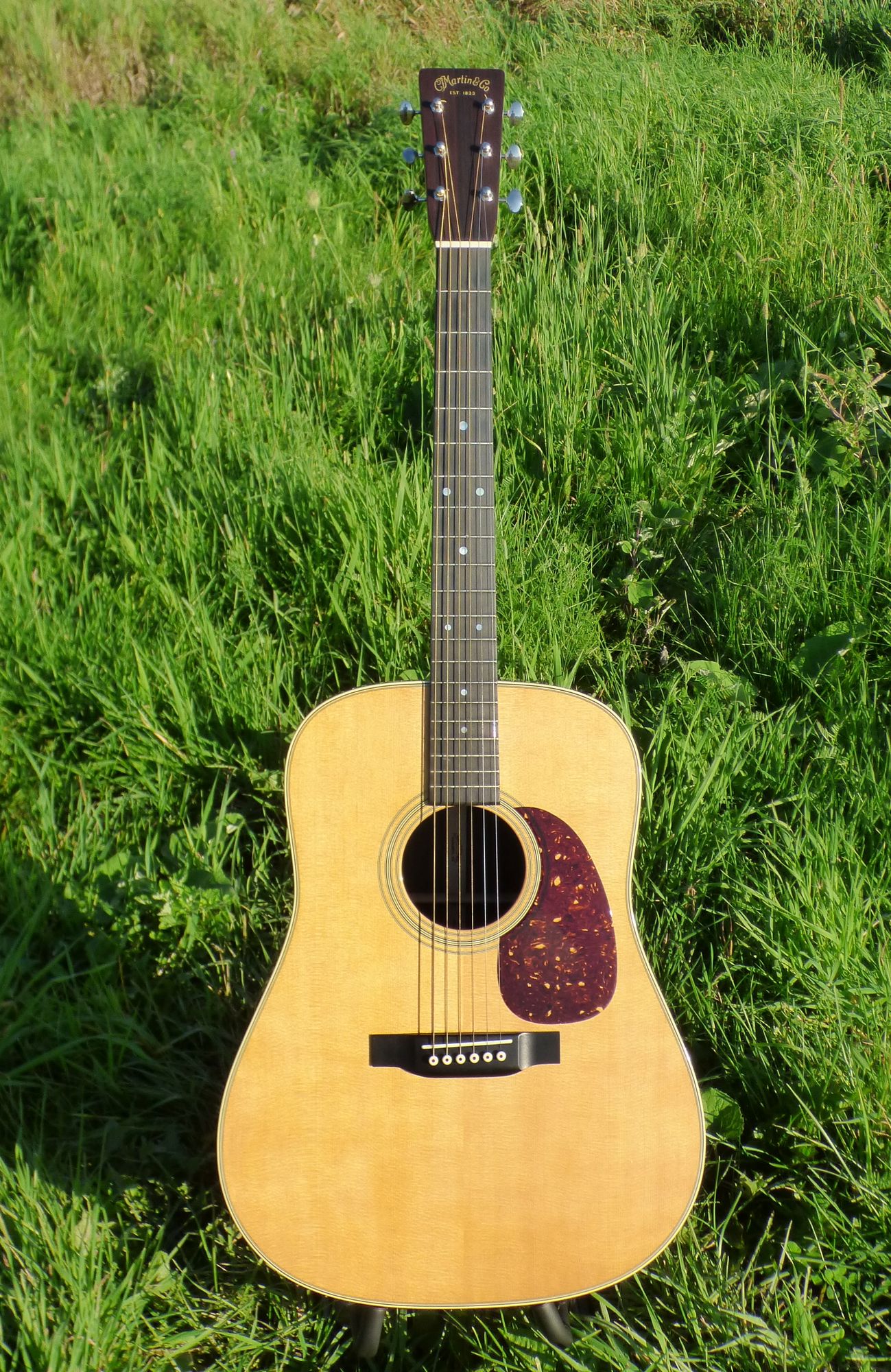
Martin D-28 Acoustic Guitar. Photo by Niranjan Arminius. Licensed under CC BY-SA 4.0. Via Wikimedia Commons. Martin
D-28
1931
You’ve heard a D-28 your whole life. It just never asked for the credit.
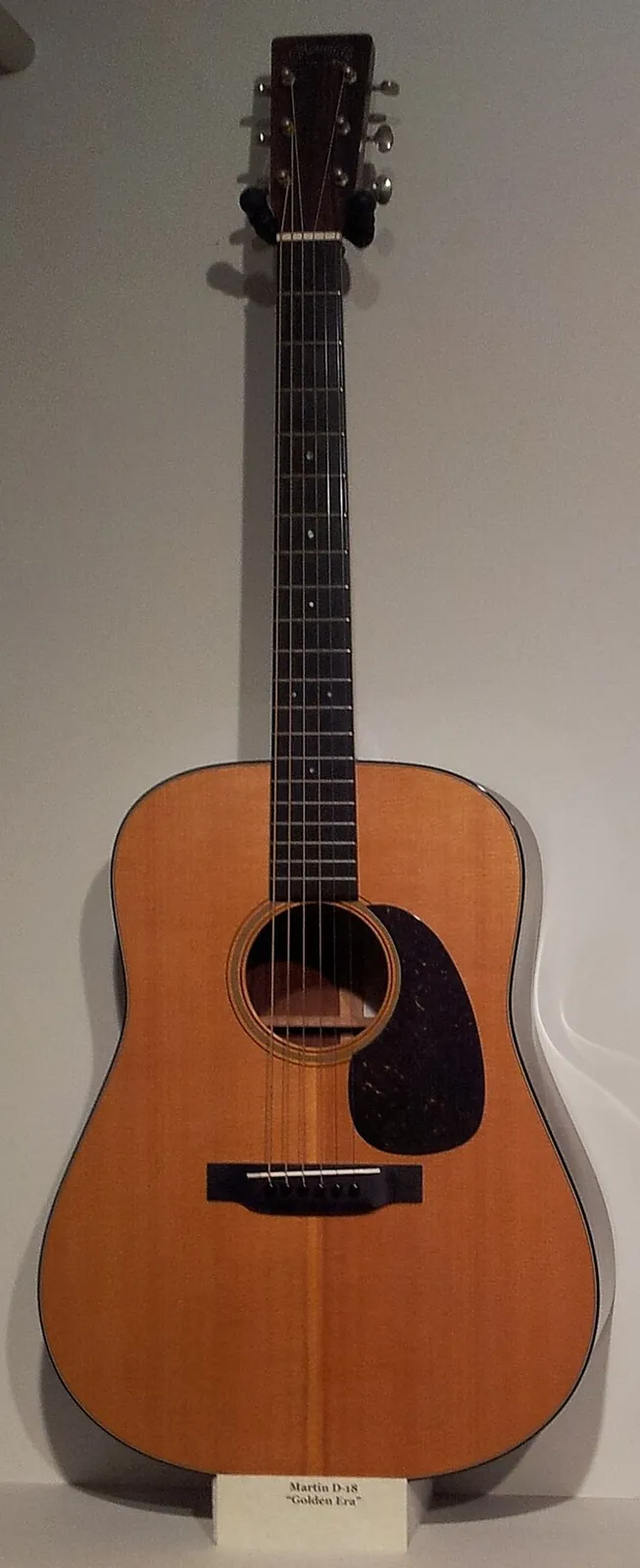
Photo: doryfour / Wikimedia Commons / CC BY-SA 2.0 Martin
D-18
1931
Elvis traded his D-18 up for a leather-covered D-28. The plain one had already been there for the Sun records.
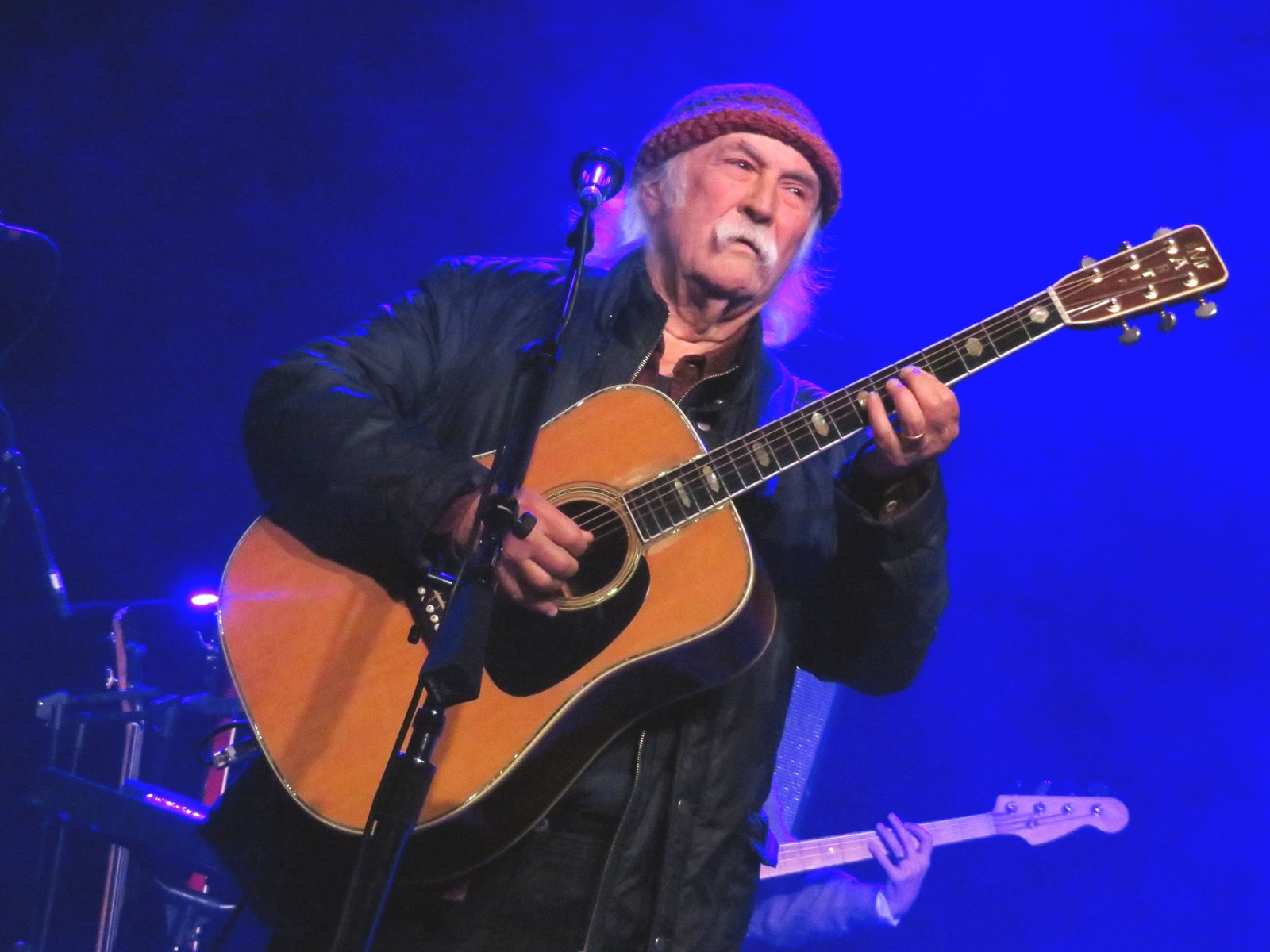
Photo: Eddie Janssens / Wikimedia Commons / CC BY-SA 4.0 Martin
D-45
1933
Pearl takes time. When the war took Martin’s time away, the D-45 stopped, and it waited 26 years to come back.