Wal
Custom Bass
Geddy Lee borrowed his producer’s. Justin Chancellor borrowed a friend’s. Then both ordered their own.
The Manor, Oxfordshire, 1985. Rush are making *Power Windows*, and their producer, Peter Collins, hands Geddy Lee a bass from a small English workshop. Lee records the whole album on it. When the record’s done, he orders one of his own.
- Introduced
- 1980
- Type
- Solidbody bass
- Class
- Production
The short version
1976
The first Wal
John G. Perry asks Ian Waller for a custom bass. The dates for the partnership itself run back into the early ’70s.
1978
The Pro
Electric Wood’s first production-line bass, pickguard and all, five or six a week.
1980
Twenty prototypes
The first Wal Custom basses. The Pro gives way to the Custom sometime between 1981 and 1983.
1985
Power Windows
Geddy Lee records an entire Rush album on a borrowed Wal.
1988
Ian Waller dies
A heart attack, at 43. Pete Stevens keeps the shop going.
1994
Six strings
Work starts on the first six-string, which becomes the Mk3 shape.
2009
Back to work
Paul Herman relaunches Wal in Surrey and takes orders again. Stevens dies in 2011.
Side A
A1
The producer’s bass
Some instruments you pick out of a catalog. A Wal, usually, gets handed to you.
In 1985 Rush were at the Manor making Power Windows, and their producer, Peter Collins, had a Wal with him. He lent it to Geddy Lee. Lee compared it on the first track, “The Big Money,” and then he kept going and recorded the entire album on it. When the record was finished he ordered his own. That’s how you know it went well. You don’t buy the thing you borrowed unless you missed it the minute you handed it back.
A2
Two men and a studio
Wal was two people. Ian Waller, Wal to his friends, was a bassist from Manchester who came south for electronics work. Pete Stevens, “The Fish,” was the woodworker. They met around Farmyard Studios. The first bass with the Wal name on it was made in 1976 for John G. Perry of Caravan, though when the two started working together depends on who you ask. Some say the early ’70s.
Next came a short run of named customs, and then, in 1978, the Pro, a production bass with a pickguard, built by their company, Electric Wood, five or six a week. In 1980 they built the first twenty prototypes of what they called the Custom, and that’s the bass people mean when they say “a Wal.”
A3
What’s inside
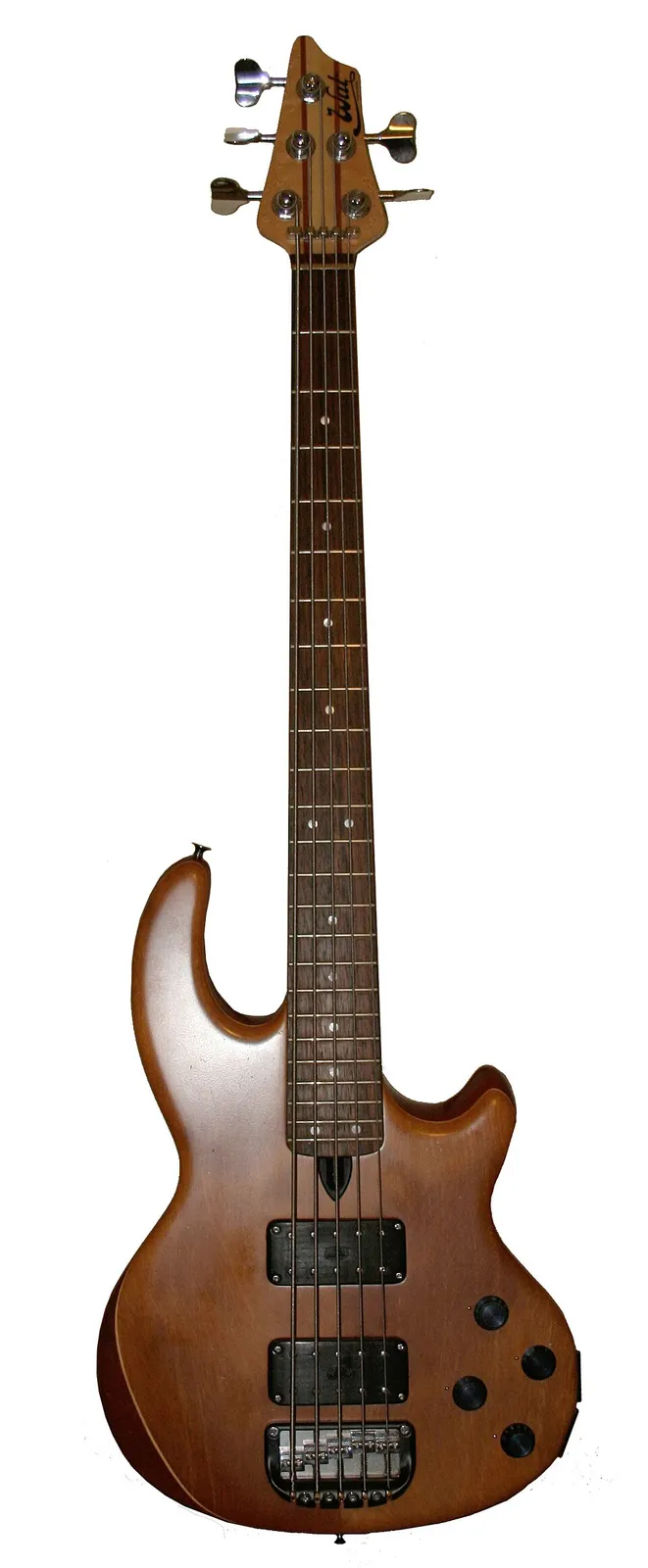
From the outside, you notice the wood. There’s a mahogany core with bookmatched facings on the front and back, wenge or walnut or lacewood or something even more exotic. No pickguard. It looks like furniture a very serious person would own.
The magic is in the back, in the electronics cavity. Each pickup is a humbucker with its own pair of matched coils for every string. Each pickup gets its own filter, a knob that rolls off treble, and when you pull the knob up, it adds about 10 dB of boost right at the point where the treble starts to fall away. That’s what gives a Wal its voice: a growl that moves around as you turn the knobs, like a wah pedal you set and leave. Pull up the volume knob and you get extra pick attack. There’s a direct output so you can plug straight into the studio desk.
Geddy Lee later said the Wal had more finesse and a snappier top than his Fender. The Fender had the bottom he wanted. That’s about as fair a summary as you’ll find.
Flip the record · By the numbers
1976
The first bass to carry the Wal name, made for John G. Perry.
20
Prototype Custom basses in 1980. The shape that became the Mk1.
2
Matched coils for every string, in every pickup.
~10 dB
Boost you get by pulling up a filter knob, right at the point where the treble rolls off.
Side B
B1
Everybody borrowed one
The funny thing about Wal’s famous players is how many of them started with somebody else’s.
Justin Chancellor was making Ænima with Tool when he borrowed a friend’s Wal. It had started life as a fretless, and somebody had put the frets back in. The tone, he said, “immediately fit in with the band.” He ordered a replica, and years later his main bass was still a Wal.
Paul McCartney met his at the Flowers in the Dirt sessions, where Trevor Horn brought one in. McCartney liked the feel and had to have one, a customized five-string. He had a Wal five-string on stage in Hamburg in 1989. By his own account, he played a Wal on the Beatles’ “Free as a Bird” a few years later.
Percy Jones of Brand X, the band that recorded at Farmyard, was playing a fretless Precision when a Wal prototype turned up. The first one was neck-heavy. The next one balanced. Mick Karn of Japan put it most simply:
Definitely the Wal I use on every recording and tour.
B2
Still made to order
In July 1988, Ian Waller died of a heart attack. He was 43. Pete Stevens kept the workshop going for almost twenty more years, until his health made him retire at the end of 2007. It looked like the end of Wal.
It wasn’t. Paul Herman, who had worked alongside Stevens, relaunched the company from a new workshop in Surrey and started taking orders again in 2009. The Mk1, the original Custom shape, is still on the list. You order it straight from the shop, and the build slots run about a year out.
That’s a long time to go without a bass you liked. Geddy Lee, Justin Chancellor, and Paul McCartney all knew the feeling. Every one of them had to hand back somebody else’s Wal first.
Put this on
You’ve read about it. Now hear it. Here’s what this guitar sounds like, and what to listen for.
The Big Money
Geddy Lee recorded all of Power Windows on a Wal his producer lent him, and this is the first track he compared it on. Listen for the snappy top end.
Find it on YouTube (opens in a new tab)Lock and Key
From Hold Your Fire. Lee used a four-string Wal most of the time on that record, and a five-string on this one.
Find it on YouTube (opens in a new tab)Ænima
Justin Chancellor borrowed a friend’s Wal while Tool were recording this album, a fretless that had its frets put back in. He liked it enough to order a replica.
Find it on YouTube (opens in a new tab)Free as a Bird
By Paul McCartney’s own account, he played a Wal on the Beatles’ reunion single.
Find it on YouTube (opens in a new tab)
The cast
The people, and the specific guitars, that made the legend.
1976
Ian Waller & Pete Stevens
The founders
Waller, a Manchester bassist, did the electronics. Stevens, known as “The Fish,” did the wood.
1985
Geddy Lee
Borrowed, then ordered
Rush’s Power Windows, Hold Your Fire, and on through Roll the Bones, before he went back to a Jazz Bass.
1996
Justin Chancellor
A friend’s, then a replica
Borrowed a Wal for Tool’s Ænima and ordered a copy. His later main bass has a mahogany core with bird’s-eye maple facings.
1989
Paul McCartney
A customized five-string
Trevor Horn brought a Wal to the Flowers in the Dirt sessions. McCartney liked the feel and had to have one. He had a Wal five-string on stage in Hamburg in 1989.
Mick Karn
His Wal
The Japan bassist said it was the bass he used on every recording and tour. Earlier Japan records are often a Travis Bean.
Percy Jones
An early prototype
Brand X’s bassist, who played a fretless Precision before the Wal. The first Wal he tried was neck-heavy. The next one balanced.
Liner notes
Specs, construction, rarity, value, and every source we used.
Mahogany core, bookmatched facings, and string-matched humbuckers with pull-up filters — Wal’s Custom, not the Pro with a scratchplate, and not a Fender.
- Body
- Mahogany core, bookmatched facings front and back; offset-waist twin-cut Mk1. Standard facings: wenge, American walnut, ash, lacewood. Light facings get a walnut interleaf; dark facings a maple veneer.
- Neck
- Six-piece laminated rock maple and mahogany
- Fingerboard
- Indian rosewood (fretted), ebony (fretless); medium nickel-silver frets; round mother-of-pearl face and side dots. 21 frets on Mk1.
- Scale
- 34"
- Pickups
- Two Wal flat-response humbuckers; a pair of matched coils per string; height-adjustable plated poles. 4-string: black ABS in a surround, three-point spring height.
- Hardware
- Wal cast frame/tailpiece, hook-in strings, chrome-plated brass saddles, 1/16" hex height and intonation; chrome low-gear tuners on Mk1/Mk2; brass string retainer
- Electronics
- Wal 9V preamp: master volume (pull = pick-attack), pickup mixer at constant combined level, low-pass filter per pickup (12 dB/octave; pull ≈10 dB quasi-parametric boost at the roll-off). 1/4" jack plus transformer-isolated balanced DI.
- Finish
- Satin house spec; gloss, burst, and tint extra
- Nut
- Unpublished on factory spec pages this pass
Open the full research fileConstruction details, the complete player record, production numbers, dated value estimates, and sources
Current typical = Mk1 Custom 4-string (Electric Wood, Surrey; walbasses.co.uk, fetched 18 September 2026). Factory: “the original Wal ‘custom’ 4-string bass shape.” Factory inches. No millimetres invented. Mk2 is the 24-fret / 5-string shape, also a 4-string. Mk3 is the condensed 6-string shape, also 4 and 5; asymmetrical neck joint, no neck plate. Pro Series is the 1978–82 scratchplate bass, not this table. JG / JP are the 1970s named customs. Direct order only. No Gibson SKU.
Construction
The job was a bass a London session player would take instead of a Fender or a Gibson. Ian Waller — Wal to his friends — had been a Manchester bassist. Electronics took him south. Pete Stevens, “The Fish,” was the wood. They met around Farmyard Studios. Factory dates the first branded Wal to 1976, when John G. Perry of Caravan and Quantum Jump asked Waller for a custom bass. Vintage Guitar puts the collaboration in the early 1970s. Wikipedia starts the company in 1974. Keep 1974, the early 1970s, and 1976. This plate starts in 1980.
The first run is not this table. Factory: a short run of Custom basses, the JG series after John Gustafson, and a short-scale JP sister after Perry. Vintage Guitar on Entwistle’s JG1128, 1978: headstock “J.G. Custom Bass,” one-piece ash, bolt-on multilaminate neck. walbasshistory, citing Electric Wood records: 44 JGs (JP1111, JG1111–JG1153). Named-custom count. Not a Custom Series census.
1978. Factory: Electric Wood Ltd., High Wycombe, the Wal ‘Pro’ Bass — first production-line instrument. Passive, then active. Scratchplate on the face. Vintage Guitar: Pro as in production, not professional; five or six a week. walbasshistory: Barratt’s stand at the 1978 Frankfurt Messe; about 700 Pro Series 1978–1982, calculated from serials, not a factory total. Last PB number: PB1859, 28 March 1981, “to all intents and purposes a Custom Series bass.” Keep the serial-guess and the tape.
The living bass is the Custom. Factory: 1980, first 20 prototype Wal Custom basses, now the Mark 1. Electronics in a shielded cavity in the back of the body. Vintage Guitar: Custom series replaced the Pro in early 1981; no pickguard is the tell. walbasshistory: first Custom series “April 1981 (sort of).” Wikipedia: Pro superseded by Custom in 1983. Keep 1980, 1981, and 1983.
What is special is the sandwich and the circuit. Mahogany core, bookmatched facings — factory current standard wenge, American walnut, ash, lacewood; Wikipedia’s Custom list also schedua, hydua, padauk. Two humbuckers with a pair of matched coils per string. 9-volt filters you pull: pick-attack on the volume, a constant-level mixer, a low-pass per pickup with about 10 dB of boost at the roll-off. Transformer DI on the bass. No scratchplate. Wal’s own bridge.
Mk1 is the original Custom 4-string shape: 34", 21-fret, 14th-fret long upper horn. Mid-1980s, factory, the first 5-string — sleeker body, 24-fret, low B — and 4-string versions of that shape became Mk2. 1994, work on the first 6-string; Mk3, a condensed Mk2, also in 4 and 5. Mk3: no neck plate, offset headstock. Current factory necks are six-piece rock maple and mahogany. Earlier Custom copy (walbasshistory): maple, Amazonian hardwood, and hornbeam. Keep both.
July 1988, Waller died of a heart attack, 43. Pete Stevens kept the shop, Paul Herman in the team. Wikipedia: by the end of 2007 Stevens’s health forced retirement; 20 August 2008, business to resume under Herman; 5 October 2009, orders again. Factory: Herman, who had studied with Roger Giffin, relaunched from a new workshop in 2009, Cobham, Surrey. Wikipedia puts production in Fetcham. Keep both. Pete died 2011. Direct order only. Factory this pass: slots about a year ahead, then a waiting list; they will not commit to prices that far out.
Not a Pro. Not a JG. Not a Jazz Bass. Not an Alembic through-neck. No Gibson SKU.
Classic vs current: 1980 Mk1 Custom — mahogany core, exotic facings, no guard, the filter circuit in the back — against a living Surrey Mk1: six-piece maple and mahogany neck, Indian rosewood or ebony, satin and chrome as the house spec, same pickup and preamp idea. Same slug.
Players
Do not hang a JG ash Custom or a Pro with a scratchplate on this table as if they were the 1980 Mk1. Do not flatten every Wal onto a four-string.
Geddy Lee (Rush). The public object. Guitar Player, April 1986: Power Windows recorded exclusively on a Wal, lent by producer Peter Collins at the Manor; first track compared, “The Big Money.” He ordered his own when the record was finished. Bass Player, November 1988: Hold Your Fire on Wal; 4-string most of the time, 5-string on “Lock and Key.” Through Presto and Roll the Bones. Counterparts (1993) he went back to a 1972 Jazz Bass. Guitar Shop, December 1996: the Wal had more finesse and a snappier top; the Fender had the bottom he wanted for Echo. Named records. Not every Rush bass line.
Justin Chancellor (Tool). Premier Guitar Rig Rundown: while recording Ænima he borrowed a friend’s Wal, originally fretless, frets put back in. Tone “immediately fit in with the band.” He ordered a replica. Later #1: mahogany core, bird’s-eye maple caps, rosewood board; main bass for the last fifteen years at that shoot. Guitar World equipment lists: Wal 4-strings. Ænima is the door. Do not stamp Undertow on it.
Paul McCartney. Guitar.com: Trevor Horn brought a Wal into the Flowers in the Dirt sessions; McCartney liked the feel and had to have one — a customised five-string. Bass Player, July/August 1995: Horn’s Wal 5-string at the Docklands jams that became the Russian Album; then the Wal on the Beatles’ “Free as a Bird.” Getty: 4 October 1989, Sportshalle, Hamburg, Wal 5-string on stage. Mk2 is the factory 5-string shape. The Höfner is not this bass.
Mick Karn (Japan). Guitar World (Joel McIver, archive of a 2004 interview): “Definitely the Wal I use on every recording and tour.” Preferred bass, not a session log for Tin Drum. Earlier Japan is often a Travis Bean. Keep the split.
Percy Jones (Brand X). walbasshistory interview: Brand X at Farmyard; a prototype arrived; he was on a fretless Precision; the first Wal was neck-heavy, the next one balanced. Wikipedia: first Brand X recordings on the fretless P, later the Wal. Factory names him on the Mk1. Do not invent which Brand X album is the first Wal side.
John Entwistle (The Who). Vintage Guitar: 1978 Wal #JG1128, lined fretless, salmon translucent ash. Current-owner research: the 18th Wal made. That is a JG Custom. It is not this table.
Also known to play, last and short. Vintage Guitar: John Taylor, Wal Mk I, Band Aid “Do They Know It’s Christmas” video, 1984; Martin Kemp (Spandau Ballet) and John Illsley (Dire Straits) at Live Aid, 1985. walbasshistory: Jonas Hellborg, first Wal double-neck, 1984. Vintage Guitar owner list also names Flea and Jeff Ament. No named records invented for that list.
Rarity
You can order a new Custom from Electric Wood in Surrey. Mk1, Mk2, and Mk3 are the living shapes. They are not a 1978 JG, and they are not a Pro.
Wal does not publish Custom Series unit totals. None invented. Serials date a bass. They don’t count a model. Custom Series: masking tape in the control cavity (walbasshistory). From about 1996, some W numbers encode a British completion date; some customers still asked for sequential numbers. That shared, overlapping practice is why a year census is unknown, not the chapter.
What is actually thinner: the factory 20 prototypes of 1980; JG-series instruments (44 on Electric Wood’s own list); complete pre-1988 Customs Waller signed off. Five-or-six-a-week (Vintage Guitar; walbasshistory) is Pro-era shop language, not a 2026 Custom count. The ~700 Pro figure is a serial-guess for 1978–82, not this table. Entwistle’s JG1128, Geddy’s black and red stage Wals, Chancellor’s Ænima borrow and the later #1, McCartney’s 5-string, Karn’s touring Wal — unique objects. They are not a vintage Custom.
Value
Informal estimate, 18 September 2026. Not an appraisal.
Ask vs sold labeled. Celebrity lots are not-comps. No invented medians or factory counts. No clean Reverb Price Guide band isolated this pass. Flag: thin sold-comp access.
New street. Factory does not publish a 2026 list (fetched 18 September 2026). Direct order; they will not commit to prices that far ahead of a slot. Blue Book manufacturer page: “Basses start at £3,650” — undated floor on that page, not a 2026 cart. Vintage Guitar, October 2005: two-year wait then. Factory this pass: slots about a year ahead, then a list.
Used modern. Named asks, not hammers (Reverb brand listings this pass): 1981 Custom Bass, black, Good $13,478.88; 1987 Mk1 fretless, Very Good $10,071.64 (was $11,190.71); 1988 Mk II 5-string, walnut, Very Good $14,999.99; 1990 Mk II 5-string, olive ash, Excellent $19,995 (The Guitar Broker; dealer page on the same object $16,495). Bass Direct, 1986 Mk1 Custom (padauk on mahogany, W2679), £7,750, out of stock. Do not average those asks. Do not treat a 5-string Mk2 as a 4-string Mk1.
Vintage / collectible. The Bass Gallery sold tags, named, not a series: Mk1 examples £7,250–£9,500; 1978 JG Custom £14,950; Mk1 (ex-Rhino) Live Aid bass £19,500 — celebrity, not a street tape. 1992 Mk II, ex-Greg Lake, Reverb ask €24,999 / $30,172.92, listing ended — one object, MIDI module missing, not a Custom average. Entwistle’s JG1128 is one object. Geddy’s and Chancellor’s are one object each.
See also
- alembic-series-i — California active laminated bass; through-neck sandwich, not this English Custom
- music-man-stingray — 1976 active four-string, one parallel humbucker; not Wal’s dual filters
- fender-jazz-bass — the bass Geddy went back to from this one
Sources
- Wal Basses, About Us — 1976 Perry commission; JG / JP; 1978 Electric Wood / Pro; 1980 first 20 Custom prototypes / Mk1; Geddy, Karn, McCartney; mid-1980s 5-string / Mk2; Waller July 1988, age 43; 1994 6-string / Mk3; Herman 2009 Cobham relaunch; Pete 2011
- Wal Basses, Models — Mk1 original Custom 4-string, 34", 21-fret, 14th-fret horn; Mk2 24-fret / 5-string shape; Mk3 condensed, no neck plate
- Wal Basses, Components — matched-coil humbuckers; 9V preamp; pick-attack; mixer; 12 dB/octave filters; ~10 dB pull boost; DI; bridge; tuners
- Wal Basses, Timbers — mahogany core, bookmatched facings, walnut or maple interleaf; six-piece maple and mahogany neck; rosewood / ebony
- Wal Basses, Order/Contact — direct order only; no far-ahead prices; ~1-year slots then wait list; standard facings wenge / American walnut / ash / lacewood; satin, chrome, hard case
- Vintage Guitar, Willie G. Moseley, Whooooo Wal You? (October 2005) — Entwistle JG1128 / 1978; JG ash / bolt-on; Pro 5–6 a week; Custom replaces Pro early 1981, no pickguard; Band Aid 1984 / Live Aid 1985; McCartney, Geddy, Hellborg, Flea, Ament, Percy Jones; two-year wait (2005)
- Wikipedia, Wal (bass) — company 1974; Custom Series 1983; Mk1/2/3 shapes; Herman 2008–09 Fetcham; Stevens retirement 2007 / death 28 December 2011
- A History of Wal Basses, Custom Series — April 1981 transition; PB1859 last Pro; mahogany core / exotic facings; flyer electronics
- A History of Wal Basses, Dating — Electric Wood 44 JGs; PB1859 / W1860; masking-tape dates; 1996 date-coded W numbers
- A History of Wal Basses, Pro Series — 1978 Frankfurt; ~700 Pros 1978–1982 from serials; 5–6 a week
- A History of Wal Basses, Percy Jones interview — Farmyard prototype; neck-heavy first, balanced second
- Guitar Player, April 1986, Geddy Lee — Power Windows on Collins’s Wal; “The Big Money”; ordered his own
- Bass Player, November 1988, Geddy Lee — Hold Your Fire Wal; 5-string “Lock and Key”
- Guitar World, Geddy Lee bass tone (Bass Player 2005 archive) — Wal from Power Windows; Jazz from Counterparts
- Guitar Shop, December 1996, Geddy Lee — Wal vs Jazz; Percy Jones as prior Wal sound
- Premier Guitar, Justin Chancellor Rig Rundown — Ænima borrowed Wal; replica #1, mahogany / bird’s-eye maple
- Guitar World, Tool’s Justin Chancellor (8 January 2020) — Wal 4-string equipment list
- Guitar.com, Paul McCartney — Horn’s Wal; Flowers in the Dirt five-string
- The Paul McCartney Project, Bass Player July/August 1995 — Horn Wal 5-string at Docklands / Russian Album; “Free as a Bird”
- Guitar World, Mick Karn archive interview (Joel McIver, 2004 / 20 August 2023) — Wal on every recording and tour
- Blue Book of Guitar Values, WAL — Custom bass mid-1970s; Electric Wood 1978; basses start at £3,650 (undated on that page)
- Reverb, Wal bass guitars — named 1981 / 1987 / 1988 / 1990 asks this pass; no clean Price Guide band
- Bass Direct, Wal MK1 Custom 1986 — £7,750; W2679; padauk on mahogany
- The Bass Gallery, Wal — named sold tags; Live Aid Mk1 £19,500 celebrity
- The Guitar Broker, 1990 Wal Mark II 5-string — $16,495 dealer; olive ash on mahogany
- Getty Images, McCartney Wal 5-string, Hamburg, 4 October 1989
Keep digging
Guitars this one gets compared to, confused with, or descended from.
- Send a picture
Alembic
Series I
1972
The sound wizards behind the Grateful Dead got tired of noisy pickups, so they built bass players a better one.
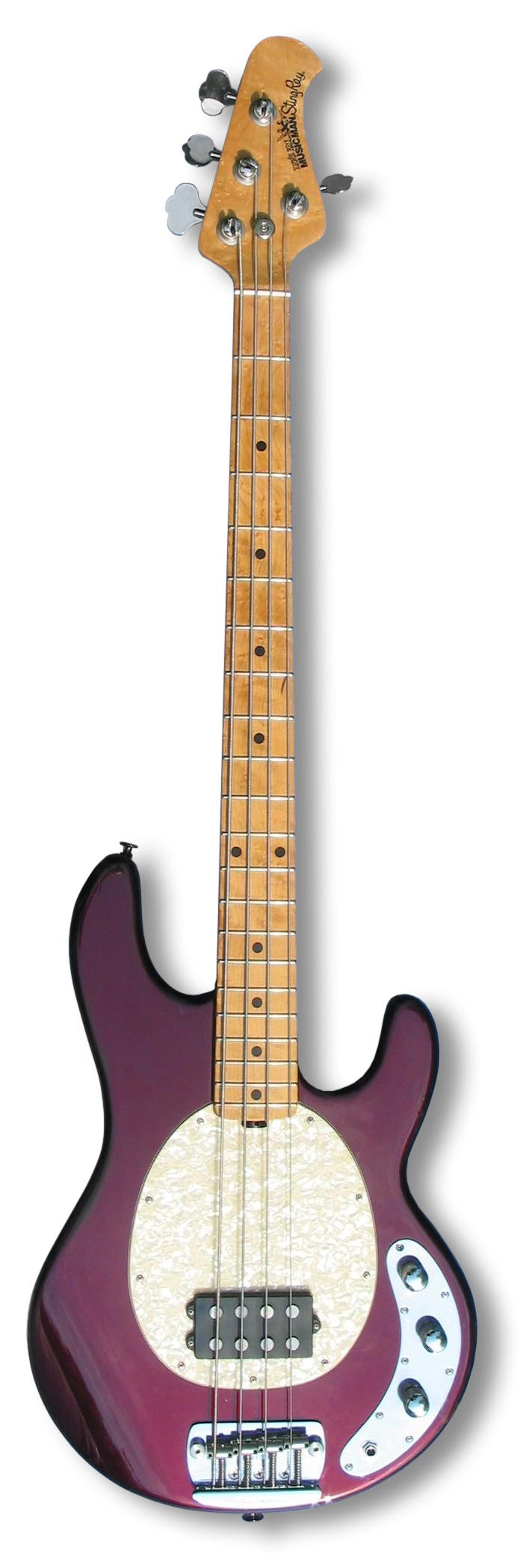
Photo: Th. Ott / Wikimedia Commons / CC BY-SA 3.0 Music Man
StingRay
1976
Leo Fender wanted a wide, bright bass. Louis Johnson hit it with his thumb, and funk had its sound.

Fender Jazz Bass from 1966 in Olympic white with the transition fingerboard (bindings and dot inlays). Photo by Th. Ott. Licensed under CC BY-SA 3.0. Via Wikimedia Commons. Fender
Jazz Bass
1960
Built for jazz players who mostly passed on it. Then bass players started using it to take the solo.