Warwick
Thumb
Named for one funk player’s thumb, fixed by Jack Bruce’s complaint, and the bass Bruce said he’d quit without.
Germany, 1985. An American bassist named John Davis, who pops his strings hard with his thumb, has been working with a small new bass maker. The maker’s next bass is built around that style: a tiny body, twenty-six frets, and the first run wears Davis’s initials.
- Introduced
- 1985
- Type
- Solidbody bass
- Class
- Production
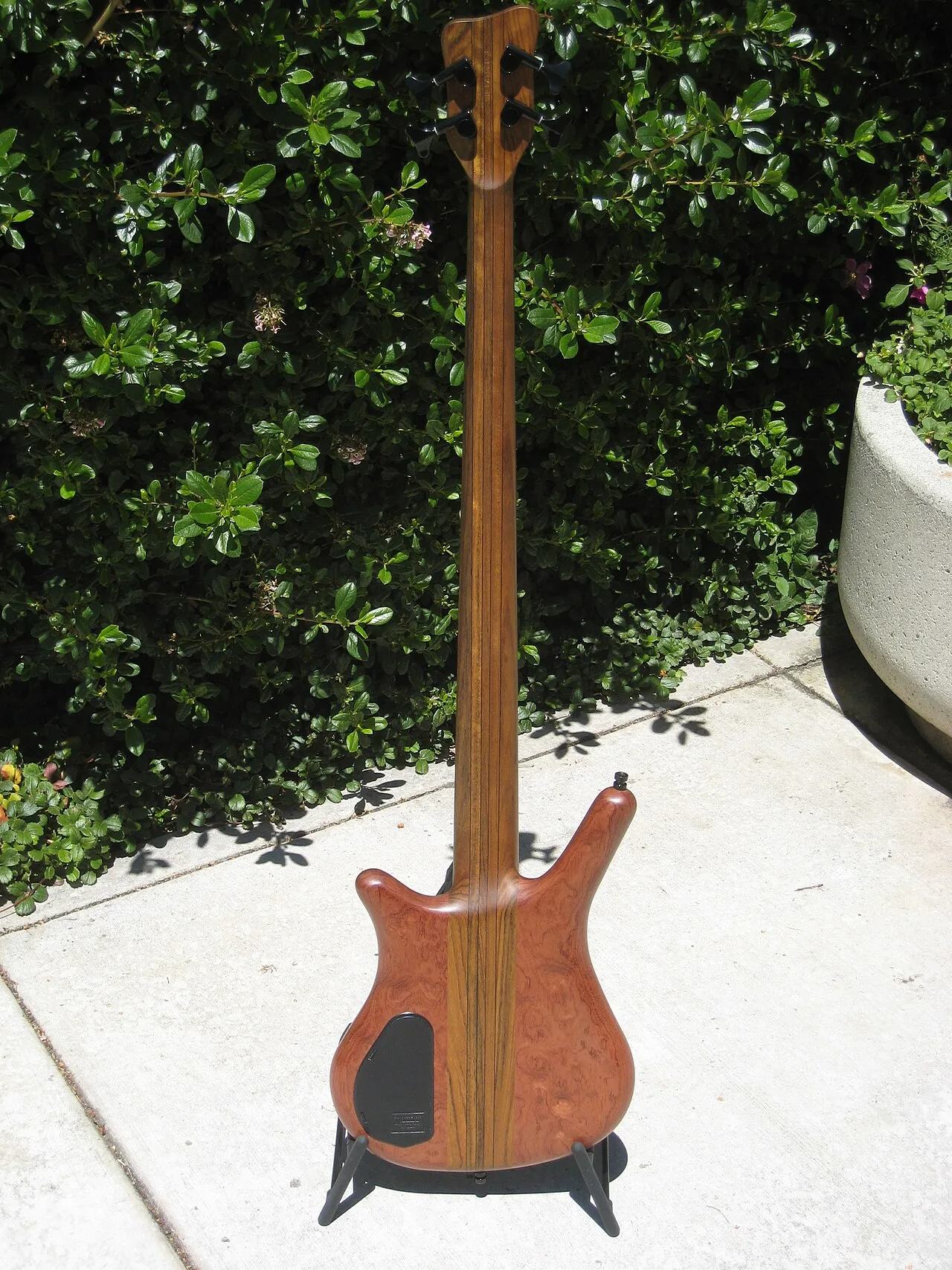
The short version
1982
Warwick opens
Hans-Peter Wilfer starts the company. Some lists date the Thumb to this year too. The bass itself came later.
1985
The JD Thumb
The first Thumbs carry John Davis’s initials. Jack Bruce finds one in a shop.
1986
Five strings
The five-string arrives. Some call it the first five-string bass produced in Europe.
1987
Restyled
After Bruce’s notes on the balance, the JD badge goes and the two-piece brass bridge comes in.
1990
The Bruce hundred
MEC pickups arrive, and Warwick makes 100 numbered fretless Jack Bruce Thumbs.
1993
Prince
From the Act II tour on, the Thumb becomes his preferred bass, live and in the studio.
2005
Cream again
Bruce plays his rosewood fretless Thumb at the Cream reunion.
Side A
A1
A bass named after a thumb
Most basses are named after a place, a company, or somebody famous. This one is named after a thumb, and not even a famous one.
In the early days of Warwick, the German company Hans-Peter Wilfer started in 1982, an American bassist named John Davis had a hand in a new design. Some say he was a serviceman stationed in Germany. His style was funk, popping and slapping, with the stubbiest finger on his right hand doing most of the work. In 1985 Warwick built a bass for exactly that kind of playing, and the first run had his initials on it: the JD Thumb.
Wilfer said later it was “the first bass with such a small body.” It was made for one player’s hand. It ended up belonging to somebody else’s.
A3
Jack Bruce complains
Jack Bruce, from Cream, was already one of the most famous bassists alive. The stories of how he found the Thumb don’t quite match. Wilfer says Jack saw one in a shop in Cologne and bought it, and that’s how the relationship started. Jack’s version, in his biography, has him buying one in a small-town shop and telling the factory the balance was wrong:
…and that’s where the Warwick Thumb comes from.
Both can be true. Either way, Warwick restyled the bass around him. By 1987 the JD badge was gone. The five-string had come in 1986, with its pickups moved in close together, and a six-string followed in 1988. In 1990 Warwick made a hundred numbered fretless Jack Bruce Thumbs, with little red lights down the side of the neck. Not many people bought them. The idea later went into the catalog as his signature model.
Flip the record · By the numbers
26
Frets on a 34-inch scale. You can actually reach the last one.
7
Layers of wenge and bubinga in the neck of a 1986 original, hidden inside the body.
100
Numbered fretless Jack Bruce Thumbs in 1990.
1985
The year Wilfer says the first Thumb was made.
Side B
B1
Prince, Fishbone, and a record advance
In the mid-’90s the Thumb became Prince’s bass of choice, on stage and in the studio. He had three that are still at Paisley Park: a white four-string with a custom eye painted on it, a black five-string with the lyrics to “Gold” written on it in gold, and a natural fretless. Sonny T played the black one in the “Gold” video. Rhonda Smith played the fretless in “The Holy River.”
In 1991 a magazine listed Fishbone bassist John Norwood Fisher’s gear, starting with “a Warwick thumb bass with a bubinga and wengewood body.” He bought his first one from Robert DeLeo of Stone Temple Pilots. Ryan Martinie of Mudvayne spent part of a record advance trying a whole pile of basses, and the Thumb was the one that worked. On “A Key to Nothing,” as he put it, “The rest of the song is my Warwick Thumb 4.”
B2
The one he couldn’t put down
In 1993 Warwick built Jack Bruce a fretless Thumb in Brazilian rosewood, the first one they made for him in that wood. He took it to his Rock and Roll Hall of Fame induction that year. He played it with Cream again at the reunion in 2005, with “White Room” and “Sunshine of Your Love” near the end of the set. He played it on Silver Rails, his last album, in 2014.
He said that if anything ever happened to that fretless Thumb, he might as well hang it up.
John Davis’s thumb gave the bass its name. Jack Bruce gave it its balance, and then he kept it busy for almost thirty years.
Put this on
You’ve read about it. Now hear it. Here’s what this guitar sounds like, and what to listen for.
Sunshine of Your Love (Cream reunion)
Jack Bruce on his 1993 Brazilian rosewood fretless Thumb, in the closing half of the Cream reunion shows. “White Room” is from the same set.
Watch it on YouTube (opens in a new tab)Silver Rails
The same rosewood Thumb, on Bruce’s last studio album.
Find it on YouTube (opens in a new tab)A Key to Nothing
Ryan Martinie plays the verses on a fretless Pedulla, and in his words, “The rest of the song is my Warwick Thumb 4.”
Find it on YouTube (opens in a new tab)Gold (video)
Sonny T is playing Prince’s black five-string Thumb, the one with the lyrics to “Gold” written on it in gold.
Watch it on YouTube (opens in a new tab)
The cast
The people, and the specific guitars, that made the legend.
1985
John Davis
The JD Thumb
An American bassist working in Germany whose thumb-popping funk style the bass was named for.
1985
Jack Bruce
Fretless Thumbs
Bought his first in a German shop, told Warwick the balance was wrong, and kept playing them, including his 1993 rosewood fretless.
1990s
Prince
Three Thumbs
A white four-string with an eye graphic, a black five-string lettered with “Gold,” and a natural fretless. All three are at Paisley Park.
1990s
Rhonda Smith
Prince’s fretless Thumb
Plays the natural fretless in the “The Holy River” video.
1991
John Norwood Fisher
Bubinga and wenge Thumb
Fishbone’s bassist. Robert DeLeo sold him his first one.
2002
Ryan Martinie
Thumb 4, tuned low
Tried a lot of basses on his record advance. The Thumb was the one that worked.
Liner notes
Specs, construction, rarity, value, and every source we used.
Hidden neck-through, twenty-six frets on a 34-inch scale, and a body small enough to slap — Warwick’s Thumb NT, not a Streamer, and not the bolt-on.
- Body
- Bubinga pommelé; ergonomic curved silhouette; hidden neck-through
- Neck
- Wenge with ekanga veneer stripes, 5 laminations; hidden through-neck
- Fingerboard
- Tigerstripe ebony (fretted); tigerstripe ebony (fretless). 20" radius, 26 jumbo bronze frets, IFT. Mix flagged.
- Scale
- 34" (864 mm)
- Pickups
- Active MEC J/J, brushed metal covers. Bridge pickup angled.
- Hardware
- Warwick 2-piece solid brass bridge; Graph Tech Ratio tuners with wooden pegs; Warwick security locks
- Electronics
- Active Warwick 3-band with rechargeable lithium battery; volume and balance stacked (push/pull), mids, stacked bass/treble
- Finish
- Natural oil, transparent satin, or high polish
- Nut
- Just-A-Nut III brass, 38.5 mm / 1.5"
Open the full research fileConstruction details, the complete player record, production numbers, dated value estimates, and sources
Current typical = Masterbuilt Thumb NT 4-string (Markneukirchen; shop.warwick.de, fetched 21 September 2026). Factory prints mixed inch/mm; no millimetres invented. Factory cart €8,160 oil for the 4-string. One German SKU prints a 45.0 mm nut on a 4-string; other 4-string carts print 38.5 mm / 1.5" — mix flagged, not averaged. 5- and 6-string NT exist (5-string radius 26"; 6-string soapbar H/H). Masterbuilt Thumb BO is bolt-on, 24 frets. Teambuilt / GPS Thumb BO is the German production bolt-on. Thumb SC is the 2010 single-cut. Jack Bruce signatures are adjacent SKUs. Not a Streamer. No Gibson SKU.
Construction
The job was a small bass you could slap without fighting a slab. Hans-Peter Wilfer, Vintage Guitar (Willie G. Moseley, July 2017): designed for comfort in slapping and playing in a virtuosic way, “the first bass with such a small body.” Chicago Music Exchange: 26 frets, and you can play up to the last one. Bass Center’s megabass.it chronology (12 July 2016): the first bass designed entirely by Warwick, if you treat the Nobby-Meidel and the Streamer as Steinberger and Spector cousins. That is the split. This table is not that curve (warwick-streamer).
Warwick itself starts 13 September 1982. Vintage Guitar: Wilfer’s father, Fred, had founded Framus in 1946; Hans-Peter started Warwick that September in a tiny Bavarian workshop. Guitar-list dates the Thumb to 1982 — the company year, not this bass. MusicRadar (Roger Newell, 28 October 2011), Vintage Guitar, Sweetwater, and Wilfer put the Thumb in 1985. Wilfer, Chicago Music Exchange: “The first thumbbass we made in 1985.” Keep 1982 as the shop. This plate starts in 1985.
The first run wore JD. Vintage Guitar: JD Thumb Bass, for expatriate American bassist John Davis, whose popping, funk-based style used the stubbiest digit on his right hand. Bass Center: a U.S. serviceman stationed in Germany who took an active role in the model. Then Jack Bruce. Wilfer: Jack saw it in a Cologne shop, bought his first, and the relationship started. Sotheby’s quotes Harry Shapiro, Jack Bruce, p. 284: Jack bought a Warwick in a small-town shop, told the factory the balance was wrong, “and that’s where the Warwick Thumb comes from.” Keep both. Wilfer has a 1985 bass Jack found. Jack has a balance complaint that restyled it.
What you get is a hidden neck-through. Vintage Guitar, on a 1986 original: seven-layer wenge and bubinga assembled so it doesn’t look like a neck-through; a cap of three sections — two wings and a plank covering the neck as it courses the body — cut from one piece and installed to look contiguous. Wilfer: measurements of hundredths of millimetres. Bass Center: four wenge strips separated by three wider bubinga strips, 26 frets, J/J, the bridge pickup on the diagonal so the D and G speak up. Vintage Guitar the same angle. Oil and beeswax on bubinga. Brass Just-A-Nut. Schaller tuners, straplocks, and a one-piece bridge of Wilfer’s design. Early boards are wenge. EMG, Seymour Duncan, Bartolini, and Schaller sat in the routes before MEC.
Not the Streamer. Visible through-neck, Ned’s NS curve, reverse-P and J, 24 frets (warwick-streamer). This is the small hidden-neck with 26. Not Stage II, which borrowed the hidden neck and is still a Streamer. Not Thumb BO. Bass Center: first bolt-on 1994–95, walnut, 24 frets, then bubinga 1995–97. Guitar-list: 1994. Warwick Forum: 1993–94. Keep 1993, 1994, and 1995. BO is screws, not this table. Not Thumb SC. Wikipedia: forum contest, NAMM 2010, swamp ash with bubinga pommelé top, flamed-maple neck, soapbar humbuckers. Single-cut. Not Buzzard (Entwistle, 1985–86). No Gibson SKU.
Then the instrument changed. 1986, five-string: Bass Center has the neck pickup moved in, almost against the bridge pickup and parallel — not a four-string with a B bolted on. MusicRadar: first five-string produced in Europe, that source’s claim. 1987, the two-piece brass bridge still on the spec sheet. Bass Center: JD drops after a closer restyle with Bruce; leftover plaques on transition instruments. 1988, six-string, Bartolini soapbars. 1990, MEC pickups, February on Bass Center’s chronology. Jack Bruce limited that year: Bass Center, 100 numbered fretless four-strings with red LEDs. Demand was thin; the idea later sat in the catalogue as a signature. 1992, lighter alloy bridge; Bass Center says the already-soft balance got worse. 1995, the shop left Franconia for Markneukirchen.
German Wikipedia: Custom Shop is Masterbuilt, Germany; Pro Series is Teambuilt, also Germany; RockBass is “Standard,” China. Wikipedia’s RockBass list does not include a Thumb this pass. Same silhouette at two German prices, bolt-on under it. The table is Masterbuilt NT 4-string: pommelé, wenge/ekanga, tigerstripe ebony, MEC J/J, 3-band lithium, two-piece brass, Just-A-Nut III. Classic vs current: 1985 JD — seven-piece wenge/bubinga, wenge board, EMG or Duncan, Schaller one-piece, short horn — against that living Markneukirchen 4-string. Same small body. Same hidden neck. Same slug.
Players
Do not hang a Streamer, a Buzzard, or a Jack Bruce JB3 on this plate. Do not recruit Mike Inez or Robert Trujillo from the Streamer list. Do not flatten L.D. 50 onto a Thumb Martinie had not bought yet.
Jack Bruce (Cream). The player this bass kept. Official site: after Aria and Spector long-scales he found Warwick; the Jack Bruce Signature is a modified fretless 4-string Thumb with MEC and side LEDs. Sotheby’s lot 24: 1986 fretless, serial D369 86, Seymour Duncan, one of his first; BBC South Bank Show with Clapton, 1987; 1989 U.S. tour with Ginger Baker and Blues Saraceno. Lot 36: 1993 Brazilian rosewood, serial A-003638-93, the first Warwick made for him in rosewood — Rock Hall induction 1993, BBM mid-1990s, Cream reunion 2005 (closing half: “White Room,” “Sunshine of Your Love”), Silver Rails (2014). Jack, via Sotheby’s: if something happened to that fretless Thumb, he might as well hang it up. Vintage Guitar: two signatures; the first a limited four-string Thumb, the later one reminiscent of his ’60s Gibson EB-3. The JB3 Survivor (2012) is that later idea. It is not this table.
Ryan Martinie (Mudvayne). Guitar World (Chris Jisi, 22 September 2024, from a January 2003 Bass Player tour of The End of All Things to Come): mainly a Warwick 4-string, tuned C G C F. “The rest of the song is my Warwick Thumb 4” on “A Key to Nothing”; verses on a fretless Pedulla Buzz. L.D. 50 (2000) is the earlier Ibanez Soundgear / Dean 5-string tuning (F# B F# B E). Do not mash them. Warwick NAMM 2013: record advance, he tried a whole crap ton of basses, the Thumb was the one that worked; no factory alterations at first.
Prince. Guitarcloud, from Prince — Guitar & Bass (Paisley Park Archives): preferred live and studio bass in the mid-1990s, Act II tour onward. Three Thumbs, all now at Paisley Park: a white four-string with a custom “eye” graphic (Jeff Munson design, Steve Parke airbrush), seen on The Gold Experience and Emancipation stages; a black five-string with the lyrics to “Gold” in gold lettering; a natural fretless four-string, near-mint — Rhonda Smith plays it in “The Holy River” video. Sonny T played the black/gold five-string in the “Gold” and “Endorphinmachine” videos.
John Norwood Fisher (Fishbone). Musician (Roy Trakin, May 1991): “a Warwick thumb bass with a bubinga and wengewood body,” plus a fretless Fender and an Alembic. Equipboard: Warwick interview in which he says Robert DeLeo sold him his first Thumb. Album-to-bass credits for named Fishbone sides are unpublished here.
Also known to play stays short. Wikipedia: custom fretless seven-string Thumb NT basses for Jeroen Paul Thesseling (Obscura / Pestilence). Those are custom objects. Do not recruit Entwistle, Inez, Trujillo, or P-Nut from the unsorted Warwick artist list.
Rarity
You can order a new Thumb NT from Markneukirchen. Masterbuilt NT, Masterbuilt BO, and Teambuilt/GPS BO all coexist on this silhouette. GPS is not a Masterbuilt NT. Custom Shop is the limited current line. It is not vintage rare. Wikipedia’s RockBass list does not print a Thumb this pass.
Warwick does not publish Thumb unit totals. None invented. Serials date a bass; they don’t count a model. Bass Center: about 60–70 instruments a month in 1984, about 100–120 a month by 1990 — company-wide, not a Thumb census. German Wikipedia: about 4,000 electric basses and guitars in 2009, company-wide. Same caveat. Bass Center on the 1990 Jack Bruce limited: 100 numbered fretless four-strings. Wikipedia on the 2001 Limited Edition Thumb BO: 150 that year. Named limited runs. Not a 1985 factory total.
What is actually thinner: JD-badged short-horn Thumbs from 1985; EMG- or Duncan-era instruments before MEC (1990); seven-piece wenge/bubinga before the living five-piece ekanga; first-year five-strings (1986); the 1990 Bruce hundred. Bruce’s rosewood A-003638-93, Prince’s eye-graphic four-string, Martinie’s C G C F four-string are unique objects. They are not a vintage Thumb.
Value
Informal estimate, 21 September 2026. Not an appraisal.
Ask vs sold labeled. Celebrity lots are not-comps. No invented medians or factory counts. US Reverb Price Guide dollar widget did not print a clean NT-4 band this pass. Flag: thin sold-comp access.
New street. Factory Masterbuilt Thumb NT 4-string €8,160 oil (shop.warwick.de, fetched 21 September 2026). Named US dealer cart: Sweetwater $8,915. Named UK dealer: Bass Direct £6,599. Named Masterbuilt BO 4-string factory €6,830; Thomann €6,199. Teambuilt / GPS Thumb BO is the German production bolt-on, labeled adjacent: Music Store Live 4-string Nirvana Black $3,830; Sweetwater Pro Series BO 4-string $4,130. Do not average GPS with Masterbuilt NT.
Used modern. Named asks this pass, not hammers: 2001 NT4 $2,850 (was $3,850); 1996 NT4 Natural $3,500; 2005 NT4 $3,000 (was $4,000). Named 2025 Masterbuilt NT sold listing €7,051.14. Do not average those asks with new GPS.
Vintage / collectible. Named asks, not hammers: 1985 JD Thumb $3,631.82 (was $7,262.46); 1991 NT $3,061.94 (listing ended). Named Reverb Price Guide band on a 1990 NT 6: $2,091–$2,771 estimated used, against a $4,200 ask. Do not average a first-year JD ask with a 1990s six-string. Jack Bruce lots are unique. Not comps: Sotheby’s 2015 estimates £10,000–£12,000 (1986 D369 86) and £80,000–£100,000 (1993 rosewood A-003638-93); hammers unpublished here. No Treble (22 December 2018): the one-off 60th-birthday Thumb “estimated to be valued over $170,000.” That is one object.
See also
- warwick-streamer — the 1984 NS-curve through-neck this small hidden-neck is not
- spector-ns-2 — Ned’s 1977 curve; not a Thumb
- music-man-stingray — 1976 active bolt-on slab; not hidden-neck 26-fret
Sources
- Warwick, Masterbuilt Thumb NT — 4-string bubinga pommelé; wenge/ekanga 5-lam; hidden neck; 34"/864 mm; 20" radius; 26 jumbo bronze; nut 38.5 mm/1.5" (one SKU 45.0 mm); MEC J/J; 3-band lithium; 2-piece brass; €8,160 oil
- Warwick, Masterbuilt Thumb BO 4-String — bolt-on; 24 frets; bubinga; wenge board; MEC J; 2-band lithium; €6,830
- Vintage Guitar, Willie G. Moseley, Warwick Thumb Bass (July 2017) — Warwick September 1982; Framus 1946; Thumb 1985 as JD / John Davis; small body for slap; hidden neck-through, seven-layer wenge/bubinga; 26 bell-bronze frets on 34"; Just-A-Nut; angled treble pickup; two-piece bridge later; Jack Bruce signatures; Markneukirchen 1995
- Chicago Music Exchange, Q&A with Hans-Peter Wilfer — first Thumb 1985; small body, 26 frets; Jack Bruce bought one in Cologne
- MusicRadar, Roger Newell, Bass manufacturer profile: Warwick (28 October 2011) — Warwick 1982 Erlangen; Thumb 1985, still current; NT and BO; 4/5/6; Markneukirchen 1995
- Bass Center, L’histoire des Warwick (12 July 2016) — megabass.it chronology; Thumb first fully Warwick design; JD 1985–86; 7-piece wenge/bubinga; hidden neck; 5-string 1986; two-piece bridge 1987; JD dropped 1987; 6-string 1988; MEC 1990; Jack Bruce limited 100 fretless 1990; ~60–70/month 1984; ~100–120/month 1990; Thumb BO 1994–95 walnut, 1995–97 bubinga
- Wikipedia, Warwick (guitar manufacturer) — founded 1982 Erlangen; Markneukirchen 1995; Masterbuilt / Teambuilt / RockBass; 2001 Limited Edition Thumb BO 150; Jack Bruce / Thesseling signatures; unsorted artist list
- Wikipedia (de), Warwick (Unternehmen) — Pretzfeld 1982; Markneukirchen 1995; ~4,000 basses and guitars 2009; Masterbuilt / Teambuilt / RockBass Standard (China)
- Wikipedia, Warwick Thumb SC — NAMM 2010 single-cut; swamp ash / bubinga pommelé; flamed maple; soapbar humbuckers
- Jack Bruce official, Gear — Warwick after Aria/Spector; Signature = modified fretless 4-string Thumb, MEC, LEDs; JB3 Survivor 2012 is the later EB-3 idea
- Sotheby’s, Jack Bruce lot 24 (2015) — 1986 fretless D369 86; Shapiro p. 284 shop-purchase / balance quote; South Bank Show 1987; estimate £10,000–£12,000
- Sotheby’s, Jack Bruce lot 36 (2015) — 1993 rosewood A-003638-93; Cream 2005 “White Room” / “Sunshine of Your Love”; Silver Rails; estimate £80,000–£100,000
- Guitar World, Chris Jisi, Ryan Martinie (22 September 2024) — Warwick 4-string, C G C F, The End of All Things to Come; Thumb 4 on “A Key to Nothing”; Pedulla verses; L.D. 50 is the earlier 5-string tuning
- Warwick, NAMM 2013 interview with Ryan Martinie — record advance; Thumb from a store, not a factory custom at first
- Guitarcloud, Warwick Thumb (Prince) — Act II onward; three Paisley Park Thumbs; Sonny T on the black/gold five-string
- Equipboard, John Norwood Fisher — Musician, Roy Trakin, May 1991: Warwick thumb, bubinga and wenge; DeLeo / first Thumb via Warwick interview
- Sweetwater, Masterbuilt Thumb NT 4-string — launched 1985; bubinga pommele; MEC J; 3-band lithium; $8,915
- Bass Direct, Masterbuilt Thumb NT — 2025; 5-piece wenge; 26 frets; nut 38.5 mm; £6,599
- Thomann, Masterbuilt Thumb BO NT 4 — bolt-on €6,199; NT 4 listed €7,499
- Music Store Live, Teambuilt Pro Series Thumb BO — GPS 4-string Nirvana Black $3,830; 5-string $3,199 (was $3,780)
- Sweetwater, Pro Series Thumb BO 4-string — $4,130
- Blue Book of Guitar Values, Warwick Thumb Bass NT — current mfg.; 4/5/6; stale 24-fret / seven-piece copy vs living 26-fret ebony
- No Treble, Warwick Unveils 60th Anniversary Thumb Bass (22 December 2018) — one-off birthday bass; estimated over $170,000
- Reverb, Warwick Thumb marketplace listings — named 1985 JD / 1990s–2000s NT asks this pass; Price Guide widget thin on NT-4
- guitar-list, Warwick Thumb Bass — tertiary 1982 date (company year); bolt-on 1994
- Warwick Forum, Thumb / All Warwick Basses (17 August 2010) — Thumb BO 1993–94; 5-string 1986; two-piece bridge 1987; MEC late 1980s / early 1990s
Keep digging
Guitars this one gets compared to, confused with, or descended from.
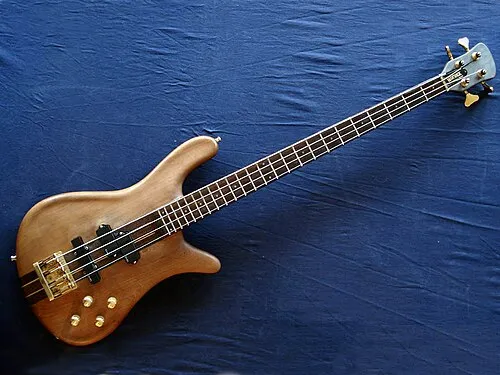
Photo: Jarlmos / Wikimedia Commons / CC BY-SA 3.0 Warwick
Streamer
1984
It started as a German copy of a bass Europe couldn’t get. By the time the lawyers came back, it wasn’t one.
- Send a picture
Spector
NS-2
1979
It started with a man looking for a belt sander. Sting found his lying on the stage before soundcheck.
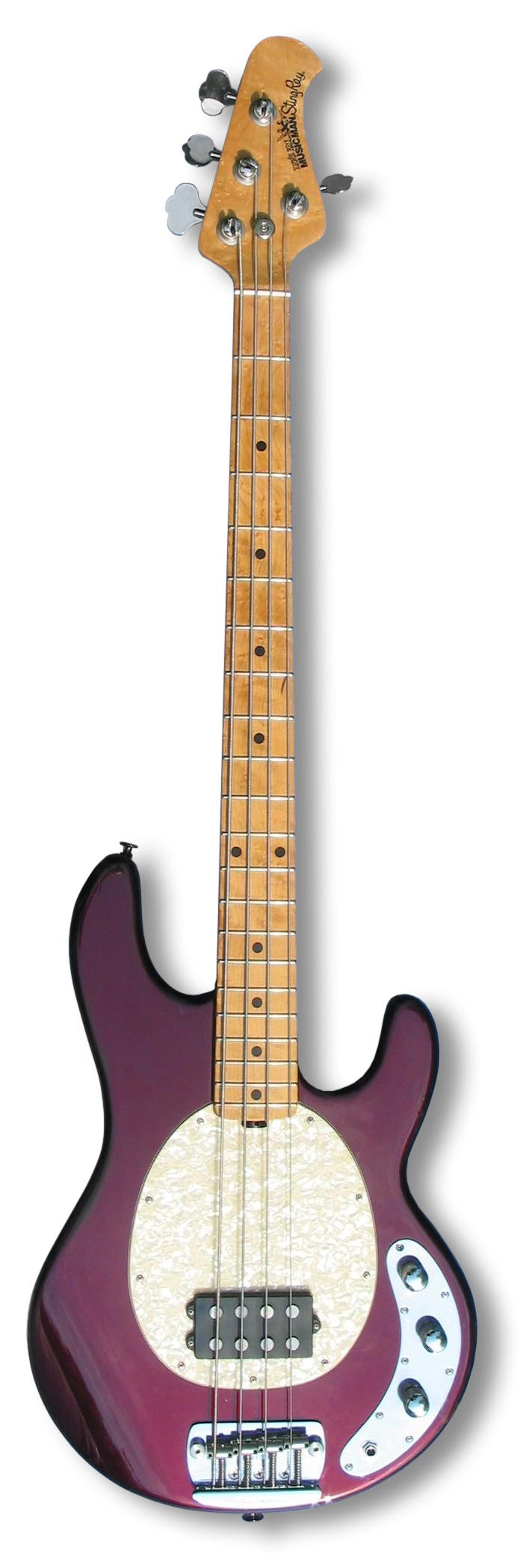
Photo: Th. Ott / Wikimedia Commons / CC BY-SA 3.0 Music Man
StingRay
1976
Leo Fender wanted a wide, bright bass. Louis Johnson hit it with his thumb, and funk had its sound.