Boss
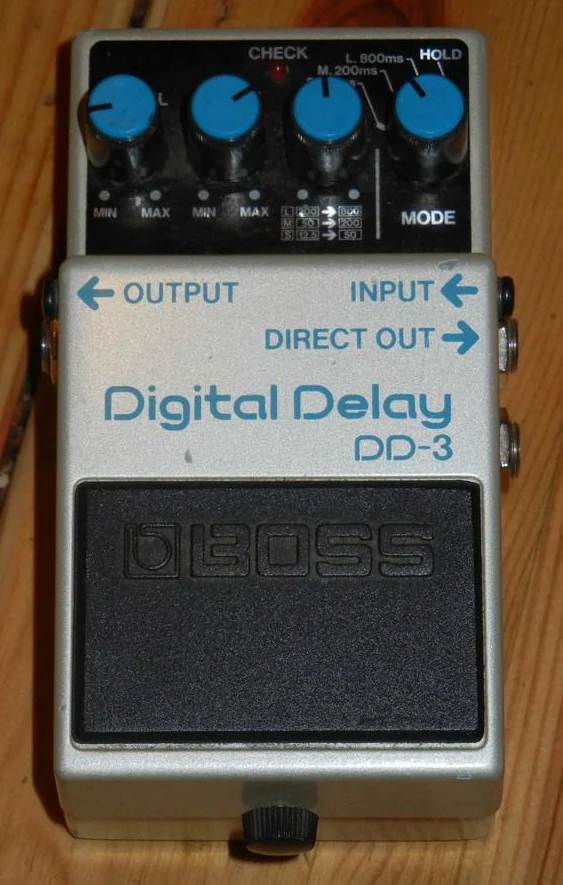
DD-3 Digital Delay
Boss changed only the name, and Noel Gallagher calls it the greatest delay pedal of all time.
Knebworth, August 1996. Oasis play two nights, and the accounts of Noel Gallagher’s floor don’t agree on what was on it. Every one of them has a Boss DD-3.
- Introduced
- 1986
- Effect
- Delay
The short version
1983
The first one
Boss squeezes the chip from Roland’s SDE-3000 rack delay into a pedal and calls it the DD-2, the first digital delay in stompbox form.
1986
Same pedal, new name
The chip gets cheaper, and Boss renames the pedal the DD-3. The circuit stays the same.
1987
The delay bug
Supporting Billy Idol, Billy Duffy hears Steve Stevens at soundcheck and is blown away.
Late ’80s
The long chip goes
A smaller chip replaces the original, and players start talking about “long chip” DD-3s.
1996
Knebworth
Noel Gallagher’s DD-3 is on the floor for both of Oasis’s nights at Knebworth.
2003
De-Loused
Omar Rodríguez-López blends a DD-3 with phasers, chorus, and filters on The Mars Volta’s first album.
2012
Two boards
Nels Cline’s Wilco rig has a DD-3 on the main board and a Deluxe Memory Man on the second.
2019
Tap tempo
The DD-3T adds tap tempo and carries the line on. Tom Morello’s board has two DD-3s, one long and one tight.
Side A
A1
Whatever else was on the plywood
Knebworth, 10 and 11 August 1996. Oasis play two nights, and Noel Gallagher’s pedalboard barely counts as one. In one telling it’s “a mere piece of plywood” with two pedals on it: a Boss tuner and a Boss DD-3 Digital Delay.
His guitar tech, talking a few months after the shows, described it differently. In his version the guitar went “into a Vox wah-wah pedal and a couple of Boss pedals,” a DD-3 and a phaser, and then on into the tuner. So nobody quite agrees on what else was down there. Everybody agrees on the delay.
That’s the kind of pedal it is. Things come and go around it. It stays.
A2
A rack delay in a stompbox
The DD-3 is really the second chapter of a pedal that came out in 1983. Roland had a best-selling rack delay that year, the SDE-3000, and Boss’s engineers worked out that its custom chip, the one players still call the “long chip,” could fit inside a compact pedal. They put it in the same size box as Boss’s analog DM-2 delay and called it the DD-2.
It was the first digital delay in stompbox form, and the first digital pedal of any kind Boss made.
Digital, here, means your guitar gets turned into numbers by 12-bit converters, held for a moment, and played back. An analog delay like the Deluxe Memory Man passes the signal down a bucket brigade of tiny capacitors instead, and every repeat comes back a little more worn. They aren’t twins, and Ed O’Brien has the fairest description of the difference:
Slightly cleaner than an analog delay, but still has lots of character.
A3
Same pedal, new name
Then the chip got cheaper. When it did, Boss changed the pedal’s name to DD-3 and cut the list price, even though the DD-2 and DD-3 were otherwise completely identical. One explanation for the new name is that Roland didn’t want a lower price to look like a drop in quality. The DD-3 arrived in 1986, in August by one count.
Do they sound the same? Depends who you ask. The circuits match, but plenty of players say the two sound different, without claiming one is better.
The long chip itself didn’t last. Sometime in the very late ’80s a smaller square chip replaced it, with better bandwidth and better audio specs. Naturally, a lot of guitarists prefer the old one, darker and warmer and more lo-fi. That’s the “long chip” DD-3 people talk about. All told, the pedal has gone through three distinct versions.
Flip the record · By the numbers
800 ms
The longest delay it does. The shortest is 12.5 ms.
4
Knobs. Effect Level, Feedback, Delay Time, Mode.
12-bit
Converters. Your guitar goes in as numbers and comes back out as echo.
2
DD-3s on Tom Morello’s board in 2019. One for solos, one for rhythm.
Side B
B1
Four knobs and one trick
The controls are plain. E.Level sets how loud the repeats are against your dry note. F.Back sets how many come back. D.Time sets how far apart they are, from 12.5 milliseconds out to 800.
The fourth knob, Mode, picks the range. S runs 12.5 to 50 ms, short enough to thicken a note more than echo it. M covers 50 to 200, and L covers 200 to 800, where the big, open repeats live. Then there’s Hold, which “repeats delay sound indefinitely.” Play a phrase, flip to Hold, and it keeps going under you. Call it a primitive looper.
There are separate Output and Dry jacks, so you can send the echo to one amp and the clean guitar to another. And an alkaline battery runs it for about 11 hours.
B2
One long, one tight
Look at the floors it ends up on. Tom Morello’s board in 2019 carried two DD-3s, one set longer for solos and one tighter for rhythm, next to a Phase 90, a Whammy, and a Cry Baby. Careful with the early records, though: on the first Rage Against the Machine album the delay was a DD-2.
Nels Cline’s Wilco rig in 2012 had a DD-3 and a DD-7 on the main board, with a Klon and a Whammy beside them, and a Deluxe Memory Man parked on the second board. Omar Rodríguez-López blended a DD-3 with a Small Stone, a Small Clone, and a filter on De-Loused in the Comatorium, and he uses the original version. Put on “Eriatarka” for his delay.
Ed O’Brien’s first compact Boss pedal was a DD-3, bought after he heard a Boss Micro Rack digital delay at an early rehearsal. He calls it “the sound of the ’80s.” The DD-5, in his book, is the sound of the ’90s, and that’s the one on The Bends and OK Computer.
B3
A cheat on the ear
Billy Duffy had no delay pedals at all in 1987, when he was supporting Billy Idol on the Whiplash Smile tour. Then he heard Steve Stevens at soundcheck and “was blown away.” He explains what a delay does better than any spec sheet:
The delay was there to make the guitar sound bigger and fatter and more impressive... it’s a cheat on the ear, a bit like the kind of reverb you get in a church as opposed to being in a basement.
He sets it around 800 ms. And he says why he landed on this one: “I’ve ended up using the DD3 ’cos it gives you that effect in an easily replaceable, robust, very reliable way.”
Boss has made plenty of delays since, with longer times and more modes. The original DD-3 is listed as discontinued now, and the line carries on as the DD-3T, the same pedal with tap tempo added. Noel Gallagher, meanwhile, has had the same road-worn DD-3 for twenty years and calls it the “greatest delay pedal of all time.”
Twenty years, same box. Whatever else goes on the plywood, it’s there.
Put this on
You’ve read about it. Now hear it. Here’s what this pedal sounds like, and what to listen for.
Knebworth 1996
Recorded over two nights in August 1996 and released in 2021. Gallagher’s tech listed “a couple of Boss pedals [DD-3 Digital Delay and a Phaser]” in the rig that weekend.
Find it on YouTube (opens in a new tab)De-Loused in the Comatorium
A Boss DD-3 is one of the colors Rodríguez-López blends on this record, alongside phaser, chorus, and filter. Boss points to “Eriatarka” to hear his delay.
Find it on YouTube (opens in a new tab)
The cast
The people who built it, and the players who made it famous.
1996
Noel Gallagher
Oasis
Had one on the floor at Knebworth. By 2023 he’d had the same road-worn DD-3 for twenty years, and he calls it the greatest delay pedal of all time.
2019
Tom Morello
Two DD-3s, long and tight
Sets one long for solos and one tighter for rhythm. On the first Rage Against the Machine album the delay was the older DD-2.
2003
Omar Rodríguez-López
The Mars Volta
Blended a DD-3 into the ever-morphing guitar on De-Loused in the Comatorium, and uses the original version in his rig.
2012
Nels Cline
Wilco
Ran a DD-3 and a DD-7 on his main board, with a Deluxe Memory Man on the second.
Billy Duffy
The Cult
Had no delay pedals until Steve Stevens’s soundcheck blew him away in 1987. The DD-3 is his “go to pedal for subtle delays.”
Ed O’Brien
Radiohead
His first compact Boss pedal. He calls it “the sound of the ’80s,” and a DD-3T is on his board now.
Often paired with
The pedals and guitars it usually shares a board or a record with.
- Send a picture
Dunlop
Cry Baby
1967 · Wah
An amp engineer’s shortcut, built into an organ pedal for horn players. Guitarists plugged in anyway.
- Send a picture
MXR
Phase 90
1972 or 1974 · Modulation
One knob, and the quiet swirl Eddie Van Halen stepped on when he wanted to be heard.
- Send a picture
DigiTech
Whammy
1989 · Other
Tom Morello used it to chase hip-hop’s high wail; Jack White used it to fake a bass line.
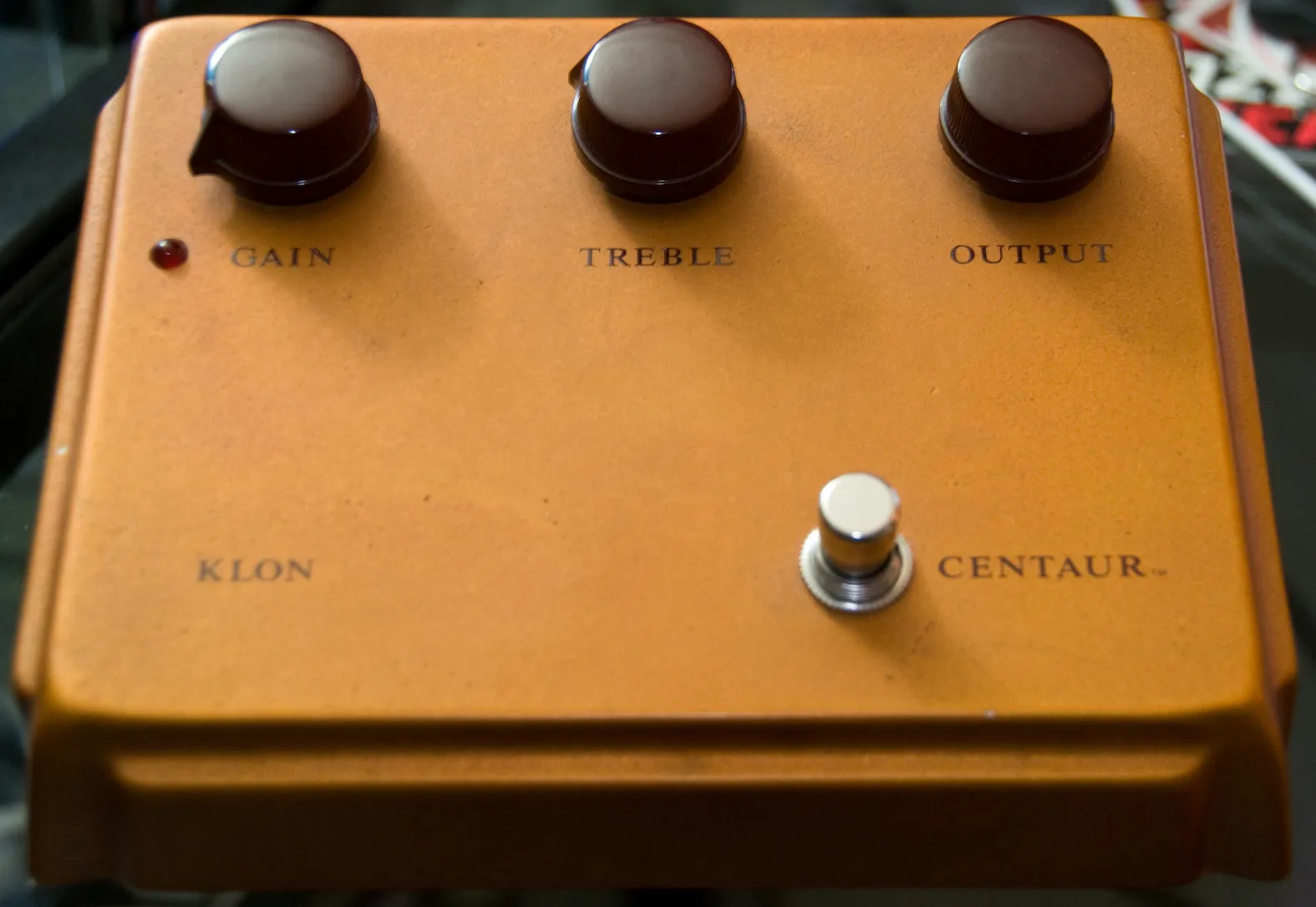
Photo: ArtBrom / Wikimedia Commons / CC BY-SA 2.0 Klon
Centaur
1994 · Overdrive
Bill Finnegan wanted an overdrive you couldn’t hear, and built about 8,000 by hand before he had to stop.
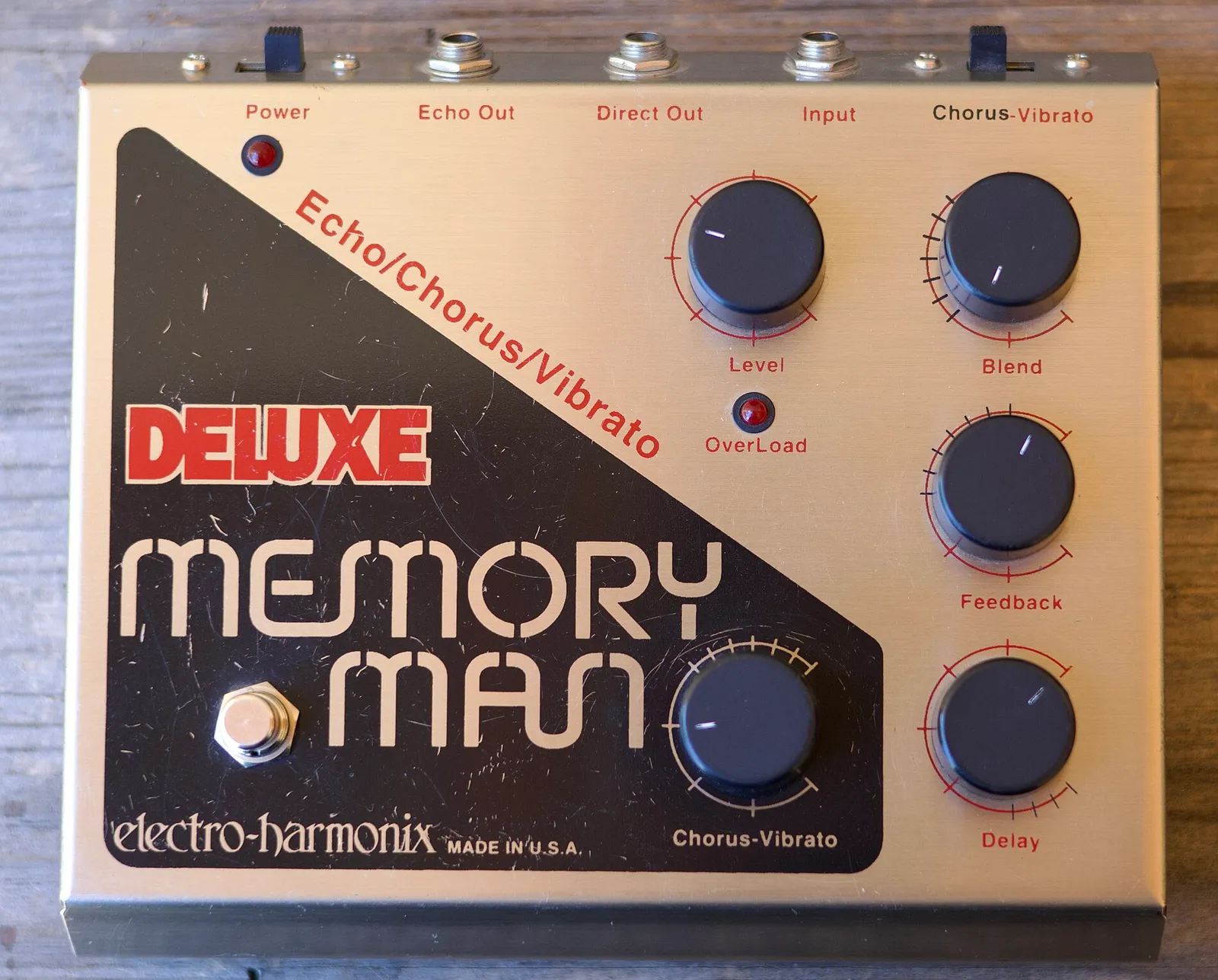
Photo: Bontempi1953 / Wikimedia Commons / CC BY-SA 4.0 Electro-Harmonix
Deluxe Memory Man
c. 1978 · Delay
A warm, wobbly analog echo, and the kind of box that taught the Edge the repeats could be the beat.
Fender Telecaster American Vintage 1952 with transparent background. Photo by Massimo Barbieri. Licensed under CC BY-SA 3.0. Via Wikimedia Commons. Fender
Telecaster
1950 · 4 versions
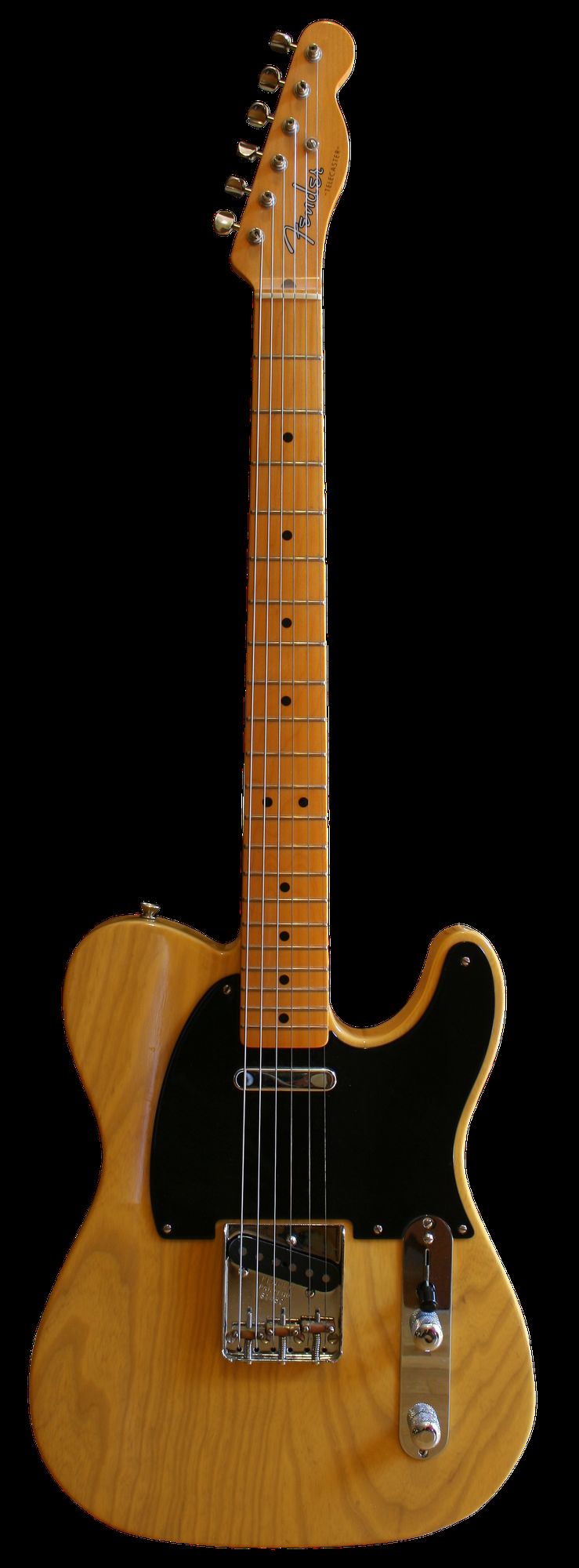
Leo built it like a tool. The famous ones look like they just clocked off a double shift.
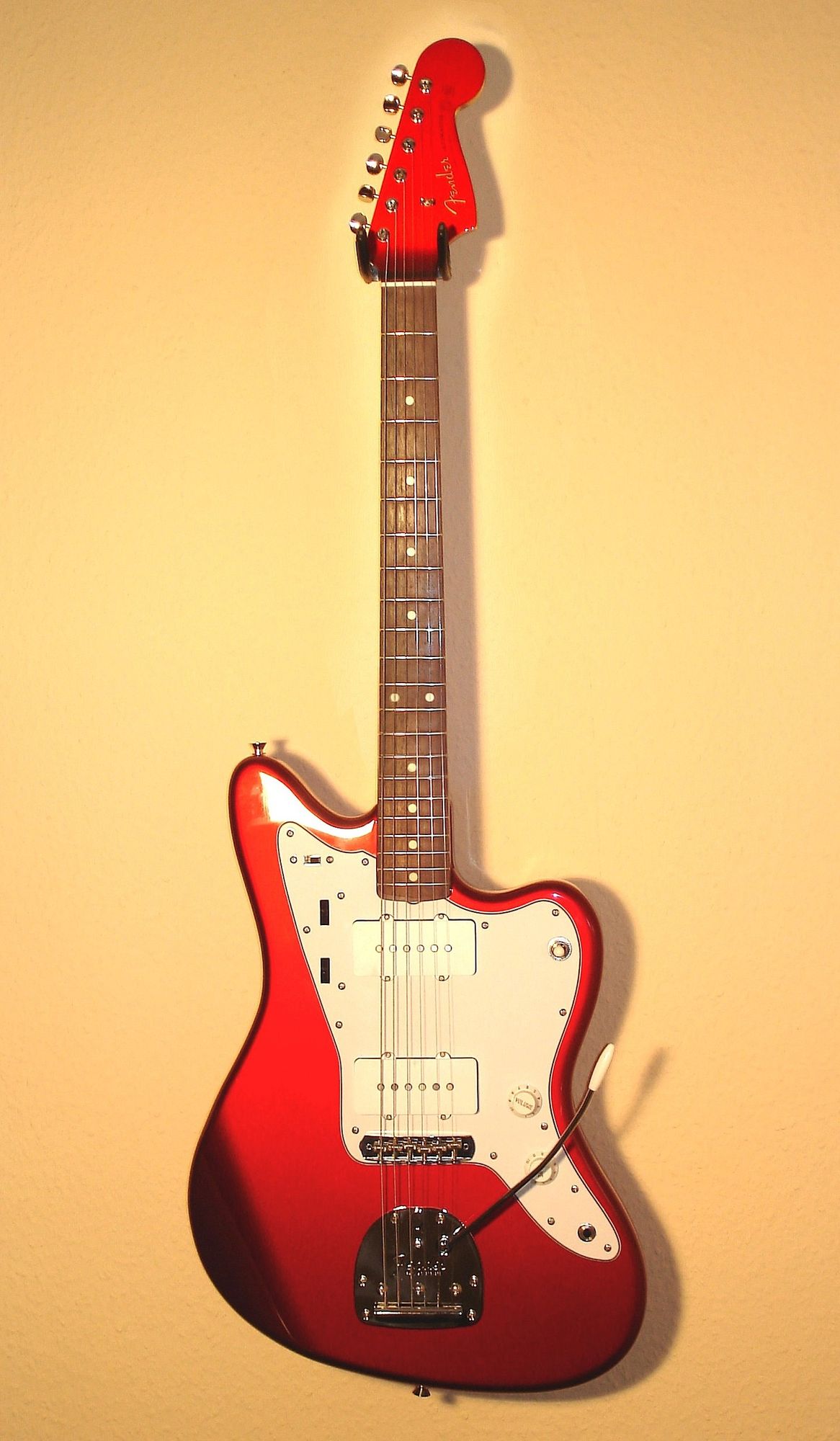
Photo: Dirk-X / Wikimedia Commons / CC BY-SA 4.0 Fender
Jazzmaster
1958
Fender built it for jazz players. Jazz players said no thanks. Surfers, punks, and noise bands said yes.
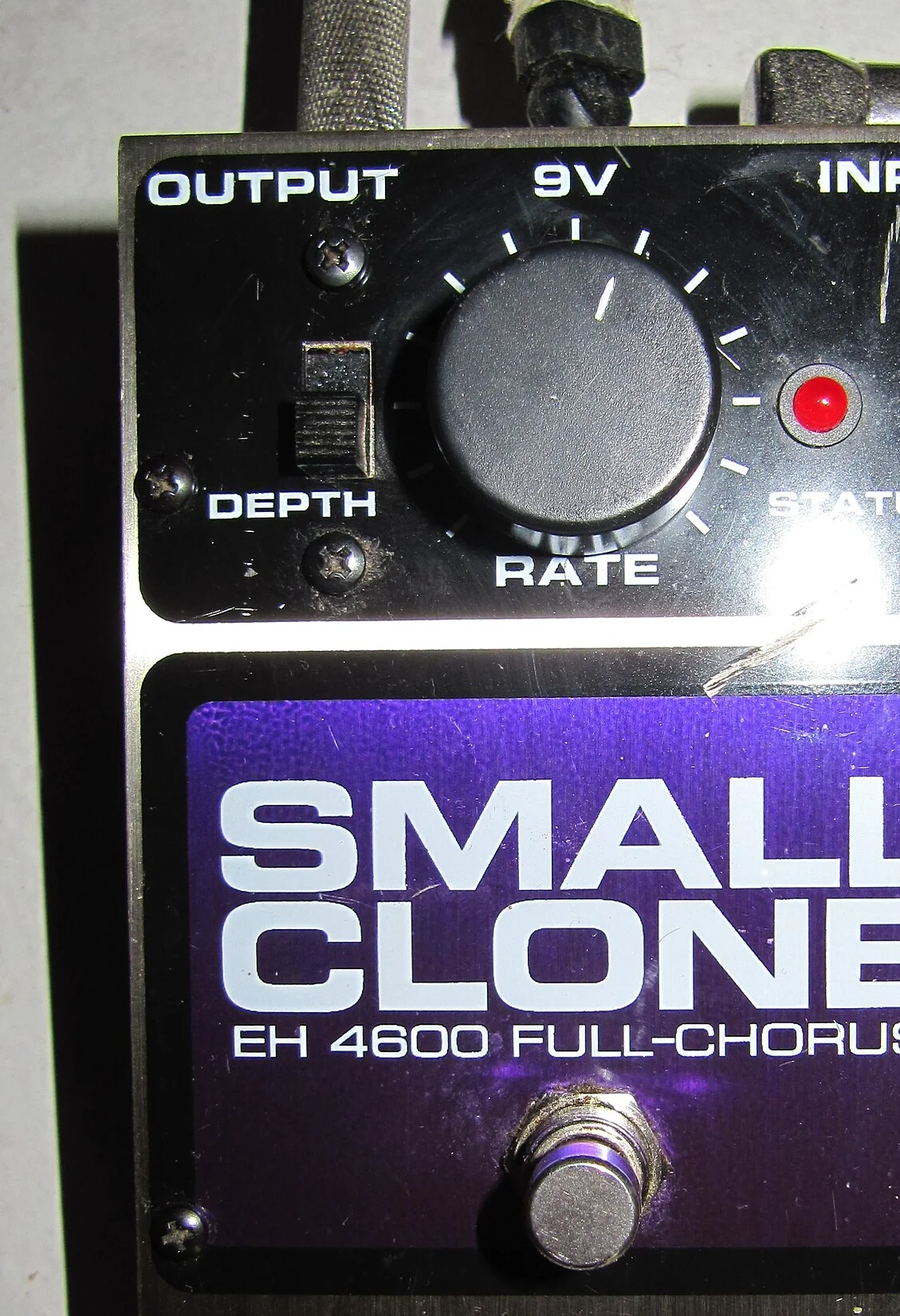
Photo: Sky99 / Wikimedia Commons / CC BY-SA 3.0 Electro-Harmonix
Small Clone
c. 1979 · Modulation
Its maker had gone broke years before it put the water under “Come As You Are.”