 Guitaripedia
Roger Mayer
Octavia
Notes that weren’t on the fretboard, in an unlabelled box Jimi Hendrix called the Octavio.
Hounslow, early 1967. At the Ricky-Tick club Jimi Hendrix puts his guitar neck through the low ceiling and wrecks the machine heads. After the gig it’s back to Olympic Studios, Noel Redding is sent to the flat for the Telecaster, and Roger Mayer plugs in the box he’s been building: an Octavia.
- Introduced
- 1966 or 1967
- Effect
- Fuzz
No photograph of this pedal yet. Have one? Send a picture
The short version
1964
Fuzz for friends
Roger Mayer, a guitar fan from southwest London who later worked on Admiralty research, builds fuzz pedals for Jimmy Page and Big Jim Sullivan.
1966 or 1967
The meeting
One account has Mayer showing Hendrix the Octavia in December 1966; Mayer dates their meeting to 11 January 1967.
1967
Purple Haze
In February, at Olympic, the Octavia makes its first appearance on record, in the solo, and Mayer says “Fire” was cut the same night.
1967
Fifteen versions
By Mayer’s count at least 15 evolutions follow in under a year, and he says the latest one is on several tracks of Axis, Bold as Love.
1969
The wedge boxes
Mayer finishes a run of about five wedge-shaped Octavias, for Hendrix and players including Syd Barrett and Peter Frampton.
1970
Band of Gypsys
Called in after Christmas because Hendrix’s Octavias had gone missing, Mayer brings a spare, and it’s on the Fillmore East album.
c. 1978
The rocket
Mayer puts the Octavia on sale for the first time, in a rocket-shaped case, years after Tycobrahe had copied it.
Side A
A1
Through the ceiling
Hounslow, early 1967. The Ricky-Tick club has a very low ceiling, and Jimi Hendrix puts the neck of his guitar straight through it. The machine heads are wrecked, and there’s no spare.
That’s a problem, because after the gig they’re going to Olympic Studios. Hendrix has a couple of solos to record. So the band heads back to the studio, and Noel Redding gets sent round to the flat to fetch the Telecaster.
Roger Mayer is there with a box he’s been building. He tells the rest himself: “That’s when we did the overdub for ‘Purple Haze’ and ‘Fire,’ using the Octavia.”
Mayer wasn’t a company. He was a 21-year-old engineer who built things for his friends, and he never put a label on a single one.
A2
The kid from the Admiralty
Mayer grew up in southwest London, played guitar, and knew Jeff Beck and Jimmy Page. He built treble boosters while he was still at school. In 1964 he made fuzz pedals for Page and for the session player Big Jim Sullivan, who used his on P.J. Proby’s “Hold Me.” After six years at university he went to work at the Admiralty Research Laboratories in Teddington, on vibration and acoustics, and kept building guitar boxes on the side.
The Octavia started with a simple wish:
I was thinking as you go up the fretboard, wouldn’t it be nice to double the frequency, so you could play notes that weren’t even on the fretboard, you know? That was the idea really.
He met Hendrix in a London nightclub, the Bag O’Nails, a few days after his 21st birthday. When exactly depends on who you ask. Mayer puts it on 11 January 1967. One Hendrix history has Mayer introducing him to the Octavia back in December 1966. About two weeks after they met, Mayer showed him an early Octavia backstage at a gig in Chislehurst Caves. Hendrix played through it and asked, “Can you do that to it?” Within about three weeks of meeting, by Mayer’s dates, it was on “Purple Haze.”
A3
A mirror image
It isn’t really making a note an octave up. Mayer is particular about this. Most people call it rectifying the signal, and he says that’s not accurate. What the circuit makes is “a phase-inverted mirror image of the signal, which makes it double.” It doubles the images of the note, and the ear hears twice the frequency, even though it isn’t really there.
What you get depends on what goes in. Push it with a fuzz and the upper octave jumps out, the way it does in the “Purple Haze” solo. Feed it a clean tone with the treble rolled off and you get strange, ring-modulated overtones instead. It works best high on the neck, on the top two strings from the seventh fret up, on the neck pickup.
Hendrix usually ran it after a fuzz and a wah. On “Purple Haze” the fuzz in front is argued over. One account says a Fuzz Face. Mayer says it was a germanium driver of his own, in a separate box. Either way, the octave is the Octavia.
Flip the record · By the numbers
21
Mayer’s age, a few days past his birthday, when he met Hendrix.
3
Weeks from meeting Hendrix to the “Purple Haze” solo, by one count.
15
Versions of the Octavia Mayer says they went through in less than a year.
5
Octavias, or so, in Mayer’s 1969 wedge-box run.
Side B
B1
Fifteen versions in a year
Chas Chandler, Hendrix’s manager and producer, had wanted to try new sounds on “Purple Haze.” After it, he forbade any more experimenting with the Octavia, finding it too far out for the public.
Mayer kept going anyway. That first unit was never used again in its original form, and he threw it in the bin. In less than a year there were at least 15 versions. “Some only had a life of a week or so,” he said. He says the latest of them was on several tracks of Axis: Bold as Love, the effect cleaner and better defined, though he doesn’t say which.
At the end of 1967 he designed a wedge-shaped case, made by his father’s electronics company, about five of them. He toured America with Hendrix in early 1968. “We never lost an Octavia though,” he said. In early 1969 he finished another small run, about five Octavias in wedge boxes, for players including Syd Barrett, Peter Frampton, Steve Marriott and Keith Relf. And Jimi, of course.
Hendrix had his own name for it. Mayer called them Octavias. Jimi called them the Octavio.
B2
All his ones were gone missing
By May 1969 Mayer had moved to New York. Just after Christmas his phone rang. Hendrix had a show at the Fillmore East on New Year’s Eve, with a new band, and he needed an Octavia: all of his had gone missing.
Mayer had one left from that 1969 run, and a distortion box. He took both to rehearsal.
Billy Cox, the bass player, said Hendrix was using a new combination of effects for the first time at those shows: a Uni-Vibe, a Fuzz Face, a wah and the Octavia. On “Machine Gun,” from the first set on 1 January 1970, the black Stratocaster runs through a Vox wah, a Fuzz Face and the Uni-Vibe, with the Octavia at the very end. On “Who Knows,” listen to the solo. Mayer says those ring-modulated overtones are the Octavia on a clean tone.
Hendrix once called Mayer “the secret” of his sound. Mayer didn’t build the Octavia for shops until around 1978 or ’79, in a rocket-shaped case, years after an American company called Tycobrahe had copied it and taken the name.
Before that, there was no Octavia in any shop. There were a handful of boxes with no labels, and a friend with a spare when Jimi called.
Put this on
You’ve read about it. Now hear it. Here’s what this pedal sounds like, and what to listen for.
Purple Haze
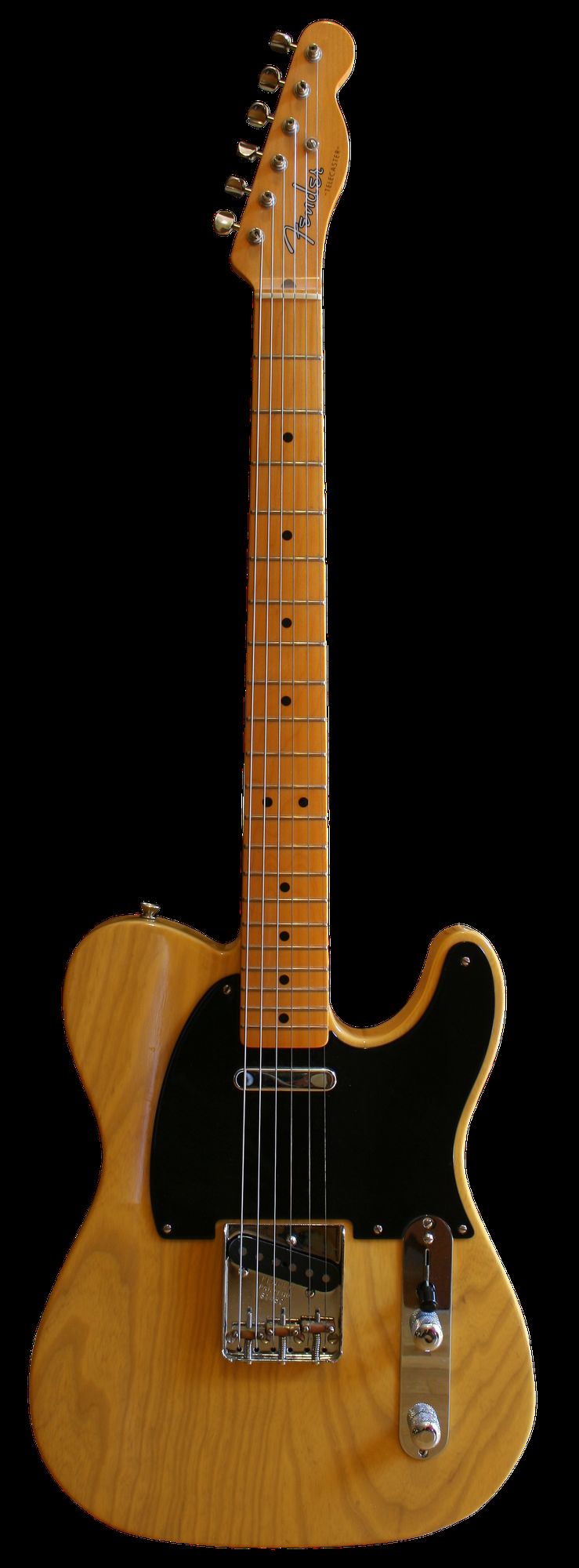
The Octavia’s first appearance on record, in the solo, played on a Telecaster. What drove it is disputed. One account says a Fuzz Face; Mayer says his own germanium driver.
Find it on YouTube (opens in a new tab)Fire
Overdubbed the same night at Olympic, “using the Octavia,” in Mayer’s words.
Find it on YouTube (opens in a new tab)Who Knows
Mayer says the ring-modulated overtones in the solo are the Octavia on a clean tone, with the treble rolled off.
Find it on YouTube (opens in a new tab)Machine Gun
The Octavia sits at the end of the chain, after a Vox wah, a Fuzz Face and a Uni-Vibe, with Hendrix on a black Stratocaster.
Find it on YouTube (opens in a new tab)
The cast
The people who built it, and the players who made it famous.
1967
Roger Mayer
Designer
Wanted to double the frequency “so you could play notes that weren’t even on the fretboard.” He never put a label on the boxes.
1967
Jimi Hendrix
The Jimi Hendrix Experience
First recorded with it on the “Purple Haze” solo, and called it the Octavio. Mayer says he usually ran it after the fuzz and the wah.
1967
Noel Redding
The Jimi Hendrix Experience
Sent back to the flat for the Telecaster the night of the “Purple Haze” overdub, by Mayer’s account.
1967
Chas Chandler
Manager and producer
Wanted new effects and sounds on “Purple Haze,” then forbade any more experimenting with the Octavia as too far out for the public.
1970
Billy Cox
Band of Gypsys
Said Hendrix played the Fillmore East shows with a new combination of effects for the first time, the Octavia among them.
1969
Syd Barrett
Pink Floyd
Got one of Mayer’s handful of 1969 wedge-box Octavias, Mayer says, as did Peter Frampton.
Often paired with
The pedals and guitars it usually shares a board or a record with.
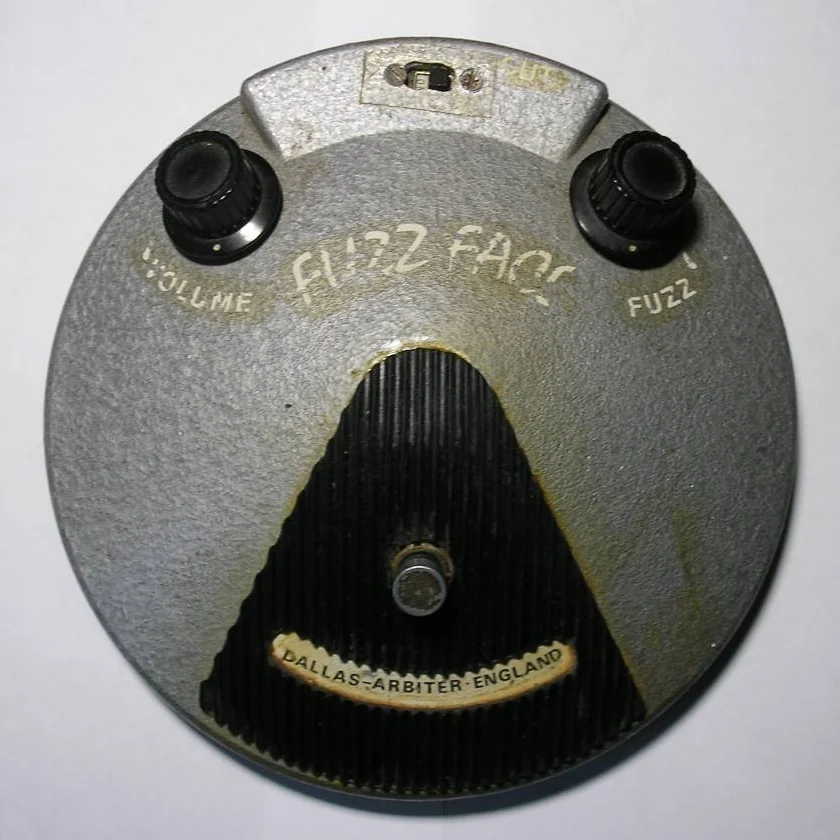
Photo: Djdaedalus / Wikimedia Commons / CC BY-SA 3.0 Dallas Arbiter
Fuzz Face
1966 · Fuzz
Two transistors in a round box that smiles, and the fuzz Jimi Hendrix bought by the handful.
- Send a picture
Univox (Shin-ei)
Uni-Vibe
1968 or 1969 · Modulation
Robin Trower plugged it in at Manny’s and heard Hendrix, then made the sound his own.
Fender Telecaster American Vintage 1952 with transparent background. Photo by Massimo Barbieri. Licensed under CC BY-SA 3.0. Via Wikimedia Commons. Fender
Telecaster
1950 · 4 versions
Leo built it like a tool. The famous ones look like they just clocked off a double shift.
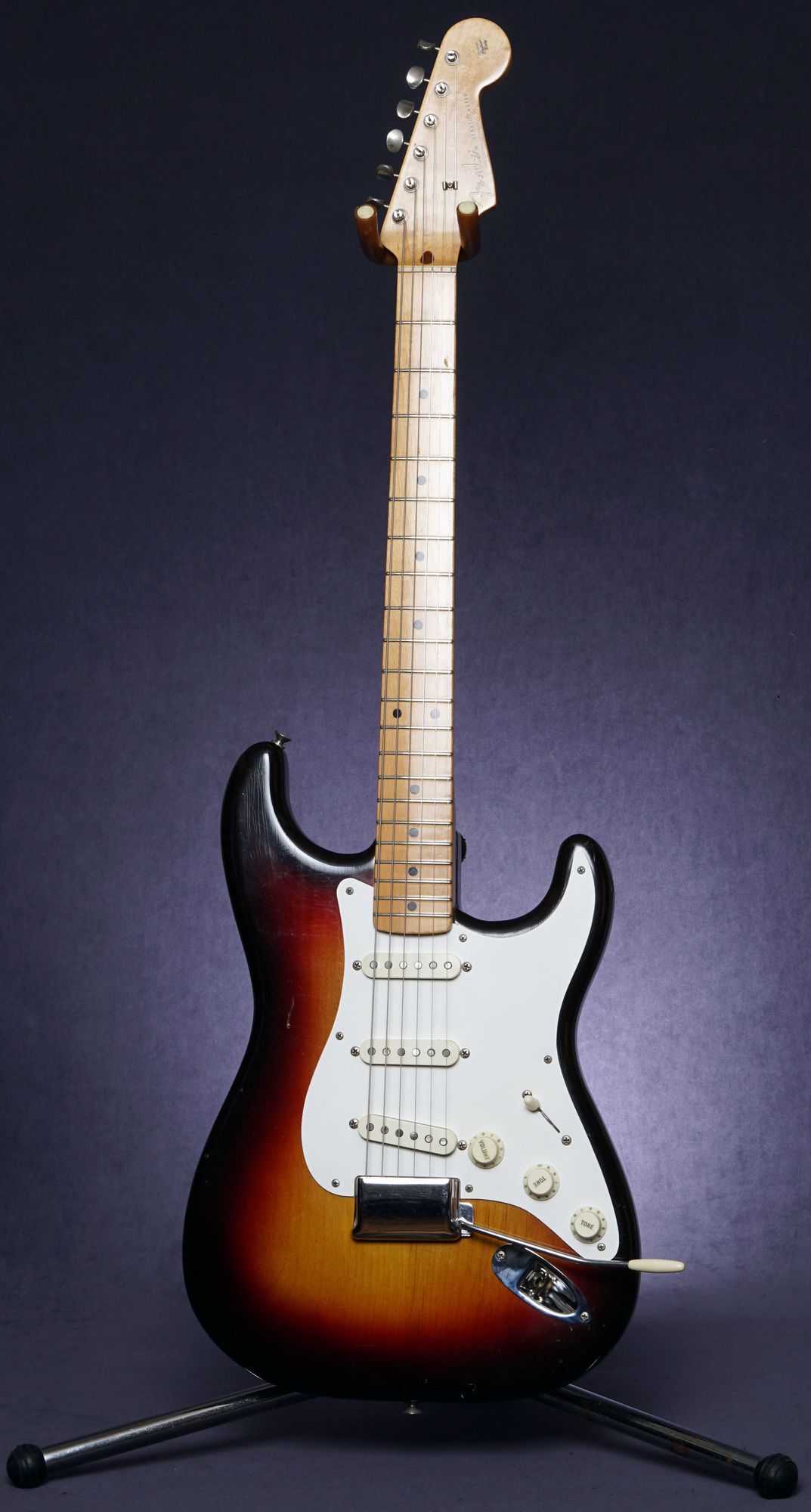
Photo: Lightburst / Wikimedia Commons / CC BY-SA 4.0 Fender
Stratocaster
1954
The guitar most people mean when they say “electric guitar.” Designed by a man who didn’t play one.