 Guitaripedia
Z.Vex
Fuzz Factory
Built in one panicked night, it squealed and wouldn’t settle down. Vex kept the knobs and let you steer.
1995. Zachary Vex is living on relocation money, and the man whose store stocked his first pedals has just told him to design another one. He goes home to a bag of odd germanium transistors from a surplus store and stays up all night. By morning the thing on his bench is squealing, and where the fixed parts were, there are knobs.
- Introduced
- 1995
- Effect
- Fuzz
The short version
1994
Out of the studio
With his ears ringing too badly to do sessions, Zachary Vex stops working as a recording engineer.
1995
The Octane
Z.Vex starts in June, and Nate Westgor of Willie’s American Guitars buys the first pedals without hearing them.
1995
One night
Told to design another pedal, Vex stays up all night building it, and his friends later talk him into keeping all the knobs.
1996
Serial number 005
Vex brings a Fuzz Factory to Dan Wilson’s birthday party, and Wilson uses it as much as he can.
1996 or 1997
The review
PJ Harvey’s guitarist Joe Gore writes it up in Guitar Player, and the pedal takes off.
1998
Last call
Wilson’s Fuzz Factory plays the lead guitar track on Semisonic’s “Closing Time.”
2001
Plug In Baby
Matt Bellamy’s Fuzz Factory squeals through the start of Muse’s single, and one is built into his main guitar.
2011
The Whole Love
Nels Cline brings his usual Wilco pedals to the sessions, the Fuzz Factory among them.
Side A
A1
Design me a new pedal
Minneapolis, November 1995. Zachary Vex has been out of work for more than a year. His ears rang too badly to keep doing sessions as a recording engineer, so he quit, and he’s been living on relocation money. His one pedal so far is the Octane.
The man who stocked it is Nate Westgor of Willie’s American Guitars. He took the first batch without hearing them. Now Vex asks him what to do next, and Westgor says: “Design me a new pedal!”
“In my fright and complete panic,” Vex said, “I stayed up all night working on another pedal.”
He had parts. At a surplus store called Axe Man he’d found a bin of big old germanium transistors, “like tiny Spam cans,” a dime apiece. He bought all 150 of them.
A2
It went haywire
He wanted something ordinary. “A regular fuzz,” he said, “something with its own tone but like a Fuzz Face-type thing.” It sounded like mush. So he put a small booster on the front, and then things got strange:
The pedal just went haywire: it started squealing and making all kinds of weird noises and I couldn’t get it to settle down.
He couldn’t find the right fixed parts, so he swapped them for knobs and went hunting. He wrote down the settings he liked. One of them he named “Ripping Velcro.” Then he went to bed sometime in the morning.
When he woke up in the afternoon, it sounded just as good. The plan was to let his friends pick a favorite sound and then fix the parts in place. His friends said leave all the knobs in. There was also a switch for positive or negative ground, and positive ground made it even less stable, so he turned that into a knob too. Now there were five.
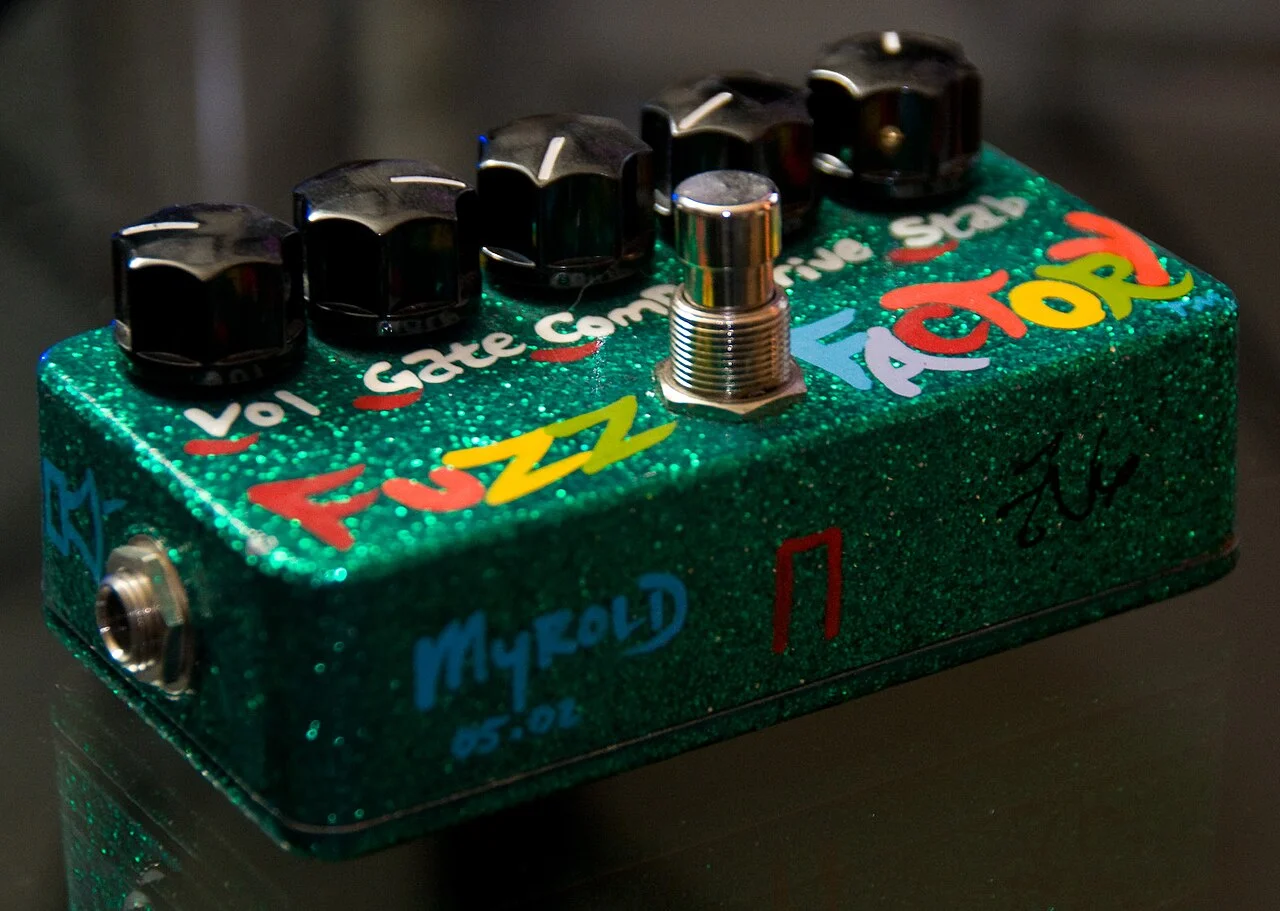
He wanted a case shaped like a foot, with a knob in each toe. He couldn’t afford the casting. While he was painting a plain box instead, the name came to him: “it’s a factory of fuzz, a way of manufacturing your own tone – something unique to yourself.”
A3
Nobody’s gonna want five knobs
He took it to Westgor. As Vex tells it, the answer was blunt: “You’re crazy. Nobody’s gonna want five knobs. They’re not gonna be able to figure out what to do.”
Vex thought the opposite. “You adjust it to the spot where you feel like you’ve created your own sound.”
The knobs are Volume, Gate, Comp, Drive and Stab, and even Vex’s manual says, “please don’t hold me to it.” Drive does roughly what Fuzz does on a Fuzz Face. Gate and Comp change how the transistors are biased, and bias them “wrong” and the signal sputters, cuts out, or starts to whistle at you. Stab sets the voltage feeding the transistors. The manual’s advice is to leave it all the way up, “unless you like your fuzz soft and squishy.” Put it first in your chain, with no buffer ahead of it, and it talks back to everything your guitar does.
Vex couldn’t afford silk-screening, so for the first year or so his girlfriend hand-painted them.
Flip the record · By the numbers
5
Knobs. Volume, Gate, Comp, Drive, Stab. Vex says three of them never had good names.
150
Germanium transistors in the surplus-store bin. Vex bought every one.
005
The serial number on Dan Wilson’s Fuzz Factory, the one on “Closing Time.”
2
Pedal circuits built into Bellamy’s first custom Manson, a Fuzz Factory and an MXR Phase 90.
Side B
B1
Serial number 005
The break came from a road trip. Vex got his pedals into a store called Rudy’s, and PJ Harvey’s guitarist Joe Gore walked in, bought an Octane, a Fuzz Factory and a Super Hard-On, and wrote about them in Guitar Player. That was 1996 or 1997, Vex thinks, and after that the Fuzz Factory took off.
Meanwhile one was already in the right hands. Vex brought serial number 005 to Dan Wilson’s birthday party in 1996. Wilson, of Semisonic, put it on “Completely Pleased,” “All Worked Out” and “California.” “It was a new sound for me, so I used it as much as I could.”
That included a song about last call. “The lead guitar track featured my brand-new Z.Vex Fuzz Factory,” Wilson said of “Closing Time.” The producer, Nick Launay, wasn’t convinced. “Nick Launay complained it sounded ‘irritating’ and I knew what he meant – but I was so excited about it! So he rose to the challenge and made it sound huge.”
B2
I need this on the guitar
Around 1999 or 2000, Matt Bellamy of Muse walked into a pedal shop in Tokyo. He doesn’t remember the name. “I was looking at all the weird ones, and that one sounded amazing. I had to have it. I literally used it that night in the show.” At the end of every song he was down on the floor making noises with it, and he decided: “I need this on the guitar.”
His first custom Manson, an aluminum guitar with a DeLorean-style finish, had a Fuzz Factory and an MXR Phase 90 built into it. From about 2001 it was his main guitar. On Origin of Symmetry you hear the Fuzz Factory in the squealing at the very start of “Plug In Baby” and in the glitchy stabs in the verses of “New Born.” Bellamy’s own guitar company says he found that intro and the riff while playing the Fuzz Factory in the studio. Vex knew the second he heard it. “I knew instantly that’s what it was!”
Nels Cline of Wilco keeps one among the few pedals he uses “in every kind of music,” and brought it to the sessions for The Whole Love. He pairs it with a Whammy set two octaves down. His description is the best one anybody has given: “really strange and intense and uncontrollable.”
Westgor was wrong about the five knobs. Each of those players found a different spot on them, and each one sounds like nobody else.
Put this on
You’ve read about it. Now hear it. Here’s what this pedal sounds like, and what to listen for.
Closing Time
Dan Wilson’s lead guitar track, on serial number 005. Producer Nick Launay called the sound “irritating,” then made it sound huge.
Find it on YouTube (opens in a new tab)Plug In Baby
That fuzzy squealing at the very start. Bellamy’s own guitar company says he found the intro sounds and the riff on the Fuzz Factory in the studio.
Find it on YouTube (opens in a new tab)New Born
Origin of Symmetry’s opener. Listen for the glitchy stabs of fuzz guitar in the verses.
Find it on YouTube (opens in a new tab)The Whole Love
Nels Cline had the Fuzz Factory among his usual Wilco pedals for these sessions. No single song is credited to it.
Find it on YouTube (opens in a new tab)
The cast
The people who built it, and the players who made it famous.
1995
Zachary Vex
Designer
Built it in a panic in one night and couldn’t get it to settle down. “It’s a factory of fuzz, a way of manufacturing your own tone.”
1995
Nate Westgor
Willie’s American Guitars
Bought Vex’s first pedals sight unseen, then told him to design another. Per Vex, his verdict on this one was “Nobody’s gonna want five knobs.”
Joe Gore
PJ Harvey, Guitar Player
Bought one on a store visit and wrote about it in Guitar Player. After that review, the Fuzz Factory took off.
1998
Dan Wilson
Semisonic
Got serial number 005 from Vex at his 1996 birthday party. “It was a new sound for me, so I used it as much as I could.”
2001
Matt Bellamy
Muse
Found one in a Tokyo shop around 1999 or 2000 and used it that night. “I need this on the guitar.” His first custom Manson had one built in.
2010
Nels Cline
Wilco
“Really strange and intense and uncontrollable.” It’s one of the few pedals he uses in every kind of music. He pairs it with a Whammy set two octaves down.
Often paired with
The pedals and guitars it usually shares a board or a record with.
- Send a picture
MXR
Phase 90
1972 or 1974 · Modulation
One knob, and the quiet swirl Eddie Van Halen stepped on when he wanted to be heard.
- Send a picture
DigiTech
Whammy
1989 · Other
Tom Morello used it to chase hip-hop’s high wail; Jack White used it to fake a bass line.
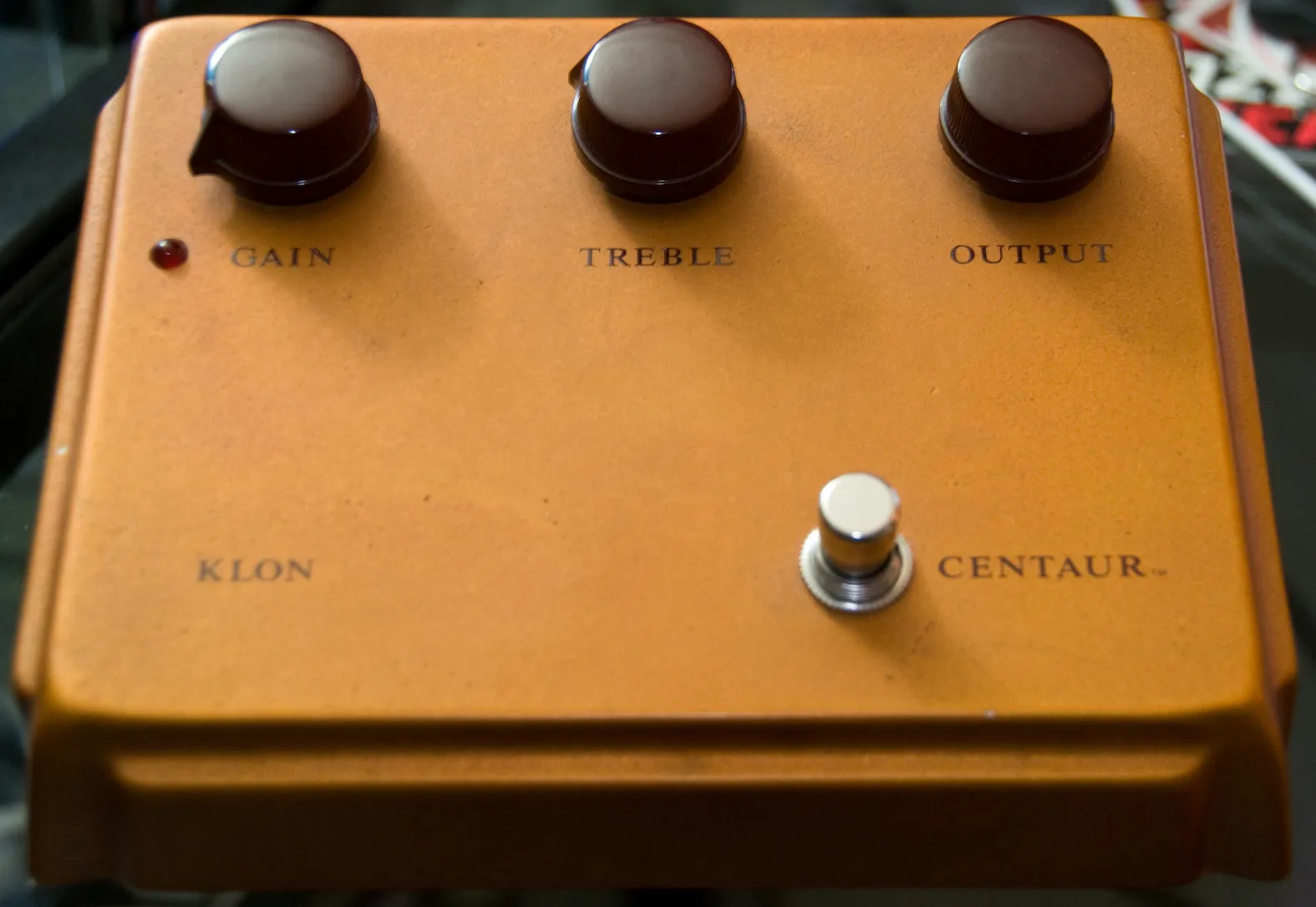
Photo: ArtBrom / Wikimedia Commons / CC BY-SA 2.0 Klon
Centaur
1994 · Overdrive
Bill Finnegan wanted an overdrive you couldn’t hear, and built about 8,000 by hand before he had to stop.
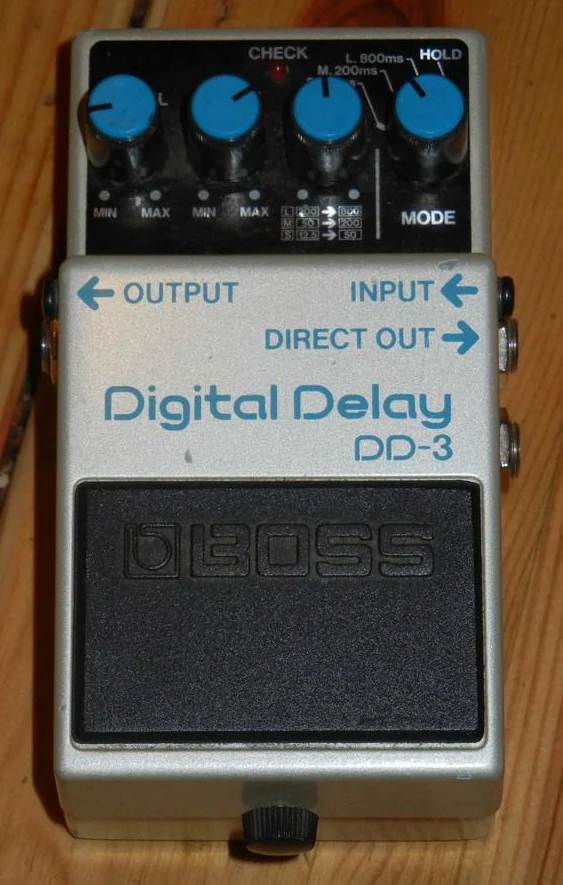
Photo: JuandiLOL / Wikimedia Commons / CC BY-SA 3.0 Boss
DD-3 Digital Delay
1986 · Delay
Boss changed only the name, and Noel Gallagher calls it the greatest delay pedal of all time.
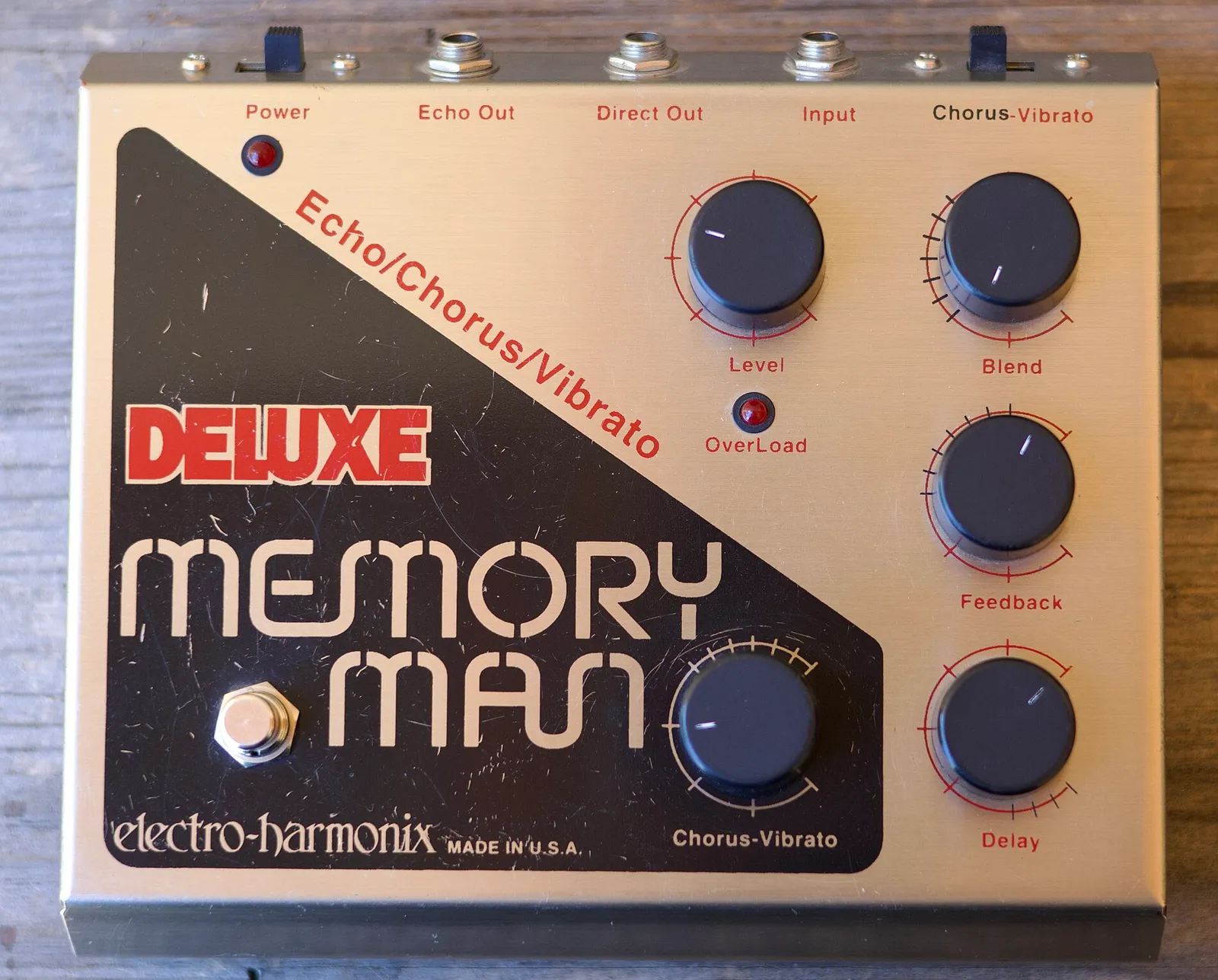
Photo: Bontempi1953 / Wikimedia Commons / CC BY-SA 4.0 Electro-Harmonix
Deluxe Memory Man
c. 1978 · Delay
A warm, wobbly analog echo, and the kind of box that taught the Edge the repeats could be the beat.
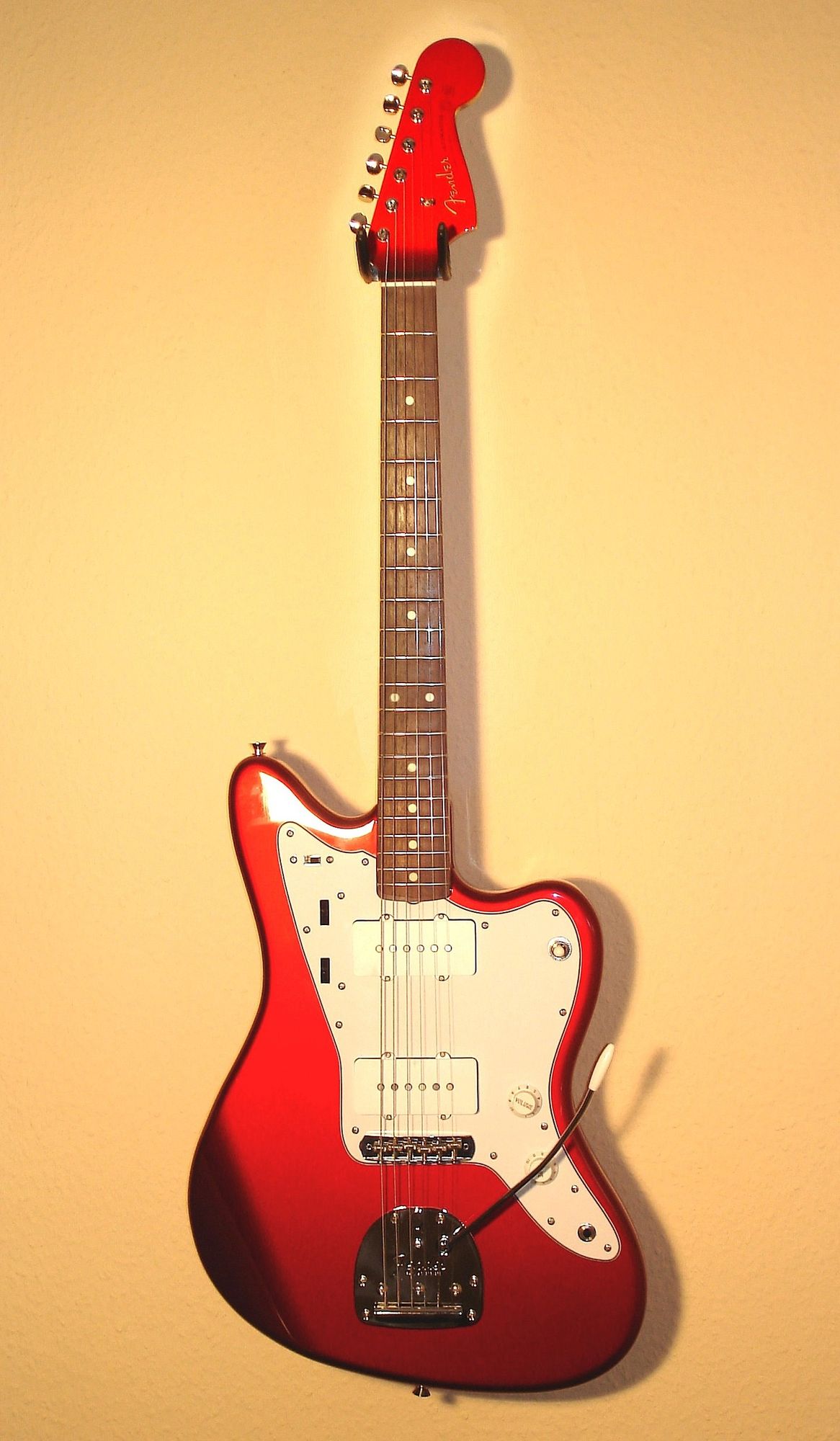
Photo: Dirk-X / Wikimedia Commons / CC BY-SA 4.0 Fender
Jazzmaster
1958
Fender built it for jazz players. Jazz players said no thanks. Surfers, punks, and noise bands said yes.