 Guitaripedia
Strymon
blueSky
Ben Monder found its shimmer by accident. Then he put it on David Bowie’s last record.
New York, 2015. Ben Monder is overdubbing the chords on the title track of David Bowie’s Blackstar, once with a pretty distorted sound and again with a clean one. On the clean pass, a small sky-blue reverb pedal is set to Shimmer, the sound that, he says, has people asking what “sounds like a string orchestra playing along with you.”
- Introduced
- 2010
- Effect
- Reverb
No photograph of this pedal yet. Have one? Send a picture
The short version
2004
Damage Control
Damage Control Engineering starts up in California, building tube-driven pedals.
2009
A new name
The team recommits to building its own gear and adopts the name Strymon, a trademark created by colleague Terry Burton.
2010
Blue at NAMM
The blueSky shows up at the NAMM show in January on a board with the Ola, and is on sale by February. One powerful chip inside does nothing but reverb.
2016
Blackstar
David Bowie’s last album comes out, with Ben Monder’s blueSky shimmer on the title track and, he says, on “Sue.”
2021
The Wind
Balmorhea use a blueSky on spring reverb for the electric guitars that open and close The Wind.
2022
V2
Strymon replaces it with a V2 that adds a sixth knob, MIDI, and presets, and calls the original discontinued.
Side A
A1
A string orchestra playing along
The Magic Shop, New York, 2015. David Bowie is making Blackstar with Tony Visconti, and Ben Monder has joined the sessions on guitar. The title track has a set of sort-of Phrygian-sounding chords, and Monder overdubs them a couple of times with a pretty distorted sound.
Then he plays them once more, clean, through a small sky-blue reverb pedal set to Shimmer.
Listen for it on “Blackstar”: a twinkling, upper-register glint that comes in and out of the song. “I was using the shimmer effect on the Strymon BlueSky pedal for that part,” Monder said, “so that might be why it’s got that upper register sheen to it and all of those nice overtones.” The distorted passes came and went around it. “I think Tony and David brought the distorted part in and out a lot as needed.”
People who hear that sound tend to ask him the same thing:
What is that thing that sounds like a string orchestra playing along with you?
He didn’t learn it from a manual. He found it fooling around.
A2
One chip, one job
The pedal came from a small California company with a big-sounding name. Damage Control Engineering started in 2004, building tube-driven distortion pedals. In 2009 the team decided to get back to building their own gear and started using a trademark one of their colleagues, Terry Burton, had created: Strymon.
The blueSky wasn’t Strymon’s first pedal, but it was one of the early ones. It turned up at the NAMM show in January 2010, on a pedalboard next to a chorus called the Ola, with the company admitting they were “swamped trying to get these done.” By February it was on sale.
The idea was to take a powerful digital chip and give it one job. Burton put it like this at the launch: “We’ve taken a super powerful SHARC DSP and dedicated it to doing one thing only—the best reverb ever.”
A3
Nine rooms
There are two little toggles. One picks the space: Plate, Room or Spring. The other picks how it behaves: Normal; Mod, which adds modulation; or Shimmer. Three times three is nine reverbs.
Shimmer is the strange one. The pedal shifts the pitch inside the reverb tank and feeds it back, over and over, so the tail climbs as it fades. On Plate it rises an octave. On Room and Spring it goes up an octave and a fifth. Turn the Decay up and it keeps blooming.
Then five knobs: Decay, Pre-Delay, Mix, and two dampers that trim the lows and the highs. The Mix is done in analog, and your dry guitar never gets turned into numbers at all. It’s quiet, too, with 115 decibels of typical signal-to-noise, and it takes line-level signals as happily as a guitar. The case is anodized aluminum, sky blue, and the name tells you the color.
Flip the record · By the numbers
9
Reverbs. Plate, Room, and Spring, each in Normal, Mod, or Shimmer.
5
Knobs. Decay, Pre-Delay, Mix, Low Damp, High Damp.
115
Decibels of typical signal-to-noise. It takes line-level signals as easily as a guitar.
2
Songs on Blackstar where Ben Monder says he used its Shimmer.
Side B
B1
No manual
Here’s how Monder found his sound. “I discovered the sound by accident while I was just experimenting with what the various knobs/switches did, as originally I had borrowed it from a friend and didn’t have the manual.”
On Blackstar he used it for the shimmer, along with its plate reverb, and let a second reverb handle the ordinary job. He says it’s on the main chordal pass of the title track, and also on “the atmospheric overdub on the tune ‘Sue.’” Give that second one some care. On “Sue” the giant wash is his Lexicon reverb unit, mix and decay all the way up. The blueSky adds the shimmer on top. And it’s the Blackstar version of “Sue,” not the earlier single.
The single “Blackstar” came out in November 2015. The album followed on 8 January 2016, Bowie’s 69th birthday. Two days later, he died.
B2
Other skies
The blueSky turned up in plenty of other rooms. In 2019 Sadler Vaden of the 400 Unit had one on his stage board, next to a pair of Analog Man pedals and a Cry Baby.
Balmorhea used it on The Wind in 2021. Michael A. Muller set it to Spring, Normal mode, with the mix around 2 o’clock, for the electric guitars on the opening and closing tracks. Then they paired it with a real reverb chamber and re-amped it into a live room in Berlin.
In 2022 Strymon replaced it with a V2, adding a sixth knob, MIDI and presets, and called the original discontinued.
The sound that made people ask about string orchestras was never in the manual. Monder didn’t have one. He just kept turning the knobs until the sky opened up.
Put this on
You’ve read about it. Now hear it. Here’s what this pedal sounds like, and what to listen for.
Blackstar
The title track of Bowie’s last album, a single first. The twinkling, upper-register sheen is Ben Monder’s clean overdub of the chords through the blueSky’s Shimmer, while a distorted pass of the same part comes and goes.
Find it on YouTube (opens in a new tab)Sue (Or in a Season of Crime)
The Blackstar remake, not the 2014 single. Monder says he put the blueSky’s shimmer on his atmospheric overdub; the big wash around it is his Lexicon reverb unit.
Find it on YouTube (opens in a new tab)The Wind
On the electric guitars of the opening and closing tracks, a blueSky set to spring, with an El Capistan, a real reverb chamber, and re-amping in a Berlin studio.
Find it on YouTube (opens in a new tab)
The cast
The people who built it, and the players who made it famous.
2010
Terry Burton
Strymon design engineer
Spoke for the blueSky at its launch, “the best reverb ever,” on a chip dedicated to nothing else. He also created the Strymon trademark.
2015
Ben Monder
David Bowie
Found the Shimmer sound by accident, experimenting with no manual, and put it on the title track of Blackstar and, by his own account, on “Sue.” People ask what “sounds like a string orchestra playing along with you.”
2021
Michael A. Muller
Balmorhea
Set a blueSky to spring and normal, mix about 2 o’clock, for the electric guitars on the opening and closing tracks of The Wind, paired with a real reverb chamber and re-amped in Berlin.
2019
Sadler Vaden
The 400 Unit
Had a blueSky on his 2019 stage board, next to a pair of Analog Man pedals, a Greer Lightspeed, and a Cry Baby.
Often paired with
The pedals and guitars it usually shares a board or a record with.
- Send a picture
Strymon
TimeLine
2011 · Delay
Engineers tired of big companies built a delay of their own, and players filled its 200 presets with theirs.
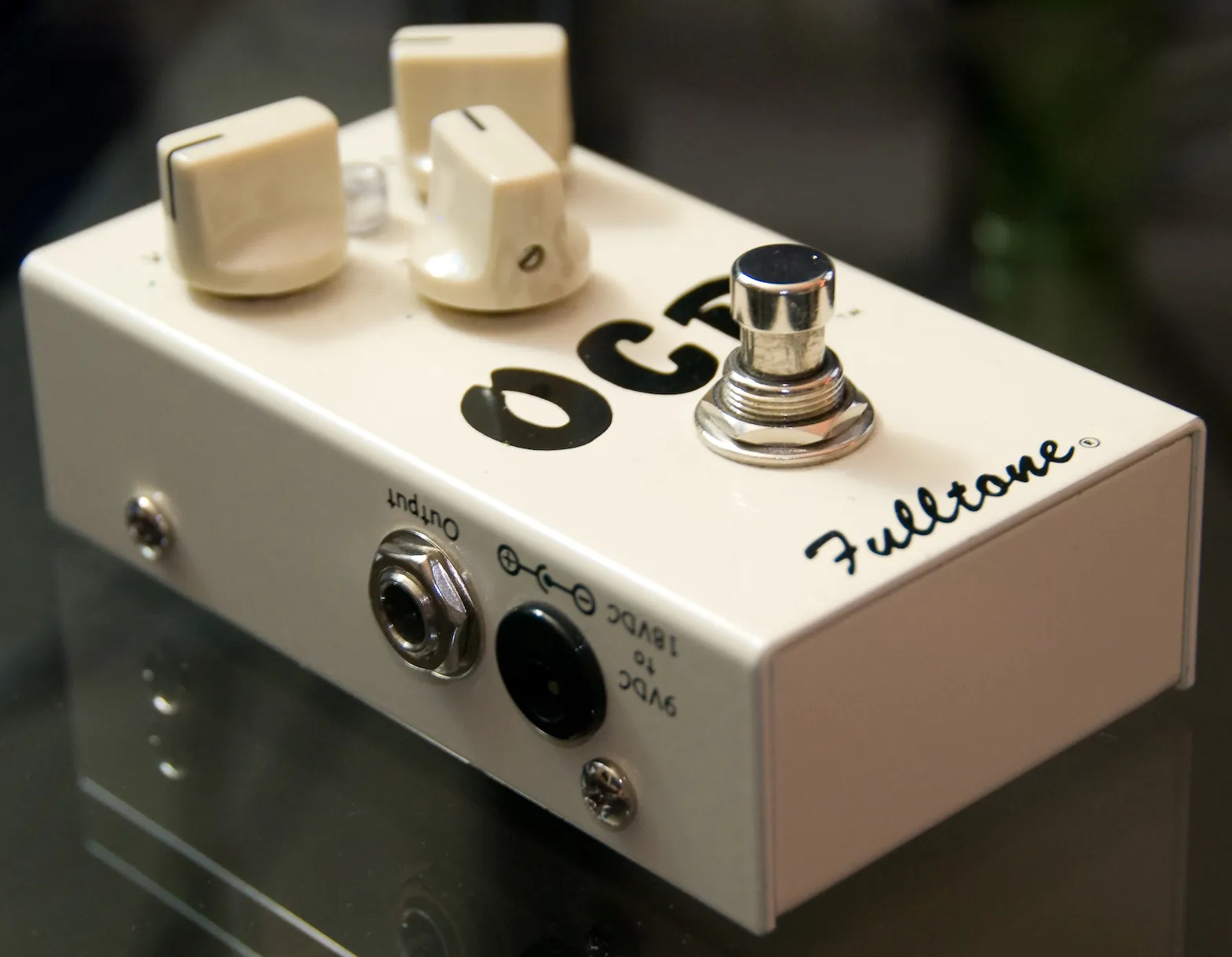
Photo: ArtBrom / Wikimedia Commons / CC BY-SA 2.0 Fulltone
OCD (Obsessive Compulsive Drive)
2004 · Overdrive
Leave it on, ride the volume knob, and whatever amp the club hands you, you get a sound.
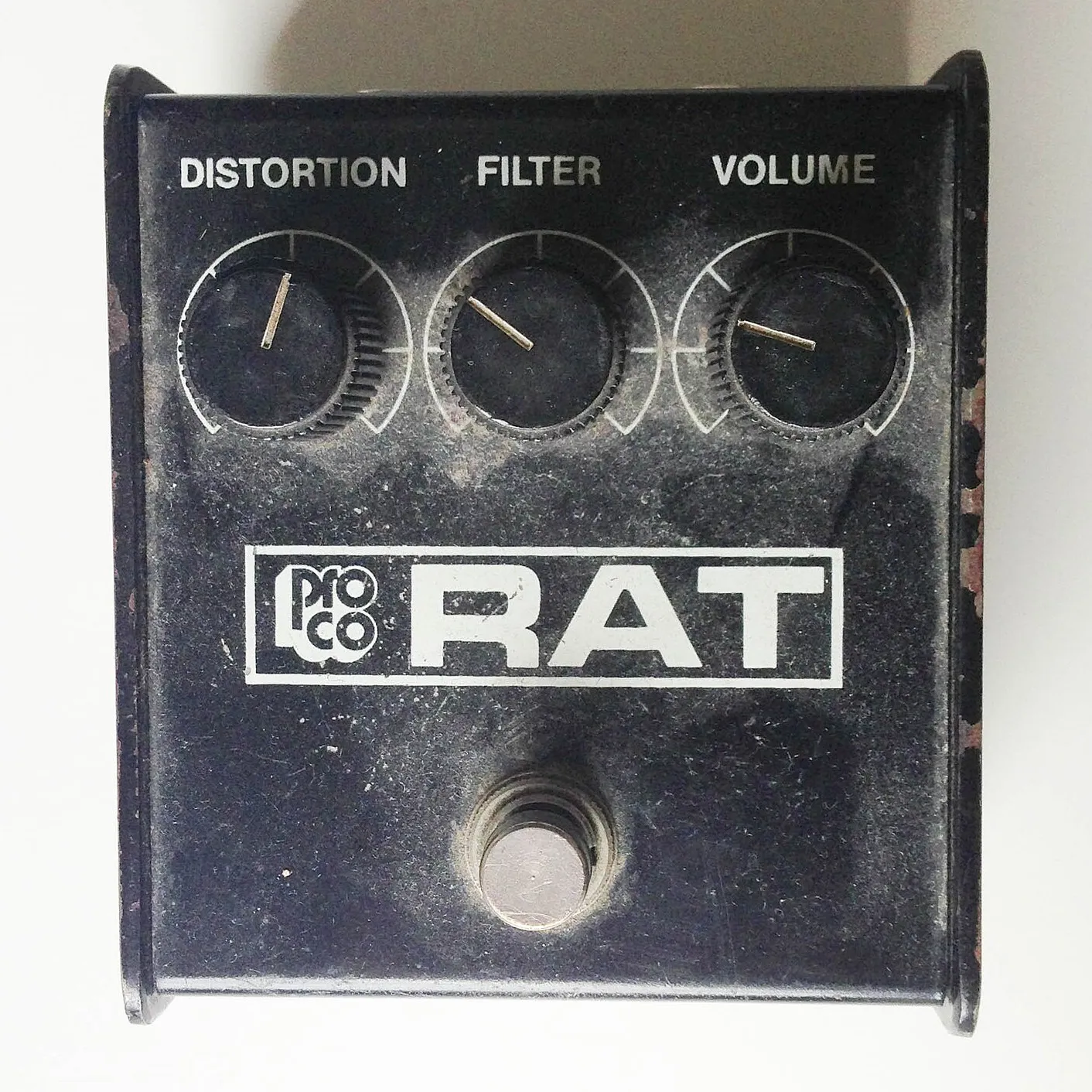
Photo: David Hilowitz / Wikimedia Commons / CC BY 2.0 ProCo
RAT
1979 · Distortion
Named for a basement full of rats, born of a wrong resistor, and at its best plugged in the wrong way.

Photo: Hal Hawkins / Wikimedia Commons / CC BY 2.0 Rickenbacker
360/12
1963
George Harrison was too sick to see it. Roger McGuinn saw it in a movie theater. Tom Petty bought one because McGuinn had one.
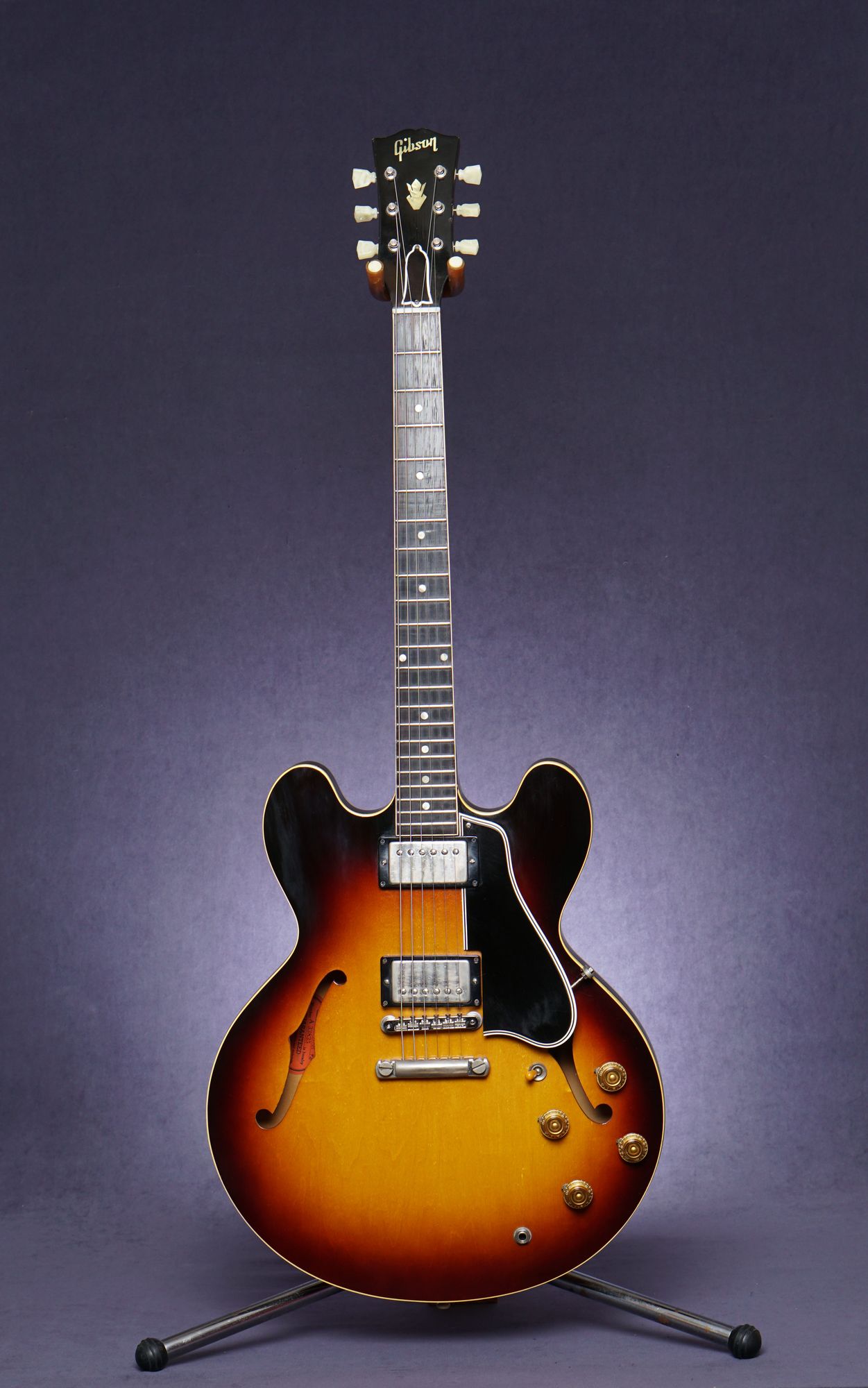
Photograph of a vintage 1960 Gibson ES-335TD. Photo by Lightburst. Licensed under CC BY-SA 4.0. Via Wikimedia Commons. Gibson
ES-335
1958
Larry Carlton played three 335s off a shop wall, unplugged, paid $850 for one, and became Mr. 335.