Fulltone
OCD (Obsessive Compulsive Drive)
Leave it on, ride the volume knob, and whatever amp the club hands you, you get a sound.
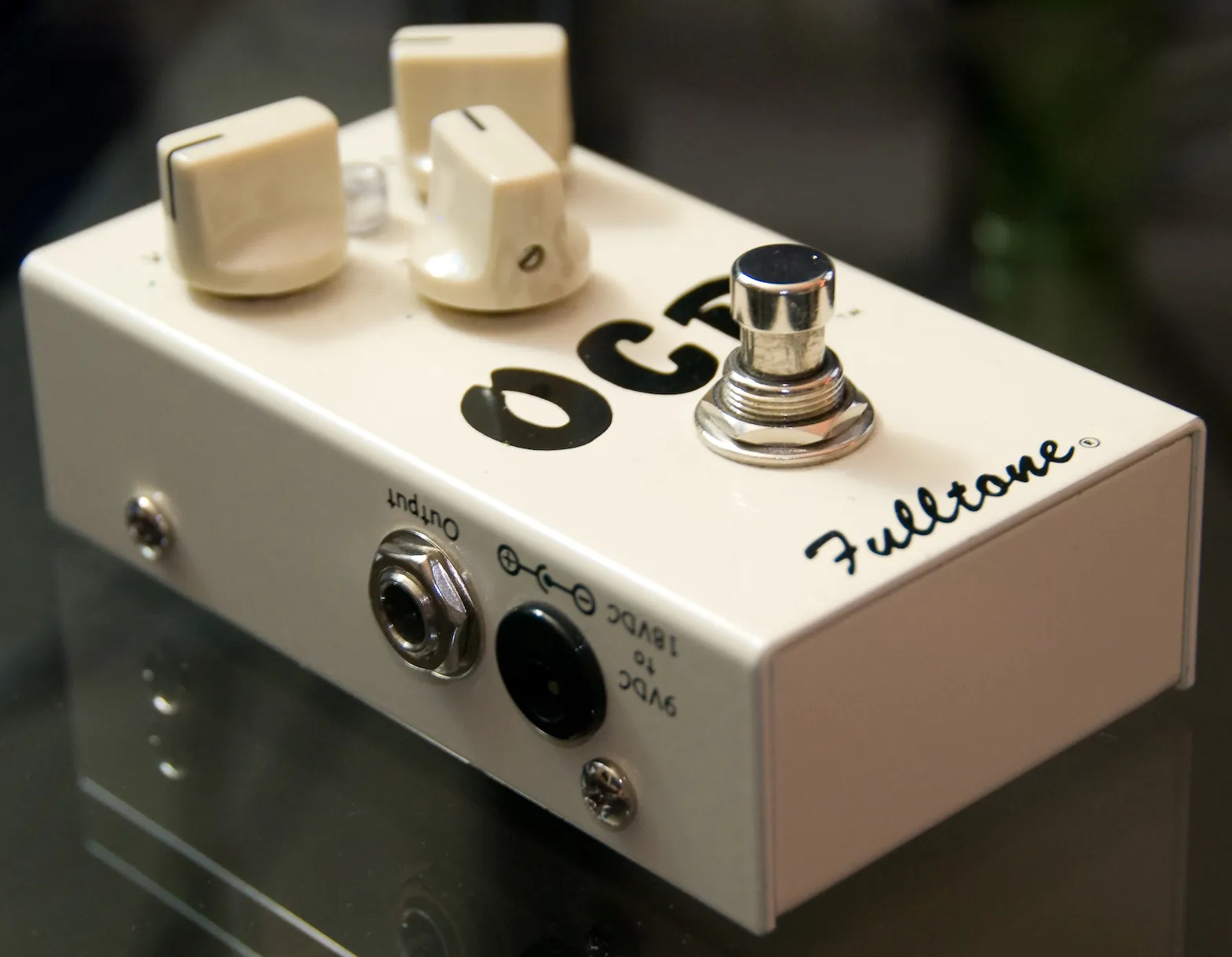
2006. A guitarist is playing clubs in New York, then Europe, and he never knows what amp the venue will hand him. So he leaves a Fulltone OCD on all the time and rides his volume knob. Whatever amp turns up, he gets a sound.
- Introduced
- 2004
- Effect
- Overdrive
The short version
1991
Fulltone
Mike Fuller starts his pedal company in California.
2004
The OCD
Fuller dates its birth to 2004. One reviewer counts from about 2005. The first boards came under a coat of epoxy.
2006
“The most amp-like”
A Tape Op reviewer calls it the most amp-like, responsive distortion pedal he’s ever used.
2008
Leslie West signs on
“I really love that Fulltone pedal,” West says of the OCD on his board.
2017
Version 2
After a run of small tweaks to the first version, a JFET input, an output buffer, and a choice of bypass. Fuller calls it the final version.
2022
The shop closes
After 30 years, Fulltone shuts its Culver City shop.
2024
Nashville
Fulltone returns with Jackson Audio building the pedals, starting with the OCD v2 and a Custom Shop copy of version 1.4.
Side A
A1
Whatever amp they hand you
Early 2006. A recording magazine runs a guitarist’s review of a new overdrive pedal, and he’s been gigging with it. First in clubs in New York, “where you never know what kind of amp you’re going to find.” Then on the road in Europe, where every venue hands him something different.
It doesn’t seem to matter. “I have no problem getting a sound with whatever amp is provided at each venue,” he writes. And he’s settled into a way of playing it:
I find that I leave the OCD on all the time and just use my volume knob and touch to create gain changes.
His verdict is short. “It’s the most amp-like and responsive distortion pedal I’ve ever used.”
The pedal is called the Obsessive Compulsive Drive. The man who built it couldn’t leave it alone.
A2
Open, with headroom
Mike Fuller started Fulltone in California in 1991. What he wanted from the OCD was specific: an open-sounding distortion pedal, with decent headroom, that more faithfully copied a tube amp being driven hard.
Headroom is why it can take more than the usual 9 volts. It runs on anything from 9 up to 18, and at the higher voltage it squashes the sound less. Fuller himself dates the pedal’s birth to 2004. One reviewer counts from around 2005. The earliest ones came with the circuit board buried under a goop of epoxy, the way the Klon’s was.
A3
Two MOSFETs and a switch
On the outside: Volume, Drive, Tone, and one small switch marked HP/LP. That switch is where a lot of the pedal’s personality lives. The 2006 reviewer put it neatly. High Peak “adds low end and an upper-mid peak and is a good choice for the high gain sounds.” Low Peak “is more natural and truer to your guitar’s actual tone.”
Inside, the clipping is done by a pair of MOSFETs, a kind of transistor, wired to a voltage reference rather than to ground, the usual place. Fulltone says it was the first pedal to clip with MOSFETs. Whatever the order, they behave like gentler diodes, and the distortion comes on more smoothly.
Don’t mistake it for a clean boost. At the bottom of the Drive knob it’s mostly extra volume for the front of your amp. At the top, the same reviewer heard something “as saturated as a Mesa Boogie Triple rectifier, but it’s not as one dimensional.” The good stuff is in between.
Flip the record · By the numbers
3
Knobs. Volume, Drive, Tone. Plus one switch, HP/LP.
2
MOSFETs doing the clipping, wired to a voltage reference instead of to ground.
18
Volts it can take. Fuller wanted headroom, and the pedal runs on 9 to 18.
1 MΩ
Input impedance on version 2, up from 330K.
Side B
B1
The one they go back to
Leslie West of Mountain had one on his board in 2008, next to a Boss Blues Driver and a TS-9. He was happy to explain it, name slightly wrong and all: “I really love that Fulltone pedal. It’s called the Obsessive Compulsive Distortion – OCD.”
James Valentine of Maroon 5 ran three overdrives on his board around 2010 and kept coming back to this one. In his words, the Fulltone was “my ballsy, over-the-top gritty soaring solo tone.” Courtney Barnett, talking about her live setup in 2015, kept it simple: “I really like the OCD.” It was one of her main pedals for her heavier sounds, and it stayed on her board while the others around it came and went.
Those are live boards, not records. For records, you have to go to the studio.
B2
In the studio
Mike Sullivan of Russian Circles made Empros in 2011 with most of the dirt coming from a Sunn amp. “I use an OCD here and there,” he said, “but only for thicker parts.” Manchester Orchestra brought one in, with a Fender Super-Sonic cab, for the Cope sessions in 2014, at their own studio in a house in Atlanta. Nobody has said which songs.
Kyle Shutt of The Sword led a project called Doom Side of the Moon, covering The Dark Side of the Moon. Put on their “Time” and wait for the solo. “When the big note hits in ‘Time,’ it’s sort of the first time the album kicks into high gear,” he said, and it’s his Big Crunch amp “along with a Fulltone OCD overdrive.”
And Neige of Alcest, making Spiritual Instinct, wanted his Jazzmaster to sound like a humbucker guitar. The chain was a Big Muff into a 1970s Marshall JMP. “We also use an OCD. I really love the Fulltone OCD.”
B3
Obsessive, compulsive
Fuller kept changing it. Version 1 went through a long run of small tweaks, mostly to the EQ, and people started calling them “version 2” and “version 3.” Fulltone says those labels were wrong. The real version 2 came in 2017, with a JFET input that raised the input impedance from 330K to 1 megohm, a new output buffer, and a choice of bypass. Fuller called it the final version.
Then the company itself changed. In 2022 Fulltone shut its Culver City shop after 30 years. In 2024 it came back, with Jackson Audio in Nashville building the pedals and Fuller still designing them. The first two out were the OCD v2 and a Custom Shop copy of version 1.4.
Fuller never stopped fiddling with the box. On stage the ritual stayed the same: leave it on, ride the volume knob, and whatever amp turns up, get a sound.
Put this on
You’ve read about it. Now hear it. Here’s what this pedal sounds like, and what to listen for.
Empros
Mike Sullivan brought the OCD in for the thicker parts. Most of the distortion is a Sunn Model T reissue.
Find it on YouTube (opens in a new tab)Cope
The band brought a Fulltone OCD into the sessions at their own studio in Atlanta. No single song is credited to it.
Find it on YouTube (opens in a new tab)Time
Kyle Shutt’s solo, when the big note hits. A Big Crunch amp “along with a Fulltone OCD overdrive.”
Find it on YouTube (opens in a new tab)Spiritual Instinct
Neige’s Jazzmaster through a Big Muff into a Marshall JMP, with the OCD in the chain too.
Find it on YouTube (opens in a new tab)
The cast
The people who built it, and the players who made it famous.
2004
Mike Fuller
Designer
Founded Fulltone in 1991 and wanted an open-sounding pedal that felt like a driven tube amp. Still designs the pedals since the 2024 relaunch.
2008
Leslie West
Mountain
Ran it next to a Blues Driver and a TS-9. “It’s called the Obsessive Compulsive Distortion – OCD.”
2010
James Valentine
Maroon 5
His “ballsy, over-the-top gritty soaring solo tone.” With three overdrives on the board, he usually goes back to the OCD.
2011
Mike Sullivan
Russian Circles
Used it “here and there, but only for thicker parts” on Empros, where most of the dirt came from a Sunn amp.
2015
Courtney Barnett
Her heavier sounds
“I really like the OCD.” It stayed on her board while other pedals came and went.
2019
Neige
Alcest
Ran it with a Big Muff and a Marshall JMP to make a Jazzmaster sound like a humbucker guitar. “I really love the Fulltone OCD.”
Often paired with
The pedals and guitars it usually shares a board or a record with.
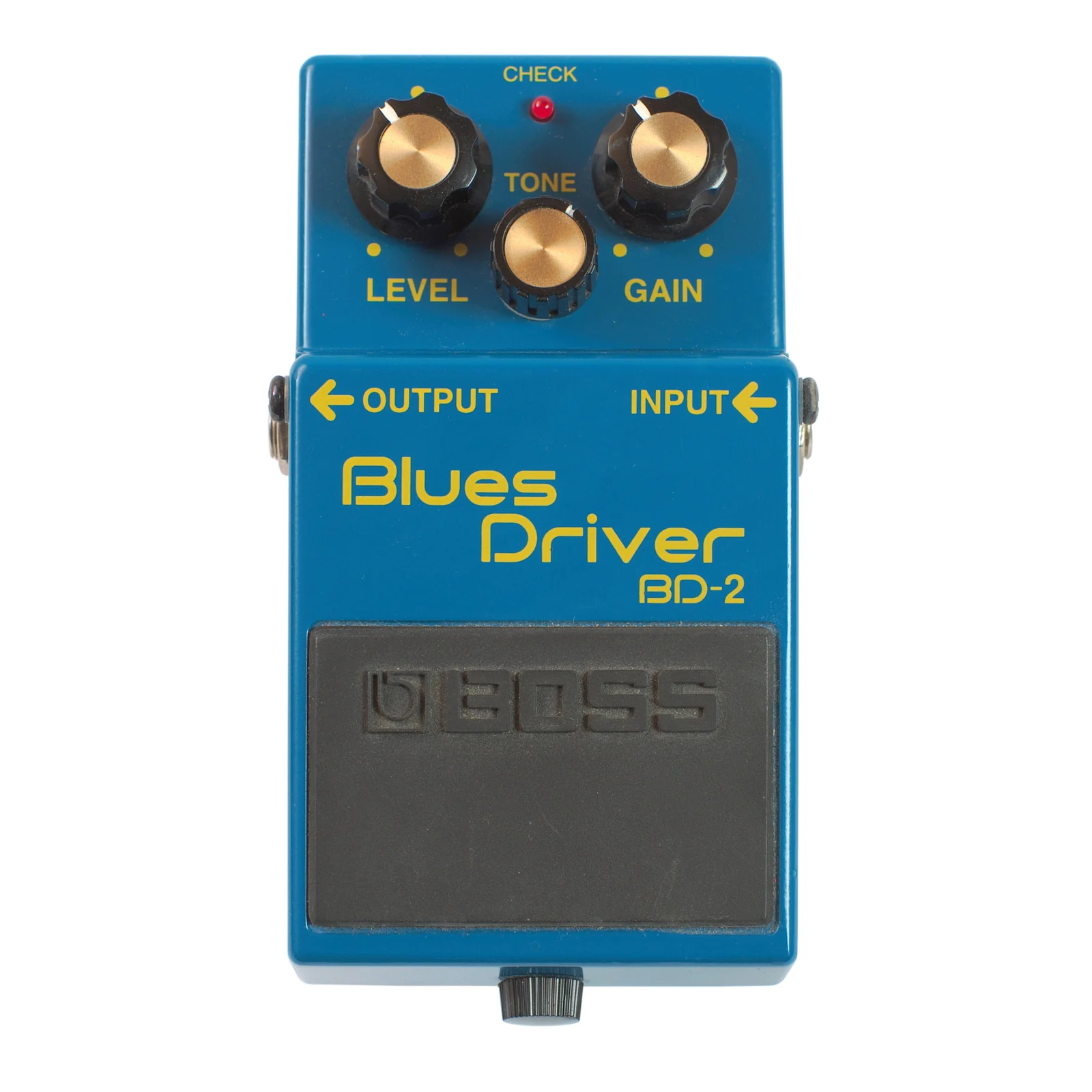
Photo: El Grafo / Wikimedia Commons / CC BY-SA 4.0 Boss
BD-2 Blues Driver
1995 · Overdrive
Three knobs on the box, and the other two are your guitar’s volume and your right hand.
- Send a picture
Electro-Harmonix
Holy Grail
2002 · Reverb
It’s called the Holy Grail, and on “Hey” John Frusciante probably never switched it off.
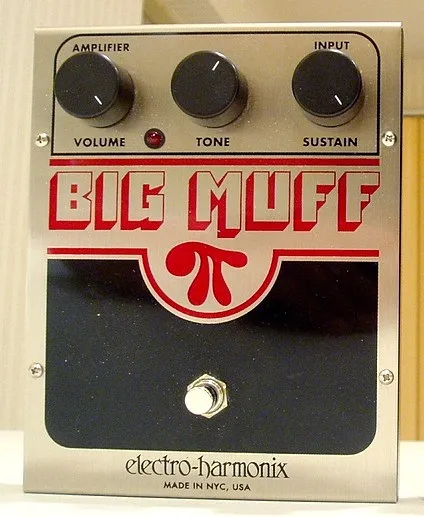
Photo: NIRVANA2764 / Wikimedia Commons / CC BY-SA 3.0 Electro-Harmonix
Big Muff Pi
1969 · Fuzz
Built to chase Hendrix, it missed, and made the smallest amp in the house sound like a wall.
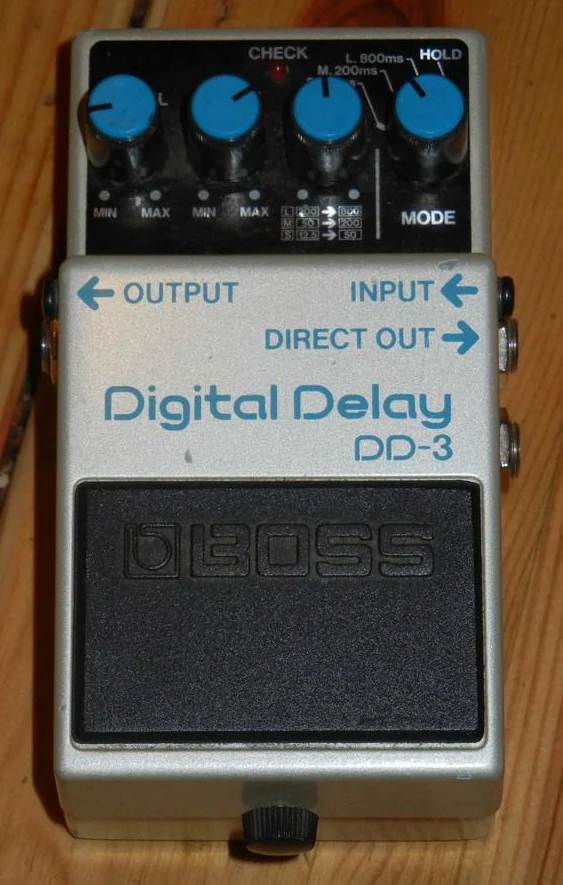
Photo: JuandiLOL / Wikimedia Commons / CC BY-SA 3.0 Boss
DD-3 Digital Delay
1986 · Delay
Boss changed only the name, and Noel Gallagher calls it the greatest delay pedal of all time.
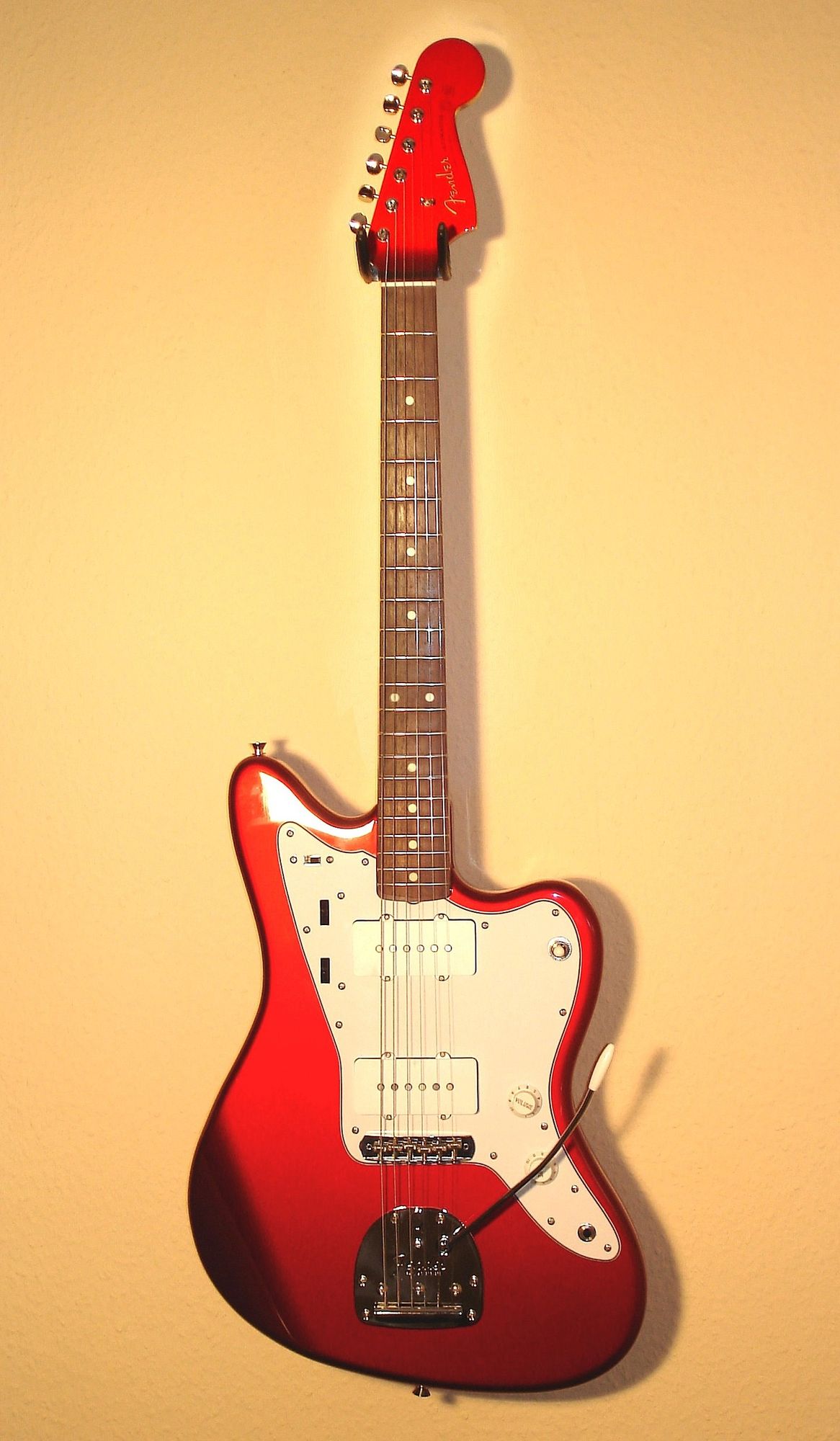
Photo: Dirk-X / Wikimedia Commons / CC BY-SA 4.0 Fender
Jazzmaster
1958
Fender built it for jazz players. Jazz players said no thanks. Surfers, punks, and noise bands said yes.