Strymon
TimeLine
Engineers tired of big companies built a delay of their own, and players filled its 200 presets with theirs.
Alberts Studio, Sydney. Boy & Bear are cutting “Stranger,” and Killian Gavin has two TimeLine settings ready: one splits a double delay across two amps, the other turns the chorus melody into something like a synth.
- Introduced
- 2011
- Effect
- Delay
No photograph of this pedal yet. Have one? Send a picture
The short version
2004
Damage Control
Engineers tired of working for big companies start Damage Control Engineering. Its pedals mix DSP with tubes, and one of them is a TimeLine.
2009
A new name
The team starts building its own gear again, under the name Strymon.
2011
NAMM, then summer
The Strymon TimeLine is shown in January and ships by the end of the summer, with twelve delay machines and no tubes.
2012
Names for presets
A firmware update lets players name their presets and carry a tapped tempo across all of them.
2013
Stranger
Boy & Bear release “Stranger,” with two TimeLine settings on Killian Gavin’s guitar.
2016
Matter
St. Lucia’s Jean-Philip Grobler does basically all the ambient effects on the album with a TimeLine and a BigSky.
2022
One for each amp
Chris Shiflett’s Foo Fighters board carries two TimeLines.
2026
The MX
Fifteen years on, Strymon announces the TimeLine MX, a separate pedal.
Side A
A1
Two settings for “Stranger”
Alberts Studio, Neutral Bay, Sydney. Boy & Bear are making Harlequin Dream, and the guitarist, Killian Gavin, has a gunmetal box on the floor with a lot of knobs. For one song he’s worked out exactly what he wants from it. “When recording ‘Stranger,’ I used two different settings.”
The first he calls Double. It’s a simple double delay, about 540 milliseconds, run in series to two amps. The second he calls Synth. It’s a texture for the guitar melody in the chorus, with a Strymon Ola in front, and it takes the guitar somewhere closer to a synthesizer.
Two sounds, saved and ready, and both of them his. That’s what the box is for.
A2
Tired of big companies
The TimeLine started with engineers who wanted out. In 2004 three of them, “grown tired of working for big companies,” started Damage Control Engineering in California: Pete Celi on DSP and sound design, Gregg Stock on analog circuits, Dave Fruehling on firmware. A company history from ten years later counts a fourth founder too, the industrial designer Lucian Tu. Depends which page you read.
Celi had come through Analog Devices, Alesis, and Line 6. Damage Control’s pedals mixed digital processing with real tubes, and one of them was called the TimeLine. It had two 12AX7s inside and seven delay modes. Celi remembers it fondly:
Each project presents a new set of challenges and discoveries, but the development of the Damage Control TimeLine stands out as a special one.
In 2009 the team went back to building its own gear under a new name, Strymon. The old tube TimeLine, Celi says, was “the genesis of the Strymon TimeLine.”
A3
Same name, no tubes
The new one was shown at the NAMM show in January 2011, and it was shipping by the end of that summer. Same name, different pedal. The Strymon TimeLine has no tubes at all. It has a SHARC processor, 24-bit converters, and twelve delay “machines” instead of seven modes.
Your dry guitar never gets turned into numbers, though. It runs on an analog path straight through, with zero latency, and only the echoes go digital. Switch it off and it can either step out of the way entirely or let the last repeats ring out.
Seven knobs sit across the top: Time, Repeats, Mix, Filter, Grit, and two for modulation. There are 200 presets. The ability to name them came in a firmware update in February 2012, along with a tapped tempo that carries across all of them. And there’s a 30-second stereo looper you can put before or after the delay.
Flip the record · By the numbers
12
Delay machines, from Digital and Reverse to dTape and dBucket.
200
Presets, saved and recalled with a footswitch.
30
Seconds of stereo looper, before or after the delay.
2
TimeLines on Chris Shiflett’s board in 2022, one for each amp.
Side B
B1
Twelve machines
The machines are where the personality is. Digital, Dual, Pattern, Reverse, Ice, Duck, Swell, Trem, Filter, Lo-fi, dTape, and dBucket. The last two are Strymon’s takes on old hardware: dTape on a tape echo with a sliding head, dBucket on an analog bucket-brigade delay. Celi explains what he was after with that one:
“A big part of the character of an analog delay is the fact that it’s running on this variable clock system where the number of buckets stay the same, but it’s just how fast you’re running through the buckets.”
In plain terms, an analog delay always passes your note down the same number of steps. Change the delay time and it just runs them faster or slower, and that changes the sound of the repeats too. Copying that, and not just the timing, is the point.
B2
Basically all of it
Jean-Philip Grobler of St. Lucia made Matter in 2016 with a TimeLine and a BigSky, Strymon’s reverb. “Basically all of the ambient effecty stuff was done with the TimeLine and BigSky,” he said. So the delay shares that credit with a reverb. Live, the TimeLine is “sometimes a modulated slap, and sometimes it’s a really long and really obvious cutting delay.” He wishes he could fit four of each on his board.
Hammock, the duo of Marc Byrd and Andrew Thompson, went to one machine in particular for Mysterium, the record that followed the death of Byrd’s nephew Clark in 2016. Matthew Kidd, who records as Slow Meadow, had shown them the Lo-fi machine. “We used the lofi setting on the TimeLine quite a bit on this record,” they said. “It was great for creating textural decaying type sounds.”
Put that one on and listen to how the sounds wear away as they fade.
B3
One for each amp
By 2022, Chris Shiflett of the Foo Fighters had a couple of TimeLines on his board, one for each amp. In 2025 Noel Gallagher took one on the Oasis reunion tour, alongside Strymon’s El Capistan tape echo. In 2026, fifteen years after the first, Strymon announced the TimeLine MX, a separate pedal.
The engineers built the box because they wanted to make their own things again. What they handed everyone else was 200 empty slots. Gavin filled two of them, and called them Double and Synth.
Put this on
You’ve read about it. Now hear it. Here’s what this pedal sounds like, and what to listen for.
Stranger
From Harlequin Dream. Gavin used two TimeLine settings on it, a double delay split across two amps and a synth-like texture under the chorus melody, with a Strymon Ola in front.
Find it on YouTube (opens in a new tab)Matter
Grobler says basically all the ambient effects on the album came from a TimeLine and a BigSky, so the delay shares the credit with a reverb.
Find it on YouTube (opens in a new tab)Mysterium
The band used the TimeLine’s Lo-fi machine “quite a bit on this record” for its decaying textures.
Find it on YouTube (opens in a new tab)
The cast
The people who built it, and the players who made it famous.
Pete Celi
Co-founder, DSP and sound design
Writes the DSP code and does the sound design. He calls the tube-driven Damage Control TimeLine “the genesis of the Strymon TimeLine.”
2013
Killian Gavin
Boy & Bear
Used two TimeLine settings recording “Stranger,” a double delay into two amps, and a synth texture under the chorus melody.
2016
Jean-Philip Grobler
St. Lucia
Did basically all the ambient effects on Matter with a TimeLine and a BigSky, and wishes he could have four of each on his board.
2017
Hammock
Marc Byrd and Andrew Thompson
Leaned on the Lo-fi machine across Mysterium for “textural decaying type sounds.”
2022
Chris Shiflett
Foo Fighters
Runs two TimeLines, one for each amp.
2025
Noel Gallagher
Oasis
Has a TimeLine on his reunion-tour board, next to a Strymon El Capistan.
Often paired with
The pedals and guitars it usually shares a board or a record with.
- Send a picture
Line 6
DL4 Delay Modeler
1999 · Delay
Line 6 built it to copy old echoes. A bored guitarist played into the looper, and the loop became a song.
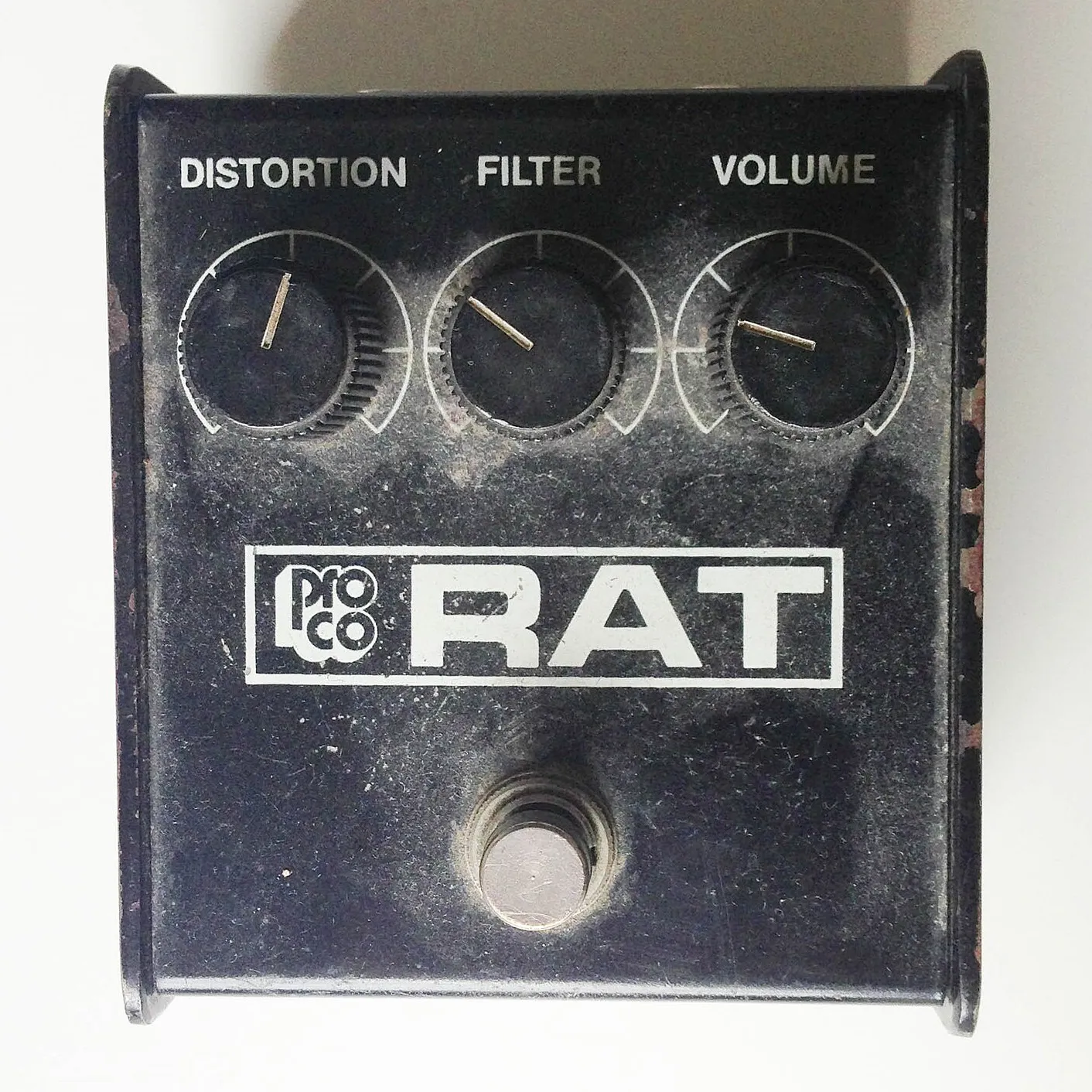
Photo: David Hilowitz / Wikimedia Commons / CC BY 2.0 ProCo
RAT
1979 · Distortion
Named for a basement full of rats, born of a wrong resistor, and at its best plugged in the wrong way.
- Send a picture
Electro-Harmonix
Holy Grail
2002 · Reverb
It’s called the Holy Grail, and on “Hey” John Frusciante probably never switched it off.
- Send a picture
Dunlop
Cry Baby
1967 · Wah
An amp engineer’s shortcut, built into an organ pedal for horn players. Guitarists plugged in anyway.
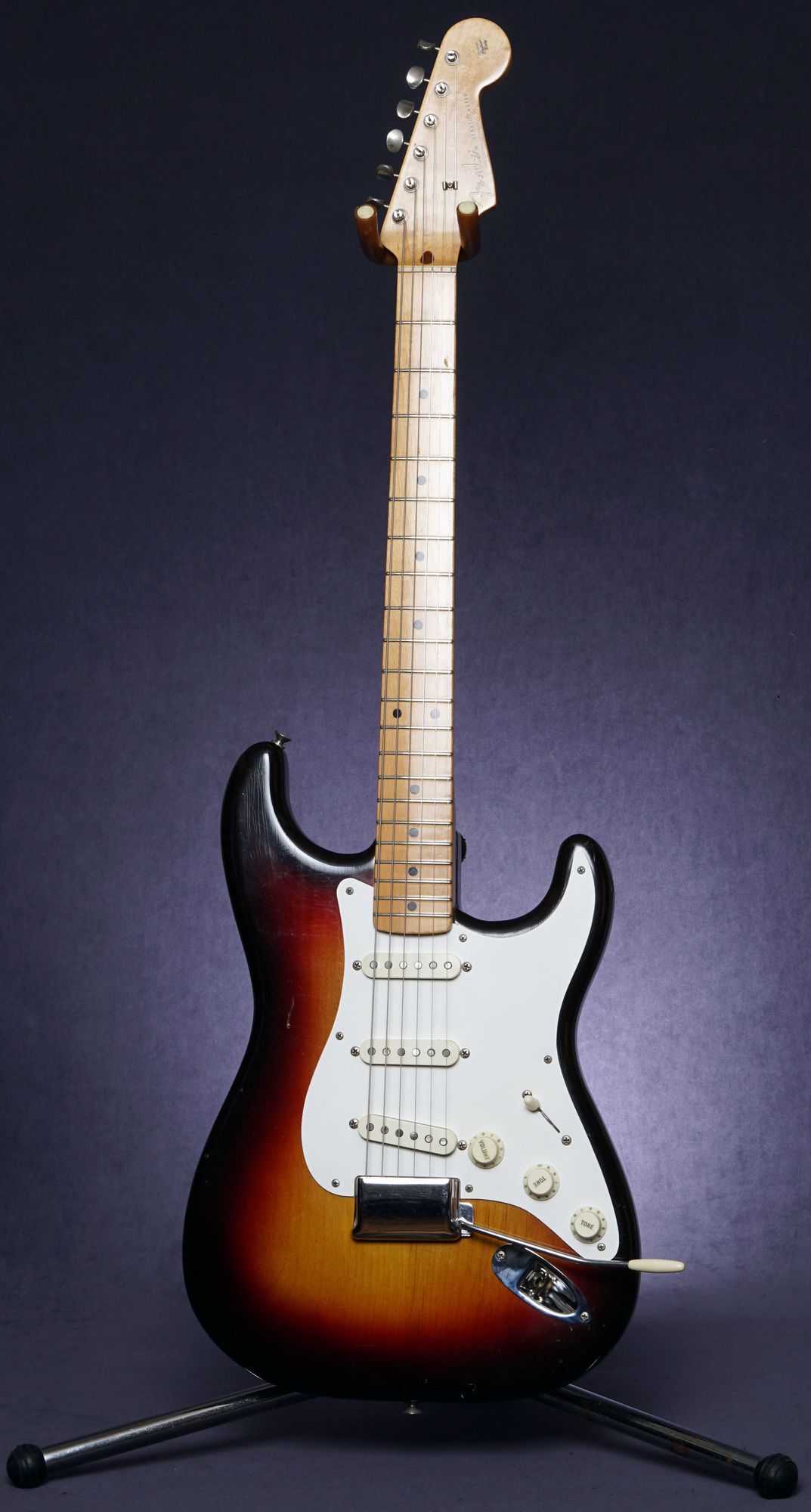
Photo: Lightburst / Wikimedia Commons / CC BY-SA 4.0 Fender
Stratocaster
1954
The guitar most people mean when they say “electric guitar.” Designed by a man who didn’t play one.
A 1974 Gibson Les Paul Custom guitar. Photo by Ibanez Guy. Licensed under CC BY-SA 3.0. Via Wikimedia Commons. Gibson
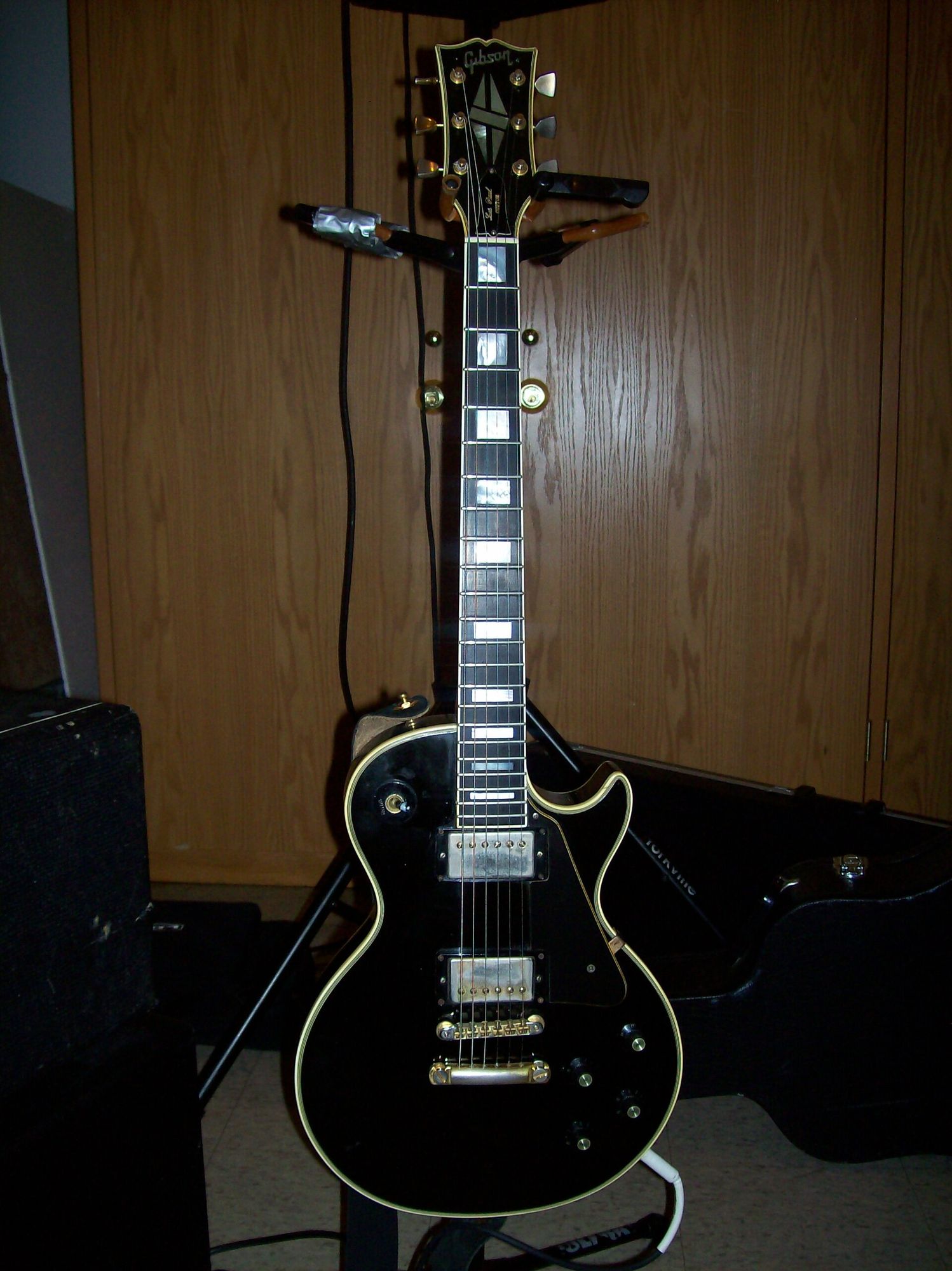
Les Paul Custom
1954
Jimmy Page paid his off in installments at 18. It was stolen in 1970. He got it back over 40 years later.