Guitars, page 6
- Send a picture
Teisco
Spectrum 5
1966
Five colored buttons, stereo out, and a Japanese badge nobody took seriously. Mark Knopfler ended up with three.
- Send a picture
Tobias
Classic
1986
You didn’t take a Tobias Classic off a wall. You ordered one from a Hollywood shop, and you waited.
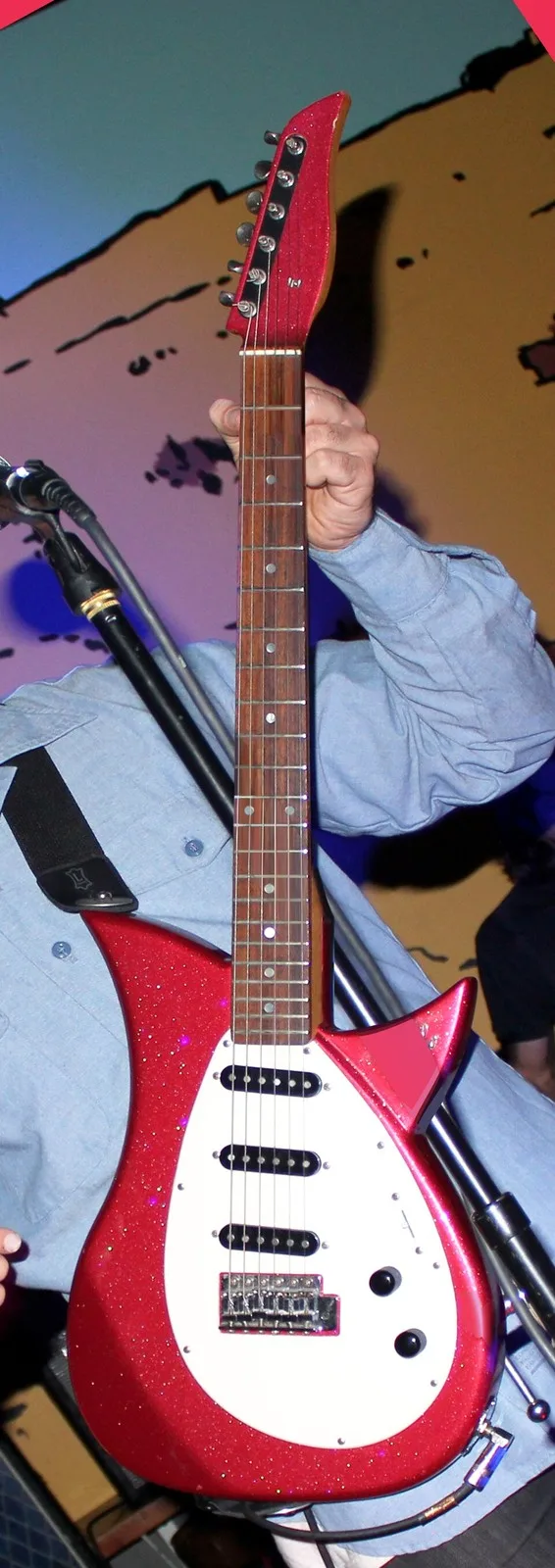
Photo: Jay Roc / Clusternote / Wikimedia Commons / CC0 Tokai
Talbo
1983
The copy company’s own idea: a guitar body poured like an engine block. Its fans wouldn’t let it stay gone.

Photo: Staff Sgt. Ryan Crane / U.S. Air Force / Public domain Tom Anderson
Classic
1991
Tom Anderson grew up on vintage guitars and wanted them a little better. Forty years later, he’s still at it.

Photo: Somalley / Wikimedia Commons / CC BY-SA 4.0 Travis Bean
TB1000
1974
A motocross racer watched a repairman fight wooden necks all day. So he made one out of aluminum.
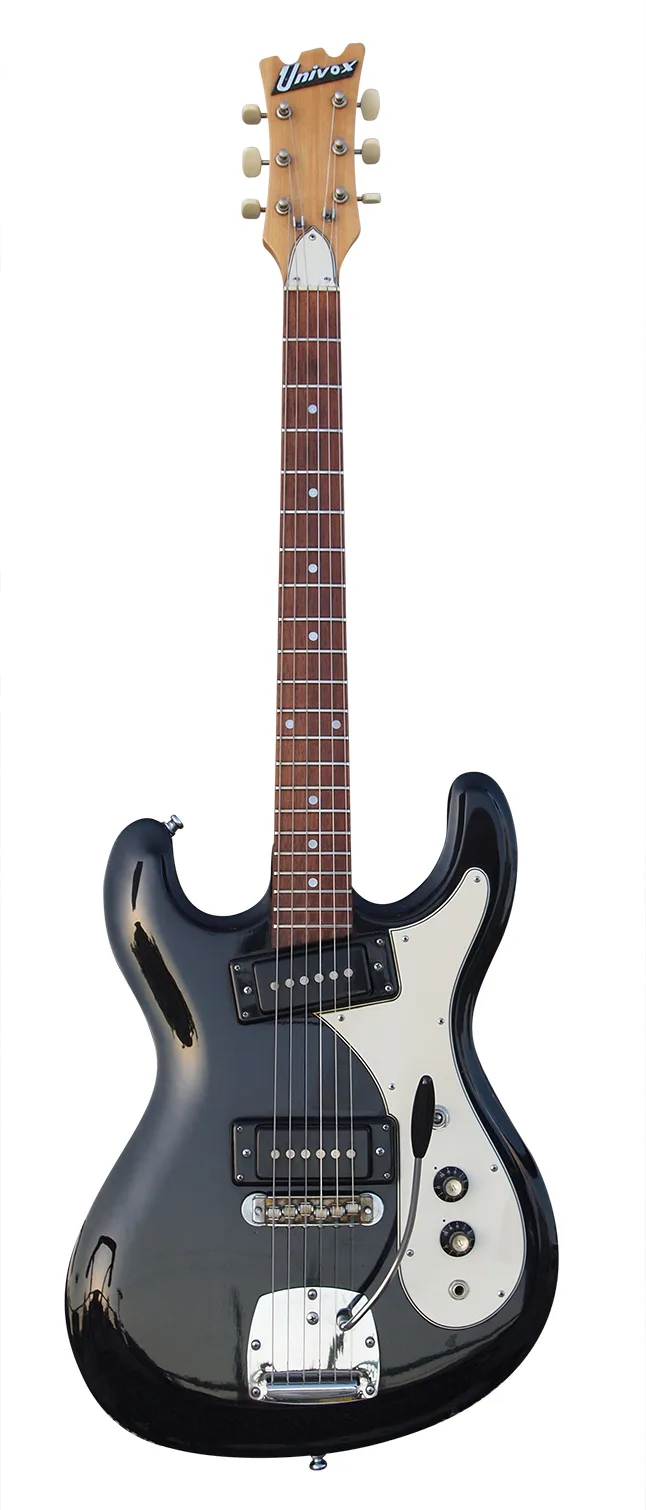
Photo: Decampos / Wikimedia Commons / CC BY-SA 4.0 Univox
Hi-Flier
1968
A Japanese copy of a Mosrite, found in pawnshops by a kid who kept breaking them.
- Send a picture
Valley Arts
Custom Pro
1987
The top of the line at Valley Arts wasn’t a spec sheet. It was “any way you wanted it.”
- Send a picture
Veleno
Veleno
1970
A rocket-parts machinist built an aluminum guitar, hid it in a closet, and waited to be asked twice.
- Send a picture
Vigier
Excalibur
1991
Patrice Vigier gave his strangest ideas the most ordinary body he could find, so people would pick them up.
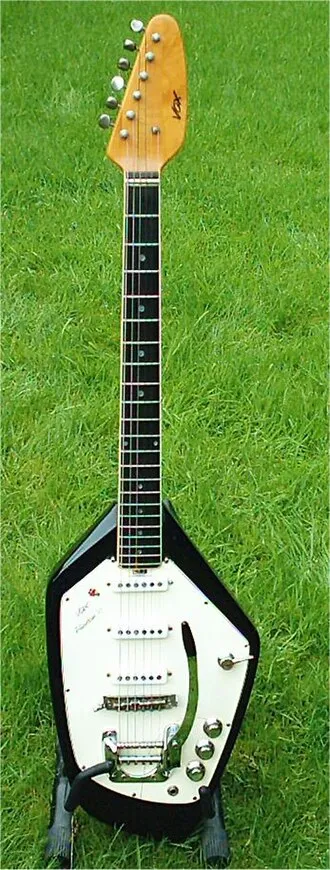
Photo: LittleRoughRhinestone / Wikimedia Commons / Public domain Vox
Phantom
1962
No Fenders in Britain, so Vox built a Strat in a five-sided coat you could spot from the back of the hall.
- Send a picture
Vox
Mark III
1963
Vox built Brian Jones a white teardrop, then sold everyone else a different guitar. The reissues chose his.
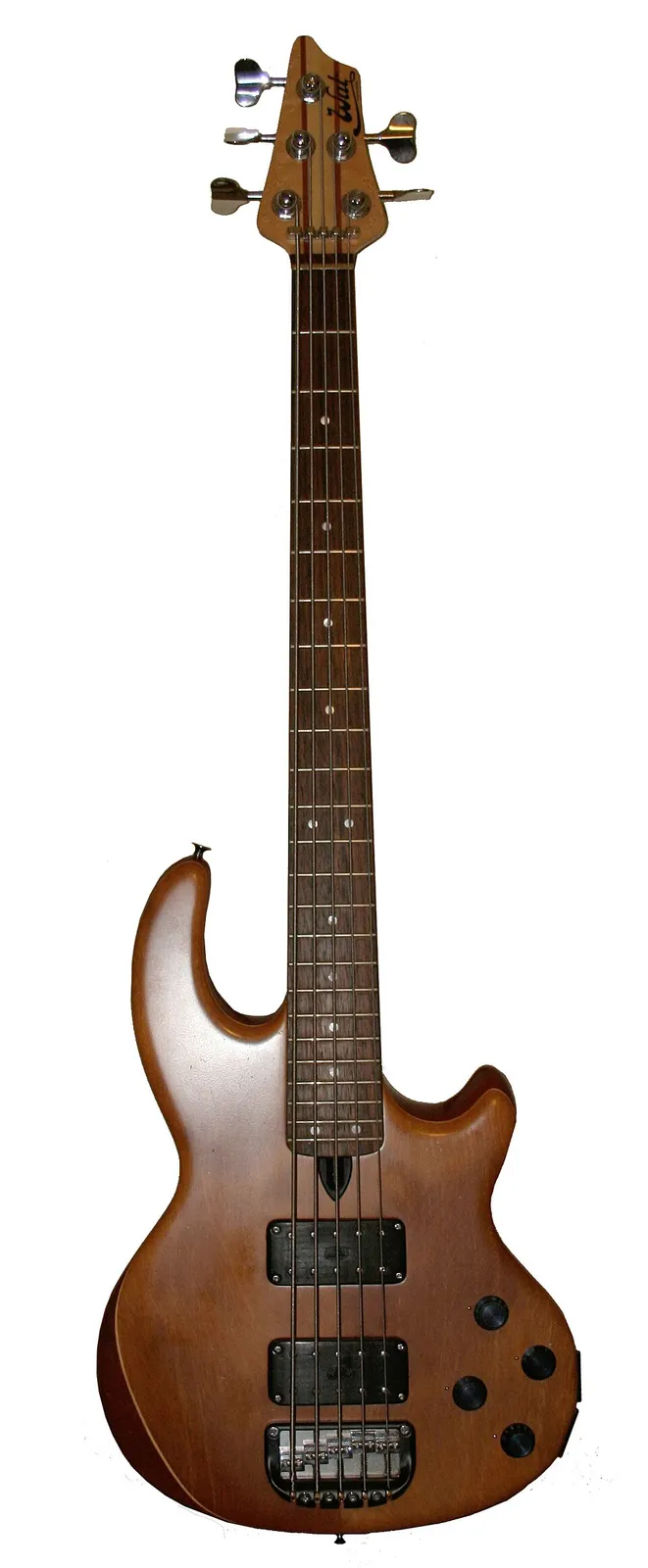
Photo: Dinobass / Wikimedia Commons / CC BY-SA 3.0 Wal
Custom Bass
1980
Geddy Lee borrowed his producer’s. Justin Chancellor borrowed a friend’s. Then both ordered their own.
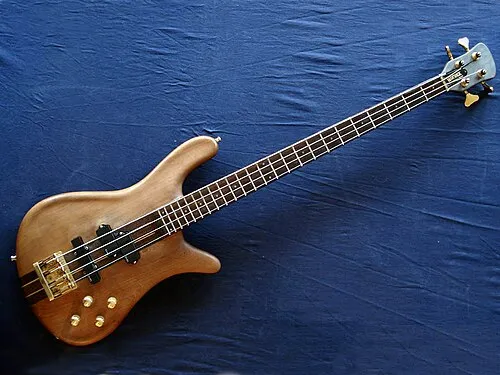
Photo: Jarlmos / Wikimedia Commons / CC BY-SA 3.0 Warwick
Streamer
1984
It started as a German copy of a bass Europe couldn’t get. By the time the lawyers came back, it wasn’t one.
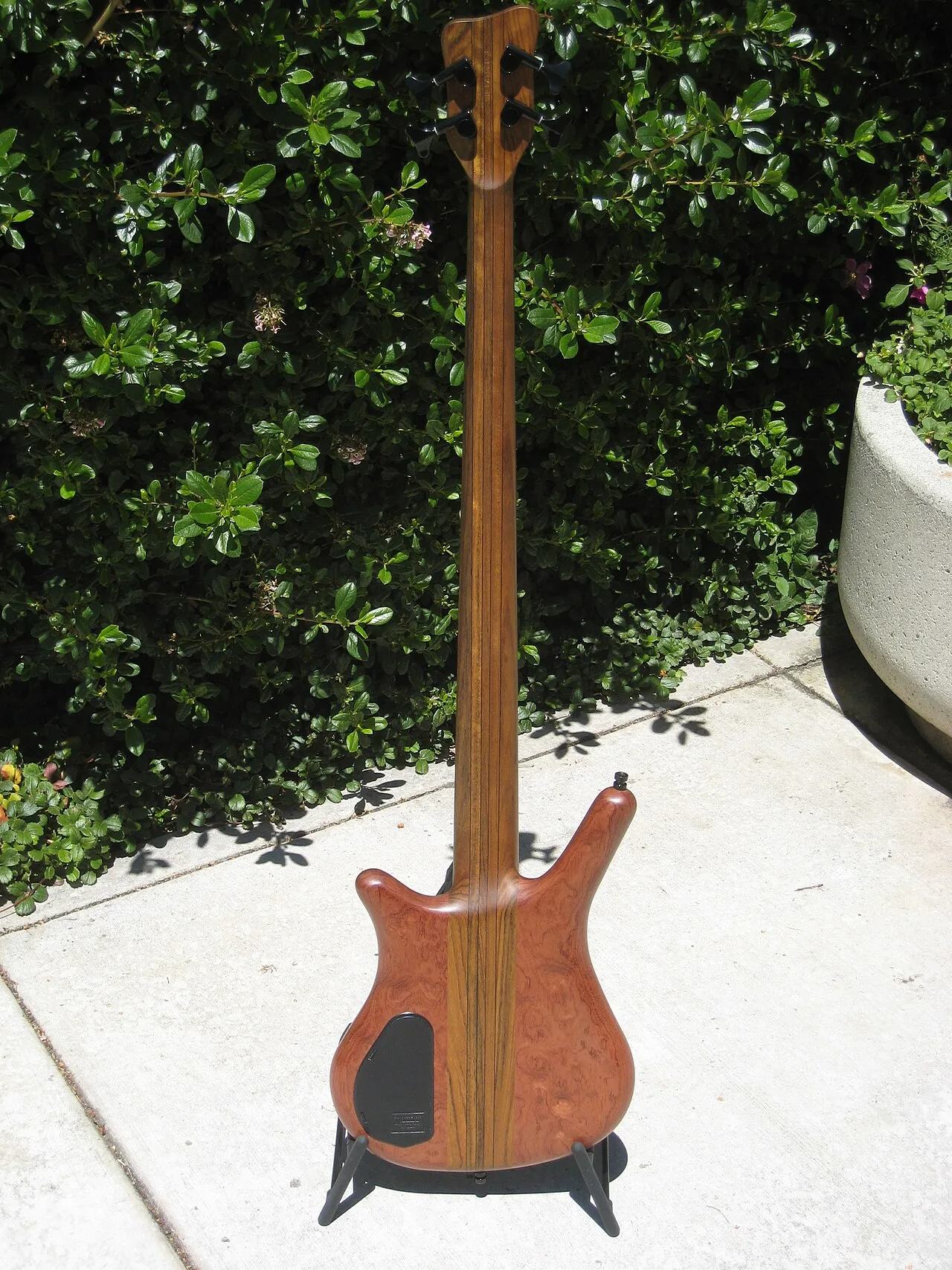
Photo: Ethan Prater from San Bruno, CA, USA / Wikimedia Commons / CC BY 2.0 Warwick
Thumb
1985
Named for one funk player’s thumb, fixed by Jack Bruce’s complaint, and the bass Bruce said he’d quit without.
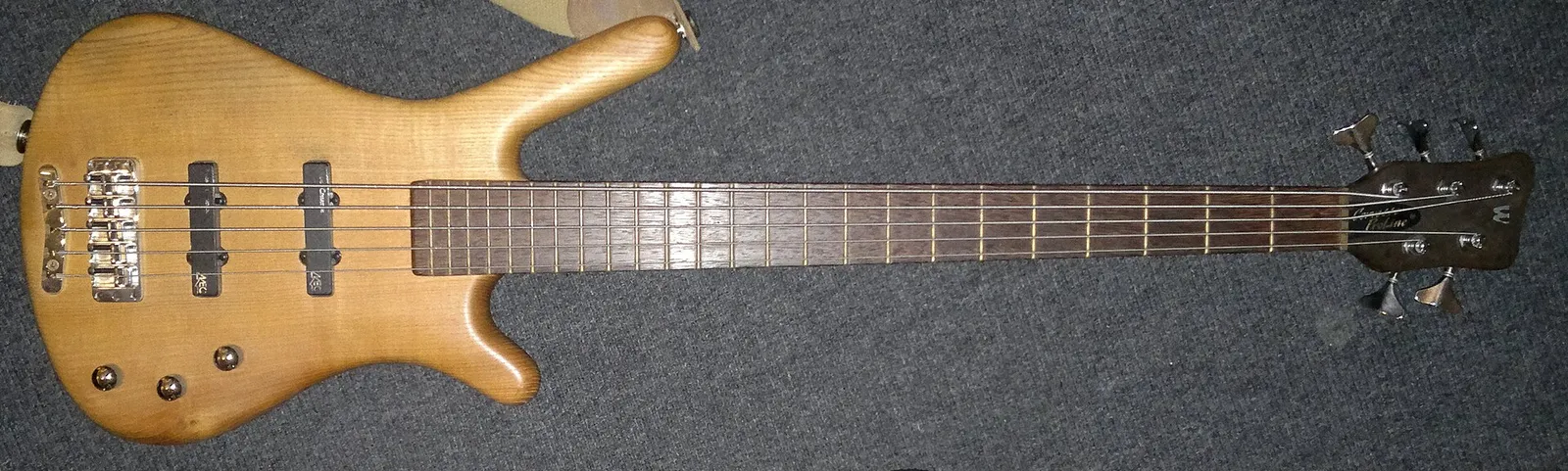
Photo: Odoublej / Wikimedia Commons / CC BY-SA 3.0 Warwick
Corvette
1992
Warwick’s first bolt-on was never shaped by hand. Then the players got their hands on it.
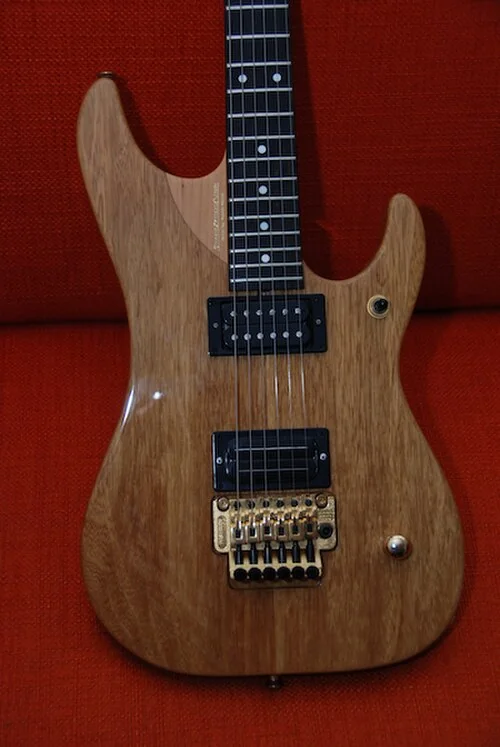
Photo: StefN4N8 / Wikimedia Commons / Public domain Washburn
N4
1990
Washburn could copy Nuno Bettencourt’s guitar down to the last ding. It couldn’t copy the years in it.
- Send a picture
Watkins
Rapier 33
1960
The Strat was the guitar everybody knew. The Rapier was the one a British kid could take home.
- Send a picture
Yamaha
FG180
1966
Built to survive a ship’s hold. Decades later, the photos put one in Elliott Smith’s hands at the Oscars.
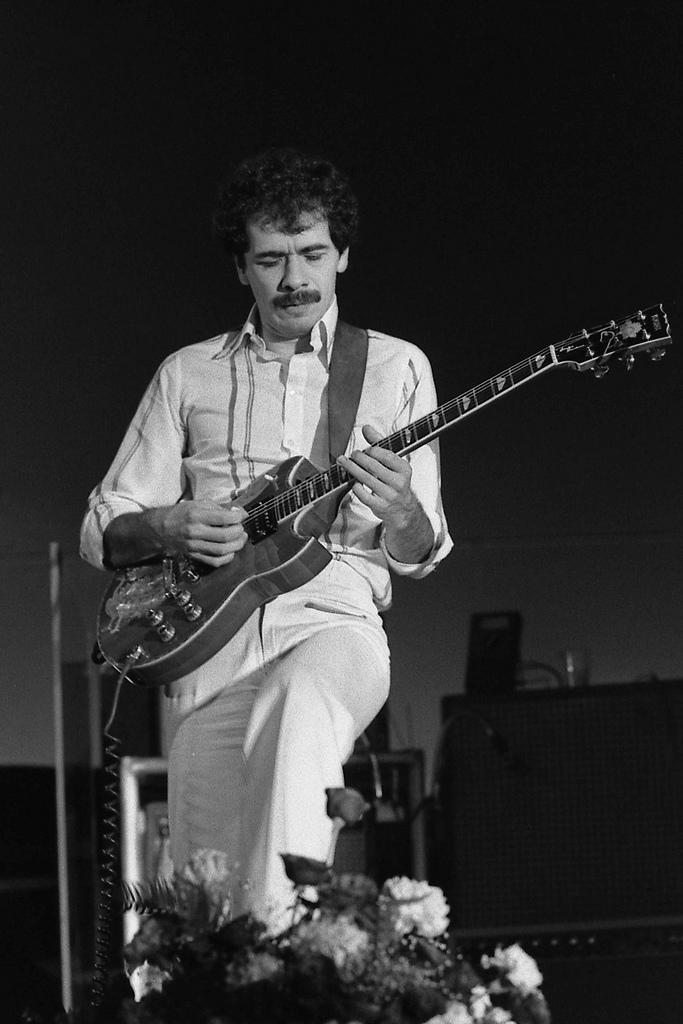
Photo: Chris Hakkens / Wikimedia Commons / CC BY-SA 2.0 Yamaha
SG-2000
1976
Santana told Yamaha to put a chunk of metal under the strings. They listened, and the notes stopped dying.
- Send a picture
Yamaha
BB-2000
1978
Andy Rourke’s main bass was a Precision. For the funky stuff, he picked up a Yamaha.
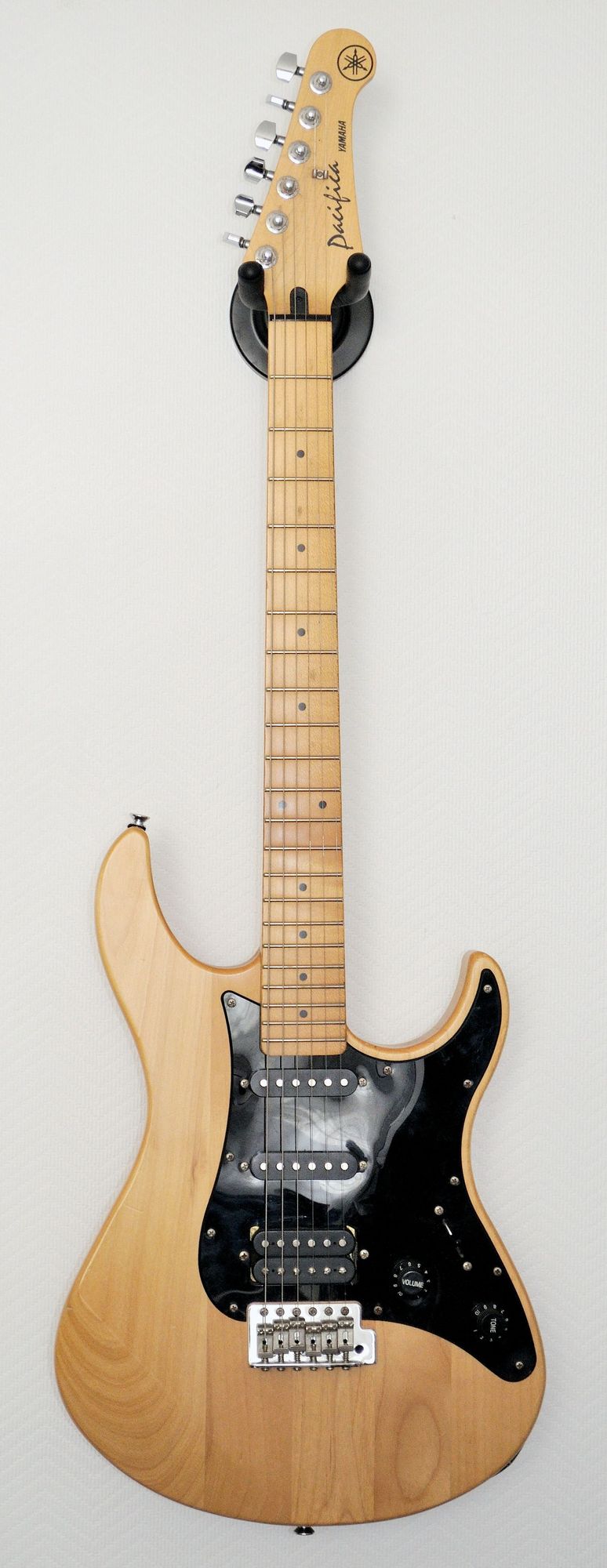
Electric guitar Yamaha Pacifica 112. Photo by BastienM. Licensed under CC BY-SA 3.0. Via Wikimedia Commons. Yamaha
Pacifica
1990
No hit record, no famous owner, no legend. Just the guitar that’s ready when a beginner is.
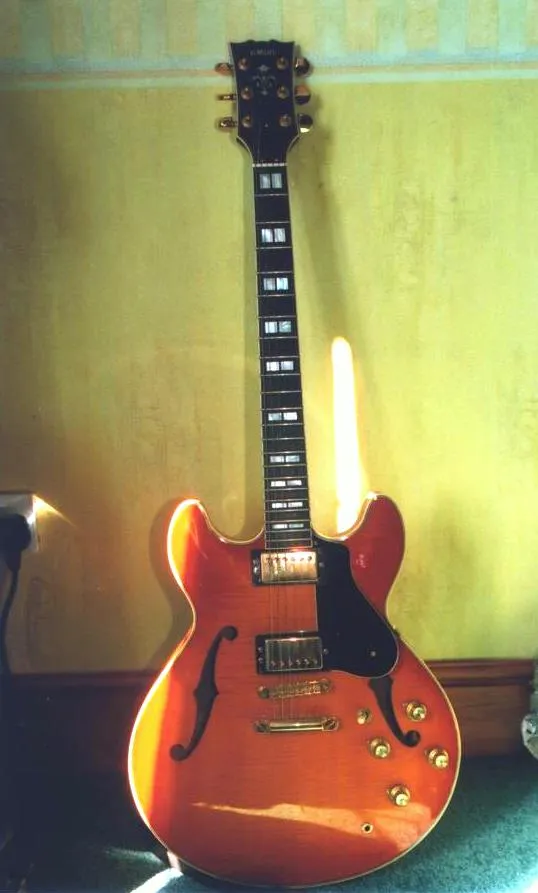
Photo: Davagh / Wikimedia Commons / Public domain Yamaha
SA2200
1991
It borrowed someone else’s outline in 1991, and it has been quietly refusing to change ever since.
- Send a picture
Yamaha
TRB-5
1994
When the synthesizers came for the low end, bassists added strings. This was the five you could buy.
- Send a picture
Yamaha
AES620
2003
Two magazine awards in its first year, gone by 2007 or 2008. Its owners just keep changing the pots.
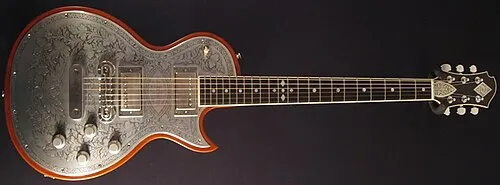
Photo: Heteren / Wikimedia Commons / Public domain Zemaitis
Metal Front
1970
A sheet of metal stopped the hum. A shotgun engraver made it the thing you stare at.

Photo: kallerna / Wikimedia Commons / CC BY-SA 3.0 Zon
Sonus
1992
Joe Zon spent years fixing other people’s bass necks. Then he built one with nothing on it to adjust.