Guitars, page 4
- Send a picture
Ibanez
AZ
2018
Ibanez made its name on the pointy one. The AZ is for the player who put it down.
- Send a picture
Jackson
Rhoads
1981
Randy Rhoads drew it on a scrap of paper. He got about a year with it. A generation of metal kids got the rest.
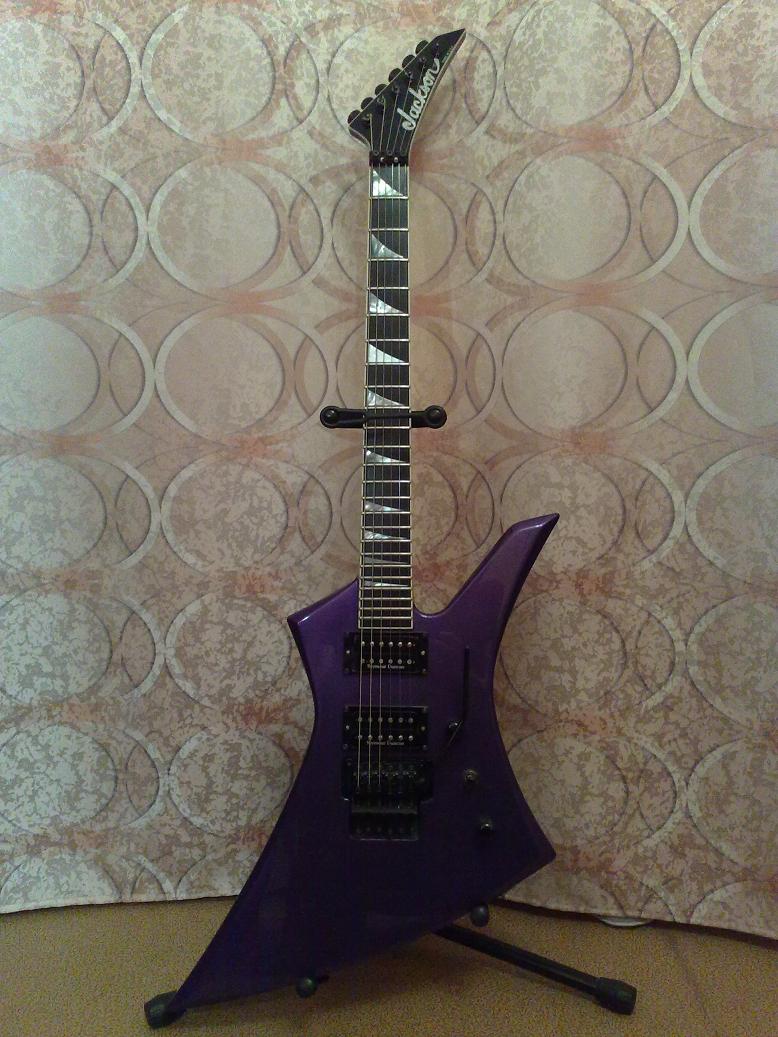
Photo: Saitaro / Wikimedia Commons / Public domain Jackson
Kelly
1983
It’s named after a guitarist from an Australian band called Heaven. Marty Friedman is why you know it.
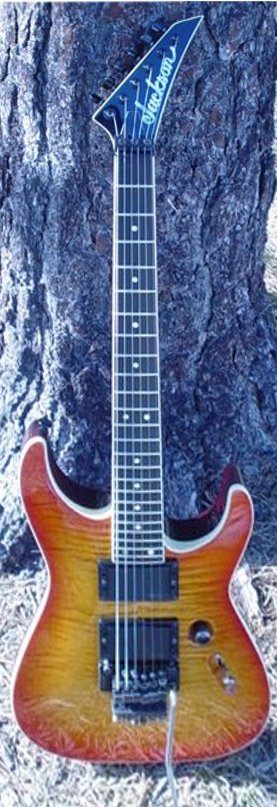
A 1987 Soloist archtop. Photo by Jimshine; perspective correction by GreyCat. Licensed under CC BY-SA 4.0. Via Wikimedia Commons. Jackson
Soloist
1984
Grover Jackson took the Strat shape and ran the maple neck straight through it. Jeff Beck’s was pink.

Photo: Deadbunny / Wikimedia Commons / CC BY-SA 3.0 Jackson
King V
1985
It started as a giant V for a giant guitarist. Then Jackson cut the wings down so everyone else could wear it.
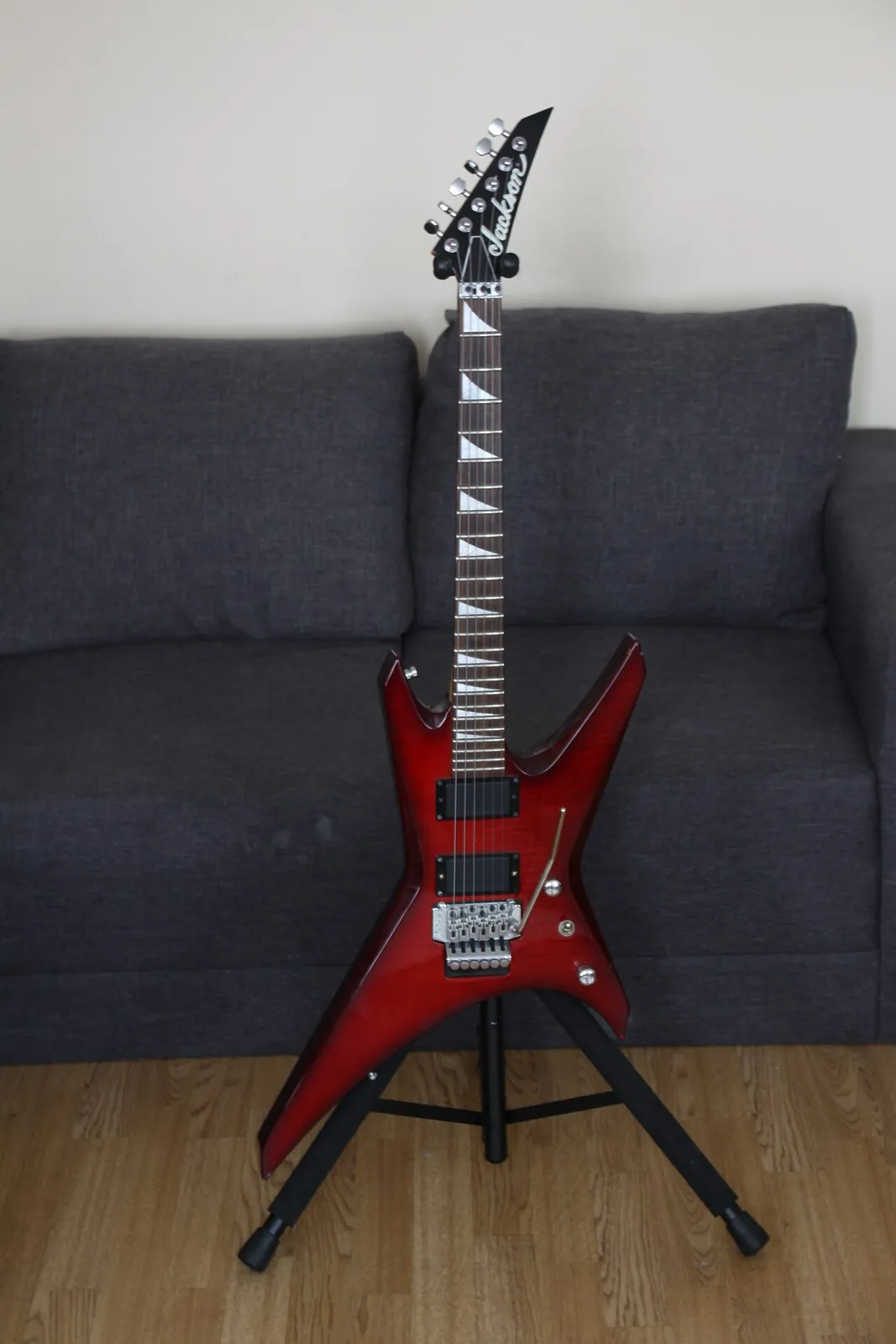
Photo: Styroks / Wikimedia Commons / CC BY-SA 4.0 Jackson
Warrior
1989
Four points, a neck straight through, and no polite angle anywhere. Some players see it once and that’s that.
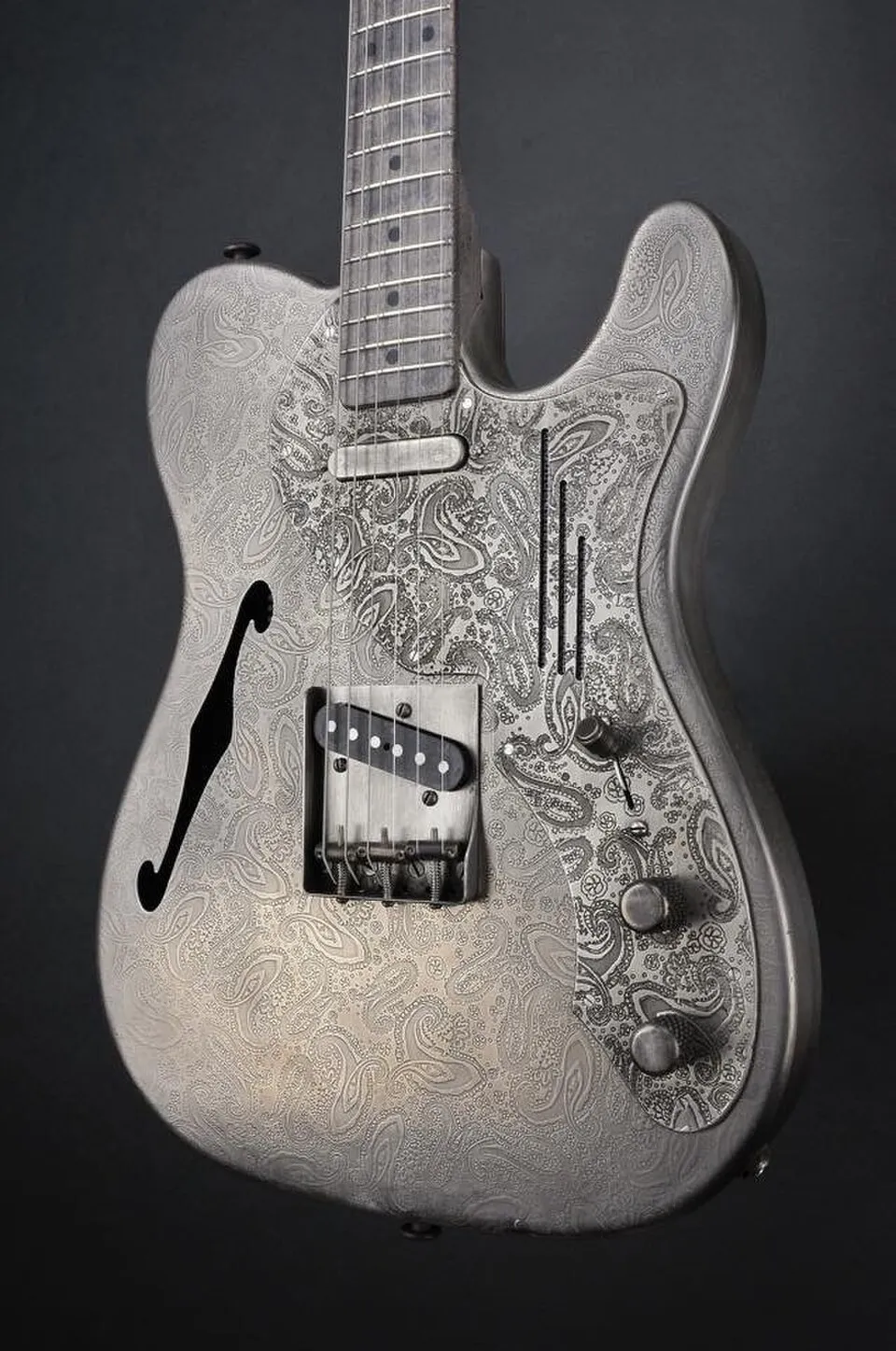
Photo: Mariecapron / Wikimedia Commons / CC BY-SA 4.0 James Trussart
SteelCaster
1983
A Telecaster shape in hollow steel, left outside to rust on purpose, so no two could ever match.
- Send a picture
James Tyler
Studio Elite
1987
Built in a North Hollywood shop with no sign, for the session players whose names were in the small print.
- Send a picture
Jerry Jones
Single Cutaway
1990
A Sears guitar came in for a setup and left Jerry Jones holding the blueprint.
- Send a picture
Kawai
Moonsault
1978
Fifty thousand guitars a month with other people’s names on them. Then Kawai had to draw its own.
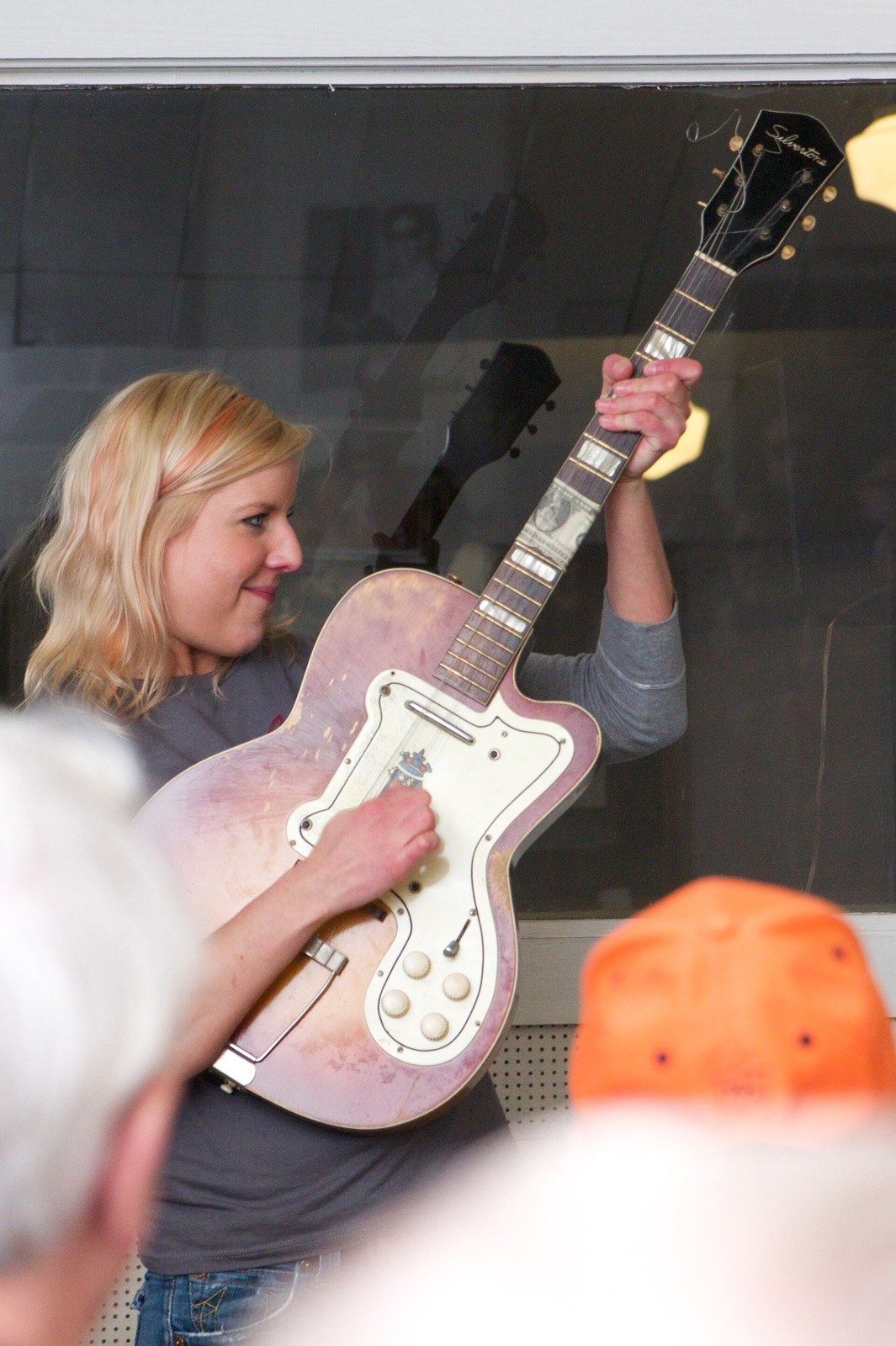
Photo: H. Michael Miley / Wikimedia Commons / CC BY-SA 2.0 Kay
Thin Twin
1952
Kay gave it a catalog number. Chicago blues gave it a name: the Jimmy Reed.
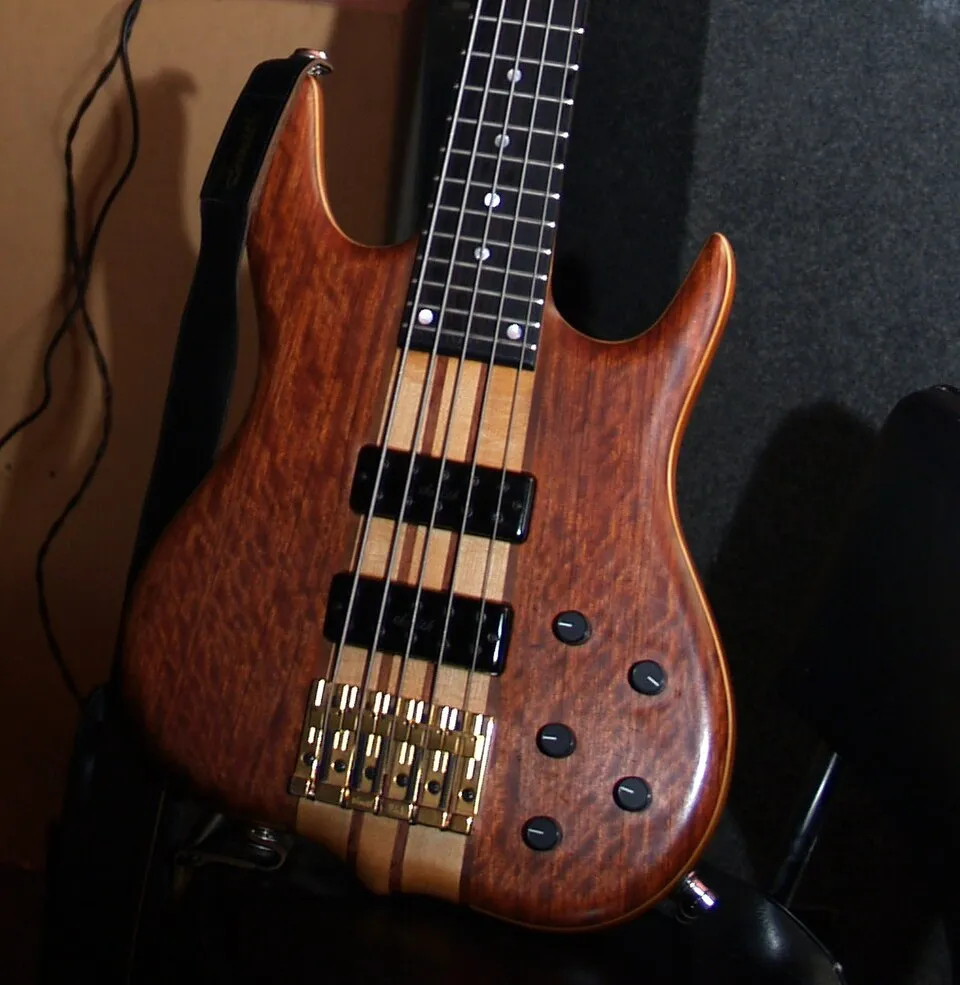
Photo: christina rutz / Wikimedia Commons / CC BY 2.0 Ken Smith
BSR
1996
Ken Smith drew his first bass for playing sitting down. The BSR is the one he drew for standing up.
- Send a picture
Kiesel
Osiris
2018
Kiesel’s Vader went headless with a neck-through. People asked for a bolt-on. The Osiris is the bolt-on.
- Send a picture
Klein Electric
1200S
1989
Twelve years of ugly guitars, one talk with Ned Steinberger, and a drawing that took half an hour.
- Send a picture
Knaggs
Severn
2010
Twenty-four years building other people’s guitars. Then Joe Knaggs built the one he wanted to play.
- Send a picture
Kramer
Baretta
1983
One humbucker, a bolt-on neck, a banana headstock. Kramer’s 1983 superstrat kept the loud part.
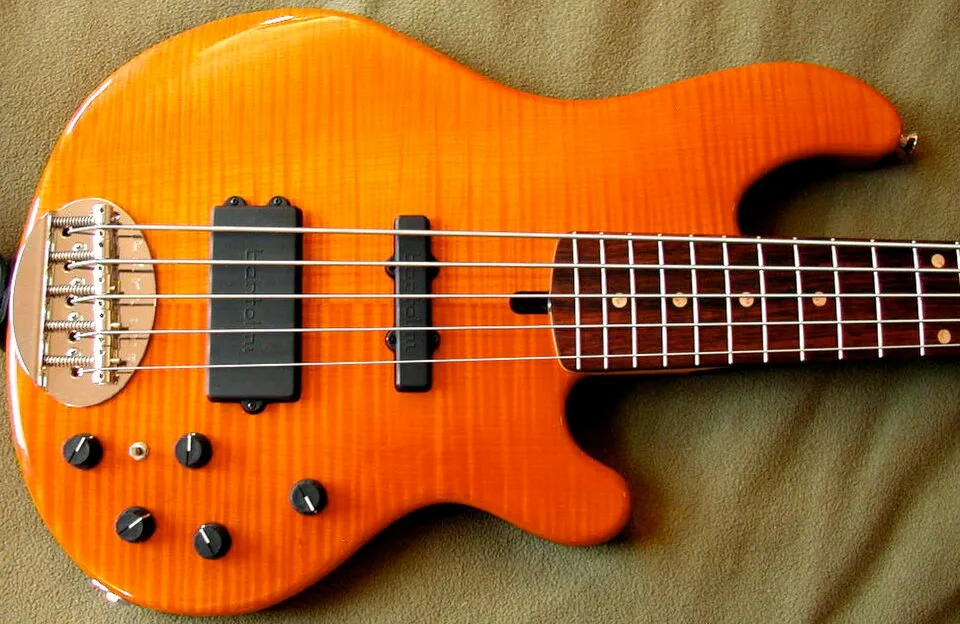
Photo: Dale Cruse / Wikimedia Commons / CC BY 2.0 Lakland
55-94
1996
A five-string for bass players who never wanted one: an extra inch of scale, and a neck that feels like home.
- Send a picture
Larrivée
OM-03
1997
A shop that started in a basement made an all-solid guitar a working player could actually afford.
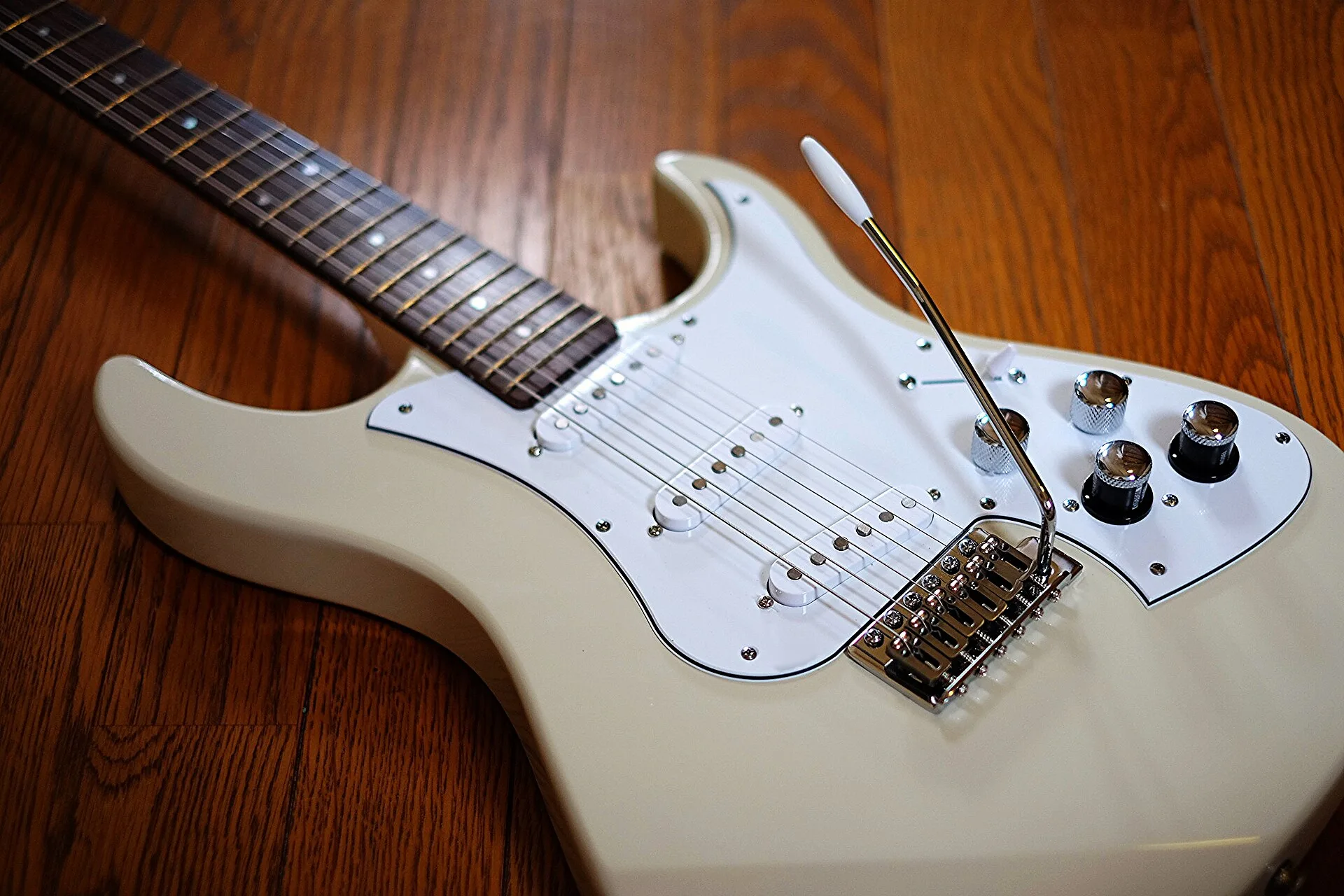
Photo: Shunichi kouroki / Wikimedia Commons / CC BY 2.0 Line 6
Variax
2002
One knob, and a plain solidbody is a 12-string, a sitar, or a banjo. It was built to be the rest of the gig bag.
- Send a picture
Lowden
O-25
1977
George Lowden refused to copy an American guitar. Twenty years on, David Gray bought one and made White Ladder.
- Send a picture
Magnatone
Mark V
1957
Paul Bigsby designed it, with his own vibrato on the tail. Everybody went home with the amp instead.
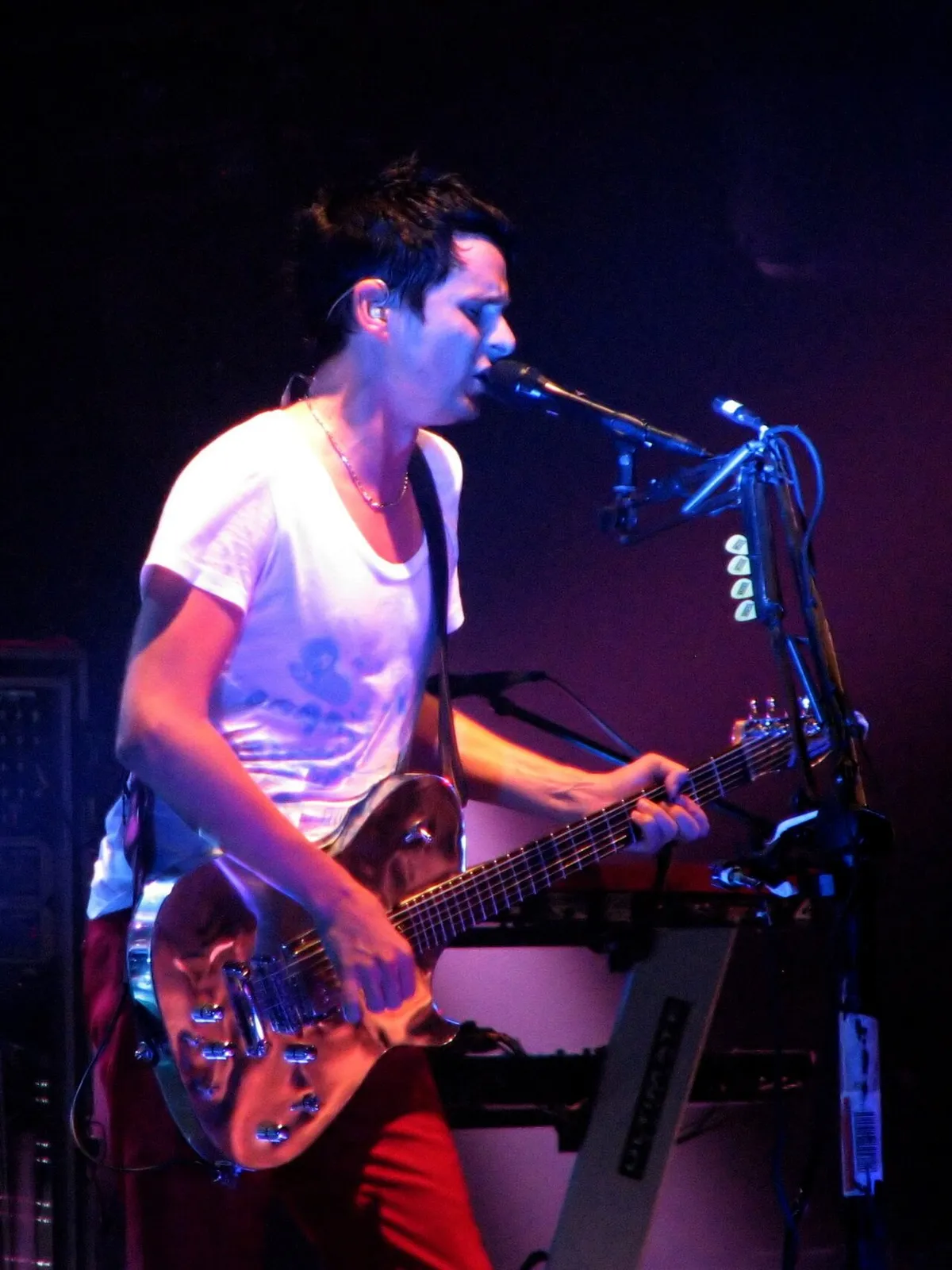
Photo: Ian Muttoo / Wikimedia Commons / CC BY-SA 3.0 Manson
MB-1
2009
Hugh Manson wouldn’t build you a Strat. He built Matt Bellamy this instead, and eventually let you have one.
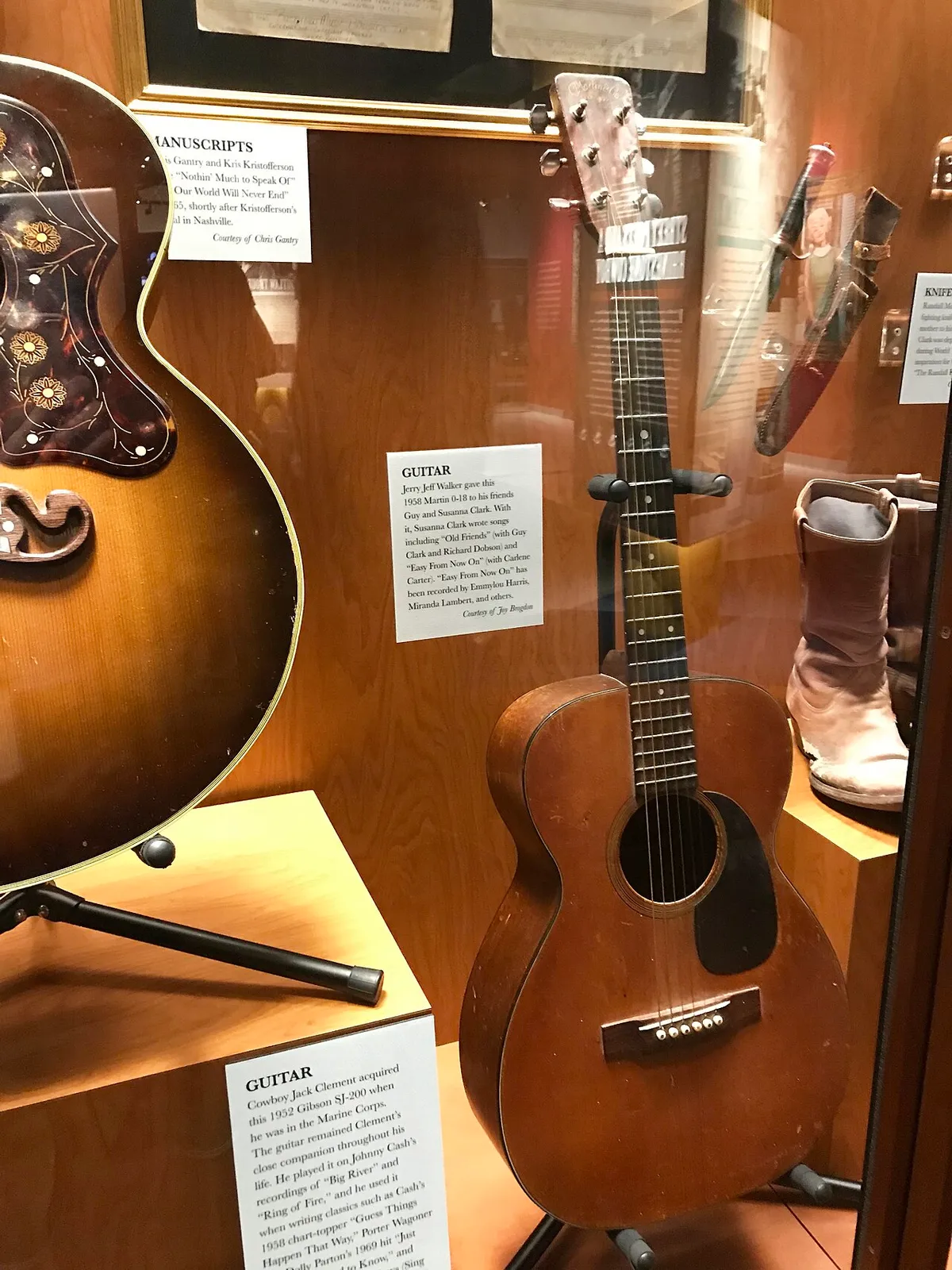
Photo: e Kat / Wikimedia Commons / CC0 Martin
0-18
1898
Martin keeps dropping the little 0-18 from the catalog. The people who own one never put it down.
- Send a picture
Martin
00-18
1898
Not the big dreadnought. The small mahogany Martin you can carry into a field and write a song on.
- Send a picture
Martin
5-18
1898
Martin sold it as a guitar for children. Marty Robbins took it onstage.
- Send a picture
Martin
OM-28
1929
In 1929 one player asked Martin for a longer neck. The answer was a new guitar, and it lasted about four years.
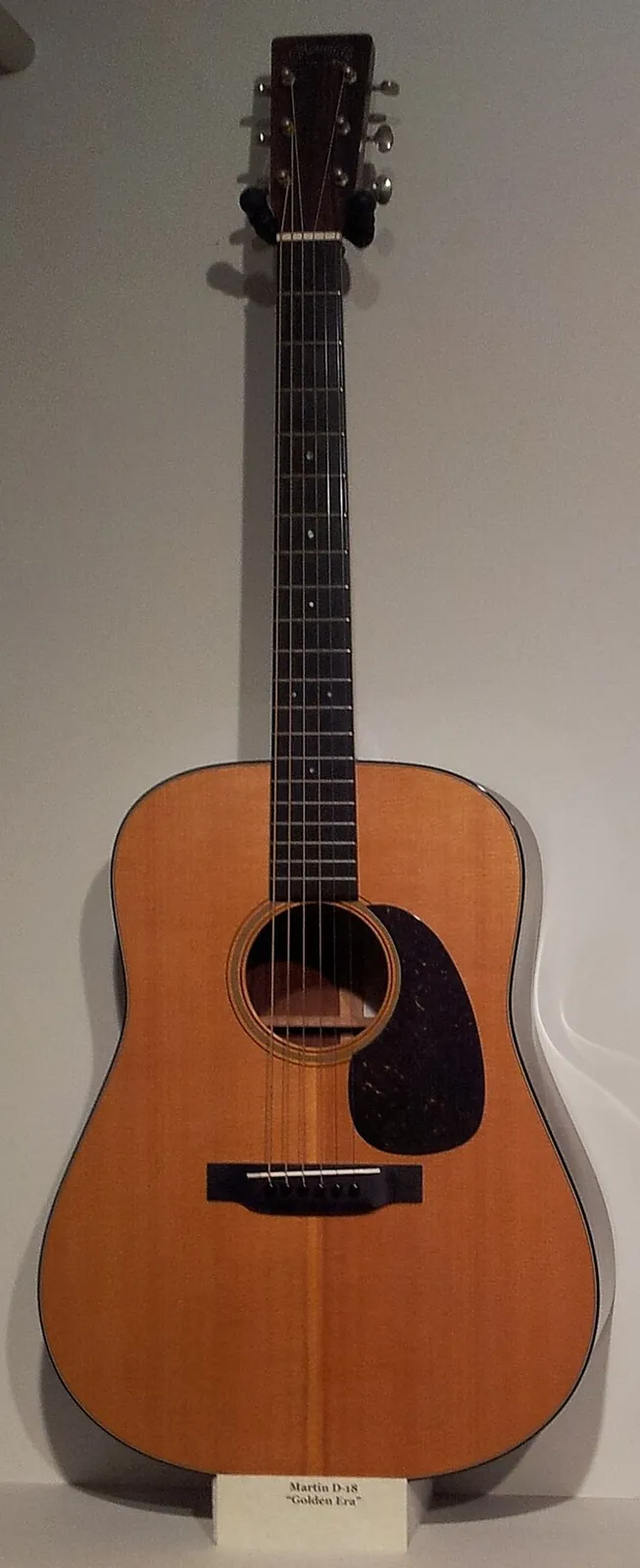
Photo: doryfour / Wikimedia Commons / CC BY-SA 2.0 Martin
D-18
1931
Elvis traded his D-18 up for a leather-covered D-28. The plain one had already been there for the Sun records.
Martin D-28 Acoustic Guitar. Photo by Niranjan Arminius. Licensed under CC BY-SA 4.0. Via Wikimedia Commons. Martin
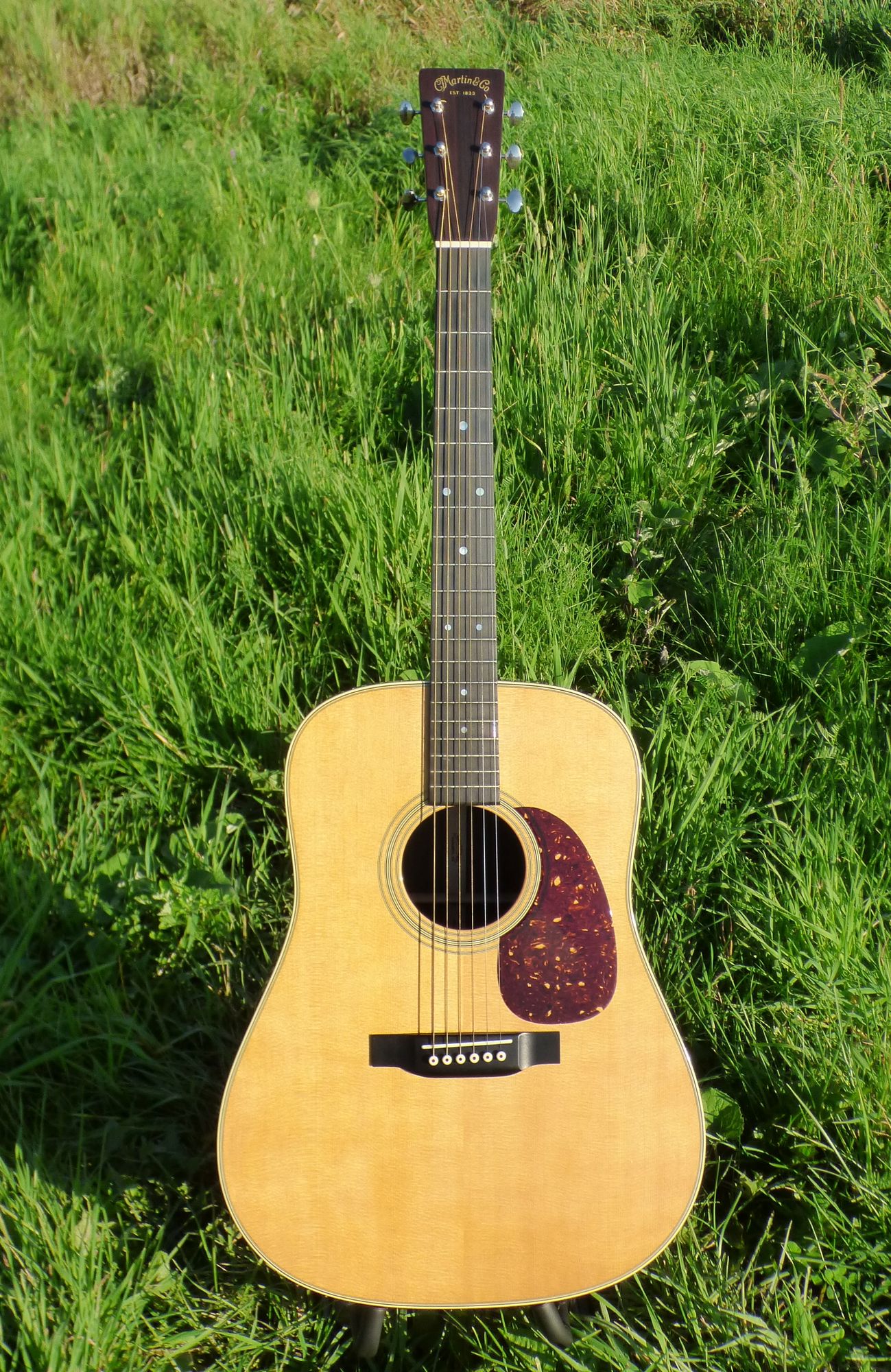
D-28
1931
You’ve heard a D-28 your whole life. It just never asked for the credit.

Photo: Eddie Janssens / Wikimedia Commons / CC BY-SA 4.0 Martin
D-45
1933
Pearl takes time. When the war took Martin’s time away, the D-45 stopped, and it waited 26 years to come back.
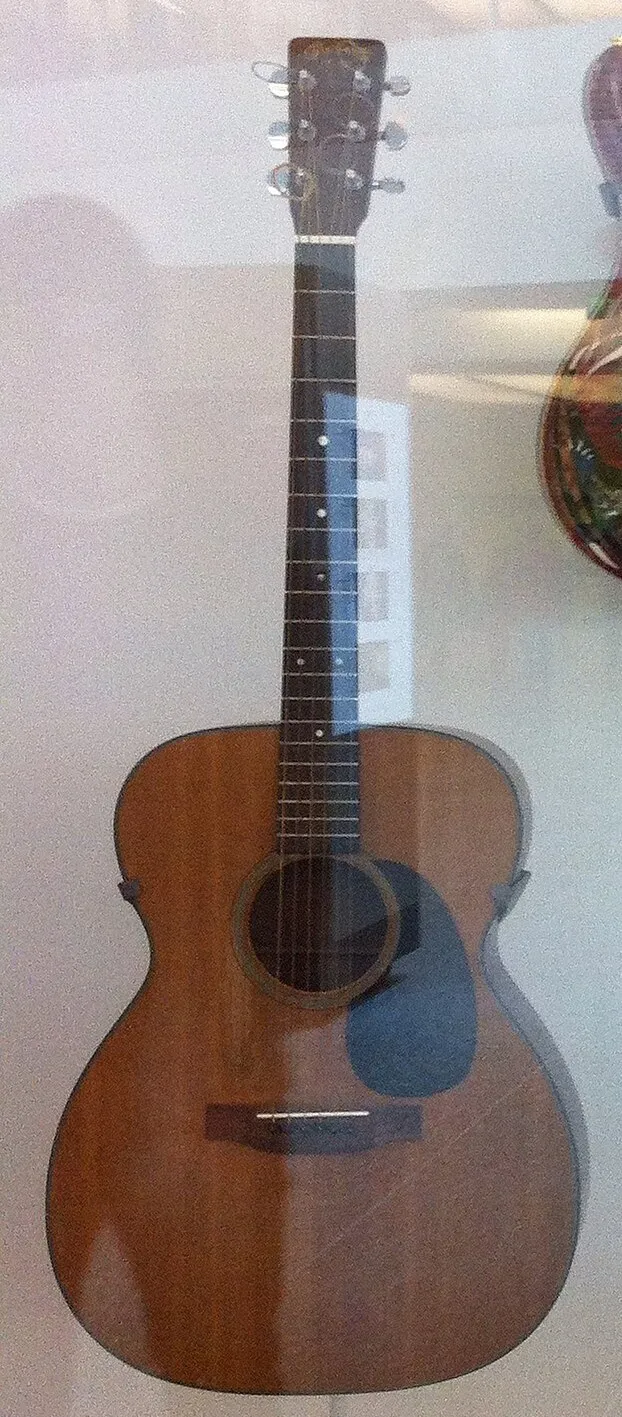
Photo: Tyfferz Y / Wikimedia Commons / CC BY 2.0 Martin
000-18
1934
Julian Lage’s 1939 000-18 had been in pieces. It showed up when his own left hand needed putting back together.
- Send a picture
Martin
000-28
1934
Eric Clapton met the 000-28 in pictures of Big Bill Broonzy. Now people meet it in pictures of Clapton.
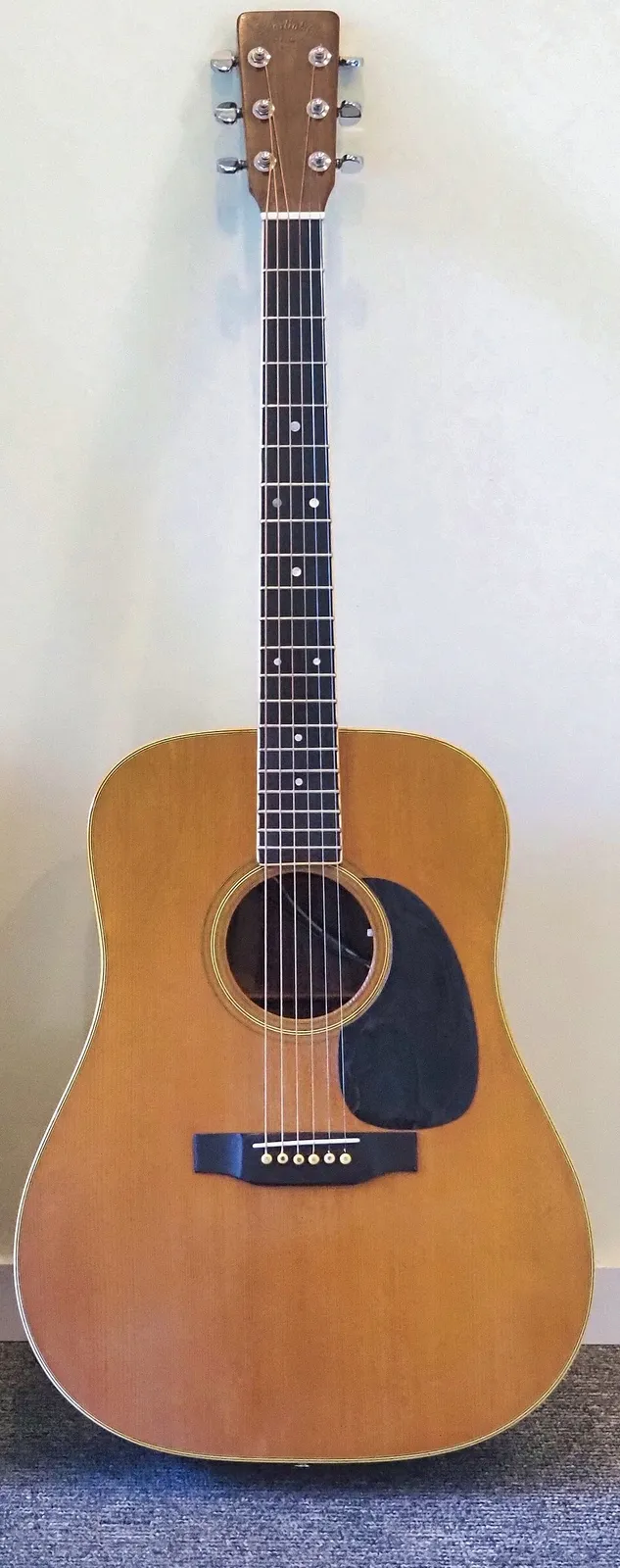
Photo: Tony Rees (Tony 1212) / Wikimedia Commons / CC BY 4.0 Martin
D-35
1965
Martin split the back in three to save rosewood. The bass it made was just what Johnny Cash’s voice needed.
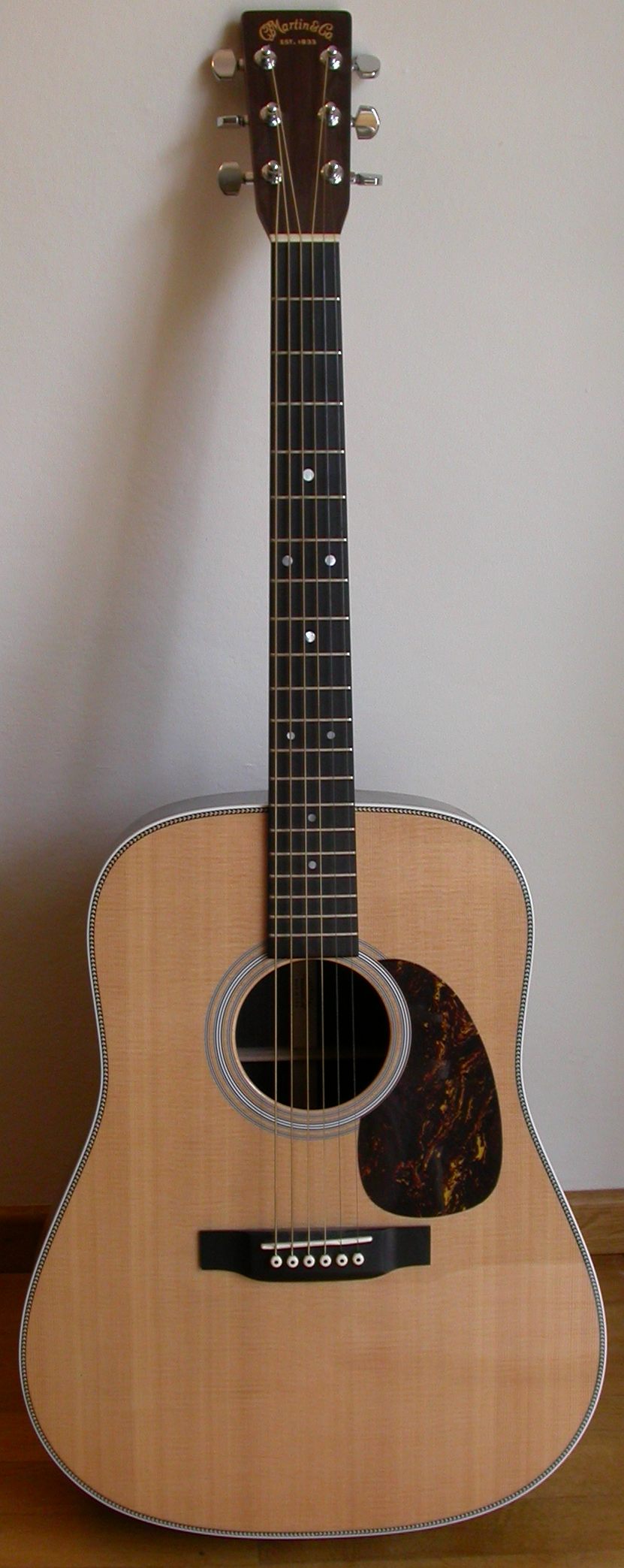
Photo: Maxo / Wikimedia Commons / CC BY-SA 2.5 Martin
HD-28
1976
For almost thirty years, a herringbone Martin meant finding an old one. In 1976 Martin added a letter.
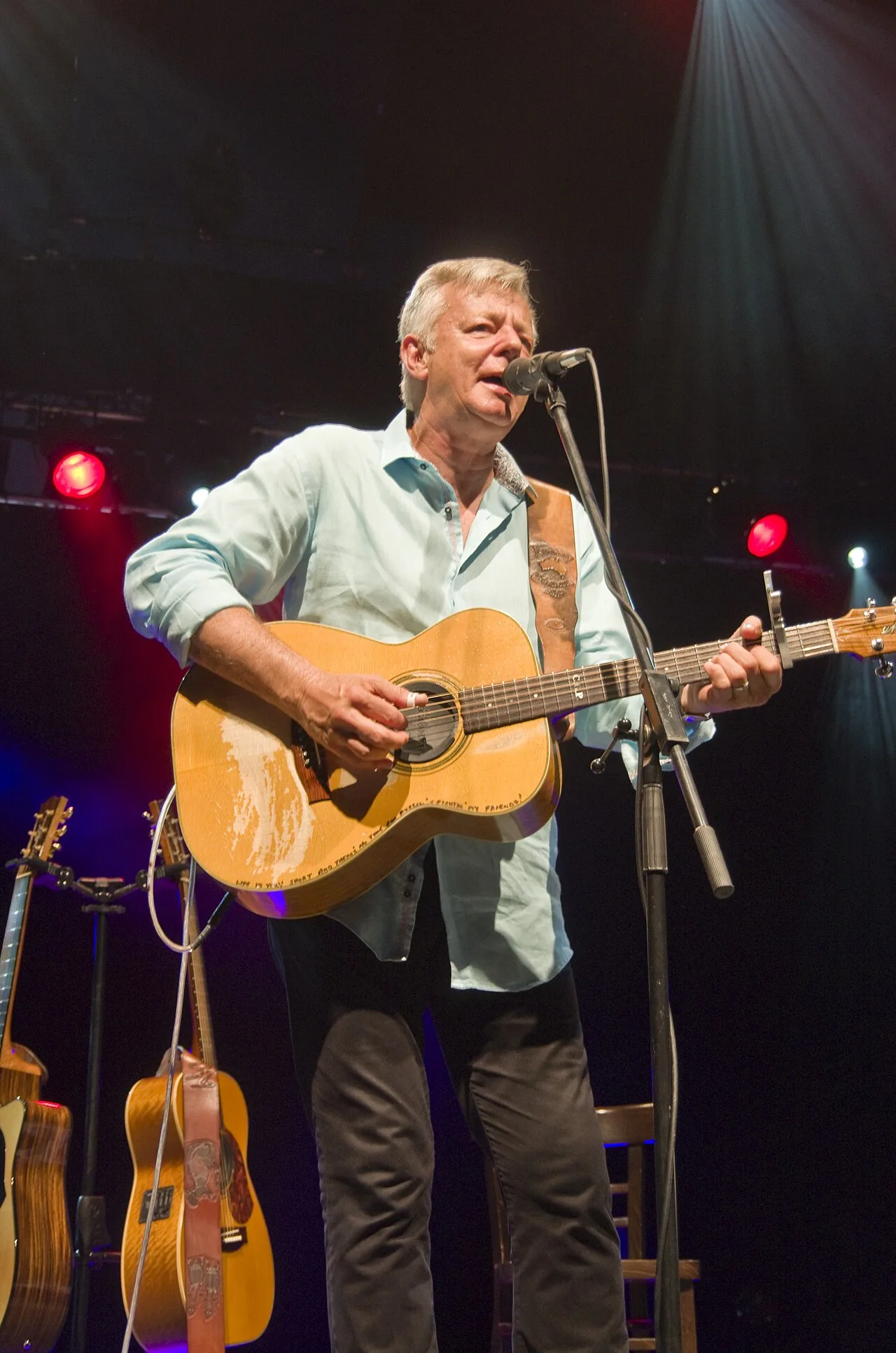
Photo: Ice Boy Tell / Wikimedia Commons / CC BY-SA 4.0 Maton
EBG808
1988
It started as the measurements off a smashed Martin, for the quiet players in a Melbourne folk club.
- Send a picture
Mayones
Regius
1998
The copies sold in Poland. The guitar Mayones drew for itself had to go to Frankfurt, every year.
- Send a picture
Micro-Frets
Spacetone
1969
A Maryland guitar you intonate at the nut, with a bar that dips whole chords in tune. Some even broadcast FM.
- Send a picture
Mike Lull
M4V
1995
Mike Lull didn’t want to reinvent Leo Fender’s wheel. He just made it about a fifth smaller.
- Send a picture
Modulus
Quantum
1978
An aerospace engineer looked at Phil Lesh’s bass and decided the problem was the wood.
- Send a picture
Mosrite
Ventures
1963
Semie Moseley offered Nokie Edwards the guitar free. He paid $200, and the Ventures dropped their Jazzmasters.
- Send a picture
MTD
Kingston
2001
He sold his own name to Gibson. The Kingston is how you get his neck without waiting on his bench.
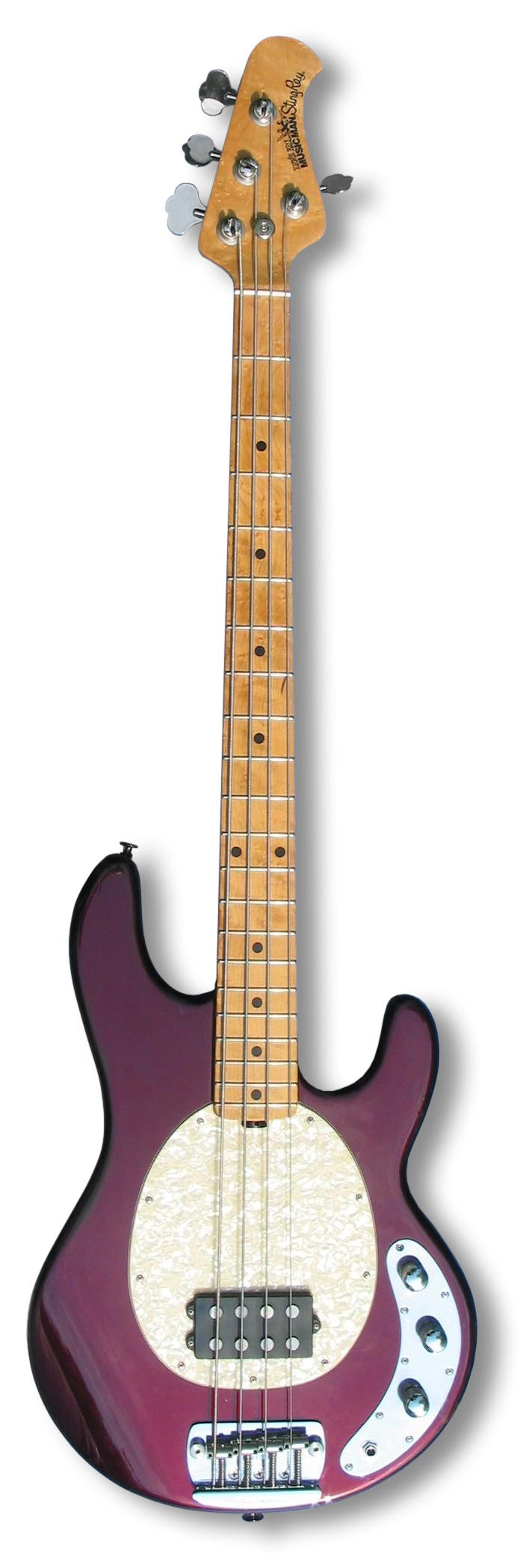
Photo: Th. Ott / Wikimedia Commons / CC BY-SA 3.0 Music Man
StingRay
1976
Leo Fender wanted a wide, bright bass. Louis Johnson hit it with his thumb, and funk had its sound.
- Send a picture
Music Man
Silhouette
1986
People laughed at Music Man’s first guitar. Then Keith Richards picked one up.
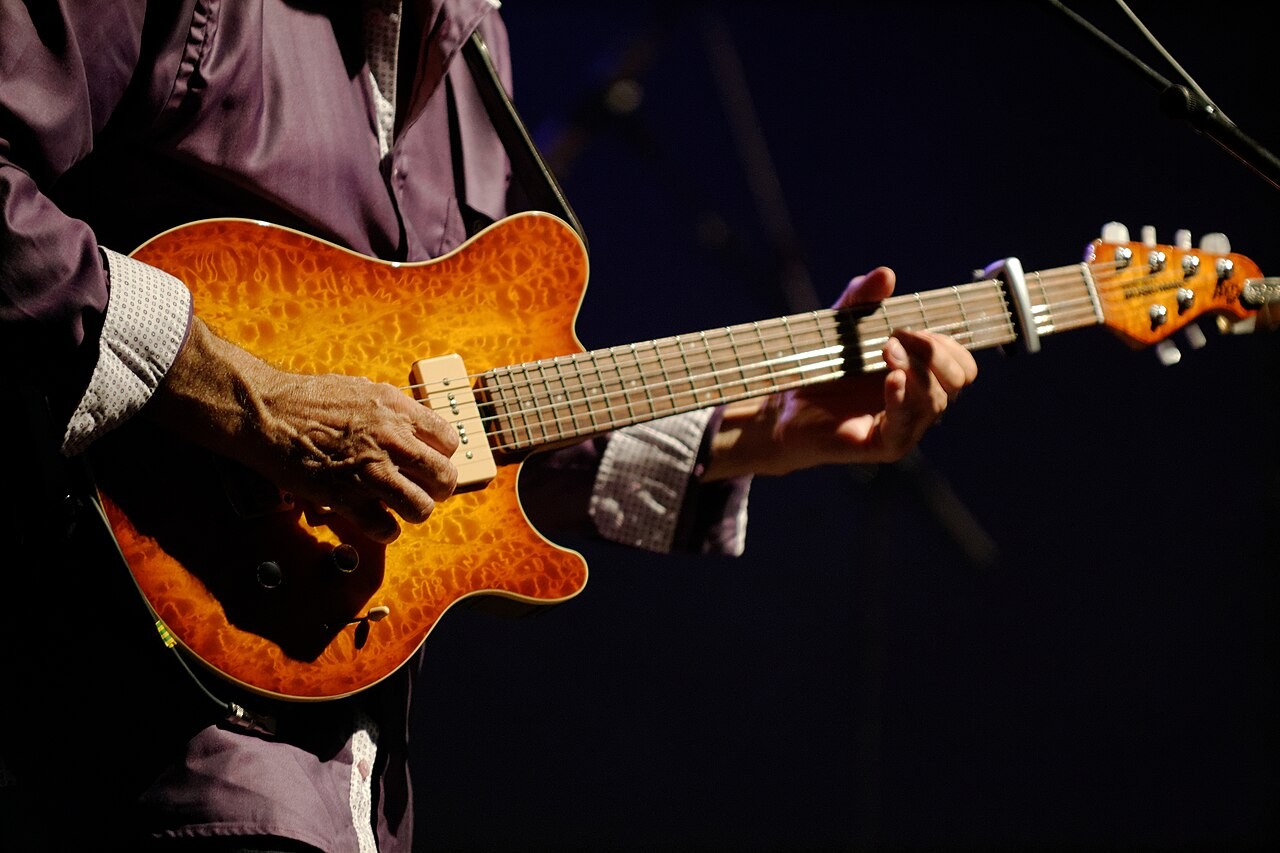
Photo: Kergourlay / Wikimedia Commons / CC BY-SA 3.0 Music Man
Axis
1991
They copied the neck off Eddie Van Halen’s worn-out Kramer. Then Eddie left, and the guitar stayed.
- Send a picture
Music Man
JP6
2001
Shaped to fit one shredder’s forearm, it became the secret weapon of a pop band’s guitarist.
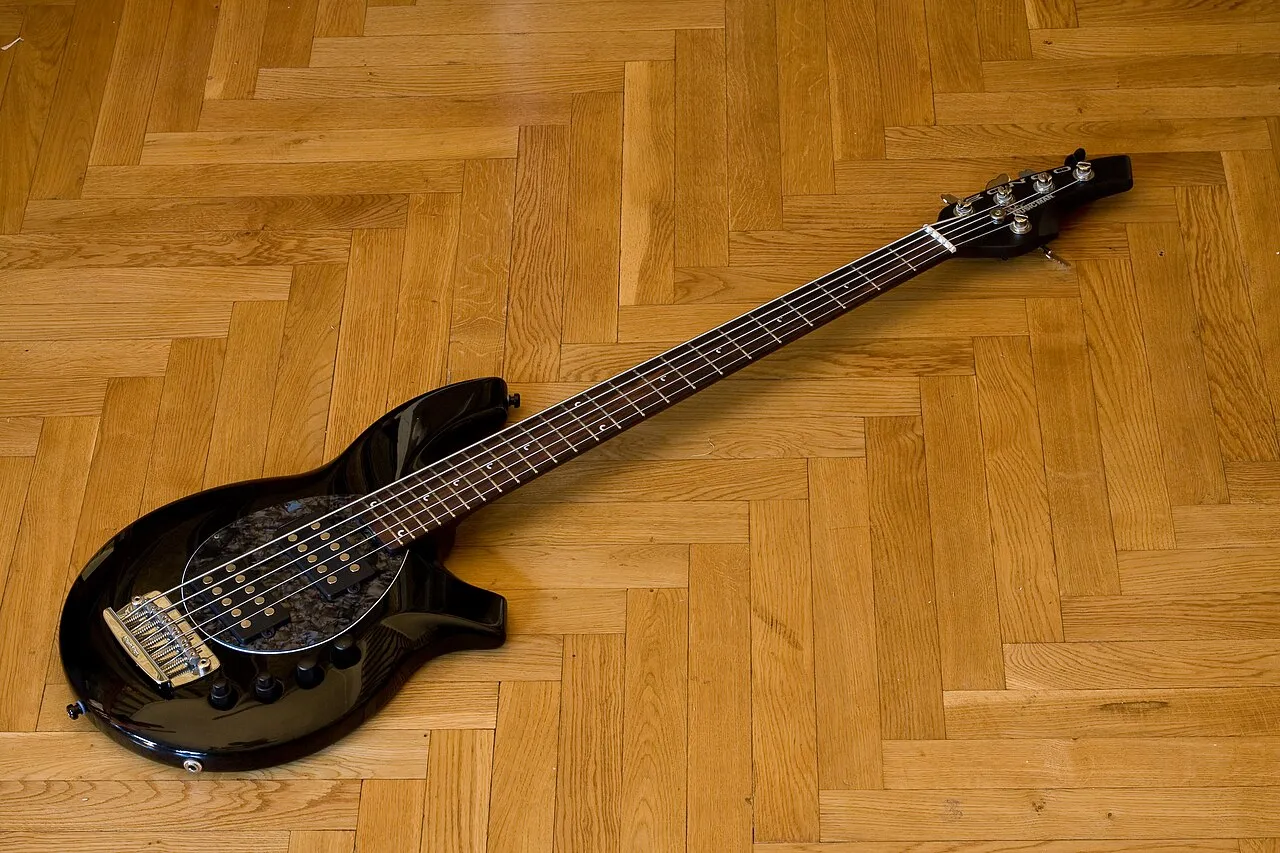
Photo: Serguei Trouchelle / Wikimedia Commons / CC BY-SA 3.0 Music Man
Bongo
2003
Sterling Ball asked BMW’s design studio for a bass. People thought he’d lost his mind. It’s still in production.
- Send a picture
Music Man
Reflex
2010
Music Man built an anniversary guitar for one year. The Reflex was the plain one that let it stay.
- Send a picture
Music Man
Cutlass
2016
Leo Fender drew up the Cutlass in the ’70s. It took about forty years to make it onto a wall.
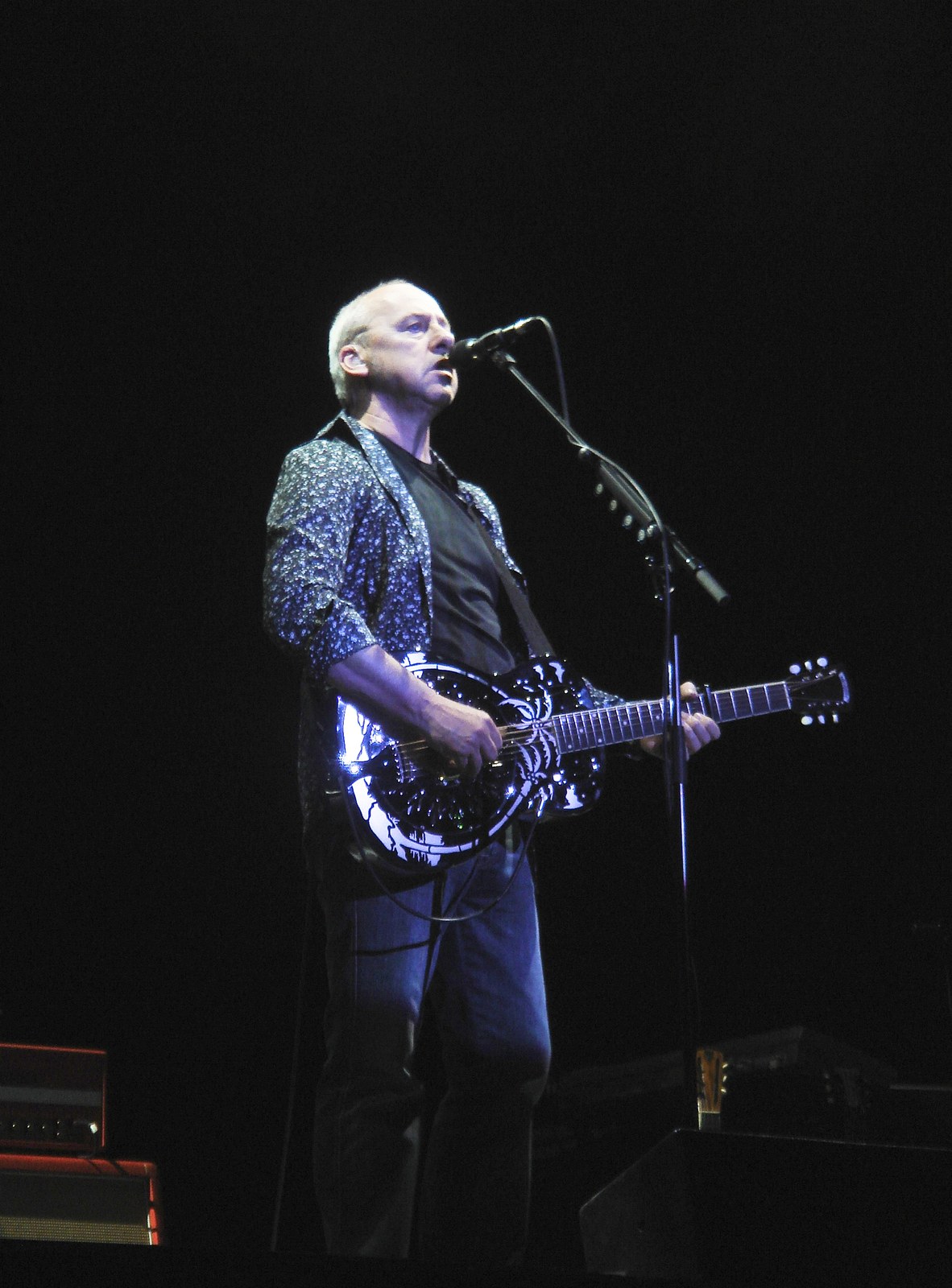
Photo: Chris J Bowley / Wikimedia Commons / CC BY 2.0 National
Style O
1930
A nickel-plated brass guitar from 1930s Los Angeles, and the one Mark Knopfler wouldn’t sell.