Guitars, page 5
- Send a picture
Nik Huber
Orca
1997
Nik Huber admits his shapes are “a mix of everybody.” When Gibson wrote about the Orca, he didn’t argue.
- Send a picture
Novo
Serus
2016
Dennis Fano walked away from the brand with his name on it, and drew a body big enough to start over.
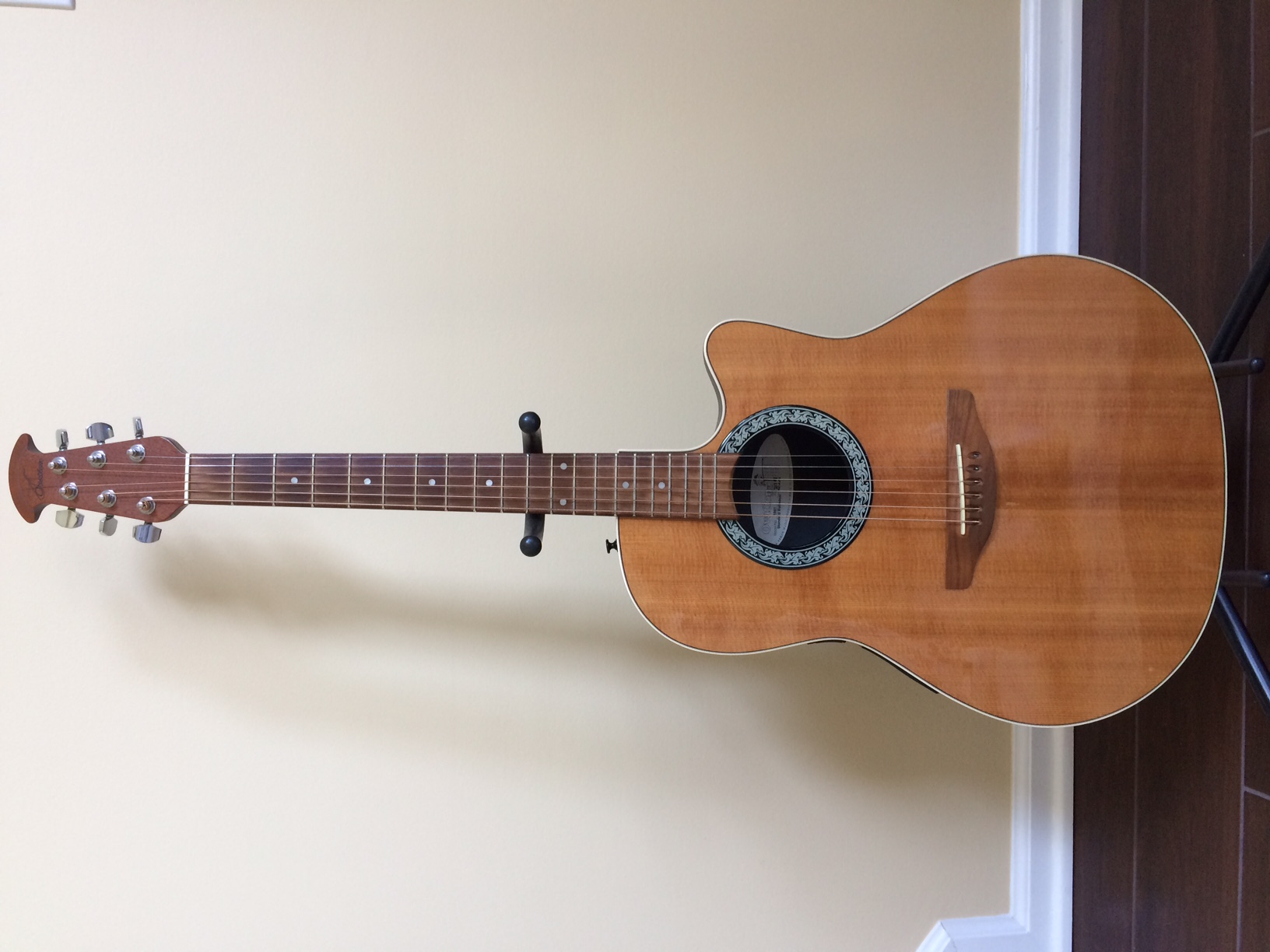
Ovation Model 1861 Standard Balladeer. Photo by Veradrive. Dedicated to the public domain under CC0 1.0. Via Wikimedia Commons. Ovation
Balladeer
1966
A helicopter builder looked at a guitar and asked why the back had to be made of wood. This was his answer.
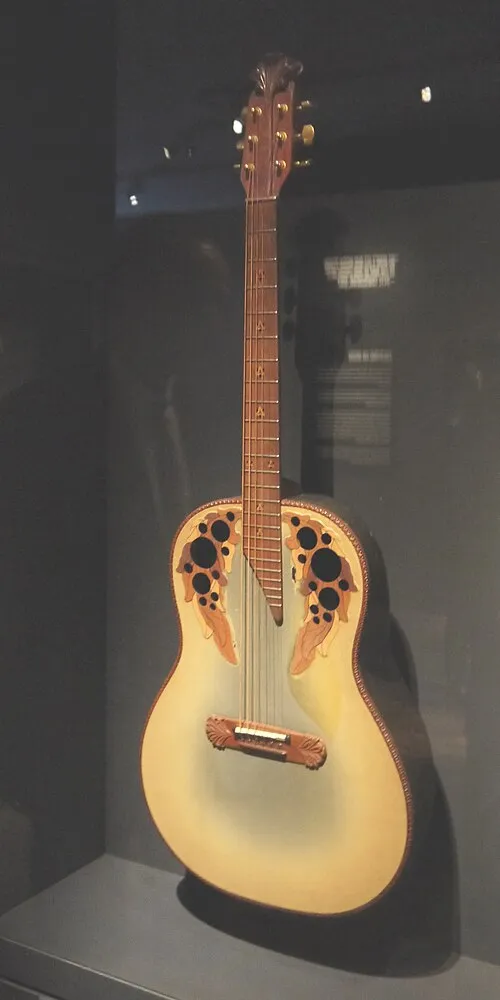
Photo: Eden, Janine and Jim / Wikimedia Commons / CC BY 2.0 Ovation
Adamas
1976
Seven years, 186 changes, and no hole in the middle. Ovation rebuilt the acoustic guitar top from scratch.
- Send a picture
Parker
Fly
1993
Ken Parker built it like a lobster: wood on the inside, and all the strength in a skin thinner than the paint.
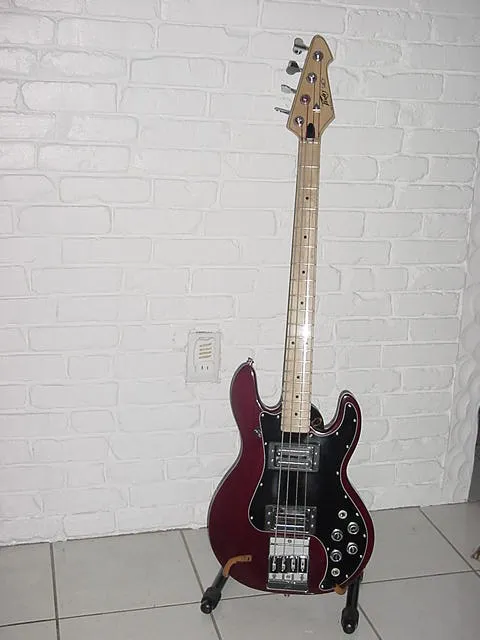
Photo: Michel Curi / Wikimedia Commons / CC BY 2.0 Peavey
T-40
1978
Peavey’s first production bass got two basses’ worth of sound out of one tone knob, and no battery.
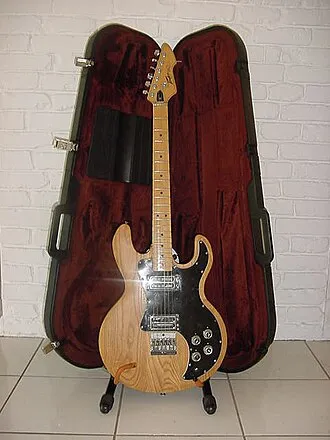
Photo: Michel Curi / Wikimedia Commons / CC BY 2.0 Peavey
T-60
1978
Peavey’s guitar man said the big guys told dealers: no amps, no guitars. So the amp company built its own.
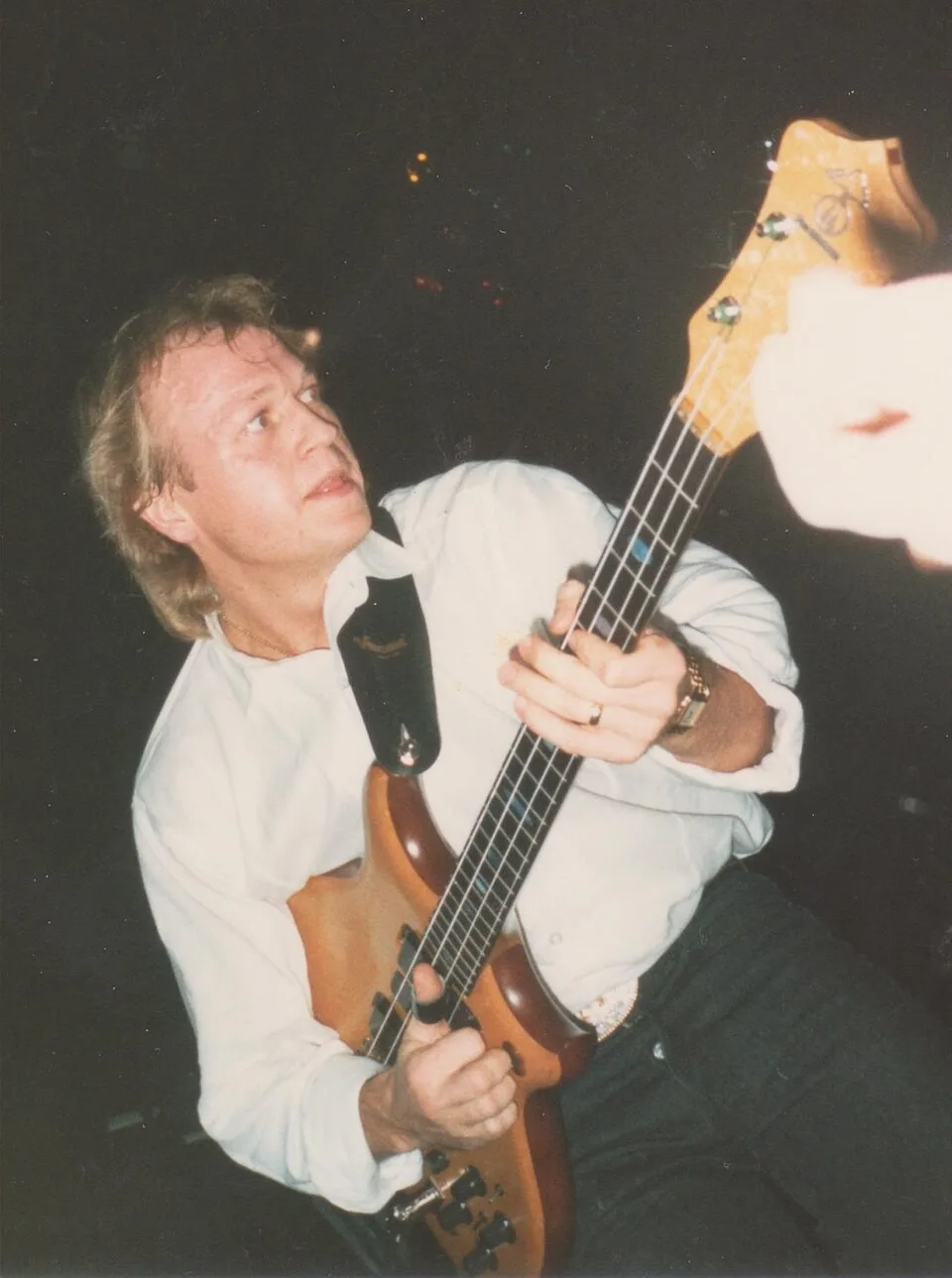
Photo: אהוד אמיר / Wikimedia Commons / CC BY-SA 4.0 Pedulla
Buzzard
1980
A fusion bassist botched his homemade fretless. The builder who fixed it went on to build him a better one.
- Send a picture
Pensa
MK-1
1988
Mark Knopfler was tired of swapping a Strat for a Les Paul, so a New York shop carved him one guitar instead.
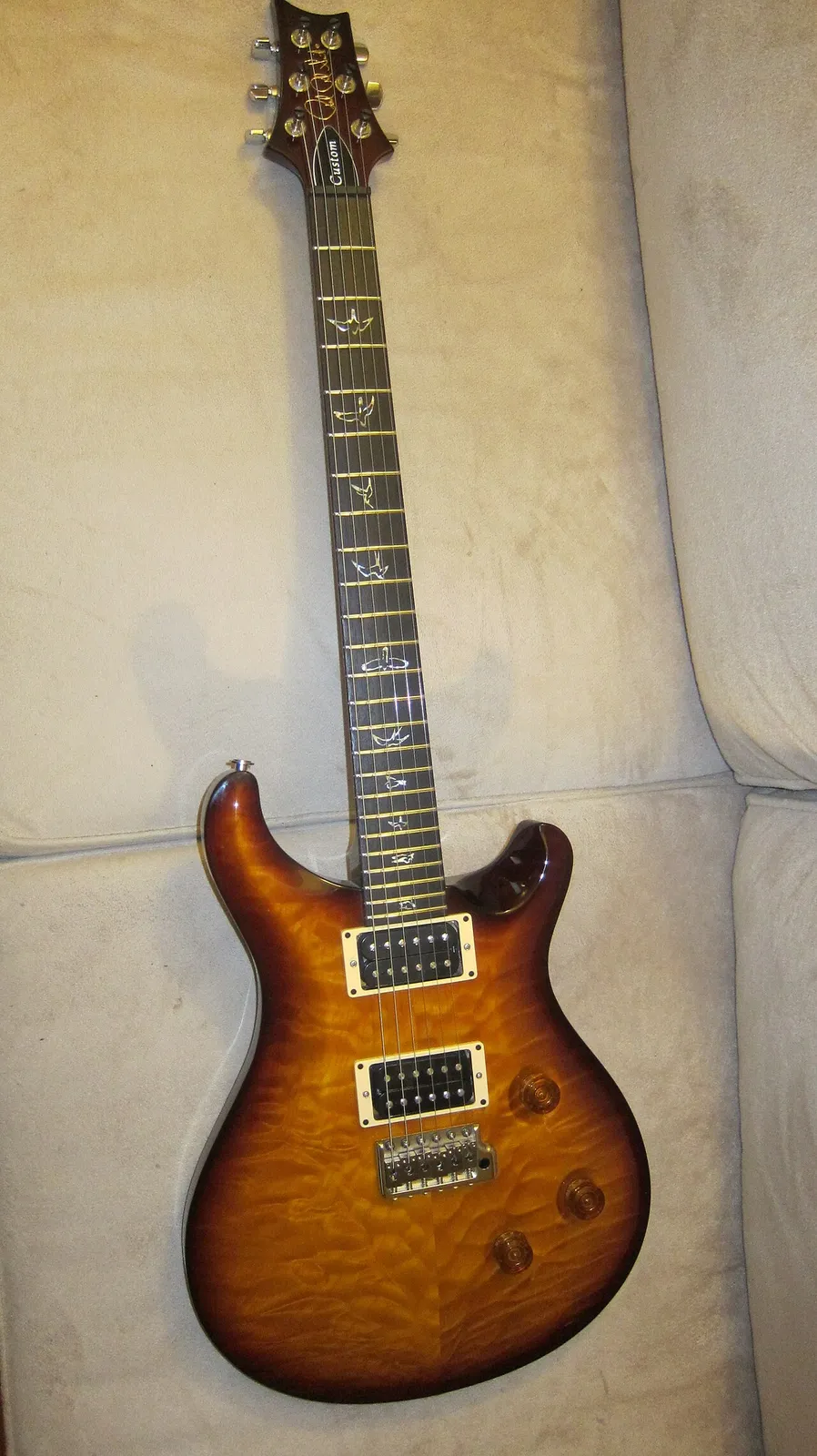
Photo: sbaimo / Wikimedia Commons / CC BY 2.0 PRS
Custom 24
1985
Paul Reed Smith spent a decade building guitars one at a time for touring stars. The Custom was for everybody else.
- Send a picture
PRS
CE 24
1988
PRS meant it to be the cheaper, quicker one. Then a second-hand black one made Opeth’s Blackwater Park.
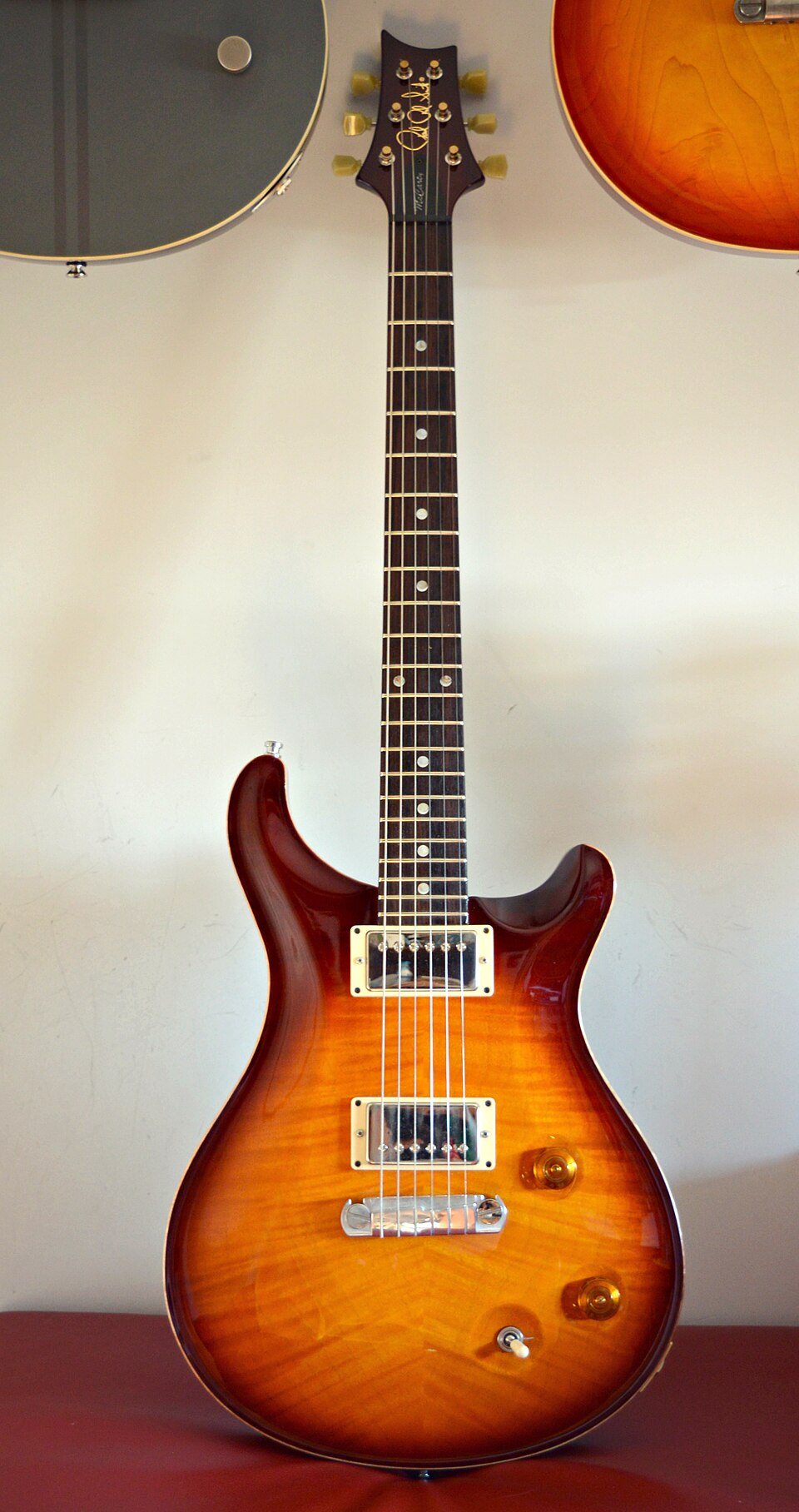
Photo: Freebird / Wikimedia Commons / CC BY-SA 2.0 PRS
McCarty
1994
Named for a man who never played guitar, built for a player who turned down having his own name on it.
- Send a picture
PRS
Santana
1995
Paul Reed Smith kept building guitars for Carlos Santana until Santana called him a guitar maker.
- Send a picture
PRS
Hollowbody II
1998
The quiet half of the song and the loud half, out of one hollow PRS with two jacks.
- Send a picture
PRS
509
2017
The 513 had thirteen sounds. The 509 kept all five pickups and threw four of the sounds away.
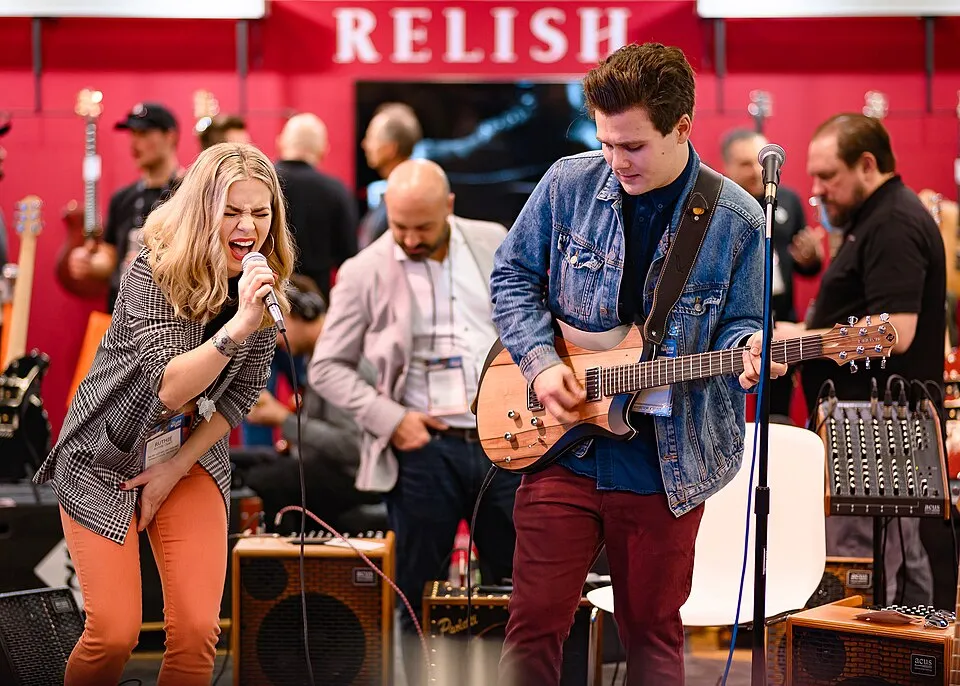
Photo: Justin Higuchi / Wikimedia Commons / CC BY 2.0 Relish
Mary
2016
The back comes off in your hands and the pickups lift out. The company that built it didn’t last.
- Send a picture
Reverend
Warhawk
2005
Reverend changed the Warhawk’s neck, pickups, and scale. It kept the ridge down the middle.
- Send a picture
Reverend
Buckshot
2007
Tele twang with more meat on it. Knopfler tried one for slide, and it never made a record. It kept working anyway.
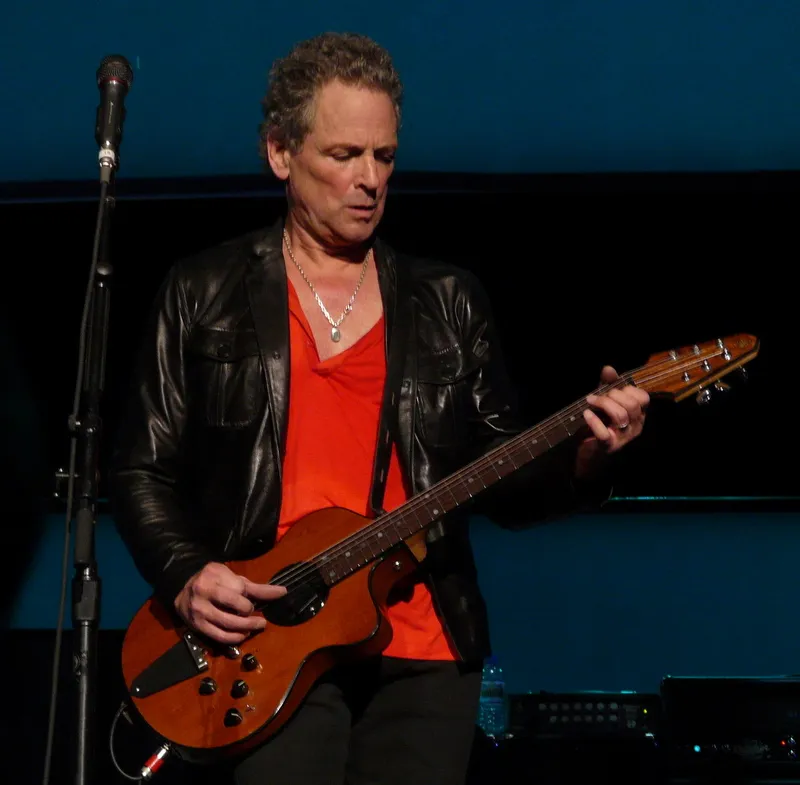
Photo: Matt Becker / Wikimedia Commons / CC BY 3.0 Rick Turner
Model 1
1979
In 1978 Rick Turner was fired from the company he co-founded, and his house burned down. He kept the drawing.
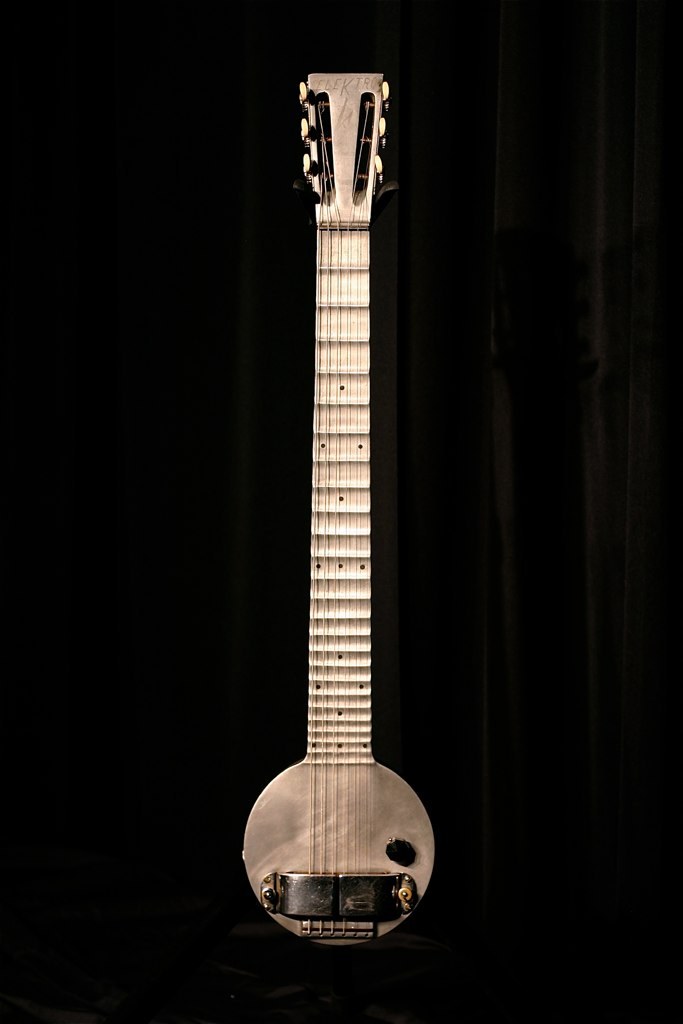
Photo: Museum of Making Music / Wikimedia Commons / CC BY 3.0 Rickenbacker
A-22 Frying Pan
1932
The first electric guitar you could buy looked like a frying pan. The patent office didn’t believe it worked.
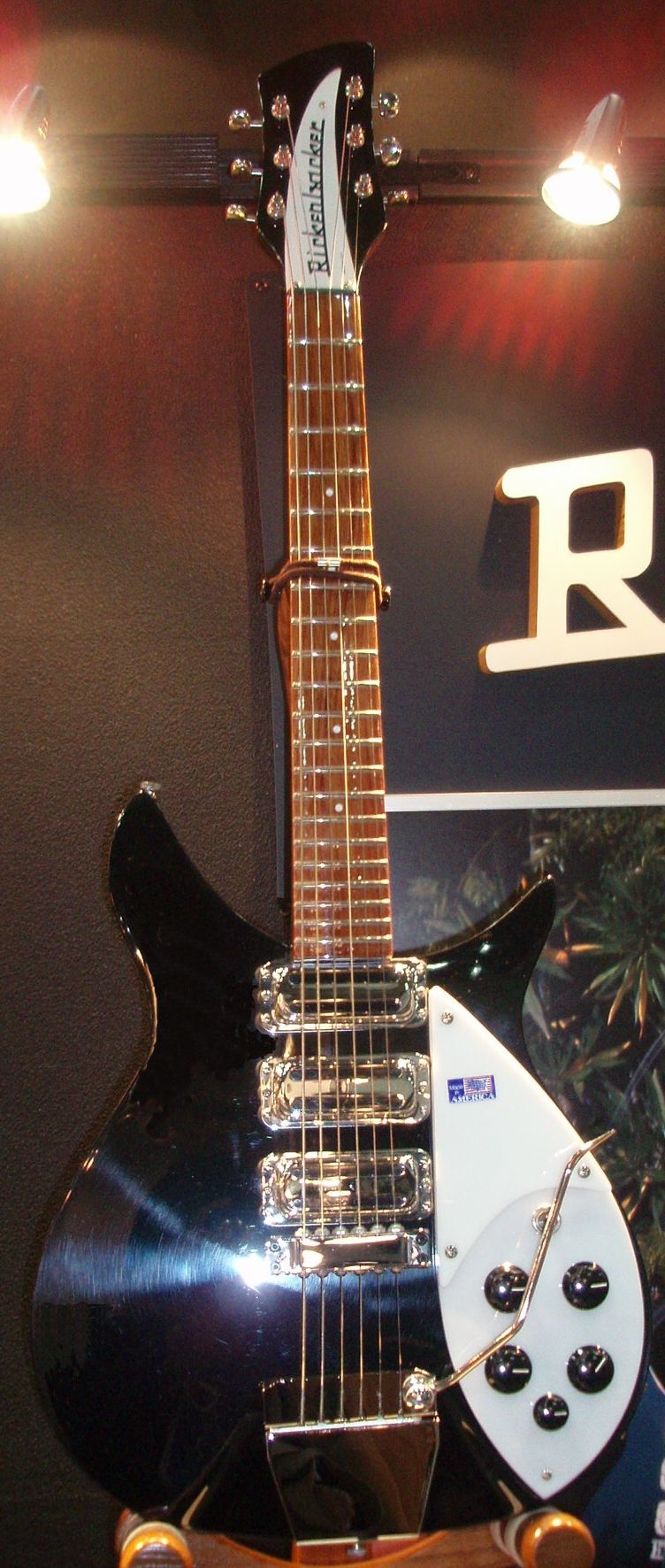
Rickenbacker 325C64. Photo by CasinoKat. Licensed under CC BY-SA 3.0. Via Wikimedia Commons. Rickenbacker
325
1958
Lennon bought it natural in Hamburg and had it painted black. The reissues copy the ends of that story, not the middle.
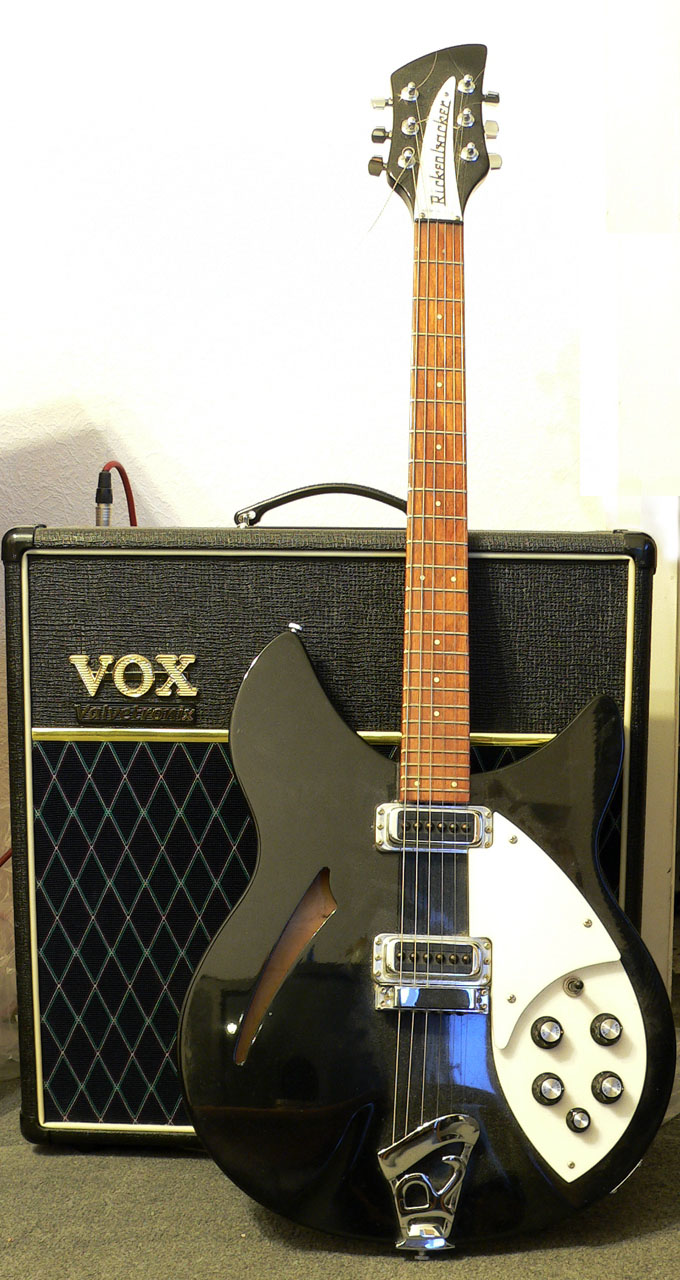
Rickenbacker 330JG. Licensed under CC BY-SA 3.0. Via Wikimedia Commons. Rickenbacker
330 / 360
1958 · 3 versions
Same body, same neck, same pickups. The 360 got the binding. The 330 got Paul Weller’s, with “I AM NOBODY” on it.
- Send a picture
Rickenbacker
4001
1961
Geddy Lee bought one to sound like Chris Squire. He plugged it in. It didn’t.
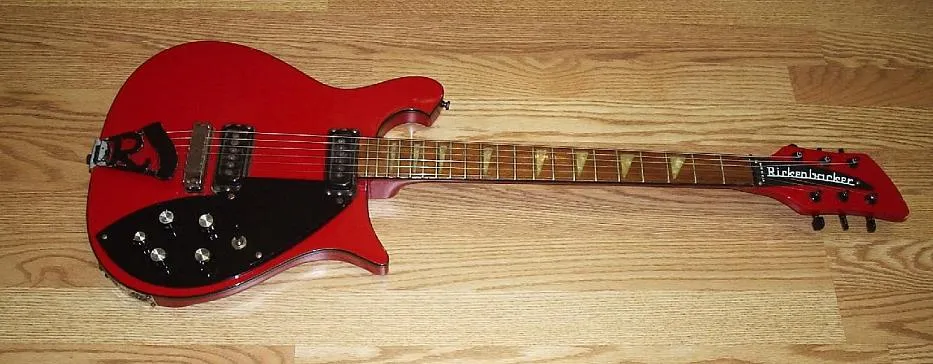
Photo: Brian Krashpad / Wikimedia Commons / CC BY-SA 3.0 Rickenbacker
620
1973
The Rickenbacker on the Damn the Torpedoes cover isn’t a 620. It’s still the reason the 620 is around.
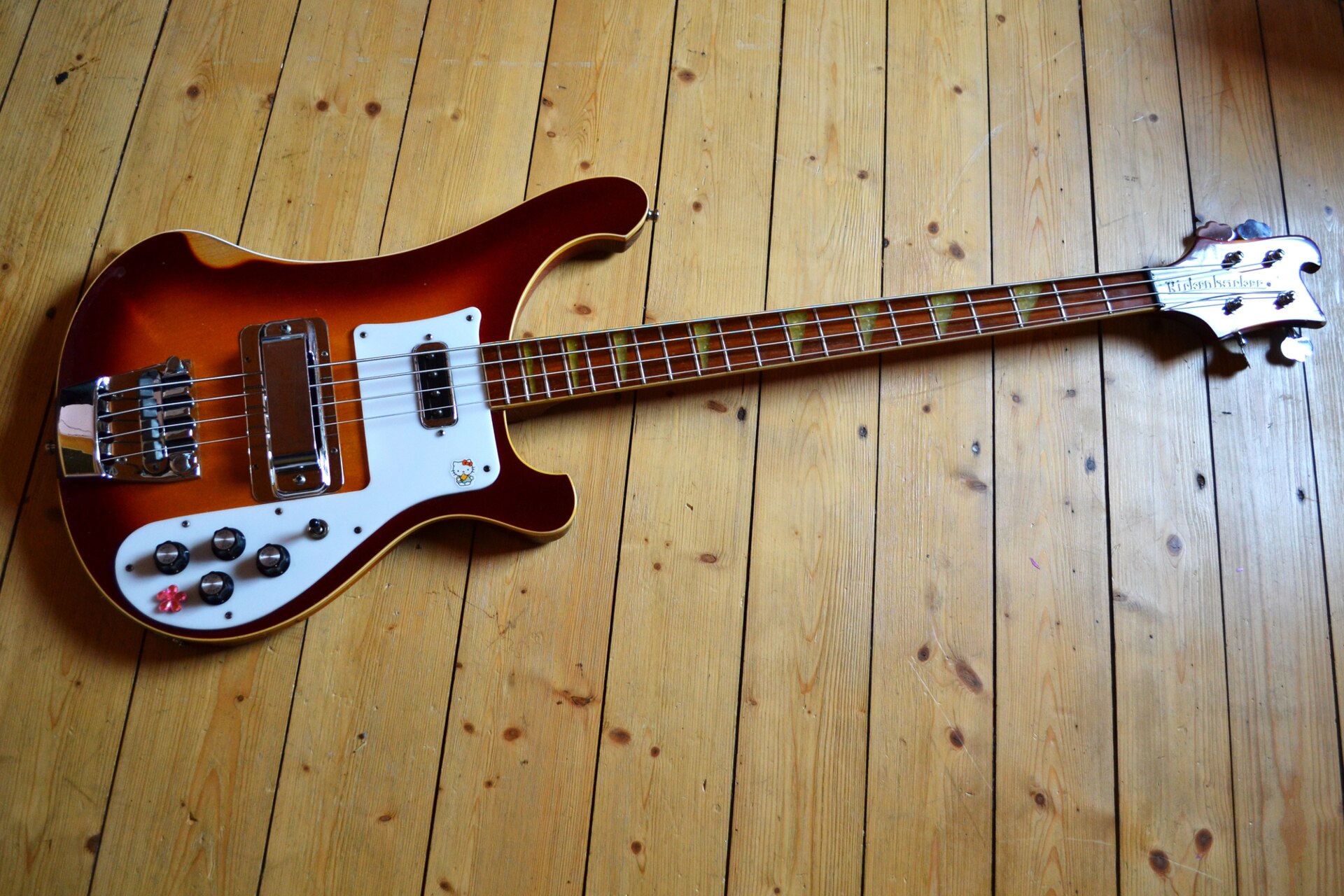
Rickenbacker 4003 (33 1/4" scale). Photo by DeLerkim. Licensed under CC BY-SA 2.0. Via Wikimedia Commons. Rickenbacker
4003
1980
Rickenbacker’s first answer to players’ new strings was to void the warranty. The 4003 was the better answer.
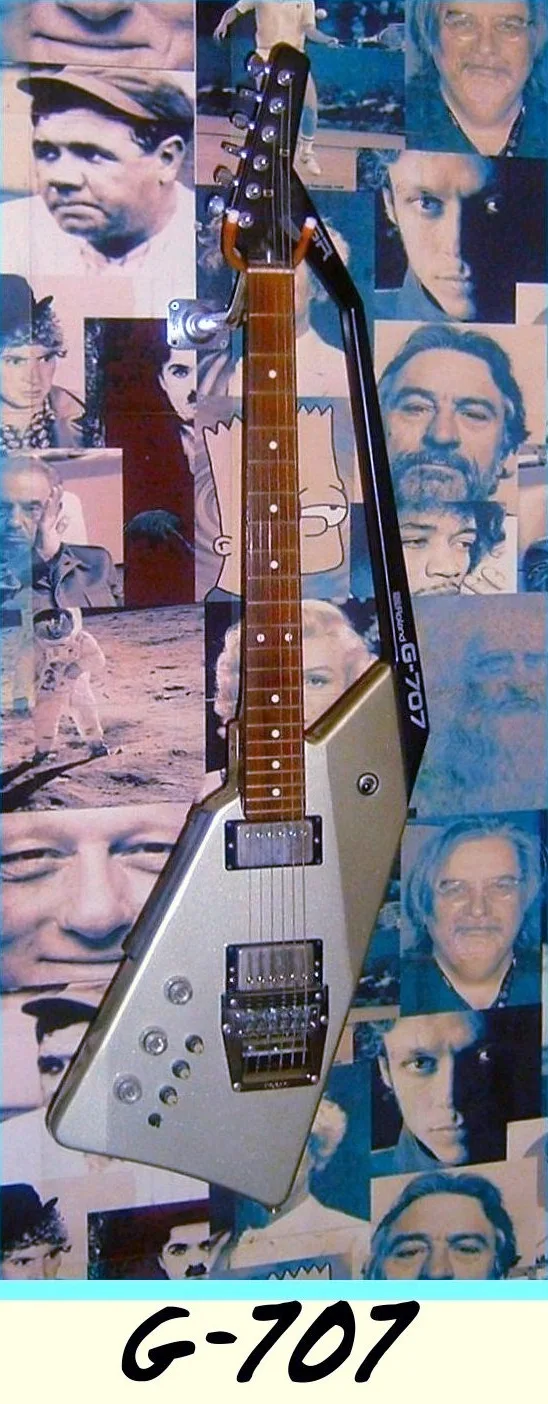
Photo: Some_of_my_lefty_guitars.jpg: Hugh Jarrse / Wikimedia Commons / CC BY-SA 3.0 Roland
G-707
1984
Roland bent a guitar into a strange shape so a machine could hear it. Then the machine learned to hear any guitar.
- Send a picture
Roscoe
SKB
1990
Roscoe’s middle-size bass is the one called Skyscraper. The big one came along about ten years later.
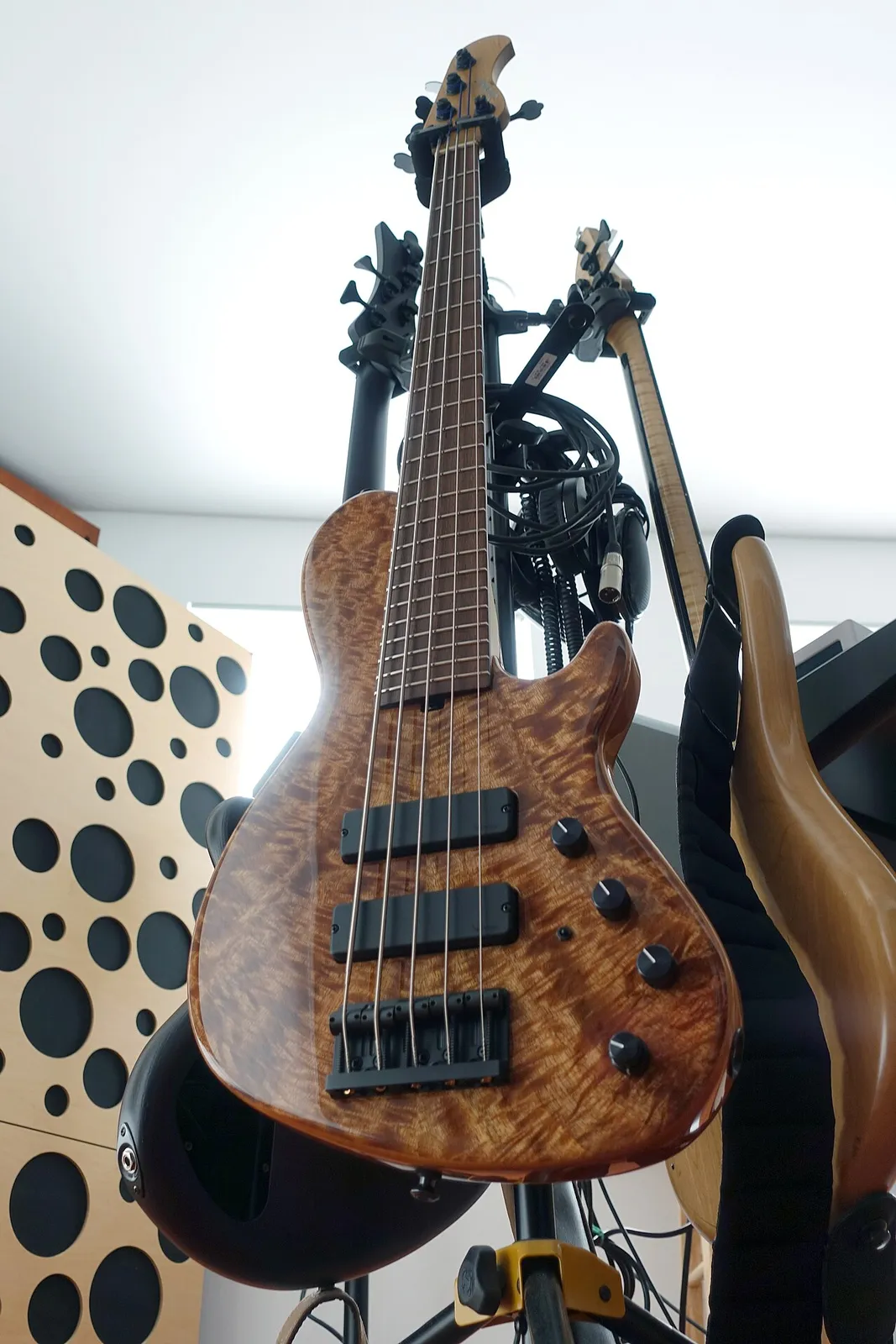
Photo: Nir Yaniv / Wikimedia Commons / CC BY-SA 4.0 Sadowsky
NYC Bass
1982
Built for the New York session bassist whose engineer wasn’t going to reset the board for him.
- Send a picture
Sandberg
California
2000
Six bolts, a zero fret, a knob that pulls. About four of every five Sandbergs are this bass.
- Send a picture
Santa Cruz
Tony Rice
1981
Tony Rice already owned the one guitar he couldn’t replace. Santa Cruz built him one he could.
- Send a picture
Schecter
C-1
1999
It made its debut in a Papa Roach video, dressed exactly like the music. It never changed clothes.
- Send a picture
Schecter
Hellraiser
2006
A borrowed shape, a set neck dressed as a neck-through, and a band that trusted it with the rhythms.
- Send a picture
Seagull
S6
1982
Kim Deal liked it because it sounded flat and dull. James Blunt took his to Kosovo.
- Send a picture
Selmer
Modèle Jazz
1936
Built so a guitar could be heard over a dance band. In Django Reinhardt’s hands, it led one.
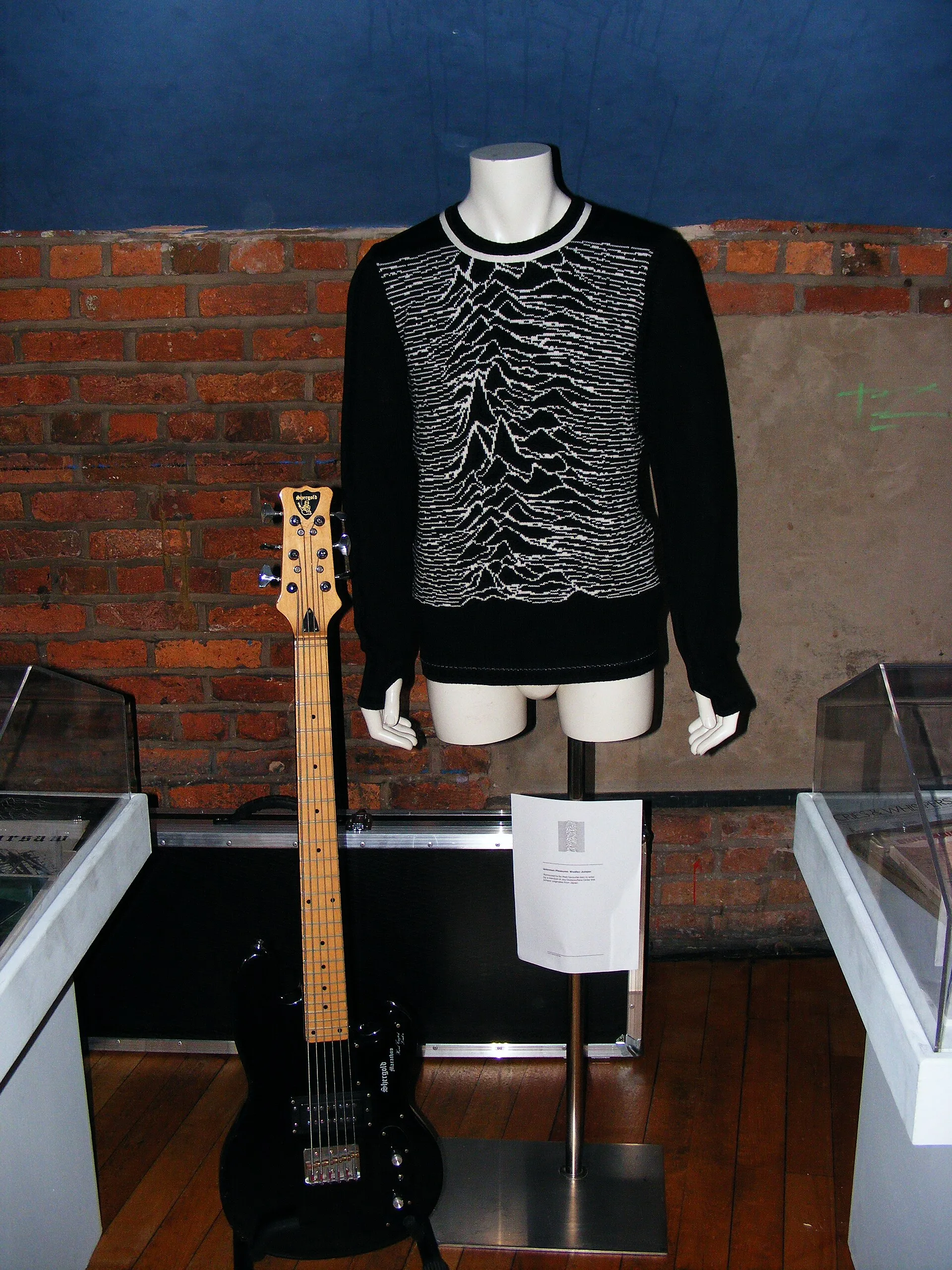
Photo: Man Alive! / Wikimedia Commons / CC BY 2.0 Shergold
Masquerader
1975
Two men spent twenty years making guitars with other people’s names on them. Then they made this.
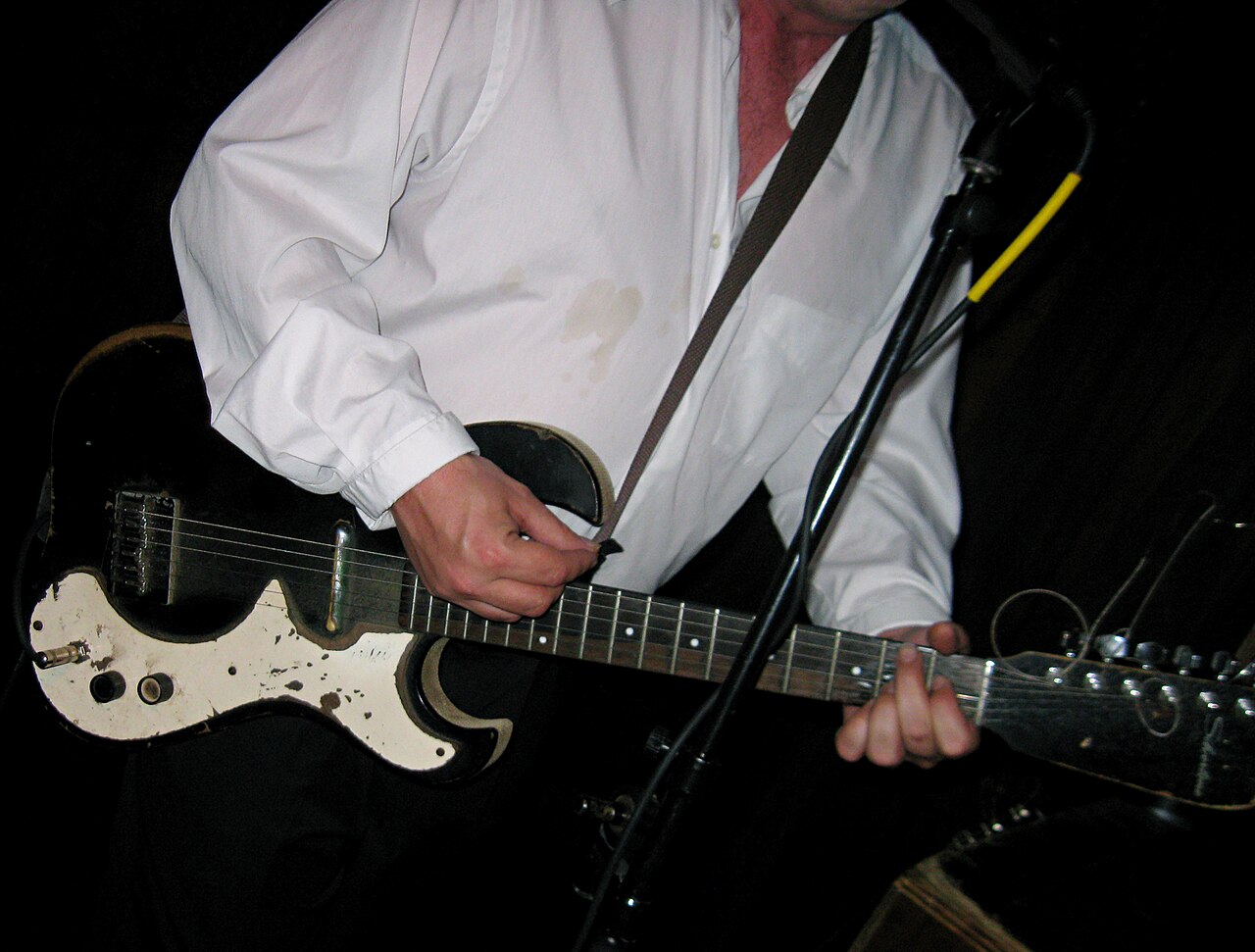
Photo: Rick Hall / Wikimedia Commons / CC BY 2.0 Silvertone
1448
1962
A beginner’s electric from the Sears catalog, with the amp in the case. Beck has played one his whole career.
- Send a picture
Spector
NS-2
1979
It started with a man looking for a belt sander. Sting found his lying on the stage before soundcheck.
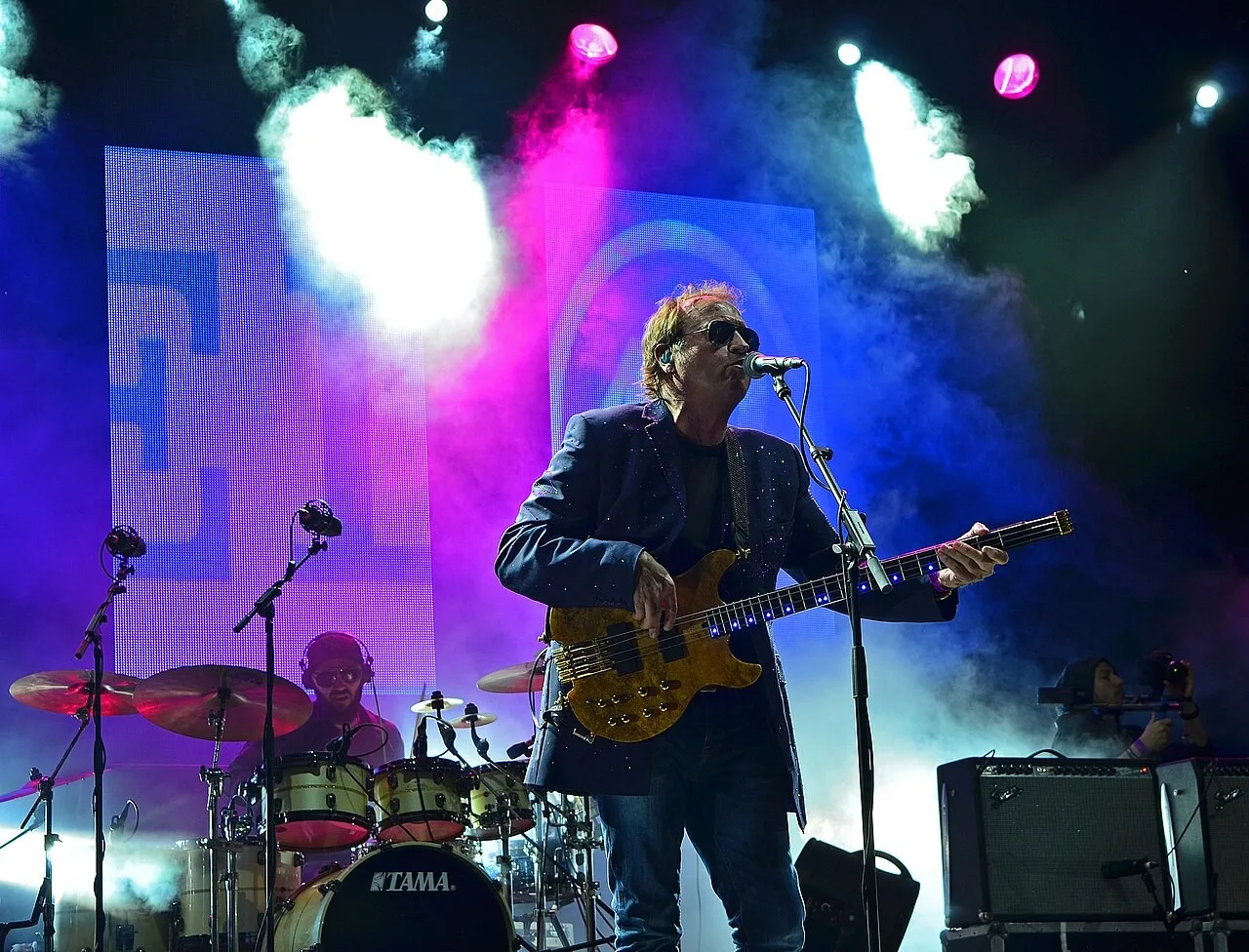
Photo: Andrew Hurley from Wallasey, England, United Kingdom / Wikimedia Commons / CC BY-SA 2.0 Status
Series II
1984
Rob Green looked at a room full of expensive basses and said he could build a better one. Then he did.
- Send a picture
Steinberger
GL
1984
No headstock, no wood, and designed by a man who didn’t play. Eddie Van Halen wrote two songs on it in days.
- Send a picture
Steinberger
XM
1987
Bill Wyman said the little Steinberger looked like a machine gun. The full-size one, he kept.
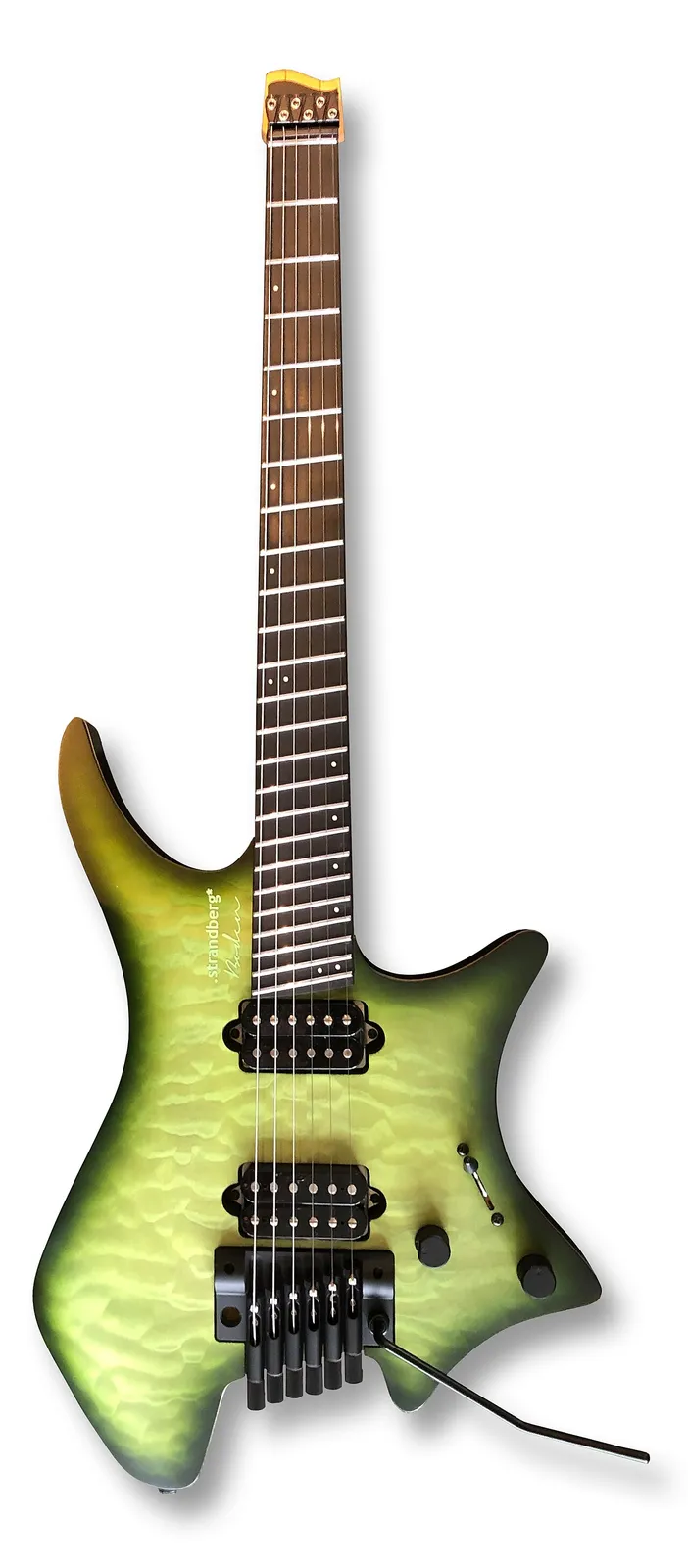
Photo: Auge=mit / Wikimedia Commons / CC BY-SA 4.0 Strandberg
Boden
2014
It started with a sore shoulder. A Swedish engineer built a guitar that would stop fighting him.
- Send a picture
Suhr
Modern
2008
Suhr could have added two frets to a Standard. It drew a new guitar instead.
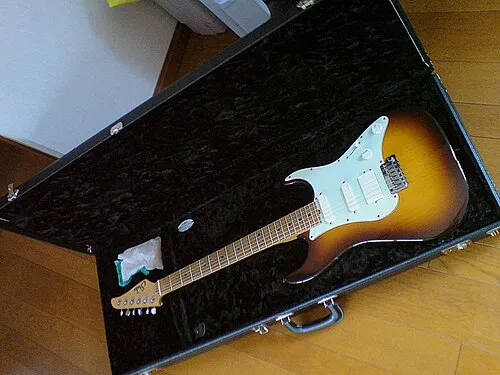
Photo: Akkun542 / Wikimedia Commons / Public domain Suhr
Classic S
2018
It looks like a Strat on purpose. Everything that’s different about it, you feel instead of see.
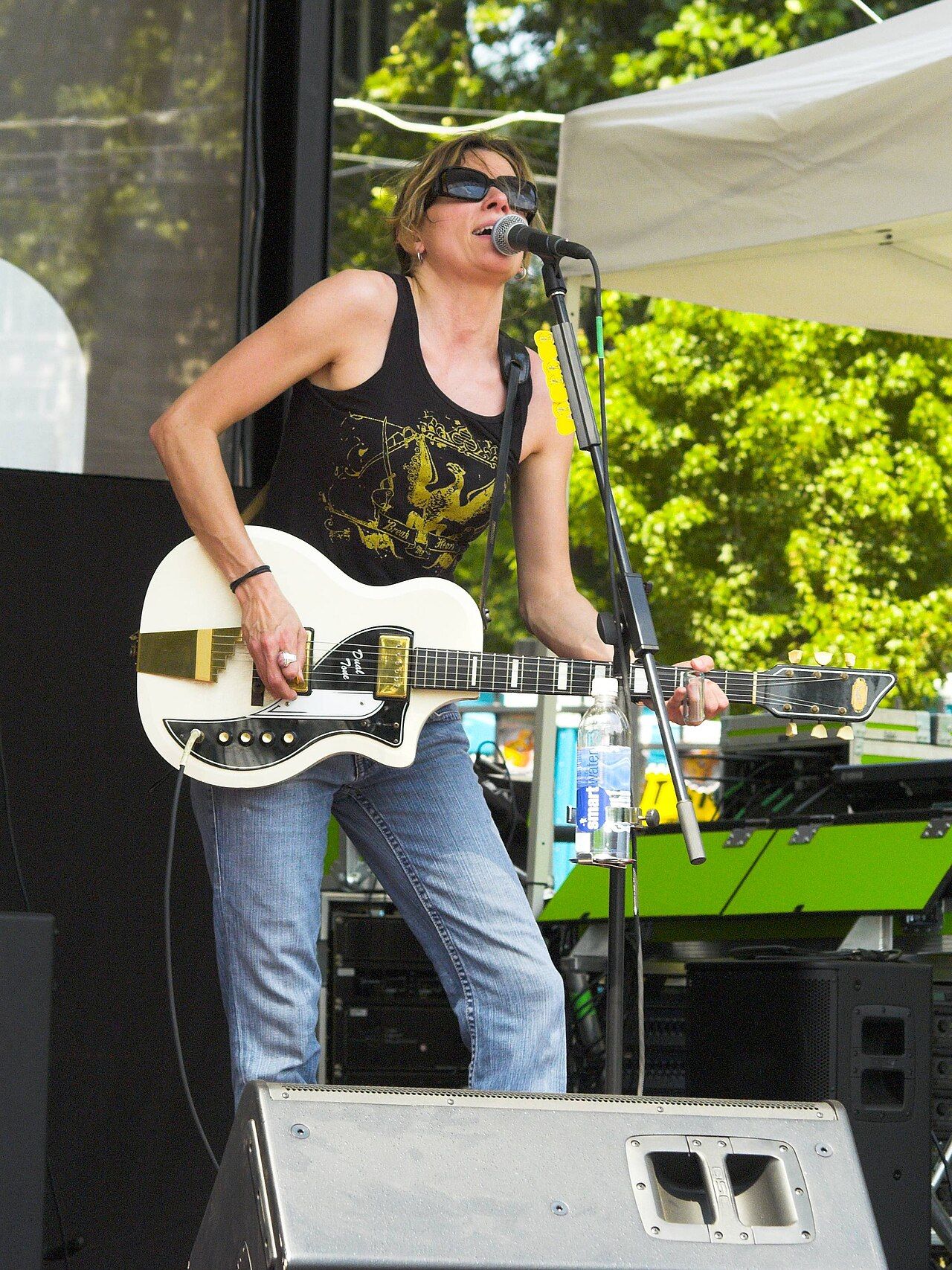
Photo: Tim from Atlanta, USA / Wikimedia Commons / CC BY 2.0 Supro
Dual Tone
1954
Link Wray posed with one for Rumble. Bowie found two on eBay. James Murphy bought his because Bowie said so.
- Send a picture
Takamine
EG360SC
2006
The stars played the Japanese Takamine. The EG360SC was the one that turned up for everybody else’s gig.
- Send a picture
Taylor
814ce
1996
Taylor has rebuilt its flagship from the braces out, again and again, and kept the same three numbers on it.
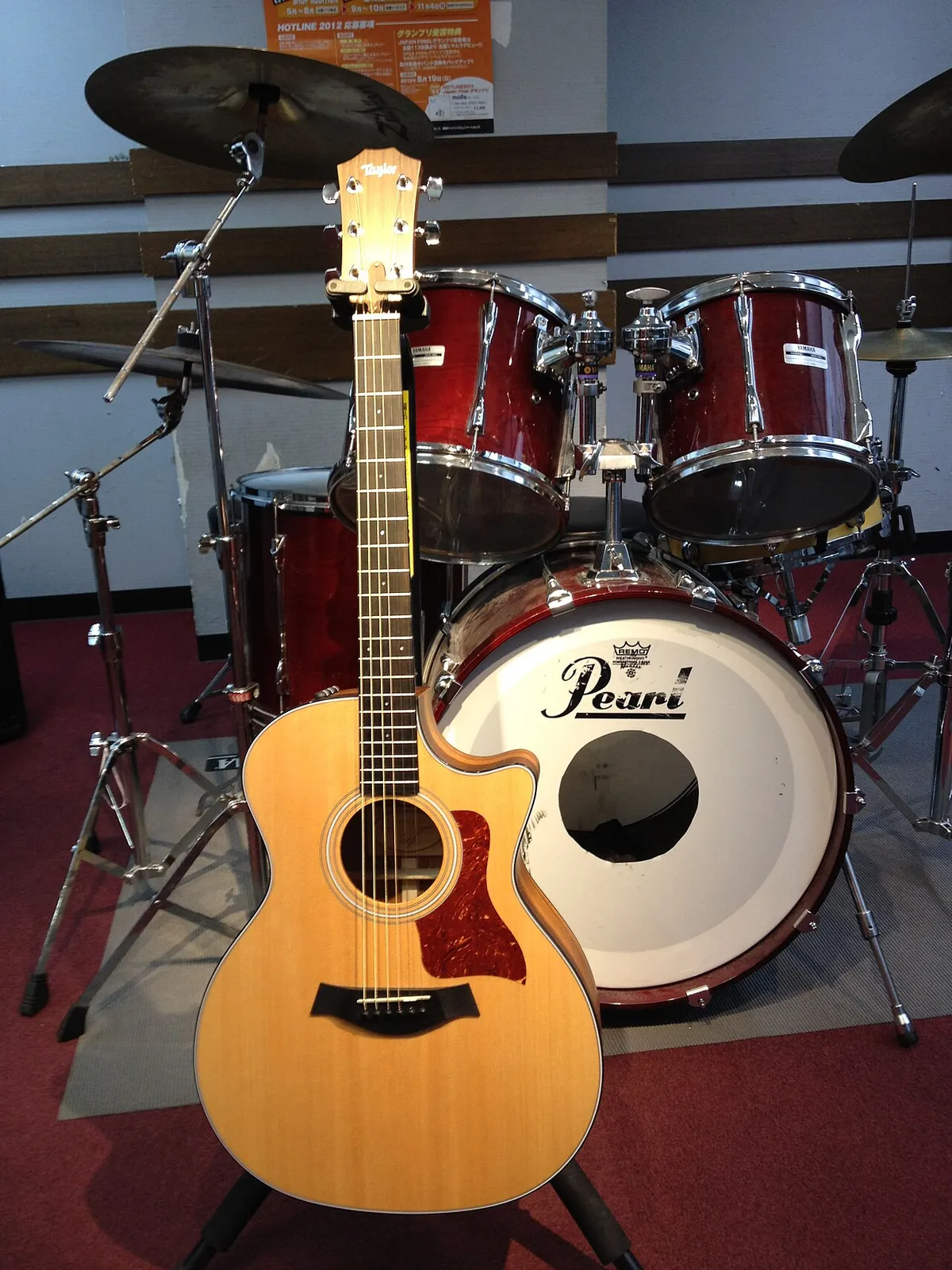
Photo: 佐藤将人 / Wikimedia Commons / CC BY-SA 3.0 Taylor
314ce
2000
Nobody writes songs about the workhorse. They just keep reaching for it.
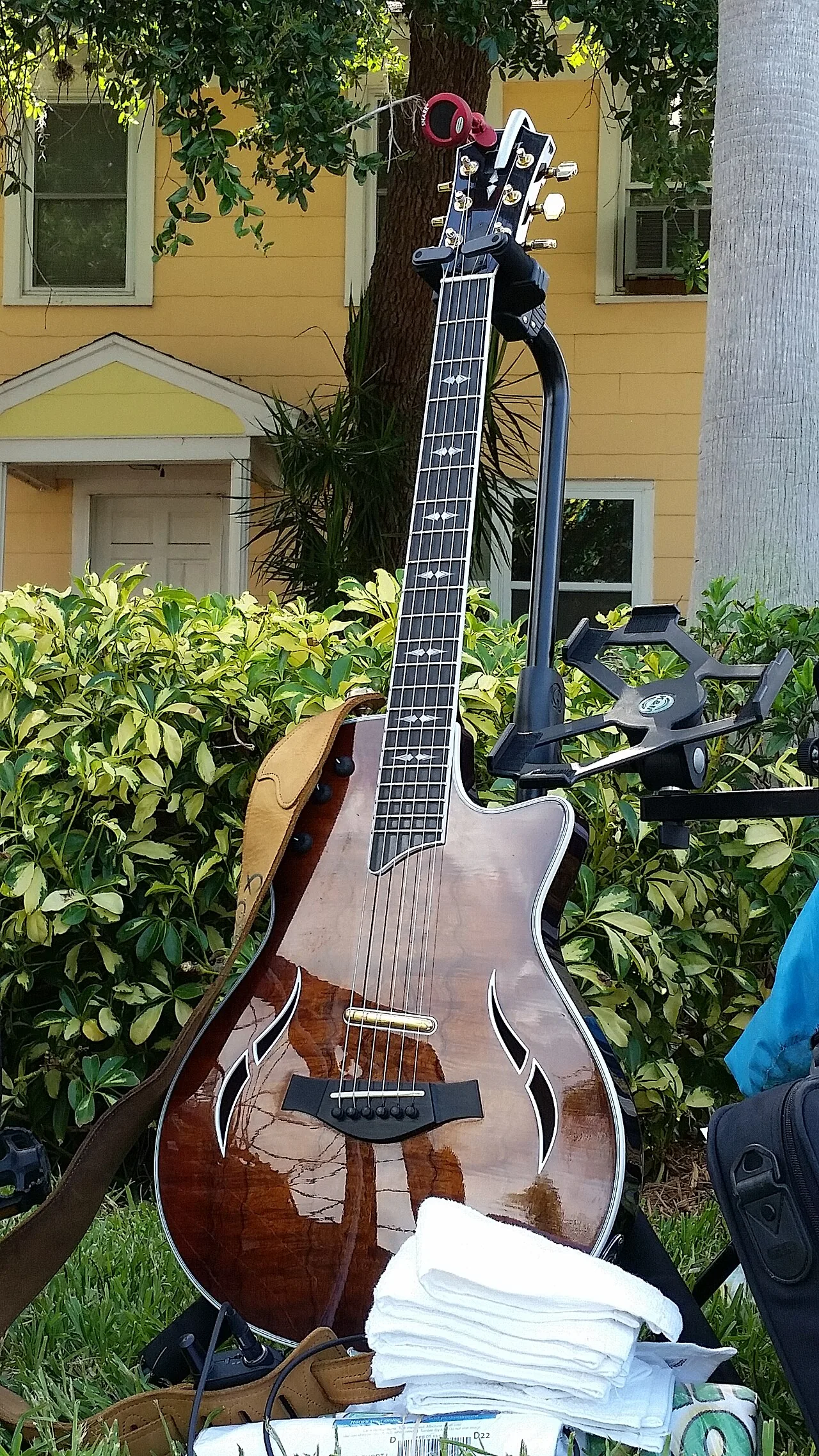
Photo: amateur photography by michel / Wikimedia Commons / CC BY 2.0 Taylor
T5
2005
Bob Taylor said Taylor would build an electric somewhere between never and a truly new idea. This was the idea.