Guitars, page 2
- Send a picture
ESP
M-II
1990
Kirk Hammett’s famous ESP grew out of this one. Josh Middleton just wanted the plain version.
- Send a picture
ESP
Eclipse
1993
ESP’s single-cut has no famous record to lean on. It has to win you over the honest way, in your hands.
- Send a picture
ESP
KH-2
1995
Kirk Hammett walked into ESP in 1987 knowing exactly what he wanted. He’s been playing it ever since.
- Send a picture
EVH
Wolfgang
2009
Eddie named it for his son. It took three companies before it lived under the family name.
- Send a picture
F Bass
BN5
1997
Half an inch longer than a Jazz Bass, so the low B sounds like a note instead of a rumble.
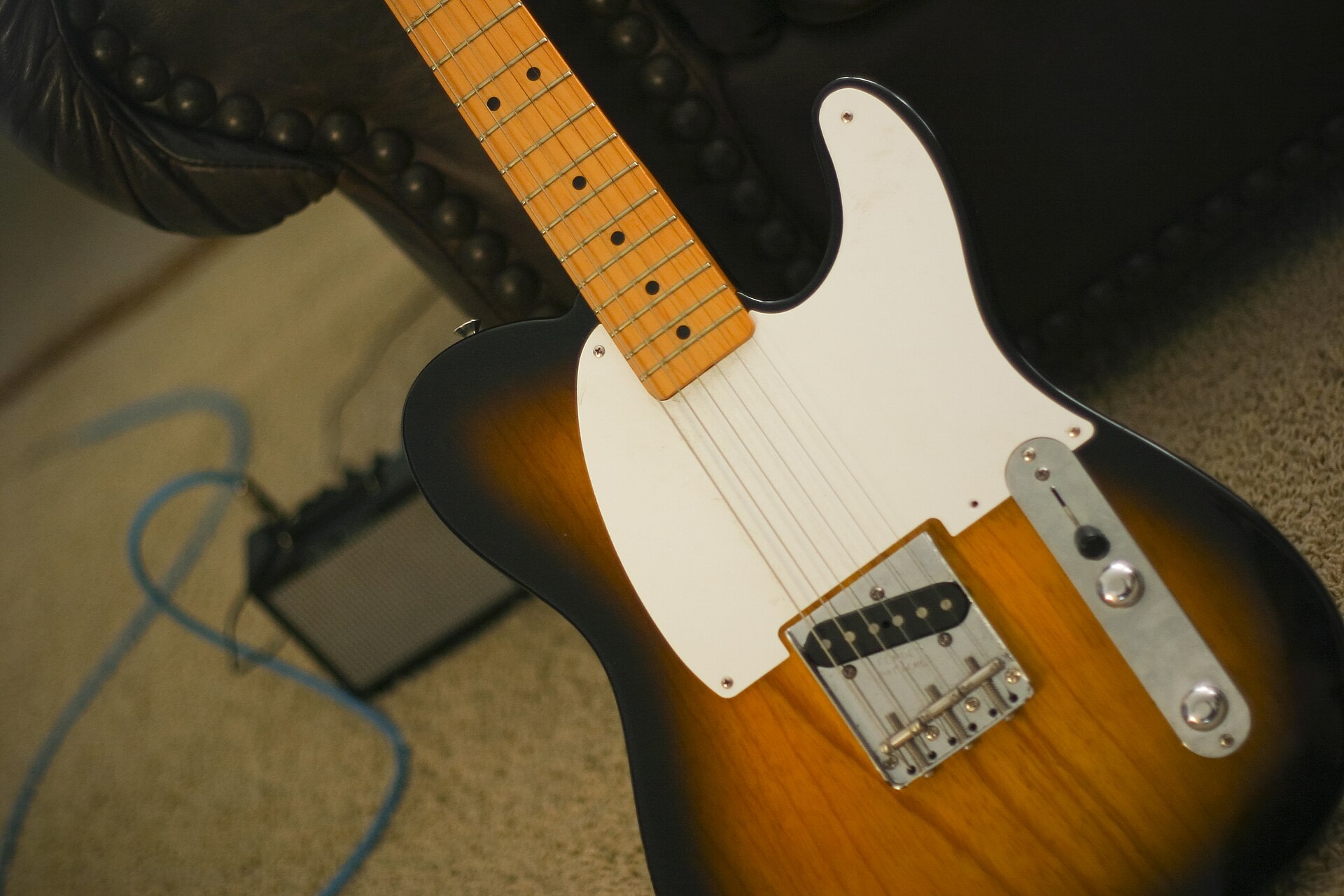
Fender Esquire. Photo by manley.josh. Licensed under CC BY 2.0. Via Wikimedia Commons. Fender
Esquire
1950
Fender’s first electric Spanish guitar settled on one pickup, and it’s been mistaken for its little brother ever since.
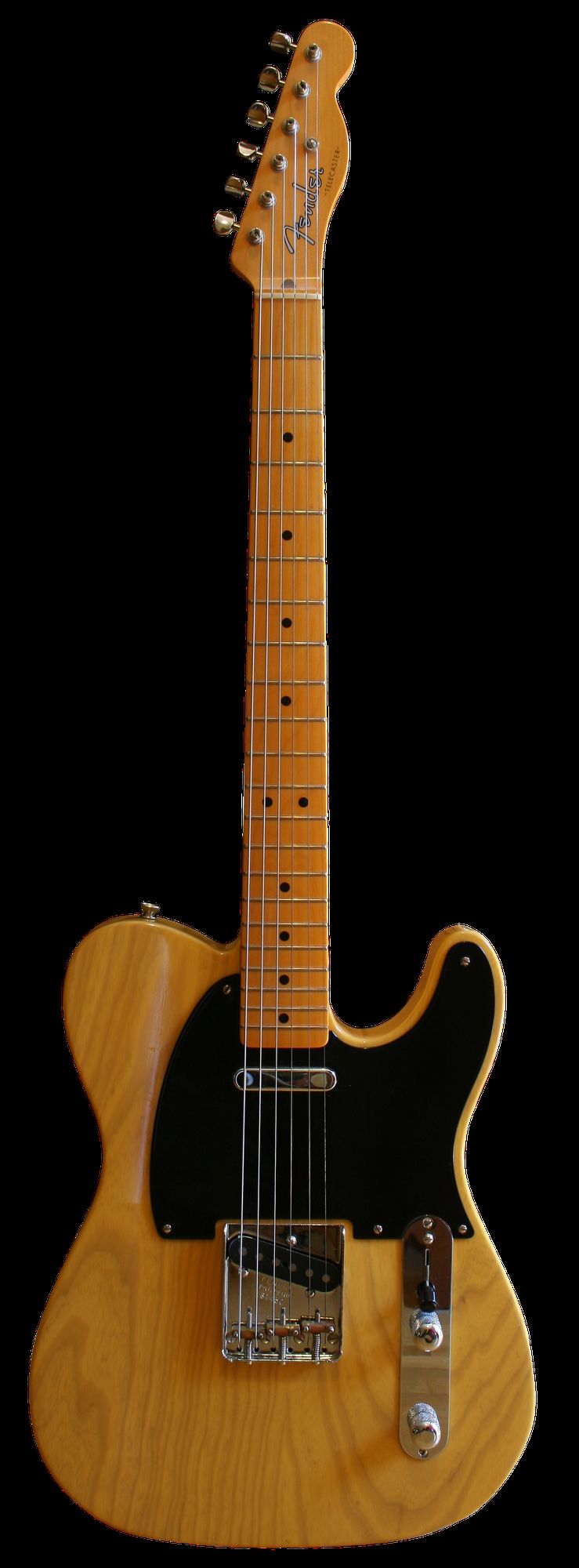
Fender Telecaster American Vintage 1952 with transparent background. Photo by Massimo Barbieri. Licensed under CC BY-SA 3.0. Via Wikimedia Commons. Fender
Telecaster
1950 · 4 versions
Leo built it like a tool. The famous ones look like they just clocked off a double shift.

Photo: Infrahertzz / Wikimedia Commons / CC BY-SA 3.0 Fender
Precision Bass
1951
Leo’s bass let the player at the back be heard. You know their lines by heart. You mostly don’t know their names.

Photo: Lightburst / Wikimedia Commons / CC BY-SA 4.0 Fender
Stratocaster
1954
The guitar most people mean when they say “electric guitar.” Designed by a man who didn’t play one.
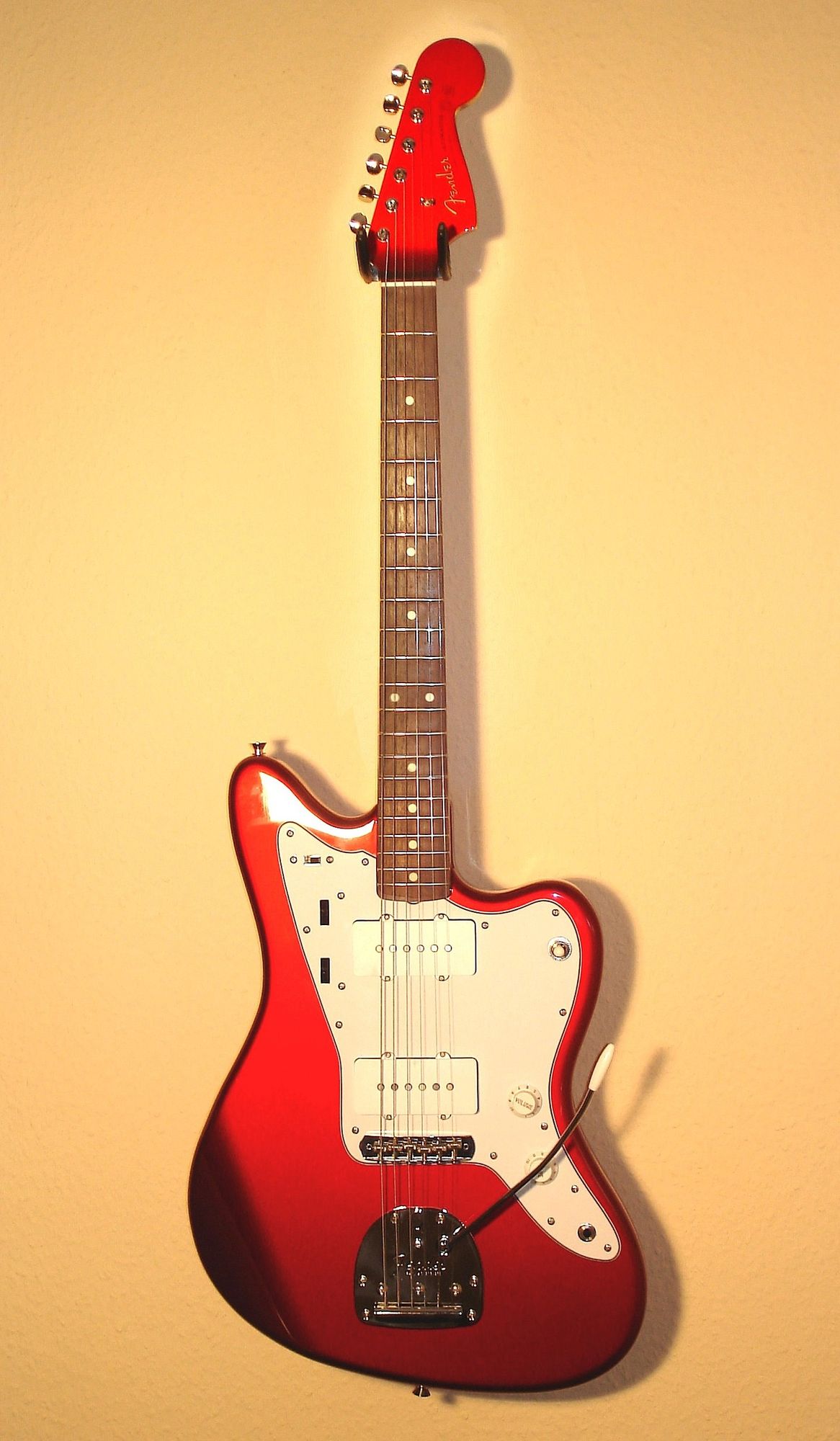
Photo: Dirk-X / Wikimedia Commons / CC BY-SA 4.0 Fender
Jazzmaster
1958
Fender built it for jazz players. Jazz players said no thanks. Surfers, punks, and noise bands said yes.

Fender Jazz Bass from 1966 in Olympic white with the transition fingerboard (bindings and dot inlays). Photo by Th. Ott. Licensed under CC BY-SA 3.0. Via Wikimedia Commons. Fender
Jazz Bass
1960
Built for jazz players who mostly passed on it. Then bass players started using it to take the solo.
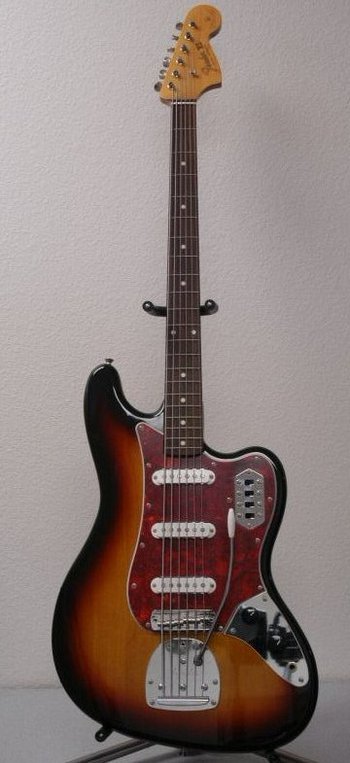
Photo: Blackyde / Wikimedia Commons / CC BY-SA 3.0 Fender
Bass VI
1961
Six strings, an octave down. It’s what a guitar player picks up when somebody hands them the bass part.
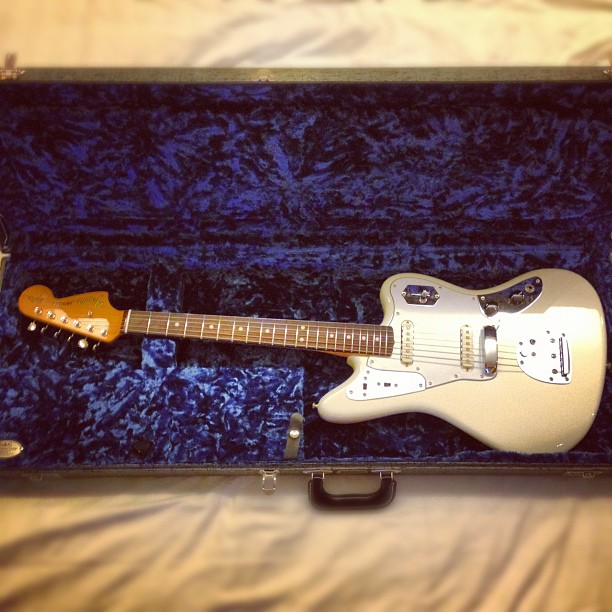
Fender Jaguar Johnny Marr signature. Photo by ToGa Wanderings. Licensed under CC BY 2.0. Via Wikimedia Commons. Fender
Jaguar
1962
It was the top of Fender’s catalog in 1962. By the late ’70s it was a pawn-shop guitar, and somebody’s only one.
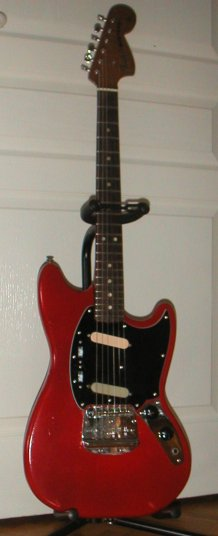
Photograph of a Fender Mustang of 1968. Photo by Alban Dericbourg. Licensed under CC BY-SA 3.0. Via Wikimedia Commons. Fender
Mustang
1964
Fender’s 1964 student guitar. It was built to be outgrown, and a lot of people never bothered.
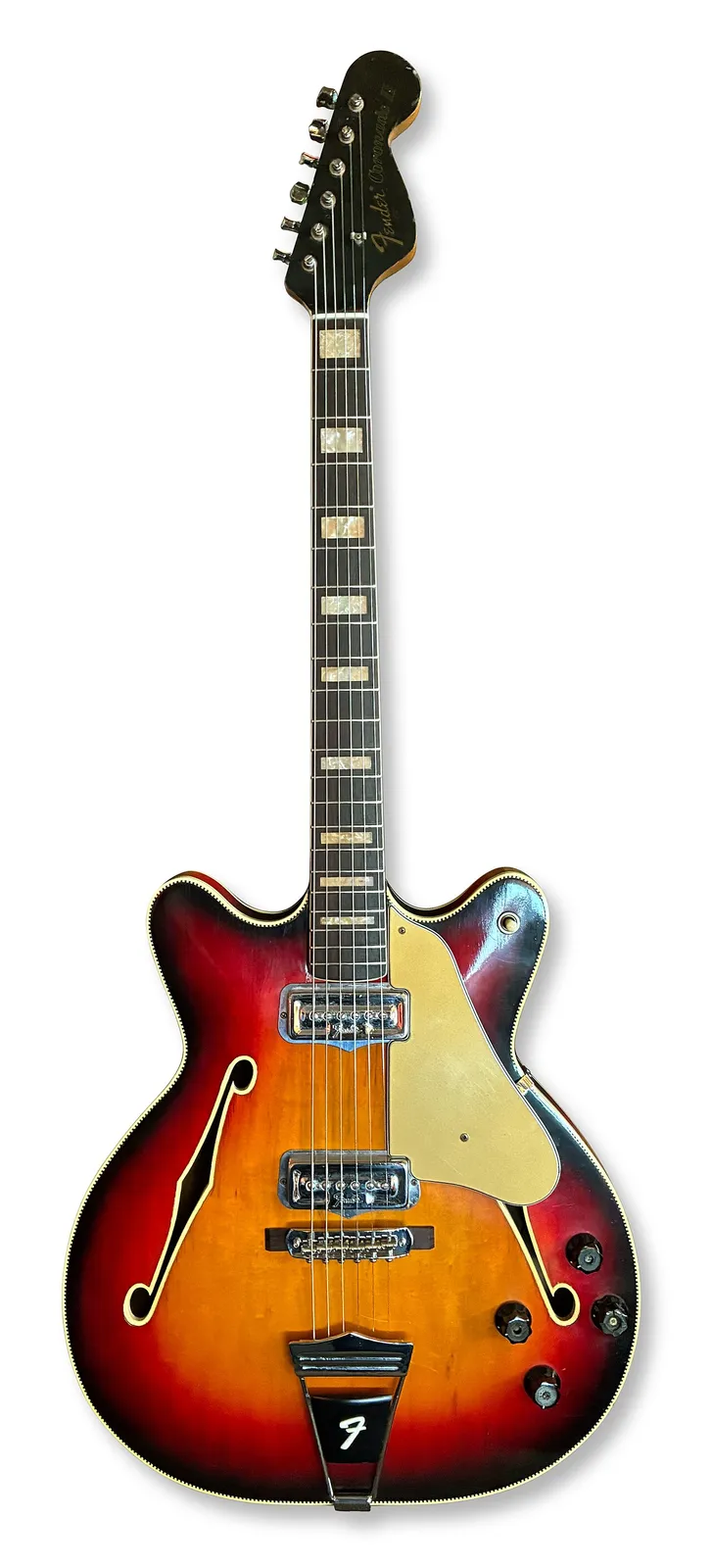
Photo: Auge=mit / Wikimedia Commons / CC BY-SA 4.0 Fender
Coronado
1966
Fender built it to stand next to a 335. It became the guitar nobody else at the gig has.
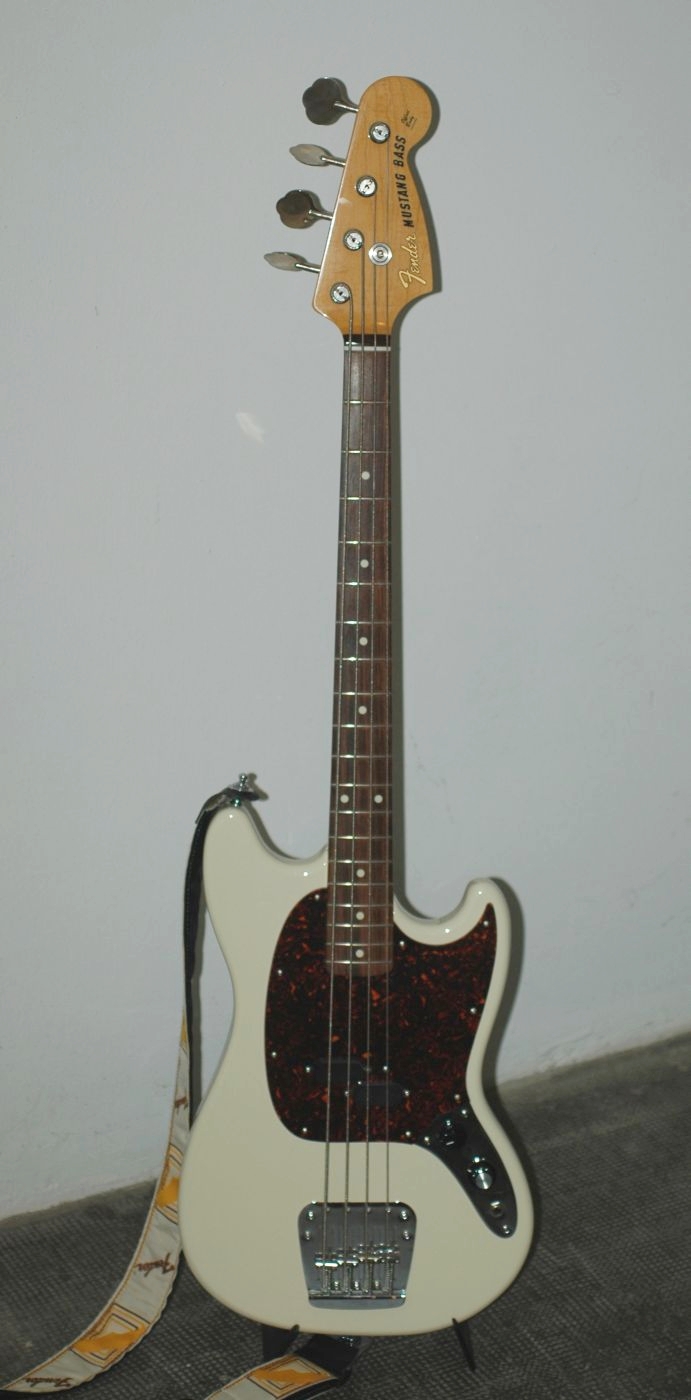
E-Bass Fender Mustang, shortscale 30". Photo by Joachim Hensel-Losch. Licensed under CC BY 2.5 (also offered as CC BY-SA 3.0). Via Wikimedia Commons. Fender
Mustang Bass
1966
Leo Fender’s last bass for Fender was a short, cheap student model. That was the whole idea.
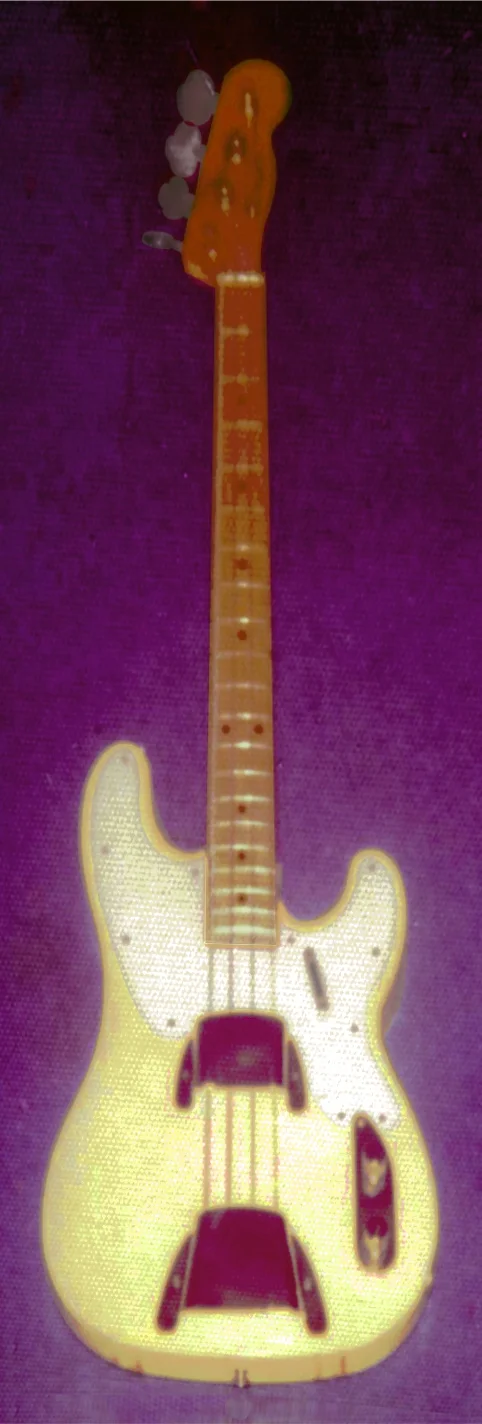
Photo: Fender_Telecaster_Bass_(c.1970s).jpg: -ted derivative work: Clusternote / Wikimedia Commons / CC BY 2.0 Fender
Telecaster Bass
1968
Fender’s first reissue was a bass it had already thrown away. George Porter Jr. found one covered in cobwebs.
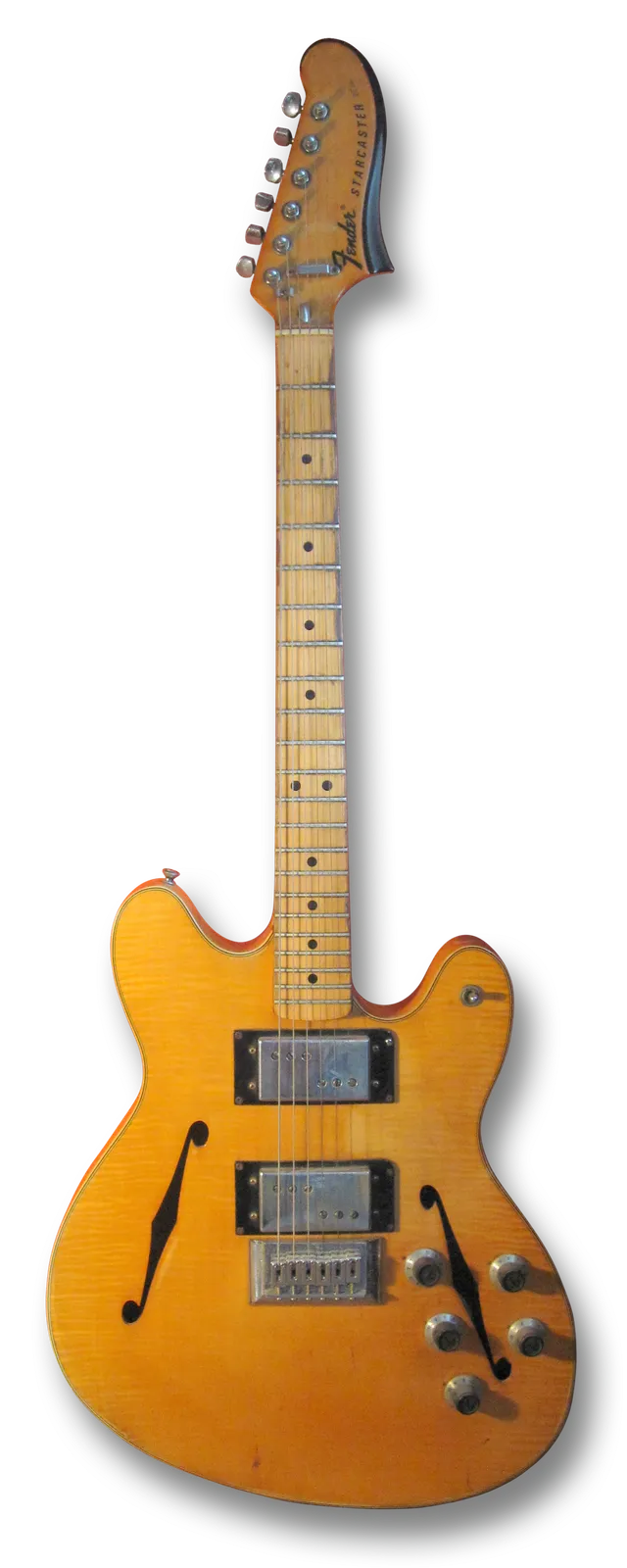
Photo: Tasmer / Wikimedia Commons / CC BY-SA 3.0 Fender
Starcaster
1976
Fender built it for 335 players. They walked right past it. Twenty years later, Radiohead didn’t.

Photo: Justin Higuchi / Wikimedia Commons / CC BY 2.0 Fender
Lead II
1979
Fender built it to fill a gap in the price list. It kept turning up as somebody’s first.
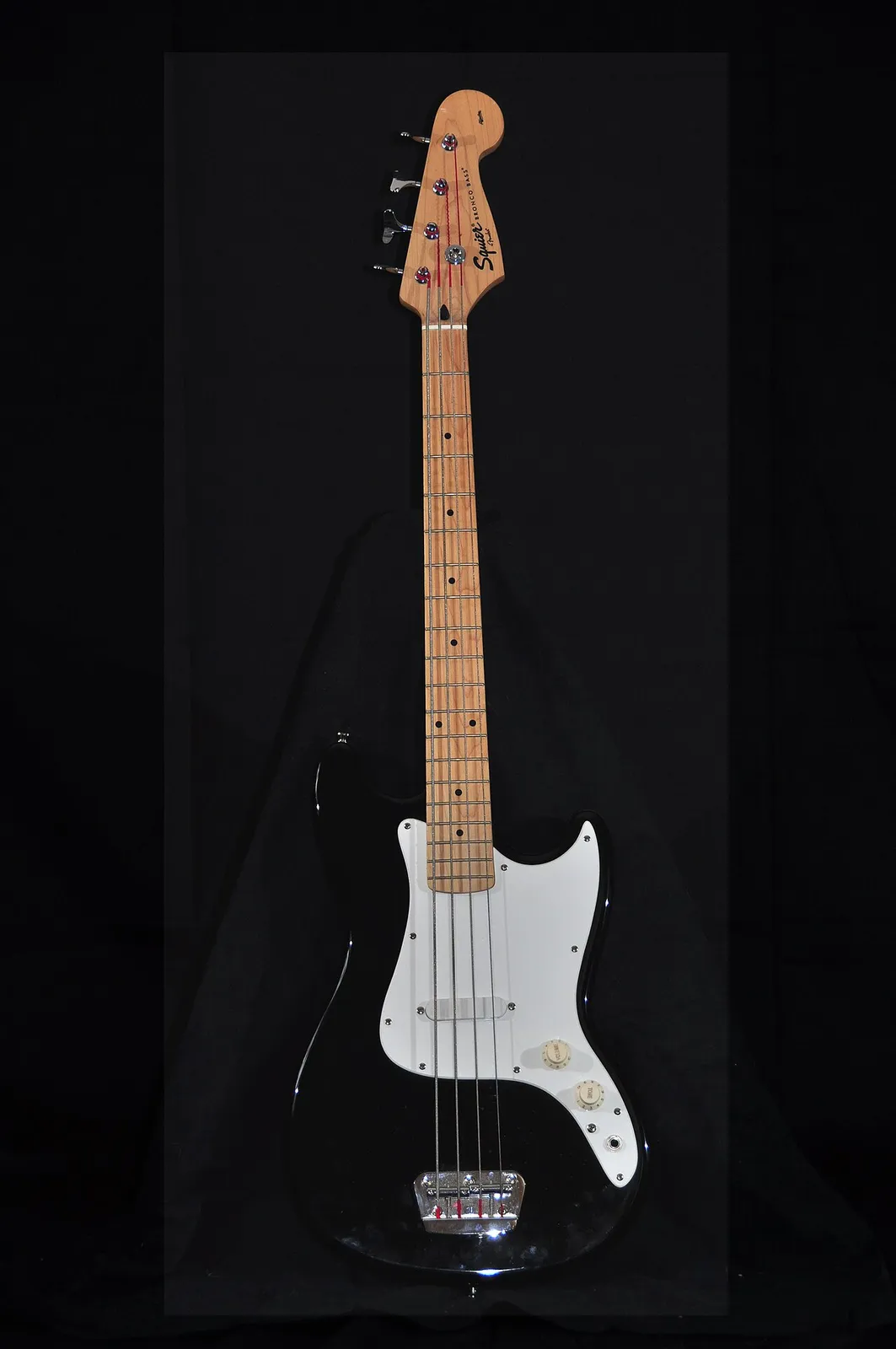
Photo: John Clift / Wikimedia Commons / CC BY 2.0 Fender
Bronco Bass
2003
The Bronco started as Fender’s beginner guitar. The name survived on a beginner’s bass.
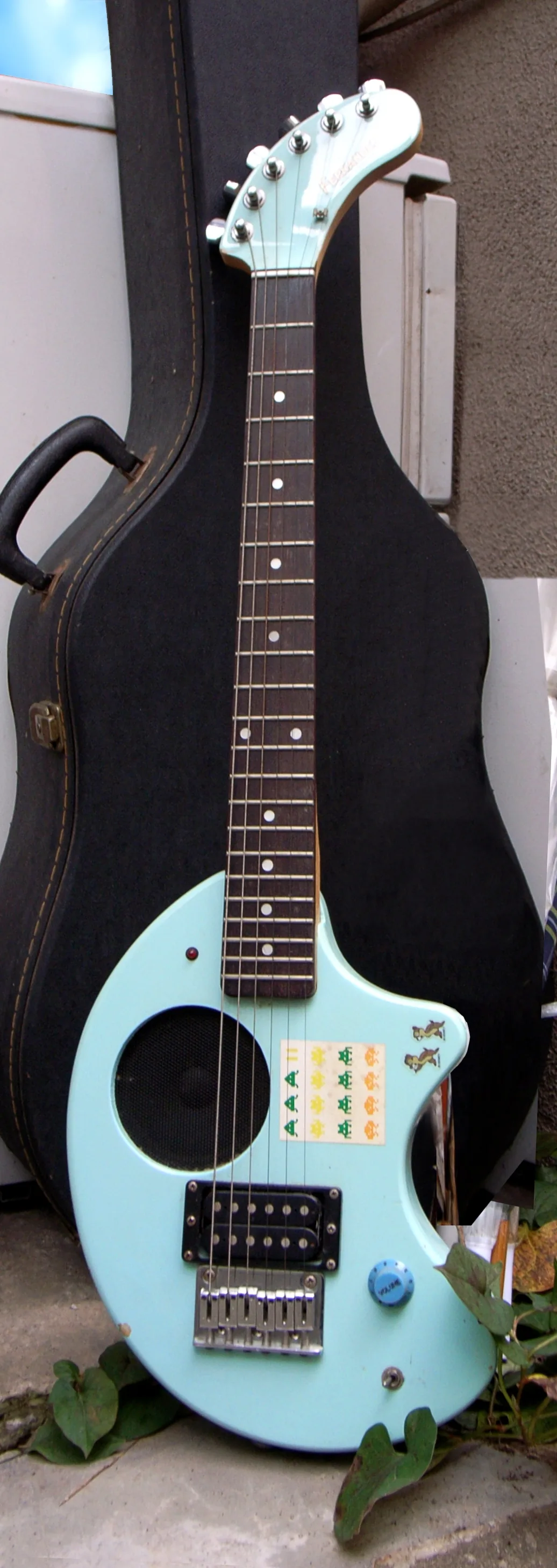
Photo: yoppy from Kawasaki, Kanagawa, Japan / Wikimedia Commons / CC BY 2.0 Fernandes
ZO-3
1990
A guitar shaped like an elephant, with the amp in its ear. Dave Navarro put one on a Chili Peppers record.
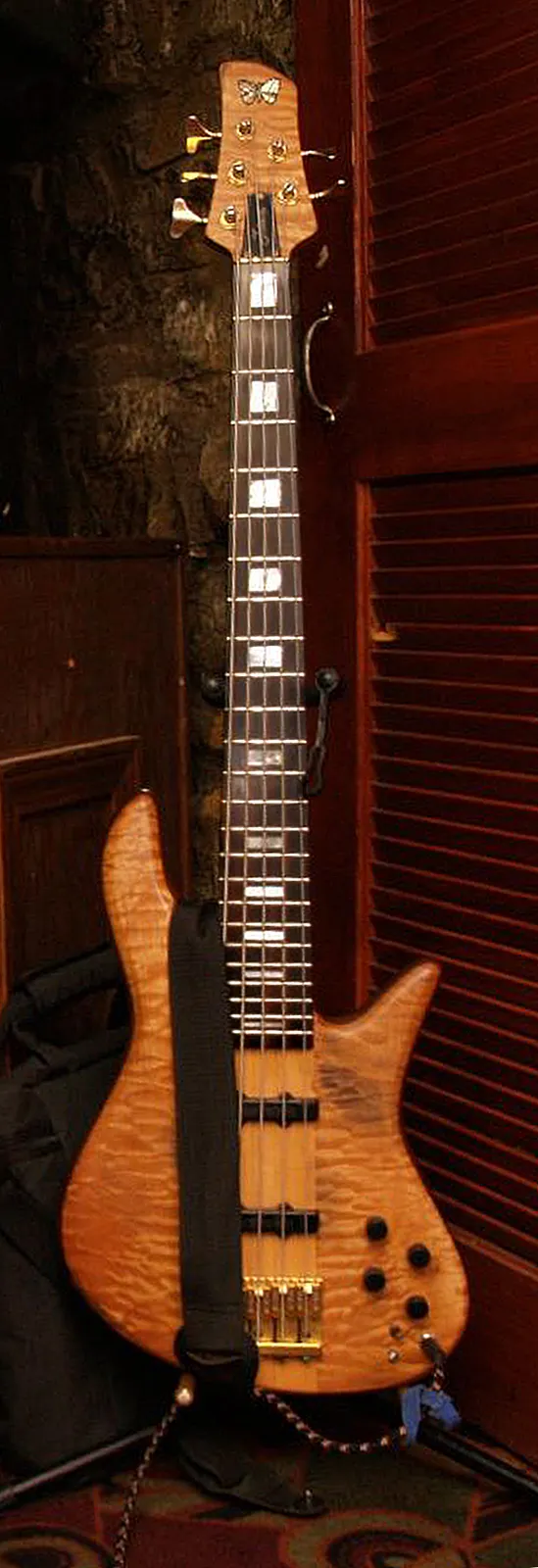
Photo: christina rutz / Wikimedia Commons / CC BY 3.0 Fodera
Monarch
1983
In 1983 a new Brooklyn shop brought a bass to a teenager’s session. It’s still Victor Wooten’s number one.
- Send a picture
Framus
Tennessee
2000
A German hollowbody built to take a hot rock pickup. One player said that’s when everything made sense.
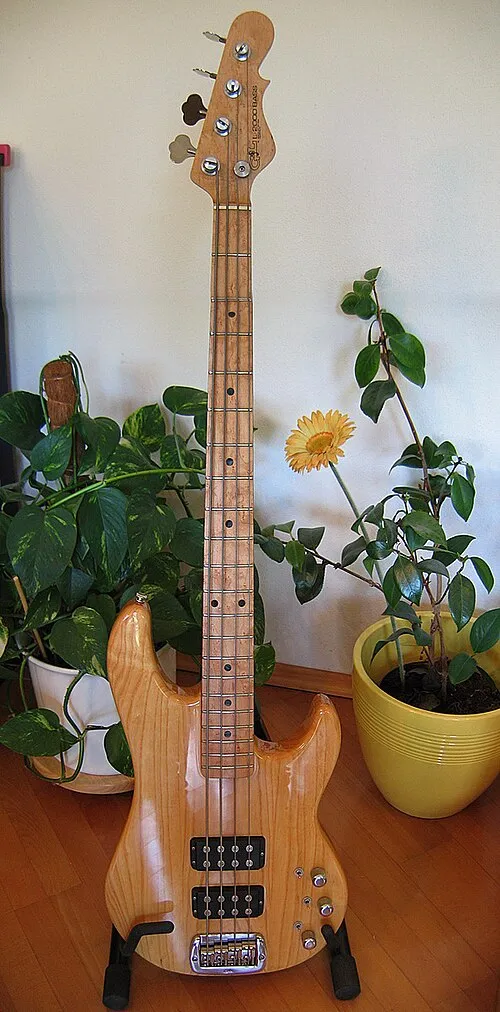
Photo: Jodeli / Wikimedia Commons / CC BY-SA 3.0 G&L
L-2000
1980
Leo Fender had already built the Precision and the StingRay. In 1980 he built one more, with more switches.
- Send a picture
G&L
ASAT
1985
Thirty-five years after his first Broadcaster, Leo Fender built another one. Gretsch objected again.
- Send a picture
G&L
Comanche
1988
Thirty-four years after the Stratocaster, Leo Fender was still trying to get the hum out.
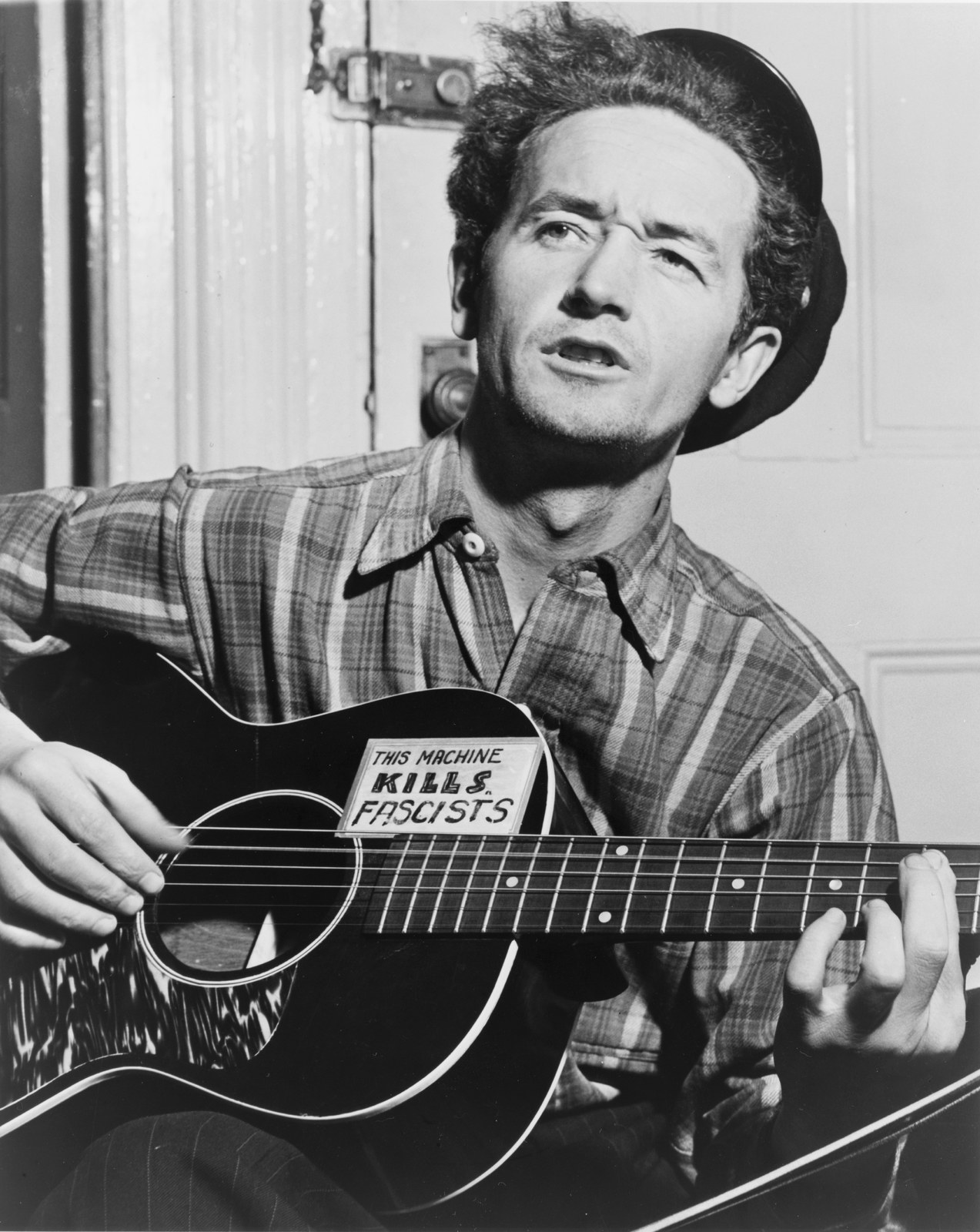
Photo: Al Aumuller / New York World-Telegram & Sun / Library of Congress / Public domain. Via Wikimedia Commons. Gibson
L-00
1931
Gibson’s plainest flat-top of the Depression. Famous names keep getting pinned on it. It never needed them.
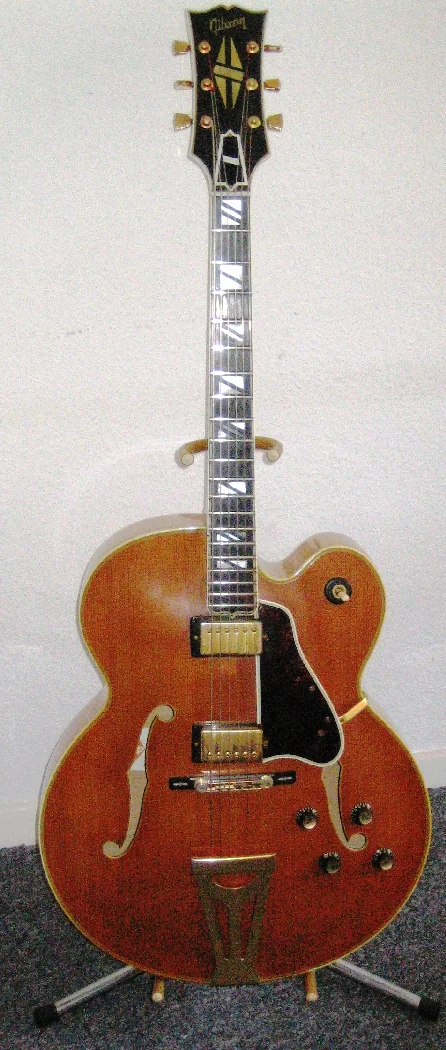
Photo: Cuetty / Clusternote / Wikimedia Commons / CC BY-SA 3.0 Gibson
Super 400
1934
Gibson priced it at $400 in the middle of the Depression and put the price right in the name.
- Send a picture
Gibson
J-35
1936
Named after its $35 price. The J-45 that replaced it looked just like it, give or take a pickguard.
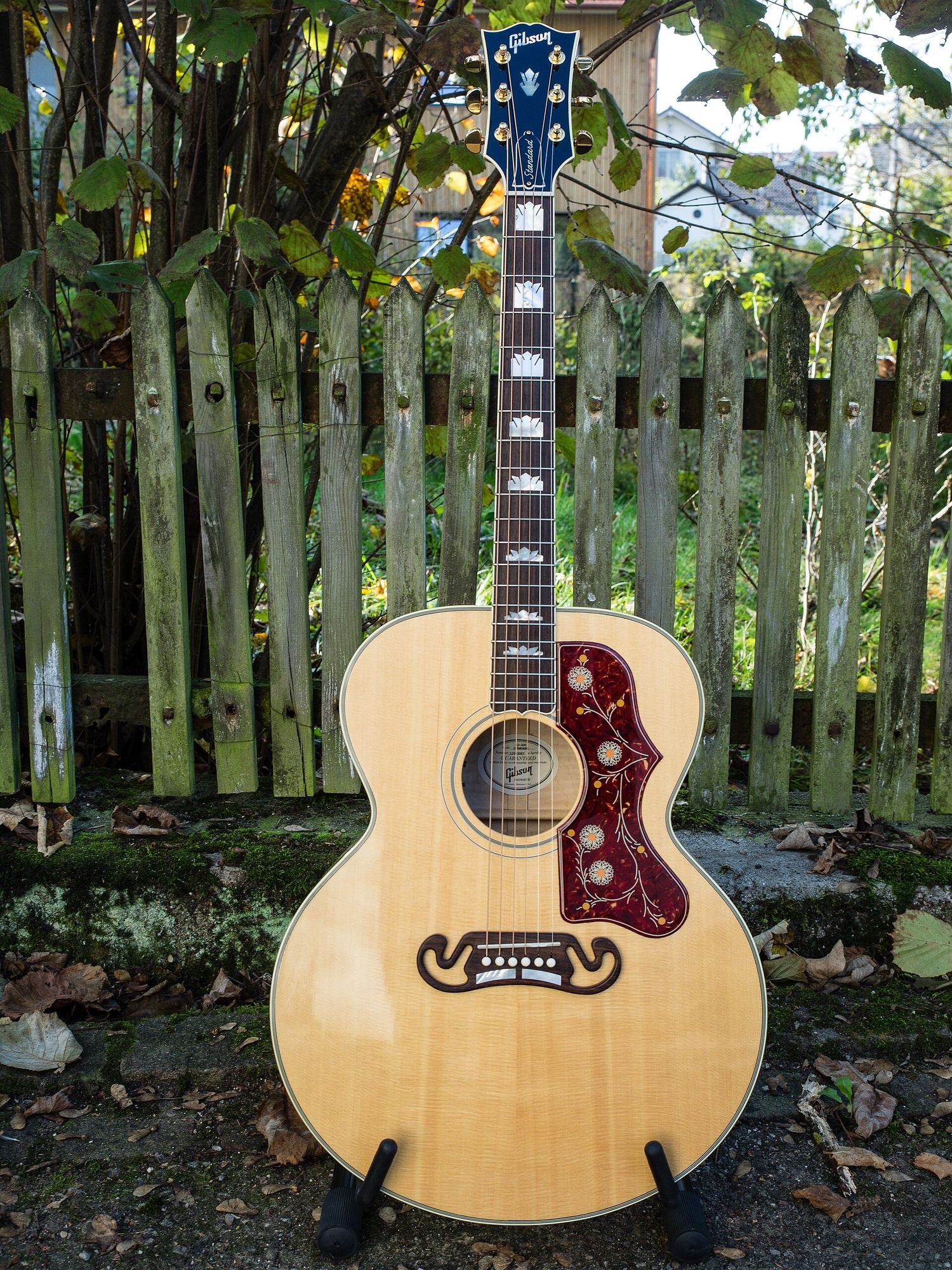
Gibson SJ-200 Standard Acoustic Guitar, Super Jumbo, Antique Natural Finish. Photo by Gibb Stutz. Licensed under CC BY 3.0. Via Wikimedia Commons. Gibson
J-200
1937
Gibson built the first one for a singing cowboy. It has been making people look like stars ever since.
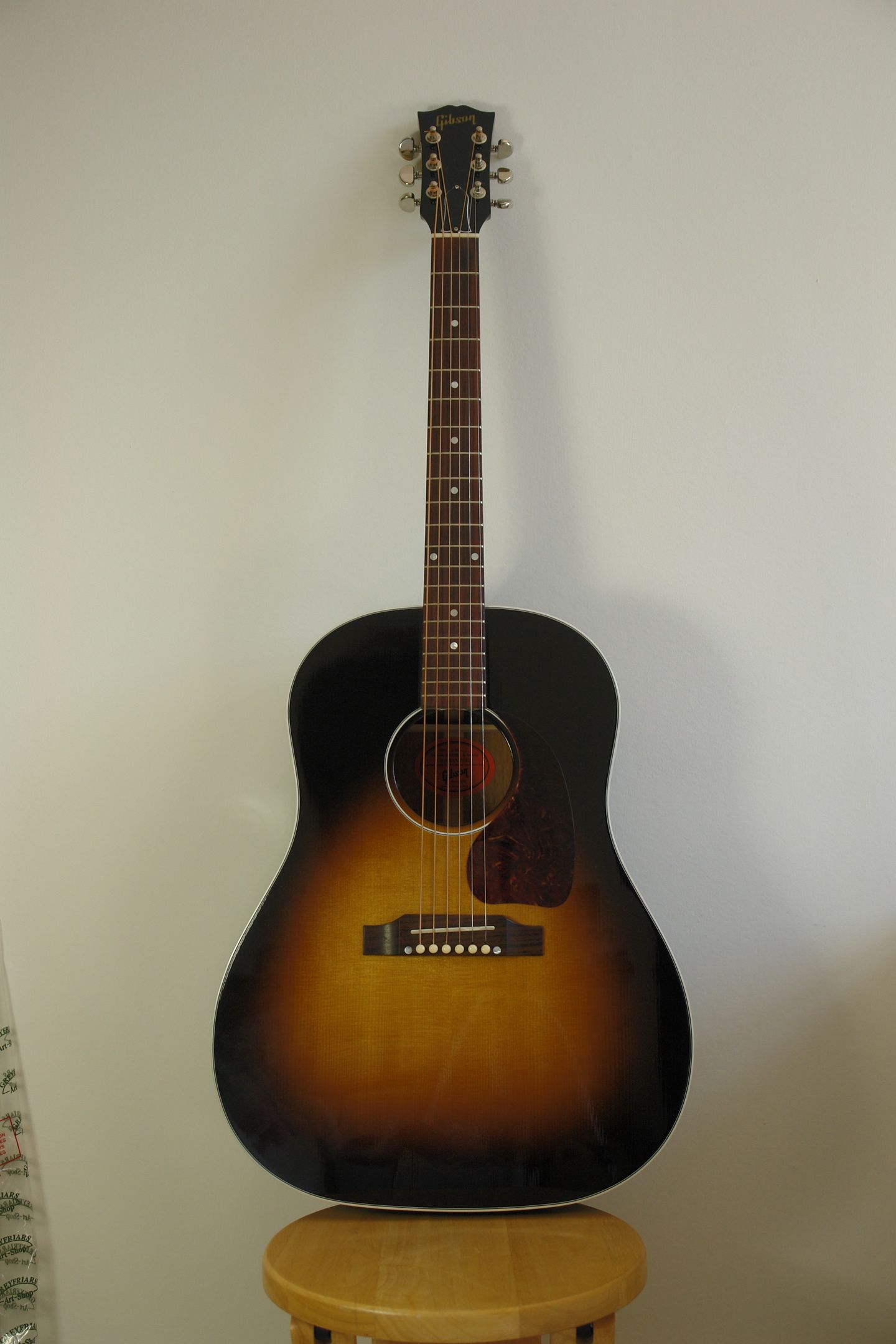
Gibson J-45. Photo by Jim Hutcheson. Licensed under CC BY 2.0. Via Wikimedia Commons. Gibson
J-45
1942
Born in 1942 out of whatever wood a wartime factory could find. Gibson calls it its best-selling acoustic ever.
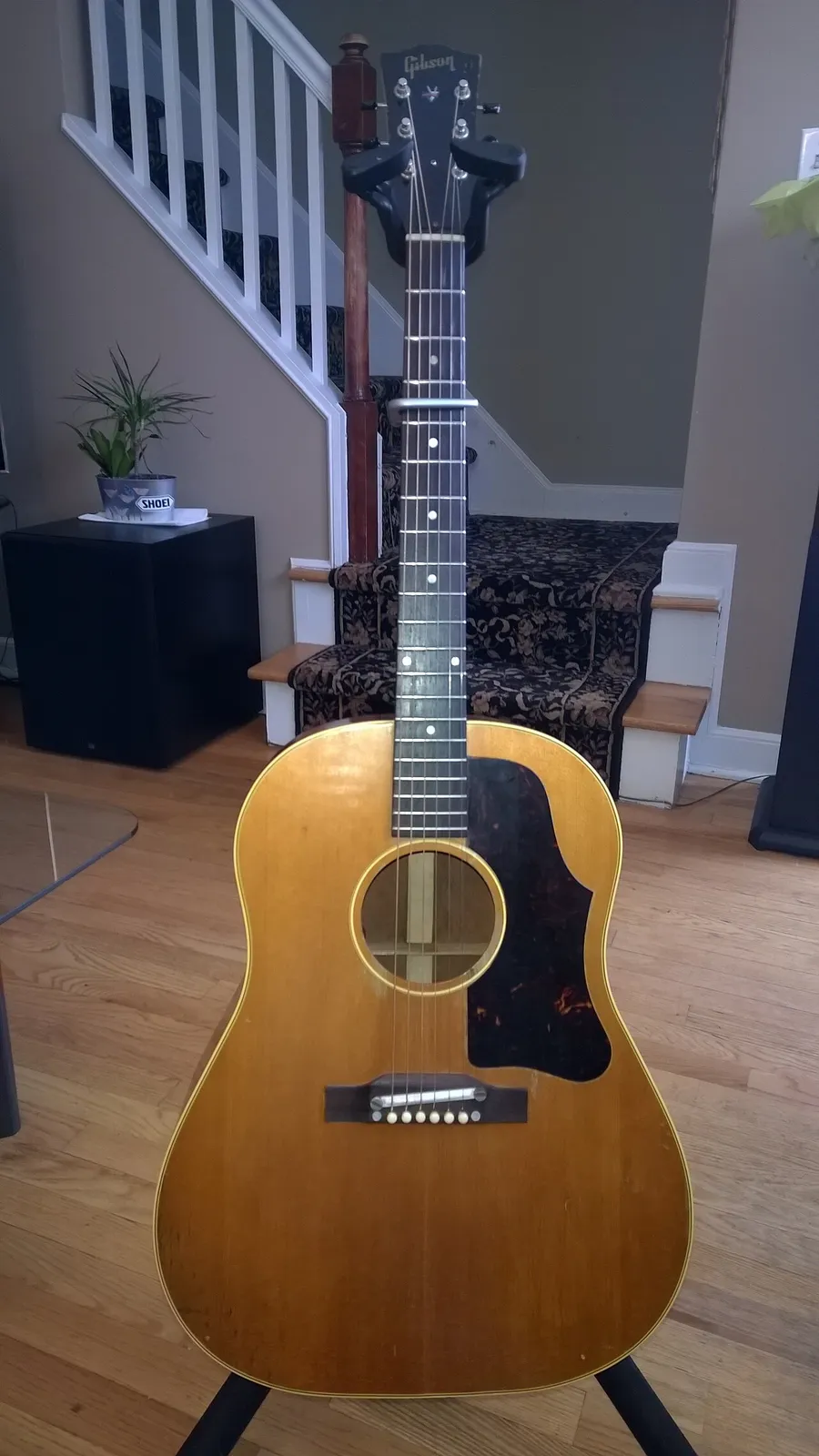
Photo: sbaimo from United States / Wikimedia Commons / CC BY 2.0 Gibson
J-50
1942
The J-45 with nothing to hide: a bare natural top, five dollars more, and Bob Dylan’s first album cover.
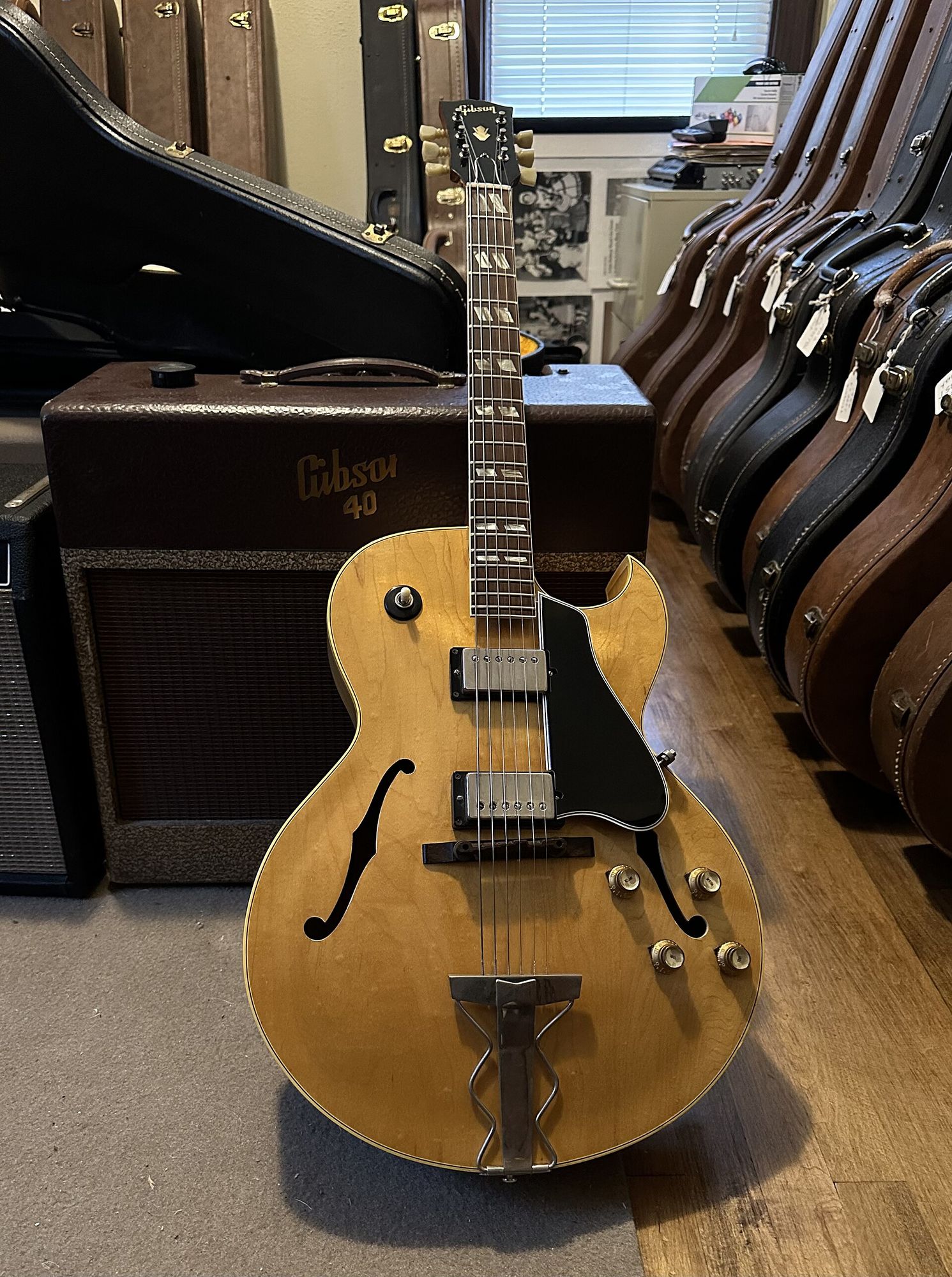
1963 Gibson ES-175DN. Photo by Lightburst. Licensed under CC BY-SA 4.0. Via Wikimedia Commons. Gibson
ES-175
1949
A laminated jazz box that kept changing hands: bought used, given as a gift, borrowed for a hit.
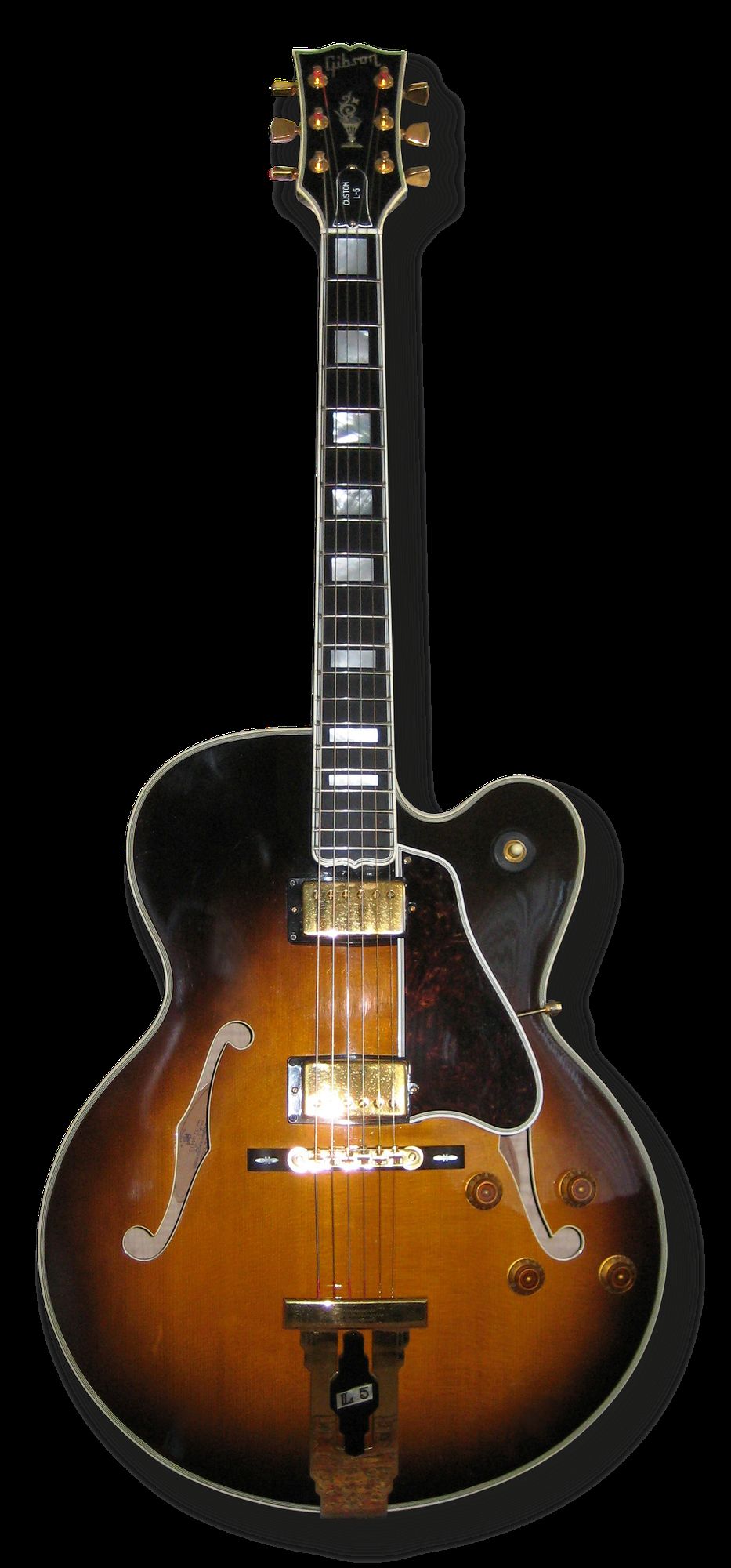
Gibson L-5 CES Tobacco Burst. Photo by Cruciniacus; isolated background by Auge=mit. Licensed under CC BY-SA 3.0. Via Wikimedia Commons. Gibson
L-5 CES
1951
In the ’50s Gibson shipped a few dozen a year. Wes Montgomery and Scotty Moore made them count.
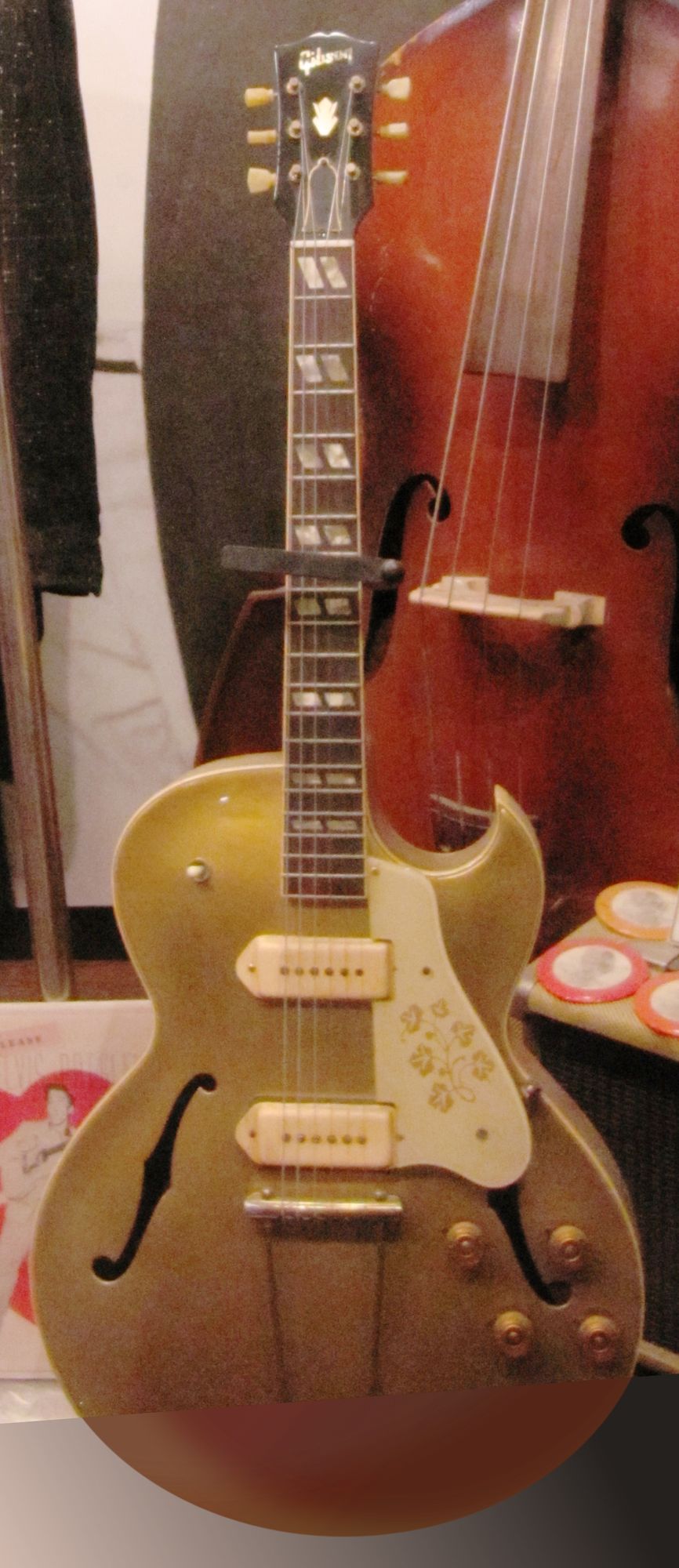
Gibson ES-295, Sun Studio. Clipped from Memphis Sun Studios Elvis instruments.jpg. Photo by Mr. Littlehand; derivative by Clusternote. Licensed under CC BY 2.0. Via Wikimedia Commons. Gibson
ES-295
1952
Scotty Moore traded a Fender for the gold guitar in the window. Four Elvis singles later, he traded it away.

2006 Gibson Les Paul Standard (SN 000660573). Photo by wetwebwork. Licensed under CC BY-SA 2.0. Via Wikimedia Commons. Gibson
Les Paul
1952 · 4 versions
Gibson made about 1,500 sunburst Les Pauls, decided nobody wanted them, and stopped. Then the British blues boom happened.
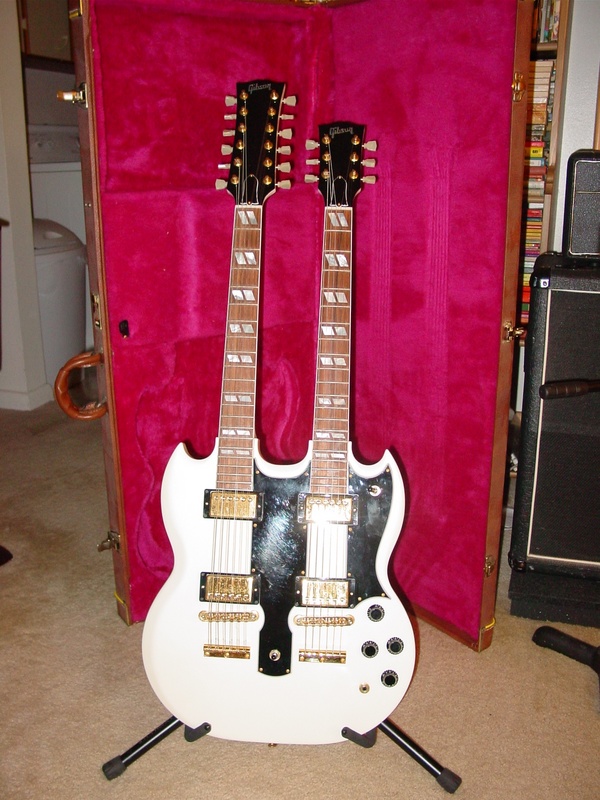
Gibson EDS-1275. Photo by T. Wesley. Public domain. Via Wikimedia Commons. Gibson
EDS-1275
1958
Jimmy Page had no way to play “Stairway to Heaven” live. So he ordered a guitar Gibson had stopped selling.

Photograph of a vintage 1960 Gibson ES-335TD. Photo by Lightburst. Licensed under CC BY-SA 4.0. Via Wikimedia Commons. Gibson
ES-335
1958
Larry Carlton played three 335s off a shop wall, unplugged, paid $850 for one, and became Mr. 335.
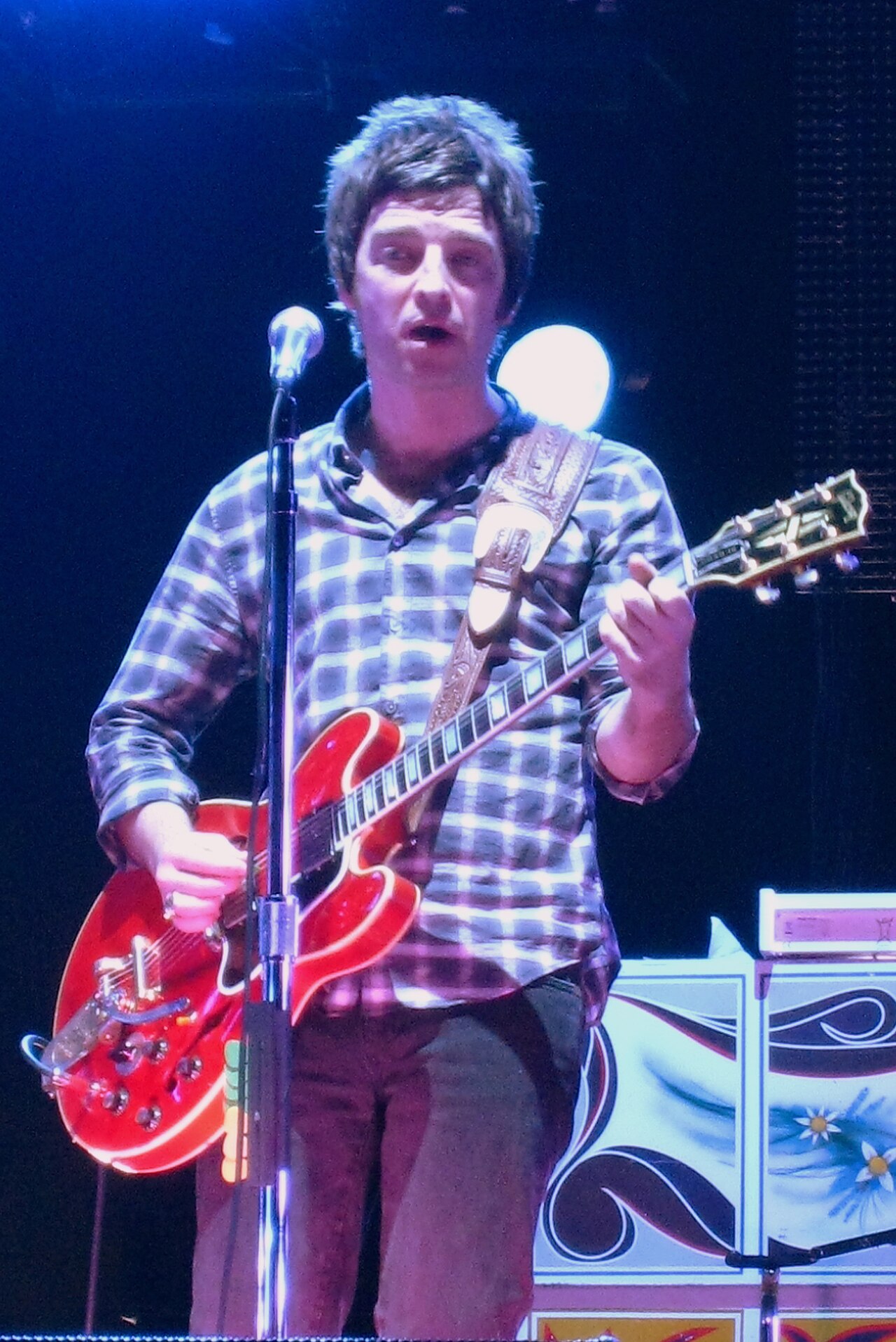
Photo: Anirudh Koul / Wikimedia Commons / CC BY 2.0 Gibson
ES-355
1958
B.B. King ran into a burning dance hall to save a guitar. Every Gibson after it was Lucille too.
- Send a picture
Gibson
Explorer (1958–59 korina)
1958–59
Gibson shipped twenty-two of them. Everybody knows the shape. Hardly anybody has held the real thing.
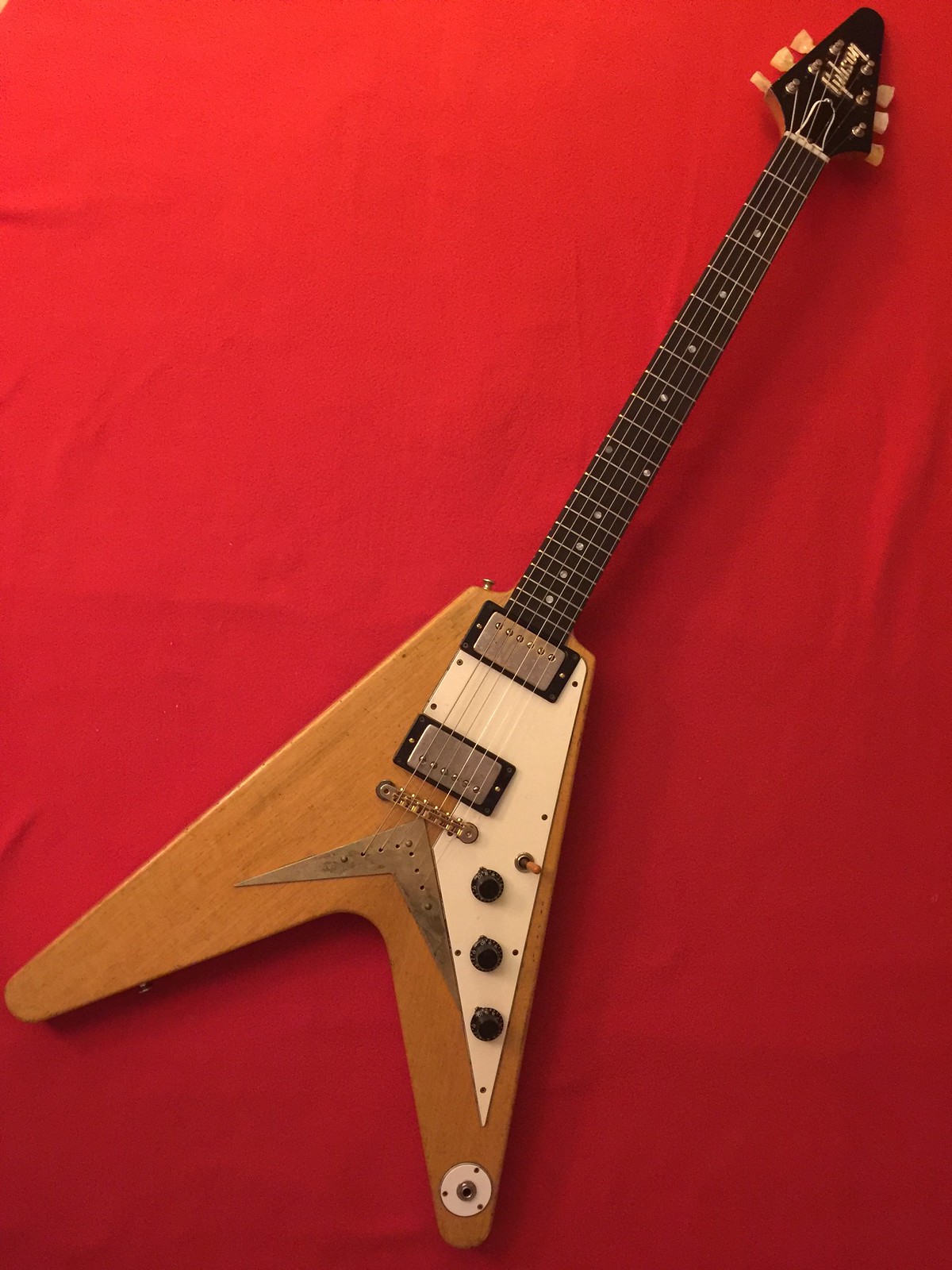
1958 Gibson Flying V korina. Photo by Pete Dyson. Public Domain Mark 1.0. Via Flickr. Gibson
Flying V (1958–59 korina)
1958–59
Gibson drew the future in 1958, and almost nobody bought it. Ninety-eight guitars later, it was finished. Then the future caught up.
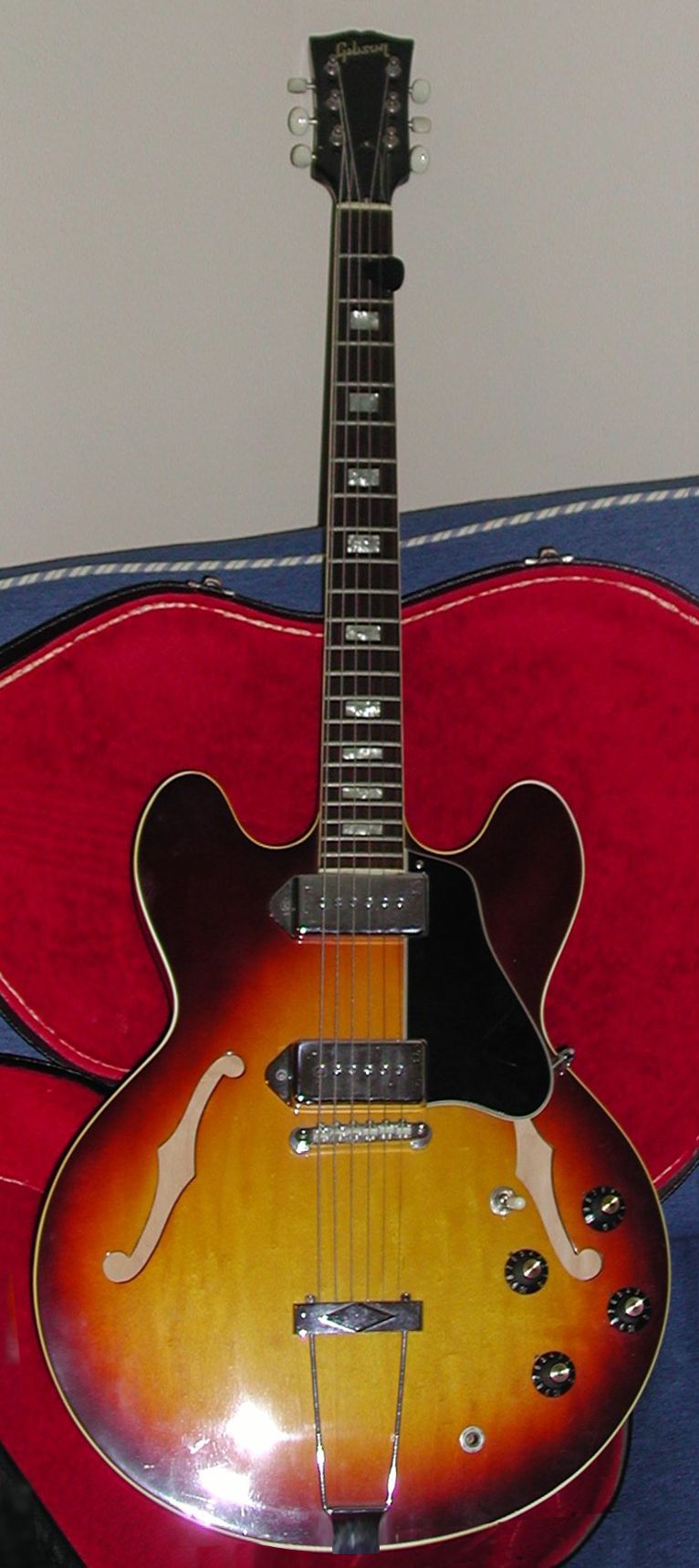
Gibson ES-330TD (front). Photo by Es330td; derivative by Clusternote. Licensed under CC BY-SA 3.0. Via Wikimedia Commons. Gibson
ES-330
1959
From across the room it looks like a 335. Inside, it’s all air, and the people who play one like it that way.
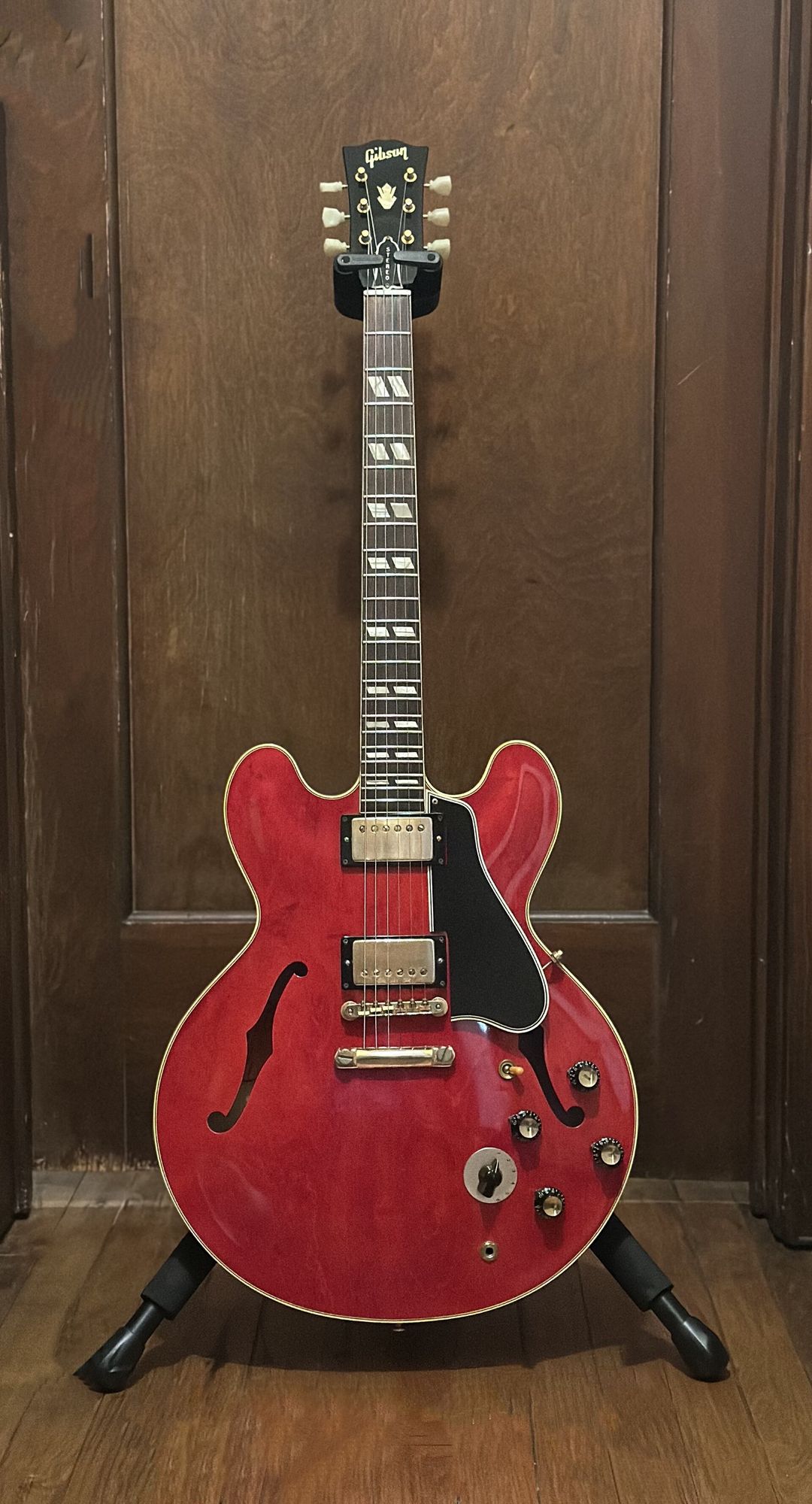
1960 Gibson ES-345TDC. Photo by Lightburst. Licensed under CC BY-SA 4.0. Via Wikimedia Commons. Gibson
ES-345
1959
Marty McFly plays one in 1955, four years before Gibson made it. Nobody in the theater minded.
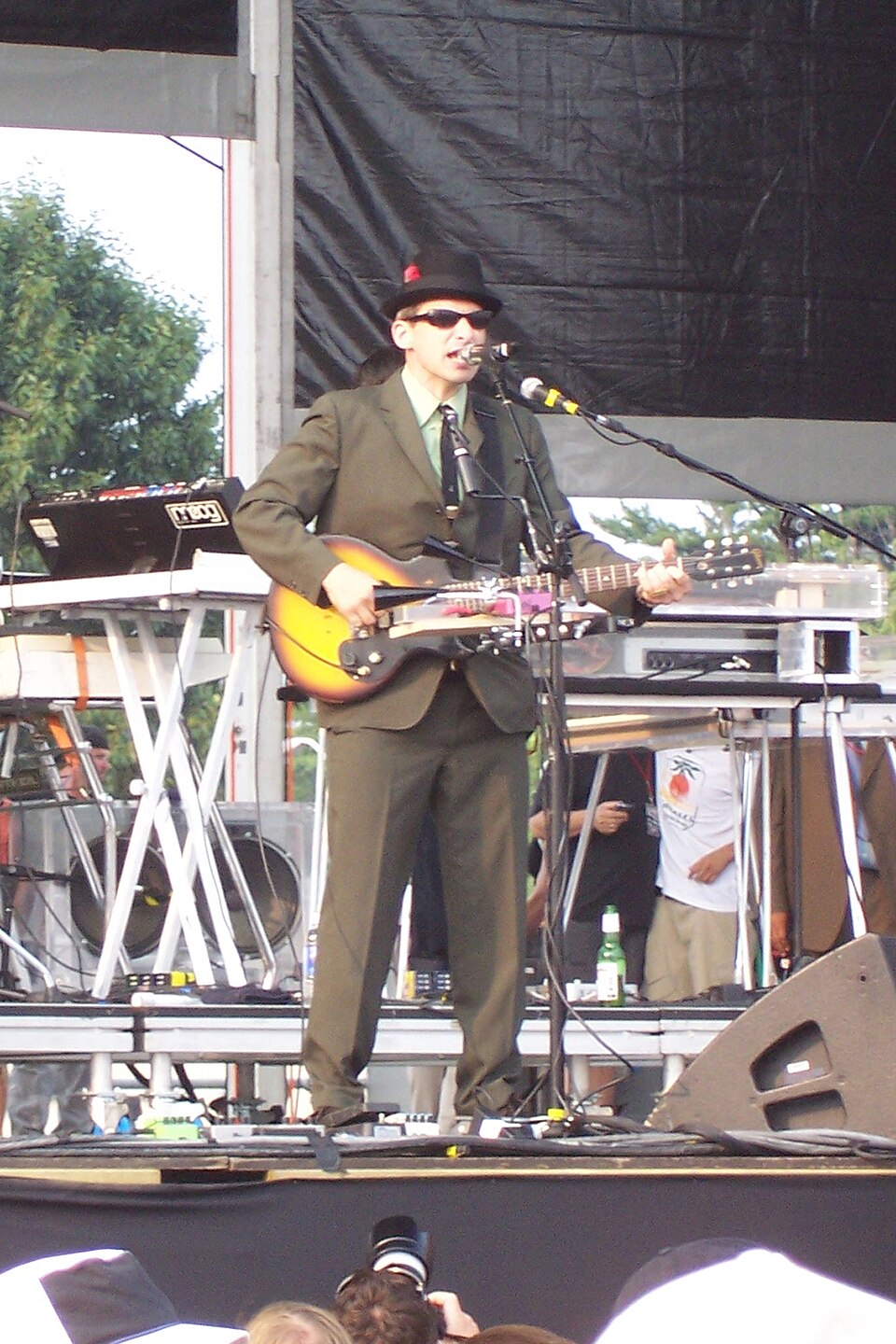
Photo: Jason / Wikimedia Commons / CC BY-SA 2.0 Gibson
Melody Maker
1959
Gibson built it to be outgrown. Billy Gibbons pinstriped his on day one. Joan Jett never traded up.
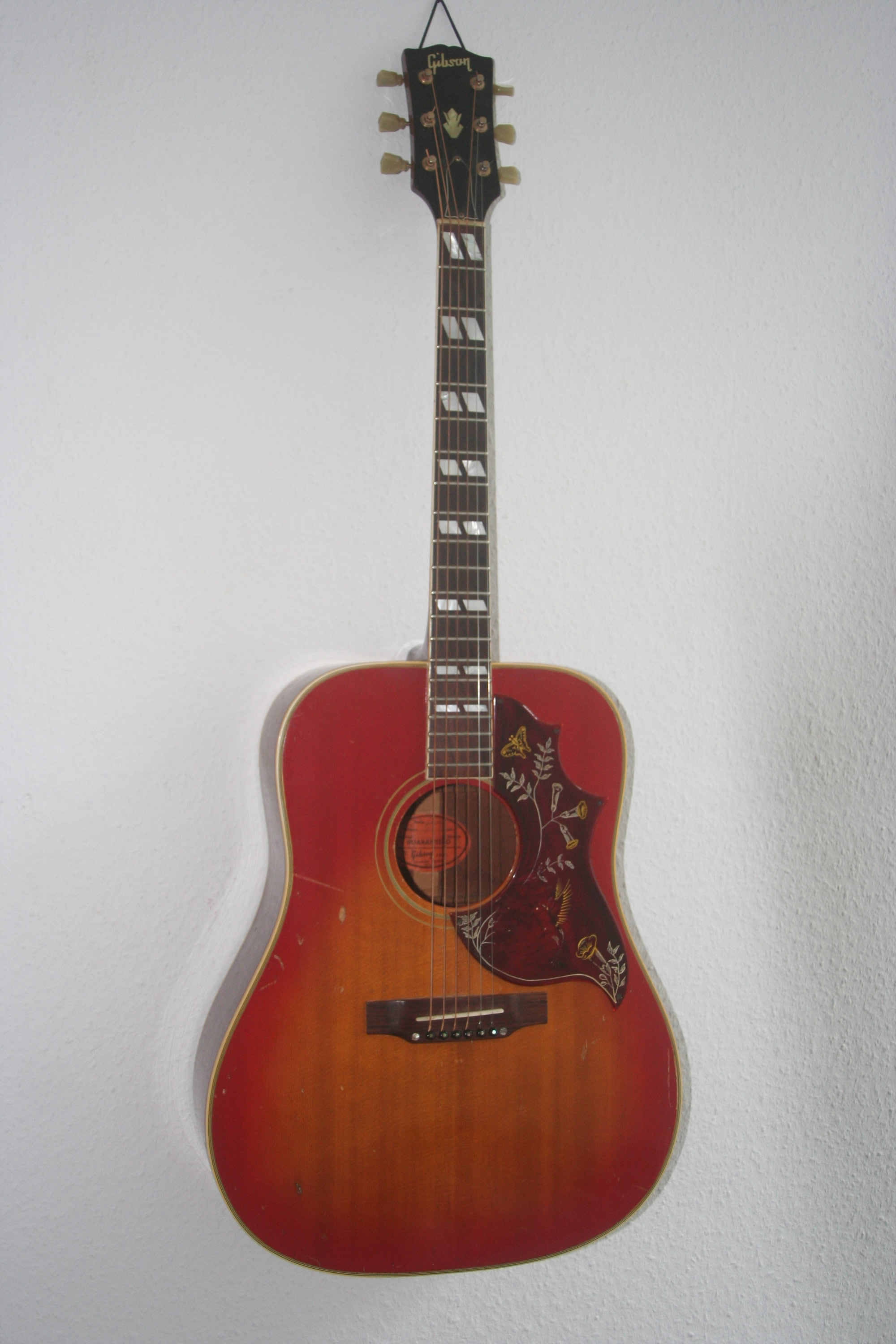
Gibson Hummingbird 1968. Photo by Guitarpimp. Licensed under CC BY 3.0. Via Wikimedia Commons. Gibson
Hummingbird
1960
Gibson gave it a hummingbird on the pickguard. Keith Richards gave it a cassette recorder.
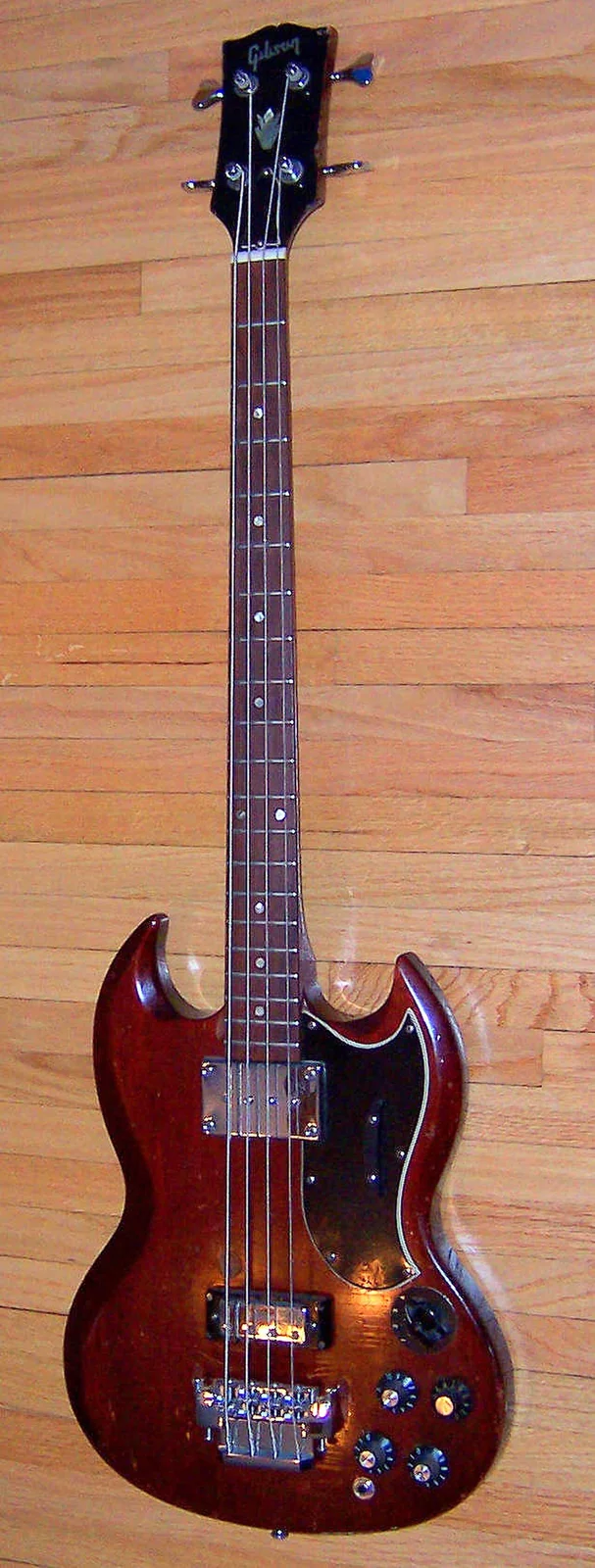
Photo: Jpkotta / Wikimedia Commons / CC BY-SA 3.0 Gibson
EB-3
1961
Jack Bruce wanted to bend bass notes like a guitarist. At thirty and a half inches, the EB-3 let him.
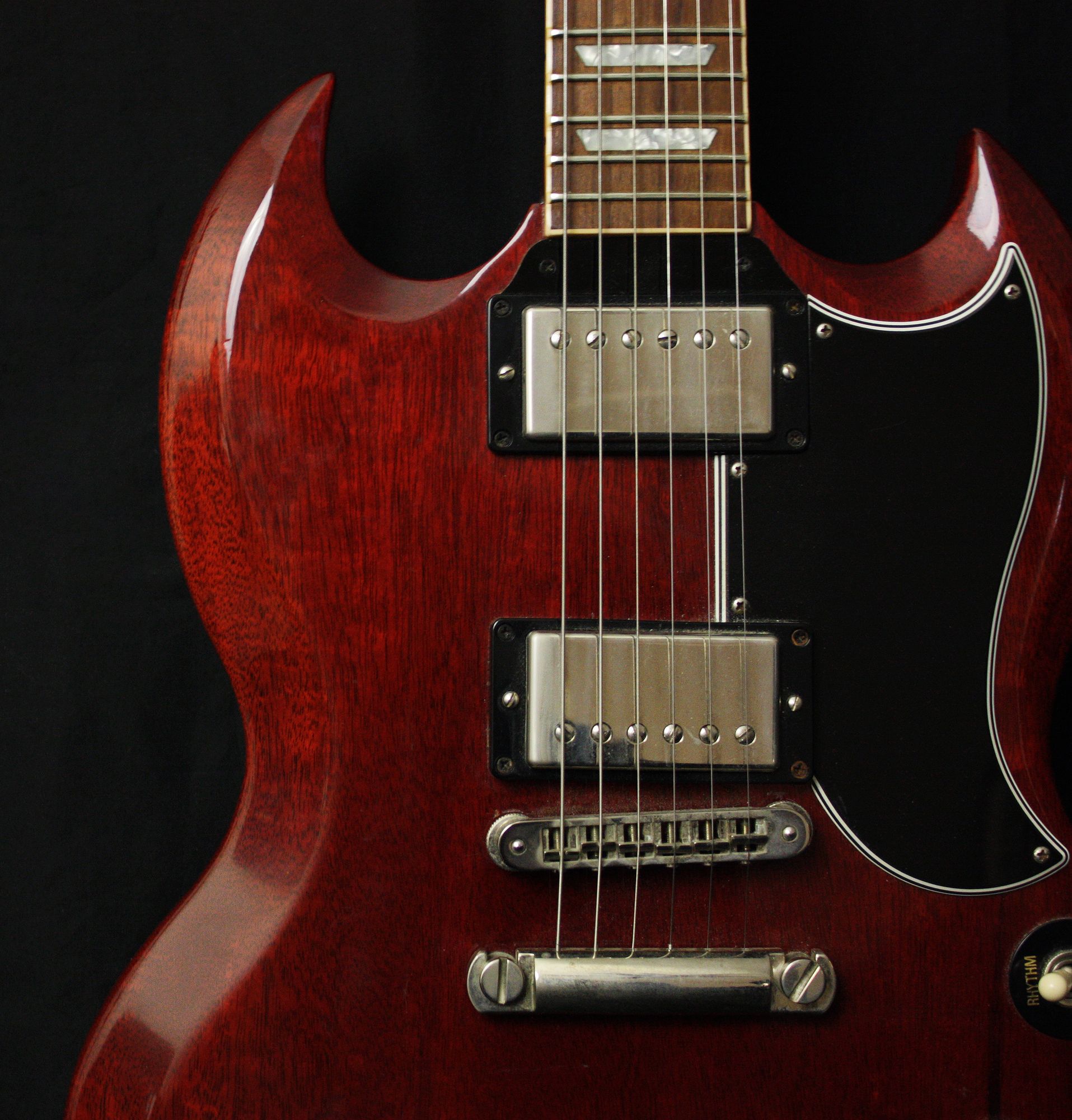
Gibson SG Standard ’61 Reissue, photographed 18 March 2010. Photo by John Tuggle. Licensed under CC BY 2.0. Via Wikimedia Commons. Gibson
SG
1961 · 3 versions
Gibson has never stopped making SGs. Angus Young has lost count of his. He still only means one.
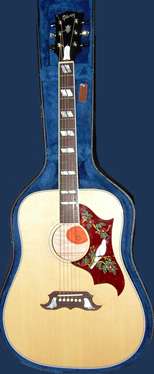
2005 Gibson Dove acoustic guitar. Photo by Rickfury. Licensed under CC BY-SA 3.0. Via Wikimedia Commons. Gibson
Dove
1962
It has the Hummingbird’s square shoulders and a bird on the guard. Different wood, longer neck, new voice.